What You Need to Know: The United States Navy lost dozens of F-14 Tomcat air-superiority fighters and an estimated 68 American aircrew over the operational life of the program due to chronic compressor stalls and unrecoverable flat spins from the Pratt & Whitney TF-30 engine — an engine assigned to the F-14 in 1974 as a “temporary” placeholder. Now the same cost-cutting impulse is shaping the U.S. Navy’s review of the Gerald R. Ford-class aircraft carrier program.
The Ford-Class Should Look to the F-14 Tomcat for Answers
The procurement of future Ford-class aircraft carriers beyond the four ships that are part of the US Navy’s (USN) current planning is now under review by the service’s civilian leadership. The Gerald Ford (CVN-78) is the only of the four planned ships (CVN 78-81) in service today, with the other three at varying stages of production.
However, there are now discussions about reducing the number of these other ships built or scaling back the list of new systems to be included in their configuration. USN officials have zeroed in on the price tag for this new class of carriers, which works out to $13 billion per ship.
Some in the Navy and Pentagon hierarchy see this as excessive and are taking the traditional route of trying to reduce the cost per vessel by deleting some of the new-generation systems that, as critics of this approach say, gut the Ford-class carriers of the ability to prove they are the technological marvels they are billed as.
One of those critics is Navy deputy assistant secretary for budget Rear Adm. Ben Reynolds. While acknowledging that there could be some merit in re-assessing some aspects of the Ford-class design, he cautioned that the many benefits of his new generation of aircraft carriers outweigh the costs of the teething pains associated with their introduction into service.
One of The Benefits of the Ford-Class: Sortie Rates
One of the key selling points for the Ford-class vessels is the projected increase in sortie rate, a key indicator for any carrier.
“I think you’ll see the sortie rate come out and it will be eye-watering,” Reynolds told reporters at the Sea Air Space symposium last week in Washington, DC, but without disclosing the rate. “The capability is just absolutely incredible.”
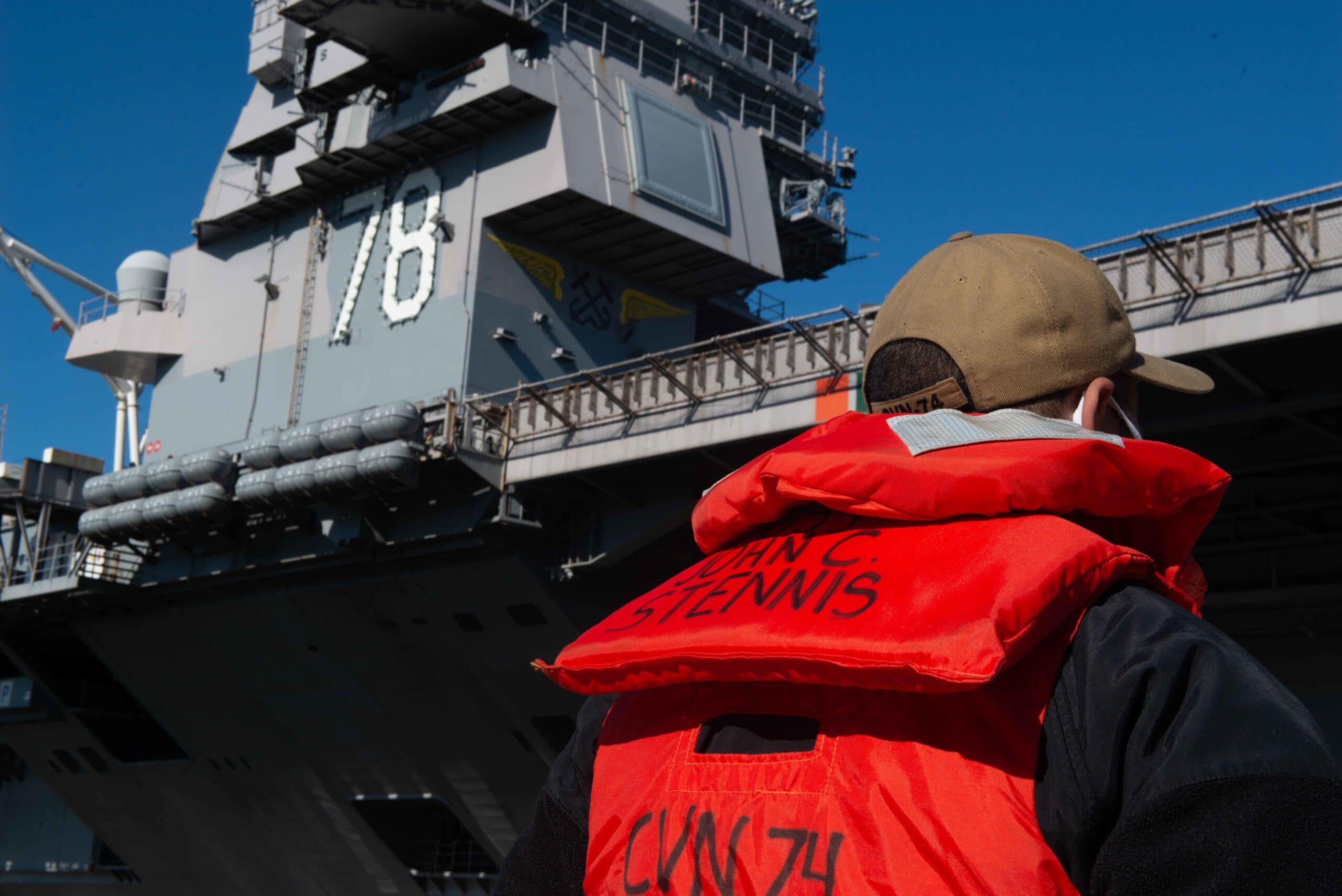
A U.S. Navy Sailor assigned to the aircraft carrier USS John C. Stennis (CVN 74), stands at parade rest as the aircraft carrier USS Gerald R. Ford (CVN 78) pulls into port in Norfolk, Va., Nov. 20, 2020. The John C. Stennis is partnering with Newport News Shipbuilding to complete Refueling Complex Overhaul on schedule with a trained, resilient and cohesive crew. (U.S. Navy photo by Mass Communication Specialist Seaman Apprentice Curtis Burdick)
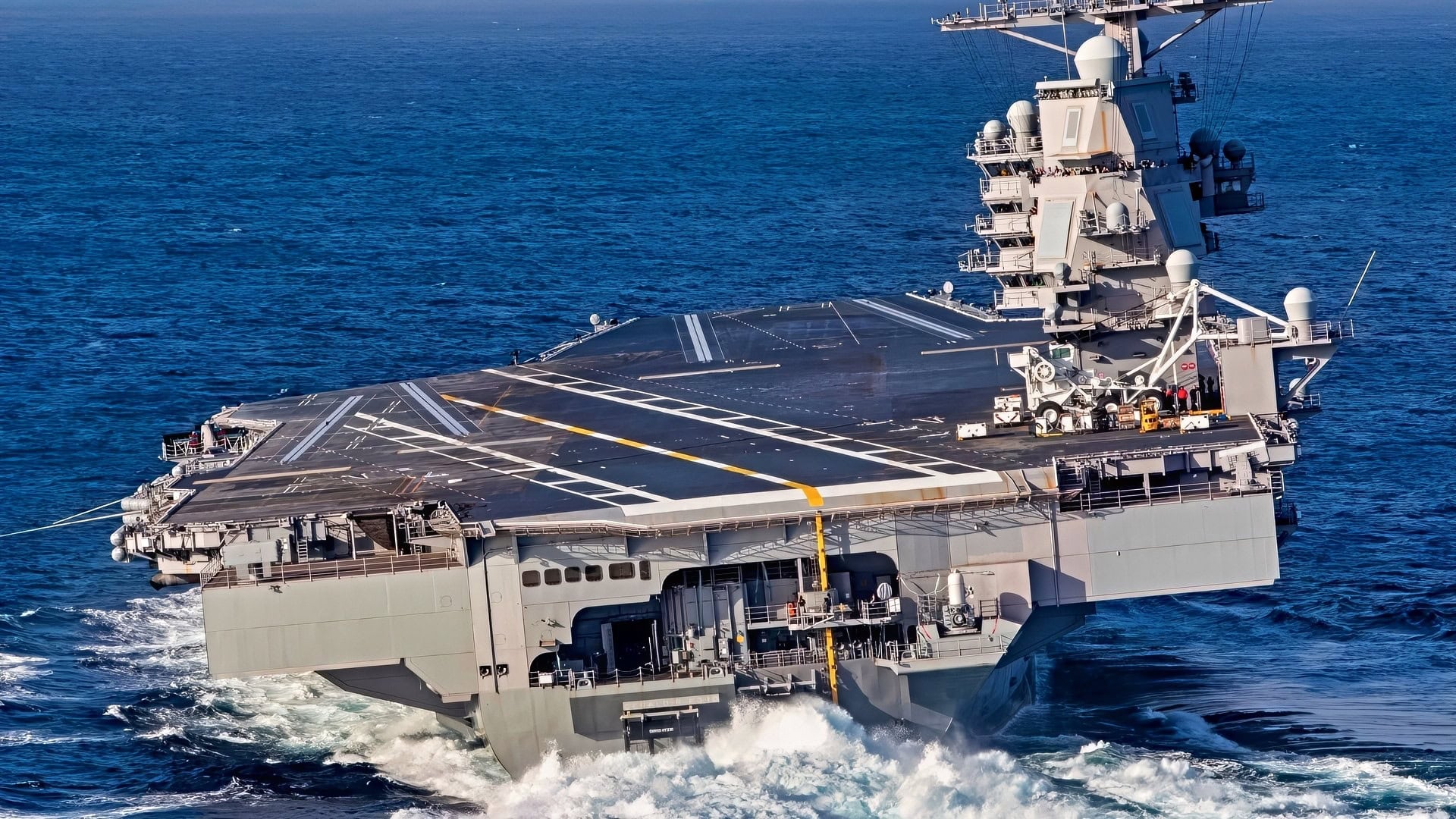
(Oct. 29, 2019) USS Gerald R. Ford (CVN 78) conducts high-speed turns in the Atlantic Ocean. Ford is at sea conducting sea trials following the in port portion of its 15 month post-shakedown availability. (U.S. Navy photo by Mass Communication Specialist 3rd Class Connor Loessin)
Two months prior to the event, in a news release, the Navy said that its initial data from the operations of the Ford to date suggests the Sortie Generation Rate (SGR) had increased, but the service did not disclose the exact percentages.
“While the Navy is still analyzing the data, preliminary reports from the Sortie Generation Rate test program show that the flight deck design in conjunction with EMALS and [Advanced Arresting Gear] have contributed to an increased sortie generation rate compared to that of a Nimitz-class carrier,” the release read.
“We’re learning as we go,” Reynolds commented at Sea Air Space. “Every ship … you build it, you operate it – and this is really the right way to do it – build it, operate it and then learn and say ‘hey are there some things that we want to change on it?’ And I think that this is an appropriate time to do that as we look at where [CVN] 82 is in the process and where we are operationally.”
The point being, as other naval analysts have told 19FortyFive, the operations of a brand-new carrier are an iterative process in many respects.
While the technologies that are the signature characteristics of the ship have been validated – most notably the EMALS catapult and the new arresting gear system – there are always, the same analysts say, going to be adjustments that have to be made once they are used in actual carrier operations.
Why Cutting Costs Ends Up Being More Expensive in the End
When the iconic F-14 Tomcat aircraft first entered service with the carriers in 1974, the weak link in the entire process was the selection of the aircraft’s engine.
At the time, the only choice available that would fit within the F-14’s airframe was the unreliable Pratt & Whitney TF30 engine.
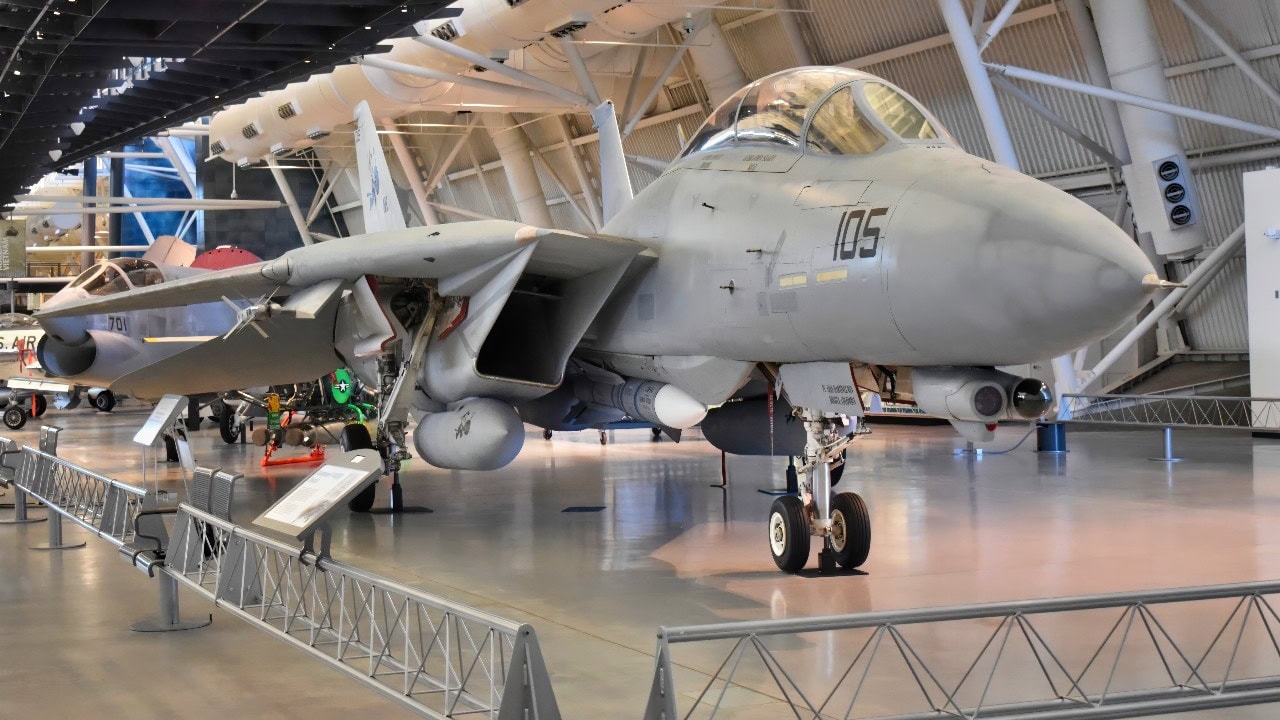
F-14 Tomcat. Image by 19FortyFive.com

F-14 Tomcat Fighter in USS Intrepid Deck. Image taken late in 2025 by Jack Buckby for 19FortyFive. All Rights Reserved.
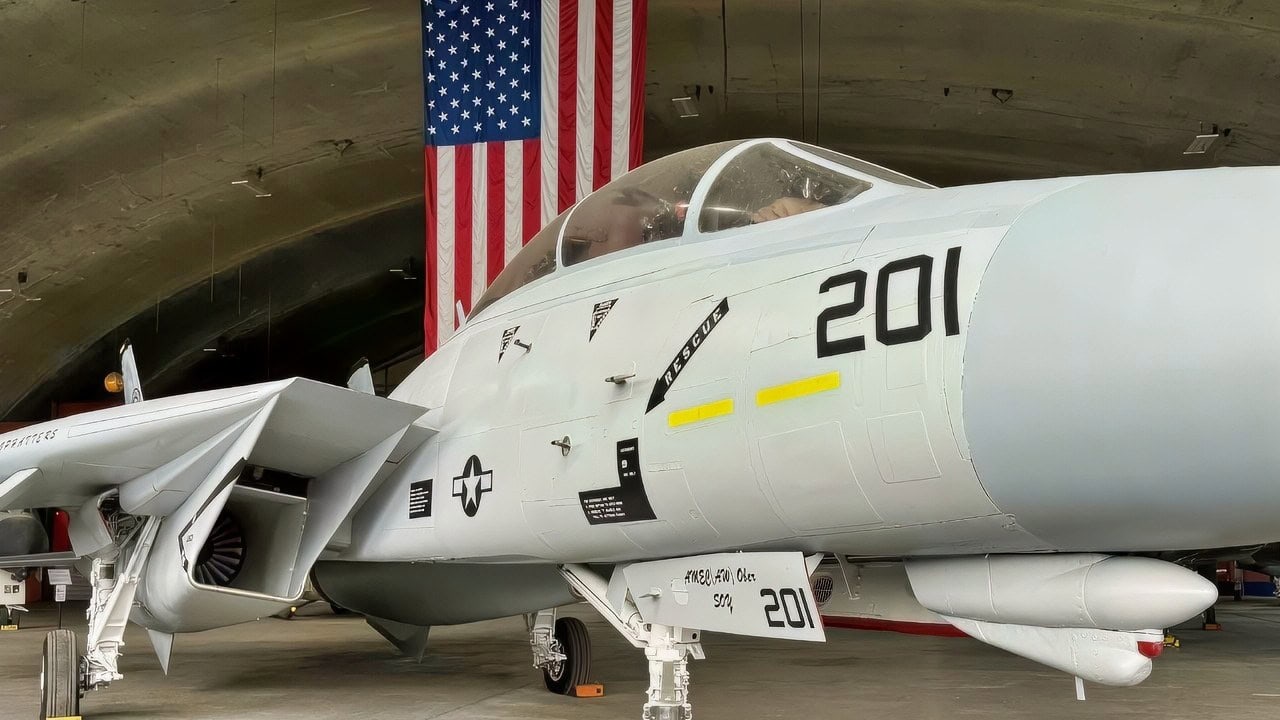
F-14 Tomcat Fighter U.S. Navy. 19FortyFive Field Research Image.
The TF30 was rated as adequate for high-speed intercept missions, but was highly vulnerable to compressor stalls, particularly at high angles of attack (AOA). While the engine was a good solution at the time for the F-111B, it was designed for a bomber aircraft, not a high-maneuverability fighter. The engine, therefore, ended up being completely unsuitable for dogfighting.
Over the years, no small number of F-14 pilots have sounded off about the problems with the TF-30, often saying that the pilot of the aircraft “had to learn how to fly the engine first and the airplane itself second.” In operation in the F-14, it was incapable of rapid thrust increases, which could cause one of the two engines to flame out.
One of the more high-profile examples was the 1994 crash of one of the Navy’s first female F-14 pilots, Lieutenant Kara Hultgreen, which was blamed on a compressor stall caused by the same TF30 engine.
One F-14 pilot with years of service in naval aviation, who was still flying the F-14 years ago as a reservist, told me that about “the only really accurate scene in the [original] TopGun film. It is that part when Tom Cruise’s F-14 has one engine die on him and the plane goes into a flat spin,” he said
“The engines in the F-14 – unlike in the F-15 or F/A-18 – are in a separated arrangement with nine feet between them – rather than both engines being mounted centreline as they are on those other aircraft. Therefore, if you lose one F-14 engine, the yaw angle created by the differential thrust of ‘one engine in burner and the other generating nothing’ dilemma turns the aircraft into a frisbee,” he continued.
The TF-30 was finally replaced in the 1980s with the GE F110-400, which solved decades of performance problems with the aircraft. When I asked the same F-14 Navy reserve pilot what would be done with the TF30 engine now that the aircraft had the engine the aircraft always needed, his response was “I hope they become boat anchors – anything but continuing to be used in the F-14.”
The moral of the story is two-fold. One is that when the TF30 was initially assigned to the F-14, it was described as a temporary measure. The Navy was forced to accept the engine as a “placeholder” powerplant.
But like so many similar decisions made in the Pentagon bureaucracy over the years, a decision that is supposed to be “temporary” has a strange habit of becoming “permanent.”
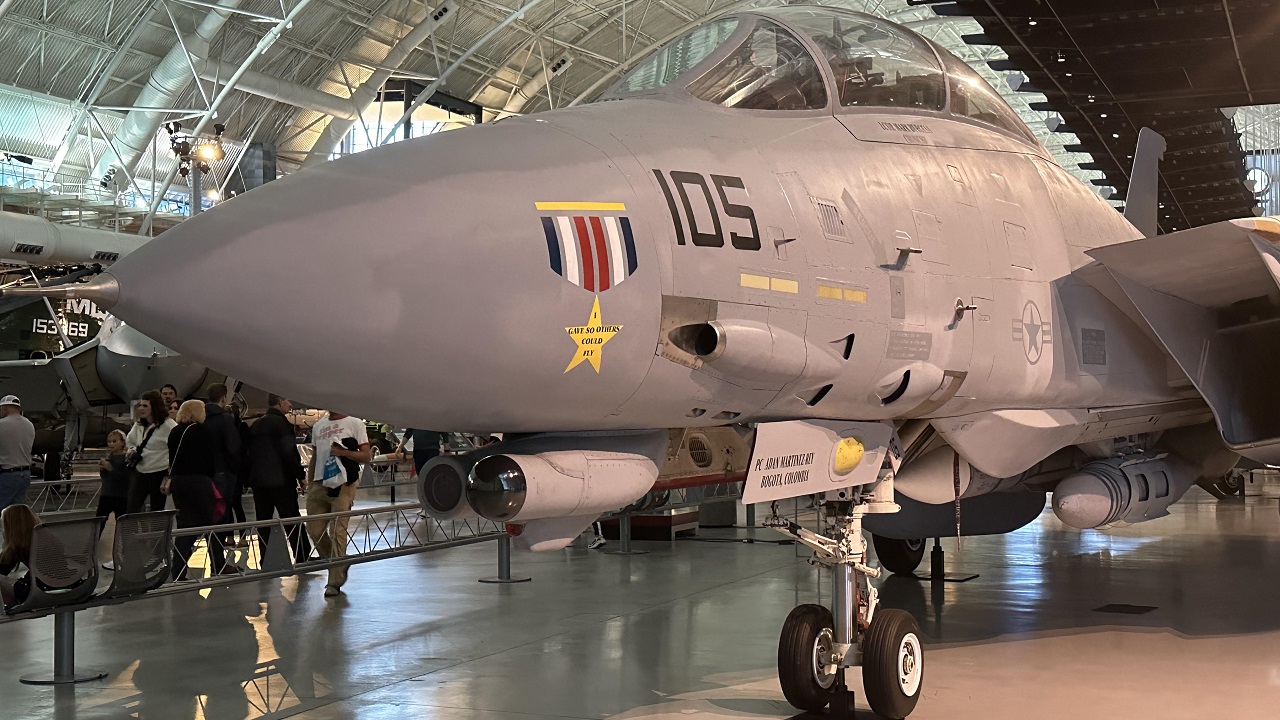
F-14 Tomcat. Image taken at National Air and Space Museum on October 1, 2022. Image by 19FortyFive.
The second aspect is that the cost for being penny-wise and pound-foolish was horrendous, in almost any objective assessment. The inadequacies of the TF30 caused the loss of at least 40 – and some say over 100 – F-14 aircraft. Engine-related accidents, primarily compressor stalls and unrecoverable flat spins during high AOA maneuvering, accounted for nearly 30 percent of all F-14A accidents throughout its service life.
The problem with the engine was so pronounced that in the 1980s, then-Secretary of the Navy John Lehman reportedly dubbed the F-14 “a nice aircraft powered by two pieces of junk.” He notably told Congress that the F-14/TF-30 combination was “probably the worst engine-airplane mismatch [we] have had in many years. The TF-30 is just a terrible engine and has accounted for 28.8 percent of all F-14A crashes. The sooner we are out of it the happier I will be.”
But the worst part of this story is that the estimates are also that no less than 68 aircrew died in these mishaps. Another cost that could have easily been avoided at the beginning of the program.

F-14 Tomcat at Aviation Museum of Kentucky. Taken on March 1, 2026. By Christian D. Orr.
“What is the number one lesson of a weapon system design?”, as I was told to learn many years ago. “Small mistakes made in the initial developmental stages expand geometrically over time – sometimes to horrendous consequences.”
What Are the Notable Aspects of the Ford Class
While the lead ship in the Ford class is operational, there will likely be issues with introducing new technologies for some time to come. Bringing crews up to speed on how to properly operate those technologies will create some higher-than-normal maintenance costs in the beginning, say those who advocate the Navy “staying the course” and waiting for the operations of the Ford carriers to be “normalized.”
The Ford-class is a 100,000-tonne warship, but in many respects, it is unlike any other carrier ever to serve in the US Navy. Rather than being a vessel of the previous century where technological advancements are “bolted on” to steam-gauge systems in later years as they are developed, the Ford carriers are built around a first-ever set of electromagnetic systems at the heart of the carrier’s operations.
These technologies are represented in the catapults, arresting gear, and weapons elevators. The criticisms now being made about them are that these technologies were not fully tested to a mature state before they were incorporated into the carrier’s configuration. This has led to multi-year delays in the ship’s entry into service and cost overruns, both during production and in service. In a perfect world, this would not have been the case, but life is quite frequently imperfect.
Both the Nimitz and Ford classes of carriers displace approximately 100,000 tons, and they are the centerpiece of carrier strike groups. But most of the similarities end there. The Ford-class ships are equipped with revolutionary technologies. More importantly, those technologies are not part of the ship’s design simply because they are available. This is a case of “engineering uber alles,” and they have justifiable, practical applications.
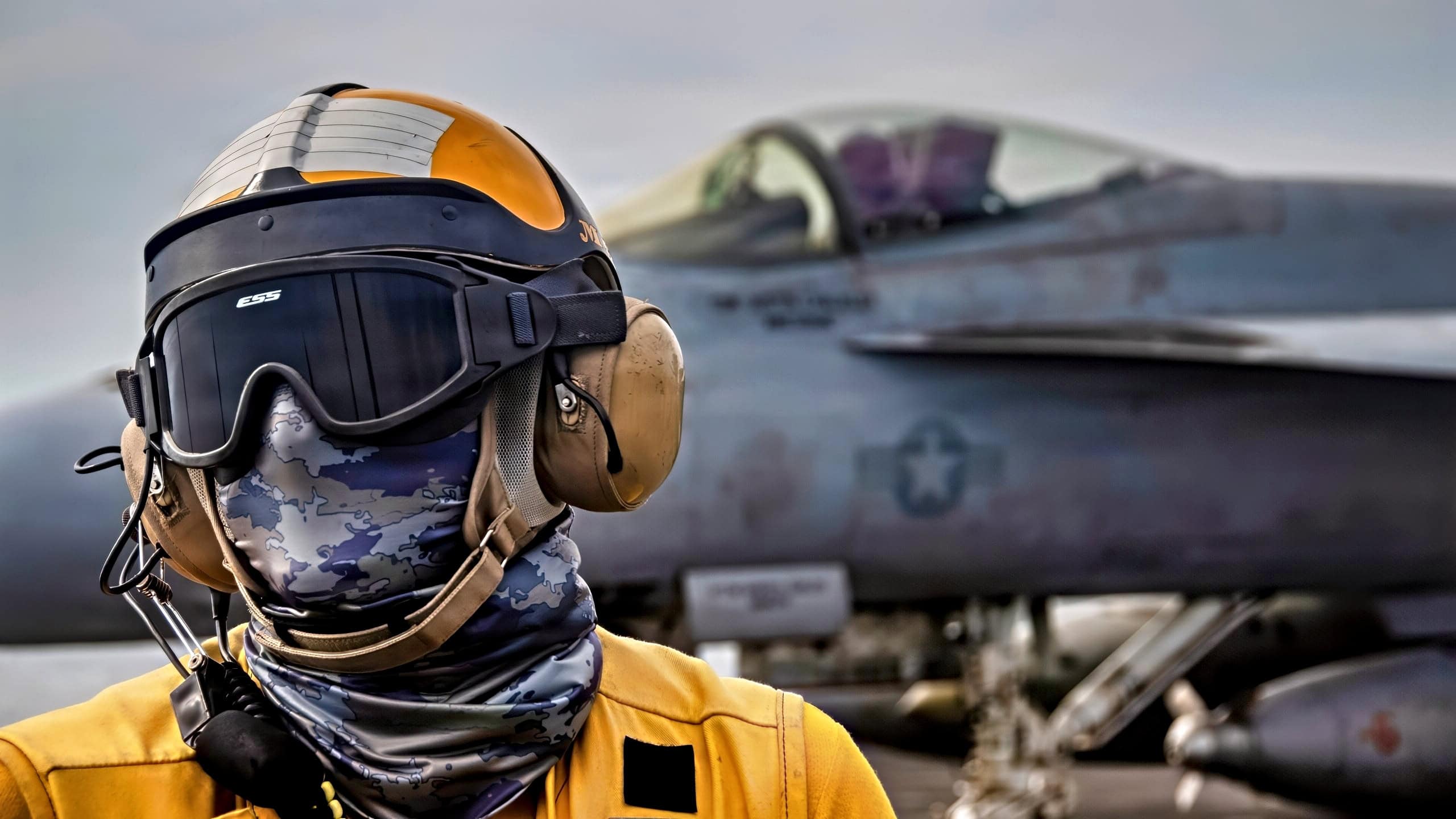
A U.S. Sailor prepares to launch a F/A-18E Super Hornet, attached to the “Kestrels” of Strike Fighter Squadron (VFA) 137, from the flight deck of Nimitz-class aircraft carrier USS Nimitz (CVN 68) in the Pacific Ocean, April 8, 2026. Nimitz is deployed as part of Southern Seas 2026 which seeks to enhance capability, improve interoperability, and strengthen maritime partnerships with countries throughout the region through joint, multinational and interagency exchanges and cooperation. (U.S. Navy photo by Mass Communication Specialist 2nd Class Jaron Wills)
These new systems, although their initial introduction into service has proven cost-intensive, are designed to enhance operational efficiency and reduce lifecycle costs. They were also employed in the ship’s configuration with future requirements as part of the considerations. Most important among them is that they will accommodate the introduction of numerous future weapons systems – some of which do not yet exist.
The Ford-class aircraft carriers also differ from previous Nimitz-class vessels by offering increased power generation, greater automation, and technology unlike that of any previous ships. Those technologies enable a 25–33 percent higher sortie generation rate and require 500–900 fewer crew members.
Those advancements are not just achieved by the Electromagnetic Aircraft Launch System (EMALS) systems replacing steam catapults and the use of the new advanced arresting gear (AAG). But the carrier also has a redesigned, smaller island placed further aft on the vessel.
That design change alone gives the Ford an extra half acre of real estate over its predecessor designs, and as such, it allows the air wing to have more aircraft ready at any given time, said Capt. Daryl Trent, the commander of Carrier Air Wing 8, when the Ford sailed from Norfolk in October 2022 for its initial deployment
Looking ahead, the vessel can support future weapons technologies, such as directed-energy and laser weapons. The future growth that the Ford class has designed in is greater than most realize or can appreciate the necessity of.
How Advanced Technologies End Up Costing Less Rather Than More
The USS Gerald R. Ford incorporates 23 new, advanced technologies that were developed, tested, and validated for the first time ever on any aircraft carrier. Some of those key technologies are what create the frequently mentioned increase in SGR and the 20 percent reduction in crew size compared to the Nimitz-class. But those innovations are not the only revolutionary developments in the design of this new-age carrier.
Just how many of these technologies were going to have to be wrung out, and the adjustments that need to be made in operation, could be seen three and a half years ago in a conversation that was held with the ship’s commander. Just how important they would turn out to be can be seen in the role these capabilities play today in the conflict in Iran.
“We start with air defense exercises. We’ll be doing a war-at-sea maritime strike and operations; we’ll be doing distributed maritime operations where we extend the force to a bigger footprint,” Ford’s commanding officer, Capt. Paul Lanzilotta told reporters. “And whether it’s our satellite communications, or the aircraft embarked on the ship that extend our line of sight, we’ll use all of that to maneuver the force. We’re going to practice all of it.”
The ship’s commander also stated that, from his perspective, one of the most important innovations is the Advanced Weapons Elevators (AWEs). These are 11 electromagnetic elevators that transport ordnance at higher speeds and capacities than any previous-generation cable-driven system.
Lanzilotta also said at the time that he believes Advanced Weapons Elevator would prove to be the most significant and influential improvement of all. It was also the technology that benefited the most from the time and energy being expended on it since the other major on-board innovations were more mature at the time the ship was delivered.
The installation of those 11 elevators produced multiple delays and delayed the carrier’s initial deployment from 2018 to 2022. But they carry greater amounts of munitions from below the ship to the hangar bay and the flight deck, which can be critical during a conflict.
“They legitimately move a lot more ordnance a lot more quickly than older ships,” Lanzilotta said at the time. “And that’s an important enabler for warfighting.”
Two other notable technologies on board the ship are a Dual Band Radar (DBR), which combines X-band (AN/SPY-3) and S-band (Volume Search Radar) to track targets.
Another is the A1B Nuclear Reactors. This is a new, smaller reactor design that generates 25 percent more electrical power to support advanced, high-power systems. This means approximately 125 megawatts per reactor. They support the advanced, high-energy requirements of systems like EMALS.
Arguments Against the Cancellation of the Ford-Class
Perhaps the strongest argument against canceling or scaling back the Ford-class carriers is the one above, which cites what happened with the F-14.
Cutting funding now on needed, cutting-edge technology – the key element in many weapon systems if they are to be survivable for the foreseeable future – only costs much more later.
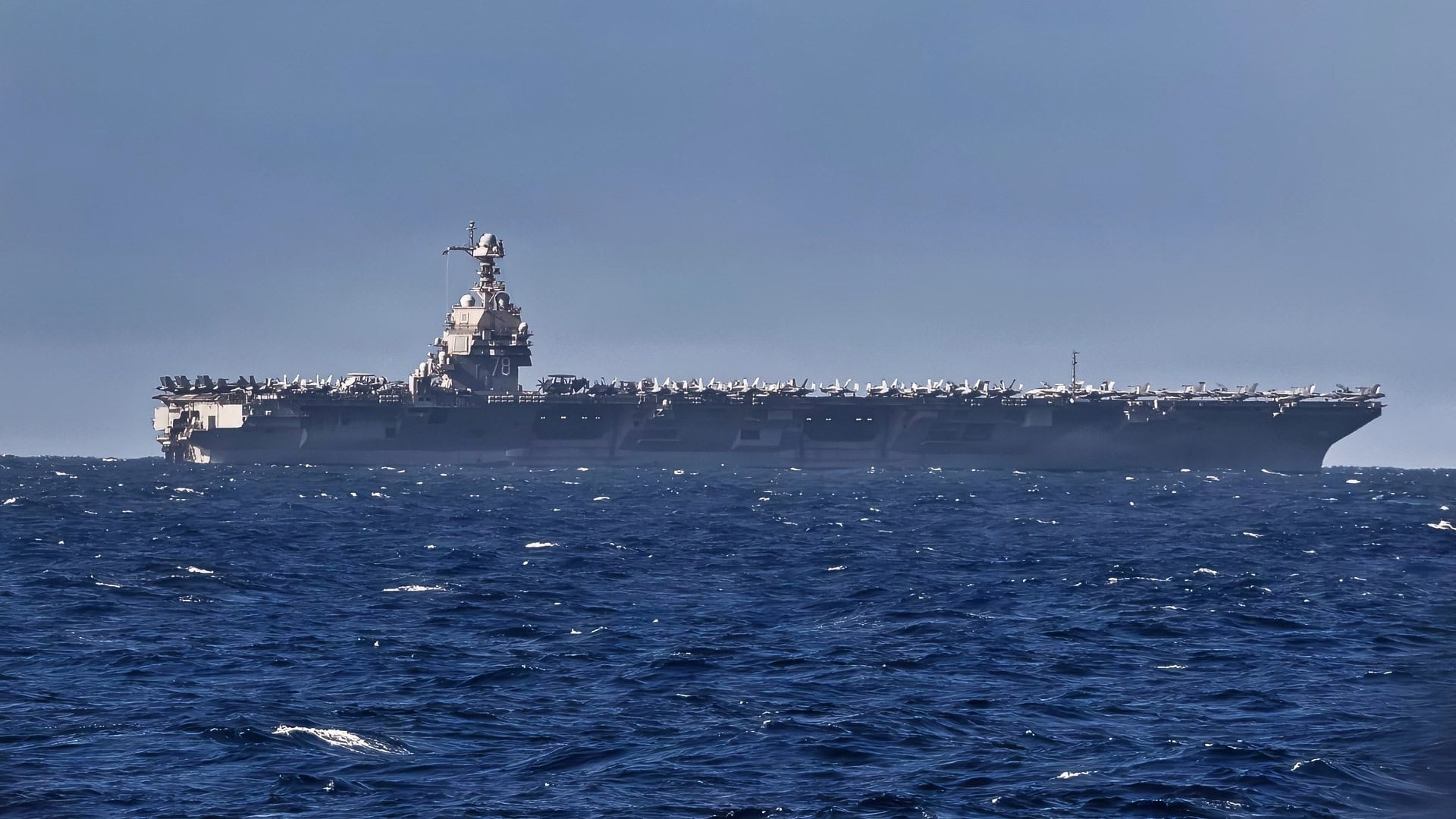
The world’s largest aircraft carrier, USS Gerald R. Ford, as seen from Arleigh Burke-class guided missile destroyer USS Bainbridge (DDG 96) before a replenishment-at-sea with Henry J. Kaiser-class fleet replenishment oiler USNS Kanawha (T-AO 196) while underway during Operation Epic Fury, Mar. 8, 2026. (U.S. Navy Photo)
But one of the more significant factors overlooked by those criticizing the costs for these ships is the much smaller crew that the Ford-class ships require. Any student of the US military’s budgeting will tell you that by far the highest costs incurred by the armed services are not multibillion-dollar weapon systems programs or multimillion-dollar missiles or other weapons. The highest dollar line item is the price of the people who operate and support these weapon systems.
It is currently estimated that over the projected 50-year service life of these new carriers, they will enjoy a $4-5 billion savings per ship in life-cycle operations and maintenance costs. Those savings will be generated exclusively by the reduction in the crews by roughly 600 to 900 compared to the Nimitz-class ships.
These new ships will also offer long-term capability that, when amortized over the future, will more than offset the costs of their initial introduction into service. There will also eventually be no substitute for the greatly superior power projection and modernized capabilities that the Ford-class will be able to generate in future conflicts.
There are other arguments, including that scaling back the program would eventually reduce the number of carriers available at any given time. The size of the carrier force is already an issue today, given the number of potential future conflicts the US may find itself embroiled in.
Without an adequate carrier force, say those who support the Ford-class procurements moving on schedule, the US would find itself not only unable to simultaneously withstand a Russian attack on NATO, fight a conflict in the Middle East, and protect the Republic of China (ROC) on Taiwan.
The other, even more calamitous consequence would be the US losing the race with its global rivals, such as the People’s Republic of China (PRC), which seems to be building carriers as fast as it can draw up plans for the next, larger, and more capable model.
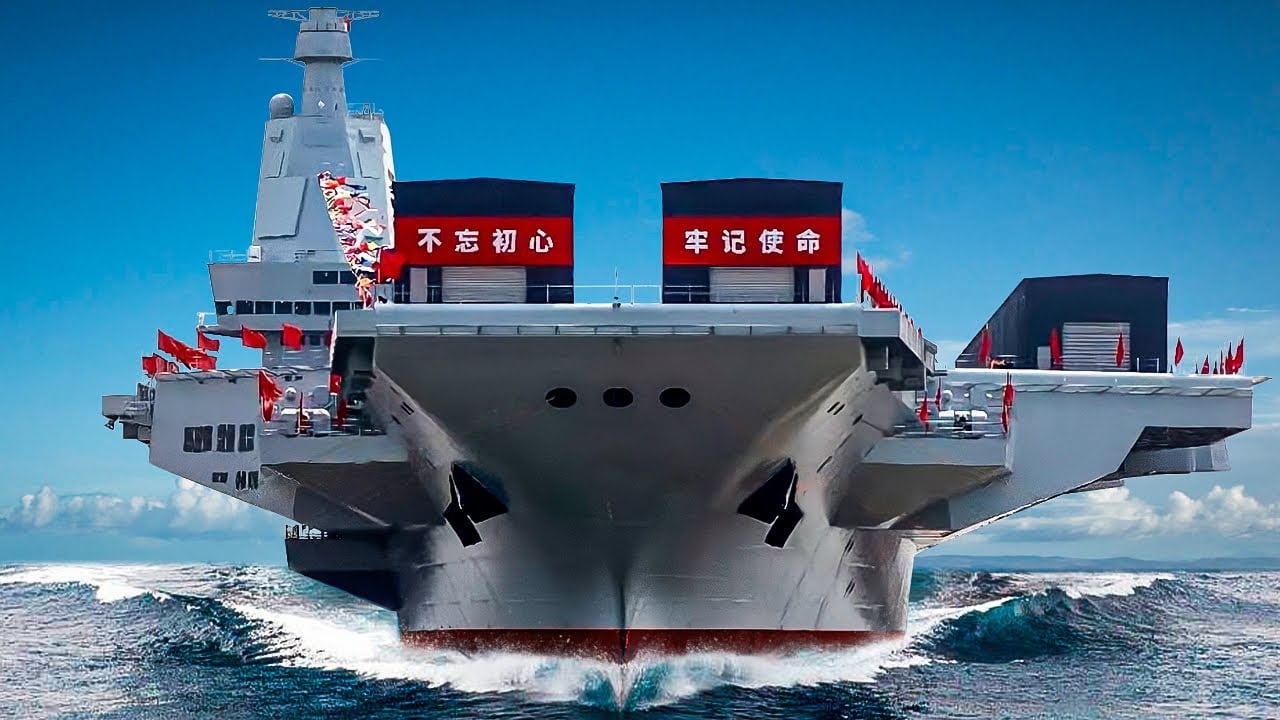
China Aircraft Carrier. Image Credit: YouTube Screenshot.
What the Iowa-class Battleships Could Teach the Ford-class
The Trump Administration is likely to understand these realities in the end and abandon the idea of reverting back to building less complicated carriers that look more like the Nimitz-class, said retired US Navy Capt. James Fanell, the former Chief of Naval Intelligence for the US Pacific Command and today a fellow at the Geneva Center for Security Policy.
“Most of the lamenting about the difficulties with the Ford-class are the complications with all of these advanced technologies,” he said – speaking today while visiting one of the main NATO bases in Europe.
“With all this trouble with these technologies, I understand what the president has said, but now seeing what the Ford has done – the longest deployment by a carrier ever – we have shown just how much of a force multiplier these vessels are. In the end, I can see the case being made to move forward with these new carriers as planned.”
“Yes, there are technical problems, and the onus of pressure needs to be on the people who are designing and are responsible for these technologies that are experiencing problems in operational environments.”
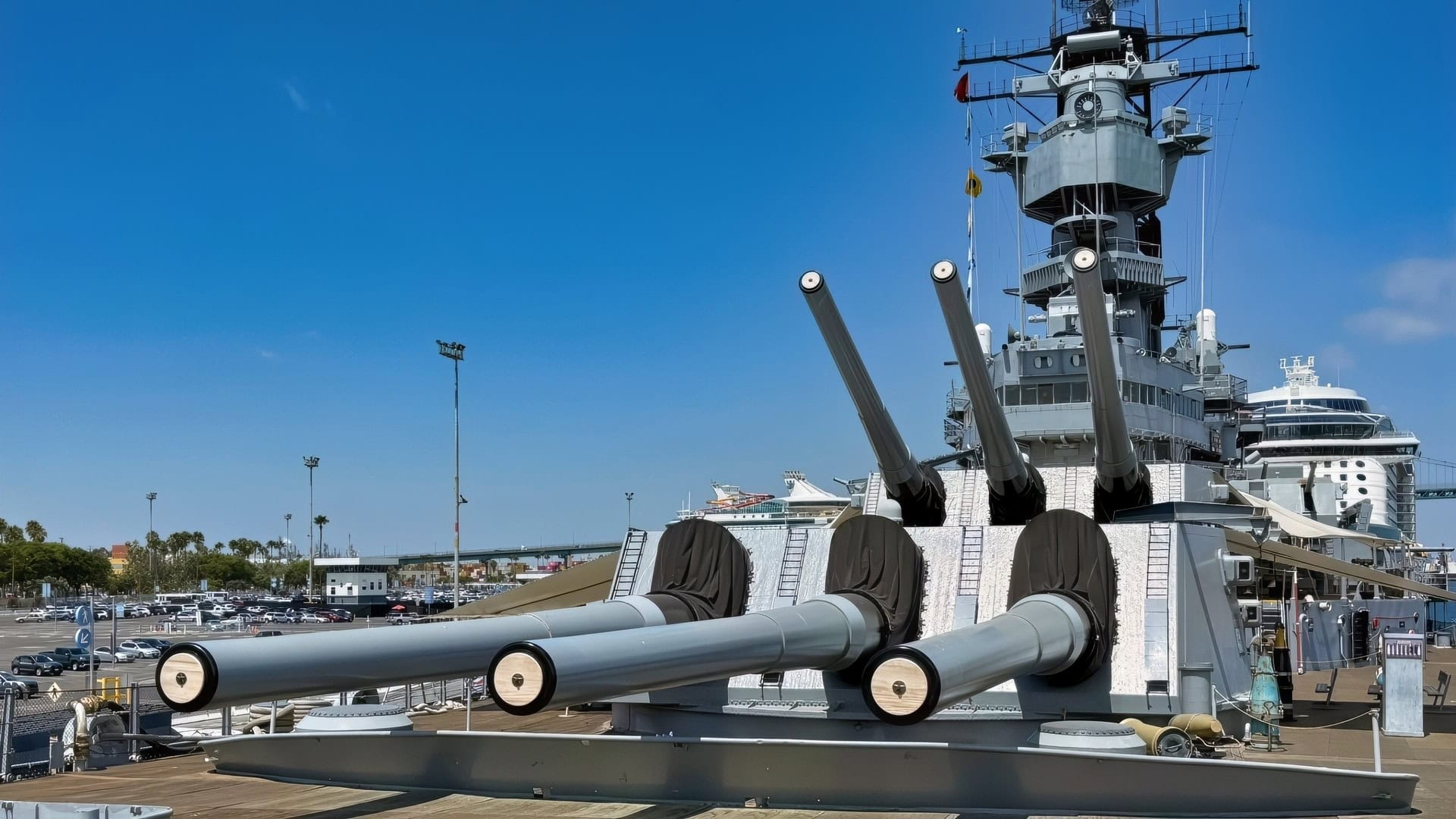
USS Iowa Battleship Guns 19FortyFive.com Image
“But to give this question a sense of perspective, we only need to look back to the late 1980s-90s when the last of the Iowa-class battleships were retired,” he continued. These were ships designed and built in the 1930s, and half a century or more later, they were still carrying the missions of the US Navy. That is the perspective we need for the Ford carriers and why they will be important to our nation’s security long after many of us are gone.”
About the Author: Reuben F. Johnson
Reuben F. Johnson has thirty-six years of experience analyzing and reporting on foreign weapons systems, defense technologies, and international arms export policy. Johnson is the Director of Research at the Casimir Pulaski Foundation. He is also a survivor of the Russian invasion of Ukraine in February 2022. He worked for years in the American defense industry as a foreign technology analyst and later as a consultant for the U.S. Department of Defense, the Departments of the Navy and Air Force, and the governments of the United Kingdom and Australia. In 2022-2023, he won two awards in a row for his defense reporting. He holds a bachelor’s degree from DePauw University and a master’s degree from Miami University in Ohio, specializing in Soviet and Russian studies. He lives in Warsaw.