
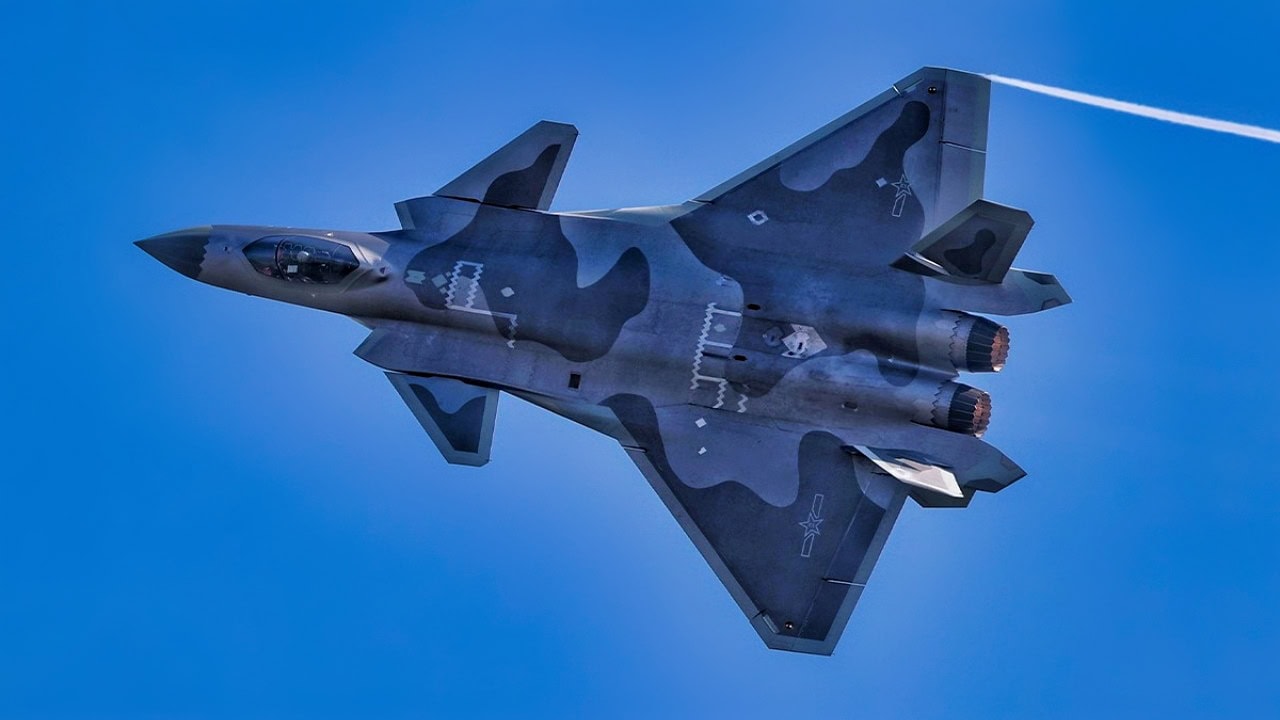
The debate over what China’s military is actually for keeps producing the wrong answer because it keeps asking the wrong question. Global power projection or regional enforcer — pick one. That framing dominates the think-tank circuit, shapes force-posture arguments in Washington, and drives some of the more anxious Taiwan contingency planning currently circulating through INDOPACOM. The distortion is concrete: it pushes American procurement toward power-projection platforms and away from the denial architecture that would actually matter in a Western Pacific fight. Beijing couldn’t design a more useful analytical error if it tried.
China’s Quest to Dominate Asia: This Is What Rising Powers Do
Strip the Mandarin away, and the PLA’s trajectory is almost tedious.
Every major economy that accumulated serious industrial weight in the modern era converted that industrial weight into military reach. Britain did it after Waterloo. The United States did it after 1898. Gorshkov pushed the Soviet navy into oceans the Red Army had never cared about. Growing economies build navies. The mechanism doesn’t change.
China crossed the GDP threshold. The PLA followed. Washington spent decades insisting that economic development would lead to political liberalization. It turns out it produces carrier strike groups. The surprise belongs to the theory, not to China.
China Is Running a Different Cost Structure
Britain needed a global empire. The United States needed a two-ocean navy and eventually a planetary basing network. These were the overhead costs of being indispensable everywhere — enormous, sustained, and in the long run exhausting.
China’s core interests are geographically concentrated in a manner historically unusual for a power of its economic weight. Taiwan. The South China Sea. The first and second island chains. The entire strategic prize sits within reach of land-based systems. Beijing doesn’t need a force designed to operate everywhere. It needs a force designed to make one region too costly to contest — a fundamentally different, and far cheaper, design problem.
Every previous great-power challenger eventually ran into the friction of projecting force at a distance.
China has structured its military to avoid that problem entirely. A2/AD architecture, a missile force built to push U.S. carriers beyond their effective strike radius, a submarine fleet optimized for sea denial rather than sea control — a regional military with global consequences.
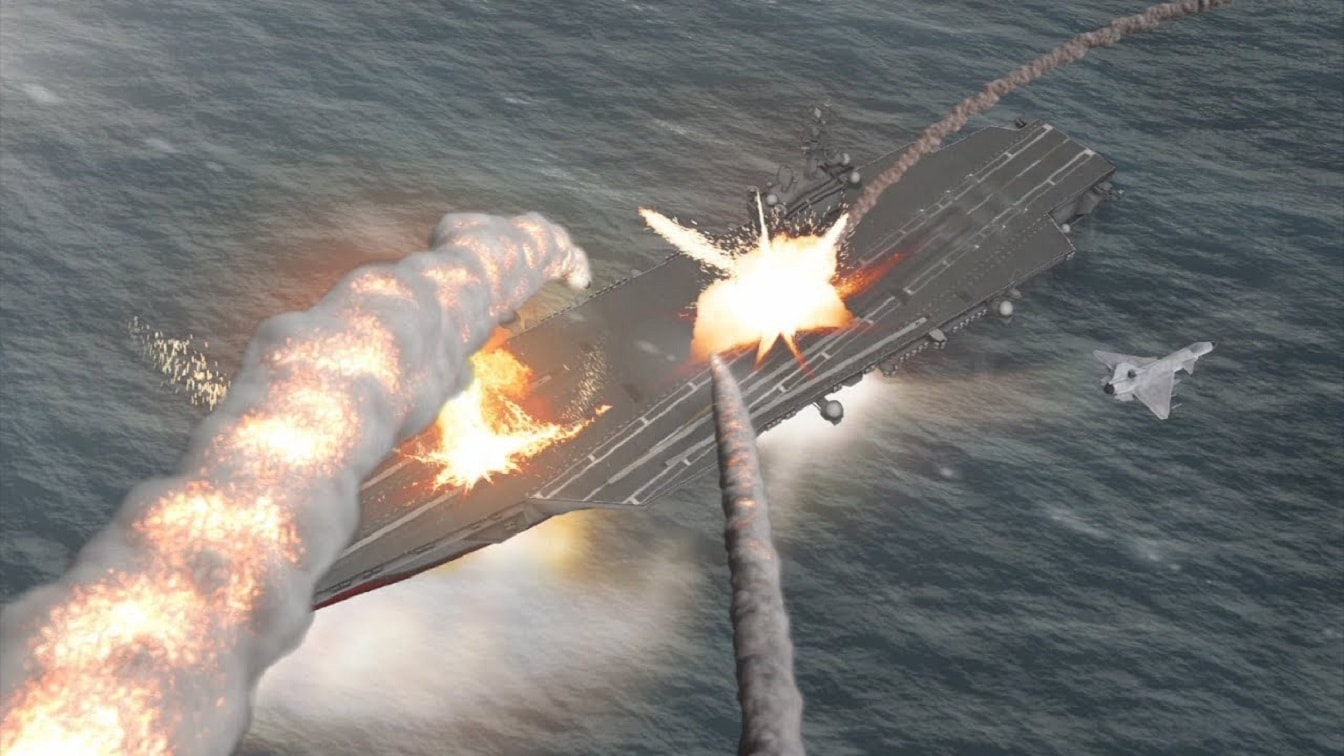
YouTube Screenshot of a Simulation of China Firing a DF-21 ASBM.
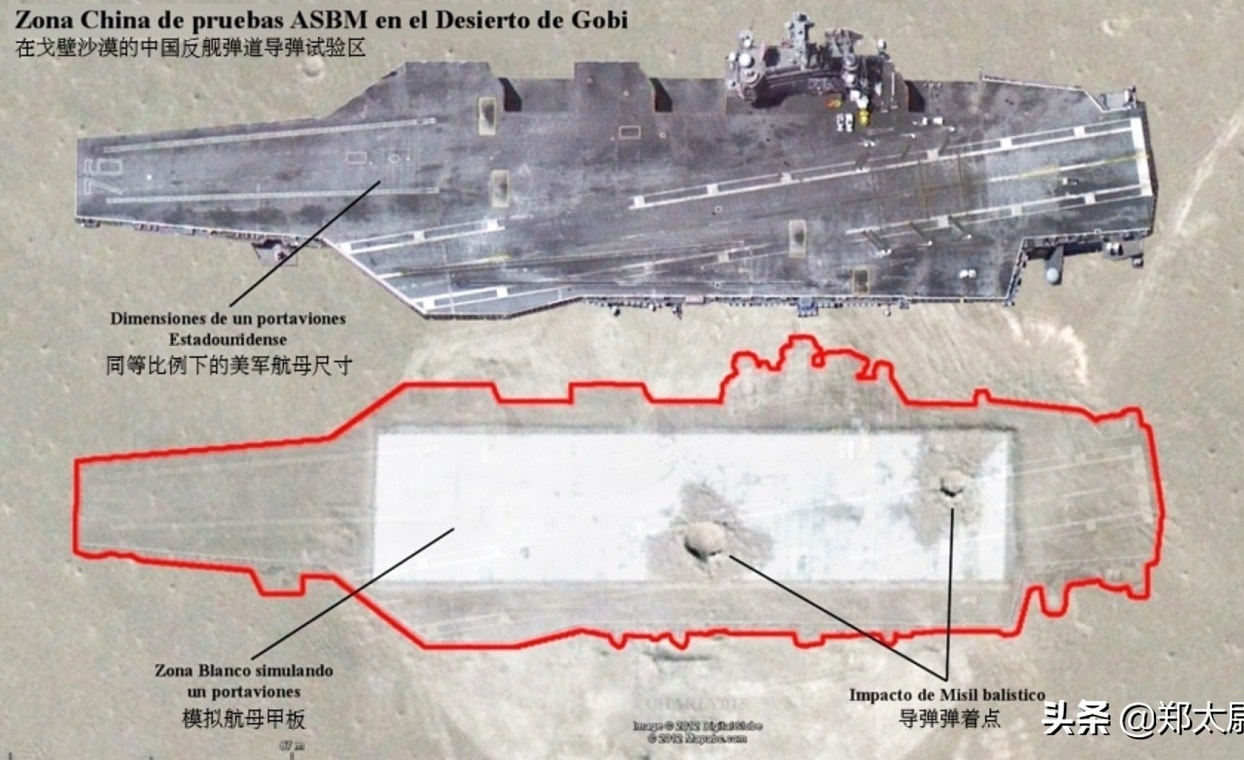
Image from the now closed WantChinaTimes. This shows a mock attack on a U.S. Navy aircraft carrier.
The gap in cost between that design and a genuinely expeditionary one is where Beijing’s long-term competitive advantage actually lives. China can sustain this competition without the imperial overstretch that hollowed out every previous challenger. That is not an accident. It is the strategy.
Owning Asia Means Owning the Commanding Heights
The geographic argument has an economic dimension that doesn’t get enough weight.
Asia-Pacific generates the majority of global economic growth. The South China Sea carries between three and five trillion dollars in annual maritime trade. The economies that depend on those lanes — Japan, South Korea, Australia, the Philippines — are not peripheral actors. Maintain the credible ability to threaten those lines of communication, and you hold leverage over the global economy that no Atlantic basing arrangement can replicate.
American hemispheric hegemony under the Monroe Doctrine was not the ceiling of U.S. power — it was the foundation from which global reach was built. China is running the same sequence.
The DF-21D keeps U.S. carriers at operational distance without requiring an expeditionary army. Port agreements along the Indian Ocean littoral provide logistics access without permanent basing liability. The model is not new. Only the flag is.
What Washington Is Actually Getting Wrong
So — global role or Asian hegemon? The premise is false, and the cost of maintaining it is concrete.
Washington keeps designing for a competitor that wants to project power globally, because that is the threat architecture American planners know how to build against. It is the Soviet template. It is not China’s template.
China doesn’t need to challenge the Seventh Fleet in the Eastern Pacific to achieve its objectives. It needs to make one region — the one that generates most of the world’s economic activity — too expensive to defend on current terms.
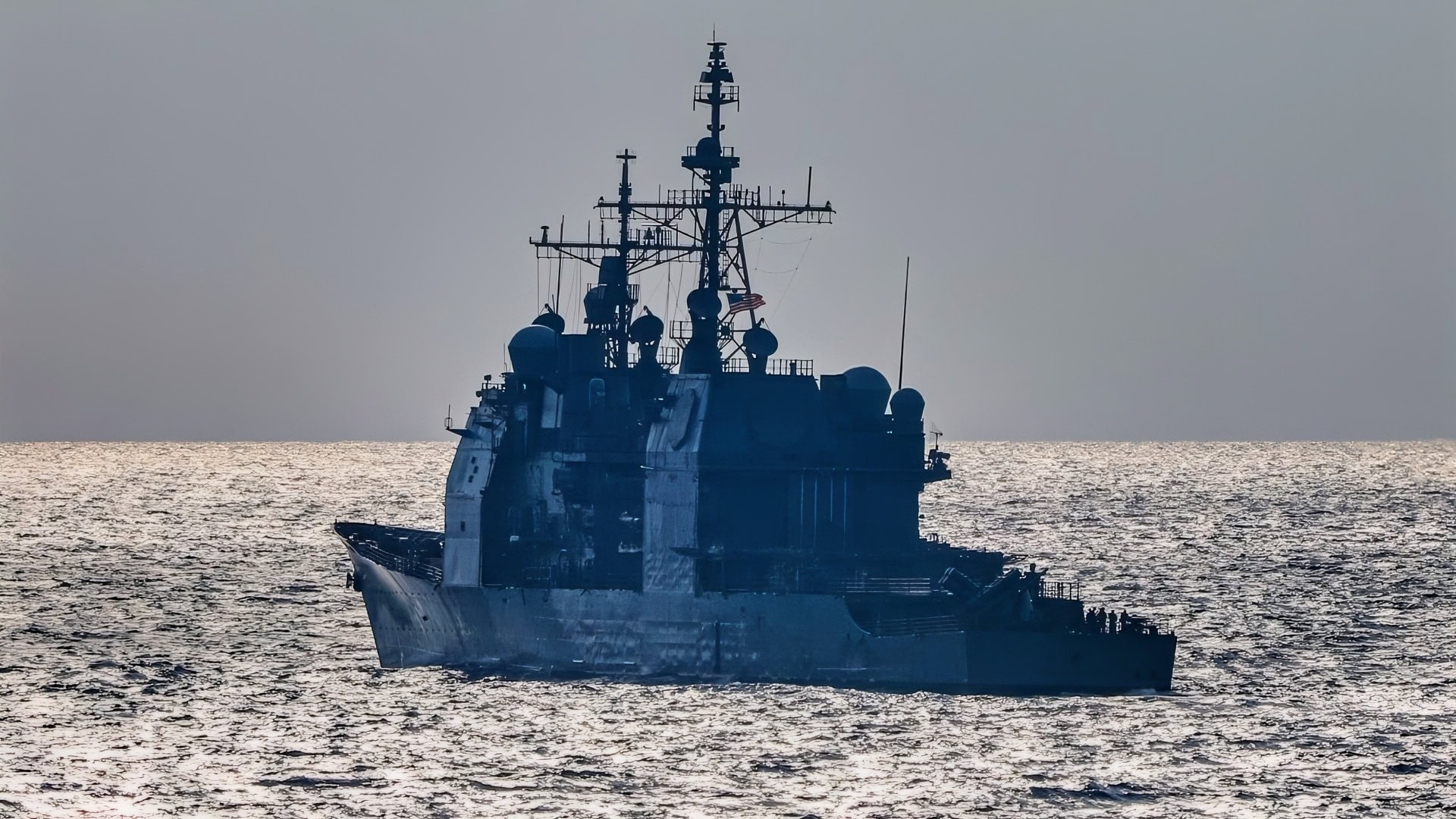
TAIWAN STRAIT (Aug. 28, 2022) Ticonderoga-class guided-missile cruiser USS Antietam (CG 54) transits the East China Sea during routine underway operations. Chancellorsville is forward-deployed to the U.S. 7th Fleet area of operations in support of a free and open Indo-Pacific. (U.S. Navy photo by Mass Communication Specialist 2nd Class Justin Stack)
Misreading the strategy produces a misallocated response. A defense posture calibrated against a global challenger generates the wrong force for the wrong geography — and when the test comes in a theater shaped by shore-based missiles rather than carrier presence, that misalignment will not be theoretical.
China’s strategy is legible. It has been for some time.
The question is whether Washington resolves the debate before the Western Pacific does.
About the Author: Dr. Andrew Latham
Andrew Latham is a professor of international relations and political theory at Macalester College in Saint Paul, MN. You can follow him on X: @aakatham. He writes a daily column for 19FortyFive.com.