
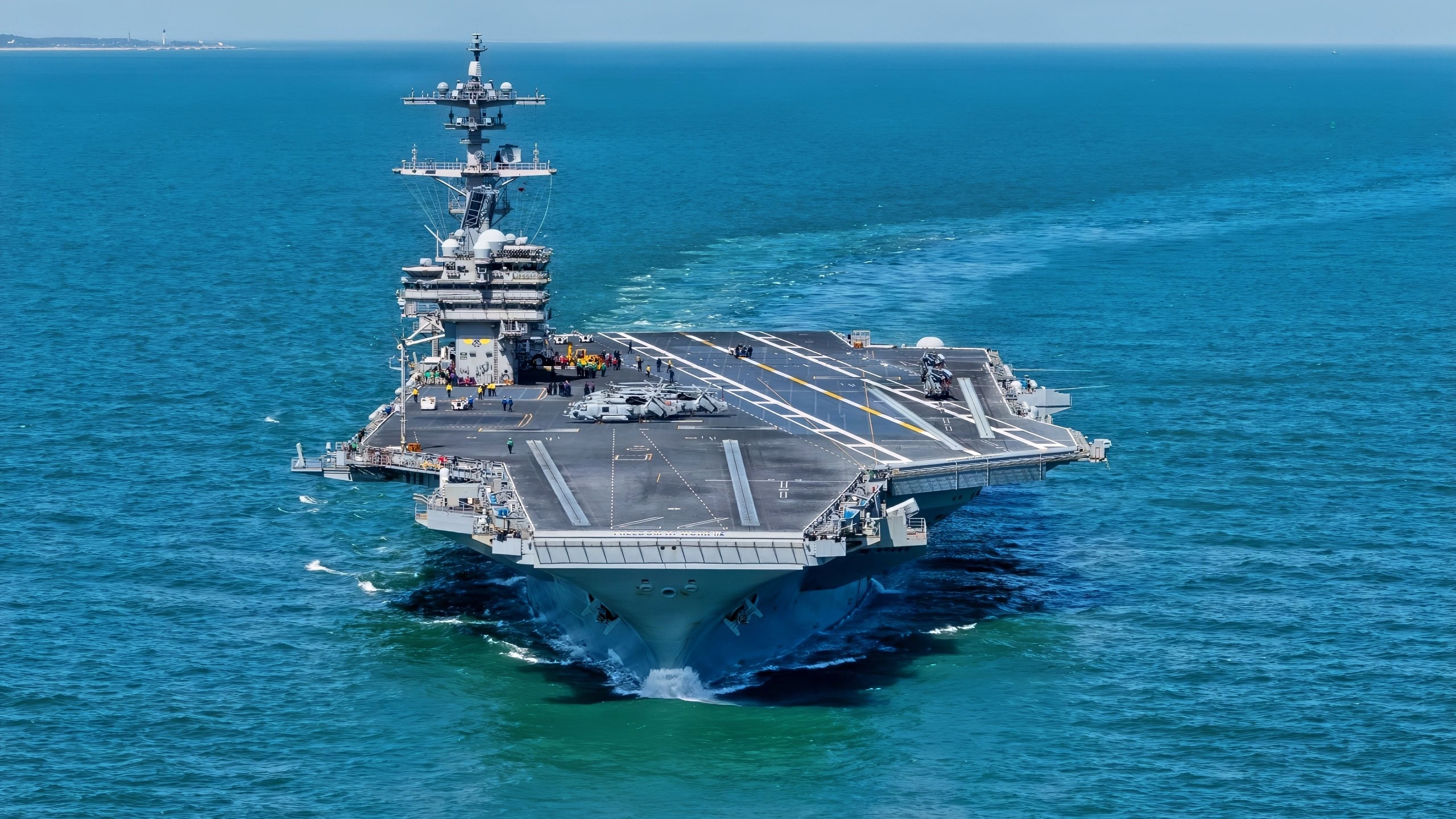
The U.S. Navy Has a Shipbuilding Crisis. China Plans to Take Full Advantage Of It
The People’s Liberation Army Navy (PLAN) is a highly capable force and the world’s largest navy by hull count, designed primarily for anti-access/area denial (A2/AD) operations in the Western Pacific.
It has modernized rapidly, featuring advanced, versatile destroyers (Type 055, 052D) and a growing submarine fleet, making it a credible, potent threat near its coast. While it lacks the extensive, long-range global power projection of the US Navy, it excels in localized, high-intensity scenarios.
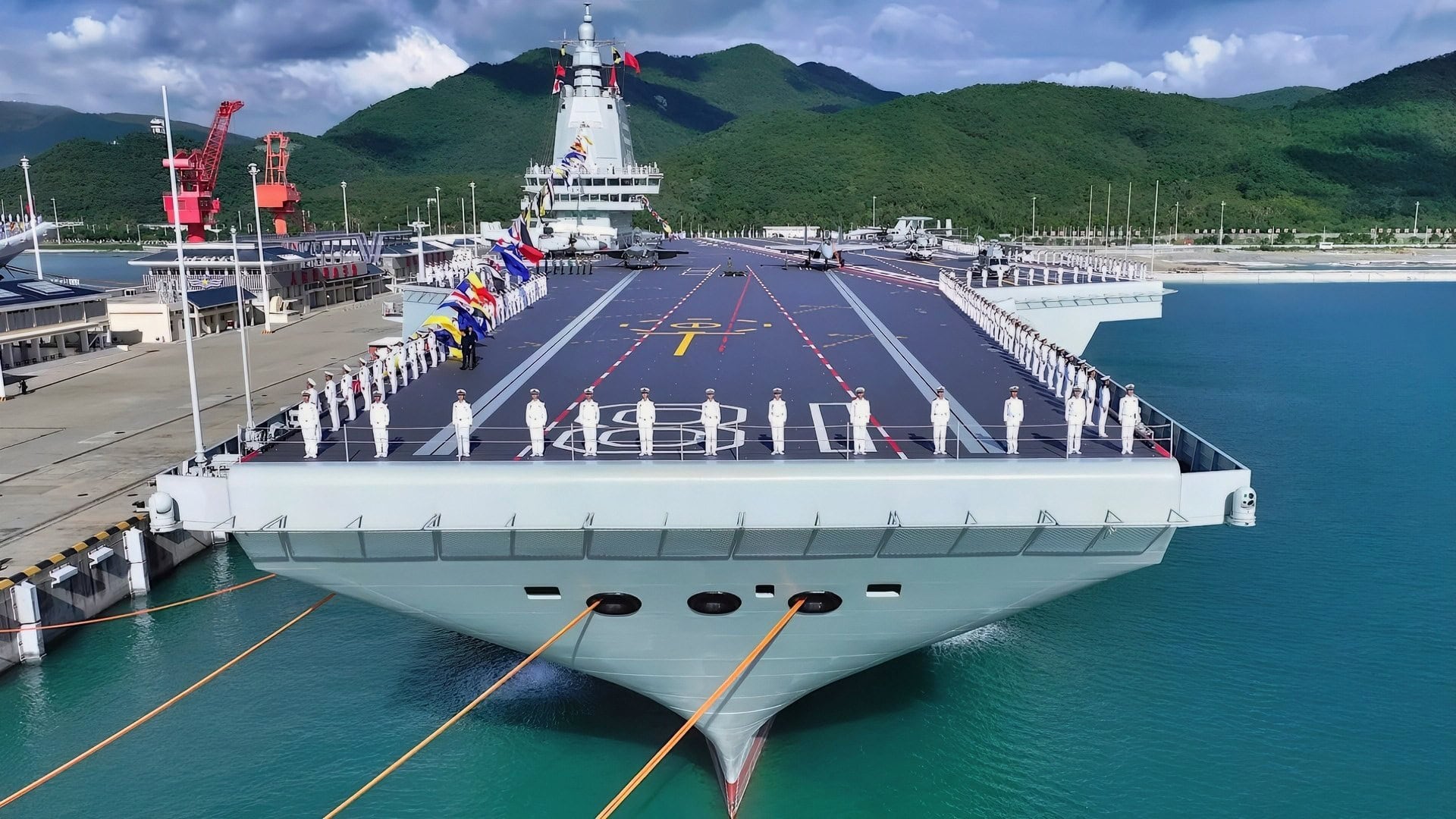
China Aircraft Carrier PLAN Image
Their capabilities have pushed the A2/D2 boundaries of their defenses far outward, allowing them to project power farther than ever before.
China’s PLAN Is Rapidly Becoming The World’s Most Powerful Navy
China’s PLAN is #2 with a bullet. It won’t be long before China’s Navy is the most powerful naval force in the world, given its modernization and the sheer number of warships it is producing. It is now the largest navy by ship count and continues to grow.
The Department of Defense’s 2024 China Military Power Report assessed the PLAN’s battle force at over 370 ships and submarines and highlighted its maturing power-projection capabilities.
The PLAN has the largest global fleet, including destroyers, frigates, corvettes, submarines, and landing craft, and is continuing to expand rapidly. China is the world’s largest naval shipbuilder, rapidly expanding its fleet and capabilities.
The PLAN is increasingly modernizing, with advanced vessels, including large destroyers (such as the Type 055) and newer aircraft carriers, and technology gaps are closing.
The PLAN’s commissioning of the Type 003 Fujian in November 2025, China’s first CATOBAR carrier with electromagnetic catapults that enable heavier aircraft and airborne early warning platforms.
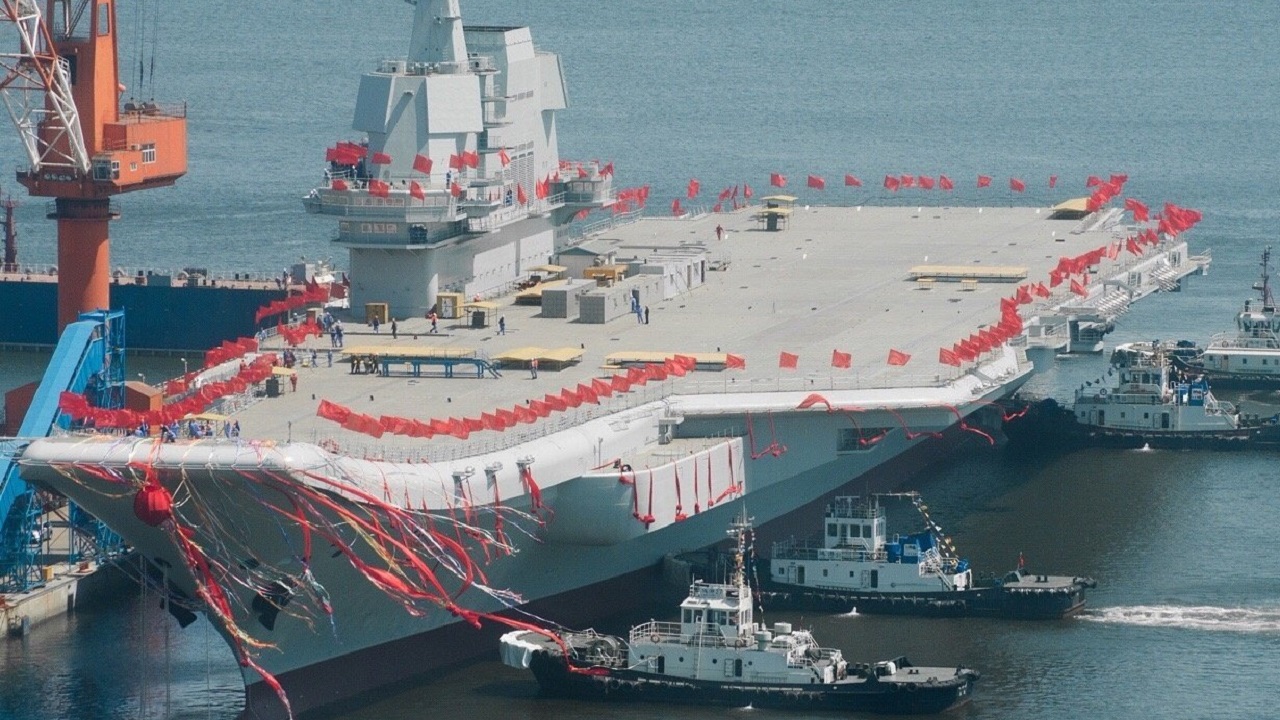
Fujian, China’s new aircraft carrier. Image Credit: Chinese Internet.
China’s navy is a rapidly growing, numerically superior force that’s transforming from a regional to a global power. While the U.S. Navy remains qualitatively superior in certain aspects, the quantitative gap and China’s relentless shipbuilding mean the balance of naval power is shifting, posing significant strategic challenges, particularly in the Indo-Pacific.
China’s Sea Denial Strategy:
The Chinese PLAN’s primary strategy may draw on Corbett’s sea-denial strategy.
Corbett’s sea denial strategy is a defensive naval approach aimed at preventing an enemy from utilizing the sea for military or economic purposes, often employed by a weaker power when complete command of the sea is unachievable.
China’s Corbett-inspired sea denial strategy focuses on using its submarines, missile boats, and aircraft to exert constant pressure and deny adversaries (mainly the US) access to its near seas (within the first island chain). It prioritizes controlling vital maritime communication lines and littoral areas over absolute control of the high seas.
The goal is to disrupt enemy communications and limit their freedom of action through the use of missiles, mines, drones, and submarines, rather than seeking decisive battles.
Unlike sea control (which is positive and allows one to use the sea), such as the US “Freedom of Navigation” strategy, Corbett considered sea denial to be “negative” in nature, focusing solely on preventing the adversary’s freedom of action.
The United States Navy Is Still #1, But In Decline:
The U.S. Navy is still the best in the world. Although the PLA Navy has more ships, the US Navy retains a commanding lead in capital ships and tonnage.
However, the US Navy has been in decline for several decades. And the sorry state of the US shipbuilding industry has made it harder for the Navy to match the Chinese Navy ship for ship, or even to properly maintain the ships that are still in service.
It is currently estimated that China has 230 times the shipbuilding capacity of the US. That is a sobering statistic, and was utterly preventable.
US Nimitz-class carriers are aging out but are being replaced 1-for-1 by Ford-class carriers. No other platform offers the same power projection and deterrence value, so carriers still reign supreme on the seas.
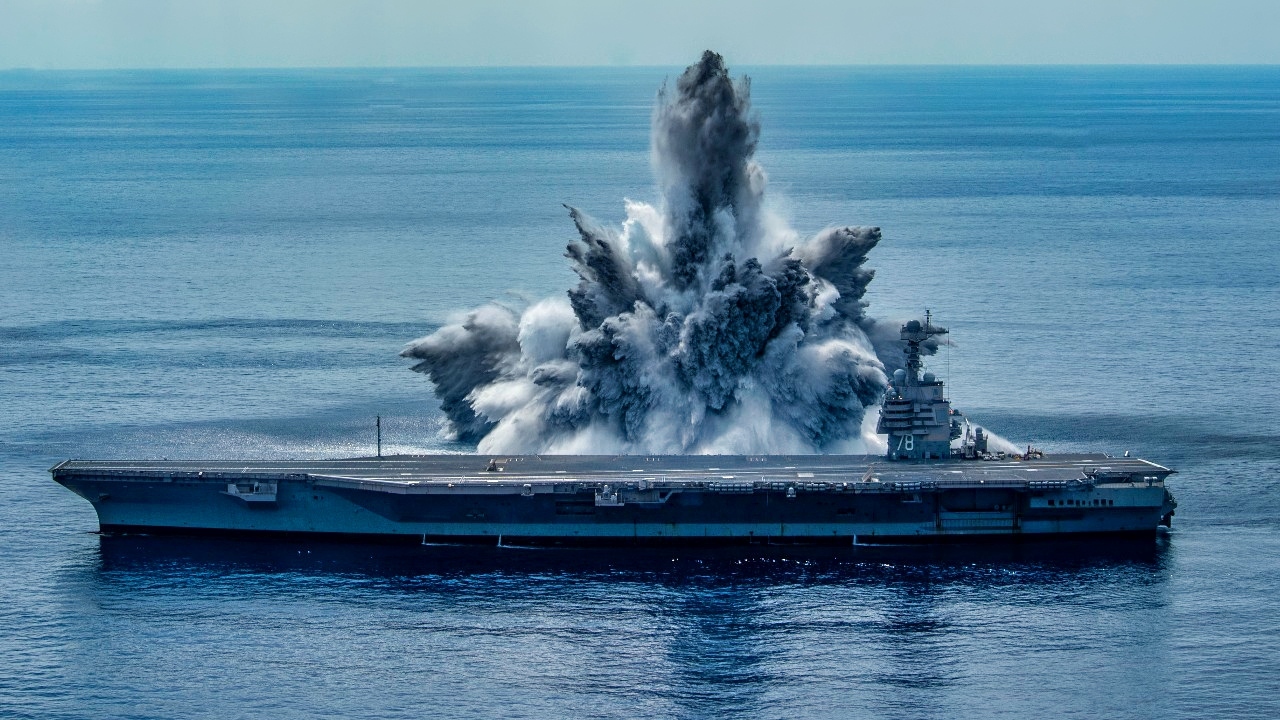
The aircraft carrier USS Gerald R. Ford (CVN 78) successfully completes the third and final scheduled explosive event of Full Ship Shock Trials while underway in the Atlantic Ocean, Aug. 8, 2021. The U.S. Navy conducts shock trials of new ship designs using live explosives to confirm that our warships can continue to meet demanding mission requirements under harsh conditions they might encounter in battle. (U.S. Navy photo by Mass Communication Specialist 3rd Class Novalee Manzella)
US Virginia-Class Submarine Fleet Is Unequaled:
As well as a huge array of surface ships, the United States boasts a large submarine fleet that is being modernized with Virginia-class submarines. Additionally, the US Navy has many modern light warships and, along with Russia, is the only nation with cruisers. In terms of fleet composition, firepower, and the ability to project power across the globe, the US Navy is still in a class of its own.
As of 2025, the fleet stood near 296 battle force ships, with official reporting in February 2025 noting 296 as of January 27; the FY2026 submission plans a deployable battle force of 287 ships for that fiscal year while procuring nineteen battle force ships to sustain the trajectory thereafter.
The Congressional Budget Office’s 2025 analysis of the Navy’s shipbuilding plan projects a long path to an ambitious plan of nearly 390 battle force ships by 2054, with shipbuilding costs averaging about $40 billion per year in 2024 dollars.
The Navy would purchase a total of 364 new combat ships, combat logistics, and support ships. Overall, under the 2025 plan, the Navy would buy more current-generation ships and more smaller ships than it would have purchased under any of the 2024 plan’s three alternatives.
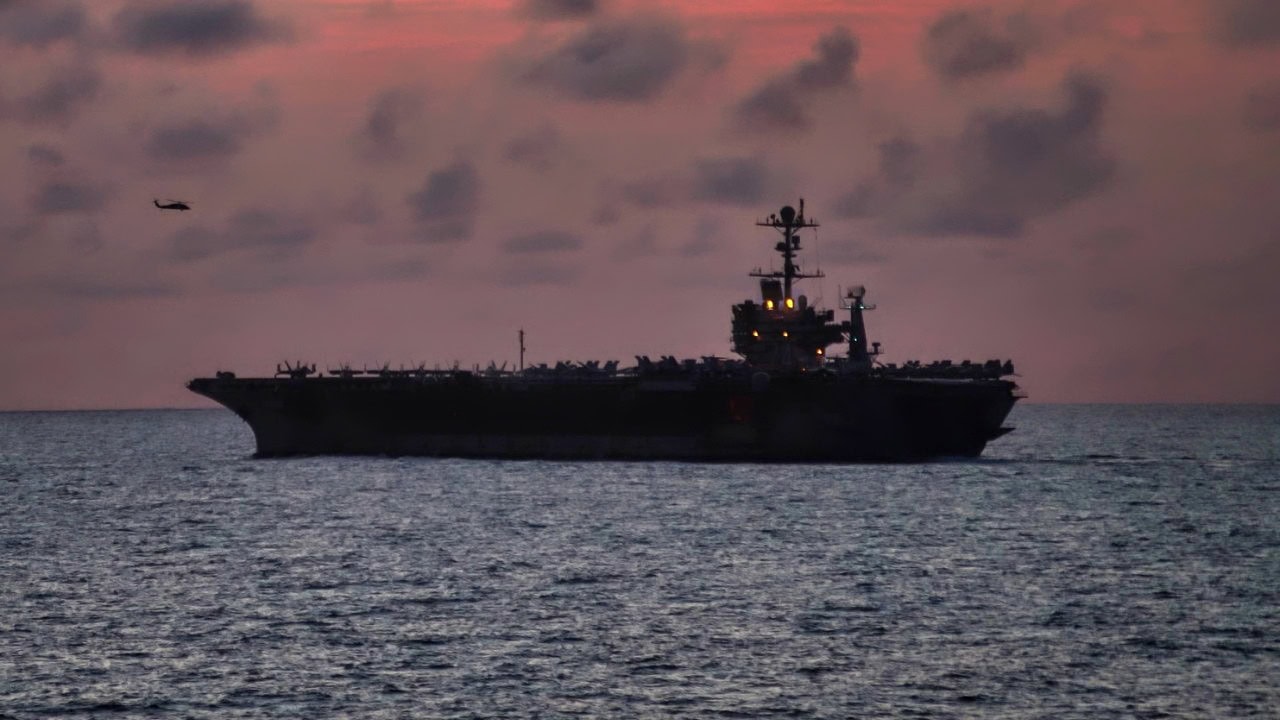
USS John C. Stennis Aircraft Carrier. Image Credit: Creative Commons.
The US Aircraft Carriers Outnumber China’s For Now:
The United States Navy’s greatest strength lies in its 11 aircraft carriers, which form the backbone of its global force projection: ten Nimitz-class carriers and the newer Gerald R. Ford-class flagship, the USS Gerald R. Ford.
These massive vessels carry numerous fighter jets and support aircraft, ensuring U.S. air superiority and rapid response to crises, with at least one Carrier Strike Group (CSG) deployed overseas at all times.
Besides its unparalleled capability of nuclear-powered aircraft carriers, cutting-edge technology ( advanced weapons, electronic warfare, missile systems), global presence, extensive training, strategic partnerships, and its ability to project power worldwide, making it the most potent and versatile force at sea, despite other nations like China building larger numbers of ships.
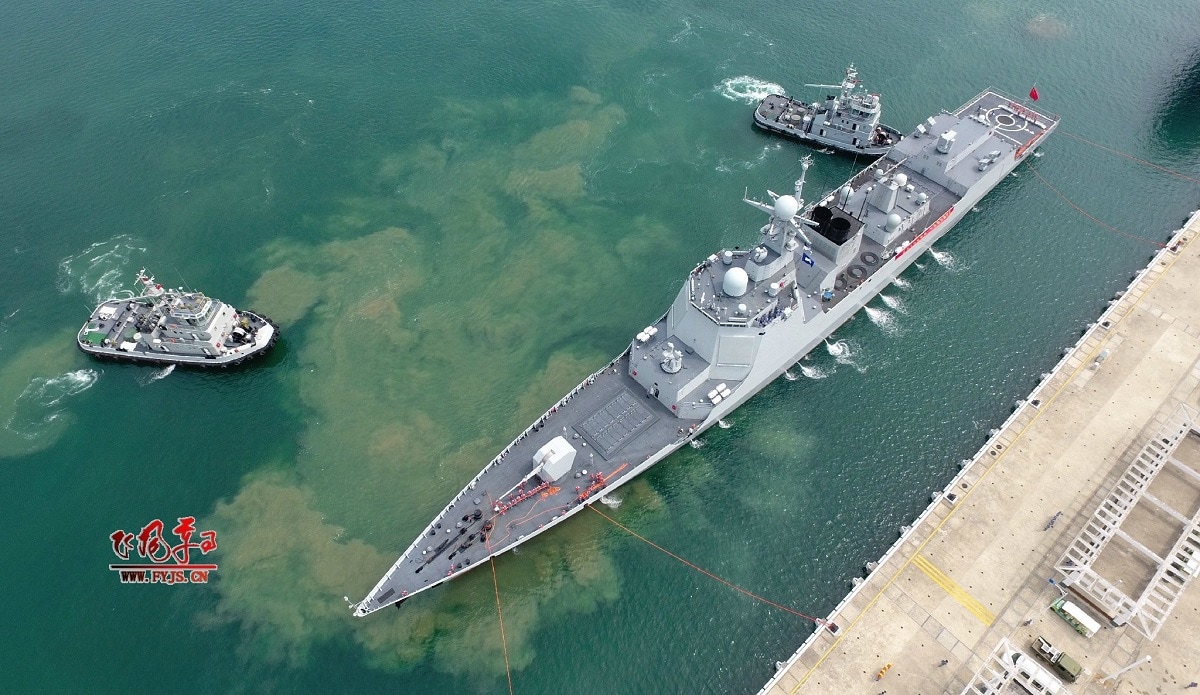
Chinese Navy. Image: Chinese Internet.
However, China is rapidly building carriers and is expected to have a half-dozen by 2035.
Destroyers Are Still An Area Of Strength:
Another area where the US still holds an advantage is in “guided missile cruisers and destroyers. Destroyers in particular serve as the backbone of any modern fleet due to their multi-mission capabilities, speed, and cruising range.
“The United States’ 73 destroyers allow it to exert sea control and project power to a greater extent than do the PLAN’s 50 destroyers. But China is closing the gap, having doubled its destroyer fleet from 20 in 2003 to 42 in 2023 to 50 in early 2026.”
The US, however, will retire all of its cruisers by 2029. The Navy is keeping the USS Gettysburg (CG-64), USS Chosin (CG-65), and USS Cape St. George (CG-71) in service until fiscal year 2029, as confirmed in late 2024.
But as CSIS also reported, US allies, if they choose to fight with the US in a war with China, will negate the PLAN’s numerical advantage. The Japanese Maritime Self-Defense Force operates 4 cruisers, 34 destroyers, 10 frigates, and 4 helicopter carriers, two of which are capable of launching and recovering F-35s. The South Korean navy operates 3 cruisers, 6 destroyers, 16 frigates, and 5 corvettes.
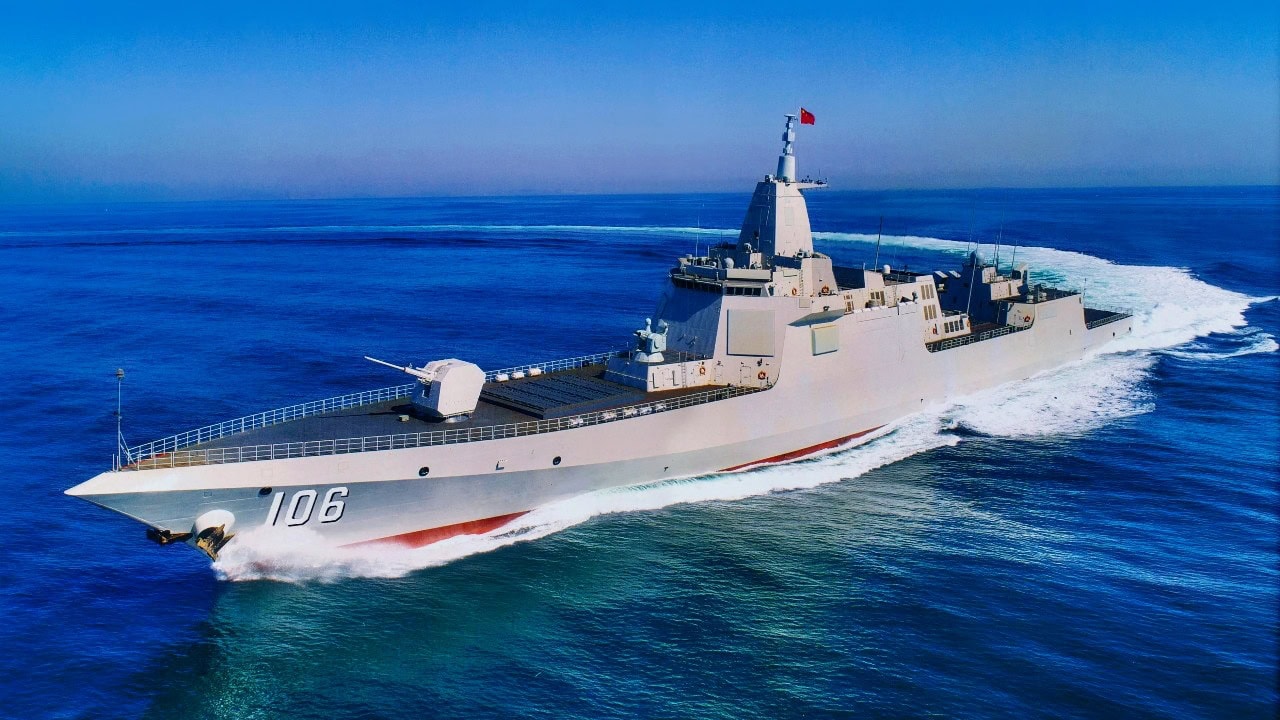
Type 055 Destroyer from China. Chinese Navy Handout/State Media.
The United States still has an enormous advantage that China can’t match. It is a vastly more combat-experienced force with 250 years of fighting at sea to draw on. China’s navy is only about three decades old and, like its army, has no combat experience.
But all the trends are pointing downward for the US, and it doesn’t look like things will change for the foreseeable future.
MORE: The Age of the Aircraft Carriers Is Over
MORE: The Strait of Hormuz Crisis Is Going From Bad to Worse
About the Author: Steve Balestrieri
Steve Balestrieri is a National Security Columnist. He served as a US Army Special Forces NCO and Warrant Officer. In addition to writing on defense, he covers the NFL for PatsFans.com and is a member of the Pro Football Writers of America (PFWA). His work was regularly featured in many military publications.