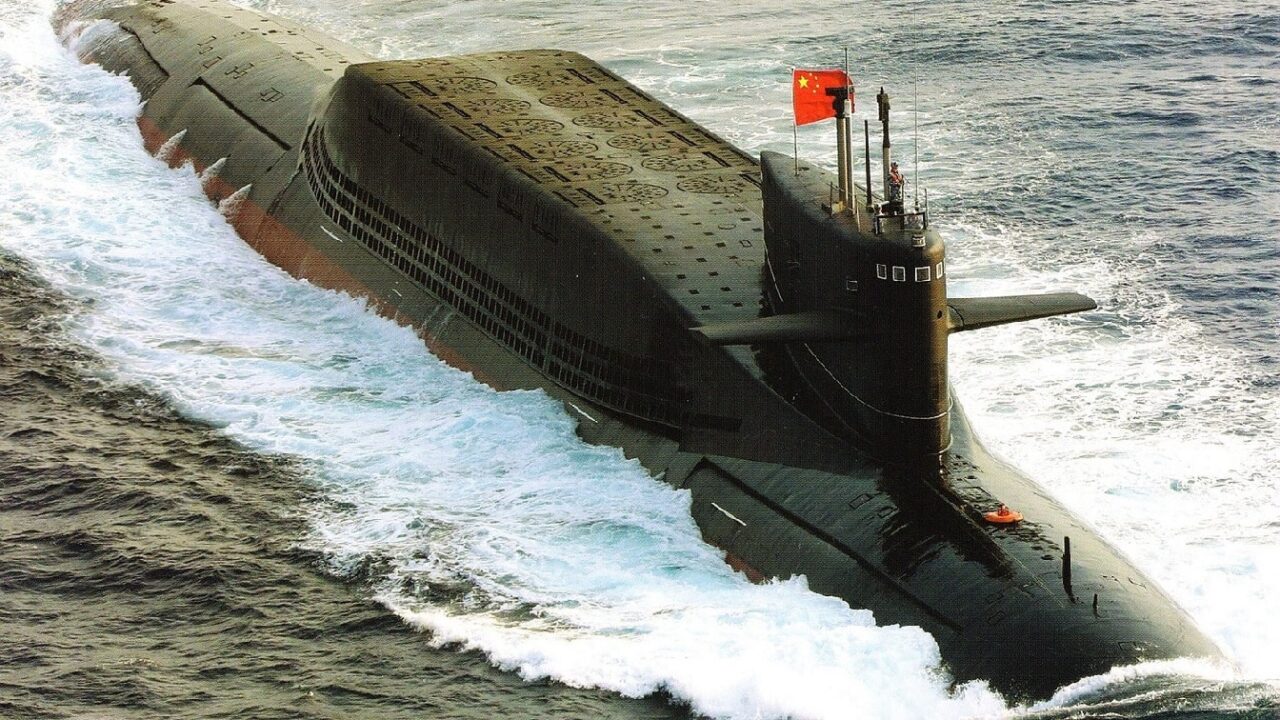
Meet China’s New Type 096 Nuclear Missile Submarine
China’s People’s Liberation Army Navy (PLAN) is fast-tracking a new class of Type 096 nuclear-armed ballistic missile submarines to operate alongside its existing JIN-class boats into the 2030s and beyond, which greatly expands China’s ability to launch nuclear attacks on the continental United States from the Pacific Ocean.
While some experts think the new class of sub might have had a major incident at port – like taking on water or sinking – the potential of this new platform is clear.
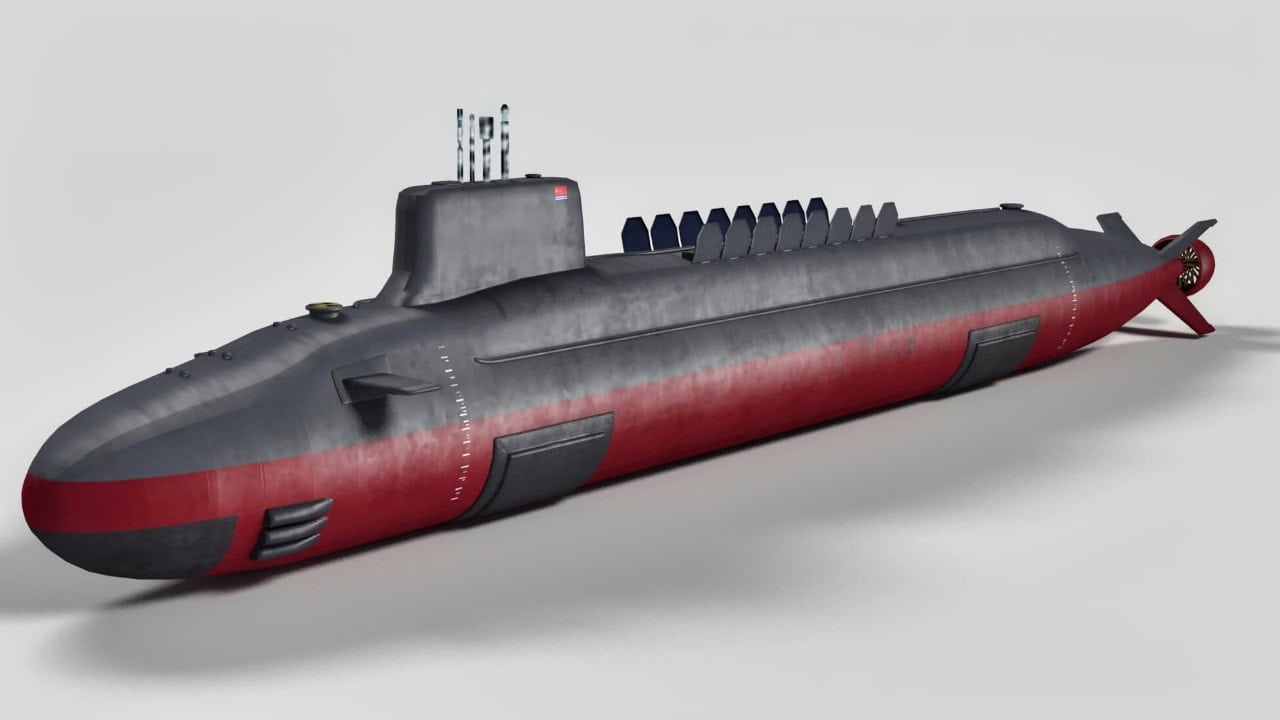
Type 096 Submarine from China. Image Credit: Creative Commons.
Nuclear-armed ballistic missile submarines, called SSBNs, lurk quietly and secretly in the dark corners of the ocean to ensure the possibility of launching a catastrophic retaliatory second-strike nuclear attack.
The concept behind undersea nuclear weapons forms the conceptual backbone of “strategic deterrence,” essentially keeping peace through strength and the promise of a second strike.
The idea, somewhat paradoxically, is to deter and prevent nuclear war by assuring complete destruction.
Pentagon Warns of JL-3
The Pentagon’s annual China report explained that the PLAN now operates at least six JIN-class SSBNs, or nuclear-armed ballistic missile submarines, armed with JL-2 and JL-3 sub-launched nuclear weapons.
The Pentagon’s 2023 assessment, called Military and Security Developments Involving the People’s Republic of China, explains that JL-2 missiles can reach targets out to nearly 4,000 miles.
It also states that the emerging JL-3s can extend farther to 5,400 miles. China’s ability to hold the U.S. at risk of nuclear attack has been present for many years now, with its growing fleet.
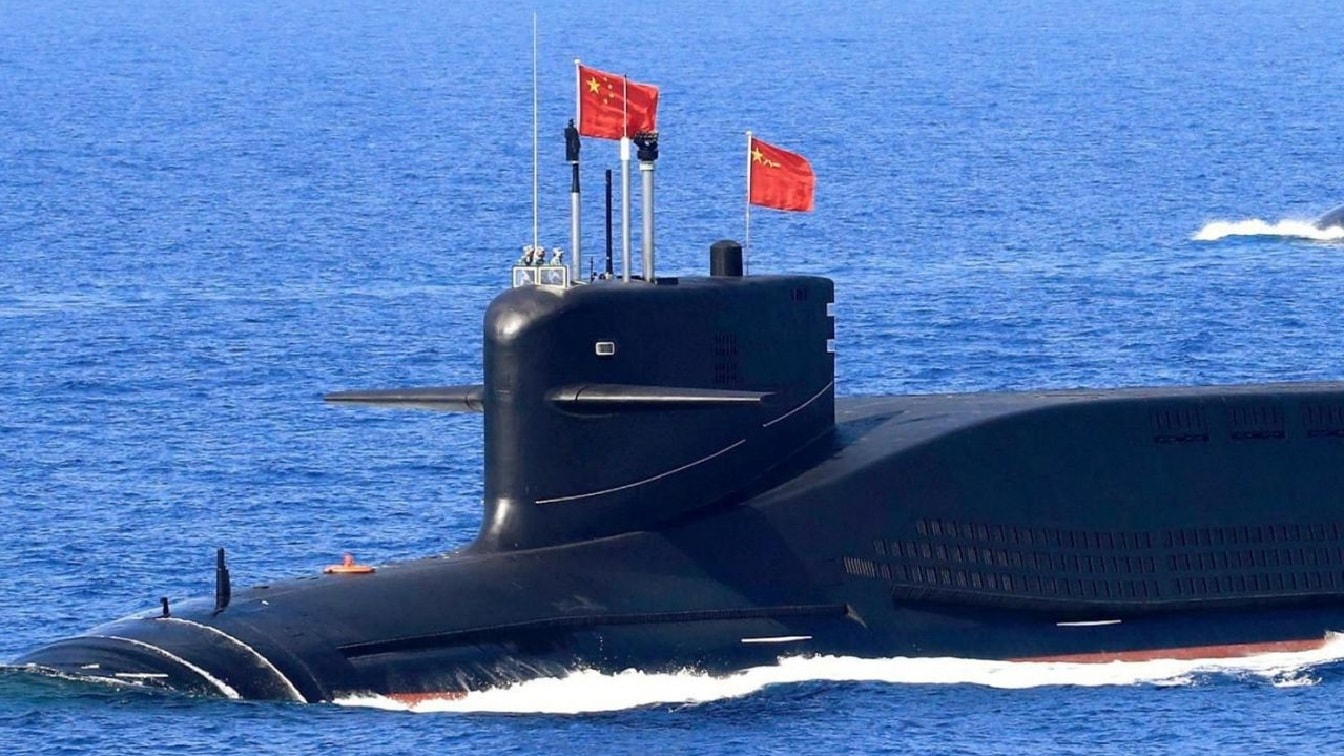
Chinese nuclear missile submarines. Image Credit: Creative Commons.
“With six operational SSBNs, the PLAN has the capacity to maintain a constant at-sea deterrent presence. With a range of approximately 3,900NM, a JIN equipped with the JL-2 would have to operate in the mid-Pacific Ocean in order to threaten targets in the western half of the Continental United States (as well as Hawaii and Alaska) or east of Hawaii in order to threaten targets on the East Coast of the United States,” the Pentagon report states.
The text of the 2023 Pentagon analysis catalogs the trajectory of China’s evolving undersea nuclear threat, including its discussion of the arriving JL-3 missile.
This nuclear weapon further increases the PLAN’s ability to hold the U.S. at risk of nuclear attack.
The JL-3, the Pentagon assessment explains, massively expands the ranges from which the PLAN can hold the U.S. at risk of undersea nuclear attack.
“PRC sources claim the JL-3 has a range of over 5,400NM, which would allow a JIN armed with this missile to target portions of CONUS from Chinese littoral waters,” the Pentagon report says.
U.S. Mainland Vulnerable
Shanghai, for example, is listed as 10,434km from Los Angeles, so a missile capable of traveling 5,400 miles could indeed threaten the U.S. mainland from Chinese coastal waters, as the Pentagon report specifies.
PLA-N Type 096 vs. U.S. Navy Columbia-class
Multiple media reports have quoted experts saying the Type 096 is likely to be “quieter” than previous SSBNs, including the existing JIN-class; however, not surprisingly, little detail is available.
By point of comparison, many are likely to wonder or seek to discern the kind of quieting propulsion system the PRC plans to build into the Type 096, because the emerging U.S. Navy Columbia-class SSBNs are believed to become the “quietest” submarine ever to possibly ever exist.
The specific technologies that drive the “stealthy” characteristics of the Columbia-class are likely unavailable for security reasons.
Yet, the service has publicly stated on numerous occasions that the new nuclear-armed submarines will operate with a quiet, “electric-drive” propulsion system.
Navy developers explain that electric-drive propulsion technology still relies on a nuclear reactor to generate heat and create steam to power turbines.
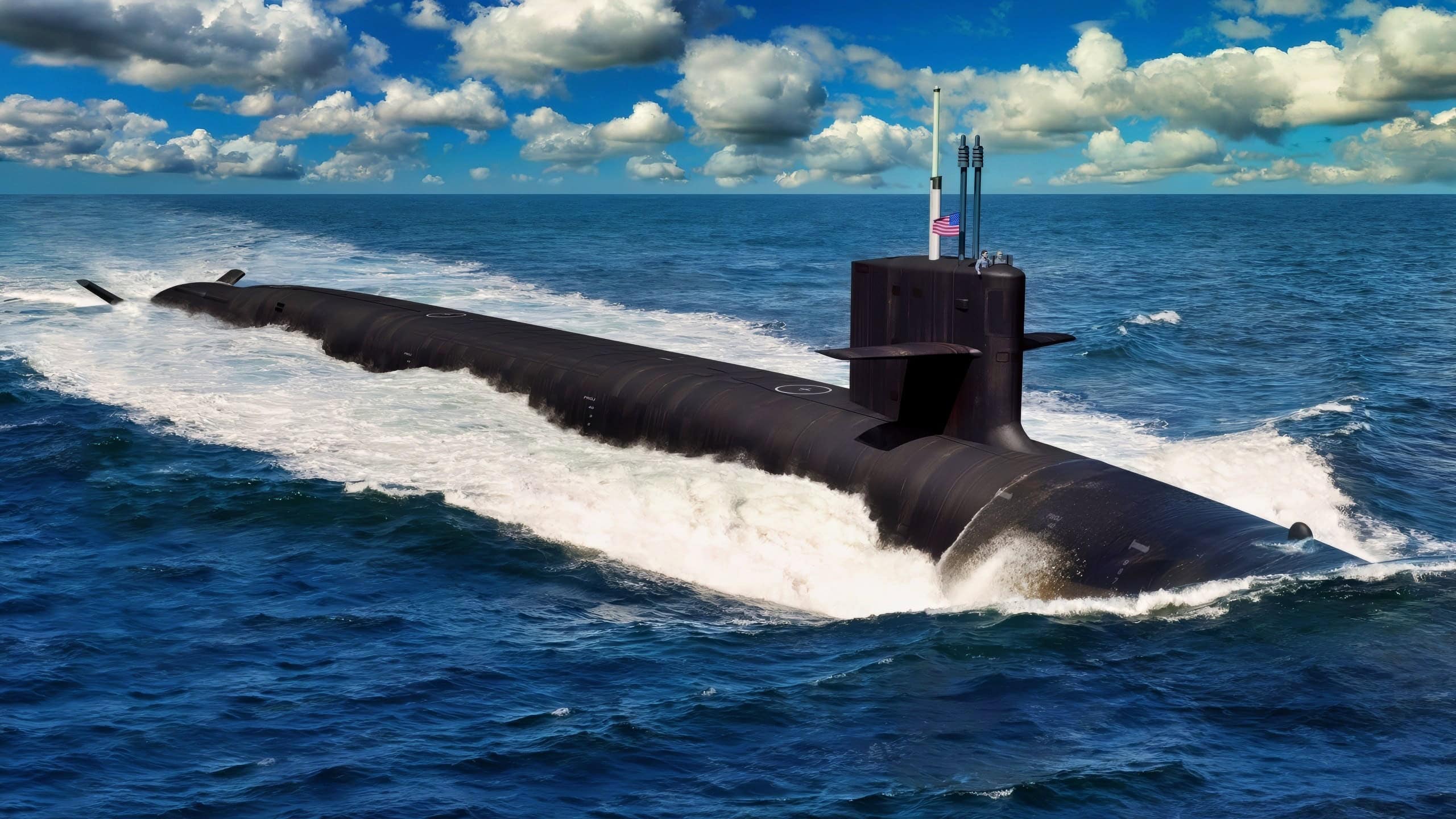
Columbia-Class Submarine SSBN Rendering U.S. Navy Photo
However, the electricity produced is transferred to an electric motor rather than so-called reduction gears to spin the boat’s propellers.
The Columbia class is also being built with a quieter “X”-shaped stern intended to improve navigation and underwater movement while lowering the boat’s acoustic signature.
Merits of Diesel Electric
The use of an electric motor brings other advantages as well, according to an MIT essay written years ago when the electric drive was being evaluated for submarine propulsion.
Using an electric motor optimizes the use of installed reactor power in a more efficient way compared with mechanical drives, making more on-board power available for other uses, according to an essay called “Evaluation and Comparison of Electric Propulsion Motors for Submarines.”
Author Joel Harbour says that in a mechanical-drive submarine, 80 percent of the reactor power is used exclusively for propulsion.
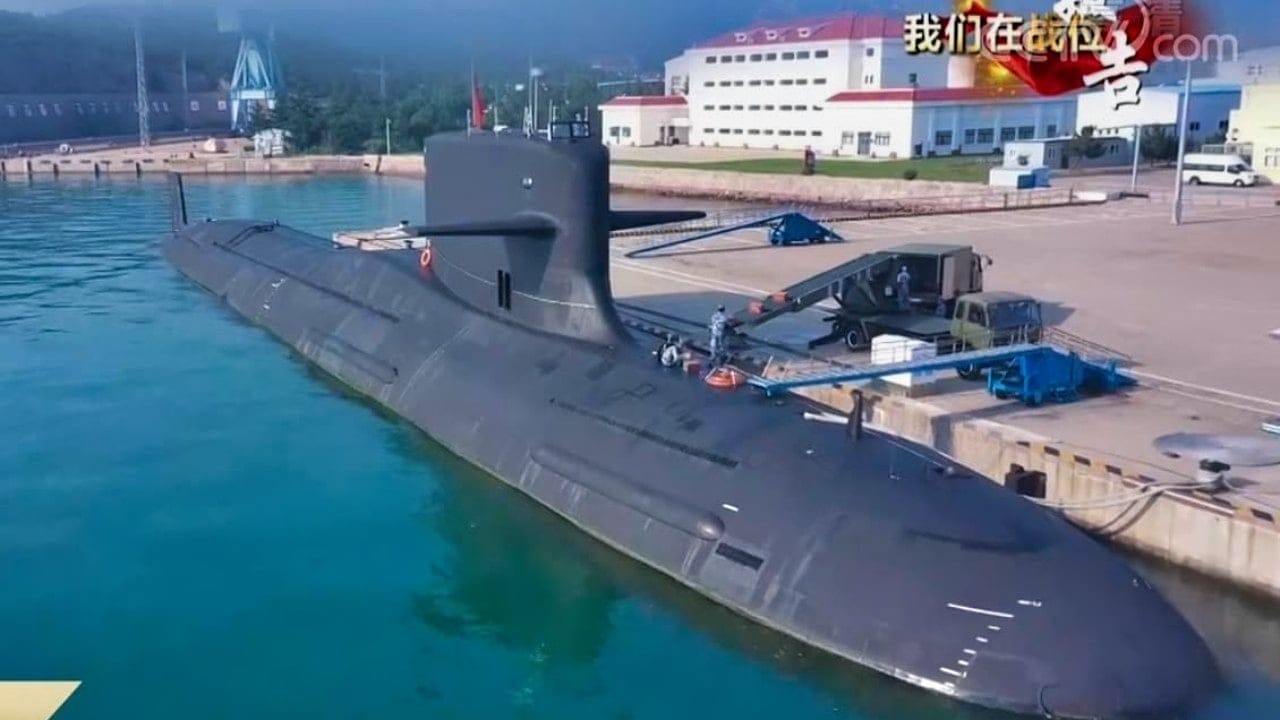
Type 093B Submarine from China. Image Credit: Screengrab.
“With an electric drive submarine, the installed reactor power of the submarine is first converted into electrical power and then delivered to an electric propulsion motor. The now available electrical potential not being used for propulsion could easily be tapped into for other uses,” he writes.
As for the PLAN’s new Type 096, it may or may not use electric drive propulsion and could leverage other quieting technologies.
Apart from the question of “quieting” technologies, the arrival of the Type 096 introduces the question of scale, as it suggests China may ultimately operate as many SSBNs as the U.S. Navy, which plans to operate as many as 12 nuclear-armed ballistic missile submarines.
About the Author: Kris Osborn
Kris Osborn is the President of Warrior Maven – Center for Military Modernization. Osborn previously served at the Pentagon as a highly qualified expert in the Office of the Assistant Secretary of the Army—Acquisition, Logistics & Technology. Osborn has also worked as an anchor and on-air military specialist at national TV networks. He has appeared as a guest military expert on Fox News, MSNBC, The Military Channel, and The History Channel. He also has a Masters Degree in Comparative Literature from Columbia University.