
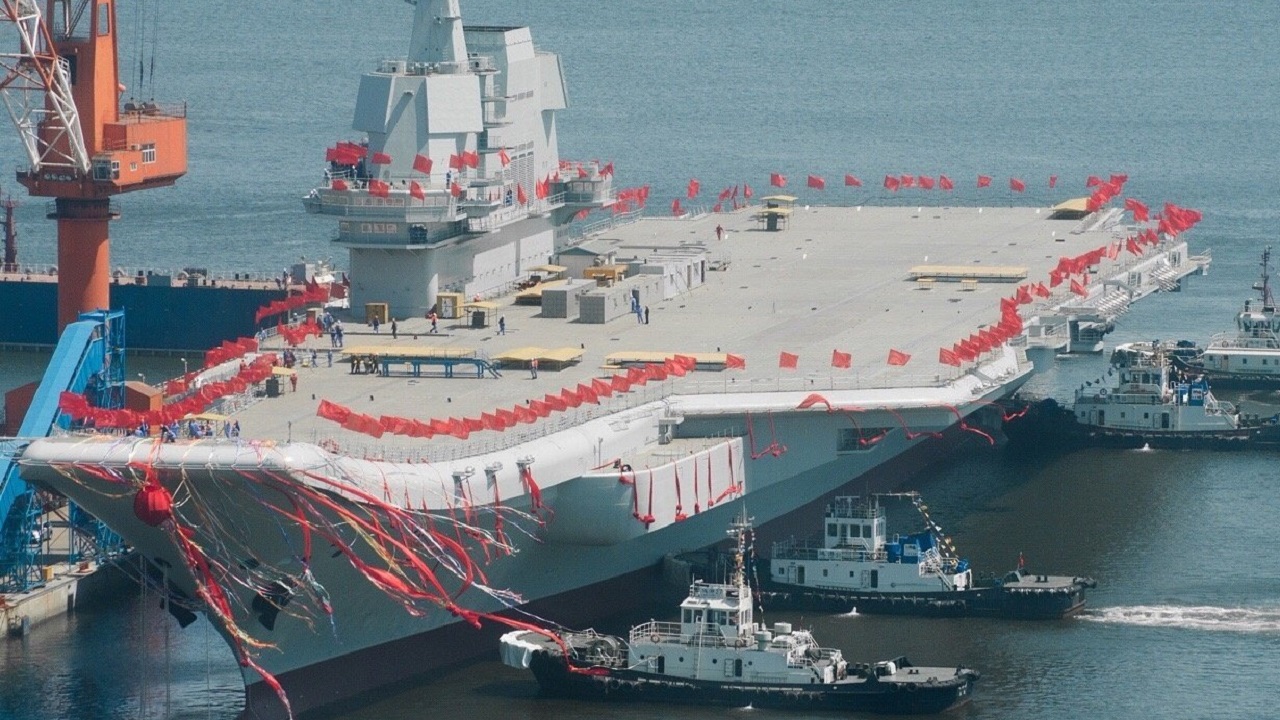
Summary and Key Points: Journalist Harrison Kass exposes the fatal flaw in the People’s Liberation Army Navy (PLAN) carrier fleet: a lack of combat experience.
-While China boasts three modern carriers—the Liaoning, Shandong, and the EMALS-equipped Fujian—they have never launched a single sortie under fire.
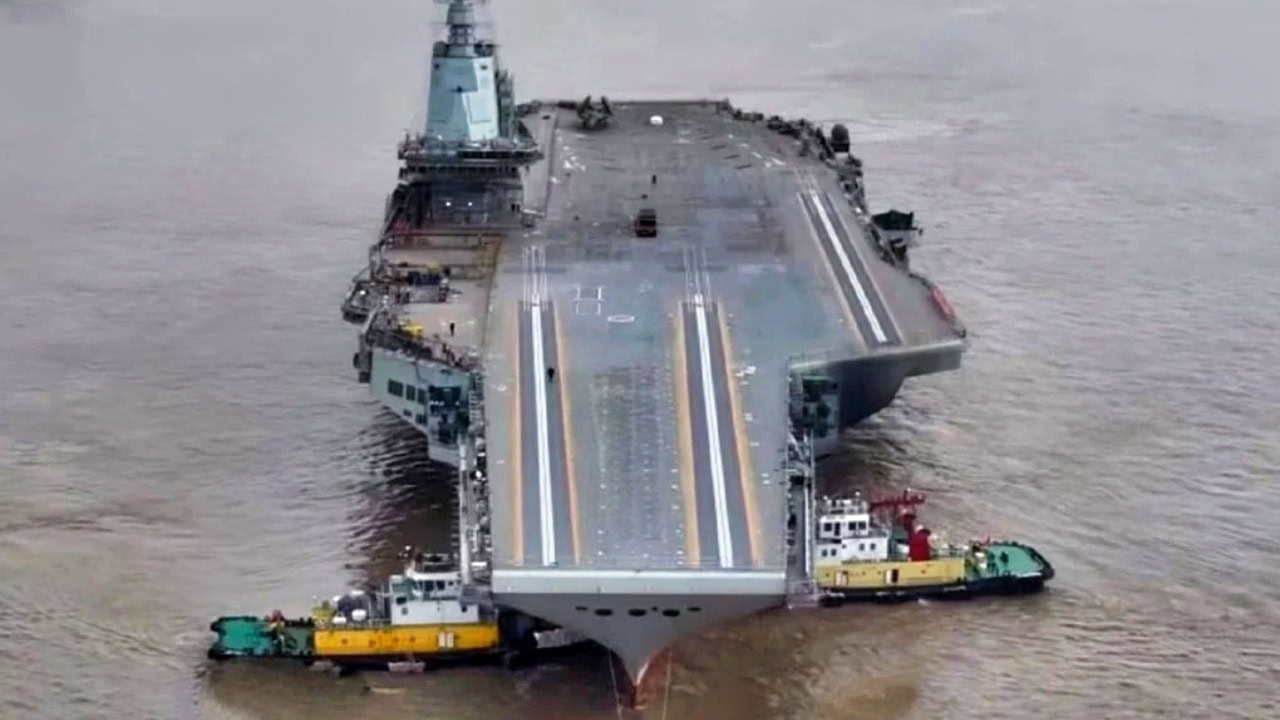
China Aircraft Carrier. Image Credit: Chinese State Media.
-Kass argues that the PLAN’s reliance on the payload-restricted J-15 “Flying Shark” via STOBAR systems, coupled with an immature support fleet lacking mature airborne early warning (AEW) or tanker capabilities, leaves a massive operational gap between Beijing’s blueprint ambitions and the U.S. Navy’s battle-tested maritime dominance.
The PLAN’s Fatal Flaw: Why China’s Aircraft Carriers Remain Unproven in Combat
China’s shipbuilding spree has included substantial investment in carrier capabilities. And while the carrier fleet looks increasingly modern, it remains unproven in the most core way: launching carrier-based fighters in combat. Can China close the gap between blueprint capability and combat capability?
The answer will have ramifications for both the Indo-Pacific region and the global scale of power.
The Fatal Flaw
The PLA Navy (PLAN) has three carriers—the Liaoning, Shandong, and Fujian—with a fourth under development.
Over the last 15 years, the fleet has modernized rapidly, giving China enhanced power projection capabilities—at least in theory.
In reality, China has zero real-world combat aviation operations.
The US carriers, by contrast, have decades of continuous combat use. And if carrier aviation is learned not just through training but through combat, then the gap between US and Chinese capabilities may be significant.
China’s Carrier Fleet
China’s first carrier, the Liaoning, is a converted ex-Soviet hull (formerly the Varyag) that the PLAN has used mostly for training and experimentation, marking a first foray into carrier aviation.
China’s first indigenous carrier, the Shandong, featured an improved sky-jump design, marking a major stepping stone for China’s military industrial base generally and carrier aviation specifically.
The most recent carrier, the Fujian, is also the most impressive. While still in the testing phase, Fujian features a CATOBAR electromagnet catapult, comparable to the American Ford-class.
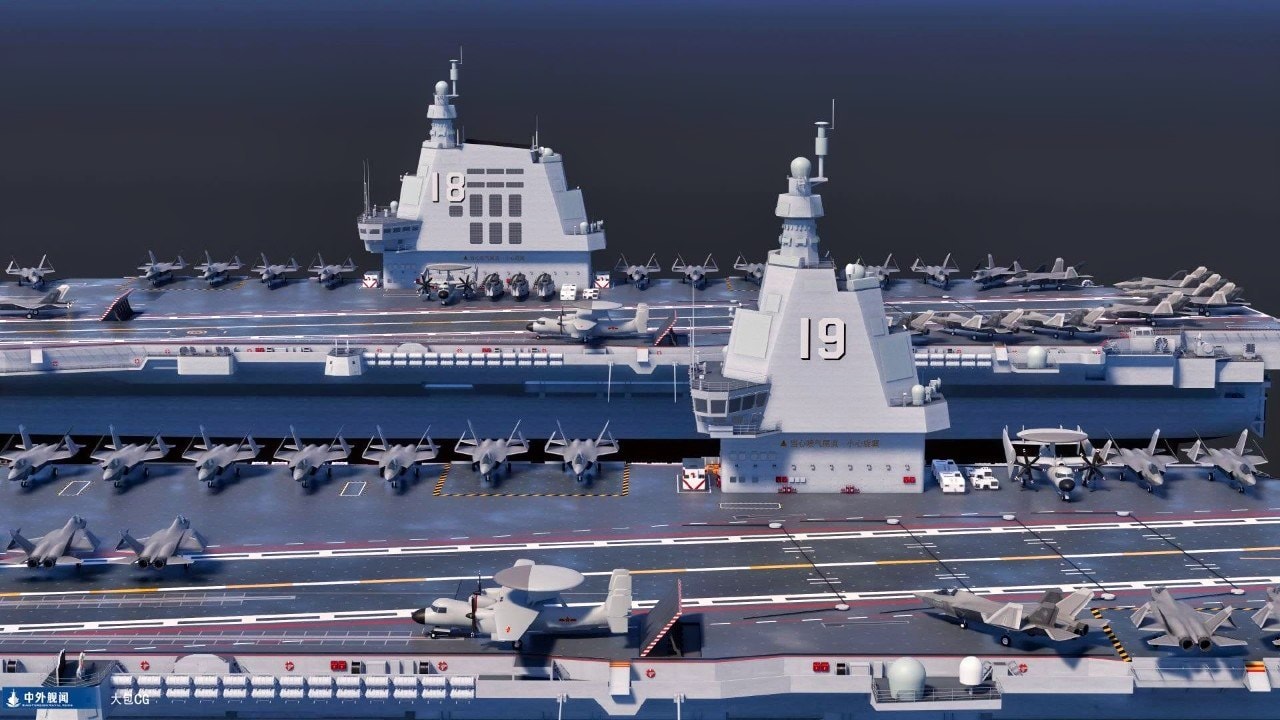
China Aircraft Carrier Models. Image Credit: Creative Commons.
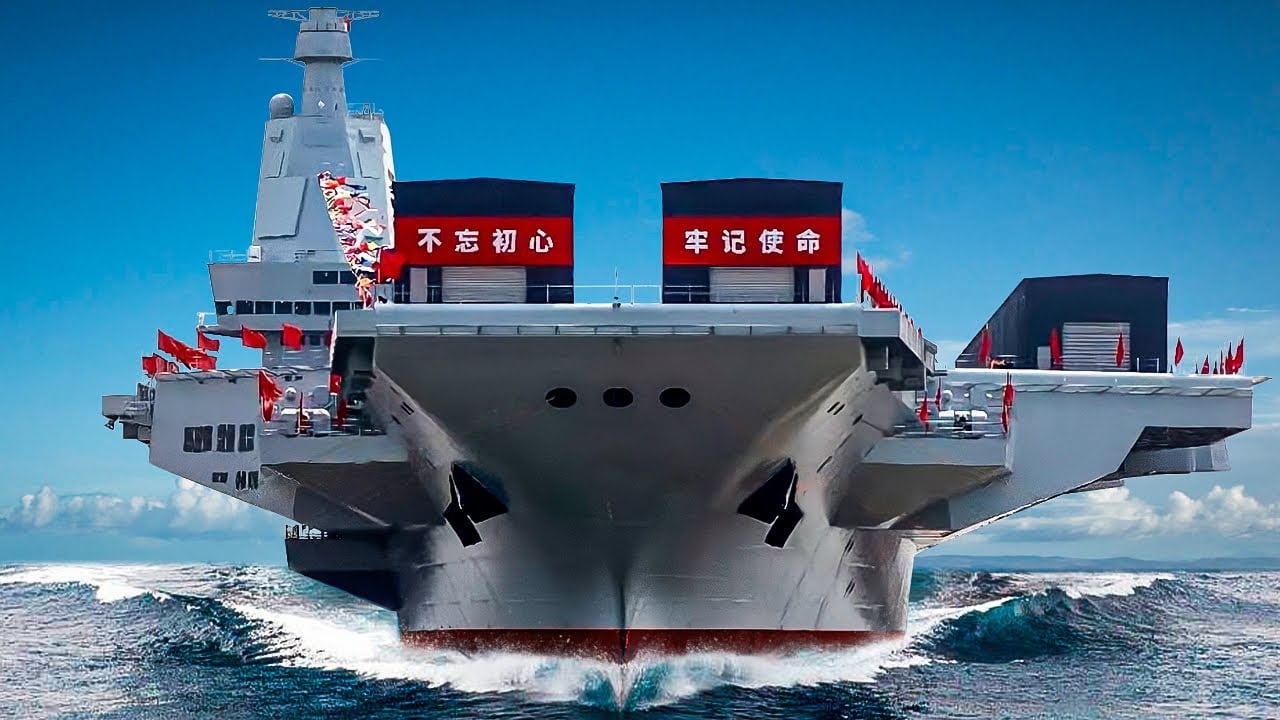
China Aircraft Carrier. Image Credit: YouTube Screenshot.
China’s Carrier-Based Aircraft
China’s primary carrier-based fighter is the J-15 Flying Shark. Derived from the Russian Su-33, the J-15 has a heavy airframe and limited range when launched from the ski-jump (fuel and payload must be limited to meet the strict weight requirements for ski-jump launches). Further, the J-15 has engine reliability concerns and a high accident rate.
Between the ski-jump-related payload limitations and the reliability issues, the J-15 has a reduced strike effectiveness.
But the J-15 is just a placeholder. China is currently developing and testing the J-35, a carrier-based stealth fighter, intended to operate as an analog to the F-35C. Expected improvements include stealth shaping, sensor fusion, and longer-range strike capability.
But the aircraft’s overall performance, including its integration with Fujian’s EMALS-like system, remains unclear. The jet could be deployed by the end of the 2020s, potentially offering the PLAN a significant capability upgrade.
Learning Through Ropes
China has never operated a CATOBAR system at scale before. And Fujian’s EMALS system is complex and maintenance-heavy, surely to test the Chinese ability to conduct reliable carrier operations at sea.
Previously, the Chinese have operated only ski-jump STOBAR systems on the Liaoning and Shandong.
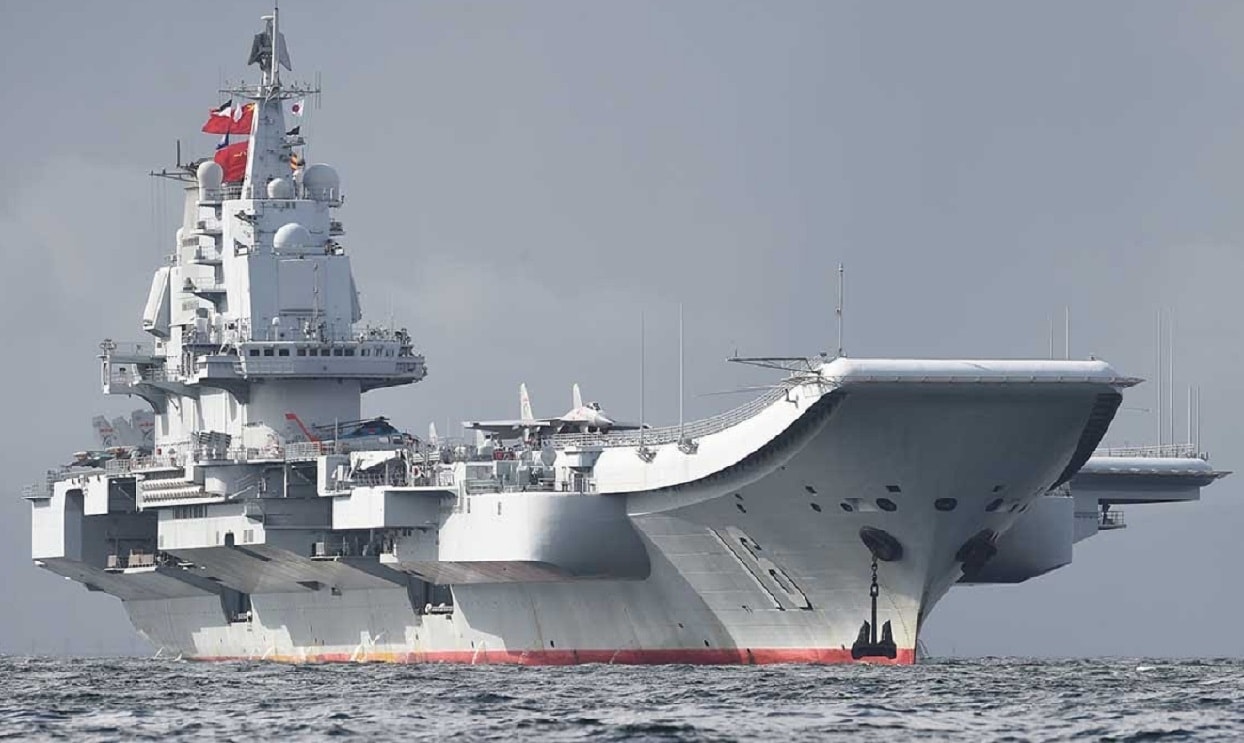
China Aircraft Carrier. Image: Creative Commons.
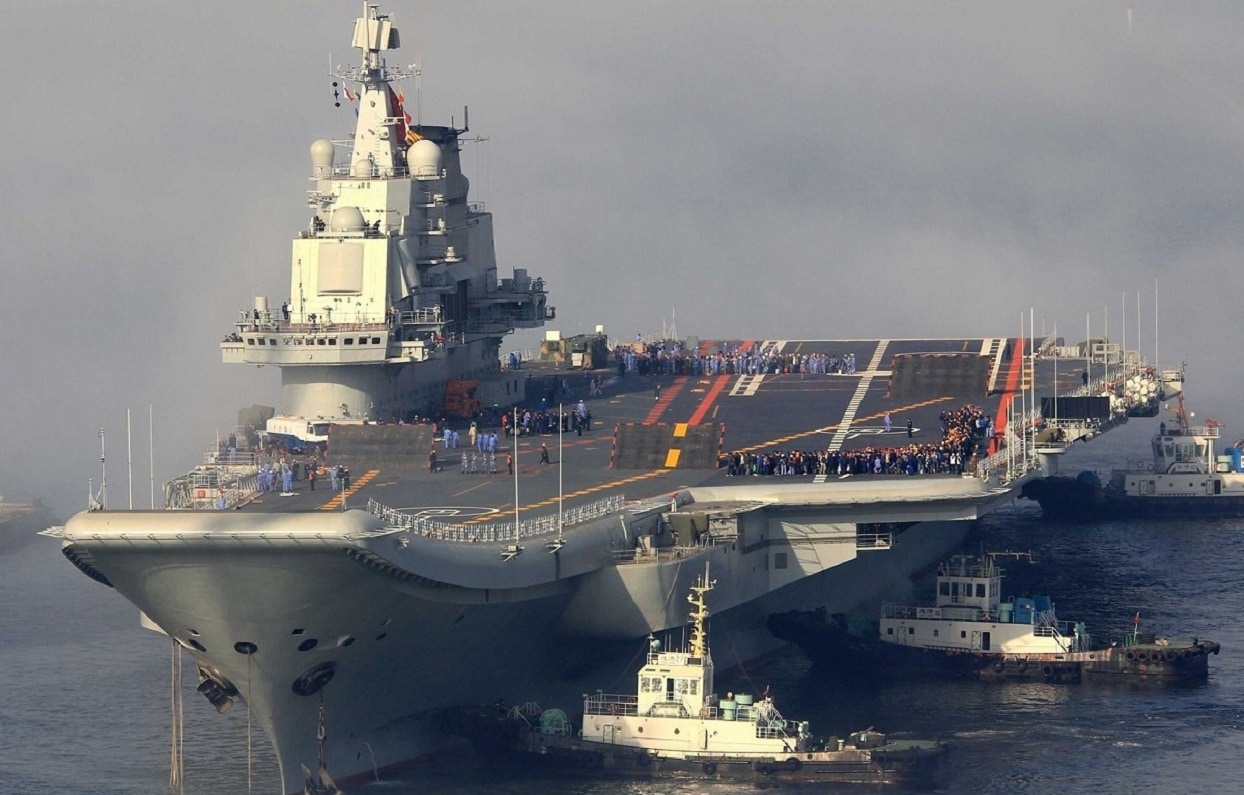
Image: Chinese Internet.
The STOBAR, of course, limits payload, fuel, and sortie flexibility, which is why the PLAN upgraded with the Fujian. But it means the Chinese are transitioning to a new system with no experience.
The reason for prompting the transition was the obvious advantages of the CATOBAR system: it allows heavier launches, meaning aircraft can carry more fuel, enabling greater range and more payload, and enabling more efficient strike operations.
The CATOBAR also enables the operation of a more diverse aircraft set, such as AEW and tankers (which China is still developing), thereby enhancing fighter operations.
But China remains untested on CATOBAR operations, presenting a potential operational vulnerability.
Incomplete Picture
China’s current lack of support aircraft widens the gap between Chinese naval aviation and American naval aviation.
Whereas the US Navy operates a variety of support aircraft, China’s support aircraft are still under development. Like the KJ-600 AEW, which China hopes will extend radar horizons and improve fleet air defense.
But China lacks a mature carrier-based tanker capability, which will reduce range, situational awareness, and endurance—all important factors in the geographically dispersed Indo-Pacific.
Training vs. Combat
China has been conducting increasingly complex exercises, including blue-water deployments.
But exercises are not combat. Real combat introduces electronic warfare, attrition, degraded communications, and unpredictable enemy behavior—experiences that cannot be fully simulated. So China’s capabilities on paper may, but do not necessarily, translate to pure combat capabilities.
In terms of proven combat operations, the US still holds a clear-cut edge over the ambitious Chinese.
About the Author: Harrison Kass
Harrison Kass is an attorney and journalist covering national security, technology, and politics. Previously, he was a political staffer and candidate, and a US Air Force pilot selectee. He holds a JD from the University of Oregon and a master’s in global journalism and international relations from NYU.