
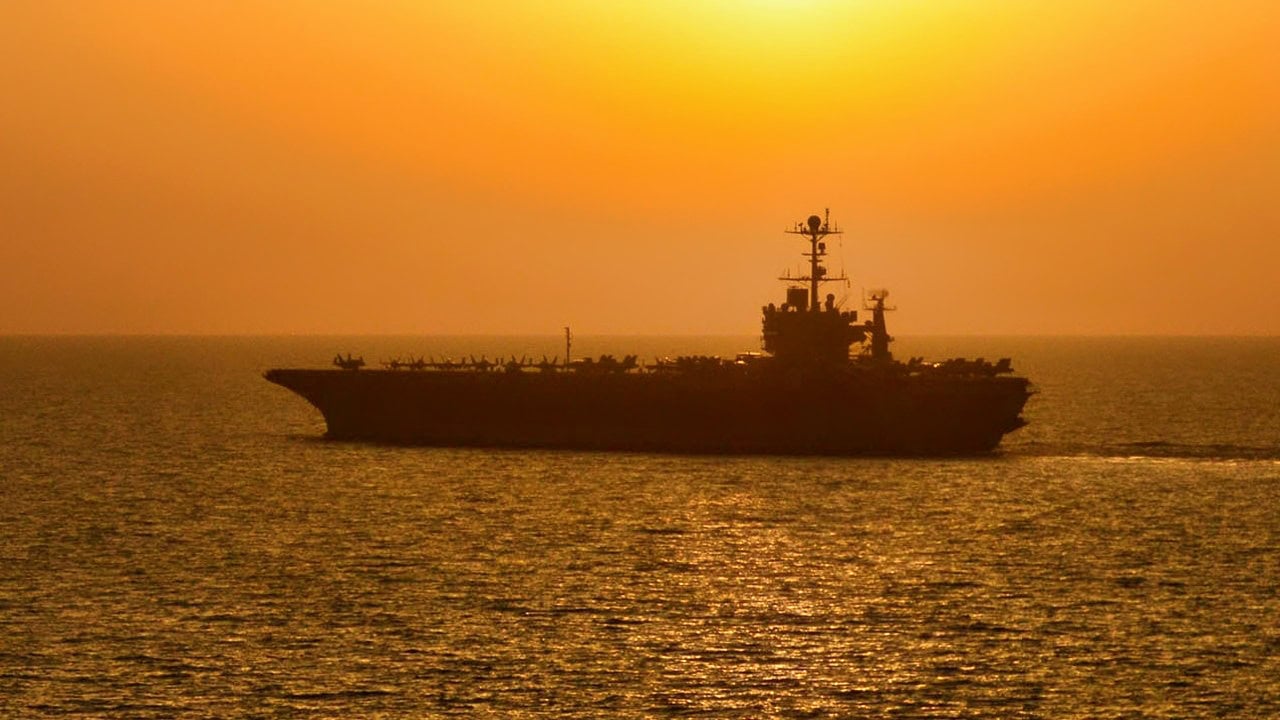
Summary and Key Points: The USS Harry S. Truman (CVN-75) is slated to begin its Refueling and Complex Overhaul (RCOH) in June 2026, a move that will sideline the Nimitz-class supercarrier until January 2031.
-Conducted at Newport News Shipbuilding, this 4.5-year industrial undertaking involves refueling dual nuclear reactors and modernizing the ship’s entire combat suite.
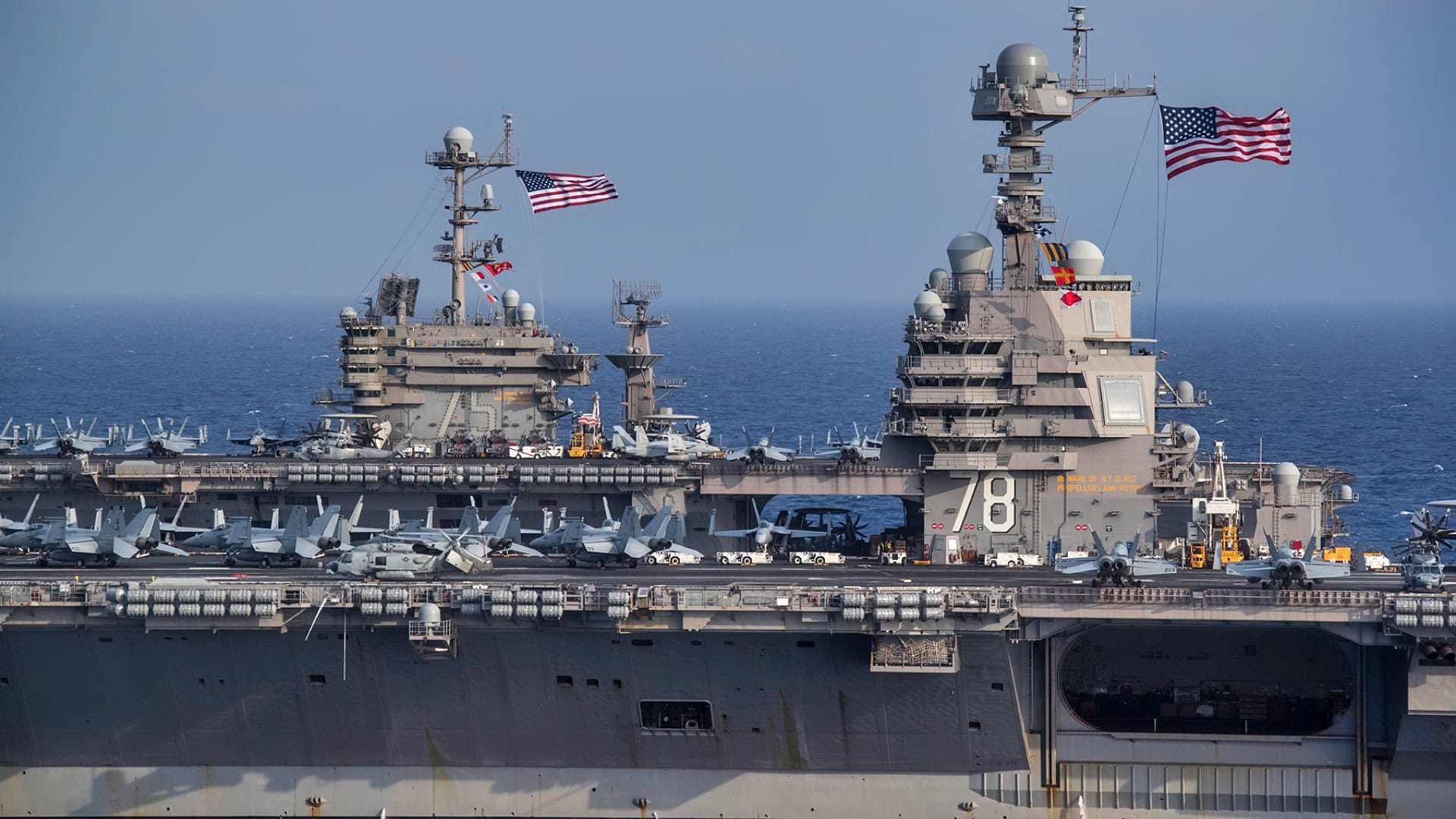
The Ford-class aircraft carrier USS Gerald R. Ford (CVN 78) and the Nimitz-class aircraft carrier USS Harry S. Truman (CVN 75) transit the Atlantic Ocean June 4, 2020, marking the first time a Ford-class and a Nimitz-class aircraft carrier have operated together underway. Ford is underway conducting integrated air wing operations, and the Harry S. Truman Carrier Strike Group remains at sea in the Atlantic as a certified carrier strike group force ready for tasking in order to protect the crew from the risks posed by COVID-19, following their successful deployment to the U.S. 5th and 6th Fleet areas of operation. (U.S. Navy photo by Mass Communication Specialist 2nd Class Ruben Reed)
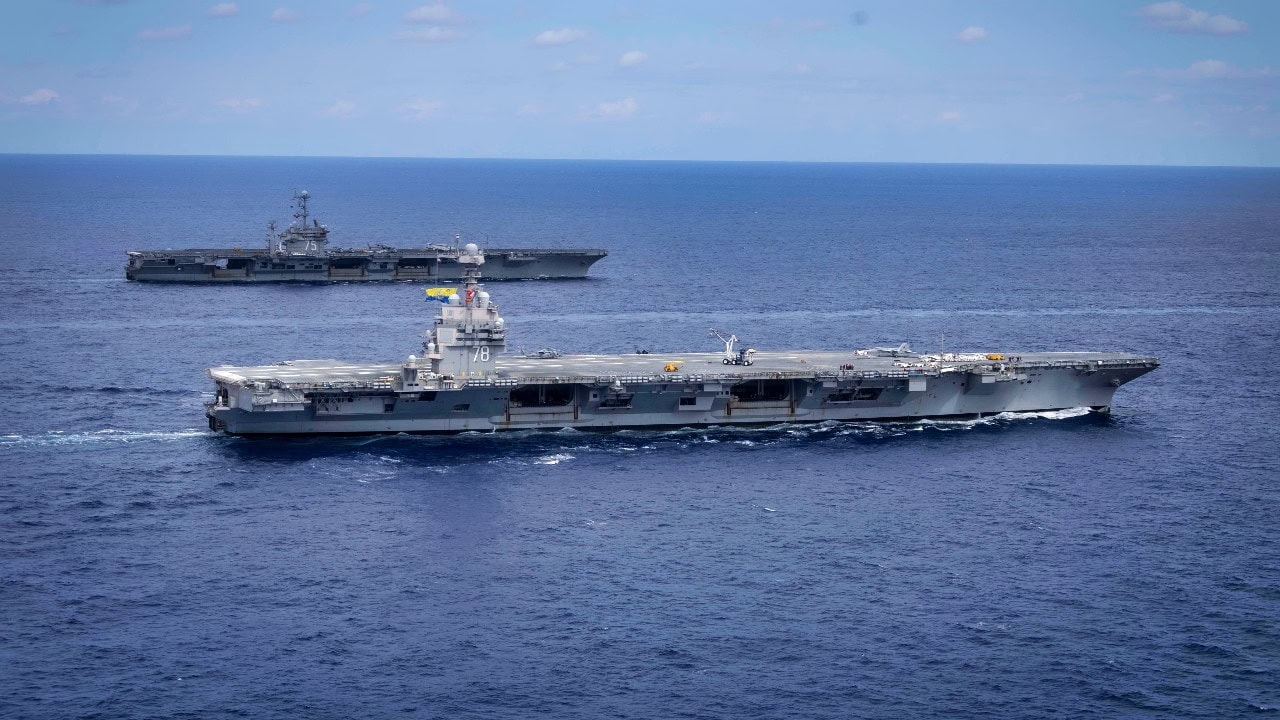
ATLANTIC OCEAN. (Aug. 24, 2024) The Nimitz-class aircraft carriers USS Harry S. Truman (CVN 75), back, and the world’s largest aircraft carrier, USS Gerald R. Ford (CVN 78), sail in formation in the Atlantic Ocean, Aug. 24, 2024. USS Gerald R. Ford is the flagship of the Gerald R. Ford Carrier Strike Group. The aircraft carrier is underway in the Atlantic Ocean to further develop core unit capabilities and skills such as fuels certification and ammunition on-load during its basic phase of the optimized fleet response plan. (U.S. Navy photo by Mass Communication Specialist 2nd Class Maxwell Orlosky).
-The timing is particularly sensitive; the fleet is already reeling from high-tempo operations in the Middle East and a 2025 collision with the merchant vessel Besiktas-M.
-Addressing this deferred structural damage during the RCOH risks cascading delays for a Navy already struggling to maintain its statutory 11-carrier requirement.
USS Harry S. Truman Is Out Until 2031: The U.S. Navy Just Lost Another Aircraft Carrier
As the U.S. Navy heads into another period of constrained aircraft carrier availability, a key source of the coming trouble will come from the scheduled removal of the USS Harry S. Truman (CVN-75), one of the Navy’s frontline nuclear-powered aircraft carriers. The USS Harry S. Truman is expected to enter a multi-year overhaul beginning this year.
Recent reporting confirms that the Truman will begin its Refueling and Complex Overhaul (RCOH) in June 2026, with completion not expected until at least January 2031 – a roughly four-and-a-half-year period of being out of service. That timeline alone is significant, but it also comes at a moment when other carriers are already tied up in maintenance or extended deployments, compounding general readiness pressures across the entire fleet.
The result is a consequential, though predictable, gap. For much of the next five years, one of the Navy’s most heavily used carriers will simply not be available.
The USS Harry S. Truman and Why It Matters
USS Harry S. Truman is a Nimitz-class nuclear-powered aircraft carrier, commissioned in 1998 and forming part of the Navy’s core fleet of large-deck carriers designed to project airpower globally. Like others in its class, the ship operates as the centerpiece of a carrier strike group, capable of launching sustained air operations ranging from strike missions to air superiority and surveillance.
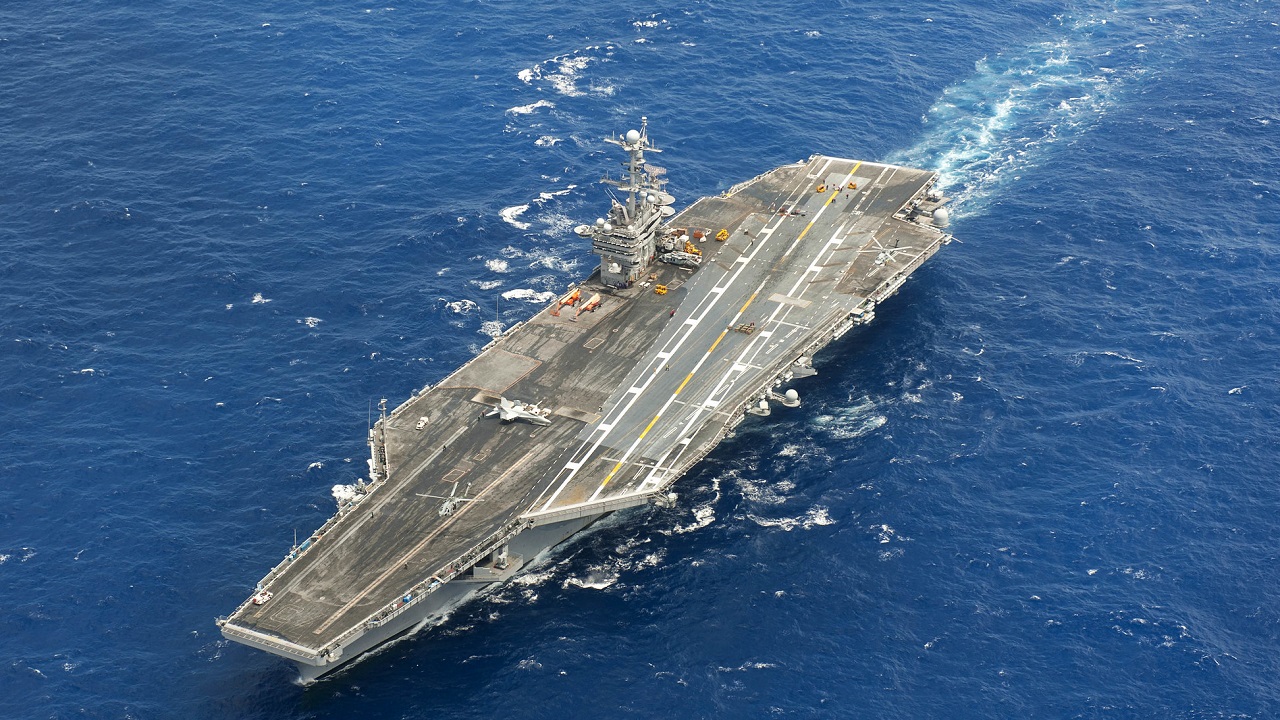
The aircraft carrier USS Harry S. Truman (CVN 75) steams through the Atlantic Ocean July 16, 2014. The Harry S. Truman was underway conducting an ammunition transfer. (DoD photo by Mass Communication Specialist 3rd Class Karl Anderson, U.S. Navy/Released)
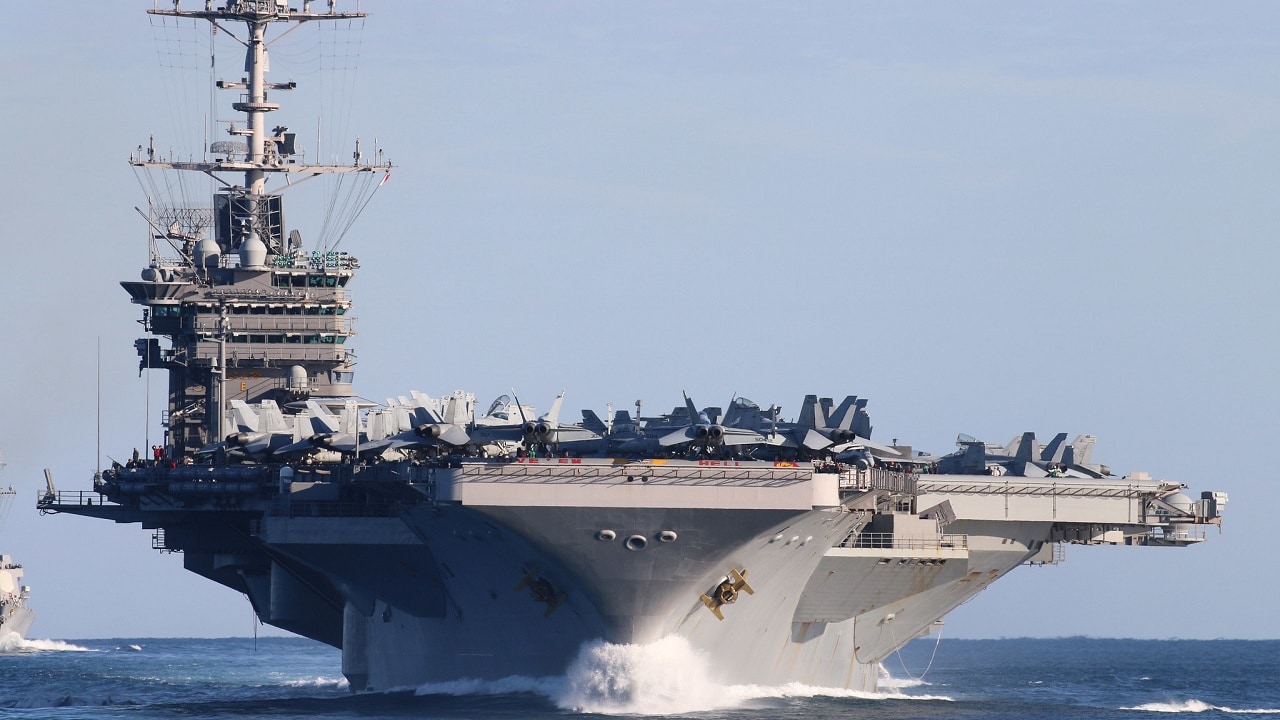
ATLANTIC OCEAN (Feb. 6, 2018) The aircraft carrier Harry S. Truman (CVN 75) participates in a composite unit training exercise (COMPTUEX). Truman is underway as a part of the Harry S. Truman Carrier Strike Group (HSTCSG) performing COMPTUEX, which evaluates the strike group’s ability as a whole to carry out sustained combat operations from the sea, ultimately certifying the HSTCSG for deployment.
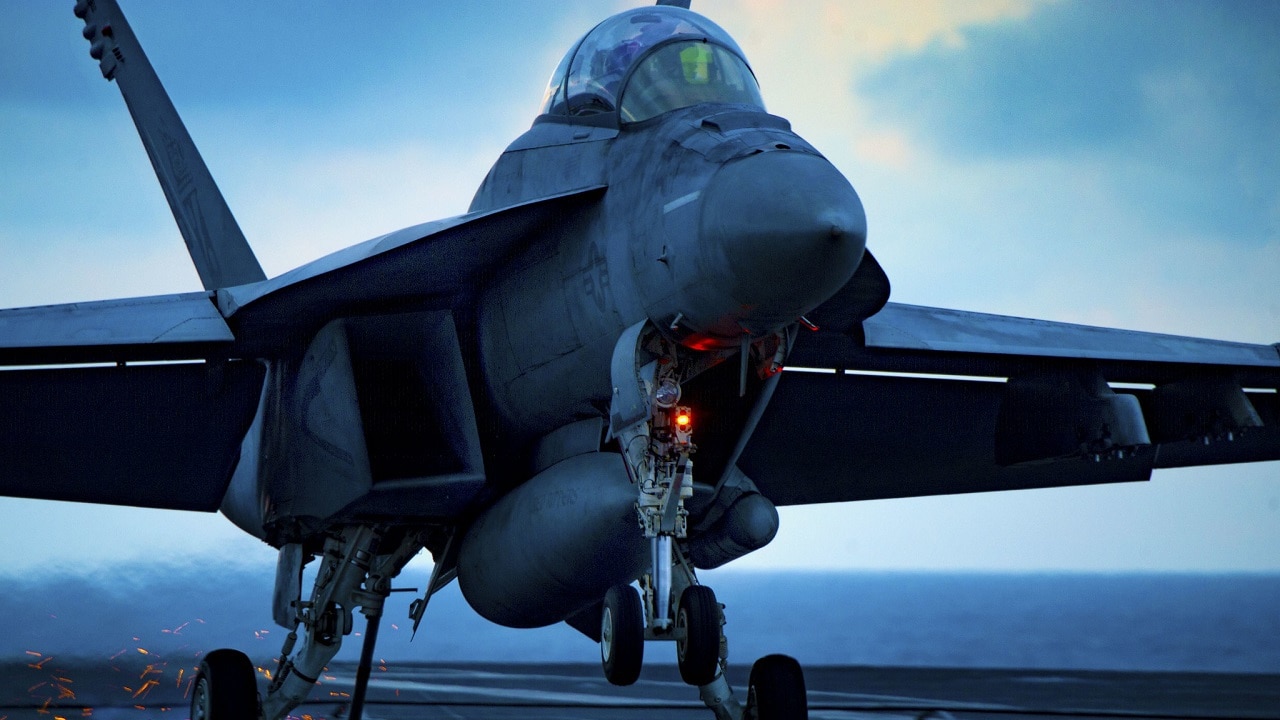
ATLANTIC OCEAN (July 4, 2018) An F/A-18F Super Hornet assigned to the “Red Rippers” of Strike Fighter Squadron (VFA) 11 sits on the flight deck of the Nimitz-class aircraft carrier USS Harry S. Truman (CVN 75). Harry S. Truman is deployed as part of an ongoing rotation of U.S. forces supporting maritime security operations in international waters around the globe. (U.S. Navy photo by Mass Communication Specialist 3rd Class Rebekah A. Watkins/Released) 180704-N-UJ486-0313
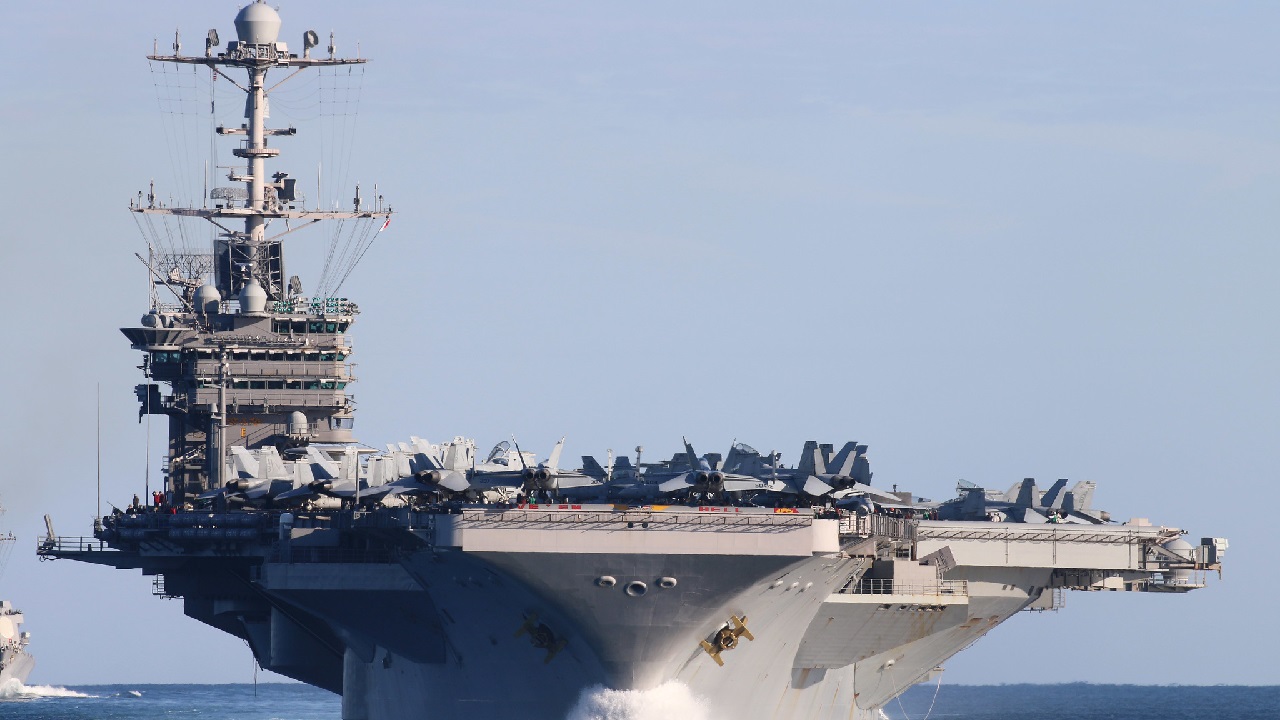
The aircraft carrier Harry S. Truman (CVN 75) participates in a composite unit training exercise (COMPTUEX). Truman is underway as a part of the Harry S. Truman Carrier Strike Group (HSTCSG) performing COMPTUEX, which evaluates the strike group’s ability as a whole to carry out sustained combat operations from the sea, ultimately certifying the HSTCSG for deployment. (U.S. Navy photo by Mass Communication Specialist 2nd Class Tommy Gooley/Released)
Truman has been very active over the years. In early 2025, the carrier conducted one of its largest strike operations, launching 27 F/A-18 Super Hornets in a coordinated attack on ISIS-Somalia targets, dropping more than 124,000 pounds of ordnance. Around the same period, it was also operating in the Red Sea and broader Middle East region, where U.S. forces were engaged in operations against Iran-backed Houthi forces and other threats.
That deployment was expensive and eventful. Between late 2024 and mid-2025, the carrier strike group experienced multiple incidents, including the loss of several aircraft and a high-profile collision with a merchant vessel. The pace of combat was intense, with deployments stretching for months and reflecting the increasing demand placed on a finite number of carriers.
RCOH and Why It Takes So Long
The Refueling and Complex Overhaul is a once-in-a-lifetime process for U.S. nuclear aircraft carriers, typically carried out at the midpoint of a ship’s service life. For Truman, that point has now been reached after more than two decades in service.
RCOH involves refueling the ship’s nuclear reactors – a complex and highly regulated process that alone requires extensive disassembly and safety procedures. But the overhaul goes far beyond that. It also includes structural repairs, modernization of combat systems, upgrades to flight deck equipment, and replacement or refurbishment of critical components throughout the ship.
The work is carried out at Huntington Ingalls Industries’ Newport News Shipbuilding yard in Virginia, the only U.S. facility capable of performing this level of carrier overhaul. The scale of the process explains the long timeline. While planned for around four years, RCOHs frequently extend beyond initial estimates due to complexity and industrial constraints. For Truman, the process is expected to run between June 2026 and January 2031 – and the Navy effectively resets the ship’s service life afterwards, allowing it to operate for another 20 to 25 years.
Collision Damage and the Risk of Delays
Complicating matters further is the condition of the ship itself. On February 12, 2025, USS Harry S. Truman collided with the merchant vessel Besiktas-M near Port Said, Egypt, causing structural damage to sections of the carrier’s exterior. While the ship remained operational and returned to duty after temporary repairs, the full extent of the damage was never completely resolved.
Instead, the Navy deliberately deferred major repairs until the RCOH period. Reports indicate that visible and structural damage from the collision will only be fully addressed once the ship enters the overhaul yard. That effectively includes the unplanned repair work in the already complex and tightly scheduled RCOH process.
This matters because RCOH timelines are already vulnerable to delays. Newport News Shipbuilding is the sole facility capable of handling these overhauls, and it has historically struggled with schedule overruns on similar projects. Previous carrier overhauls have extended beyond planned timelines due to workforce constraints, supply chain issues, and the sheer complexity of the work.
What the Navy Loses and What Comes Next
The immediate impact of Truman’s overhaul is that there will be one fewer carrier available for deployment. But in practice, the effect is actually much bigger. Carrier availability is part of a larger rotation cycle, and removing a single ship for multiple years puts additional strain on the rest of the fleet at a time when the strain is already visible.
U.S. carriers have been sustaining extended deployments in recent years, with some exceeding eight months at sea to meet operational requirements. The absence of Truman will force more adjustments, particularly as the Navy balances its commitments in both the Indo-Pacific and the Middle East. Looking further ahead, though, the purpose of the overhaul is to ensure that Truman remains viable well into the 2040s. Once its RCOH is completed, the ship will return as a modernized platform capable of supporting future air wings.
About the Author: Jack Buckby
Jack Buckby is a British researcher and analyst specialising in defence and national security, based in New York. His work focuses on military capability, procurement, and strategic competition, producing and editing analysis for policy and defence audiences. He brings extensive editorial experience, with a career output spanning over 1,000 articles at 19FortyFive and National Security Journal, and has previously authored books and papers on extremism and deradicalisation.