
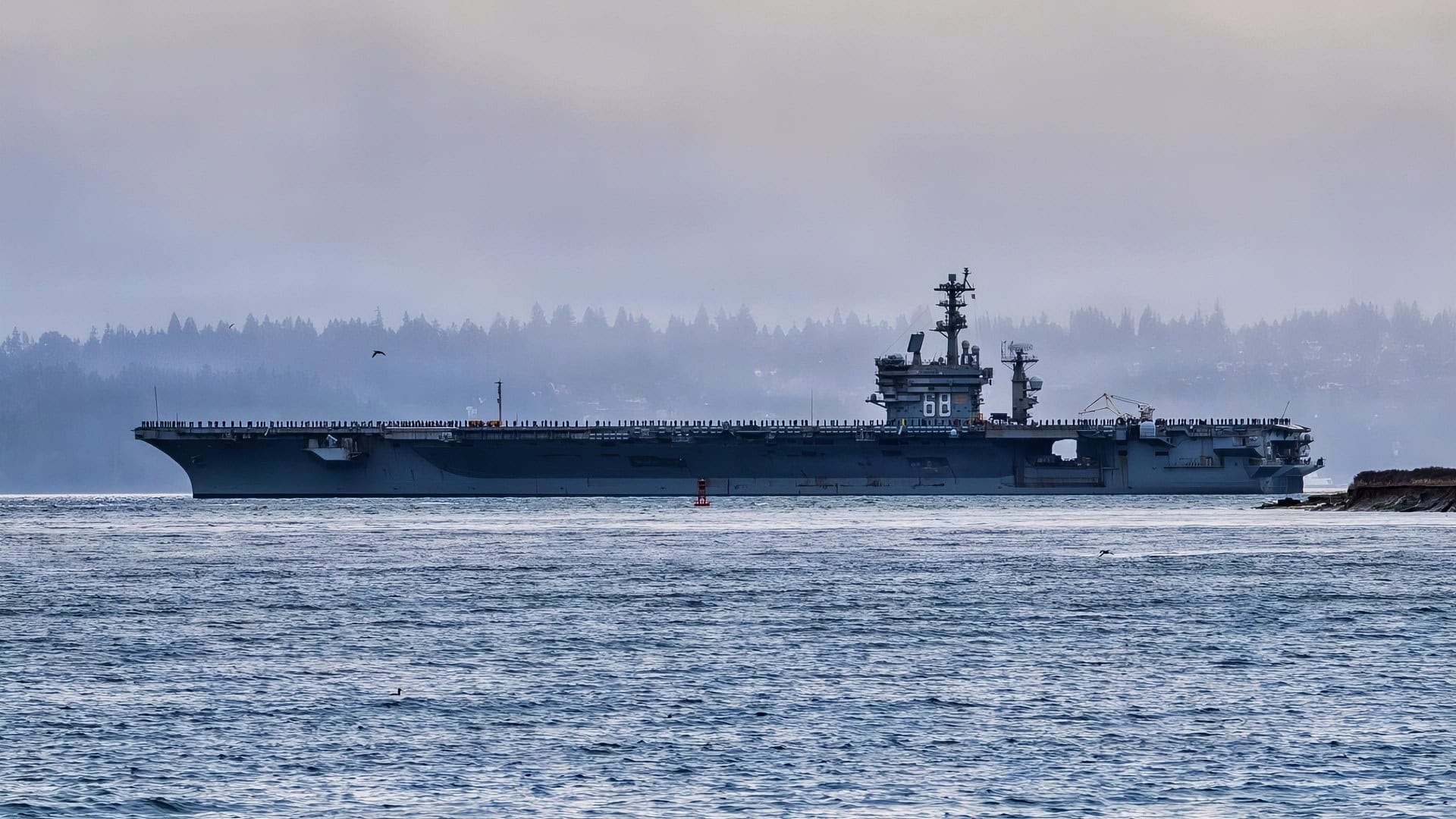
Summary and Key Points: Defense analyst Jack Buckby evaluates the USS Nimitz (CVN-68)’s final operational transit from Bremerton, Washington, to Norfolk, Virginia.
-Despite its scheduled May 2026 decommissioning, the carrier is currently leading the Southern Seas 2026 exercises in the U.S. Southern Command (SOUTHCOM) area.
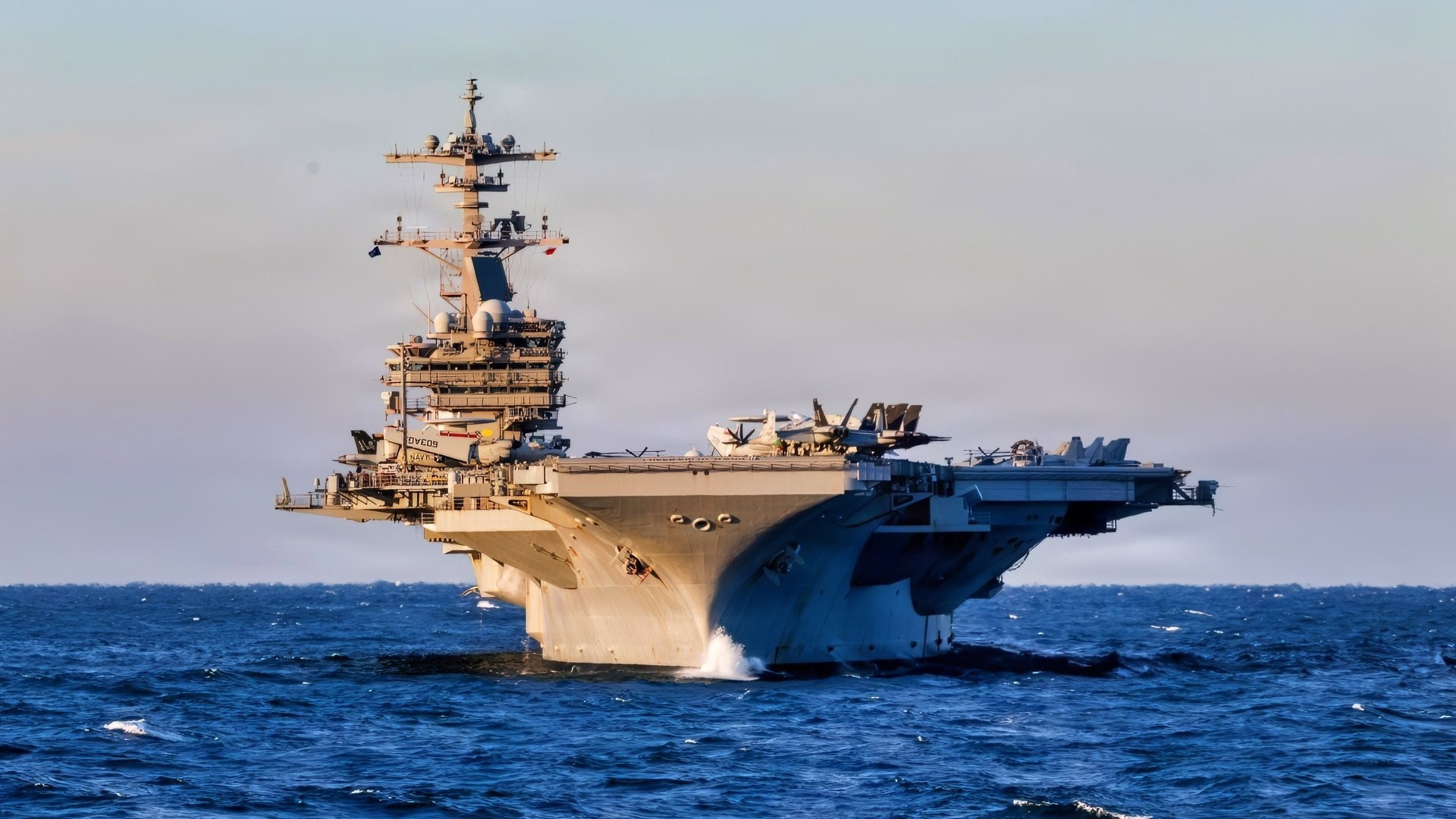
The Nimitz-class aircraft carrier USS George H.W. Bush (CVN 77) sails in the Atlantic Ocean, Feb. 6, 2026. The George H.W. Bush Carrier Strike Group is at sea as an integrated warfighting team. Composite Training Unit Exercise (COMPTUEX) is the Joint Force’s most complex integrated training event and prepares naval task forces for sustained high-end Joint and combined combat. Integrated naval training provides combatant commanders and America’s civilian leaders highly capable forces that deter adversaries, underpin American security and economic prosperity, and reassure Allies and partners. (U.S. Navy photo by Mass Communication Specialist 3rd Class John R. Farren)
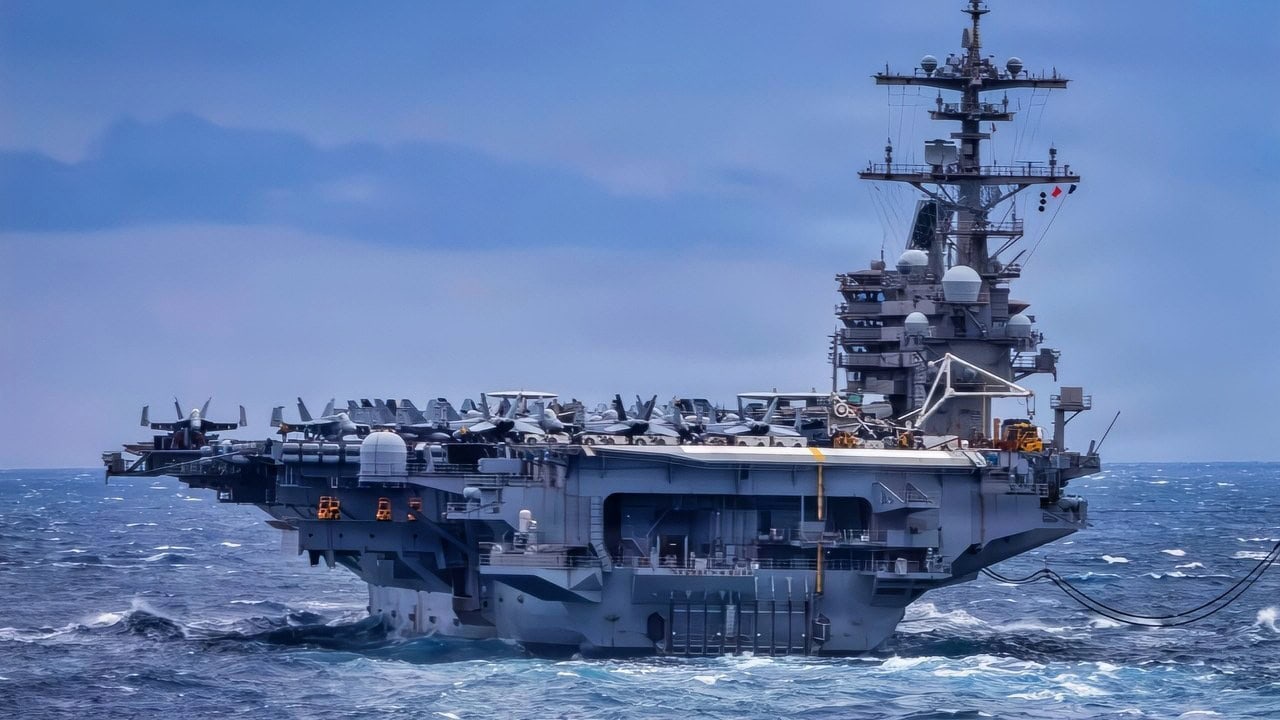
The Nimitz-class aircraft carrier USS George H.W. Bush (CVN 77) and the Henry J. Kaiser-class fleet replenishment oiler USNS John Lenthall (TAO 189) transfer cargo and JP-5 during a replenishment at sea in the Atlantic Ocean, Feb. 15, 2026. The George H.W. Bush Carrier Strike Group is at sea training as an integrated warfighting team. Composite Training Unit Exercise (COMPTUEX) is the Joint Force’s most complex integrated training event and prepares naval task forces for sustained high-end Joint and combined combat. Integrated naval training provides combatant commanders and America’s civilian leaders highly capable forces that deter adversaries, underpin American security and economic prosperity, and reassure Allies and partners. (U.S. Navy photo by Mass Communication Specialist 2nd Class Mitchell Mason)
-This report analyzes how the Nimitz is providing a “symbolic deterrent” in South America after the USS Gerald R. Ford was redirected to the Middle East.
-Buckby explores the logistical necessity of the Cape Horn circumnavigation, concluding that the Navy is maximizing the utility of the carrier’s final reactor life for regional diplomacy.
Why is the Navy Sending USS Nimitz Aircraft Carrier to Drills Before Retirement?
The U.S. Navy’s oldest aircraft carrier is heading towards retirement, but its final voyage raises some questions about whether that decision could soon change. USS Nimitz (CVN-68), commissioned in 1975 and the lead ship of the Nimitz-class supercarriers, departed Naval Base Kitsap-Bremerton in Washington in early March and is now sailing toward Norfolk, Virginia, where it is expected to begin the decommissioning process later this year.
But the journey is not simply a transit to the shipyard. According to reporting by USNI News, the carrier will participate in the Southern Seas 2026 exercises in U.S. Southern Command and visit partner countries during a circumnavigation of South America before arriving in Norfolk.
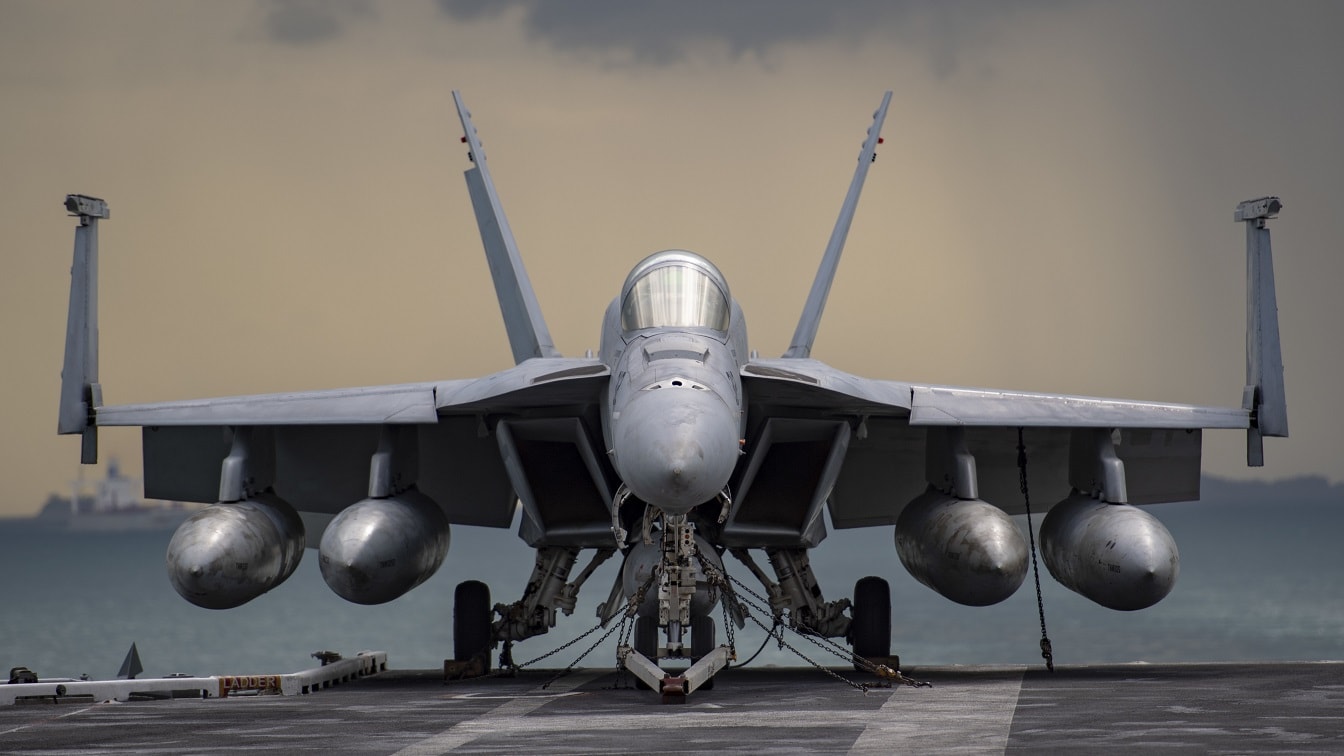
A (Feb. 5, 2021) An F/A-18E Super Hornet, from the “Kestrels” of Strike Fighter Squadron (VFA) 137, rests on the flight deck of the aircraft carrier USS Nimitz (CVN 68) during a strait transit. Nimitz is part of the Nimitz Carrier Strike Group and is deployed conducting maritime security operations and theater security cooperation efforts. (U.S. Navy photo by Mass Communication Specialist 3rd Class Elliot Schaudt/Released)
That is not the typical way a warship ends its career. Carriers approaching retirement usually move directly toward deactivation, with minimal operational activity. Instead, Nimitz appears to be conducting one last operational cruise. There is, therefore, an obvious question that must be asked: why send a carrier on multinational drills if the Navy is certain it is about to retire it?
An Unusual “Last Cruise”
USS Nimitz began its final voyage when it left Bremerton on March 7 and started a long journey around South America before arriving in Norfolk. Because the ship is too large to transit the Panama Canal, the trip requires sailing around Cape Horn at the southern tip of the continent before heading north along the Atlantic coast.
During that voyage, the carrier is expected to take part in the Southern Seas 2026 naval exercises, a multinational engagement organized by U.S. Naval Forces Southern Command that typically includes training events and port visits with regional partners.
The carrier’s involvement suggests a schedule that looks more like a deployment than a retirement transit. In many cases, ships nearing decommissioning are gradually withdrawn from operational rotations while crews and equipment are reassigned.
Instead, the Navy appears to be using Nimitz for diplomatic engagement and training operations across Latin America before sending it to Virginia for inactivation.
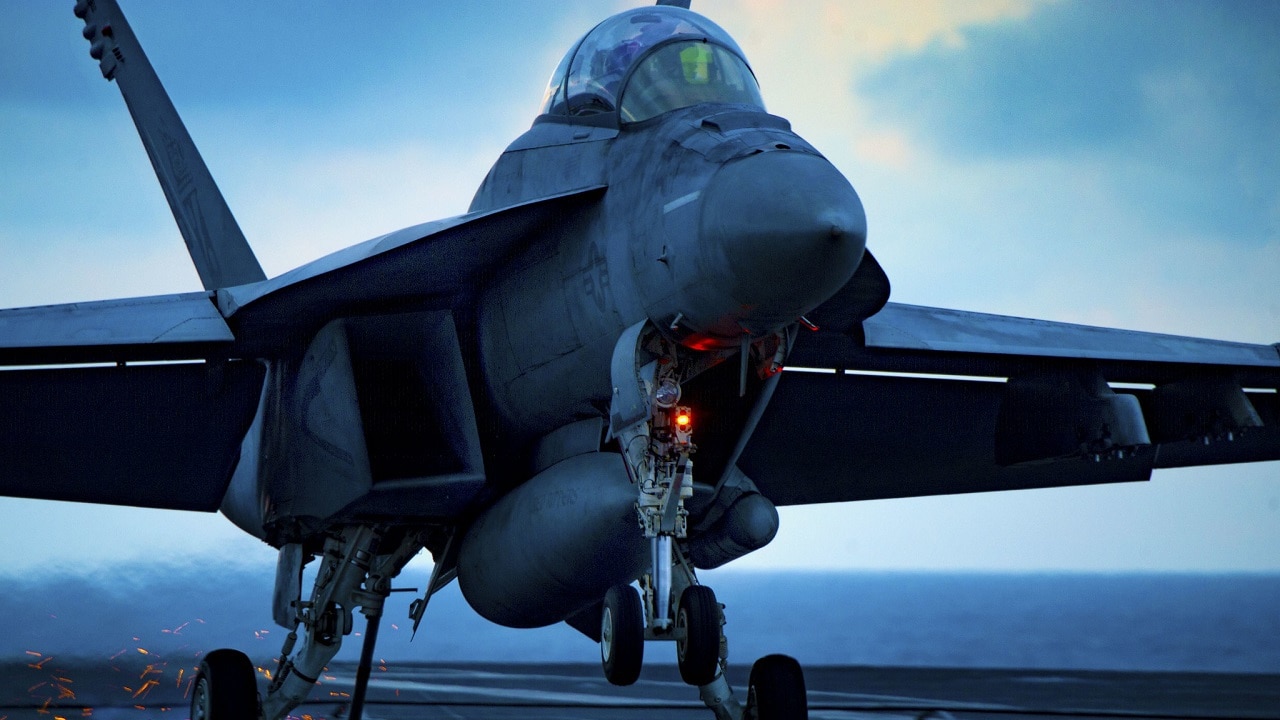
ATLANTIC OCEAN (July 4, 2018) An F/A-18F Super Hornet assigned to the “Red Rippers” of Strike Fighter Squadron (VFA) 11 sits on the flight deck of the Nimitz-class aircraft carrier USS Harry S. Truman (CVN 75). Harry S. Truman is deployed as part of an ongoing rotation of U.S. forces supporting maritime security operations in international waters around the globe. (U.S. Navy photo by Mass Communication Specialist 3rd Class Rebekah A. Watkins/Released) 180704-N-UJ486-0313

U.S. Navy sailors view the Nimitz-Class aircraft carrier USS Carl Vinson (CVN-70) from the hangar bay of the aircraft carrier USS Theodore Roosevelt (CVN-71). Theodore Roosevelt was deployed in the U.S. 5th Fleet area of responsibility supporting Operation Inherent Resolve, strike operations in Iraq and Syria as directed, maritime security operations and theater security cooperation efforts in the region.
The choice implies that even in its final months, the ship still has enough operational utility to justify keeping it at sea for longer.
“Not Certified for National Tasking”
At the same time, the carrier’s role in the exercise will be limited. According to the same USNI News report, the USS Nimitz is “not certified for national tasking.” In Navy terminology, national tasking refers to a carrier being fully ready to deploy on operational missions directed by national command, such as combat operations or crisis response. Achieving that status requires a full series of readiness certifications involving the carrier strike group, its air wing, and training cycles.
But because Nimitz is approaching retirement, the ship has not completed those certification requirements. That does not, however, mean it cannot operate. The carrier can still sail, participate in exercises, conduct training, make diplomatic port visits, and function largely as it would have previously. What it cannot do, though, is immediately deploy as a fully certified strike group responding to a military crisis.
In other words, the Navy appears to be using the ship in a limited operational role during its final months rather than maintaining it as a frontline combat asset.
Aircraft Carrier Fleet Already Under Pressure
The decision to retire Nimitz comes at a time when the Navy’s carrier fleet is already facing constraints. U.S. law requires the Navy to maintain at least 11 operational aircraft carriers, a requirement established by Congress to ensure sufficient global presence.
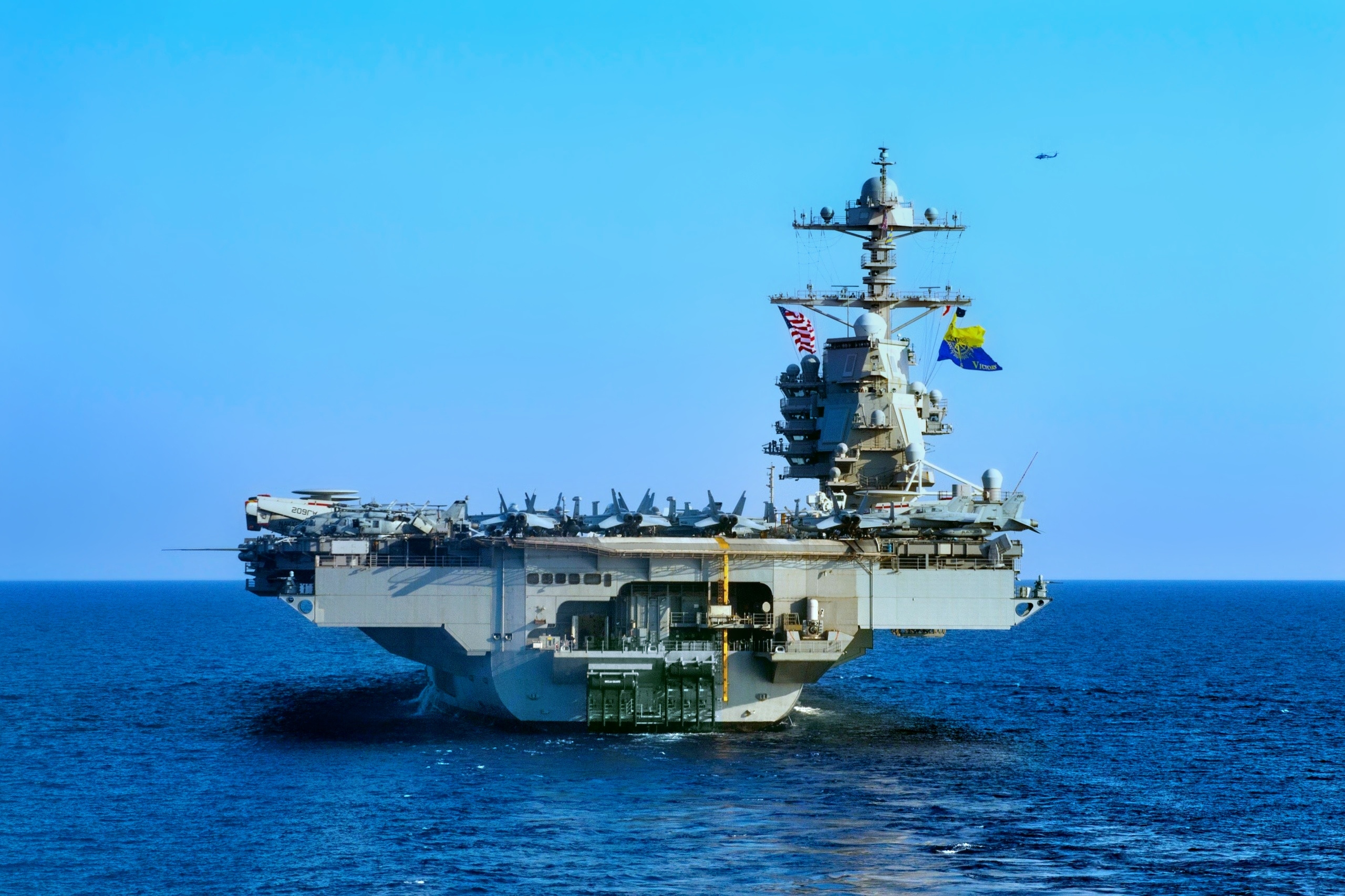
Ford-Class Aircraft Carrier. Image Credit: Creative Commons.
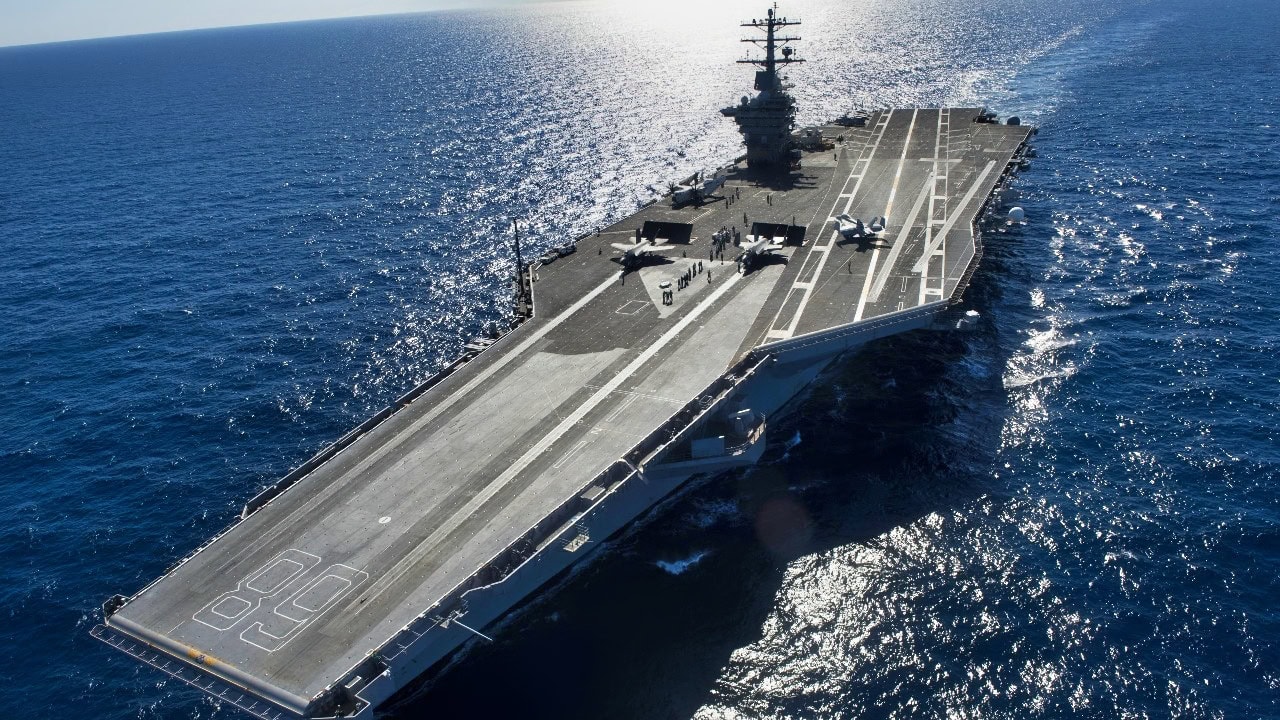
Ford-Class. Image Credit: Creative Commons.
Maintaining that number has become increasingly difficult. The Navy’s newest Ford-class carriers have faced repeated development and delivery delays, including the second ship in the class, USS John F. Kennedy, which is now expected to be delivered years later than originally planned. At the same time, older carriers periodically undergo lengthy Refuelling and Complex Overhaul (RCOH) maintenance periods, removing them from operational service for several years.
The result is a fleet with carrier availability often tight. The Navy has acknowledged that delays and maintenance cycles have put stress on the ability to sustain the legally required carrier force structure.
And it’s in that context that retiring a still-operational nuclear carrier inevitably raises questions about how much capacity the fleet can afford to lose at this point in time.
Why the Navy Might Still Be Using Nimitz
There are several possible explanations for why the Navy is sending Nimitz on exercises rather than moving directly to decommissioning. One possibility is purely ceremonial. The carrier has served for five decades and deployed across the Pacific, the Middle East, and other regions.
A final cruise that includes partner engagements could function as a symbolic farewell for a historically significant warship.
But there could be a practical explanation for this, too. If the ship is already sailing to Norfolk, the Navy might simply be maximizing the value of the voyage by combining it with training exercises and diplomatic port visits.
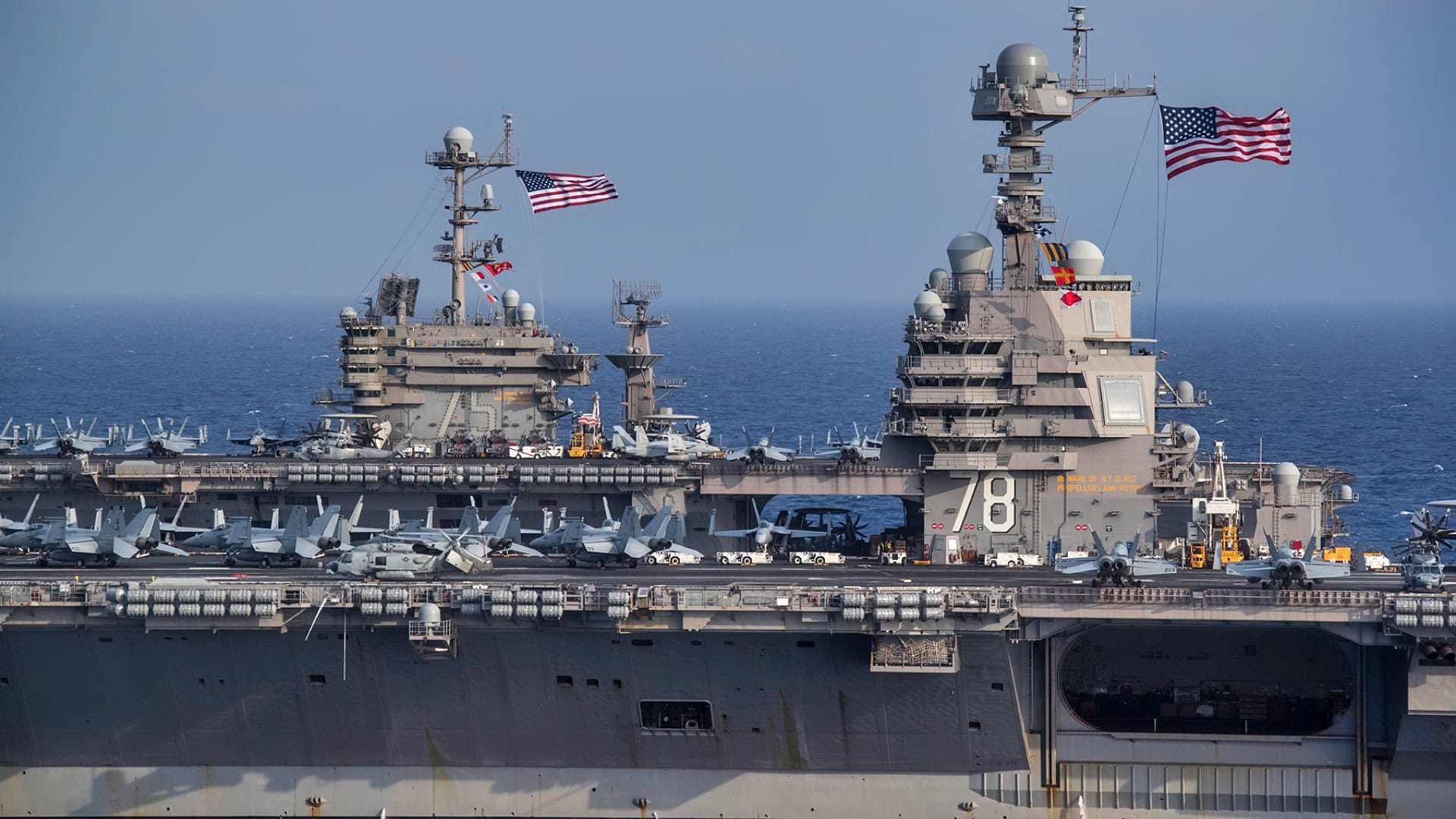
The Ford-class aircraft carrier USS Gerald R. Ford (CVN 78) and the Nimitz-class aircraft carrier USS Harry S. Truman (CVN 75) transit the Atlantic Ocean June 4, 2020, marking the first time a Ford-class and a Nimitz-class aircraft carrier have operated together underway. Ford is underway conducting integrated air wing operations, and the Harry S. Truman Carrier Strike Group remains at sea in the Atlantic as a certified carrier strike group force ready for tasking in order to protect the crew from the risks posed by COVID-19, following their successful deployment to the U.S. 5th and 6th Fleet areas of operation. (U.S. Navy photo by Mass Communication Specialist 2nd Class Ruben Reed)
A third possibility is strategic signaling. Even a partially operational carrier operating in Southern Command demonstrates U.S. naval reach and provides a visible symbol of American presence.
But the decision also leaves another question open: if the Navy still finds the ship useful enough to send on multinational drills and regional engagements, some observers might wonder whether the service is entirely comfortable removing it from the fleet just yet.
For now, at least, the Navy says USS Nimitz will be decommissioned later this year.
About the Author: Jack Buckby
Jack Buckby is a British researcher and analyst specialising in defence and national security, based in New York. His work focuses on military capability, procurement, and strategic competition, producing and editing analysis for policy and defence audiences. He brings extensive editorial experience, with a career output spanning over 1,000 articles at 19FortyFive and National Security Journal, and has previously authored books and papers on extremism and deradicalisation.