
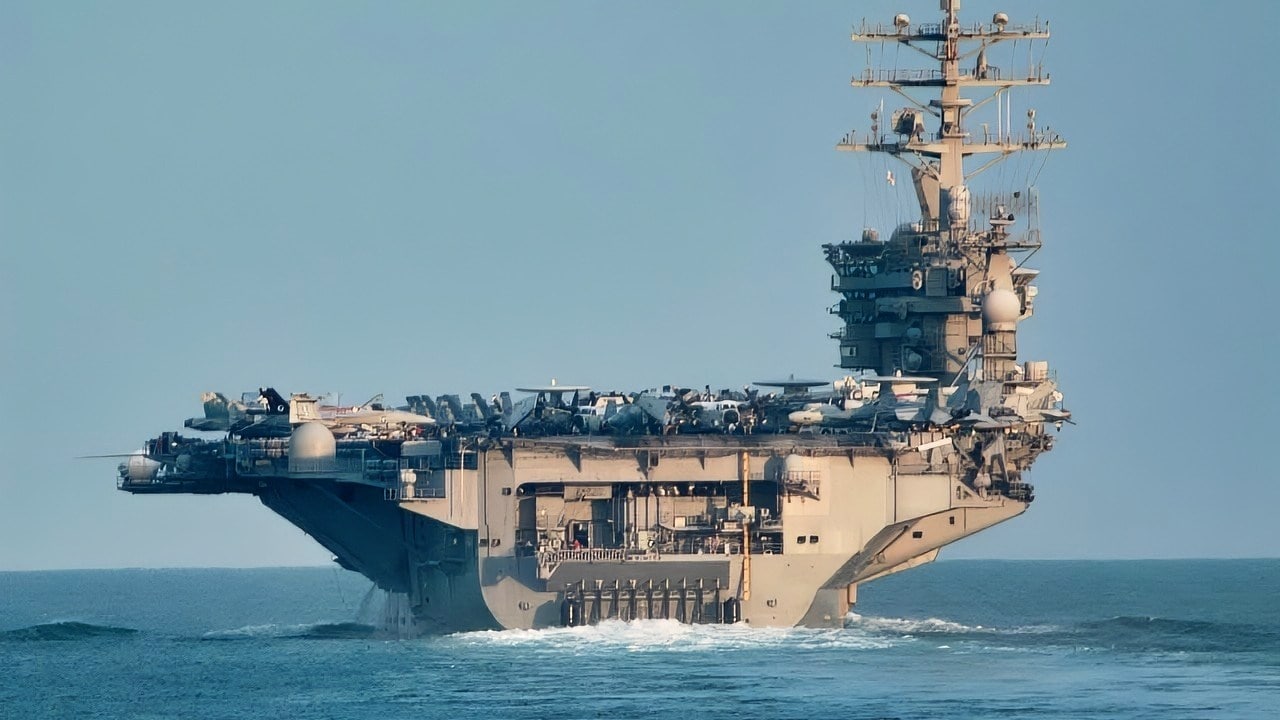
Synopsis: The U.S. Navy faces a critical decision regarding the 50-year-old USS Nimitz (CVN-68): retire the aging flagship or invest in a costly life extension to bridge the gap caused by Ford-class production delays.
-Harrison Kass explains that while a full overhaul—including potential “reactor refueling-related work”—is technically possible, it would consume billions of dollars and precious shipyard capacity, competing directly with submarine and other carrier maintenance.
-Ultimately, the decision rests on a complex “readiness math” equation. The Navy must weigh the strategic need for 11 deployable carriers for global deterrence against the diminishing returns of upgrading a Cold War hull that can never be retrofitted with modern tech like EMALS (Electromagnetic Aircraft Launch System).
Retire or Refuel? The Navy’s Massive Nimitz Supercarrier Dilemma
With the Supercarrier USS Nimitz (CVN-68) approaching the end of its planned service life, the Navy faces a classic question: refuel/upgrade and extend the vessel’s service life—or retire and replace?
The decision will come down to industrial capacity, carrier availability, and risk. Life extension is technically possible but expensive and may not deliver proportionate strategic value—especially given the Navy’s broader shipyard constraints.
Why now?
The Nimitz has been in service for five decades, serving as the flagship of a carrier class that has formed the backbone of US naval air power for two generations.
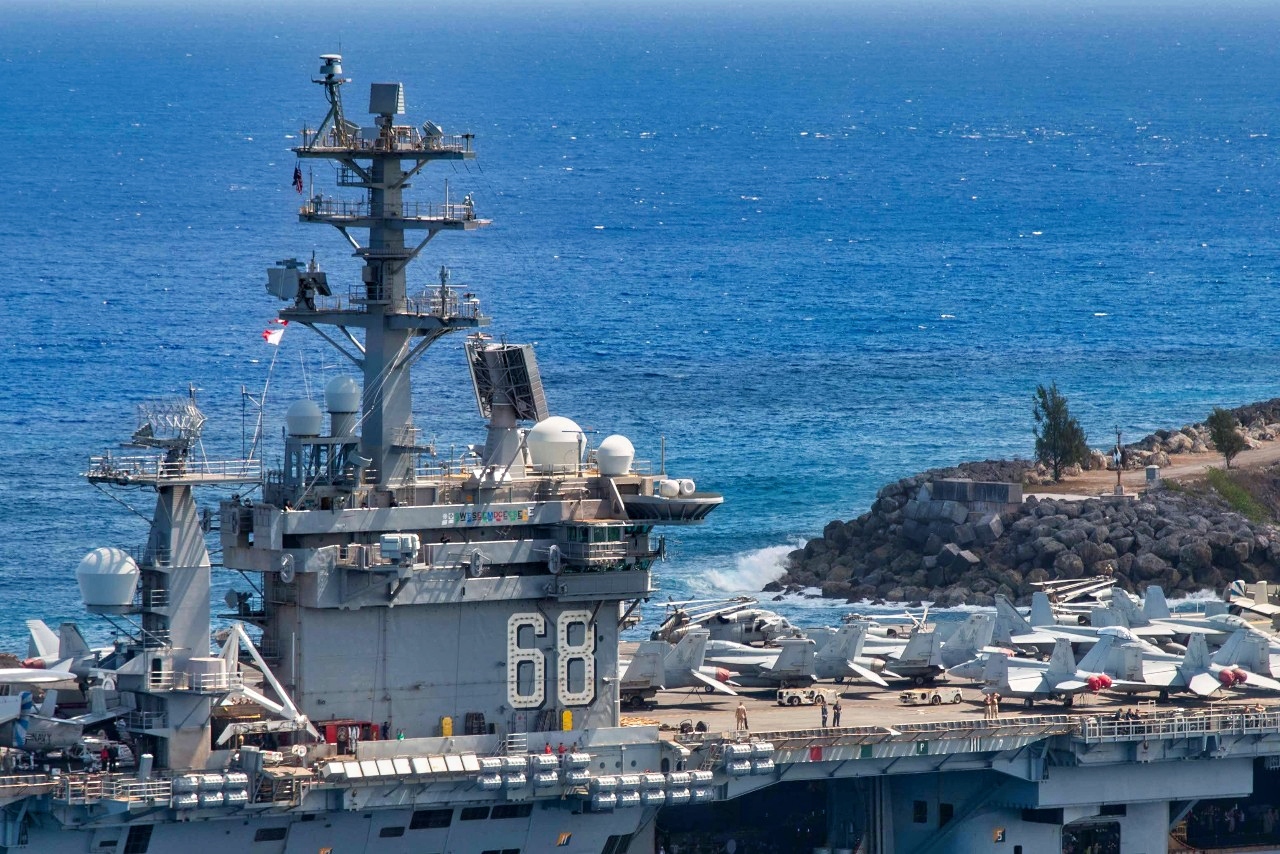
APRA HARBOR, Guam (April 18, 2025) Nimitz-class aircraft carrier USS Nimitz (CVN 68) arrived in Guam for a scheduled port visit, April 18. Nimitz is underway in the U.S. 7th Fleet area of operations on a scheduled deployment, demonstrating the U.S. Navy’s unwavering commitment to a free and open Indo-Pacific. (U.S. Navy Photos by Mass Communication Specialist 1st Class Samantha Jetzer)
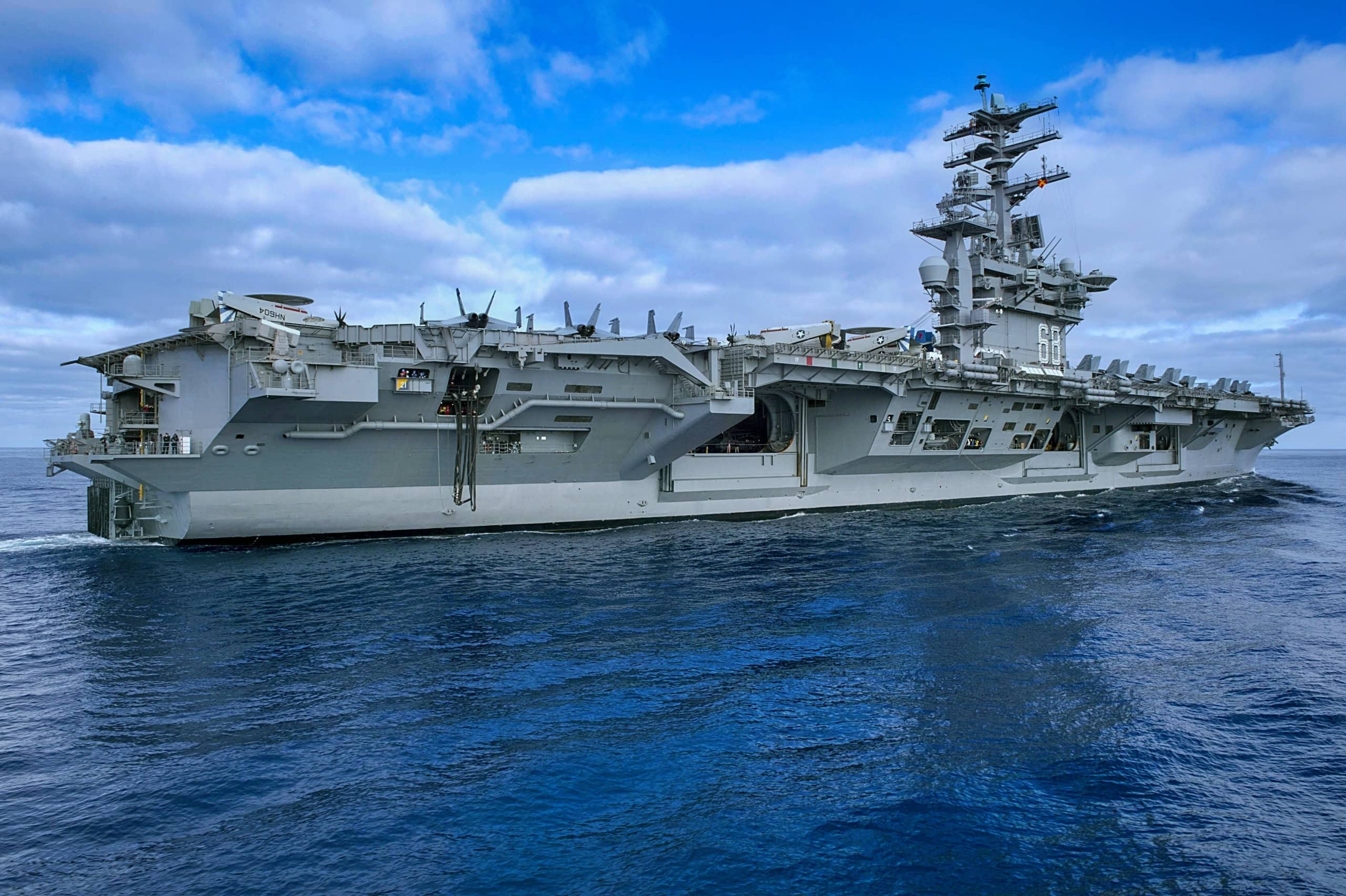
USS Nimitz Aircraft Carrier. Image Credit: Creative Commons.
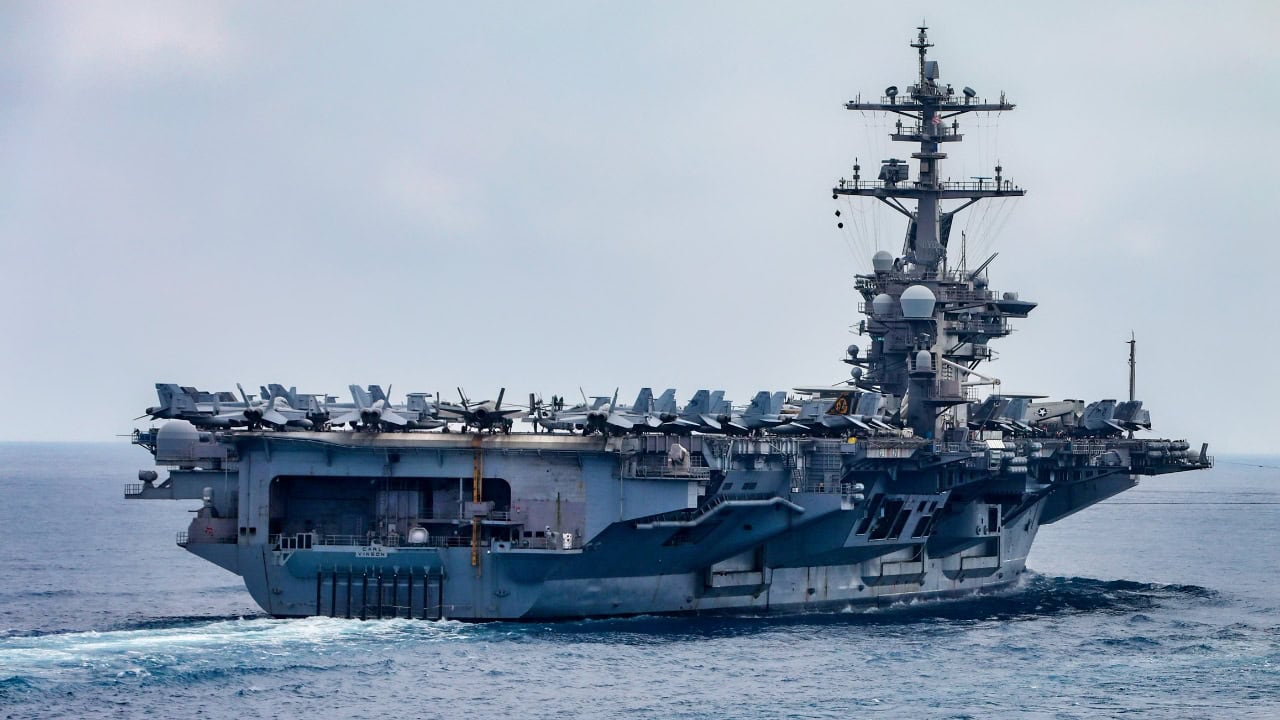
SOUTH CHINA SEA (Feb. 2, 2025) The Nimitz-class aircraft carrier USS Carl Vinson (CVN 70) conducts a replenishment-at-sea with the dry cargo and ammunition ship USNS Carl Brashear (T-AKE 7) Feb. 2, 2025. The Carl Vinson Carrier Strike Group is underway conducting routine operations in the U.S. 7th Fleet area of operations. (U.S. Navy photo by Mass Communication Specialist 1st Class Jacob I. Allison)
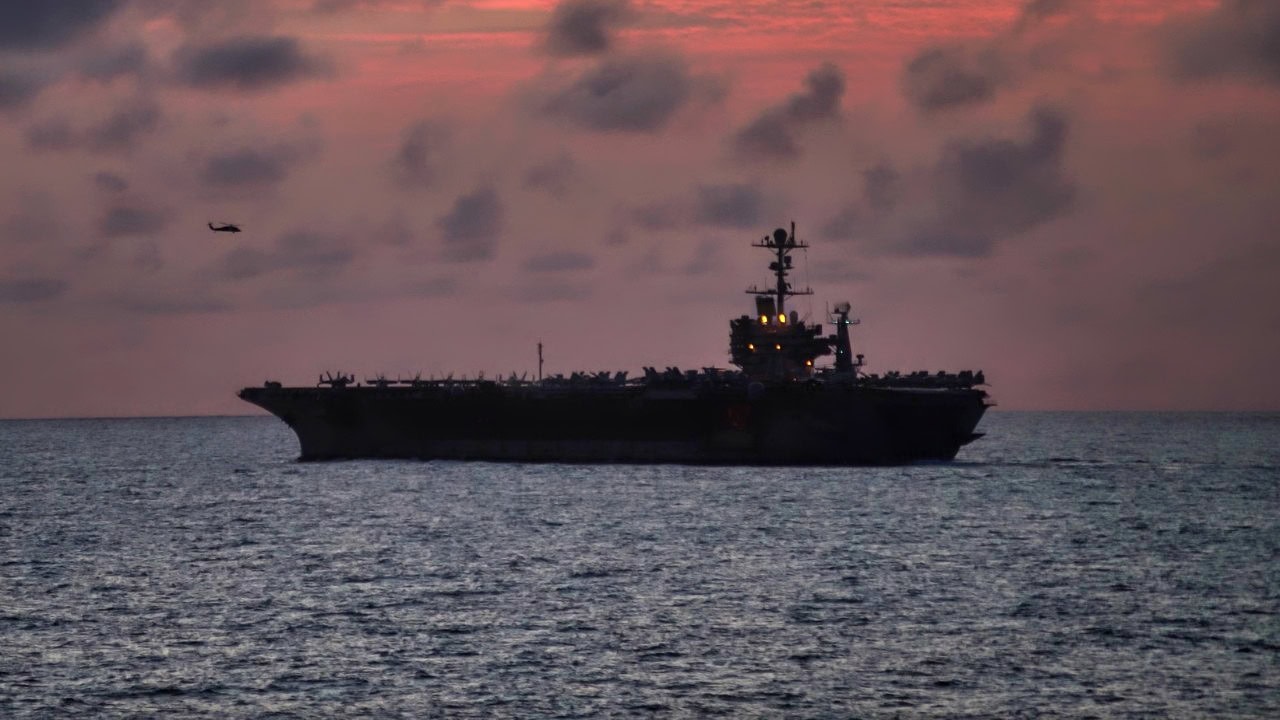
USS Nimitz. Image Credit: Creative Commons.
Today, carrier demands remain high—for presence missions, deterrence signaling, crisis response, etc.
And the Ford-class ramp-up has been slower than hoped, raising questions about readiness and delivery timelines that pressure the fleet to keep older hulls like the Nimitz around. Shipyard bandwidth is finite, too; every major carrier yard period competes with other nuclear fleet needs.
History of the Nimitz
The lead ship of its class, the Nimitz, is a Cold War-era design that became the backbone of post-Cold War US power projection. The core value proposition over the decades has been: persistent global presence; sea-based air power without host-nation basing; and crisis response and deterrence.
The Nimitz has offered proof of concept for decades, validating nuclear carrier operations at scale.
What upgrading means
There are different types of upgrading: service-life extension vs. capability modernization.
Option A is a full life-extension. But the only way to truly extend the platform’s planned life by a few more years is through significant shipyard work.
This may include reactor refueling-related work and associated nuclear systems overhaul, major structural inspections and steel repairs, and replacement/overhaul of critical propulsion auxiliaries and electrical distribution systems. This all would require a major shipyard period.
Option B would be a targeted modernization without deep life-extension. If the goal is to keep the Nimitz relevant until a replacement is ready, a targeted modernization could focus on combat systems refreshes, network and communications upgrades, reliability fixes that increase sortie-generation rate, and defensive systems upgrades. This would require less work than Option A.
Upgrade limitations
But upgrades are not a cure-all. Carrier systems can be modernized, but you can’t turn an older Nimitz hull into a Ford-class.
You can’t retrofit an EMALS or AAG. There are fundamental architectural constraints. And regardless, survivability against modern A2/AD networks is more about tactics and the air wing than about ship hardware.
Carrier deep maintenance is also very expensive and time-consuming, with costs potentially reaching billions depending on the scope.
Retiring the vessel outright can avoid large near-term overhaul costs but reduces carrier availability during the transition, putting pressure on the remaining fleet and accelerating wear and tear. Upgrades also tie up the shipyard, creating a real opportunity cost—delaying other carrier maintenance and competing with nuclear submarine work during the backlog period.
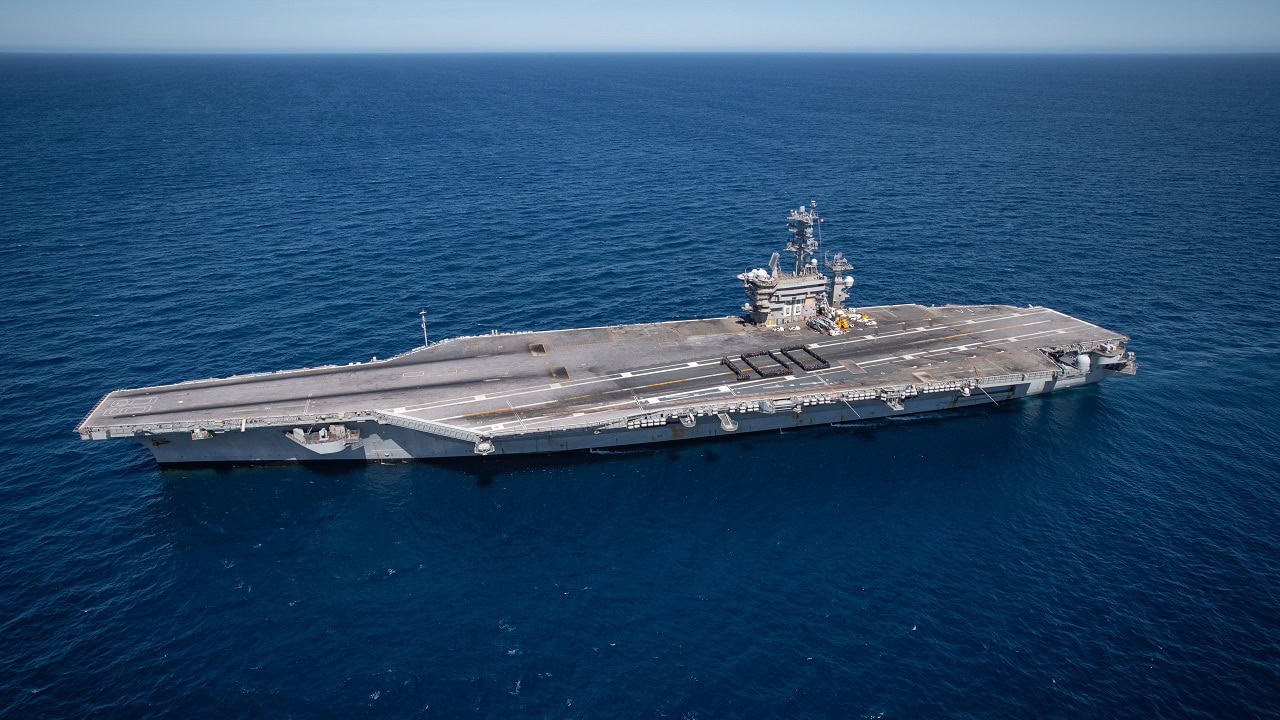
(Mar. 12, 2022) Sailors aboard USS Nimitz (CVN 68) assemble on the flight deck and form a human ‘100’ to commemorate the centennial of the aircraft carrier. On March 20, 1922 the former USS Jupiter (Collier #3) recommissioned as the USS Langley (CV 1), the U. S. Navy’s first aircraft carrier. One hundred years later, Nimitz and Ford-class aircraft carriers are the cornerstone of the Navy’s ability to maintain sea control and project power ashore. Nimitz is the first in its class and the oldest commissioned aircraft carrier afloat., carrying with it a legacy of innovation, evolution and dominance. Nimitz is underway in the 3rd Fleet Area of Operations. (U.S. Navy photo by Mass Communication Specialist 3rd Class Elliot Schaudt)
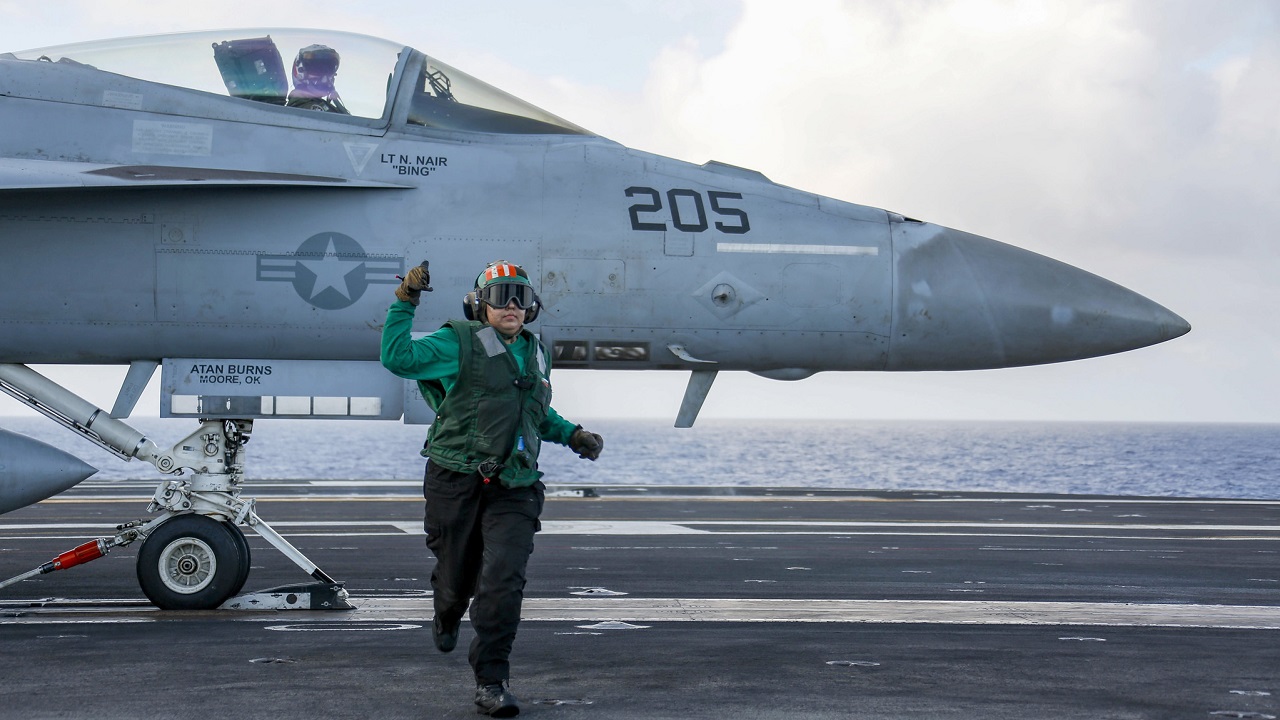
Aviation Boatswain’s Mate (Equipment) 3rd Class Anatalia Zamora, from Midland, Texas, runs to a safe distance before an F/A-18E Super Hornet assigned to the “Tophatters” of Strike Fighter Squadron (VFA) 14 launches from the flight deck of the Nimitz-class aircraft carrier USS Abraham Lincoln (CVN 72). The Abraham Lincoln Carrier Strike Group is on a scheduled deployment in the U.S. 7th Fleet area of operations to enhance interoperability through alliances and partnerships while serving as a ready-response force in support of a free and open Indo-Pacific region. (U.S. Navy photo by Mass Communication Specialist 3rd Class Michael Singley) 220228-N-MM912-1137
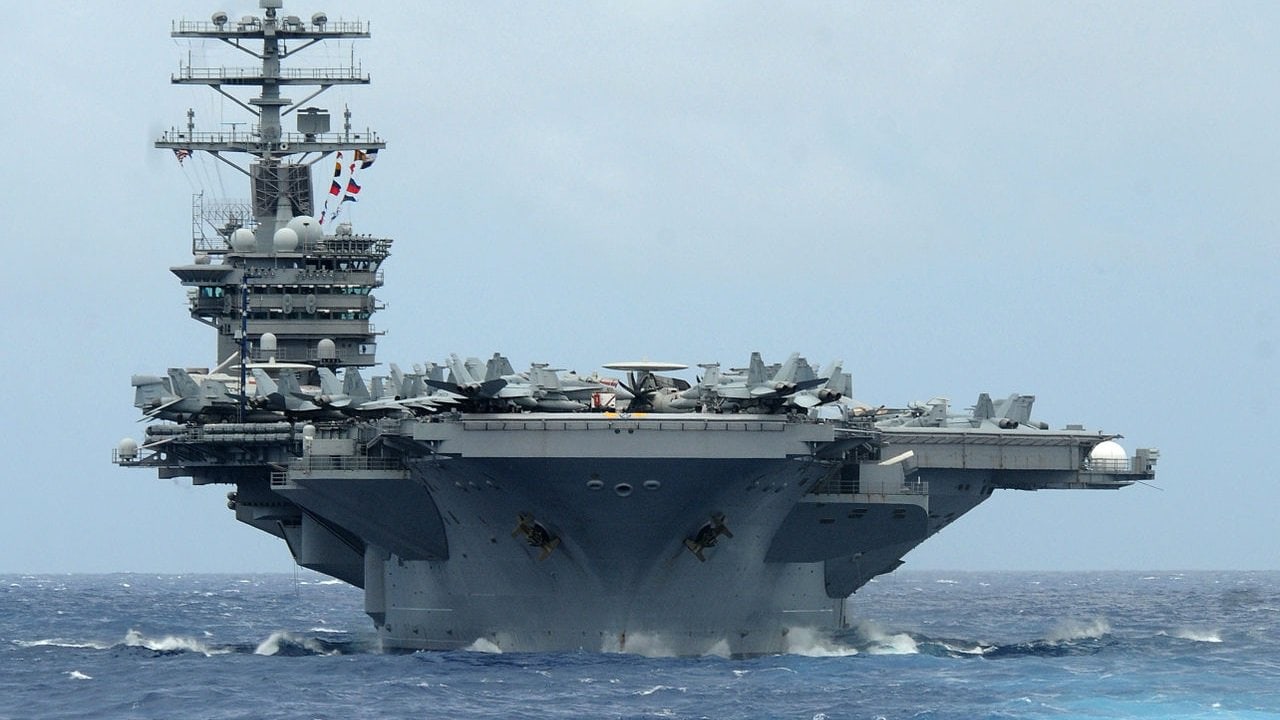
The aircraft carrier USS Nimitz (CVN 68) is underway during the Great Green Fleet demonstration portion of the Rim of the Pacific (RIMPAC) 2012 exercise. Nimitz took on 200,000 gallons of biofuel in preparation for the Great Green Fleet demonstration during Rim of the Pacific (RIMPAC) 2012. Twenty-two nations, more than 40 ships and submarines, more than 200 aircraft and 25,000 personnel are participating in RIMPAC exercise from June 29 to Aug. 3, in and around the Hawaiian Islands. The world’s largest international maritime exercise, RIMPAC provides a unique training opportunity that helps participants foster and sustain the cooperative relationships that are critical to ensuring the safety of sea lanes and security on the world’s oceans. RIMPAC 2012 is the 23rd exercise in the series that began in 1971. (U.S. Navy photo by Mass Communication Specialist 2nd Class Eva-Marie Ramsaran/Released)
Readiness Math
While the Navy has 11 super carriers, carrier availability isn’t always so clean and simple. The real metric is deployable-ready hulls given maintenance cycles, training cycles, and unplanned repairs.
Extending the Nimitz could be framed as a bridging strategy if Ford-class schedules and maintenance throughput don’t support demand.
And whether the US needs 11 carriers is a live and worthwhile debate. But whatever the exact number of carriers the US needs, the Nimitz decision is closely tied to alliance signaling requirements, global commitments, and the political risk of a reduced presence.
The logic undergirding the US carrier force structure is not strictly about war-fighting but about peacetime presence and crisis response, too.
For and against
Upgrading the Nimitz would buy time during an uncertain transition, with the Ford-class ramp-up and ongoing shipyard constraints. It would preserve presence capacity, reduce stress on the rest of the fleet, and potentially be cost-effective compared with the operational strain of a smaller carrier force.
But upgrades would also be very expensive for a limited additional service life. Shipyard bottlenecks make it a zero-sum trade with other readiness priorities. And capability gains may be marginal compared to investing in air wing range, munitions, stockpiles, escorts, and submarines.
Extending the Nimitz could be a practical bridging option, but it is not necessarily a clear-cut, low-cost strategic victory.
About the Author: Harrison Kass
Harrison Kass is an attorney and journalist covering national security, technology, and politics. Previously, he was a political staffer and candidate, and a US Air Force pilot selectee. He holds a JD from the University of Oregon and a master’s in global journalism and international relations from NYU.