
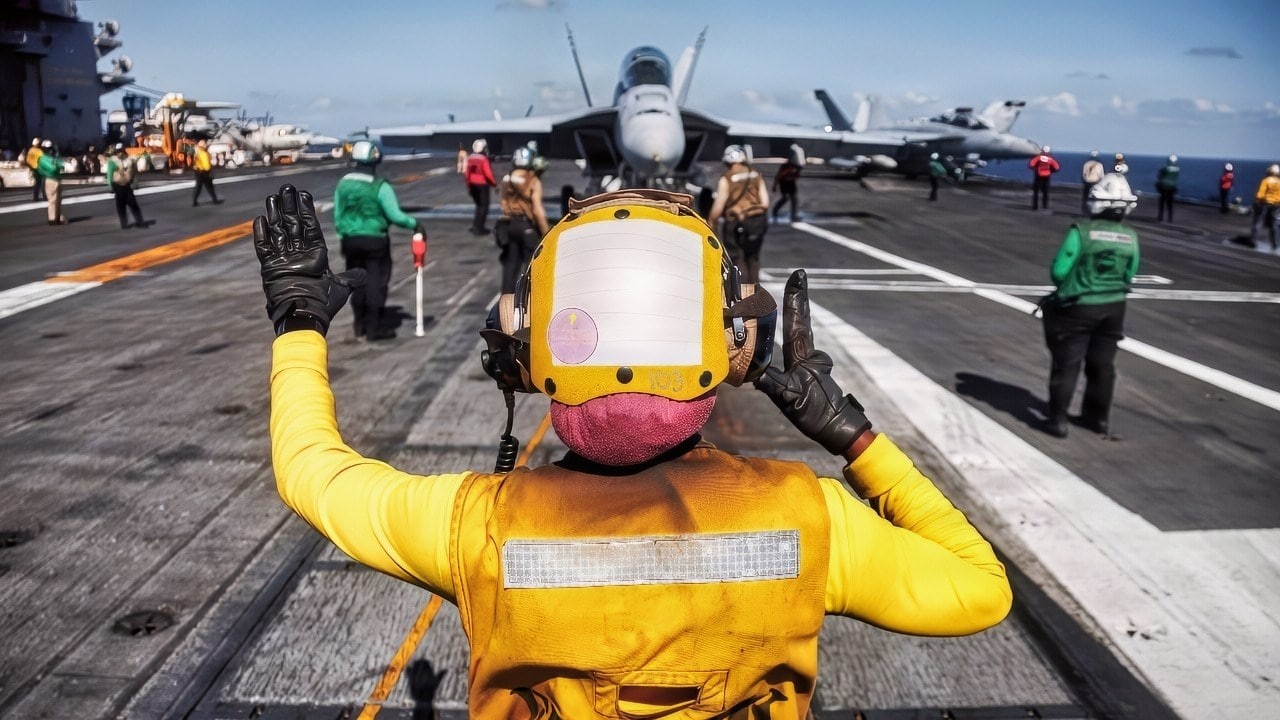
Summary and Key Points: Stephen Silver, an award-winning national security journalist, analyzes the record-breaking deployment of the USS Gerald R. Ford (CVN-78).
-Having transited the Strait of Gibraltar to arrive in Haifa, the carrier is now positioned for a potential strike on Iran following its role in the Nicolas Maduro operation.
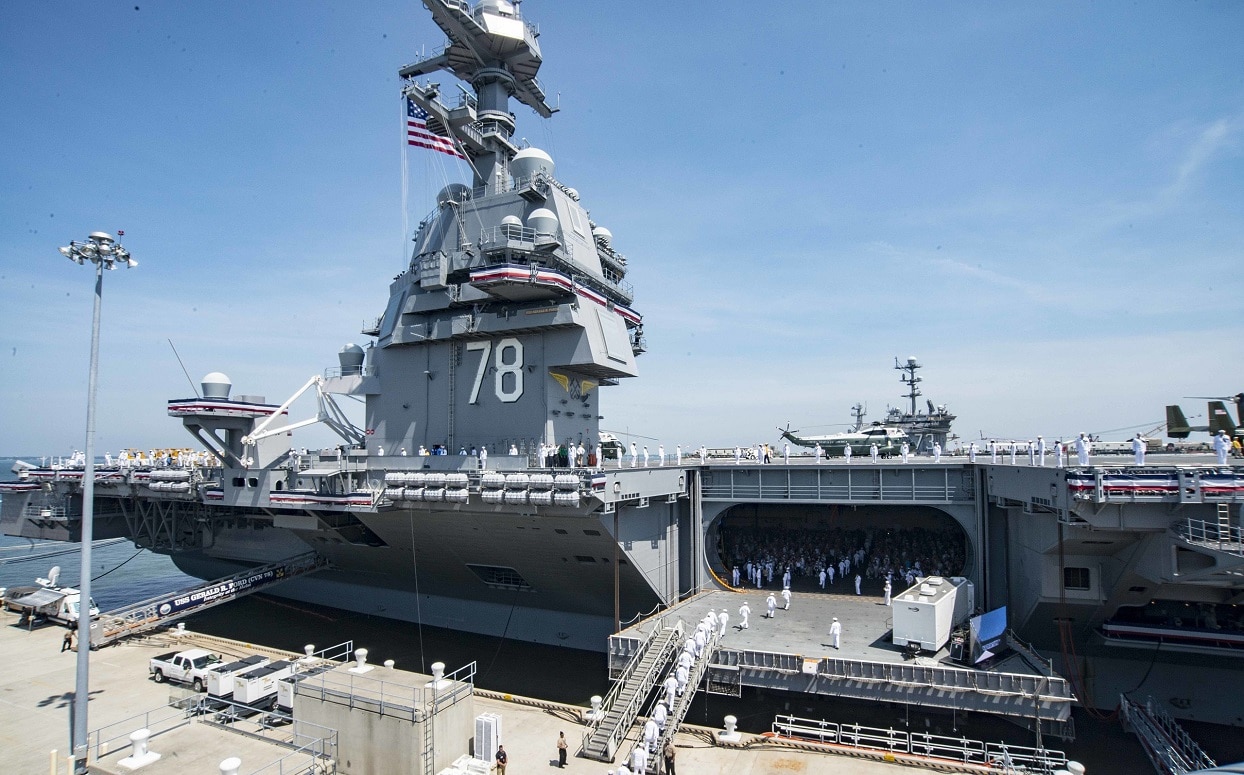
Gerald R. Ford-class. Image: Creative Commons.
-This 19FortyFive report scrutinizes CNO Admiral Daryl Caudle’s pushback against extended deployments, evaluating how a year at sea impacts carrier maintenance schedules and sailor morale.
-The analysis also explores the controversial vacuum sewage system failures and the “running rust” concerns currently challenging the fleet’s operational readiness.
250 Days and Counting: The USS Gerald R. Ford Approaches a Historic Post-Vietnam Deployment Record
The USS Gerald Ford, per The Jerusalem Post, arrived at the dock in Haifa on Monday, as part of a massive show of force ahead of a possible attack on Iran.
Per the Jerusalem Post, the USS Gerald Ford’s carrier group, known as Carrier Strike Group 12, “entered the Mediterranean after transiting the Strait of Gibraltar,” after crossing the Atlantic from its previous deployment in the Caribbean, at the time of the U.S. operation to arrest Venezuelan leader Nicolas Maduro.
According to the War Zone, the carrier group, which is the largest in the world and the newest in the U.S. Navy’s fleet, left its home port in Norfolk on June 24, 2025, and has been at sea ever since. The Middle East sojourn is the second extension of the carrier’s deployment.
Per TWZ, the carrier group went from Norfolk to a “regularly scheduled deployment” in the Mediterranean, just before the war began between Israel and Iran last summer, leading into the Operational Midnight Hammer mission in which the U.S. attacked Iran’s nuclear sites. In October, the carrier was ordered to the SOUTHCOM region, amid the tensions with Venezuela. The carrier was anchored off St. Thomas in the U.S. Virgin Islands in early December.
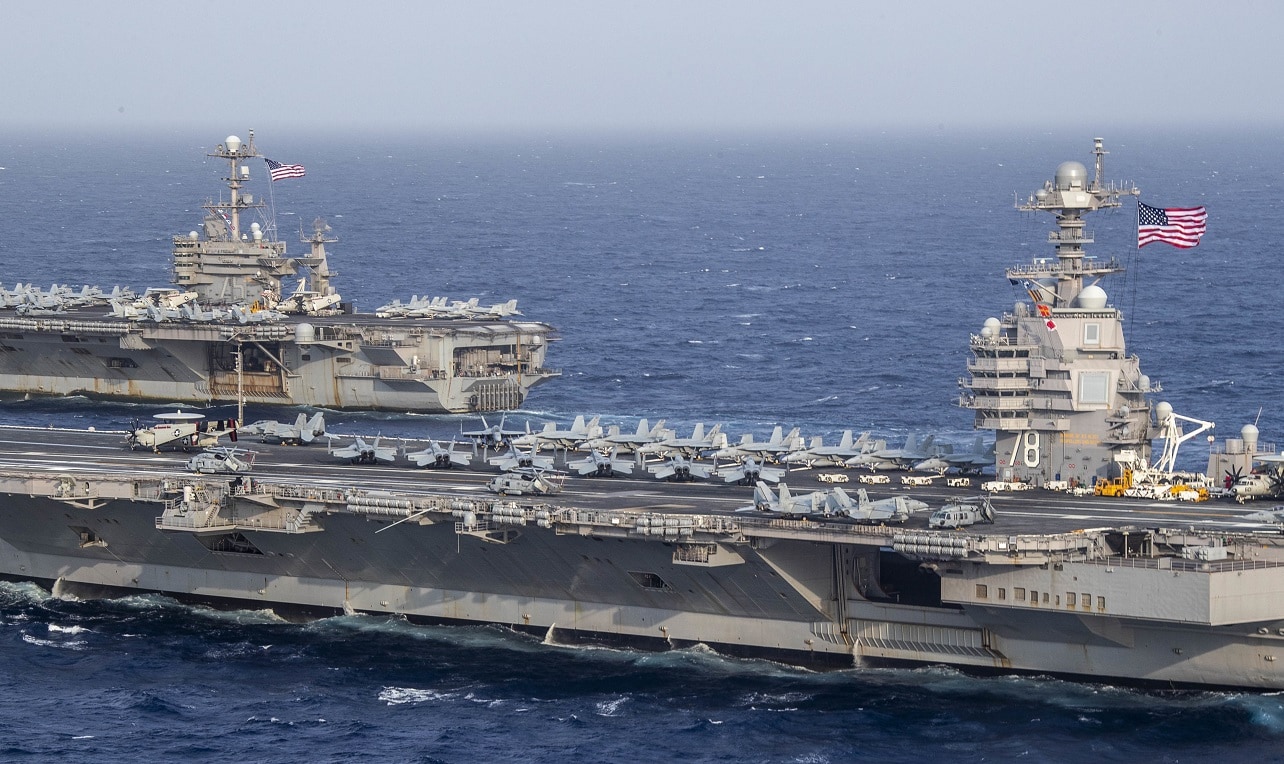
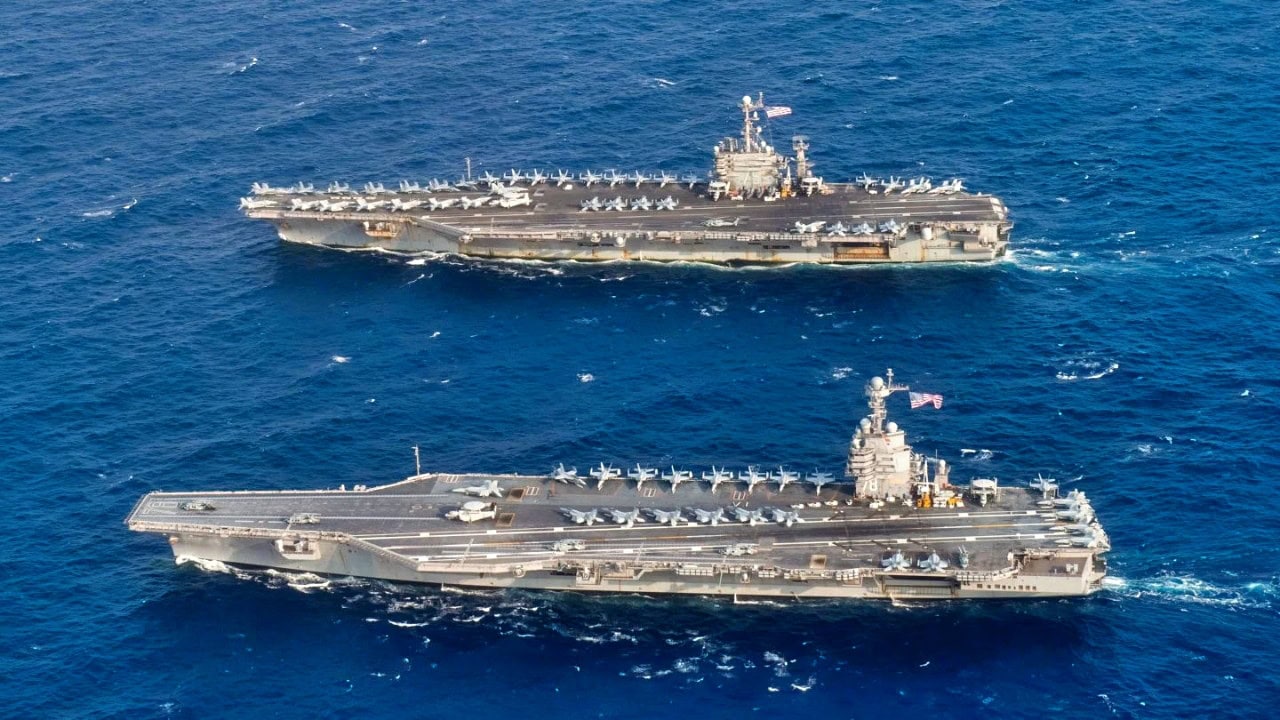
The Ford-class aircraft carrier USS Gerald R. Ford (CVN 78) and the Nimitz-class aircraft carrier USS Harry S. Truman (CVN 75) transit the Atlantic Ocean June 4, 2020, marking the first time a Ford-class and a Nimitz-class aircraft carrier operated together underway. Ford is underway conducting integrated air wing operations, and the Harry S. Truman Carrier Strike Group remains at sea in the Atlantic as a certified carrier strike group force ready for tasking in order to protect the crew from the risks posed by COVID-19, following their successful deployment to the U.S. 5th and 6th Fleet areas of operation. (U.S. Navy photo by Mass Communication Specialist Seaman Riley McDowell)
Per a New York Times report on February 12, which first reported on the deployment to the Middle East, the USS Gerald Ford and its escort ships are “not expected to return to their home ports until late April or early May.” This would bring its deployment close to the year mark, potentially pushing it past the post-Vietnam War era record.
According to Maritime Executive, in a February 16 story, the USS Gerald Ford will have logged about 250 days at sea by the time of its arrival in the Middle East.
“Adding as little as 20 days on station and two weeks returning to Norfolk, and Ford could beat the post-Vietnam deployment record set by USS Harry S. Truman in 2021 (285 days),” that report said. “If her time in theater extends for months – as it plausibly could, if negotiations are as protracted as they were during the Venezuelan campaign – she could surpass the record set by USS Midway in 1972-3, during the peak of Operation Linebacker.”
And according to multiple reports, the extended deployment is beginning to take a toll on the sailors on board and their families.
Pushing Back on Aircraft Carrier Deployment
TWZ reported back in January that “the Navy’s top admiral said he would seek alternatives to extending the deployment” of the USS Gerald Ford, as the idea of the carrier group heading to the Middle East had been discussed at that point.
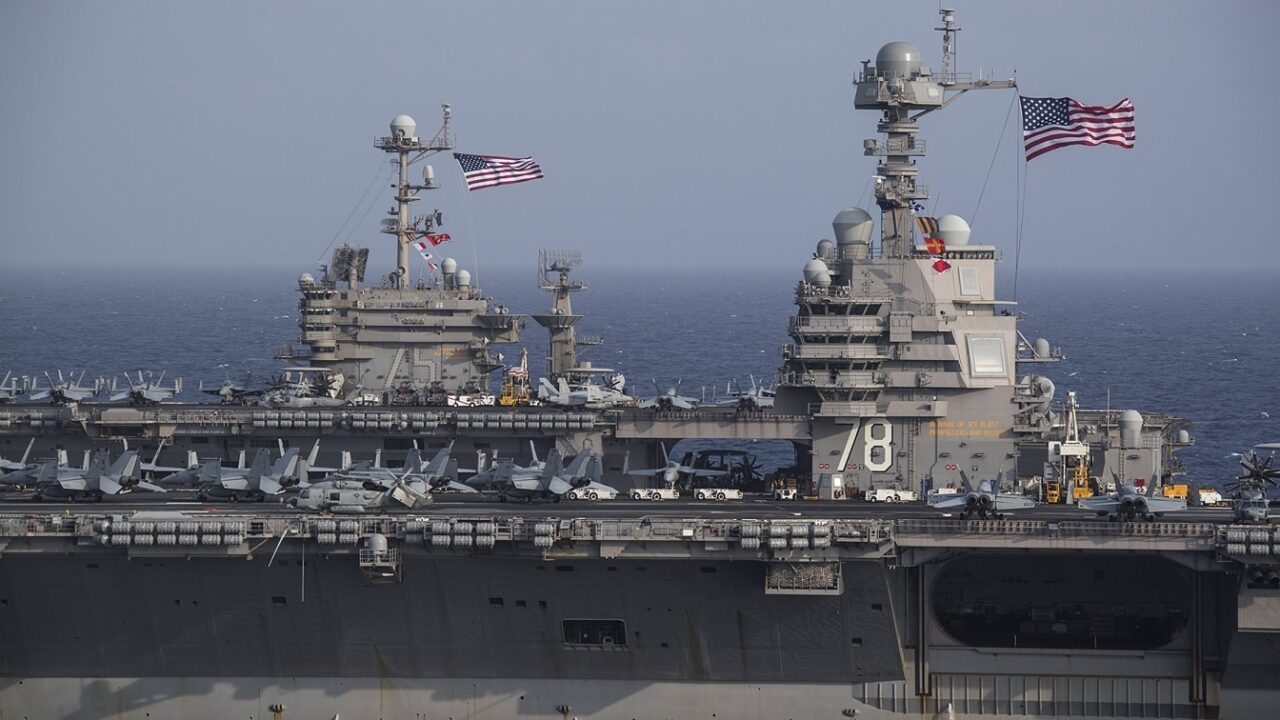
(June 4, 2020) The Ford-class aircraft carrier USS Gerald R. Ford (CVN 78) and the Nimitz-class aircraft carrier USS Harry S. Truman (CVN 75) transit the Atlantic Ocean, June 4, 2020, marking the first time a Ford-class and a Nimitz-class aircraft carrier have operated together underway. Gerald R. Ford is underway conducting integrated air wing operations and the Harry S. Truman Carrier Strike Group remains at sea in the Atlantic Ocean as a certified carrier strike group force ready for tasking in order to protect the crew from the risks posed by COVID-19, following their successful deployment to the U.S. 5th and 6th Fleet areas of operation. (U.S. Navy photo by Mass Communication Specialist 2nd Class Ruben Reed/Released
Long deployments, the report said, have been known to have “a cascading effect on the ability to maintain ships and on the lives of the sailors who operate them.”
Adm. Daryl Caudle, the Chief of Naval Operations (CNO), brought this up at the Surface Navy Association’s January symposium.
“I think the Ford, from its capability perspective, would be an invaluable option for any military thing the president wants to do,” Caudle said at the symposium, per TWZ. “But if it requires an extension, it’s going to get some pushback from the CNO. And I will see if there is something else I can do.”
“The fact that the Ford is currently operating in the Southern Command’s area of operations is fine with me,” Caudle added at the conference, as reported by TWZ. “It is the extensions that bother… I am a big non-fan of extensions, and because they do have significant impact… number one, I’m a sailors-first CNO. People want to have some certainty that they’re going to do a seven-month deployment.”
“When it goes past that, that disrupts lives,” Caudle added at the conference. “It disrupts things like funerals that were planned, marriages that were planned, okay, babies that were planned, you know, so the human element of extension, I’m not a big fan of obviously.”
He also addressed the maintenance issue during long deployments.
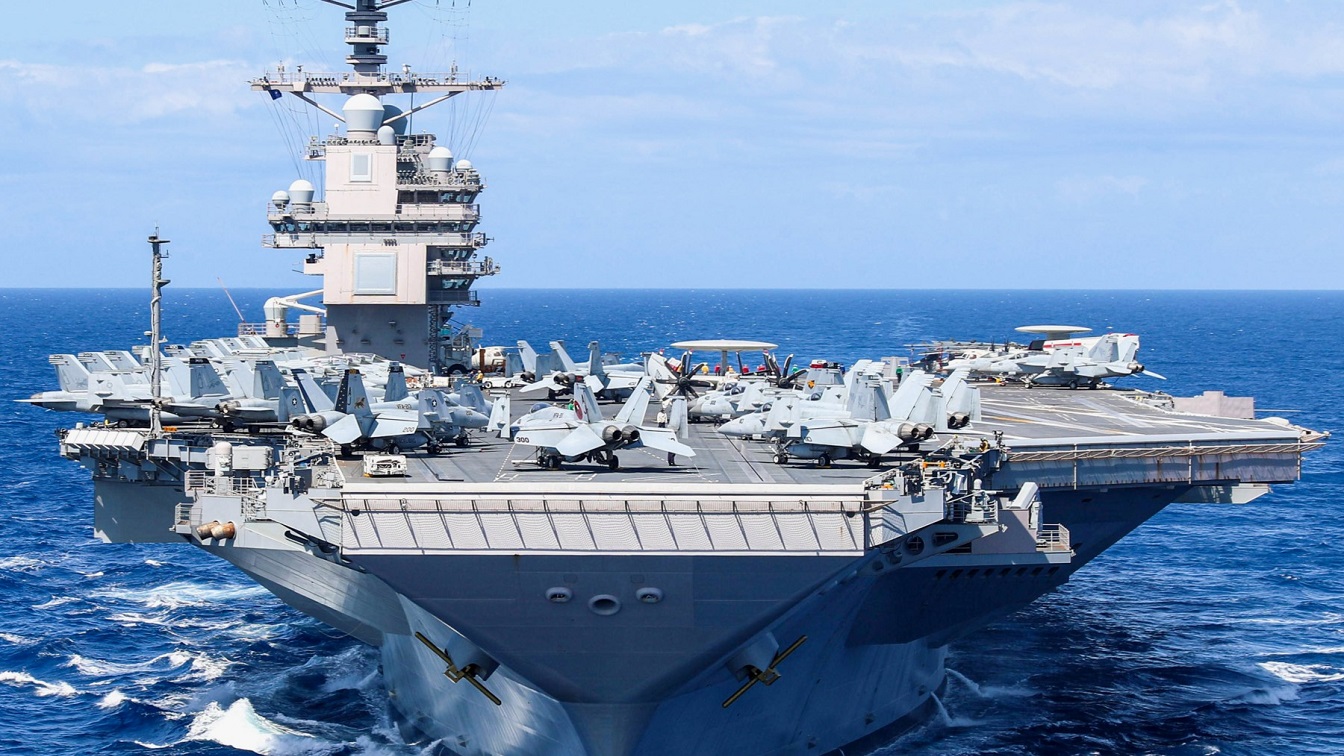
Ford-Class. Ford-Class Aircraft Carrier USS Ford.
“To the financial and readiness aspects, we have maintenance agreements and contracts that have been made with yards that are going to repair the ships that are in that strike group, including the carrier itself,” Caudle explained. “And so when those are tied to a specific time, the yard is expecting it to be there. All that is highly disruptive.”
Caudle also addressed the toll taken on “the workforce, to the balance on that yard, and to how we actually conduct that maintenance, even more so if it goes into the next fiscal year,” Caudle said. “The financial aspects of an extension can be quite disruptive when we burn the ships hotter, more than planned. That does have detrimental effects on the work package.”
A TWZ report on February 13 noted that Admiral Caudle had said this, and that his concerns appear to have not been heeded.
The Toll Taken on USS Gerald R. Ford Aircraft Carrier
Per the Maritime Executive story, “the Navy has repeatedly warned that extra-long, extended deployments take a toll on readiness, starting with maintenance. Yard period schedules get deferred; equipment gets worn down, adding to the repair scope when the ship returns; and the crew has to put off plans for reuniting with their families.”
The Times, meanwhile, had reported in December that the Navy “regularly kept carriers deployed for nine months at a time or longer during the post-9/11 wars, peacetime deployments typically do not go past six.” Whether the current moment counts as “peacetime” is an entirely separate question.
The Wall Street Journal, on February 21, looked at the toll taken on sailors and their families stemming from the long deployment, while also sharing details about conditions on the carrier, including the condition of the toilets.
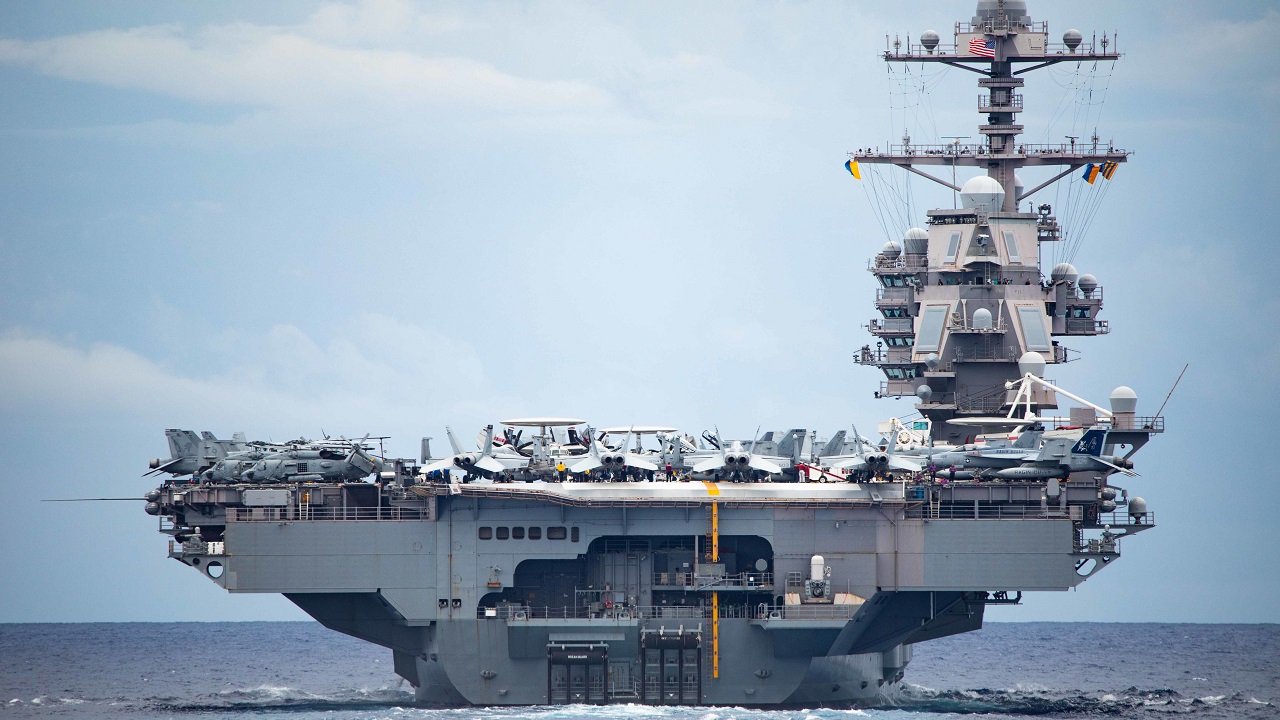
A view of the first-in-class aircraft carrier USS Gerald R. Ford (CVN 78) from aboard the Ticonderoga-class guided-missile cruiser USS Normandy (CG 60) as Normandy participates in a Tactical Force Exercise as part of the Gerald R. Ford Carrier Strike Group, Oct. 13, 2022. Ford is on its inaugural deployment conducting training and operations alongside NATO Allies and partners to enhance integration for future operations and demonstrate the U.S. Navy’s commitment to a peaceful, stable and conflict-free Atlantic region. (U.S. Navy photo by Mass Communication Specialist 2nd Class Malachi Lakey)
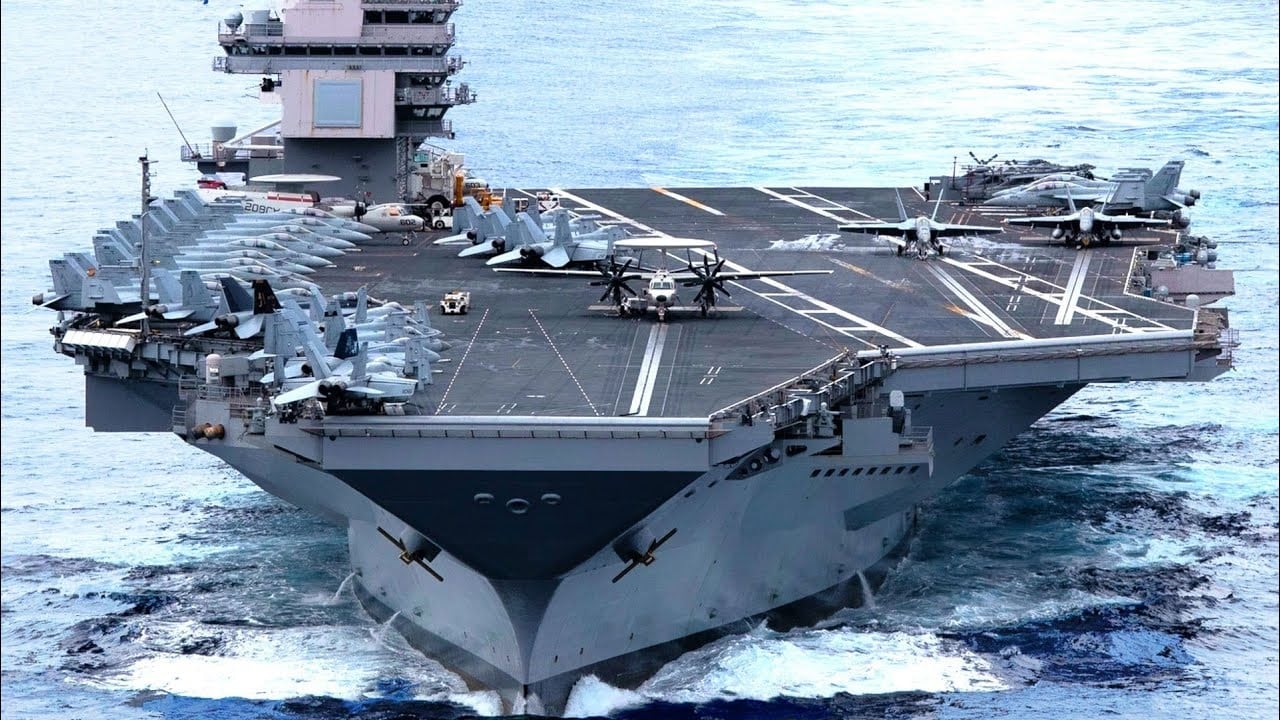
USS Gerald R. Ford. Image Credit: Creative Commons.
“One sailor missed the death of his great-grandfather. Another is thinking about leaving the Navy after almost a year away from her toddler daughter. Two more said the ship had sewage problems, the Journal story said. “President Trump’s decision to extend for a second time the deployment of the aircraft carrier USS Gerald R. Ford is taking a toll on the ship’s sailors and their families, and leading some to consider leaving the Navy when they return to home port, according to interviews with sailors on board the ship and their family members back home.”
Some sailors talked to the newspaper, although they did not use their names.
“One sailor on board the Ford told the Journal that many crew members are angry and upset, with some saying they want to leave the Navy at the end of the deployment,” the Journal reported. “The sailor said she was strongly considering quitting herself. She said she misses her toddler daughter, but the unpredictability of when she would see her family again hurt the most.”
The Journal also obtained a letter sent by Capt. David Skarosi, the Ford’s commanding officer, from mid-February.
“I’ve spoken to many of your Sailors who are coming to terms with missing Disney World plans, weddings they already RSVP’d to attend, and spring break trips to Busch Gardens,” he added. ‘When our country calls, we answer.”
An Older Concern
Stars and Stripes in August of 2024 reported on the concern of the effect of long deployments on morale, as well as recruitment efforts.
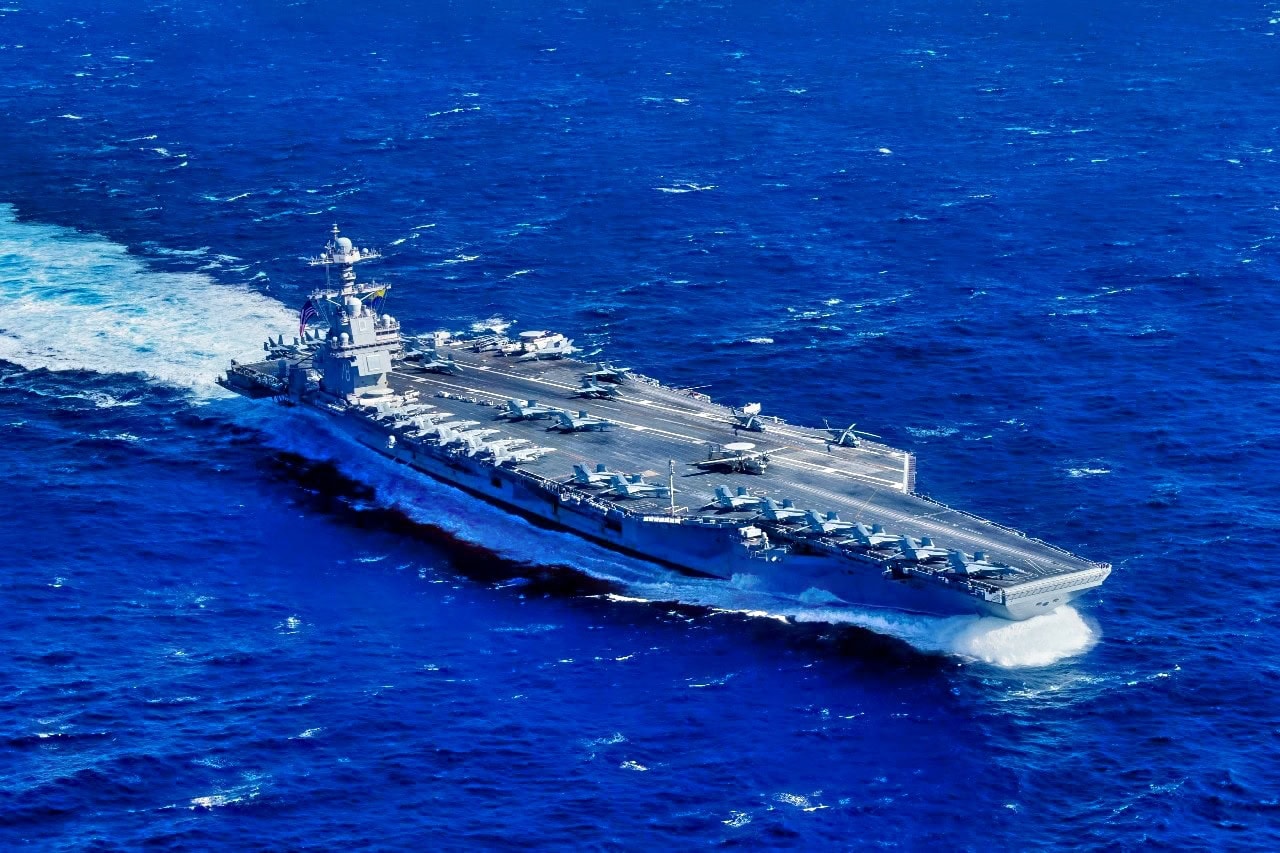
The world’s largest aircraft carrier, USS Gerald R. Ford (CVN 78), sails in formation with the Arleigh Burke-class guided missile destroyers USS Winston Churchill (DDG 81), USS Mitscher (DDG 57), USS Mahan (DDG 72), USS Bainbridge (DDG 96), and USS Forrest Sherman (DDG 98) in the Atlantic Ocean, Nov. 12, 2024. The Gerald R. Ford Carrier Strike Group is underway in the Atlantic Ocean completing Group Sail. Group Sail is the first at-sea integrated phase training event during a routine deployment training cycle. It is designed to challenge the Gerald R. Ford CSG’s ability to use the capabilities of the USS Gerald R. Ford (CVN 78), USS Winston S. Churchill (DDG 81), Carrier Air Wing (CVW) 8, Destroyer Squadron (DESRON) 2, and embarked Information Warfare team as a cohesive Strike Group to meet Navy and Joint Warfighting requirements that increases warfighting capability and tactical proficiency across all domains. (U.S. Navy photo by Mass Communication Specialist 2nd Class Maxwell Orlosky)
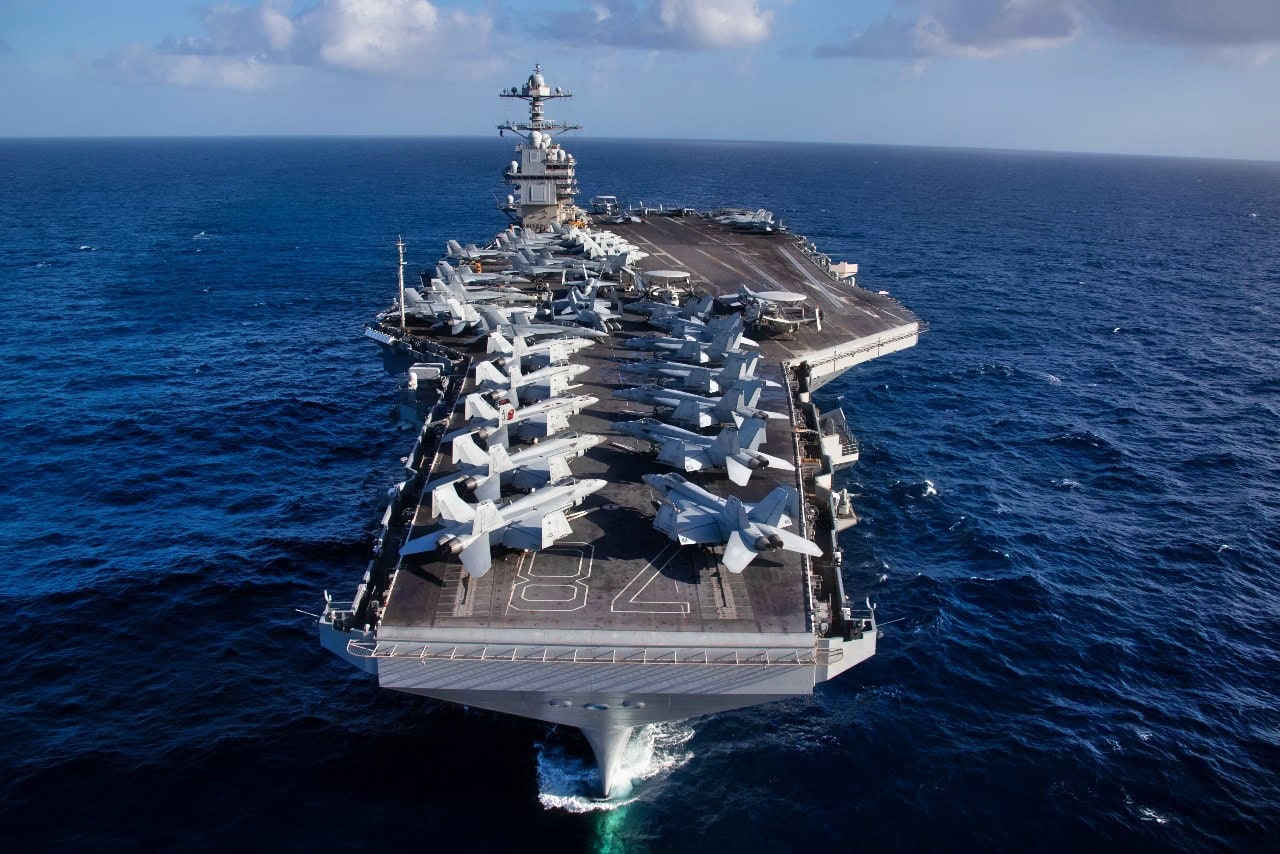
The world’s largest aircraft carrier USS Gerald R. Ford (CVN 78), steams in the Mediterranean Sea, Dec. 24, 2023. The Gerald R. Ford Carrier Strike Group is currently operating in the Mediterranean Sea. The U.S. maintains forward-deployed, ready, and postured forces to deter aggression and support security and stability around the world. (U.S. Navy photo by Mass Communication Specialist 2nd Class Jacob Mattingly)
The USS Dwight D. Eisenhower, at that time, was returning, also to Norfolk, on the 274th of a 275-deployment, which had also been extended twice.
“She is tired,” Petty Officer 1st Class Keith Woodcock said about the ship. “We all are.”
“If you are a potential recruit and you are basing your decisions mostly on what you see in the news and what you see from the recruiting commands, then you are going to be more likely to join the Navy. But if you base your decision on feedback you are getting from sailors themselves, it could be more of a mixed bag,” retired Navy Cmdr. Bryan Clark, a senior fellow with the Hudson Institute think tank in Washington, told Stars and Stripes in the 2024 story.
At that point, the Navy had missed its recruiting goal for the second straight year.
In the fall of 2025, per Navy Times, the Navy touted its strongest recruiting numbers in nearly a quarter-century.
“We’ve listened to those line recruiters and done the things that they indicated were the most important to them, and that has changed the game,” Rear Adm. James Waters, head of Navy recruiting command, said in that story.
“We would not be where we are without every line recruiter doing that hard work, day in and day out, the thousands of things that they do that I will never know to go the extra mile — that has been the difference.”
Toilet Trouble for this Ford-Class Carrier
NPR had reported back in January that there were problems with the ship’s plumbing system, which dated back to last summer, not long after the deployment began.
“To be blunt, it’s hard for 4,600 sailors to spend weeks and months on a ship without fully functioning toilets. USS Ford is the U.S.’ newest aircraft carrier,” Steve Walsh, a reporter from a TV station in the carrier’s home port of Norfolk, said in the NPR report, which began when the mother of a sailor reached out.
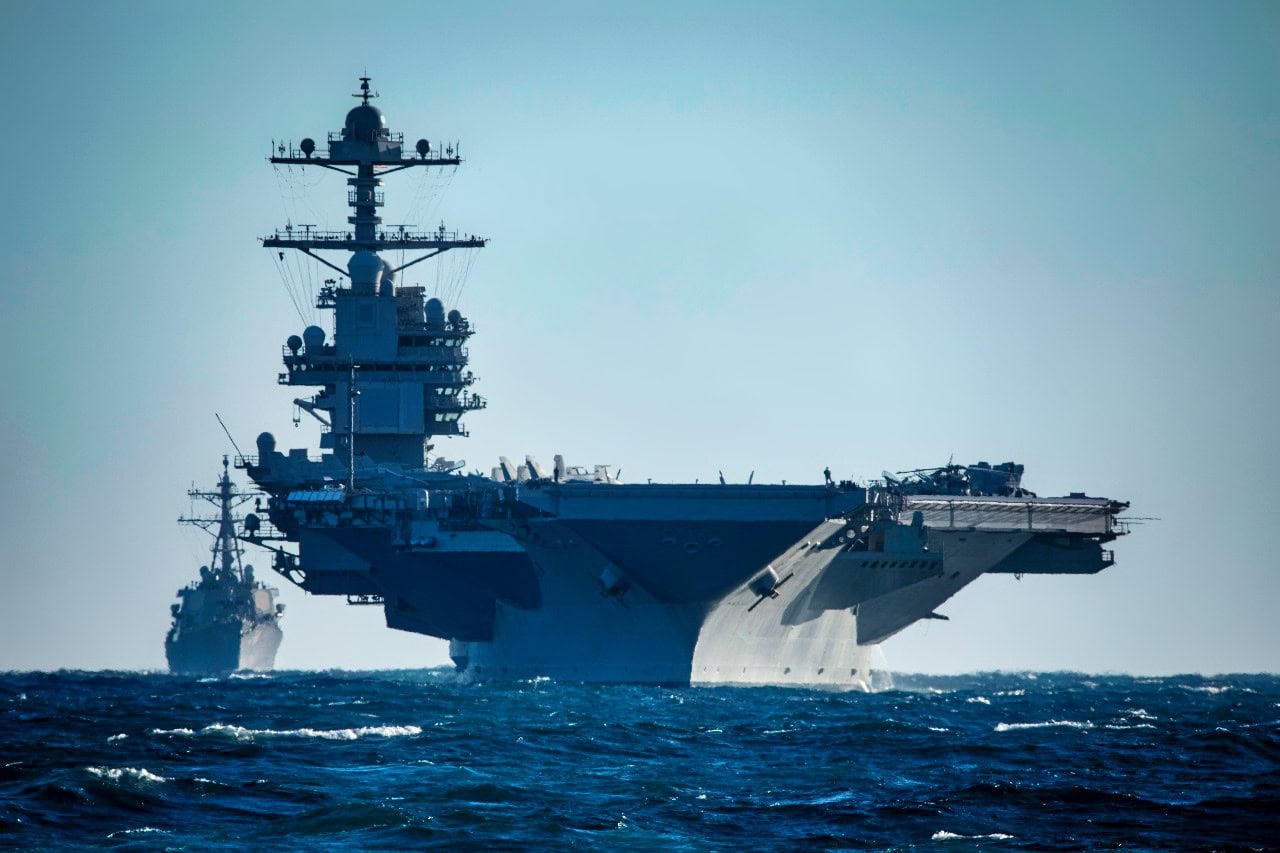
A view from the Ticonderoga-class guided missile cruiser USS Normandy (CG 60) of the first-in-class aircraft carrier USS Gerald R. Ford (CVN 78) and the Arleigh Burke-class guided missile destroyers USS Thomas Hudner (DDG 116), USS Ramage (DDG 61) and USS McFaul (DDG 74) as the ships steam in formation during a drill while underway as part of the Gerald R. Ford Carrier Strike Group March 5, 2023. Ford Carrier Strike Group is underway in the Atlantic Ocean executing its Composite Training Unit Exercise (COMPTUEX), an intense, multi-week exercise designed to fully integrate a carrier strike group as a cohesive, multi-mission fighting force and to test their ability to carry out sustained combat operations from the sea. As the first-in-class ship of Ford-class aircraft carriers, CVN 78 represents a generational leap in the U.S. Navy’s capacity to project power on a global scale. (U.S. Navy photo by Mass Communication Specialist 2nd Class Malachi Lakey)
Ford-Class Aircraft Carrier U.S. Navy. Image Credit: Creative Commons.
“It cost $13 billion, and it includes a number of new systems that hadn’t been fully tested on Navy warships. The vacuum sewage system was partially borrowed from the cruise ship industry. It uses less water. But cruise ships are very different from warships, and the crew is struggling to keep up with repairs.”
By the time the Journal story was published the next month, there were more details about the continuing plumbing issues, although they were “improving.”
“The Navy official said the Ford’s sewage system, which uses vacuum technology to transport waste from roughly 650 toilets on board, has experienced issues during the deployment, averaging about one maintenance call a day,” the Wall Street Journal said. “But the situation is improving, and the problems haven’t impacted the carrier’s ability to carry out its mission, the official said.”
One writer for National Review, meanwhile, responded to the reports by stating that the toilet story “has been promoted by accounts linked to China.” Author Luther Ray Abel, in a piece titled “The Ford Will Accomplish Its Mission with or without Flushing Toilets,” argues that the spreading of the story is “an unsubtle ploy to lower American morale ahead of possible strikes against Chinese proxy Iran.”
The author adds that on his own deployments, there were always problems with CHT (sewage collection, holding, and transfer).
“Here’s the reality: Warships are some of the most complex pieces of technology man has ever created. They are bespoke systems within systems within systems that have to operate in conditions hostile to man and machine for as long as the U.S. needs them there,” he writes.
Concerns of Rust
Another issue with the ship, and other ships that stay out in deployment for longer than usual? Rust.
Per a TWZ story in January, President Trump saw a picture of the Arleigh Burke-class guided missile destroyer USS Dewey, covered in “running rust,” and demanded action, even sending late-night texts to his nominee to serve as Navy secretary, John Phelan.
“We know what to do, but we choose not to do it,” Mark Lattner, director of the Navy’s
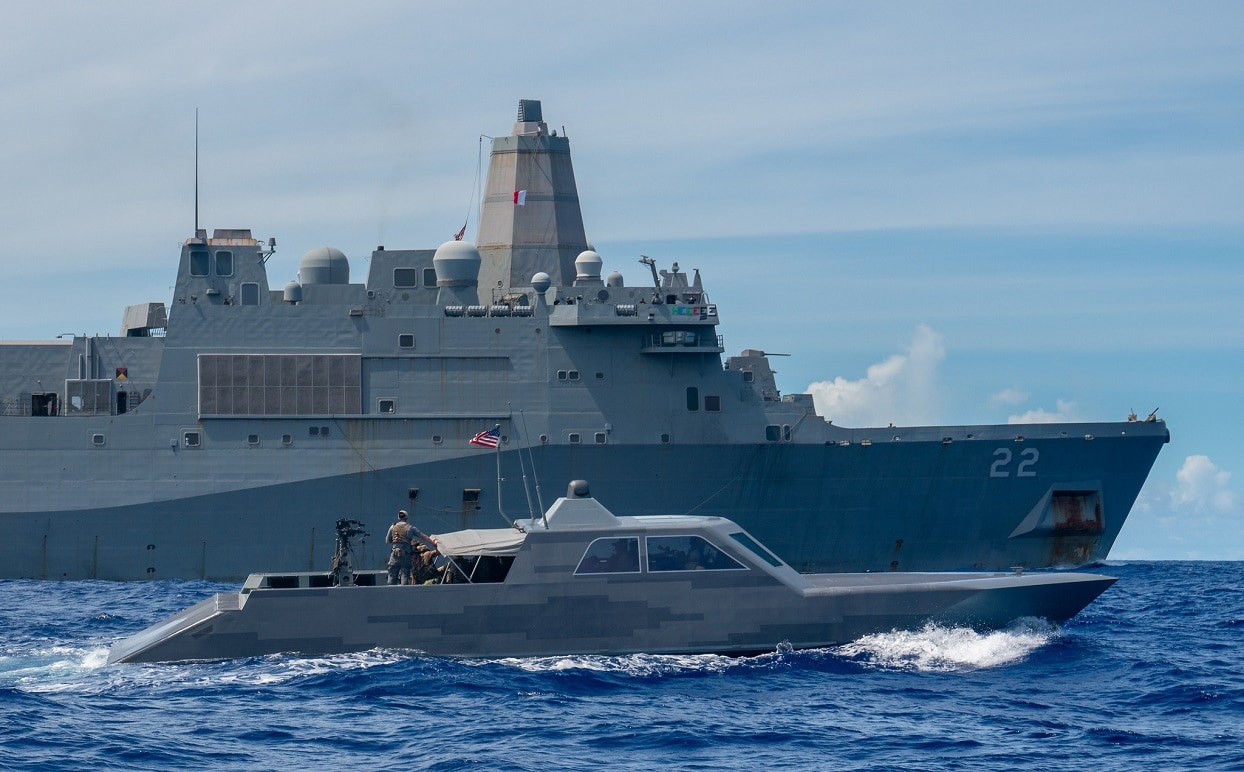
PACIFIC OCEAN (April 17, 2021) Naval Special Warfare combatant craft conduct maritime interoperability training with Marines assigned to the 15th Marine Expeditionary Unit (MEU) alongside the amphibious transport dock ship USS San Diego (LPD 22) near Guam. Naval Special Warfare is the nation’s premier maritime special operations force and is uniquely positioned to extend the fleet’s reach and deliver all-domain options for naval and joint force commanders. (U.S. Navy photo) 210417-N-KK081-0175
Ship Integrity and Performance Engineering, Naval Systems Engineering Directorate, told TWZ in January at the Surface Navy Association’s annual symposium.
There haven’t been reports about the USS Gerald Ford facing rust during its current deployment, although delays in maintenance are a frequent issue in longer-than-usual ship deployments.
About the Author: Stephen Silver
Stephen Silver is an award-winning journalist, essayist, and film critic, and contributor to the Philadelphia Inquirer, the Jewish Telegraphic Agency, Broad Street Review, and Splice Today. The co-founder of the Philadelphia Film Critics Circle, Stephen lives in suburban Philadelphia with his wife and two sons. For over a decade, Stephen has authored thousands of articles that focus on politics, national security, technology, and the economy. Follow him on X (formerly Twitter) at @StephenSilver, and subscribe to his Substack newsletter.