
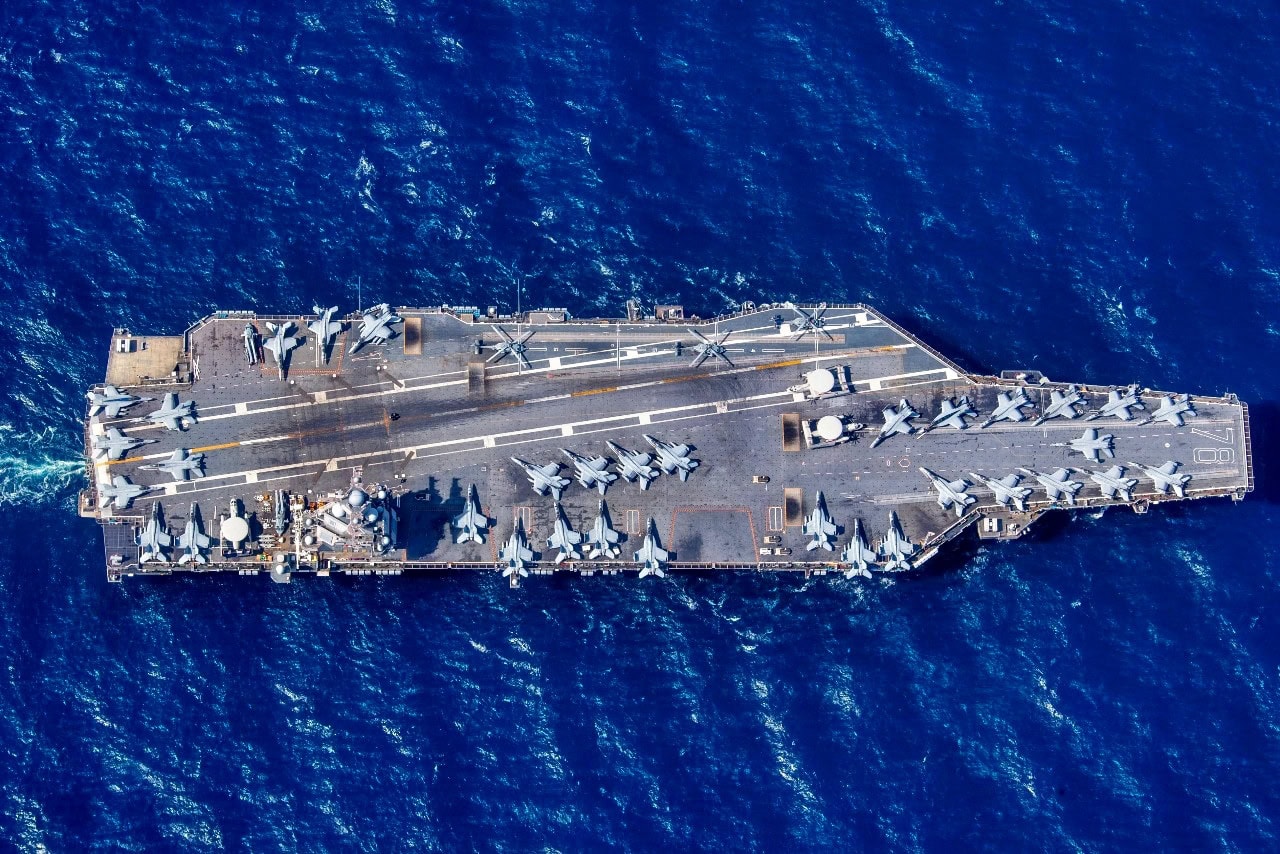
Synopsis: After over 50 years of service, the USS Nimitz (CVN-68) has completed its final cruise and is headed to Naval Station Norfolk for decommissioning.
-The inactivation process is a massive industrial undertaking estimated to cost at least $500 million and take over two years.
-It involves the complex task of defueling the ship’s two nuclear reactors—a hazardous procedure previously performed on the USS Enterprise—before the hull is likely cut into sections for scrap.
The End of an Era: Aircraft Carrier USS Nimitz Heads for the Scrap Yard
Sadly, it is the end of the road for the USS Nimitz. The esteemed aircraft carrier has served the U.S. Navy with honor and distinction for over 50 years. It has returned to Naval Base Kitsap in Bremerton, Washington, after its last cruise and will finally transit to Naval Station Norfolk, Virginia, for decommissioning.
Can We Extend Its Service Life?
I have called for the Nimitz to be spared the scrapping process for another one to two years before the new USS John F. Kennedy supercarrier comes online in 2027 – the sister ship to the USS Gerald R. Ford. The John F. Kennedy’s introduction has been delayed, and the Navy is down a carrier, but the Department of Defense does not appear willing to change its plans to retire the Nimitz.
Long Road to the Scrap Yard
How will the Nimitz be scrapped, and what is involved in decommissioning?
First, it takes time – maybe over two to three years.
Workers will be challenged by the large task of permanently taking it out of service. The work is tiring and painstaking, and workers will be required to take extra care with workplace safety, a major concern. Additionally, it will be expensive for the Navy to conduct, and that would require redirecting precious resources and funds from building new ships to the Nimitz job site.
The Nimitz, as a nuclear-powered carrier, presents additional challenges that are expected to require significant man-hours to decommission. Fortunately, the Navy has experience with this de-nuclearization process. It disassembled the USS Enterprise in 2017, so a plan is in place. That doesn’t make the job less hazardous, though. The National Interest has a good overview of the deactivation process.
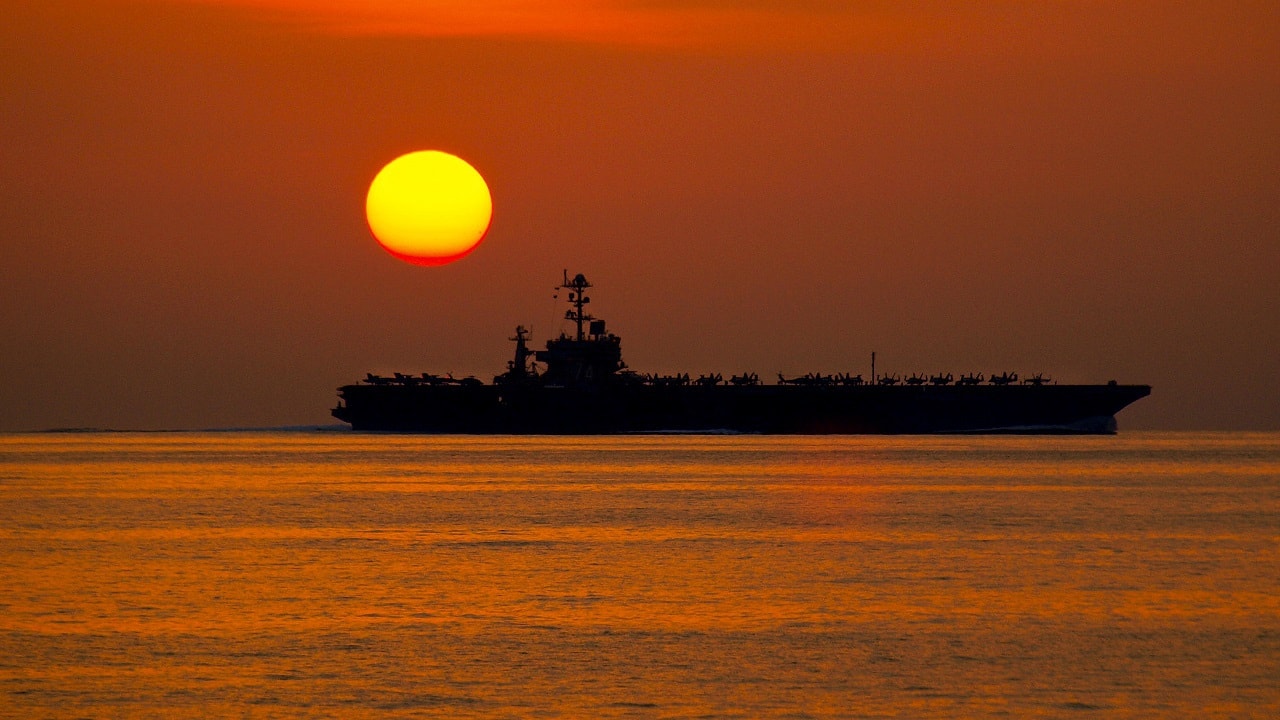
U.S. 5TH FLEET AREA OF RESPONSIBILITY (Jan. 5, 2012) The Nimitz-class aircraft carrier USS John C. Stennis (CVN 74) operates in the Arabian Sea during sunset. John C. Stennis is deployed to the U.S. 5th Fleet area of responsibility conducting maritime security operations, theater security cooperation efforts and support missions for Operation Enduring Freedom. (U.S. Navy photo by Yeoman 3rd Class James Stahl/Released)
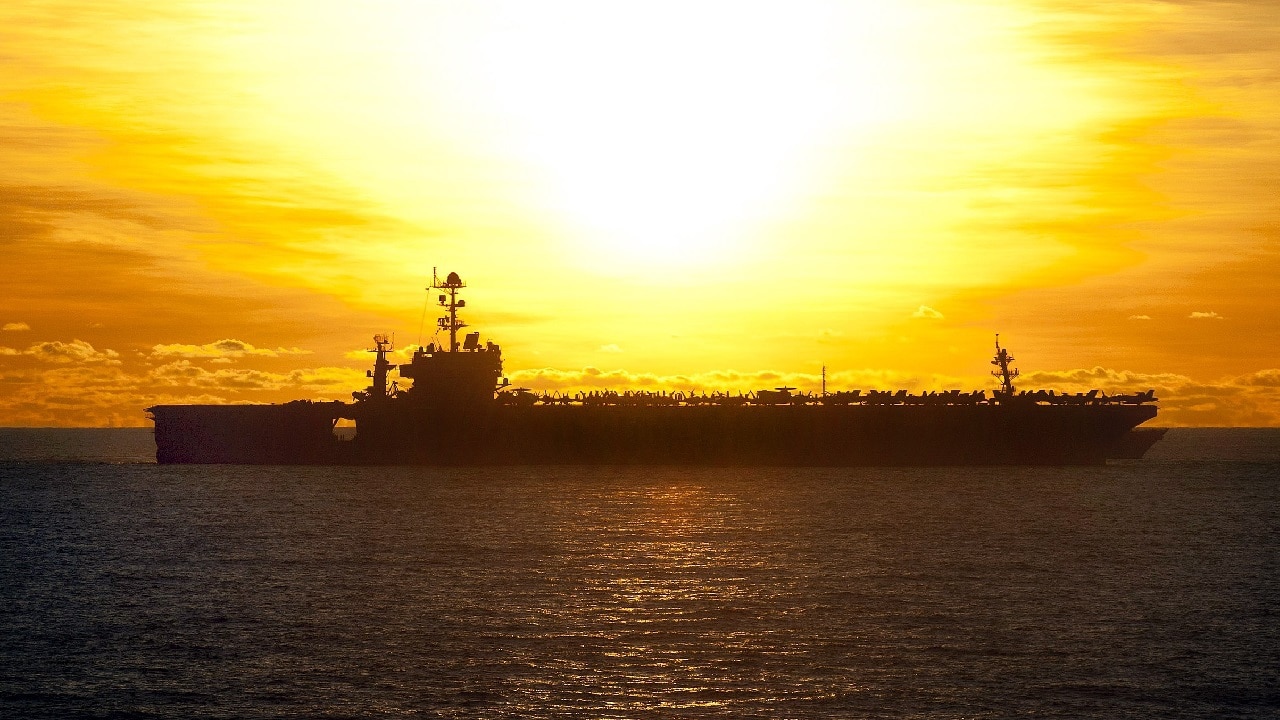
(July 8, 2012) The Nimitz-Class aircraft carrier USS George Washington (CVN 73) conducts an early morning replenishment at sea with the George Washington Strike Group. George Washington is forward deployed to Yokosuka, Japan, and is underway in the U.S. 7th Fleet area of responsibility. (U.S. Navy photo by Mass Communication Specialist 3rd Class Paul Kelly/Released) .
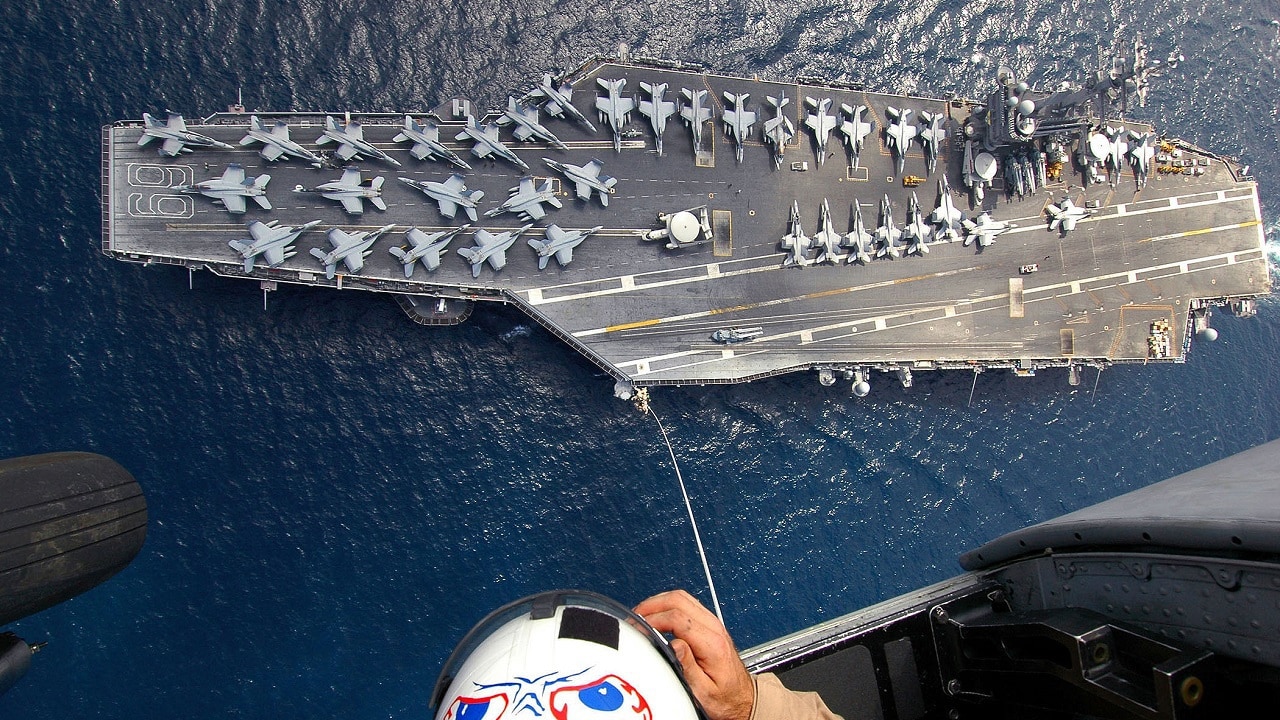
Explosive Ordnance Disposal 1st Class Christopher Courtney assigned to Explosive Ordnance Disposal Mobile Unit Six (EODMU-6), Det. 16 assist his team members during Special Purpose Insertion Extraction (SPIE) training from an SH-60 Seahawk helicopter. The Nimitz-class aircraft carrier USS Dwight D. Eisenhower (CVN-69) is deployed in support of Maritime Security Operations (MSO) and the global war on terrorism.
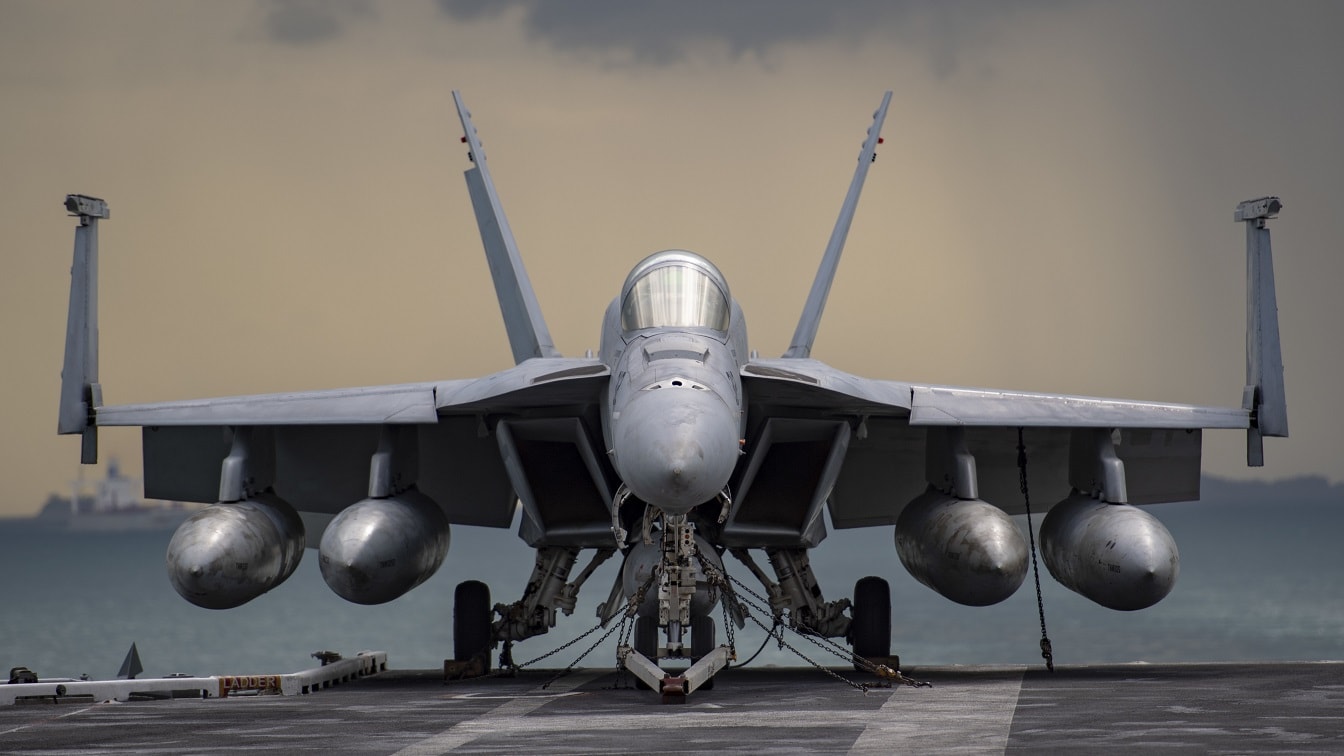
A (Feb. 5, 2021) An F/A-18E Super Hornet, from the “Kestrels” of Strike Fighter Squadron (VFA) 137, rests on the flight deck of the aircraft carrier USS Nimitz (CVN 68) during a strait transit. Nimitz is part of the Nimitz Carrier Strike Group and is deployed conducting maritime security operations and theater security cooperation efforts. (U.S. Navy photo by Mass Communication Specialist 3rd Class Elliot Schaudt/Released)
The Plan Is In Place
There is the CVN Inactivation and Disposal Program Office (PMS 368), which will keep the workforce engaged and lead the decommissioning process. The program office is expected to request a minimum of $500 million budget for all the work. It makes one wonder whether this could be done more cheaply, but the Enterprise required considerable effort from many workers to complete the job.
The nuclear reactors on the Nimitz need to be defueled. This will take about 2.5 years. The work is painstaking, and employees must prioritize safety throughout the process.
The Work Does Not Stop There
While that is underway, equipment such as weapons, radar, and communication systems must be removed. This can be done before defueling, but it will take months to complete. All aviation refueling modules will be taken apart. The catapults need to be deactivated. No aviation systems can stay on the ship either.
The hull needs to be readied for towing. After de-fueling of the reactor, all hazardous materials must be offloaded. This may be one of the most dangerous parts of the process.
“The preferred commercial option involves cutting the ship into sections. Non-nuclear parts are recycled for steel and metals, while reactor compartments are packaged as low-level radioactive waste and transported to licensed sites like Hanford, Wash. While the Enterprise had eight separate nuclear reactors, Nimitz has only two, simplifying handling and potentially reducing timelines,” according to the National Interest.
Why Not Make the Nimitz a Museum Ship?
Defense analyst Brandon J. Weichert asked if the Nimitz could be used as a museum ship. The problem, he explained, is the nuclear reactors. This makes for a dangerous and inhospitable environment for tourists.
Sink the Nimitz on Purpose?
Overall, the Nimitz will face a long decommissioning process. It will eventually have to be cut up into scrap. A “Sink Ex” could be possible. The USS America was sunk on purpose in 2005 off the coast of North Carolina. The idea was to collect data on how a carrier can take explosions on the water line and inside the ship before it finally capsizes. It took four weeks to scuttle the America.
That may not happen to the Nimitz, and sinking on purpose would be an ignominious end for such a majestic carrier, although seeing it dismantled is unfortunate, too.
Give It One More Gasp of Air
I’ll still root for the Navy to decide that the Nimitz could make just one more cruise to the Middle East or the Indo-Pacific. And what about sending a Nimitz strike group to the Caribbean to relieve the Gerald R. Ford? That would help the United States continue to wield the big stick in the Southern Command area of operations.
But alas, we must face the reality that the Nimitz’s days are numbered. Let’s hope the new USS John F. Kennedy avoids delays so the carrier situation is not adversely affected for an indefinite period. It would seem that the Navy could convince some members of Congress to call for a life extension of the Nimitz, which could nudge the Office of the Secretary of Defense or the White House to change its mind and extend the Nimitz’s life for one more mission.
About the Author: Dr. Brent M. Eastwood
Author of now over 3,000 articles on defense issues, Brent M. Eastwood, PhD is the author of Don’t Turn Your Back On the World: a Conservative Foreign Policy and Humans, Machines, and Data: Future Trends in Warfare plus two other books. Brent was the founder and CEO of a tech firm that predicted world events using artificial intelligence. He served as a legislative fellow for US Senator Tim Scott and advised the senator on defense and foreign policy issues. He has taught at American University, George Washington University, and George Mason University. Brent is a former US Army Infantry officer. He can be followed on X @BMEastwood.