
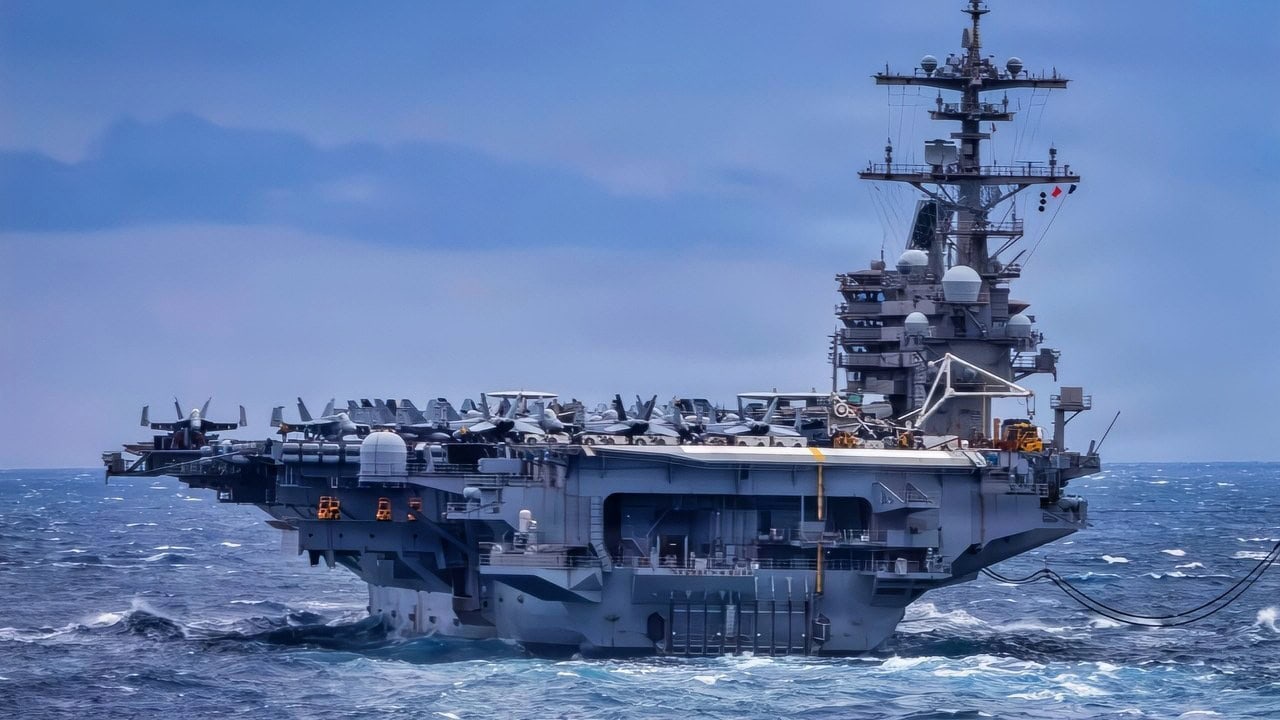
Summary and Key Points: Defense journalist Harrison Kass evaluates the retirement of the USS Nimitz (CVN-68), scheduled to begin in May 2026.
-After five decades of service, the ship’s nuclear reactors have reached their core lifespan, making further overhauls at Newport News Shipbuilding cost-prohibitive.
-This report analyzes the Navy’s transition to the Gerald R. Ford-class, which features EMALS and Advanced Arresting Gear (AAG) to improve sortie rates.
-Kass explores the 2026 “carrier crunch,” concluding that while the USS John F. Kennedy (CVN-79) won’t enter service until 2027, the remaining ten nuclear carriers provide sufficient mass for Operation Epic Fury and Indo-Pacific deterrence.
The Final Sunset: Why the USS Nimitz is Officially Retiring Amid the 2026 Middle East Crisis
The USS Nimitz (CVN-68) has arguably been the world’s most iconic ship for half a century. Commissioned in 1975, Nimitz became the lead ship for the Nimitz-class, the backbone of the US carrier fleet for decades. Yet, in May 2026, the Nimitz is scheduled to begin the long process of decommission and have its nuclear reactor removed.
The timing is odd, now that the US has entered Operation Epic Fury, with the deployment of two carrier strike groups (CSGs) to the Middle East. With tensions so high, with US carriers actively involved in strike operations, is now really the time to retire such an important warship?
Yes. The Nimitz is still a capable platform, but its retirement is unavoidable—and manageable given that the US has 10 other carriers in service.
Introducing the USS Nimitz
The USS Nimitz was the first of ten nuclear-powered carriers in its class.
For decades, these ships formed the core of US naval power projection worldwide.
Outfitted with nuclear propulsion, the Nimitz-class had unlimited endurance; with the ability to carry 60-70 aircraft, and flight decks capable of launching and recovering aircraft continuously for sustained operations, the Nimitz was, in effect, a floating airbase, capable of transporting US air power roughly anywhere in the world.
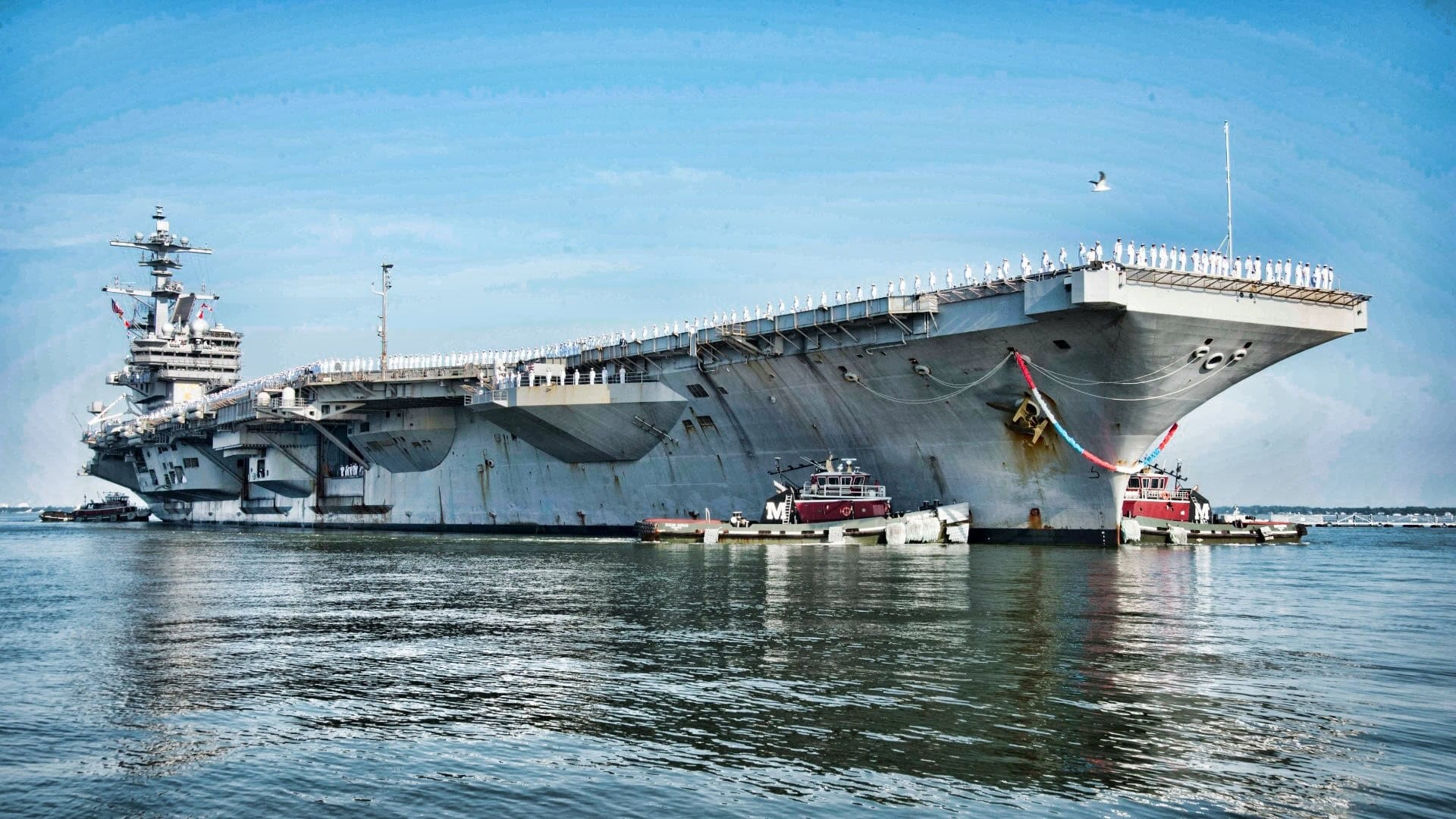
NORFOLK (Aug. 18, 2017) Tugboats guide the aircraft carrier USS George H.W. Bush (CVN 77) into port at Naval Station Norfolk (NSN). George H.W. Bush arrived at NSN with its carrier strike group following a seven-month deployment in support of maritime security operations and theater security cooperation efforts in the U.S. 5th and 6th Fleet areas of operation. (U.S. Navy photo by Mass Communication Specialist 2nd Class Patrick Ian Crimmins/Released)

120511-N-WO496-003 STRAIT OF HORMUZ (May 11, 2012) Guided-missile cruiser USS Cape St. George (CG 71) and aircraft carrier USS Abraham Lincoln (CVN 72) transit the Strait of Hormuz. Both ships are deployed to the U.S. 5th Fleet area of responsibility conducting maritime security operations, theater security cooperation efforts and support missions as part of Operation Enduring Freedom. (U.S. Navy Photo by Mass Communication Specialist 3rd Class Alex R. Forster/Released)

USS Gerald R. Ford Aircraft Carrier or Supercarrier
The Nimitz proved itself through the Cold War, the Gulf War, Iraq, Afghanistan, and numerous other deterrence deployments. For over 50 years, the Nimitz-class represented the most powerful warship ever put to sea.
Why Retire USS Nimitz?
The reason for the Nimitz’s retirement: age. The Nimitz has been in service for over 50 years, and the ship’s nuclear reactors were never designed to operate indefinitely. Nuclear reactors have limits—the core lifespan expires. Refueling and reactor maintenances becomes increasingly expensive as the platform ages.
And to keep the Nimitz in service longer, major overhauls would be required, which can take the ship offline for years and be remarkably expensive—all to preserve a 50-year-old vessel with outdated technology. At a certain point, the overhaul investment isn’t worth the time, shipyard capacity, or money; building a new ship can actually be more efficient.
Decommissioning Timeline
The Nimitz (CVN-68) retirement process is already underway. In April, the ship’s final homeport will shift to Norfolk, Virginia. In May, the official deactivation process will begin.
The nuclear fuel will be removed and the reactor inactivated at Newport News Shipbuilding. But the decommissioning process is complex and expensive and will take years to complete, giving the Navy ample time to field a replacement.
Replacing the Nimitz
The Nimitz is not being retired without a replacement. The Navy is already transitioning toward the Gerald R. Ford-class, the most technologically advanced carrier ever fielded. Ford-class improvements include the new electromagnetic aircraft launcher system (EMALS), advanced arresting gear (AAG), improved radar and sensors, and a larger sortie generation rate (SGR).
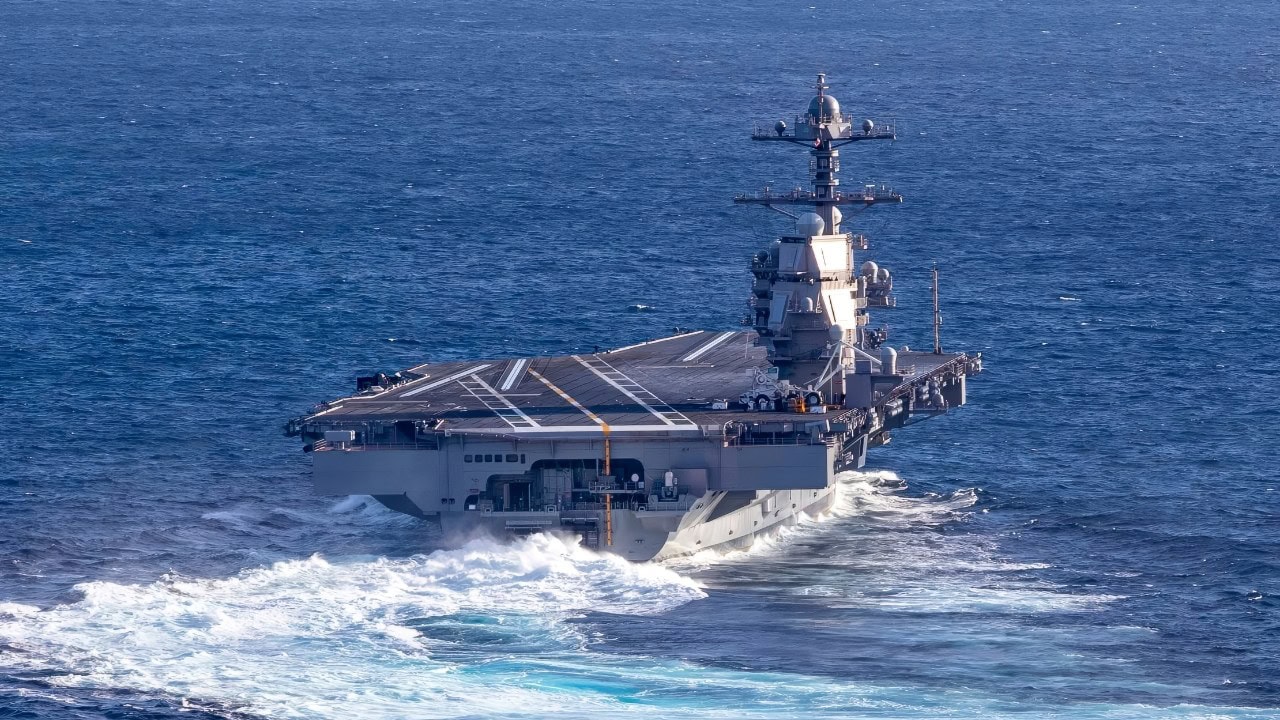
ATLANTIC OCEAN (Oct. 29, 2019) USS Gerald R. Ford (CVN 78) conducts high-speed turns in the Atlantic Ocean. Ford is at sea conducting sea trials following the in port portion of its 15 month post-shakedown availability. (U.S. Navy photo by Mass Communication Specialist 3rd Class Connor Loessin)
ATLANTIC OCEAN (Oct. 29, 2019) USS Gerald R. Ford (CVN 78) conducts high-speed turns in the Atlantic Ocean. Ford is at sea conducting sea trials following the in port portion of its 15 month post-shakedown availability. (U.S. Navy photo by Mass Communication Specialist 3rd Class Connor Loessin)
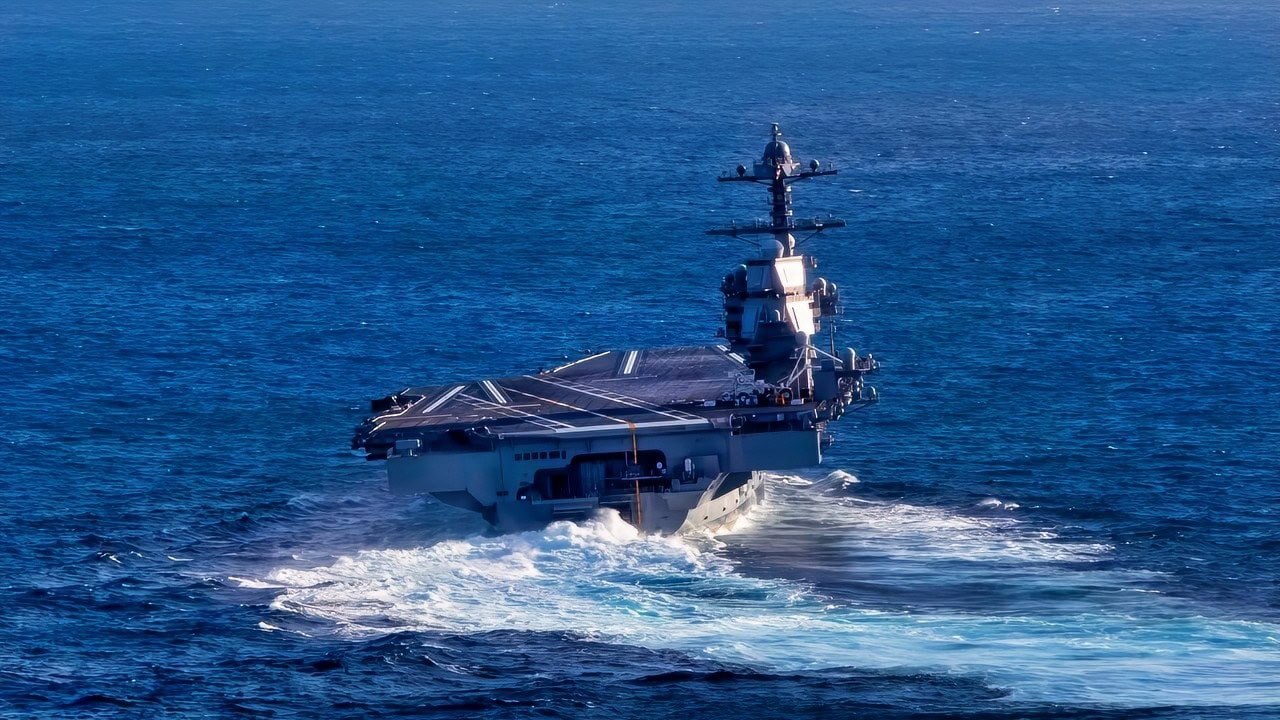
ATLANTIC OCEAN (Oct. 29, 2019) USS Gerald R. Ford (CVN 78) conducts high-speed turns in the Atlantic Ocean. Ford is at sea conducting sea trials following the in port portion of its 15 month post-shakedown availability.(U.S. Navy photo by Mass Communication Specialist 3rd Class Connor Loessin)
The Ford lead-ship (CVN-78) is already in service, with the USS John F. Kennedy (CVN-79) expected to enter service in 2027, effectively replacing CVN-68.
Retired too Soon?
The Nimitz is still an effective carrier. Even after decades of service, the ship is still extremely capable, and, aside from the Ford-class, still the most effective carrier design in the world. The Nimitz is capable of sustained air operations, deep-inland strike missions, ISR support, air superiority, and fleet defense—no other nation possesses a ship as capable as the Nimitz.
Yet despite this status, as nearly world-leading, the Nimitz is headed for the scrapyard. That may seem odd, but consider that despite the Nimitz’s strengths, retirement is inevitable.
The ship is old. As the ship ages, maintenance costs increase. And as technology advances, the Nimitz, which cannot easily integrate new technology, becomes increasingly outdated.
Modern naval warfare increasingly relies on advanced sensors, electronic warfare, and networked communications. The Nimitz can’t incorporate these technologies without extensive modifications.
Ten More
And don’t forget, even without the Nimitz, the US carrier fleet is still massive. The US currently operates 11 nuclear-powered aircraft carriers. Even after the retirement of the Nimitz-class, the US fleet will remain massive relative to global standards. For comparison, most countries have zero carriers, and only a handful have even a single carrier.
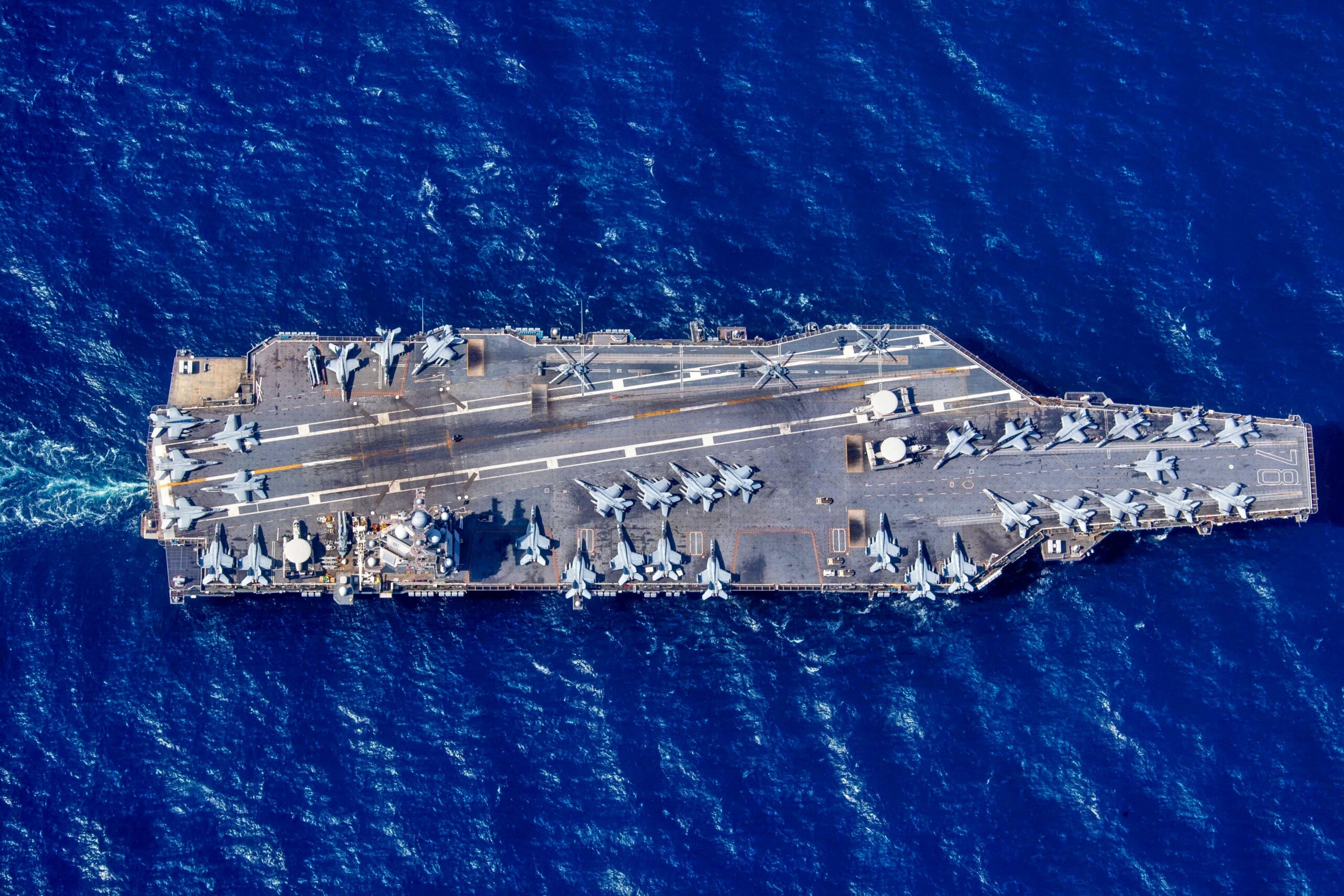
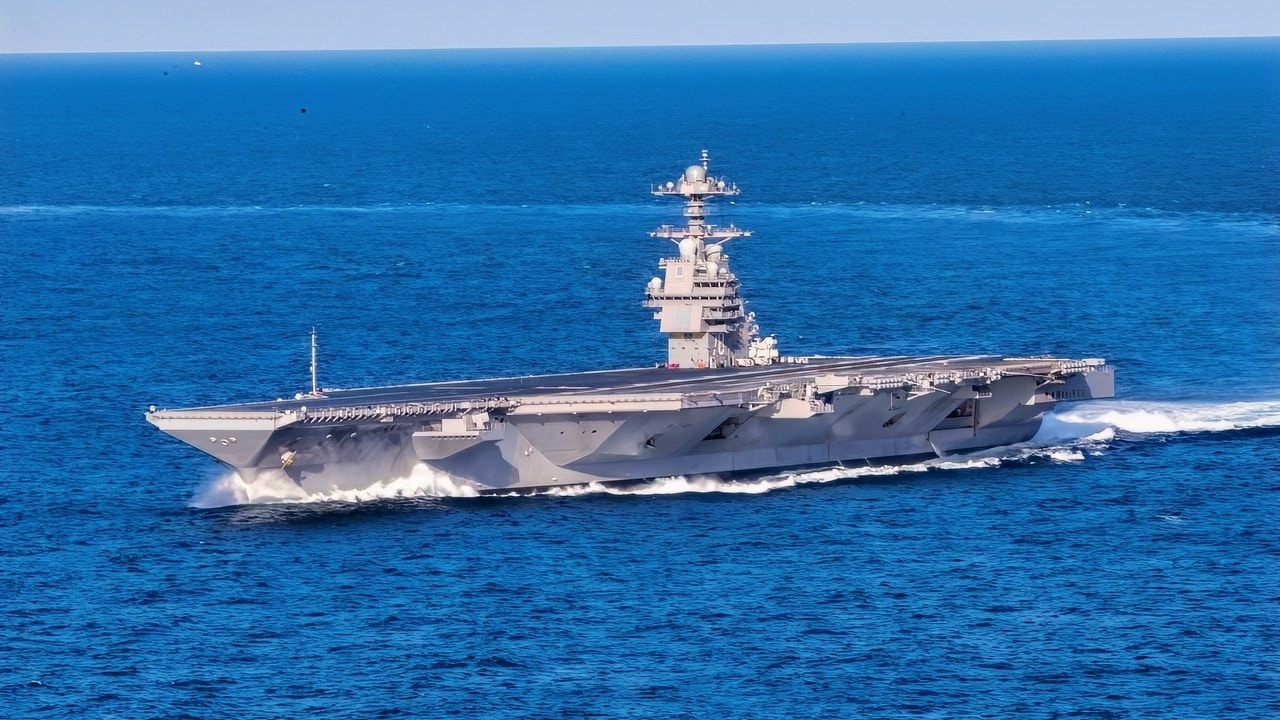
Ford-Class. Image Credit: Creative Commons.
China currently has three, two of which are fairly obsolete. So, the Nimitz retirement does not leave a capability gap. Even if the US maintains extensive global commitments, including simultaneous conflicts in multiple regions and a constant forward presence, a ten-carrier fleet would still support deterrence in the Indo-Pacific, operations in the Middle East, and NATO commitments in Europe.
So while the Nimitz has served admirably for 50 years, and while the ship is still entirely capable, retirement is inevitable and absorbable within the world’s largest carrier fleet.
About the Author: Harrison Kass
Harrison Kass is an attorney and journalist covering national security, technology, and politics. Previously, he was a political staffer and candidate, and a US Air Force pilot selectee. He holds a JD from the University of Oregon and a master’s in global journalism and international relations from NYU.