

Summary and Key Points – USS Nimitz is set to retire in 2026 after roughly five decades of service, closing out a career that spanned Iran-era crises, tanker protection missions, Desert Storm operations, no-fly zone enforcement, and sustained strike support during the Global War on Terror.
-The argument for a short extension is straightforward: carrier demand is rising across the Middle East, the Caribbean, and the Indo-Pacific, while available hulls feel increasingly stretched.
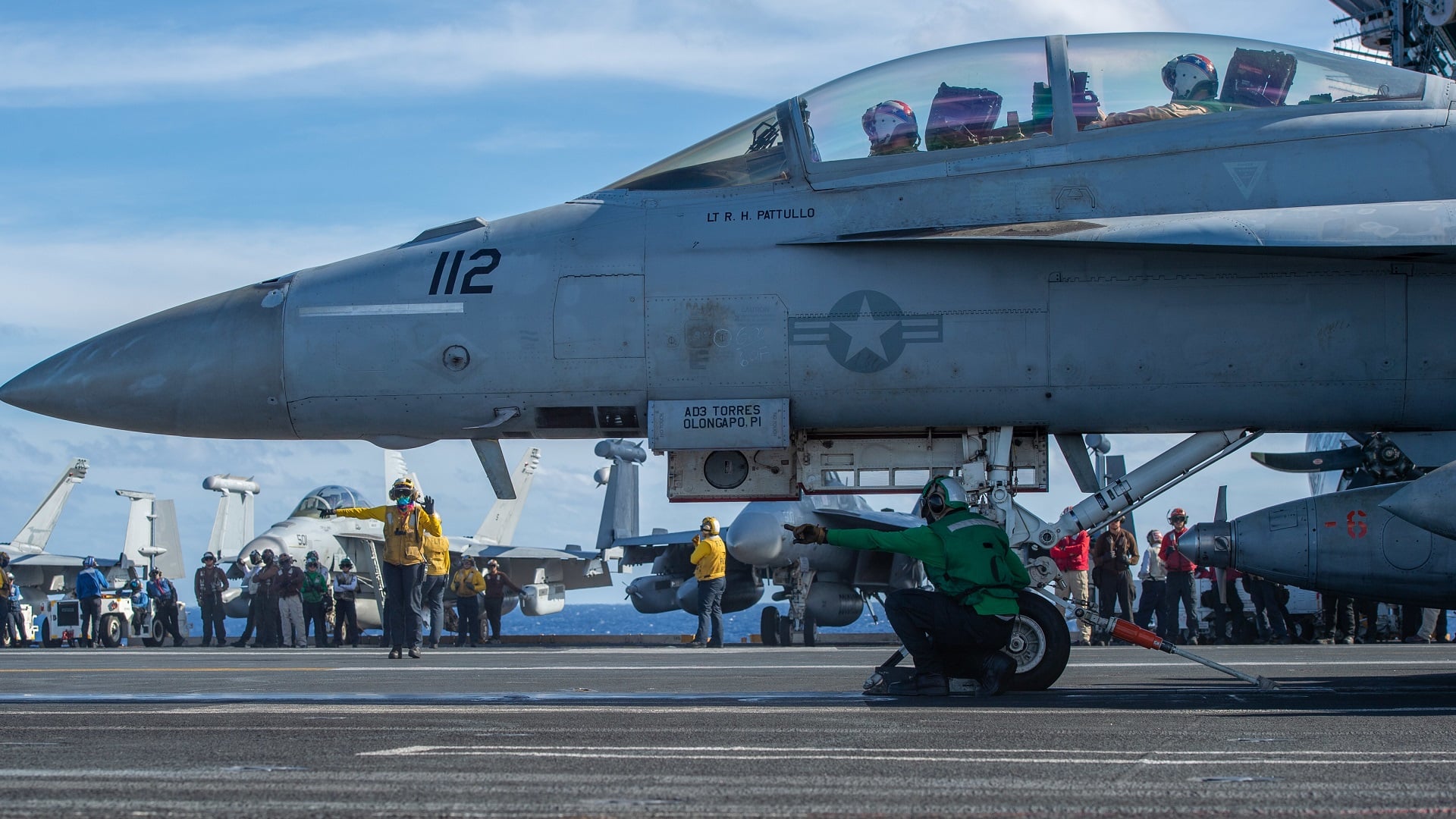
221227-N-DU622-1227 PHILIPPINE SEA (Dec. 27, 2022) An F/A-18F Super Hornet from the “Fighting Redcocks” of Strike Fighter Squadron (VFA) 22 prepares to launch from the flight deck of the aircraft carrier USS Nimitz (CVN 68). Nimitz is in 7th fleet conducting routine operations. 7th Fleet is the U.S. Navy’s largest forward-deployed numbered fleet, and routinely interacts and operates with 35 maritime nations in preserving a free and open Indo-Pacific region. (U.S. Navy photo by Mass Communication Specialist 2nd Class Justin McTaggart)
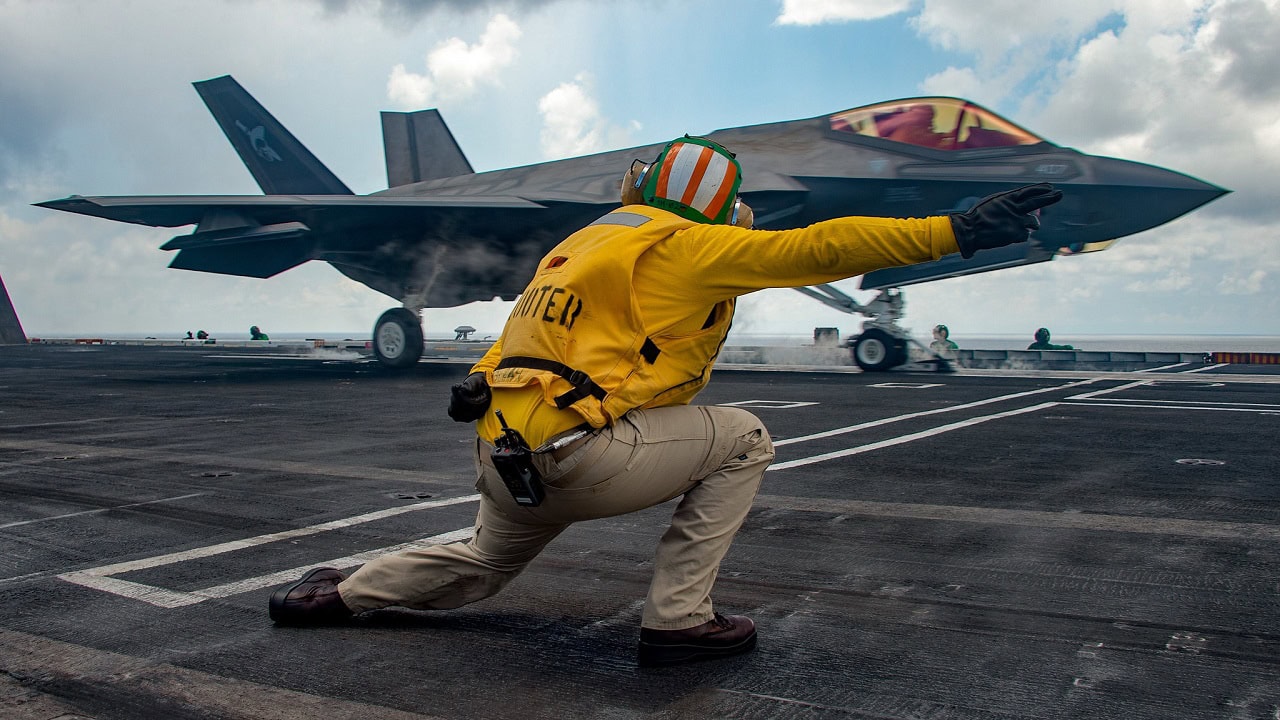
Lt. Nicholas Eppler, from Exeter, Calif., directs flight operations as an F-35C Lightning II assigned to the “Argonauts” of Strike Fighter Squadron (VFA) 147 launches from the Nimitz-class aircraft carrier USS Carl Vinson (CVN 70), Oct. 25, 2021. The Carl Vinson Carrier Strike Group is on a scheduled deployment in the U.S. 7th Fleet area of operations to enhance interoperability through alliances and partnerships while serving as a ready-response force in support of a free and open Indo-Pacific region.
-Nimitz also served as a milestone platform, including hosting the first F-35C landing, and logged major aviation benchmarks late in life before heading into final decommissioning procedures.
The Amazing History and Legacy of Supercarrier USS Nimitz
The esteemed aircraft carrier USS Nimitz will, unfortunately, be retired this year after an amazing 50 years of service.
No other carrier in the fleet has enjoyed such a sterling record. I have called for a one- to two-year extension for the flat-top until the new USS John F. Kennedy is ready in 2027.
However, the Navy thus far sees the situation differently. The Nimitz just completed its last cruise to the Red Sea and the Indo-Pacific and is now in Naval Base Kitsap in Bremerton, Washington.
This year, the vaunted ship will transit to Naval Station Norfolk, Virginia, for its final decommissioning procedure.
Is the Navy’s Aircraft Carrier Force Stretched Too Thin?
It’s too bad because the Nimitz is desperately needed. There are only six surface ships in the Middle East, and a carrier needs to be there in case President Donald Trump orders air strikes against Iran.
Plus, the USS Gerald R. Ford is in the Caribbean for Operation Southern Spear on stand-by in case Venezuela implodes, and if boats full of narcotics need to be destroyed.
The USS Abraham Lincoln is in the South China Sea, so one of those carriers must make it to the Central Command area of operations soon.
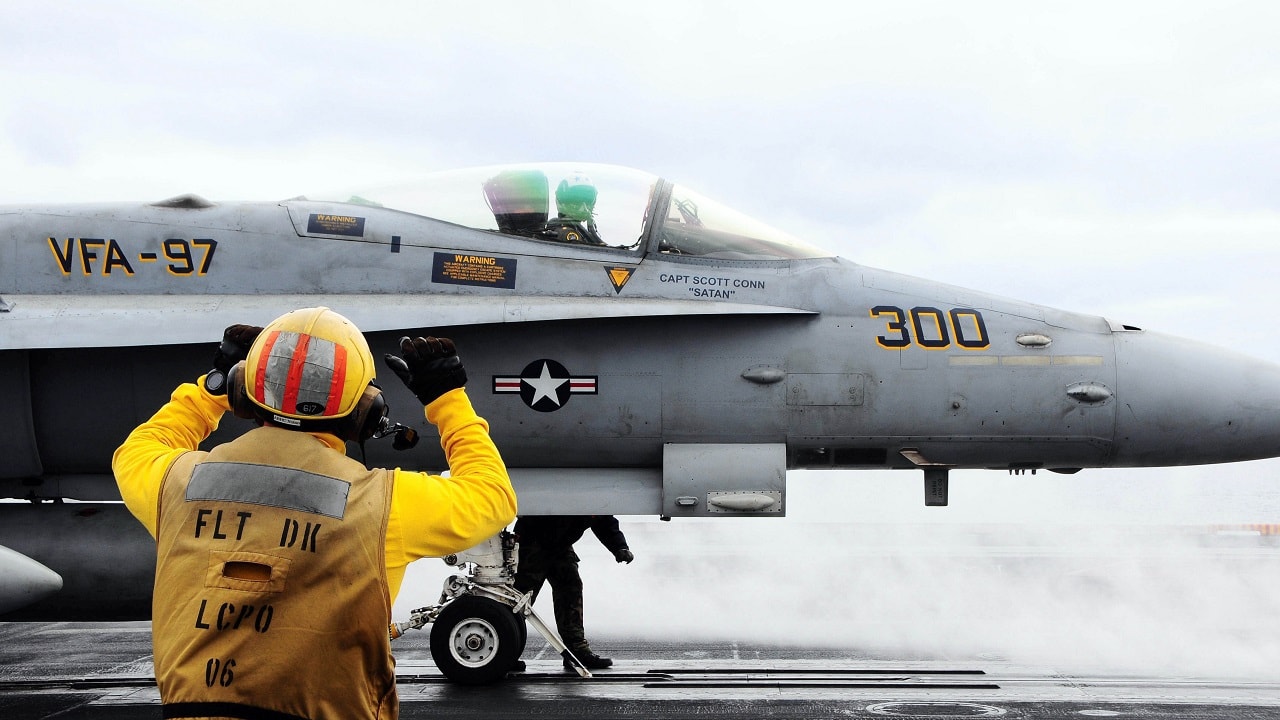
A Chief Aviation Boatswain’s Mate guides an F/A-18C Hornet assigned to the “Warhawks” of Strike Fighter Squadron 97 into place on catapult three aboard the aircraft carrier USS Nimitz. Nimitz and Carrier Air Wing 11 are conducting a Composite Training Unit Exercise off the coast of Southern California in preparation of a scheduled deployment to the western Pacific Ocean.
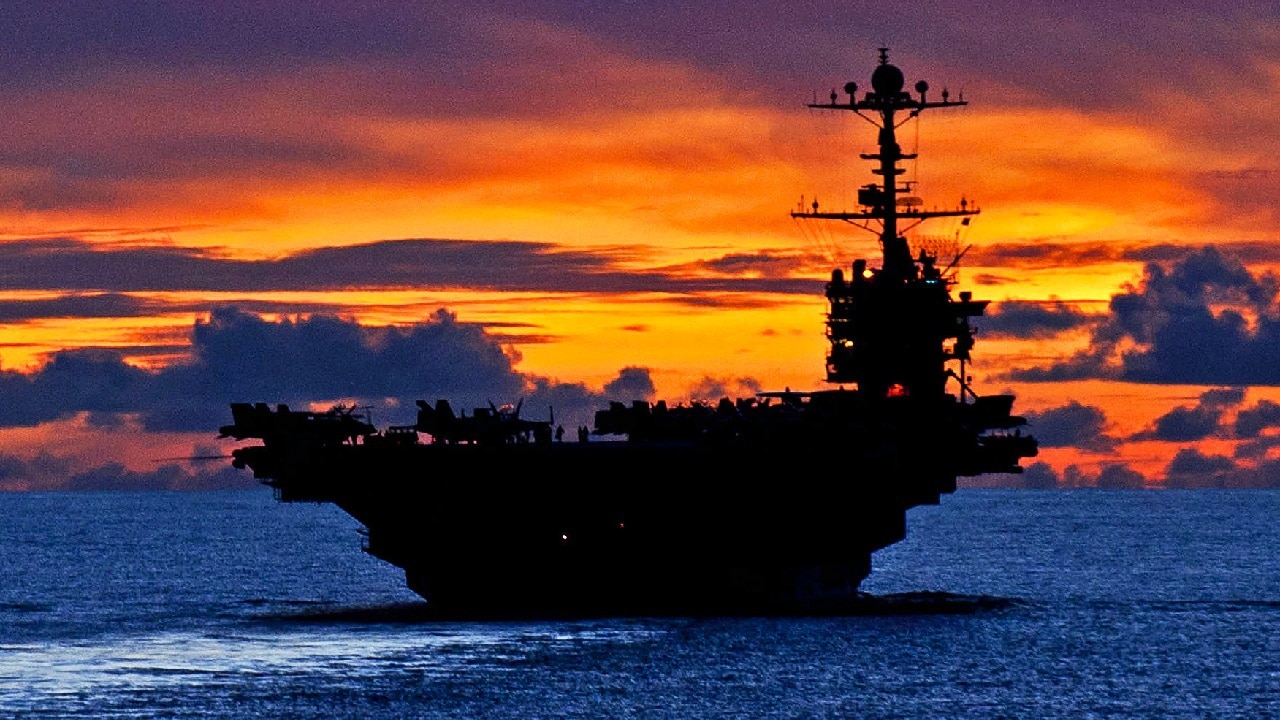
The aircraft carrier USS George Washington sails through calm seas near Guam at sunset while under way in the Pacific Ocean, Sept. 8, 2012. The George Washington is the centerpiece of Carrier Strike Group 5, the US Navy’s only continuously forward deployed carrier strike group, based out of Yokosuka, Japan. Carrier Strike Group 5 is currently on a routine Western Pacific patrol.
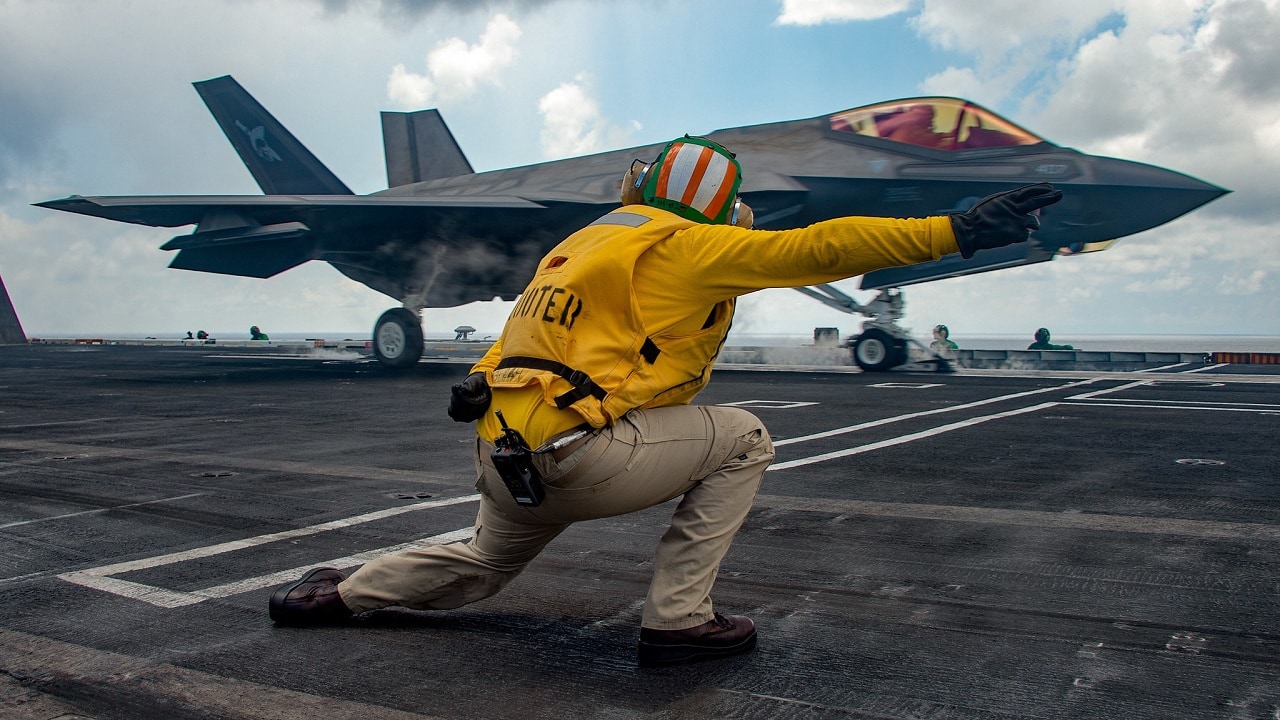
SOUTH CHINA SEA (Oct. 25, 2021) Lt. Nicholas Eppler, from Exeter, Calif., directs flight operations as an F-35C Lightning II assigned to the “Argonauts” of Strike Fighter Squadron (VFA) 147 launches from the Nimitz-class aircraft carrier USS Carl Vinson (CVN 70), Oct. 25, 2021. The Carl Vinson Carrier Strike Group is on a scheduled deployment in the U.S. 7th Fleet area of operations to enhance interoperability through alliances and partnerships while serving as a ready-response force in support of a free and open Indo-Pacific region. (U.S. Navy photo by Mass Communication Specialist Seaman Emily Claire Bennett) 211025-N-TY704-1241
Chief of Naval Operations Admiral Daryl Caudle is concerned that the carrier force is overextended and that the current number of operational carriers may not be sufficient to meet requirements from the National Command Authority.
The Die Is Cast for the USS Nimitz
It doesn’t appear that the Navy will change its mind about the Nimitz. It just requires too much maintenance, and it has a high price tag to keep it mission effective. That’s not good news since the geopolitical realities of a dangerous world require as many carriersas the Americans can get into the water as possible.
History of the Carrier
The USS Nimitz was commissioned in 1975 and deployed for the first time in 1976. The vessel was in the Mediterranean in 1979 after the Islamic Revolution in Iran, and American hostages were seized by extremists. Nimitz was part of Operation Eagle Claw/Evening Light, the mission to rescue the hostages that unfortunately failed.
In 1988, the Nimitz was deployed for Operation Earnest Will in the North Arabian Sea. This mission was designed to protect Kuwaiti-owned oil tankers from Iranian attack. This was the largest naval operation since World War Two.
A Winning Leader During the First Gulf War
In 1991, the Nimitz was sent to the Central Command area of operations for Operation Desert Storm. The carrier provided excellent air support throughout the successful campaign with round-the-clock sorties from its aviation squadrons.
The Nimitz wasn’t finished in the Middle East. It returned to the theater for Operation Southern Watch in 1993, to the Arabian Gulf. This was to enforce a no-fly zone over Iraq. Saddam Hussein was still a problem and had bombed his own citizens after losing the Gulf War to the United States and coalition forces. The Nimitz was instrumental in those years to keep Hussein boxed in.
Punishing Terrorists and Insurgents in Afghanistan and Iraq
During the Global War on Terror, the Nimitz was one of the stalwarts against Iraq and Afghanistan. It flew hundreds of sorties against military targets to gain battlefield advantage and provide close air support that saved countless soldiers and marines.
The aviators on Nimitz dropped thousands of bombs, and the carrier was instrumental in projecting power and carrying the flag valiantly in the Persian Gulf and Arabian Sea.
There was no way that U.S. ground forces could have maneuvered as well as they did without air support from the Nimitz. The carrier also provided maritime security and force projection for the 5th Fleet as a rapid responder to other geopolitical threats.
In 2005, the Nimitz was the subject of the 10-part PBS documentary “Carrier.”
The ship was also busy from 2007 to 2009 during the height of the war against insurgents and terrorists in Iraq.
“In 2007 and 2008, the USS Nimitz carrier strike group deployed in support of the U.S. commitment to peace and stability in the region. Nimitz departed for the Persian Gulf for a scheduled eight-month Western Pacific deployment on July 31, 2009, in support of Operation Enduring Freedom,” an official history from the U.S. Navy stated.
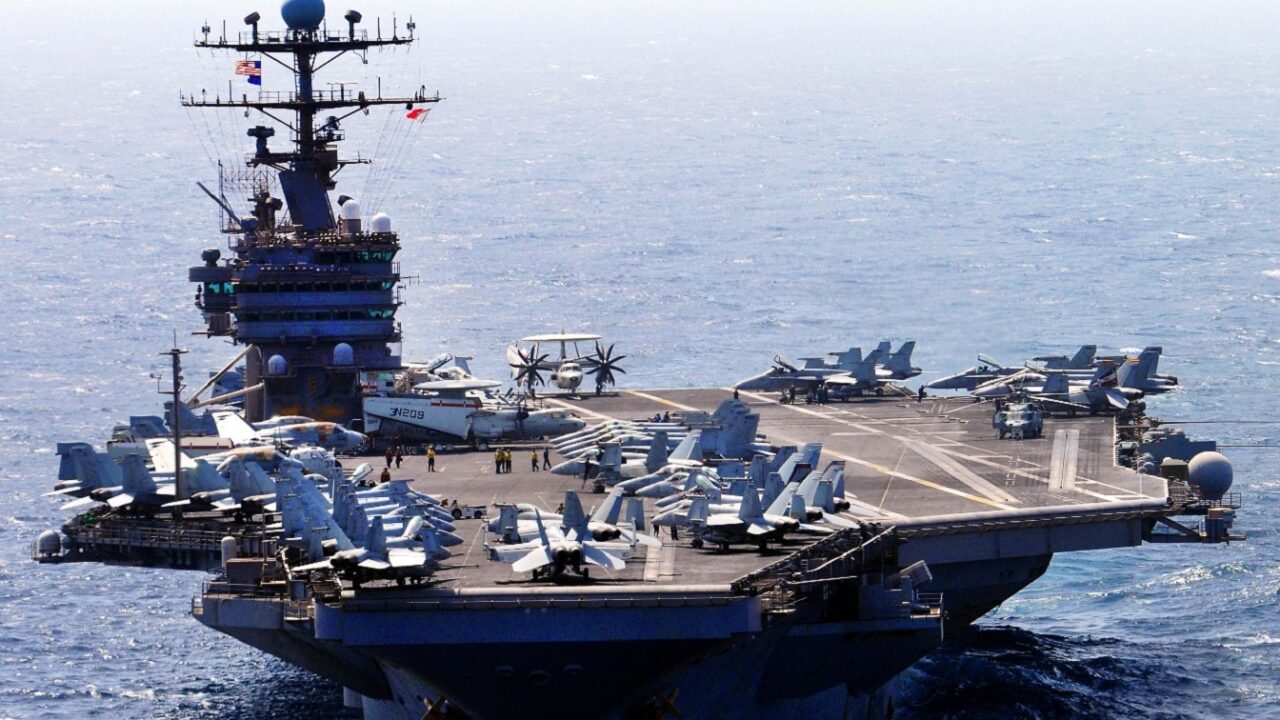
ARABIAN SEA (May 24, 2012) The Nimitz-class aircraft carrier USS Abraham Lincoln (CVN 72) transits the Arabian Sea. Abraham Lincoln is deployed to the U.S. 5th Fleet area of responsibility conducting maritime security operations, theater security cooperation efforts and support missions as part of Operation Enduring Freedom. (U.S. Navy photo by Mass Communication Specialist 3rd Class Amanda L. Kilpatrick/Released)
The First Ever F-35C Landed on the Nimitz
In 2014, the Nimitz was again part of history when the first F-35C Lightning II landed on the carrier. This was to mark the reign of fifth-generation flight for the U.S. Navy – kicking off an exciting era of aviation to go along with the valuable F/A-18 E/F Super Hornet squadrons that were so active in the previous decade.
Finally Received Some Badly-Needed Rest
By 2018, the Nimtz needed a planned incremental availability (PIA) docking at Puget Sound Naval Shipyard. This gave the crew a rest and allowed for much-needed tender loving care after being so active in the previous 20 years.
By 2022, the Nimitz had achieved some important milestones. It logged its 65,000th nautical mile and by 2023, its 350,000th aircraft landing.
While it would be great if the Nimitz could conduct one more cruise before retiring, it appears that this is the end of the road for the outstanding ship. Perhaps the Navy should reconsider and allow it to extend its service life after a short maintenance period, but this does not appear to be in the cards.
An Exemplary Legacy to Remember
The legacy of the Nimitz is cemented as one of the best carriers in Navy history. Five decades of service are incredible, and with ample combat actions under its belt, sailors can rest assured that historians will be kind to the Nimitz.
The crew and pilots who served on board the Nimitz will likely smile at the memories and forget any hardships. The carrier met the challenge for anything the Navy threw at it. The sterling reputation of the grand ship will not be forgotten.
About the Author: Dr. Brent M. Eastwood, Aircraft Carrier Expert
Author of now over 3,000 articles on defense issues, Brent M. Eastwood, PhD is the author of Don’t Turn Your Back On the World: a Conservative Foreign Policy and Humans, Machines, and Data: Future Trends in Warfare plus two other books. Brent was the founder and CEO of a tech firm that predicted world events using artificial intelligence. He served as a legislative fellow for US Senator Tim Scott and advised the senator on defense and foreign policy issues. He has taught at American University, George Washington University, and George Mason University. Brent is a former US Army Infantry officer. He can be followed on X @BMEastwood.