
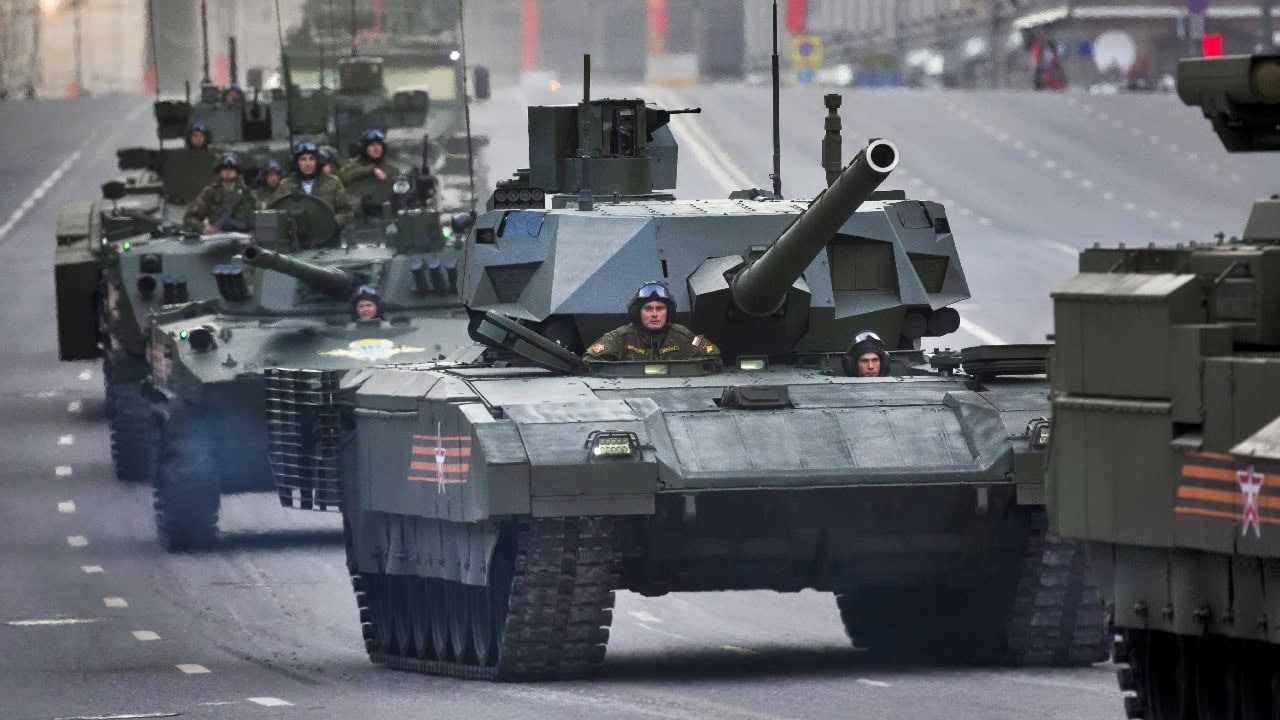
Russia’s Prototype Trap: The T-14, Su-57, and Su-75 Are Wonder-Weapons Moscow Cannot Mass-Produce: Russia unveiled the T-14 Armata tank, the Su-57 stealth fighter, and the Su-75 Checkmate with enormous fanfare, and a decade on, it has built almost none of them. The pattern is not an accident or bad luck; it is a structural trap in which sanctions and a strained industrial base choke off exactly the most advanced and most expensive platforms. Yet the same country churns out cheap attack drones by the tens of thousands. The gap between those two facts is the real story of Russian military power.
Every few years, Moscow rolls a revolutionary new weapon across Red Square or onto an air-show tarmac, and Western headlines dutifully ask whether Russia has just leaped ahead. Then the weapon vanishes. It does not enter mass production, it does not appear in combat, and years later, it turns out only a handful were ever built. This has now happened often enough, and consistently enough, to constitute a pattern rather than a series of isolated stumbles. Russia has a real talent for designing advanced weapons and a structural inability to manufacture its most ambitious ones at scale. Three flagship programs show the trap at work, and a fourth set of weapons shows why the diagnosis is more specific, and more interesting, than “Russia can’t build things.”
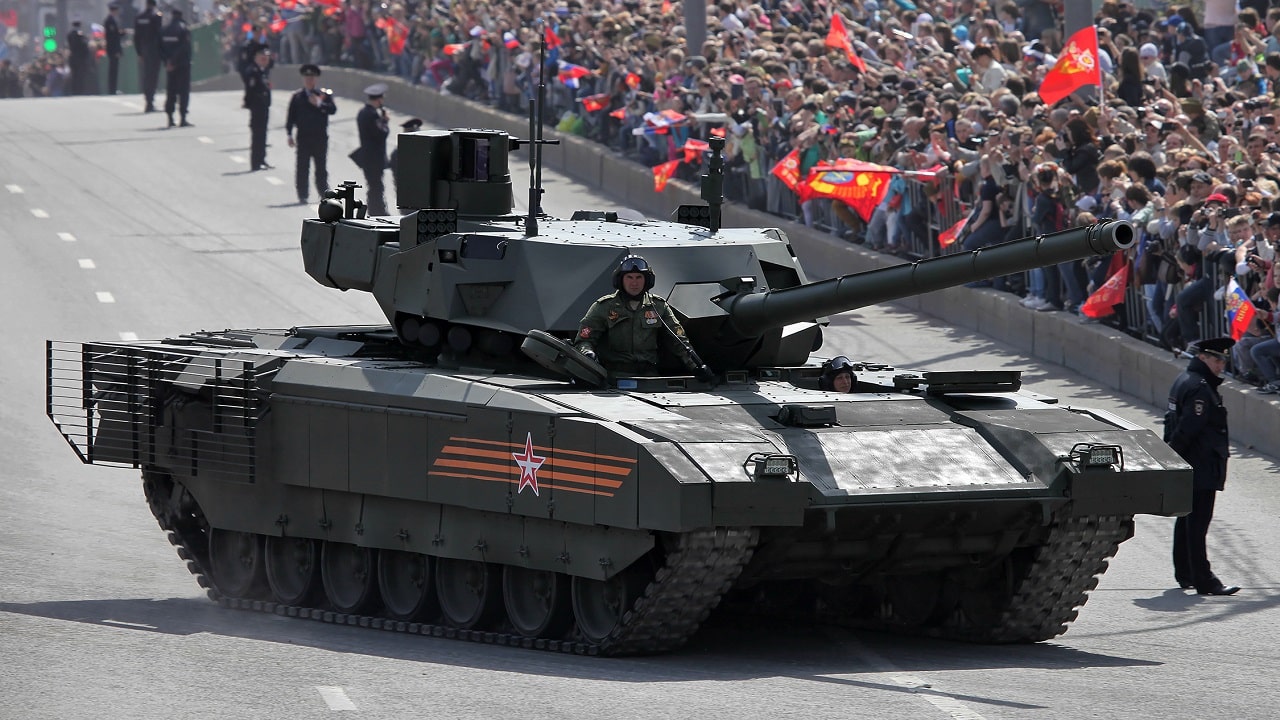
Image of T-14 Armata tank in the Russian Military. Image Credit: Vitali Kuzman.
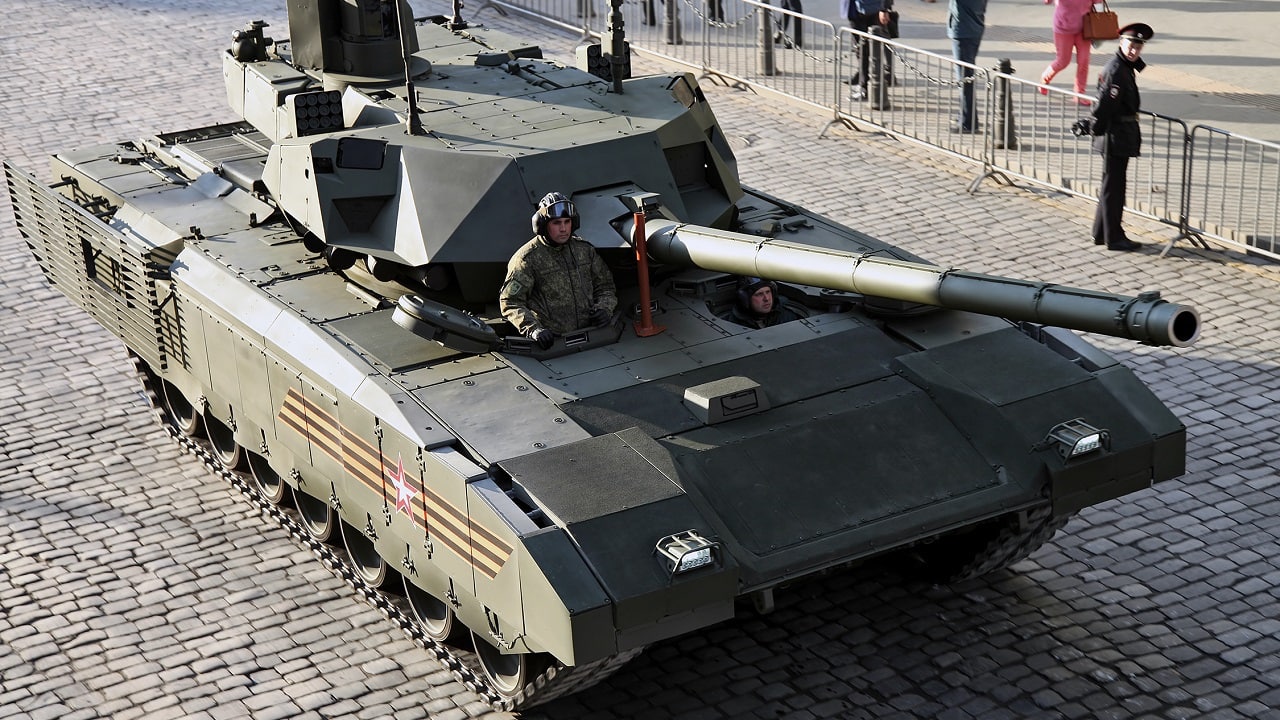
Russian Armata T-14 Tank. Image Credit: Creative Commons.
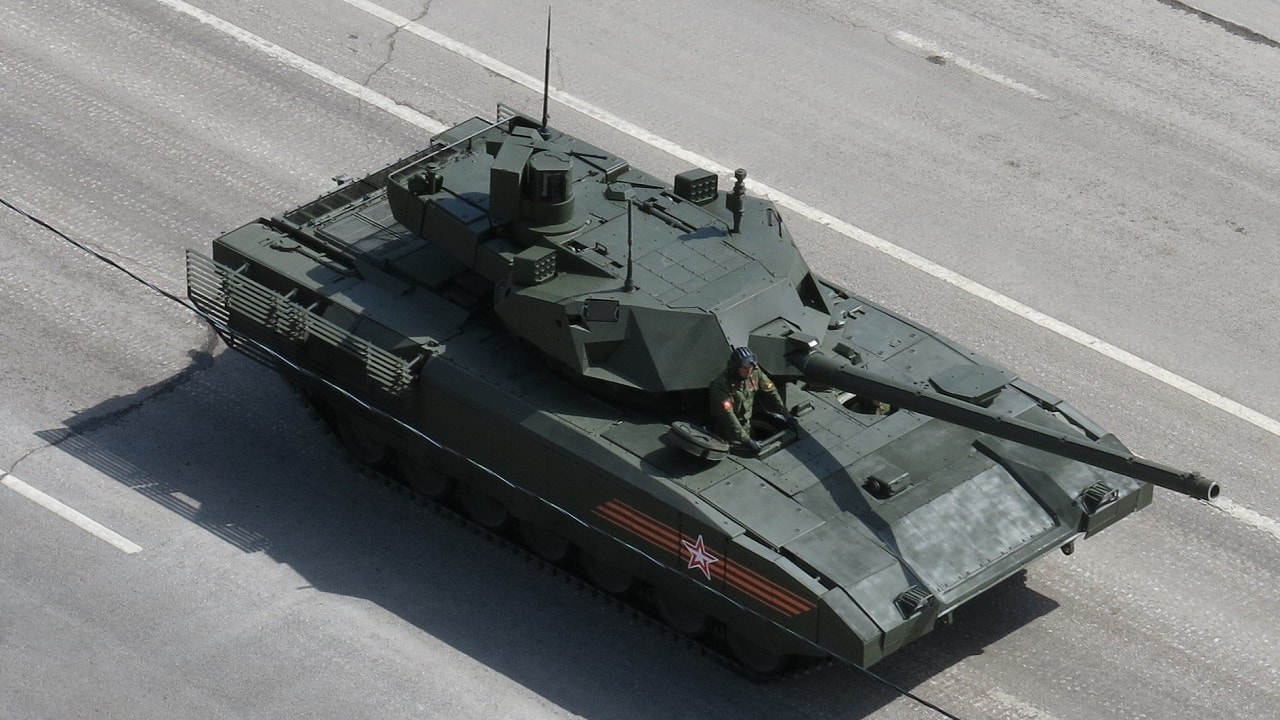
Russian Armata T-14 Tank Prototype from above.
The Tank That Never Rolled
The T-14 Armata is the emblem of the problem. Unveiled at the 2015 Victory Day parade as the most advanced main battle tank on earth, with an unmanned turret, a crew sealed in an armored capsule, and the Afghanit active-protection system, it was supposed to replace Russia’s Soviet-era fleet wholesale. The army initially planned to buy 2,300 of them by 2020.
It never happened. Estimates put the number actually built at roughly 20 to 40, perhaps 50, hand-assembled rather than turned out on a serial production line. The tank has not fought in Ukraine in any meaningful way, despite Russia losing thousands of older tanks there. In 2024, Rostec chief Sergei Chemezov said the quiet part aloud, explaining that the Armata is simply too costly for the war: “it is too valuable, so the army is unlikely to use it now. It’s easier for them to buy the same T-90s.” Even after Chemezov claimed the tank had formally entered service, Moscow declined to say how many had been delivered, and Britain’s Defence Ministry assessed that any deployment would be a “high-risk decision” for a program dogged by delays and manufacturing problems. It was absent from the 2025 Moscow Victory Day parade, and Russia has since offered to hand the technology to India to build under license, a tacit admission it cannot scale production at home.
The Fighter That Never Filled the Skies
The Su-57 Felon tells the same story in the air. Russia’s first stealth fighter, designed to rival the American F-22 and F-35, first flew in 2010 and entered service in 2020. Its planned production run was 76 aircraft by 2027 or 2028.
Instead, analysts estimate that only about 20 to 32 airframes exist, roughly 10 of them prototypes, produced at a rate of 2 to 4 per year. For scale, the United States builds more than 150 F-35s annually, and China turns out over 50 J-20s. The jet’s intended fifth-generation engine, the Izdeliye 30, has been under development for more than a decade and is still not in operational service, so the Su-57 flies on upgraded fourth-generation powerplants. Worse, leaked documents and analysts indicate that sanctions have forced Russia to deliver aircraft missing systems, substituting Chinese or domestic components for cut-off Western microelectronics. Russia uses the Felon so cautiously over Ukraine that it typically fires standoff weapons from within Russian airspace, and a Ukrainian drone still managed to damage one parked hundreds of miles from the front. In the export market, the supposed showpiece has attracted only one confirmed buyer, Algeria, after India walked away from a joint program years ago. A late-2025 study by Britain’s Royal United Services Institute, pointedly titled “Clipping Russia’s Wings,” laid out how dependent the Sukhoi production complex remains on foreign components and imported machine tools.
The Fighter That Never Flew
If the T-14 and Su-57 at least exist in small numbers, the Su-75 Checkmate barely exists at all. Rolled out as a sleek scale model at the 2021 MAKS air show and pitched as an affordable single-engine stealth fighter for export, it was promised a first flight within a few years. Five years on, it has never flown, the program is effectively frozen, and Russia has redirected its scarce resources toward the Su-57 and, above all, toward drones. The Checkmate is the purest form of the trap: a weapon that got as far as a pedestal and a brochure and no further.
The Machinery of Failure
The reasons these programs stall are consistent, and they compound one another. The first is sanctions on the specific inputs advanced weapons need: the high-end microelectronics, precision machine tools, and specialized materials that Russia cannot produce domestically and now struggles to import. The second is the absence of true serial manufacturing for these systems; the T-14 was assembled essentially by hand, “like a luxury car,” which is the opposite of the mass production a war demands. The third is industrial bandwidth: Russia’s factories are fully occupied refurbishing legacy T-72s and building proven Su-35s, leaving little capacity to stand up an entirely new production line. And the fourth is simple economics, sharpened by the war. When a T-14 costs several times as much as a modernized T-90, and the front needs hundreds of tanks, the exquisite option loses every time.
What Russia Can Build
Here, the story turns because the lazy conclusion that Russia simply cannot manufacture weapons is flatly wrong, and getting this right is essential to understanding the actual threat. In the same years that the T-14 and Su-57 stalled, Russia has mass-produced other weapons on an enormous scale. Its Geran-2 attack drones, domestic copies of the Iranian Shahed, went from a handful of imported units to a domestically manufactured weapon launched in nightly salvos of hundreds. Russia fired more than 38,000 of them at Ukraine in 2025, and now plans annual output measured in the tens of thousands, with some estimates of combined strike drones and decoys reaching 110,000 a year. Each costs on the order of $35,000. Russia’s achievement there, as one missile-defense assessment put it, is industrial rather than technological: it paired a deliberately cheap airframe with serial production at scale. The same is true of its guided glide bombs and its cruise and ballistic missiles, which roll off production lines by the dozens each month.
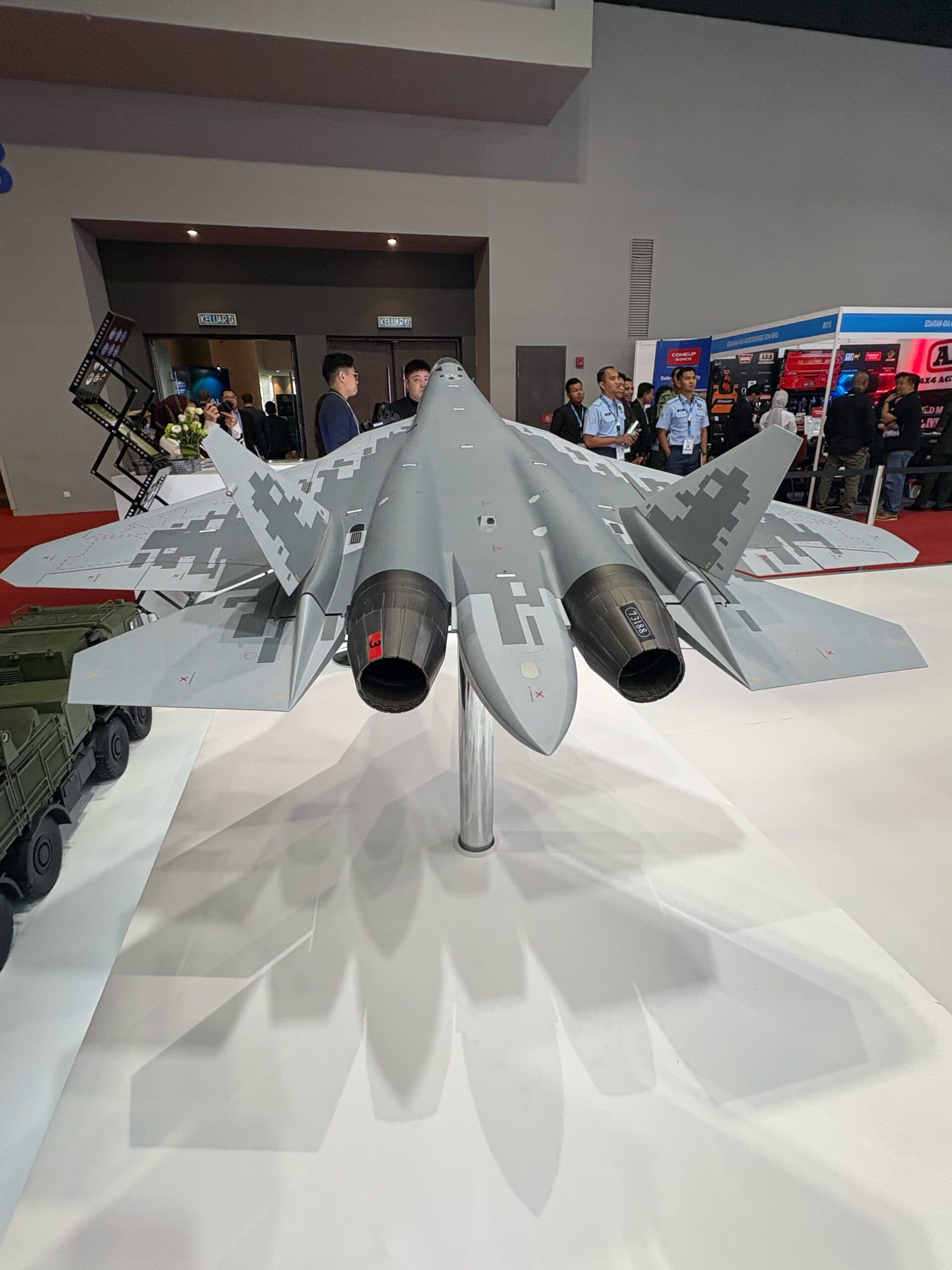
Russian Su-57 Model. Image Credit: 19FortyFive Photo.
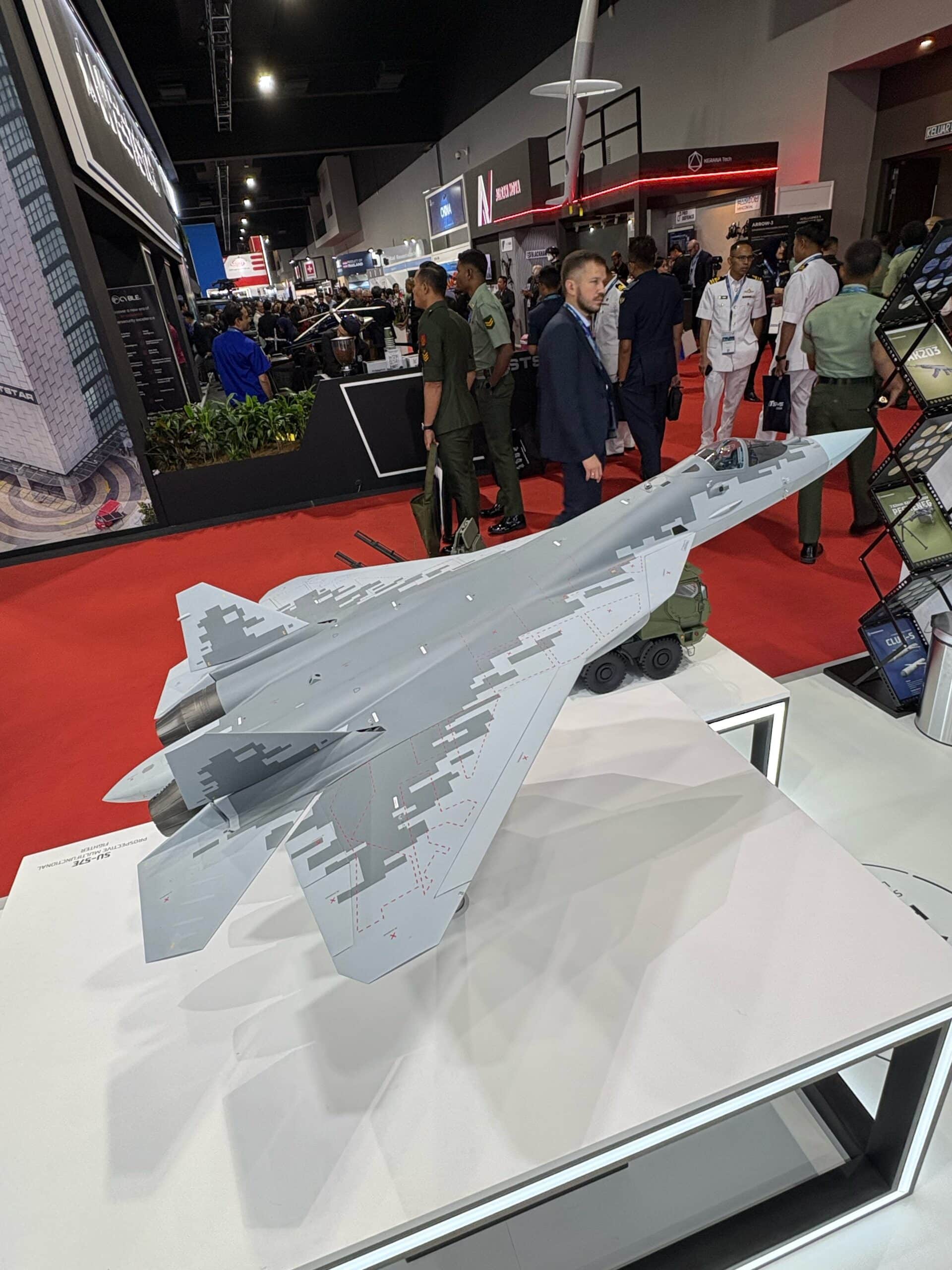
Su-57 Model 19FortyFive Original Photo
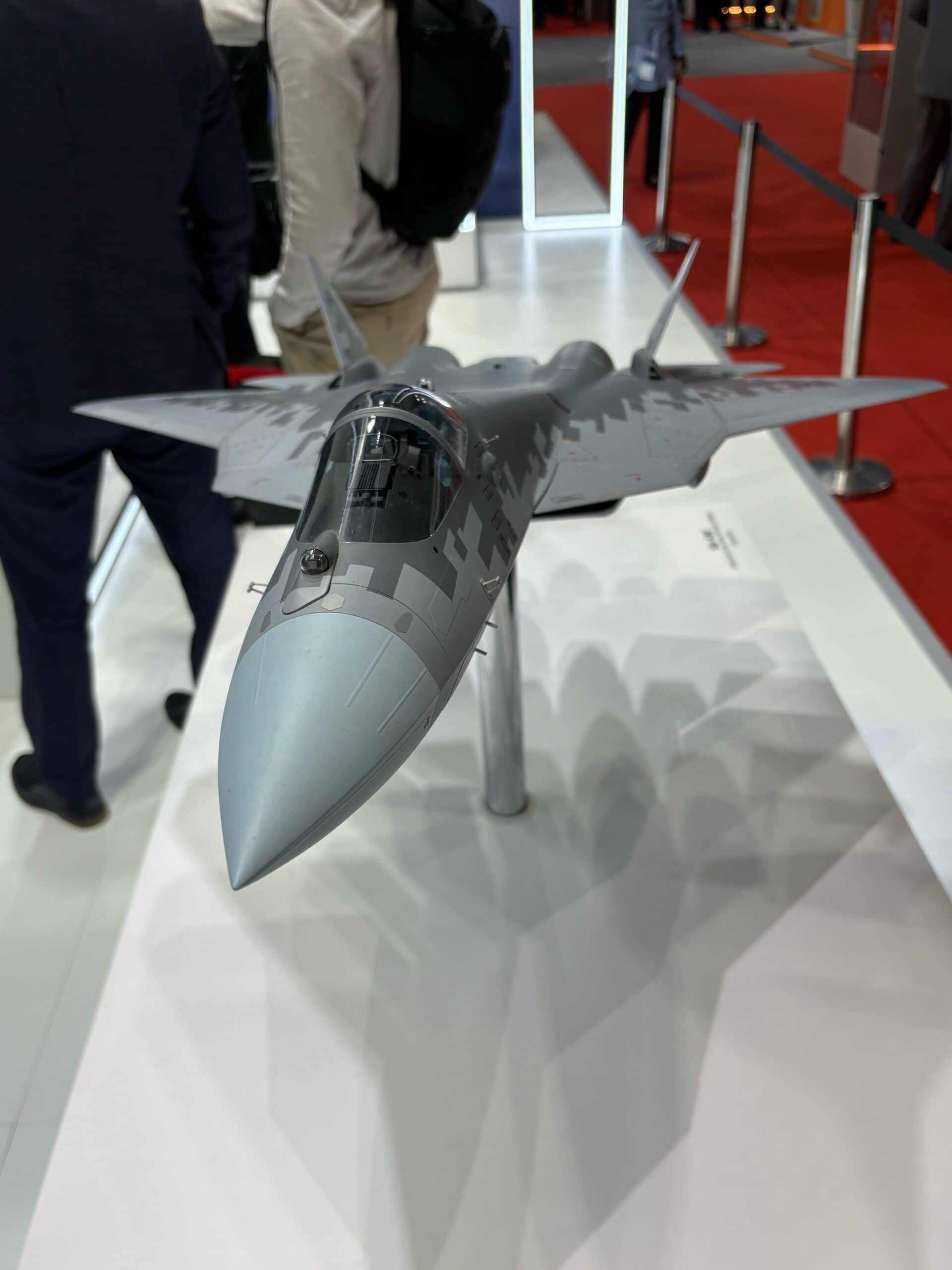
Su-57 Model 19FortyFive Original Photo
The contrast is the point, and it holds even within the missile force: the cheap Geran floods the sky while Russia manages fewer than ten of its exquisite Kinzhal hypersonic missiles a month. The more sophisticated and Western-technology-dependent the weapon, the fewer Russia can build. The less sophisticated and the cheaper, the more it floods the battlefield.
The Real Diagnosis
This resolves the apparent paradox. Russia’s problem is neither a lack of engineering talent, its designs are advanced and often ingenious, nor a general inability to manufacture, it out-produces the West in cheap drones. The trap is specific: the most complex, most import-dependent, most expensive platforms are exactly the ones that sanctions and a strained wartime industrial base cannot scale. The T-14, the Su-57, and the Su-75 sit at that precise intersection, and that is why they remain showpieces while Geran drones darken Ukrainian skies.
The strategic implication is not that Russia has been disarmed. It is that Russia has re-armed differently, trading the dream of a fleet of world-beating tanks and stealth fighters for the reality of cheap, attritable mass. That shift is partly a symptom of the prototype trap and partly a rational adaptation to a war that rewards quantity, and it should reshape how the West reads Russian power. The honest assessment underestimates neither Russia’s ability to design sophisticated weapons nor its proven capacity to mass-produce simple ones. But the gap between the two, the chasm between what Moscow can draw and what it can actually field in numbers, is the one sanctions have widened most, and it is where the vaunted T-14 has spent the last decade: parked, polished, and almost entirely absent from the war it was built to win.
About the Author: Harry J. Kazianis
Harry J. Kazianis (@Grecianformula) was the former Senior Director of National Security Affairs at the Center for the National Interest (CFTNI), a foreign policy think tank founded by Richard Nixon based in Washington, DC. Harry has over a decade of experience in think tanks and national security publishing. His ideas have been published in the NY Times, The Washington Post, The Wall Street Journal, CNN, and many other outlets worldwide. He has held positions at CSIS, the Heritage Foundation, the University of Nottingham, and several other institutions related to national security research and studies. He is the former Executive Editor of the National Interest and the Diplomat. He holds a Master’s degree focusing on international affairs from Harvard University.