
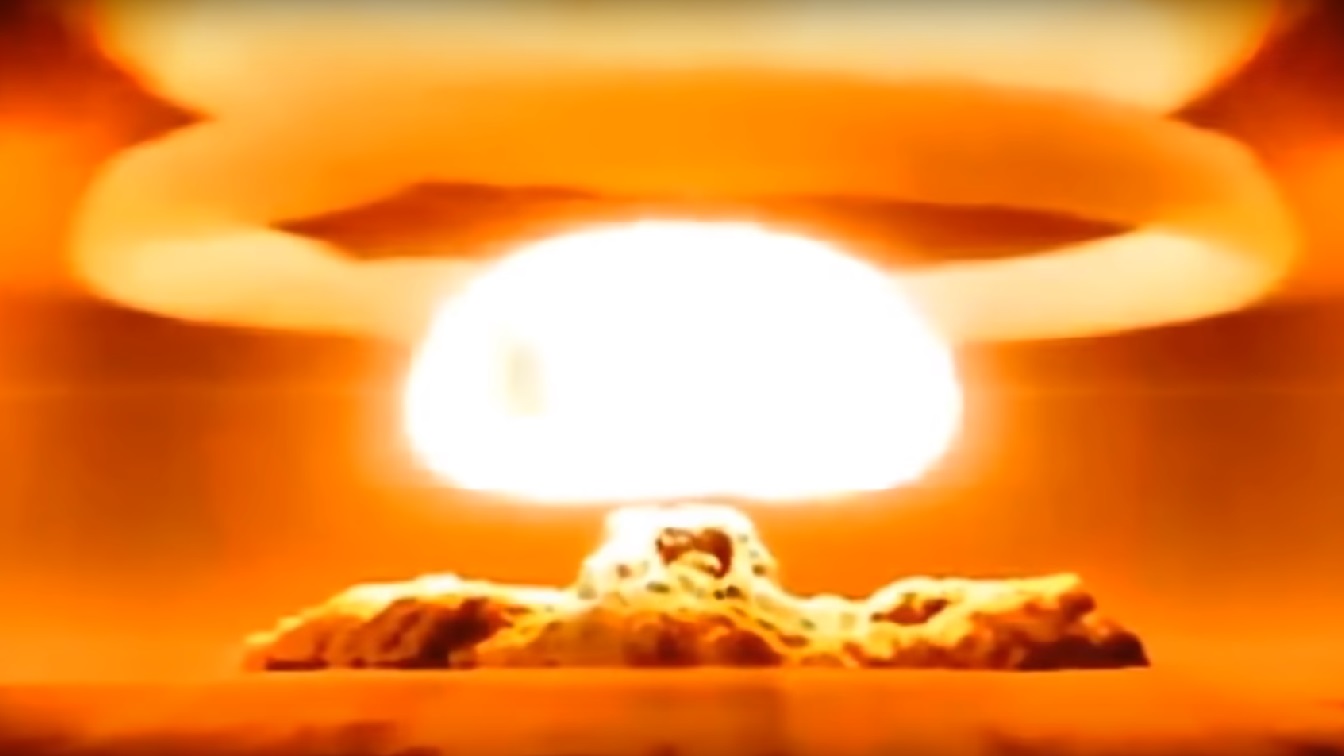
July 16 marks the anniversary of the Trinity test—the world’s first detonation of a nuclear weapon.
Conducted in the New Mexico desert as a critical part of the Manhattan Project, the explosion lasted only seconds, but it altered warfare and international politics in a way that is still relevant today, eighty years later. Essentially, Trinity ushered in a new era for humanity, within which humanity had, for the first time, the ability to destroy itself.
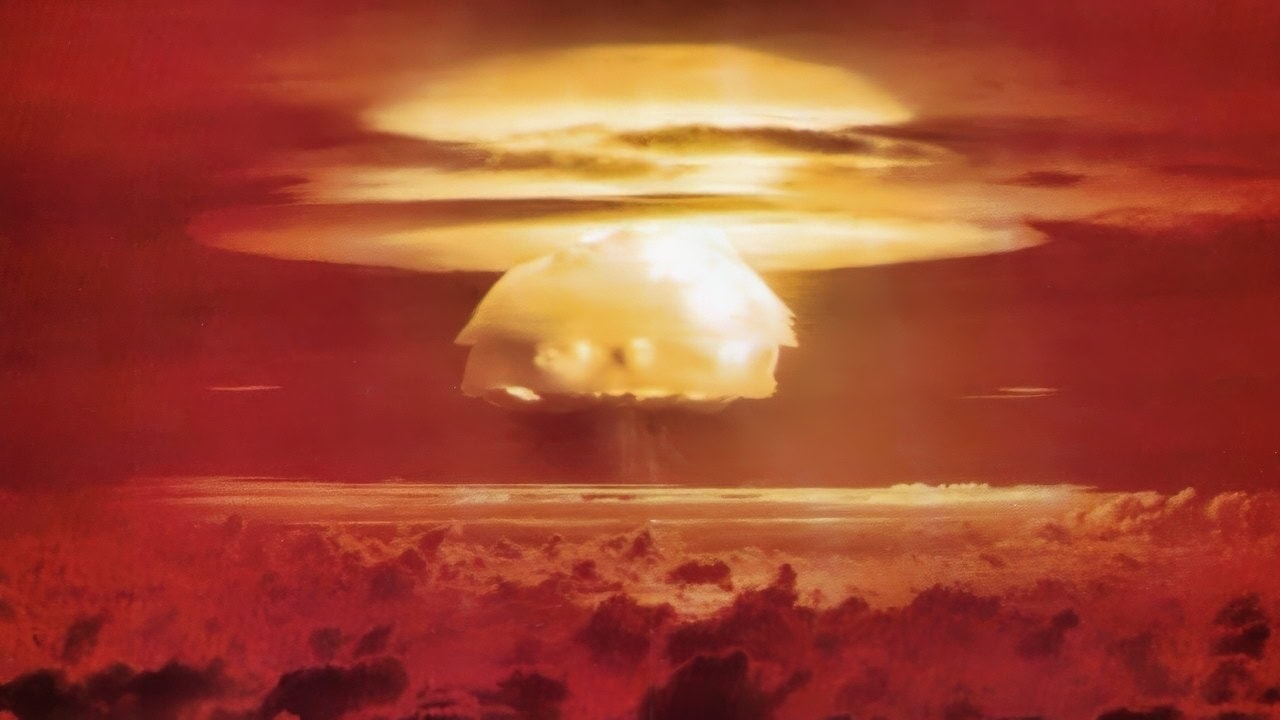
Nuclear Bomb Detonation. Image Credit: Creative Commons.
The First Test
On July 16, 1945, at the Jornada del Muerto desert in New Mexico, a plutonium implosion bomb, known as “Gadget,” was detonated. With a yield of roughly 21 kilotons, the explosion marked the culmination of the Manhattan Project, arguably the most intensive and most important military-industrial project ever.
Led by Robert Oppenheimer and General Leslie Groves, scientists were uncertain exactly what would happen once Gadget was detonated. Some theories held that the atmosphere itself would ignite, ending the world.
That didn’t happen, fortunately, but the destruction—and the implications of that destruction—were profound, prompting Oppenheimer to recollect, “Now I am become Death, the destroyer of worlds,” a quote from the Bhagavad Gita.
From Experiment to Application
Within weeks of the Trinity test, the technology was operationalized. The atomic bomb was dropped on Hiroshima and Nagasaki that August.
Japan surrendered and World War II ended.
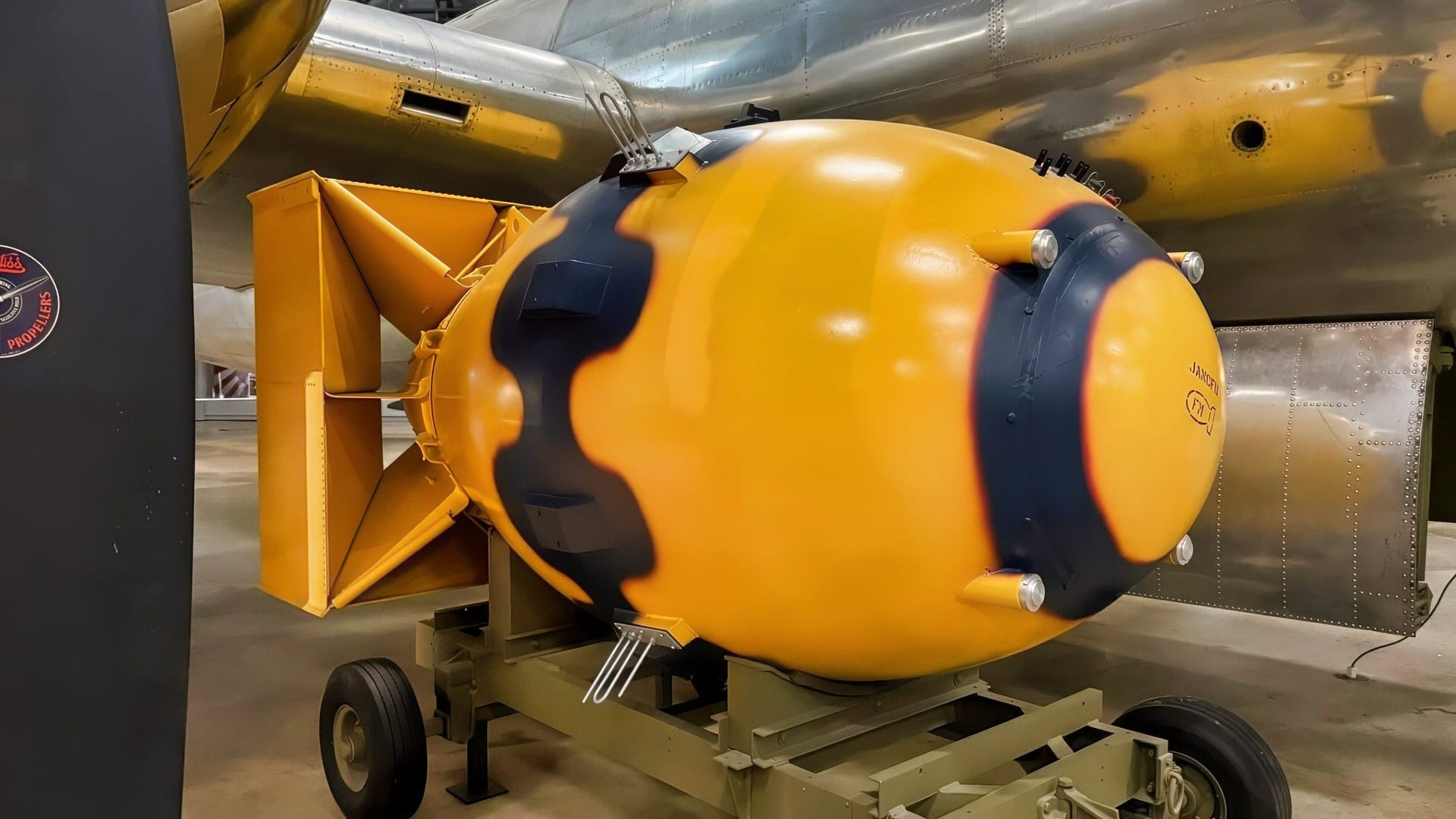
Fat Man Nuclear Bomb from National Museum of the U.S. Air Force. 19FortyFive.com Image.
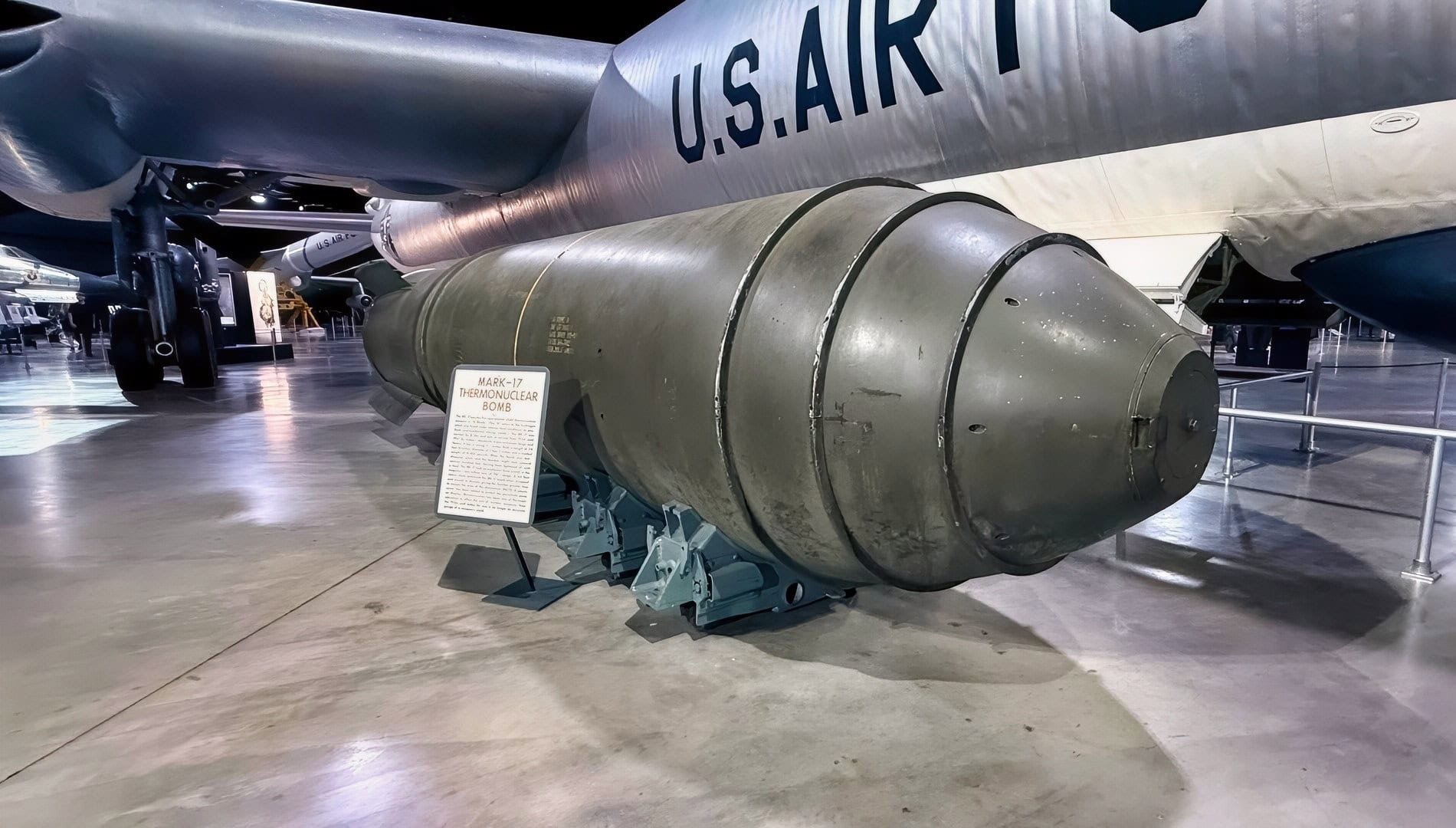
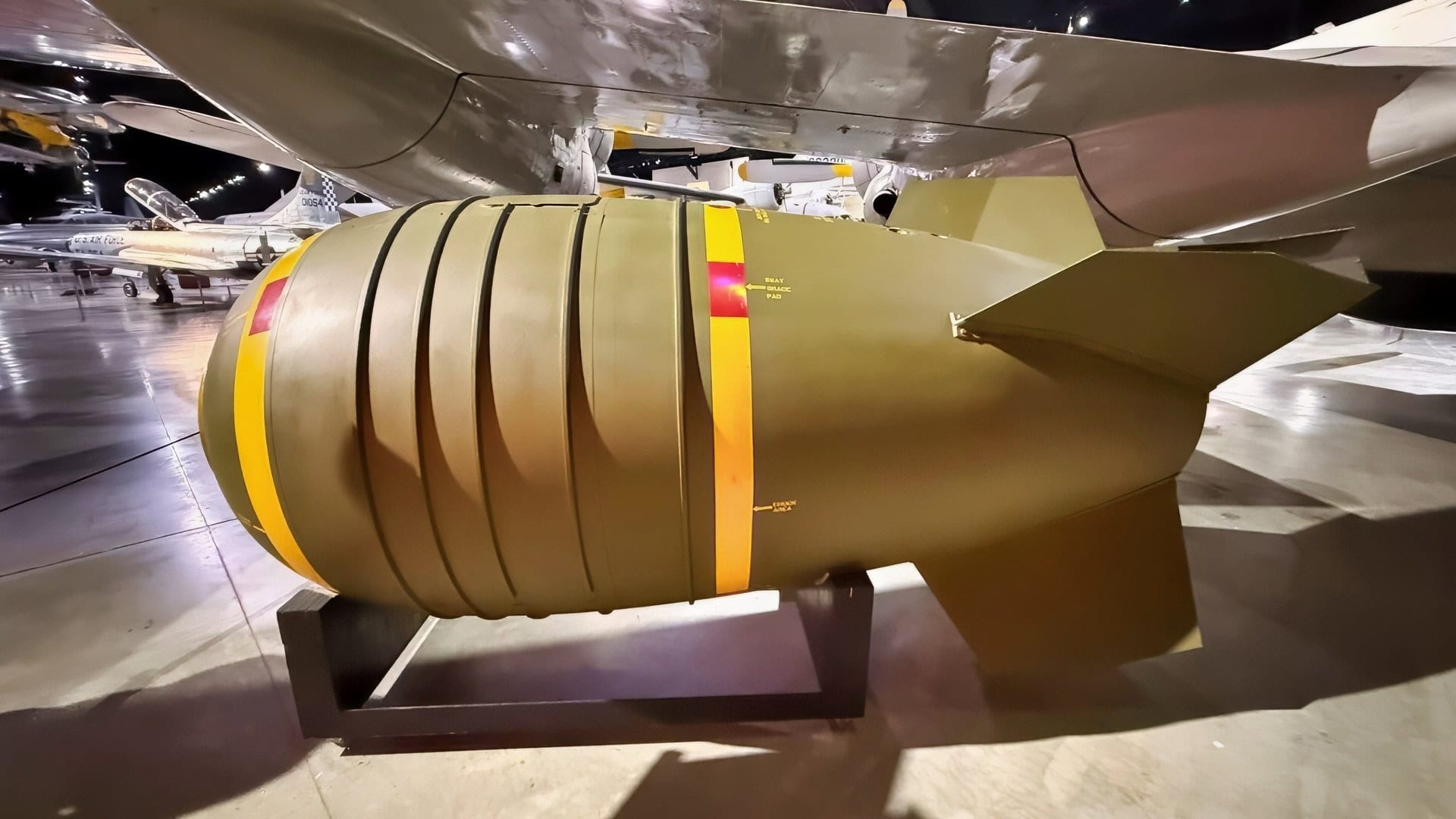
Mark-17 Nuclear Bomb 19FortyFive.com Image
Nuclear Bomber Image Taken at National Museum of the Air Force by 19FortyFive.com
Nuclear weapons had immediately demonstrated that a single aircraft could destroy an entire city, marking a watershed moment in military history and ushering in a new strategic era through the birth of nuclear deterrence.
Before 1945, wars often rewarded industrial production and manpower.
But Trinity changed the calculus. After Trinity, the goal increasingly became preventing war altogether.
The thinking goes, if both sides possess nuclear weapons capable of existential-scale destruction, then striking first could lead to the end of the state.
This became a foundation of Cold War strategy, and arguably, one of the reasons the post-World War II era has been the most peaceful in human history.
The New Era
After World War II, as both the US and USSR built increasingly large nuclear arsenals, military planners were forced into a new reality.
Even if one side launched a surprise first strike, it would not be able to destroy all of an opponent’s nuclear forces, meaning the opponent would retaliate.
Indeed, both countries intentionally built a second-strike capability, preserving the option of striking back and thereby increasing deterrence.
This led to a doctrine of Mutually Assured Destruction (MAD). The logic was grim but simple and arguably peace-upholding: any nuclear war between superpowers would almost certainly lead to the end of both civilizations, making victory functionally unattainable.
To guarantee second-strike capability, the US and USSR developed the nuclear triad, which consisted of land-based ICBMs, strategic bombers, and ballistic missile submarines (SSBNs) capable of launching submarine-launched ballistic missiles (SLBMs).
Each leg of the triad compensated for weaknesses in the others, giving each nation a fairly comprehensive set of first- and second-strike options.
Indirect Competition
The remarkable effect of Trinity and the nuclear age is that in the decades since, no two nuclear-armed powers have fought a full-scale conventional war against each other.
This represents one of the more significant strategic shifts in human history. Before 1945, of course, great powers fought regularly (World War I and World War II being recent examples). But after Trinity, direct conflict vanished.
That doesn’t mean conflict disappeared entirely, but it shifted to proxy wars, intelligence operations, covert action, arms races, and economic competition.
This is arguably an improvement over the conventional bloodshed that regularly punctuated great power competition for most of human history.
The Wake of Trinity
Trinity didn’t just prove that the atomic bomb worked—it changed how nations think about war. Military powers today aren’t measured solely by standing armies, fleets, or production capacity—they are measured by whether or not they have nuclear weapons.
And even as new technologies emerge, like artificial intelligence, hypersonic missiles, and cyber warfare, none have displaced the importance of nuclear weapons, suggesting that Trinity may have ushered in not just a new era but possibly a new epoch of strategic competition.
About the Author: Harrison Kass
Harrison Kass is a writer and attorney focused on national security, technology, and political culture. His work has appeared in Tablet, City Journal, The Hill, The Spectator, and The Cipher Brief. He holds a JD from the University of Oregon and a master’s in Global & Joint Program Studies from NYU. More at harrisonkass.com.