
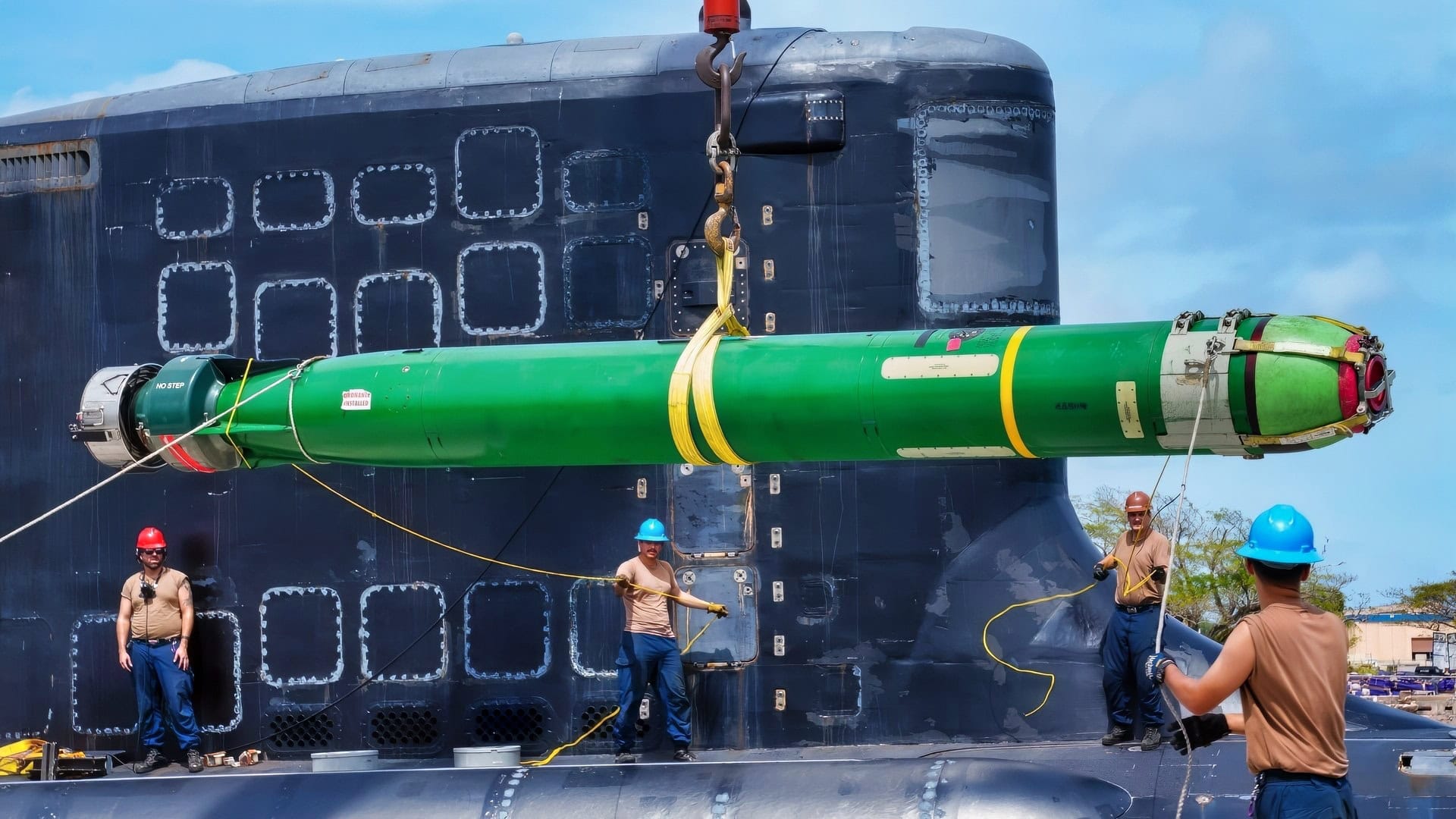
In March 2026, a U.S. submarine sank an Iranian frigate with a single Mark 48 torpedo, the first time an American submarine had torpedoed an enemy warship since 1945. The weapon that did it is more than half a century old, unglamorous, and largely ignored in an era obsessed with drones and hypersonic missiles. Yet a growing body of analysis, and now a rare combat kill, suggests this quiet 21-inch tube may be among the most important weapons in the U.S. Navy’s arsenal. Here is the case, and the case against it.
Meet the Mark 48 Torpedo
On March 4, 2026, in the Indian Ocean roughly 20 nautical miles south of Sri Lanka, a U.S. Navy fast-attack submarine fired on the Iranian frigate IRIS Dena. The Pentagon later released infrared periscope footage showing the result: a massive detonation at the frigate’s stern, which lifted the ship, broke its hull, and sent it under. Defense Secretary Pete Hegseth confirmed the strike alongside Joint Chiefs Chairman Gen. Dan Caine, describing it as a “quiet death” and the first sinking of an enemy ship by a torpedo since World War II. Caine specified that the vessel had been destroyed by a single Mark 48 torpedo.
It was a grave event as well as a historic one. The Dena, a Moudge-class frigate, was returning from an international naval review in India and was transiting international waters when it was hit; of roughly 180 sailors aboard, only 32 were rescued, and at least 80 were killed. The circumstances, a strike far from the war’s center on a ship returning from a diplomatic gathering, drew sharp condemnation from Tehran. Whatever one concludes about those circumstances, the engagement demonstrated something concrete about the weapon involved, a weapon that had not sunk a ship in anger in eight decades and that most observers of modern warfare rarely think about at all.
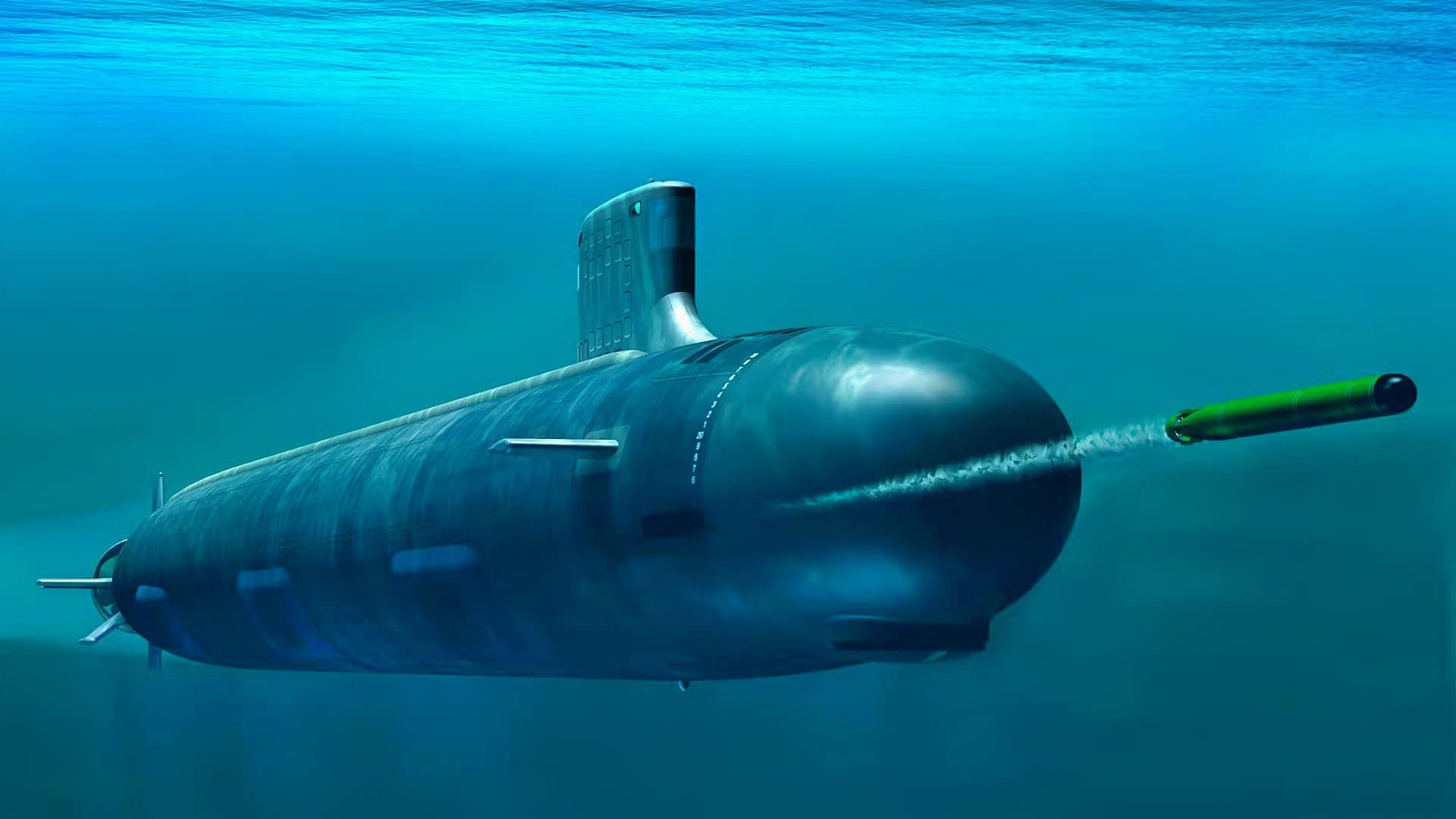
Mark 48 Torpedo.
The Weapon
The Mark 48 has been the United States Navy’s heavyweight submarine torpedo since 1972. In its current Advanced Capability form, it is the sole submarine-launched torpedo carried by every class of American submarine, from the Virginia– and Los Angeles-class attack boats to the Ohio-class ballistic-missile submarines that carry it purely for self-defense. It is a 21-inch-diameter, nineteen-foot weapon that can be steered from the launching submarine through a thin guidance wire or left to hunt on its own using active or passive acoustic homing, and if it misses on its first pass, it can circle and attack again.
What makes it so lethal is how it kills. Rather than striking a ship’s side like a missile, the Mark 48’s roughly 650-pound warhead is designed to detonate in the water directly beneath the hull. That explosion creates a gas bubble that lifts the ship’s midsection and then collapses, snapping the keel, the structural spine of the vessel, and breaking the ship apart. A missile that hits above the waterline can leave a warship damaged but afloat; a torpedo detonating under the keel can break a ship’s back and sink it outright, which is precisely what the IRIS Dena footage showed. Just as important, there is no reliable defense against it. Warships carry layered systems to shoot down incoming missiles and aircraft, but a heavyweight torpedo running deep beneath the surface is extraordinarily difficult to stop.
Why the Undersea Domain Decides
The argument that this makes the Mark 48 a weapon of the first rank does not rest on one strike against a lightly defended frigate. It rests on where the future of naval warfare is heading, and on what happens when American planners game out the fight everyone worries about most: a Chinese invasion of Taiwan.
When the Center for Strategic and International Studies ran exactly that scenario, playing it twenty-four times across a range of assumptions, one finding stood out: among the most decisive factors in whether China’s invasion failed was U.S. dominance in the undersea domain. The reason is the flip side of a hard truth those games surfaced: inside China’s dense anti-ship-missile defenses, surface warships are highly vulnerable and non-stealthy aircraft are, in the analysts’ blunt framing, not even survivable. Attack submarines are the key assets precisely because they can go where surface ships and planes cannot, operating with relative impunity to strike a fleet that has few good ways to fight back.
This is the deeper case, and it connects directly to the technological trend of the age. As drones, satellites, and networked sensors make the surface of the ocean ever more transparent, ships and aircraft become easier to find and target every year. The one platform that remains hard to locate is the submarine, hidden beneath a wall of water that radar and cameras cannot penetrate. And a submarine, for all its stealth and its cruise missiles, ultimately sinks ships with its torpedoes. A submarine without a working heavyweight torpedo is a very expensive sensor. The Mark 48 is what makes the Navy’s most survivable platform lethal, which is why its quiet importance grows as the flashier domains become more exposed.
The Case Against
That thesis deserves a serious challenge, and there are real ones. The most obvious is that sinking a stationary, lightly armed frigate transiting peaceful waters is a poor proxy for combat against a defended Chinese fleet screened by anti-submarine helicopters, escorts, and sensors. The IRIS Dena proved the weapon works; it did not prove it would work against a peer.
The harder problem is arithmetic. Heavyweight torpedoes are expensive, costing several million dollars apiece, and are produced in modest numbers, and a great-power war at sea could exhaust American stockpiles quickly. A congressionally requested CSIS simulation estimated that in a Taiwan conflict, the Navy could run out of long-range anti-ship missiles in less than a week of fighting, and the torpedo magazine would face similar pressure. The Navy knows this, which is why the Pentagon’s Strategic Capabilities Office in late 2025 solicited a cheaper, mass-producible heavyweight torpedo called RAPTOR to supplement the Mark 48, and why the service is experimenting with launching torpedoes from unmanned surface vessels rather than only from scarce submarines. Those very programs are a tacit admission that the exquisite, costly Mark 48 alone is not a sufficient answer.
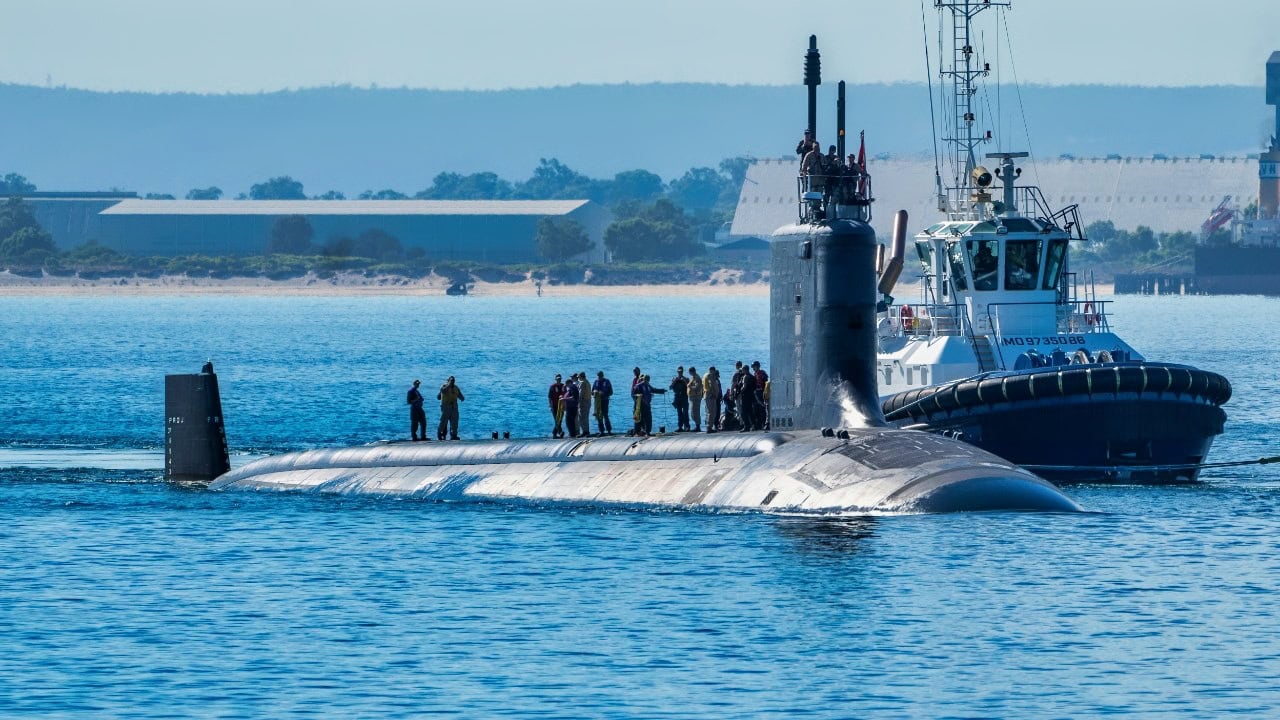
Western Australia, Australia (Feb. 25, 2025) The Virginia-class fast-attack submarine USS Minnesota (SSN 783) prepares to moor at HMAS Stirling, Western Australia, Australia, Feb. 25, 2025. Minnesota arrived in Western Australia kicking off the first of two planned U.S. fast-attack submarine visits to HMAS Stirling in 2025. Minnesota is currently on deployment supporting the U.S. 7th Fleet, the U.S. Navy’s largest forward-deployed numbered fleet, operating with allies and partners in preserving a free and open Indo-Pacific region. (U.S. Navy photo by Lt. James Caliva)
Nor is the American undersea advantage permanent. China is fielding progressively quieter submarines and investing heavily in anti-submarine warfare, and some analysts warn that the U.S. edge in the deep is narrowing. And “most important weapon” is a thesis, not a consensus; the same Taiwan wargames also credited long-range anti-ship missiles, land-based Taiwanese forces, and access to bases in Japan as decisive factors. The torpedo is one pillar among several, not a single war-winner.
The Boring Weapon That Matters
Weigh all of that, and the fairest verdict is not that the Mark 48 is a magic bullet but that it is something rarer in defense debates: a mature, reliable, continuously improved weapon whose importance has been quietly compounding while attention drifted elsewhere. It first entered service during the Nixon administration; it is not stealthy or hypersonic, and it generates no headlines. Yet it has been upgraded across decades of new guidance and sonar packages, with further modernizations underway, and it remains the weapon on which America’s most survivable naval platform depends.
The temptation in an era of drones and hypersonic missiles is to assume the decisive weapons must be the newest and most exotic ones. The undersea domain suggests otherwise. There, the platform that matters most is the one hardest to see, and the weapon that matters most is the one hardest to stop, and both have been around for a long time. The March strike in the Indian Ocean was a grim reminder of that logic in action. Long after it fell out of fashion, a fifty-year-old torpedo did what no American submarine weapon had done since 1945, and in doing so it pointed, uncomfortably, at where the next war at sea might be decided.
About the Author: Harry J. Kazianis
Harry J. Kazianis (@Grecianformula) was the former Senior Director of National Security Affairs at the Center for the National Interest (CFTNI), a foreign policy think tank founded by Richard Nixon based in Washington, DC. Harry has over a decade of experience in think tanks and national security publishing. His ideas have been published in the NY Times, The Washington Post, The Wall Street Journal, CNN, and many other outlets worldwide. He has held positions at CSIS, the Heritage Foundation, the University of Nottingham, and several other institutions related to national security research and studies. He is the former Executive Editor of the National Interest and the Diplomat. He holds a Master’s degree focusing on international affairs from Harvard University.

