

One of my favorite lived experiences in the defense and military career I have had the privilege of enjoying was standing on the bridge of the USS North Carolina, a real-life Virginia-class submarine, back in October of 2004. To be fair, she was the module section for the North Carolina, being completed at Electric Boat in Groton. Even all those years ago, I could tell these were truly special subs, but nothing stays static, and the challenges are mounting. Business & industrial problems, along with geopolitics, are demanding more of the Virginia-class, resulting in a problem that won’t be easily solved.
Two Virginia-Class Submarines A Year: The Business & Industrial Math The U.S. Navy Cannot Solve

The USS Constitution sails past the Virginia-class nuclear-powered fast-attack submarine USS Massachusetts (SSN 798) during Massachusetts’ commissioning in Boston, on March 28th, 2026. Massachusetts is the newest fast-attack submarine and the fifth U.S. Navy vessel to bear the name. (U.S. Navy photo by Mass Communication Specialist 2nd Class Lucas J. Hastings)
The United States Navy has a single number it must hit to keep its undersea force from shrinking, and it has never hit it. The requirement is to deliver two Virginia-class attack submarines every year, alongside one Columbia-class ballistic missile boat — the “2+1” formula the Navy calls its top industrial-base priority. The actual delivery rate, which has been stuck since 2022, is about 1.2 boats per year.
In May, the Navy’s own chief told Congress the two-a-year rate will not arrive until around 2032. Two years ago, the target was 2028. The finish line is moving away from the Navy faster than the Navy is moving toward it, and the reasons have almost nothing to do with money and almost everything to do with a problem money cannot quickly fix.
1.2 Boats A Year Against A Requirement Of Two
The shortfall is not new, and the trend inside it is the alarming part. Virginia-class submarines have been funded at two boats per year since 2011, but the actual production rate has never reached 2.0, and since 2022 has fallen to roughly 1.1 to 1.2 boats annually because of workforce and supply-chain constraints, leaving a growing backlog of submarines bought by Congress but not yet built.
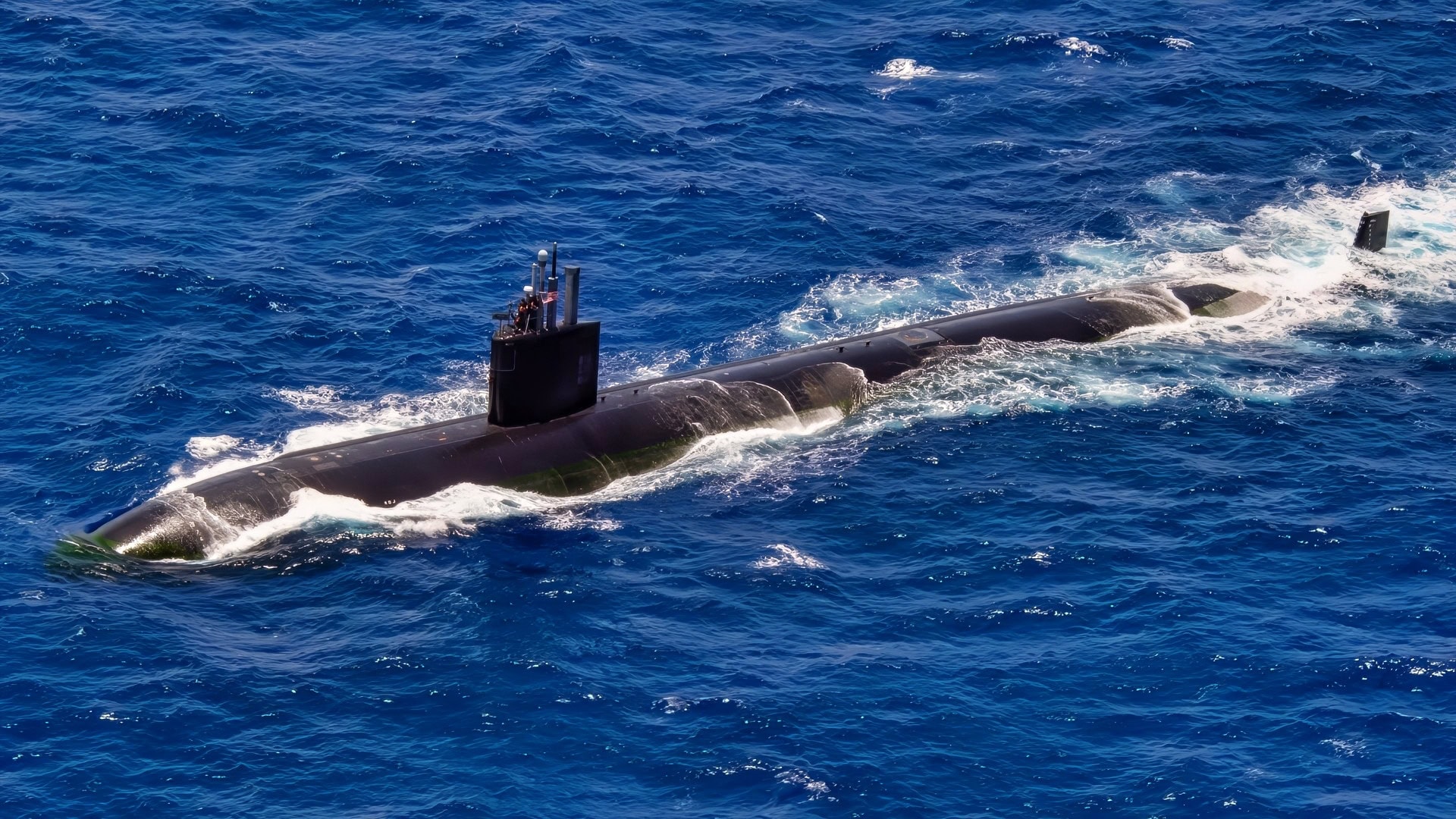
Virginia-class submarine USS North Carolina (SSN-777) sails during the at-sea phase of Exercise Rim of the Pacific (RIMPAC) 2024.
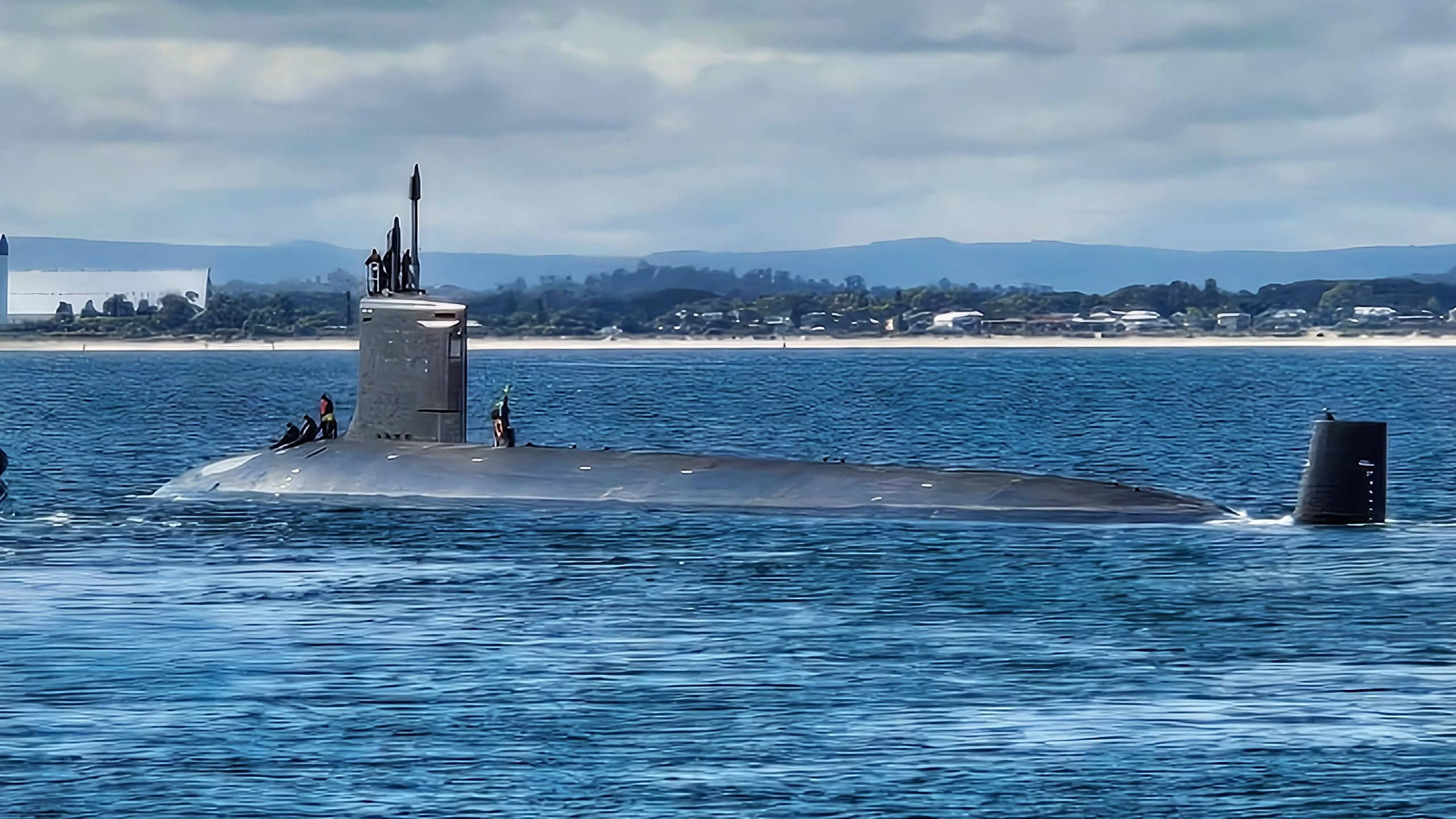
HMAS STIRLING, Western Australia, Australia (Sep. 10, 2024) — USS Hawaii (SSN 776) departs HMAS Stirling Sept. 10, marking the conclusion of a historic submarine maintenance period in Western Australia. As part of the Australia, United Kingdom, United States (AUKUS) Pillar 1 effort, Royal Australian Navy personnel assigned to submarine tender USS Emory S. Land (AS 39) worked alongside their U.S. Navy counterparts to make repairs on the U.S. Virginia-class SSN in Australia during a multi-week Submarine Tendered Maintenance Period, or STMP. (U.S. Navy photo by Rory O’Connor)
The yards touched a rate near 1.9 for about three years before the pandemic, then fell to 1.13 by the end of 2024 and have not recovered. Every boat not delivered on schedule is a boat the fleet planned to have and does not.
Admiral Daryl Caudle, the Chief of Naval Operations, gave appropriators the current estimate in May, and he did not dress it up. Based on the investments already made and the expansion of distributed construction, Caudle put the two-a-year delivery rate at around 2032 — a date that lands harder when set against the recent past. In 2023, then-Secretary Carlos Del Toro told Congress that the yards would reach two boats per year by 2028, with steady improvement in workforce recruitment and retention.
The recruitment and retention did not come steadily enough, and the milestone slid four years to the right in the space of three. That is the pattern worth watching: not that the rate is low, but that the date of its recovery keeps receding.

(June 30, 2011) The Virginia-class attack submarine USS California (SSN 781) underway during sea trials. (U.S. Navy photo by Chris Oxley/Released).
Two Shipyards, And No Way To Build A Third In Time
The first wall is the most concrete. Only two facilities in the United States can build a nuclear-powered submarine — General Dynamics Electric Boat in Groton, Connecticut, and HII’s Newport News Shipbuilding in Virginia — and both are already running at capacity.
There is no third yard to absorb the overflow, and there is no fast way to create one. A new nuclear shipyard is a decade-plus undertaking requiring graving docks, specialized heavy infrastructure, security accreditation, and above all, a nuclear-certified workforce that does not yet exist, all before a single hull comes out. Congress cannot appropriate a shipyard into being inside the timeframe the China problem runs on.
The two yards also depend on each other in ways that turn a delay at one into a delay at both. Electric Boat integrates the final boat, but the stern and bow sections are fabricated at Newport News and shipped north, and the handoffs have been a documented bottleneck.
When one yard falls behind on a module, the other waits. Two facilities building the most complex machines the country manufactures, with no slack in the system, means there is nowhere to route work when either one stumbles.
The Workforce Wall: Skilled Trades Take Years To Build
The constraint every Navy official names first is people. Submarine construction runs on skilled trades — nuclear-certified welders, machinists, electricians, pipefitters — and those skills take years of training and supervised experience to reach proficiency.
The experienced generation that built the fleet through the 1990s and 2000s is retiring; the pandemic accelerated departures, and the yards must now recruit, train, and retain tens of thousands of new tradespeople in a tight national labor market, competing with private employers offering easier work for comparable pay.
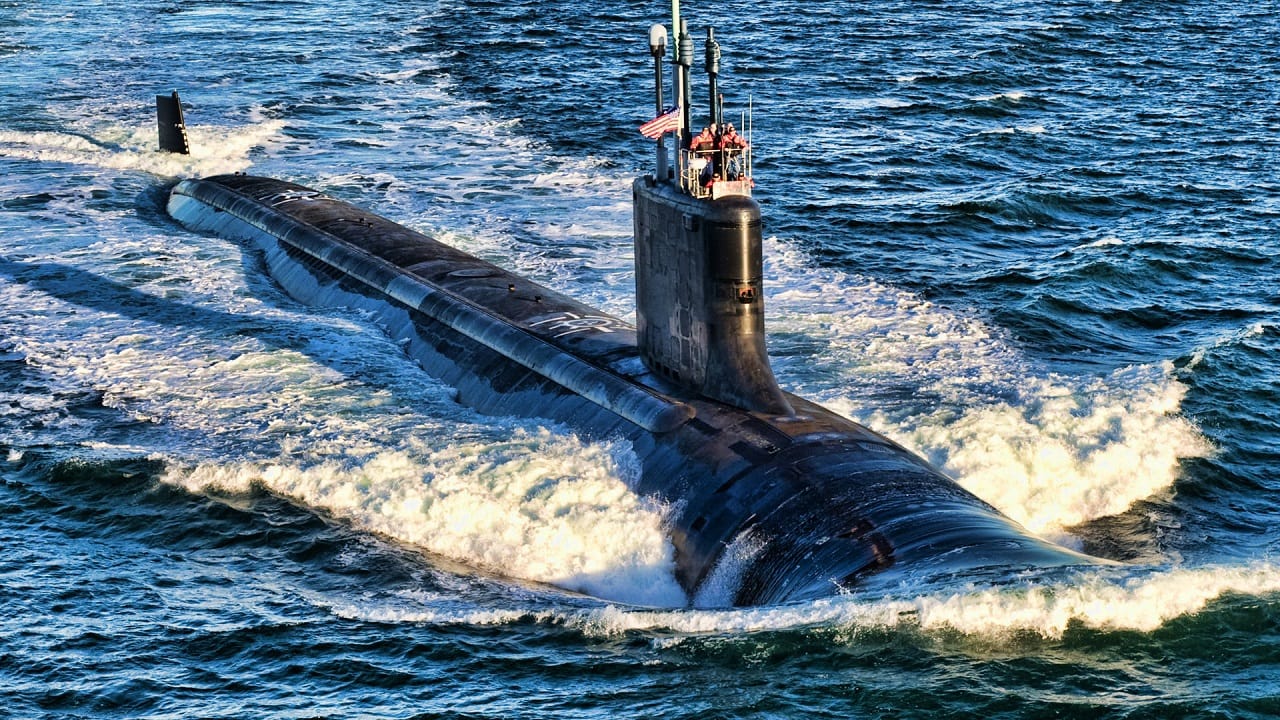
US Navy Attack Submarine. Image Credit: Creative Commons.
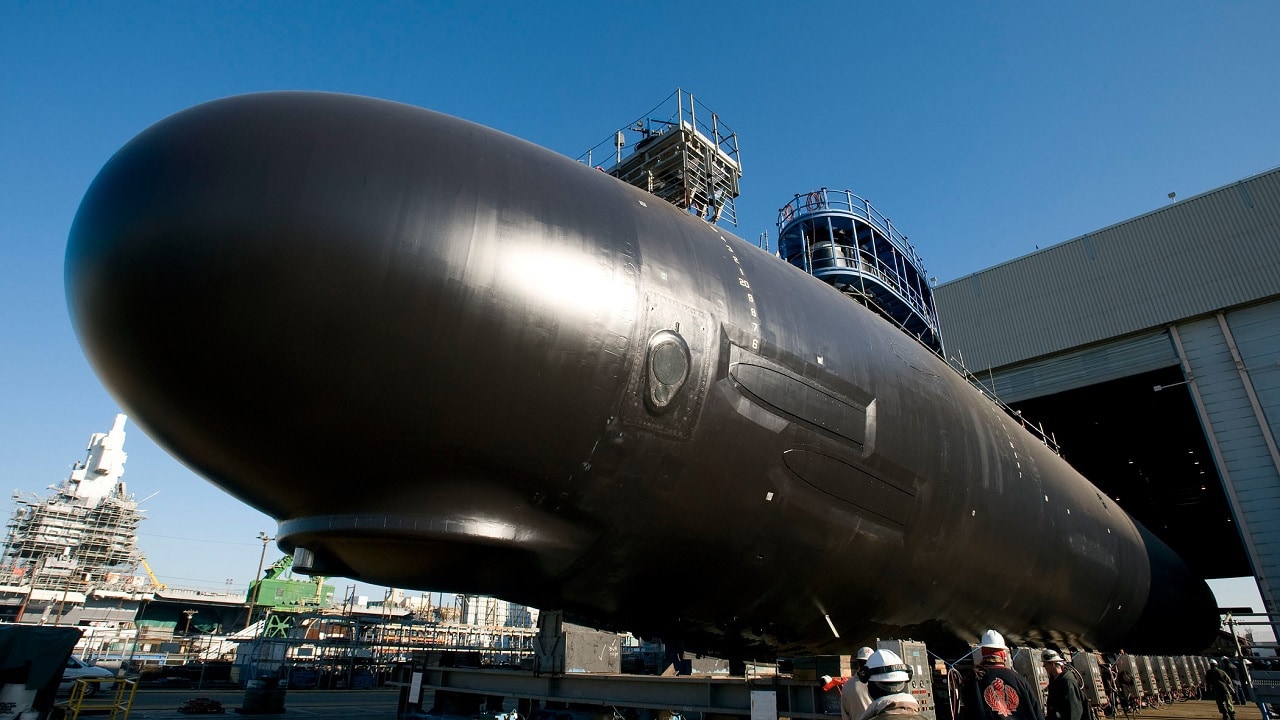
Virginia-Class. Image Credit: Creative Commons.
The hard part is that this wall does not come down with a check. A welder qualified to join a submarine’s pressure hull to nuclear standards cannot be trained in a quarter or a year; certification and supervised hours are the bottleneck, and they move at the pace at which people actually learn a trade. The Navy’s investments in training pipelines are real and necessary, but they pay out over a decade, not a budget cycle.
First-time quality suffers when a workforce is this green — rework on a misjoined weld can cost months, which means the very inexperience the hiring surge creates drags the production rate down before it lifts it.
The yards are running to stand still: hiring thousands a year, partly just to replace the thousands who leave.
A Supply Chain Hollowed Out Over Thirty Years
Beneath the yards sits a supplier base that cannot be commanded to grow. A Virginia-class submarine draws on thousands of suppliers, many of them the sole source for a specialized casting, valve, or reactor component, and all of them subject to the same nuclear-certification and quality demands as the shipyards themselves.
The lean procurement years after the Cold War thinned that base — firms exited the defense market, consolidated, or lost specialized skills — and rebuilding it means qualifying new vendors through a slow, exacting process because a flawed reactor component is not a tolerable risk.
The fragility is structural. One late or defective part can stall an entire hull, and material and supplier delays rank near the top of every official list of factors that dropped the production rate after 2020. A system with thousands of single points of failure, each requiring nuclear-grade reliability, does not surge on demand. It moves at the pace of its slowest certified supplier, and there are thousands of opportunities for that pace to be slow.
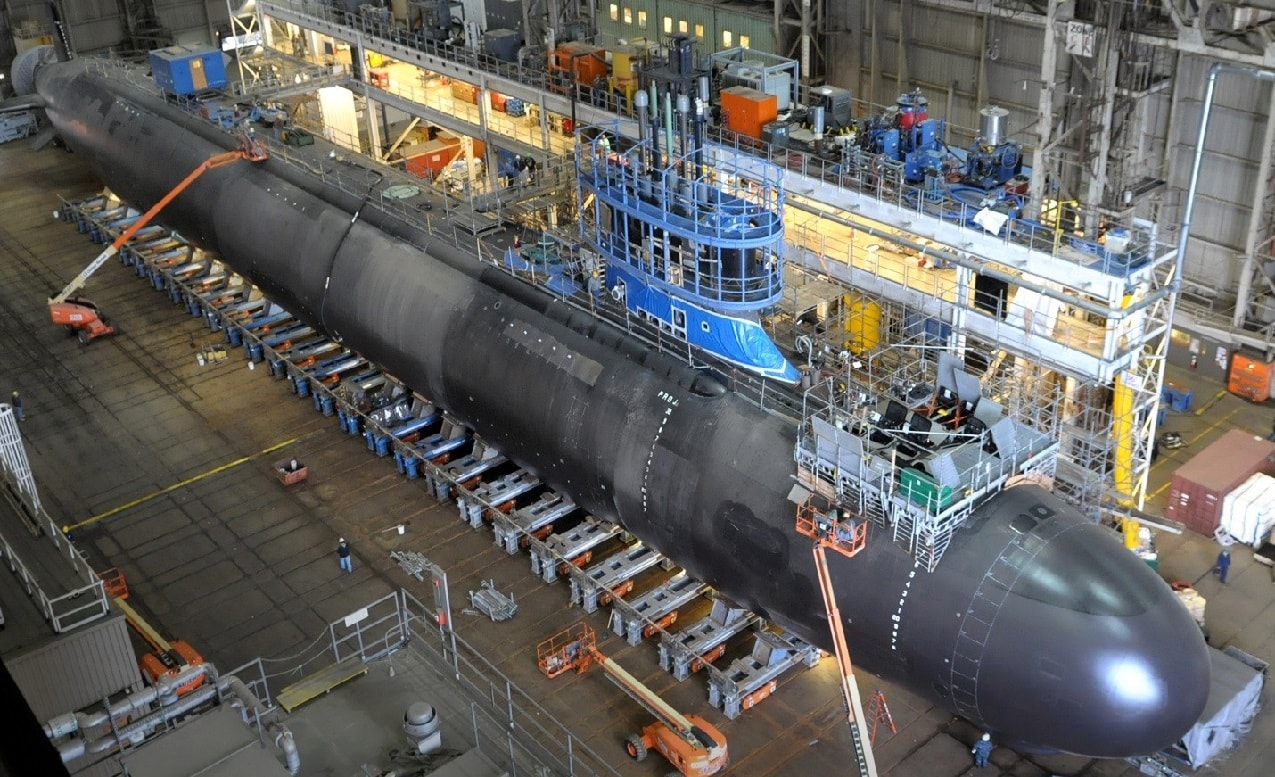
US Navy Virginia-class Submarine Under Construction.
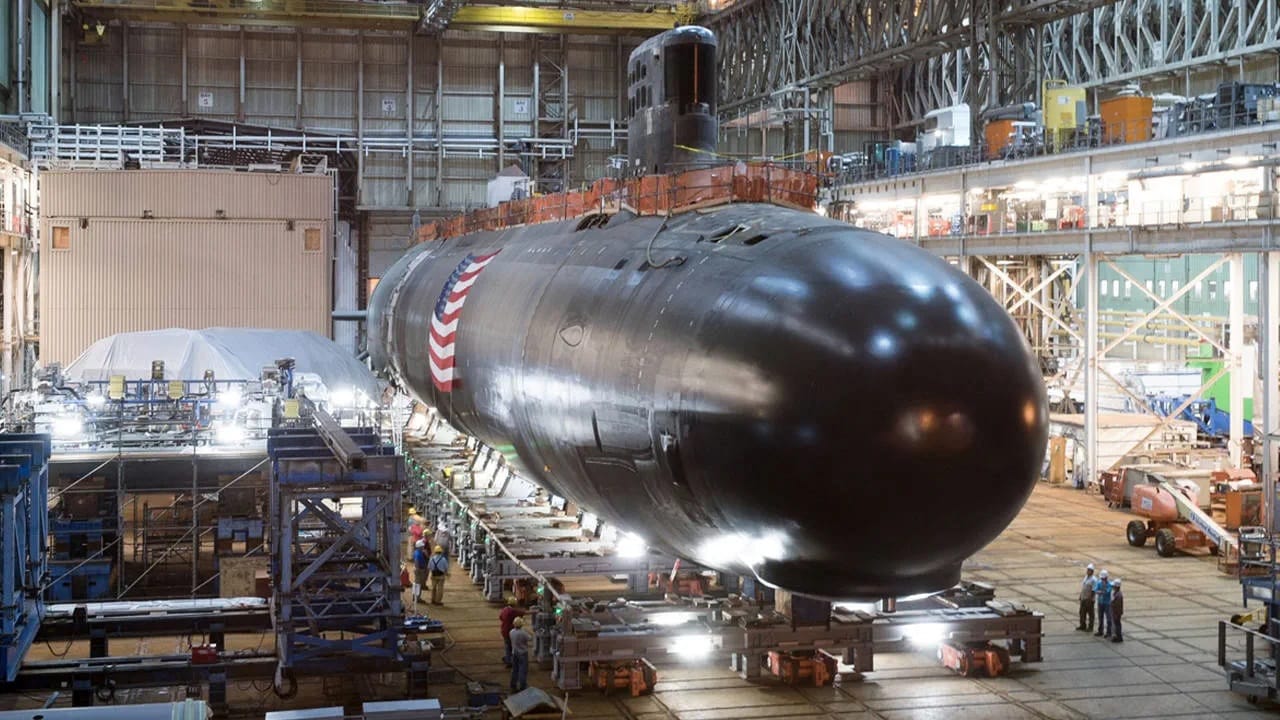
US Navy Virginia-class Submarine Under Construction.
Columbia Comes First, By Law And By Logic
The fourth wall is the one the Navy built on purpose. The Columbia-class ballistic missile submarine is the Pentagon’s highest-priority strategic-modernization program — it replaces the aging Ohio-class boomers that carry the sea leg of the nuclear triad — and it has first call on the same yards, suppliers, and skilled workers as the Virginia program.
When the two compete for a scarce welder or a scarce dry-dock week, Columbia wins, because a slip in the nuclear deterrent is unacceptable in a way that a slip in the attack fleet is not.
That priority is defensible and is also a direct tax on Virginia’s output. Every hour of certified labor and every critical component routed to Columbia is unavailable to the attack boats, and the strain will intensify as Columbia construction ramps through the late 2020s. The arithmetic gets worse still when the export commitment is added. Navy officials have said for years that the industrial base must build about 2.33 Virginia-class boats a year — not two — to sustain the U.S. fleet and supply Australia under AUKUS simultaneously.
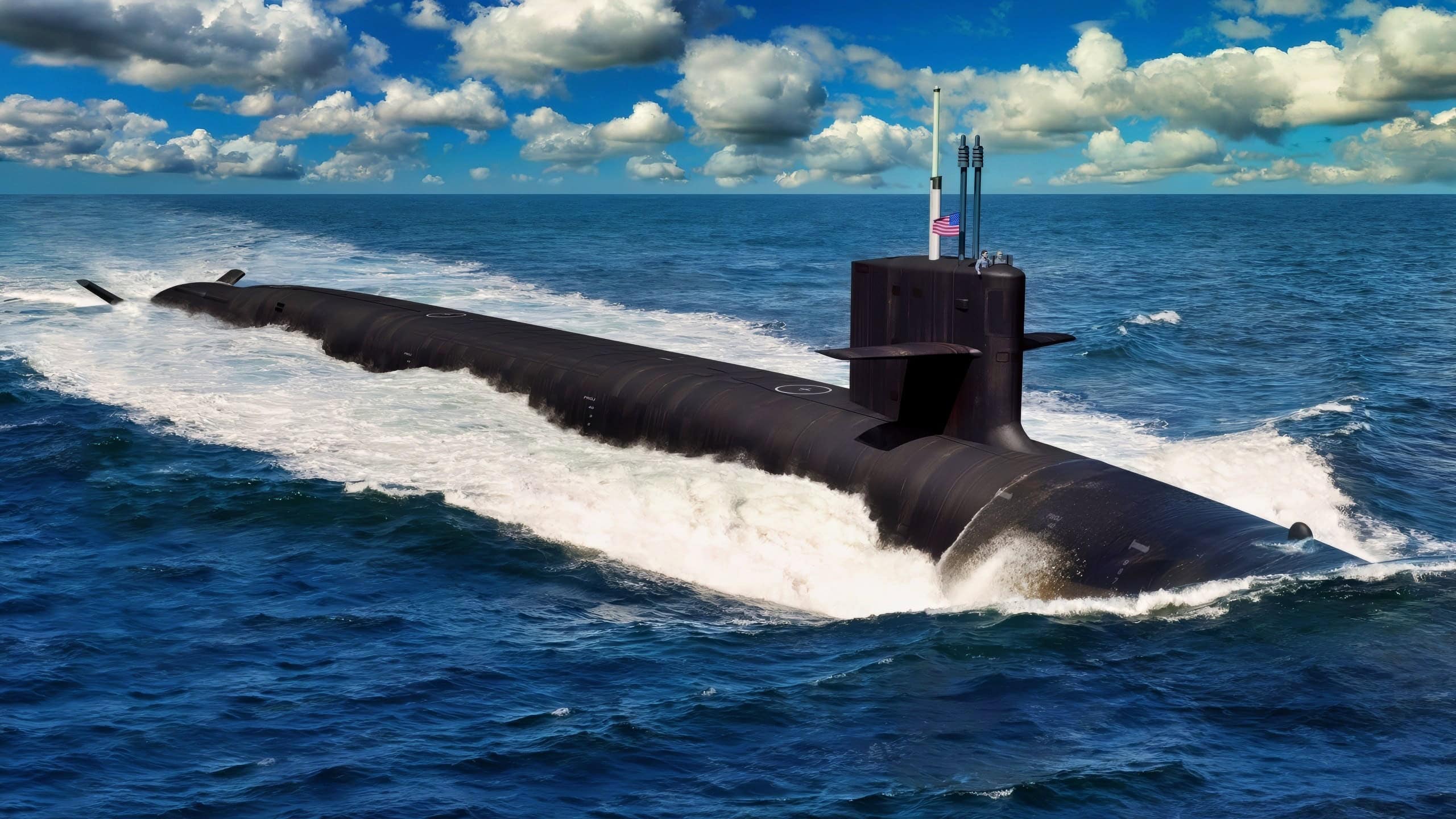
Columbia-Class Submarine SSBN Rendering U.S. Navy Photo
The base cannot reliably build 1.2. The gap between 1.2 and 2.33 reflects the difference between the plan on paper and the physical capacity.
Business & Industrial Challenges Billions Spent, And The Rate Has Not Moved
The hardest fact for anyone who believes spending solves procurement problems is that the spending has already happened. Congress approved a $1.9 billion plus-up for the Virginia program in the 2026 appropriations act to avert a funding gap that would have forced a stop-work order, on top of multibillion-dollar submarine-industrial-base investments across the workforce, suppliers, and infrastructure, and Australia is contributing billions more under AUKUS specifically to expand American shipyard capacity. The rate is still 1.2.
Money speeds recovery at the margins — it funds training programs, supplier development, and facility upgrades — but it cannot compress the time those things take. A trade school cannot graduate a master shipfitter faster than the trade can be learned.
A new supplier cannot be nuclear-certified faster than the inspections allow. A second graving dock cannot be poured, cured, and accredited on a wartime schedule. The recovery to two boats a year is fundamentally time-limited, not budget-limited, which is exactly why throwing more dollars at it has not moved the 2032 estimate closer. The Navy is buying capacity that will arrive years from now, no matter how fast the checks are written.
The Strategic Bill Comes Due In The 2030s
The consequences are not abstract, and they arrive on the same clock as the China problem. The Navy’s requirement is 66 attack submarines. The fleet today sits at roughly 49, and the Navy projects it will fall to about 46 by 2030 as older boats retire faster than new ones replace them — a low point reached precisely as the Los Angeles-class boats age out and as the Navy has told its own forces to be ready for a potential conflict over Taiwan by 2027.

The Virginia-class submarine USS Vermont (SSN 792) makes her way up the Thames River and past Fort Trumble and the Coast Guard Cutter Borque Eagle as she returns home to Submarine Base New London on Thursday, December 24, 2020. The nineteenth and newest Virginia-class submarine she is the third U.S. Navy ship to be named for the Green Mountain State. (U.S. Navy Photo by John Narewski/Released)
Roughly 40 percent of the attack fleet has at times been unavailable due to maintenance backlogs, meaning the deployable number is smaller than even the hull count suggests. China, meanwhile, fields the world’s largest navy by ship count and is expanding it.
AUKUS sharpens the dilemma into a choice. The United States has committed to selling Australia several Virginia-class boats beginning in 2032, and the pressure of the production shortfall is already reshaping that deal. On May 30, the three governments revised the plan so that all of Australia’s first submarines come from the existing U.S. fleet rather than new construction, because the new boats to fill the order do not exist and will not be available in time.
Selling attack submarines from a fleet already 17 boats below its requirement to meet an alliance commitment, while building toward a possible Pacific war, is the corner the production math has painted Washington into. A U.S. submarine commander asked to give up boats the fleet does not have, for a partner whose role in a Taiwan fight Canberra has not fully specified, is a problem with no clean answer.
The Honest Verdict: A Generation of Atrophy Cannot Be Reversed On A Wartime Clock
None of this means the program is a failure of competence, and the case against despair is real. The Virginia-class boat remains a generation ahead of anything China builds in quietness, sensors, and weapons, and the submarine force is still the clearest military advantage the United States holds in the Pacific.
The Navy restructured the latest construction contract away from the cost-plus terms General Dynamics’ leadership said were ruinous. Distributed construction is spreading fabrication to more suppliers across more states, and the workforce and supplier investments, though slow, are the correct investments. The boats being delivered are superb. There are simply not enough of them.
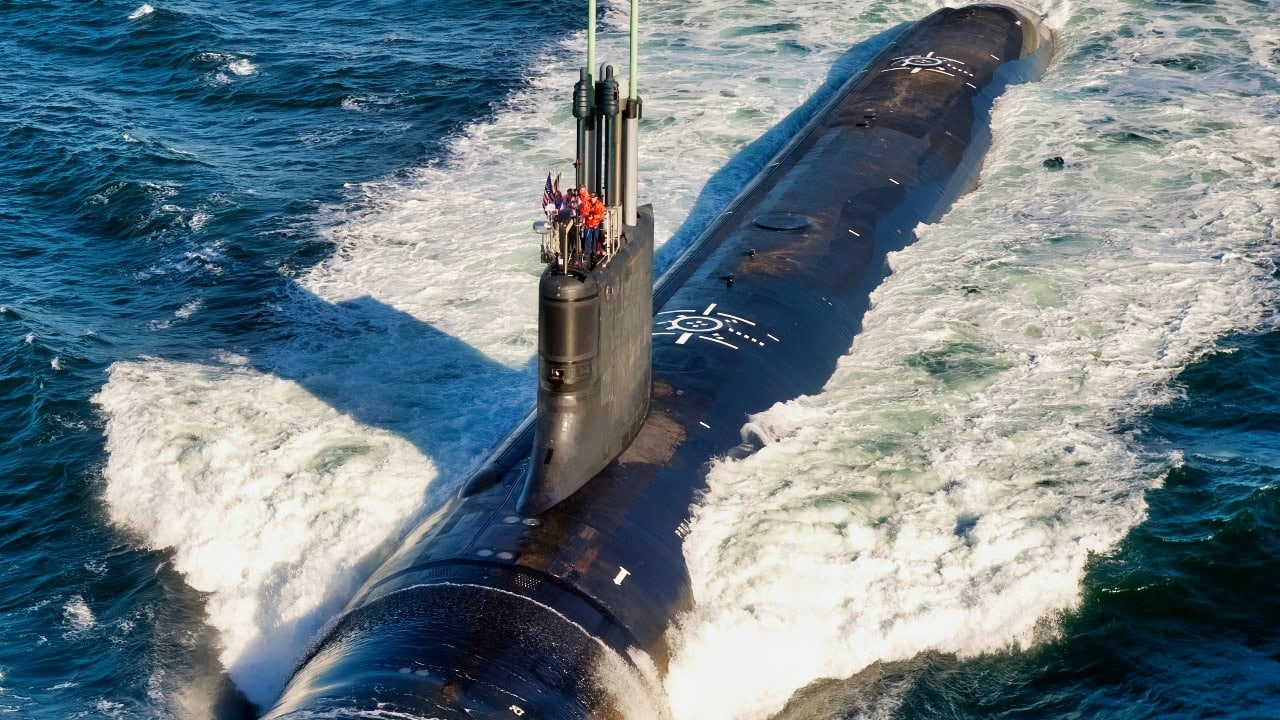
Virginia-Class Submarine.
The uncomfortable truth under the whole problem is that the United States is trying to rebuild, on a wartime timeline, an industrial capacity it allowed to wither for thirty years. The submarine base that could build close to two boats a year in the 1980s was deliberately scaled back over the post-Cold War decades — yards closed, suppliers exited, the skilled workforce dispersed — on the assumption that demand would not return.
MORE – China Can Build a New Aircraft Carrier in Less Than 2 Years
MORE – The U.S. Navy’s Aircraft Carrier Crisis Has No Easy Fix
The demand returned, but the capacity did not, because industrial capacity of this kind takes far longer to regrow than to lose. The 2032 date Caudle gave Congress is not a promise the Navy is confident in, so much as an estimate of how long it will take to undo a generation of decline, assuming nothing else slips. The two-a-year rate is not impossible. It is just years away.
About the Author: Harry J. Kazianis
Harry J. Kazianis (@Grecianformula) was the former Senior Director of National Security Affairs at the Center for the National Interest (CFTNI), a foreign policy think tank founded by Richard Nixon based in Washington, DC. Harry has over a decade of experience in think tanks and national security publishing. His ideas have been published in the NY Times, The Washington Post, The Wall Street Journal, CNN, and many other outlets worldwide. He has held positions at CSIS, the Heritage Foundation, the University of Nottingham, and several other institutions focused on national security research and analysis. He is the former Executive Editor of the National Interest and the Diplomat. He holds a Master’s degree focusing on international affairs from Harvard University.

