
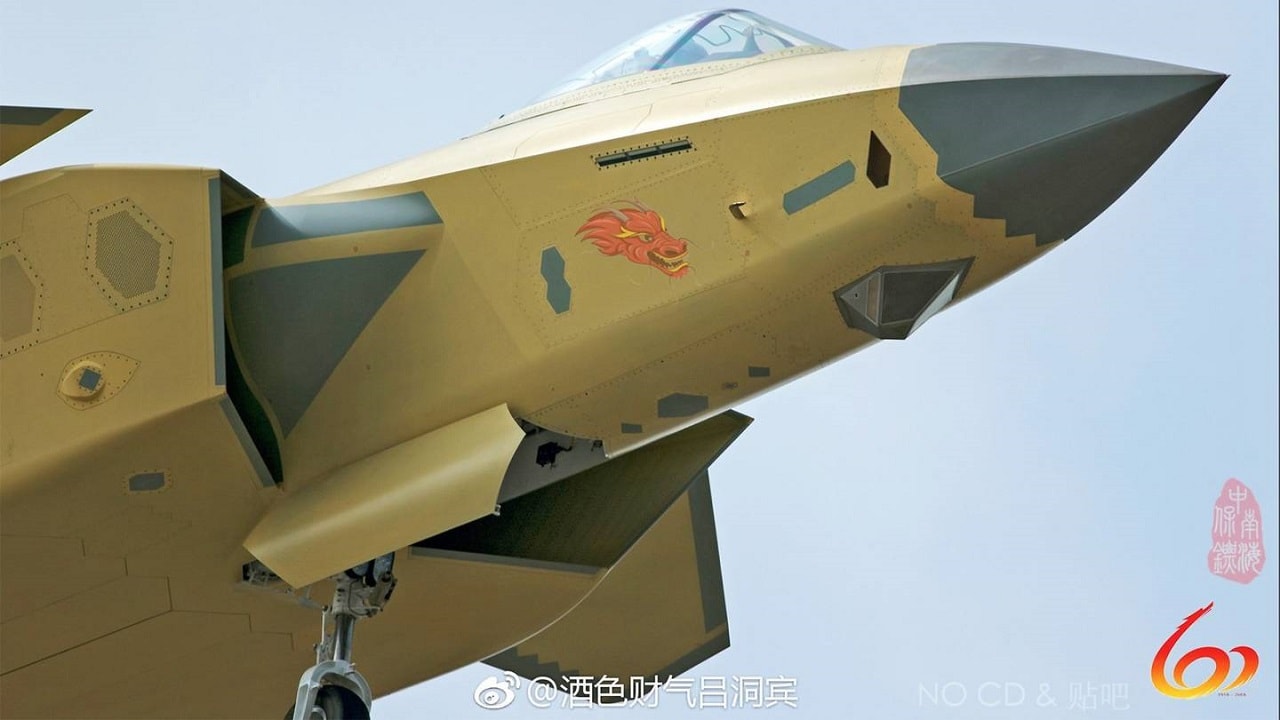
The most important air-power story of 2026 was told by commercial satellites photographing factory rooftops in Chengdu. The analysis, presented at the Air & Space Forces Association’s Warfare Symposium in February by Mitchell Institute senior fellow J. Michael Dahm, found that China’s fighter plants have expanded to the point that the Chengdu complex alone could be producing as many as 100 J-20 stealth fighters per year, with the Royal United Services Institute putting 2025 output at 120, and total Chinese fighter production capacity heading toward 300 to 400 aircraft annually. Set aside the long-running debate over whether the J-20 can match an F-22 or F-35 in a merge, because that debate increasingly misses the point. China is building stealth fighters at a pace that changes the Pacific math, even if every individual American jet remains better, and the United States military has never faced an adversary that could say that.
The Satellite Evidence: Eight Million Square Feet Of New Factory
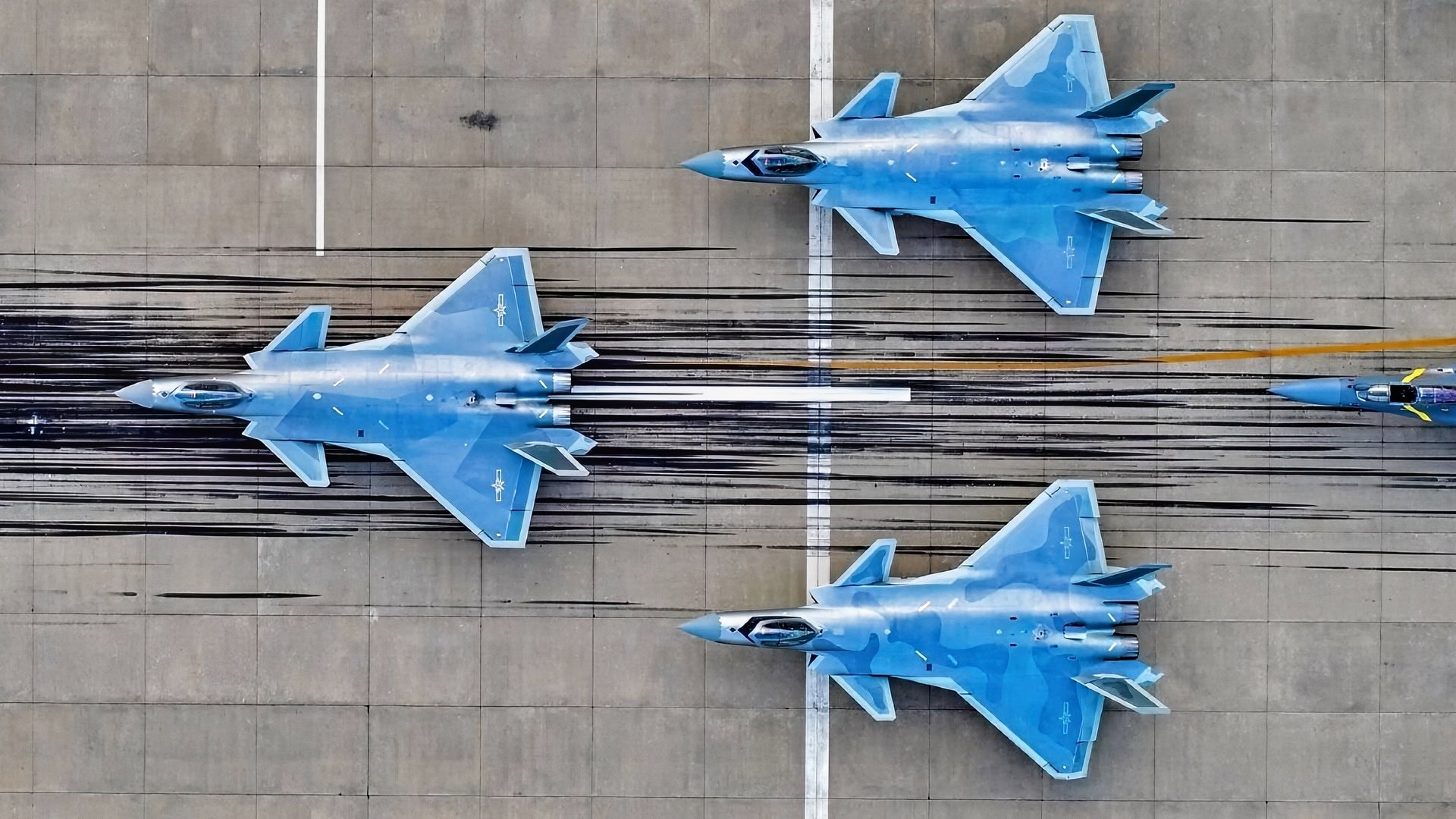
J-20S. Image Credit: Creative Commons.
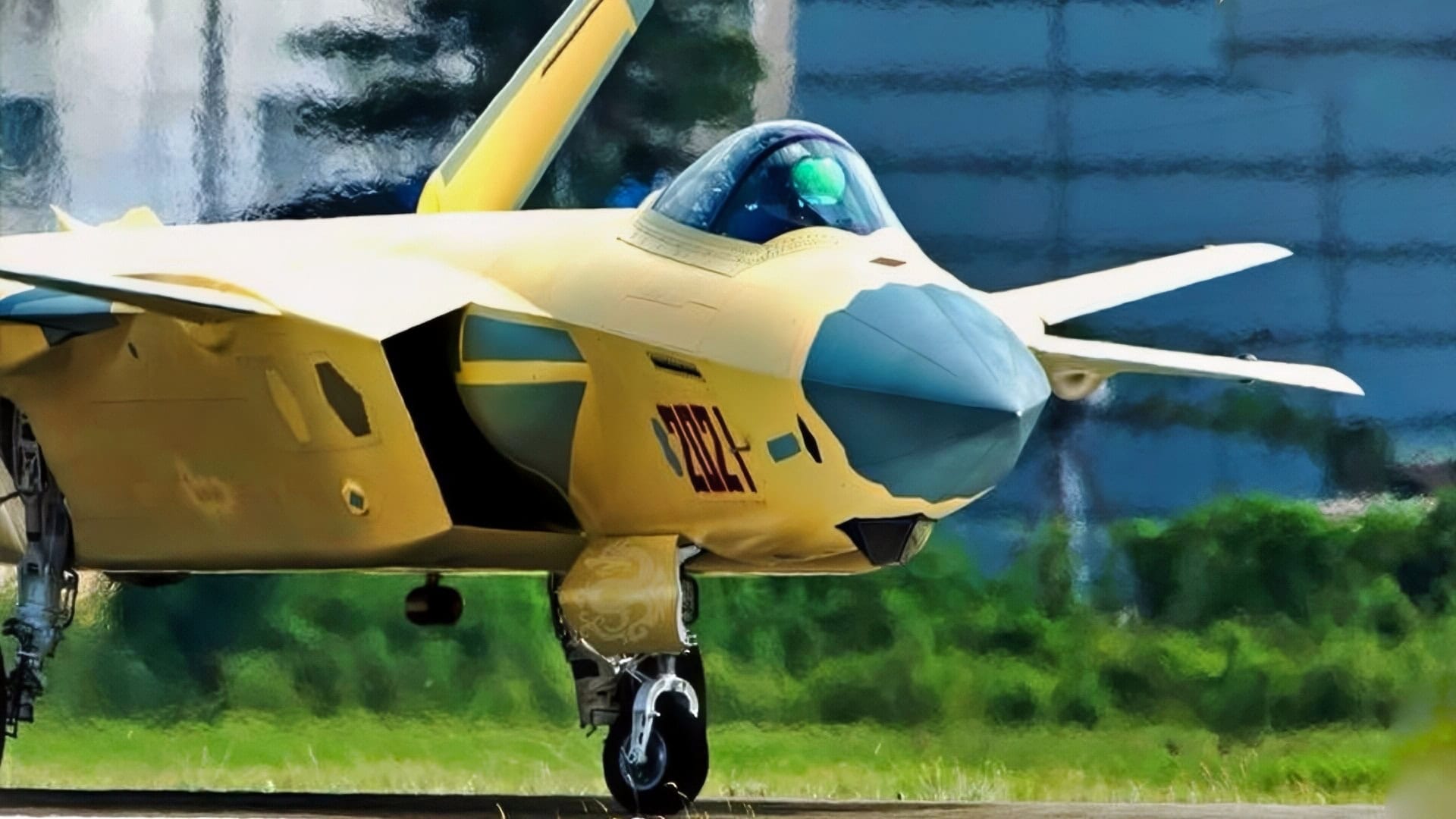
China’s J-20 Mighty Dragon in Yellow. Image Credit: Screenshot.
The physical evidence is the place to start, because it does not depend on anyone’s propaganda. Imagery from commercial providers shows the Aviation Industry Corporation of China adding more than 743,000 square meters of manufacturing space, roughly eight million square feet, across its major plants at Chengdu, Shenyang, and Changhe.
Chengdu, home of the J-20, has multiplied its assembly halls. Shenyang, building the J-35 family alongside fourth-generation jets, is growing in parallel. The same open-source analysis notes cleared land beside the Chengdu complex, apparently reserved for whatever comes after the fifth generation — and something is coming, because China’s J-36 and J-50 sixth-generation demonstrators have continued flying through this spring.
The infrastructure conclusion is what matters: independent analysts now assess that Chinese fighter output is approaching or exceeding any single Western fighter program in operation, with the trajectory pointing toward a thousand fifth-generation aircraft by 2030.
From 40 Jets A Year To 120: How Fast The Estimates Moved
Honesty about the numbers requires showing their distribution, and that distribution is itself the story. As recently as 2024, public estimates drawn from the US military and open sources put J-20 production at 40 to 50 aircraft per year and the fleet around 200. French defense analysis tracked output at 70 to 80 jets per year from mid-2024, with the fleet reaching 320 to 350 aircraft by the middle of last year. Now Dahm’s imagery supports 100 per year, RUSI says 120, and Chinese media claims the lines are accelerating further through automation. Nobody outside Chengdu knows the true figure, and capacity is not the same as output. But the direction of every revision for three years has been up, and the doubling of credible estimates in twenty-four months tells you the analysts have been chasing the factories, not the other way around.
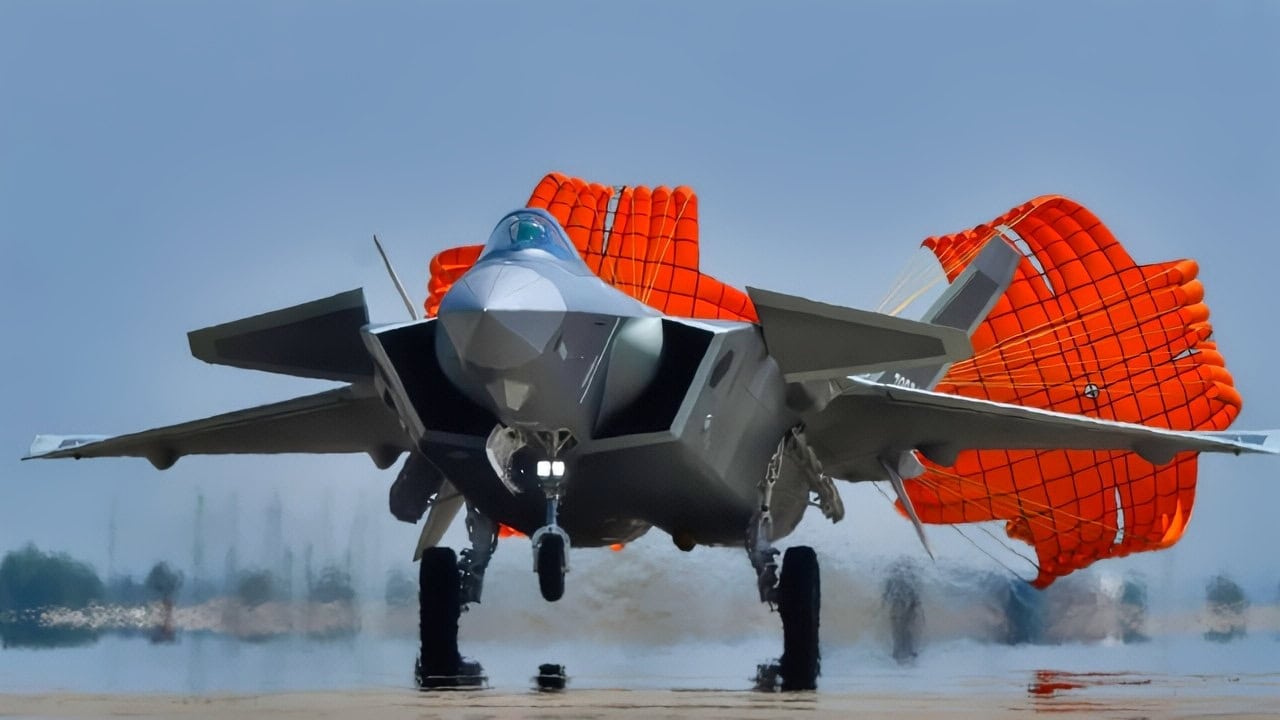
J-20 Stealth Fighter Landing. Image Credit: Creative Commons.
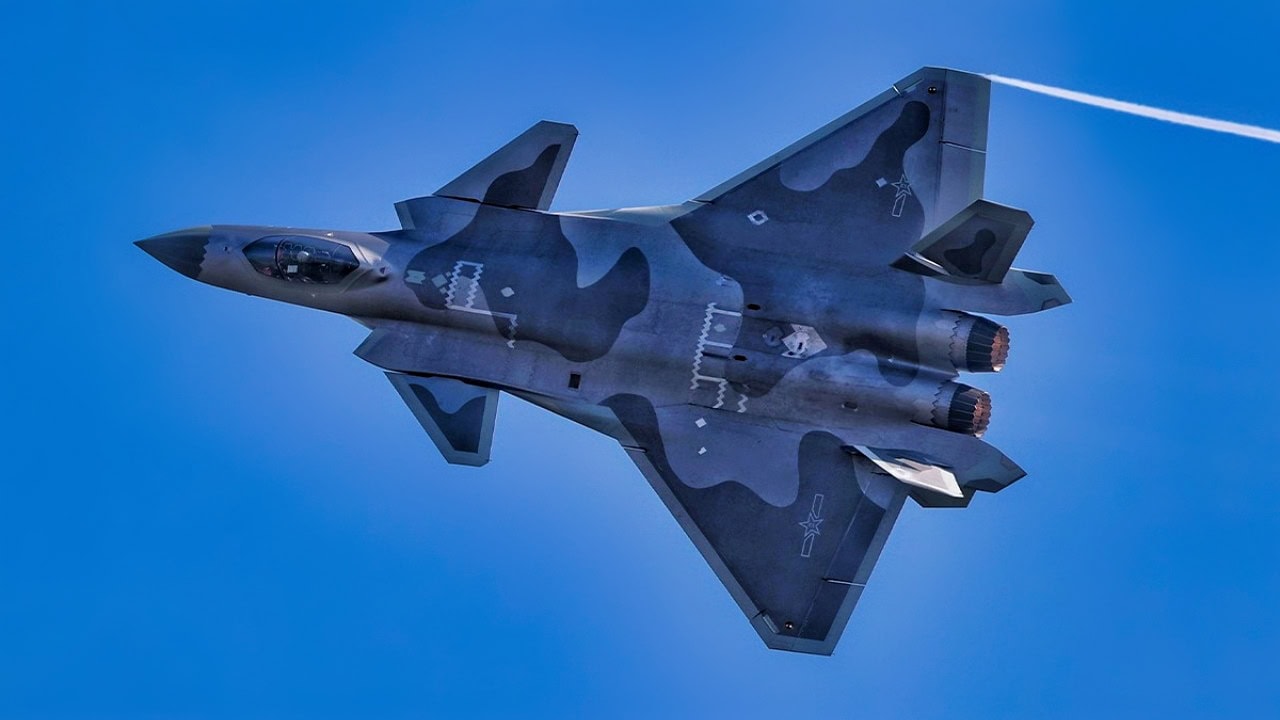
J-20 Fighter. Image Credit: Creative Commons.
Compare the trend lines. The F-22 line closed in 2011 and will never reopen; the Air Force plans to keep all 184 of its remaining Raptors precisely because no replacement exists yet. The F-35 line runs at a stable 156 jets per year — and last year’s record of 191 deliveries, against previous highs of 142 and 110, owed much of its margin to clearing a backlog of roughly 100 finished jets that had been parked awaiting software certification, a delivery surge rather than a production surge. American fifth-generation production is a known, fixed quantity. Chinese fifth-generation production is an open question whose floor keeps rising.
The J-35A And A Two-Stealth-Fighter Nation
The second Chinese type sharpens everything. The J-35A made its formal debut at the Zhuhai Airshow in November 2024 and entered service with the air force in September 2025, while its naval sibling conducts electromagnetic-catapult operations with the carrier Fujian.
That makes China the only country other than the United States ever to put two stealth fighter types into simultaneous production, and it hands the People’s Liberation Army a distinction that should sting in Washington: a catapult-launched stealth fighter entering carrier service while the US Navy’s own next fighter, F/A-XX, remains a contested budget line. The J-35 family also gives Beijing an export product aimed at the one market the F-35 cannot touch, with Pakistan long reported as the opening customer.
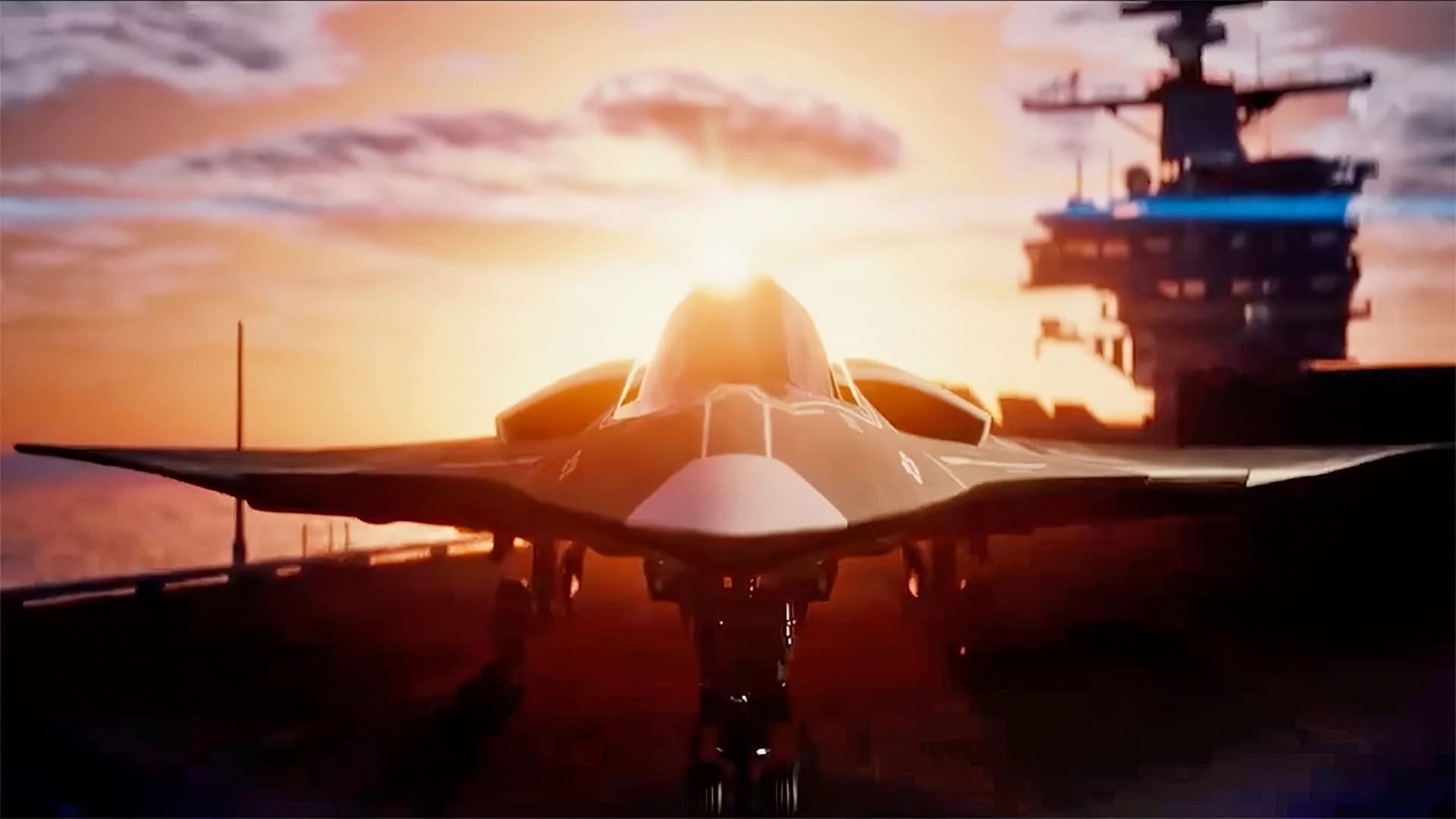
FA-XX Fighter Video Screenshot. Image Credit: NG Video Screencap.
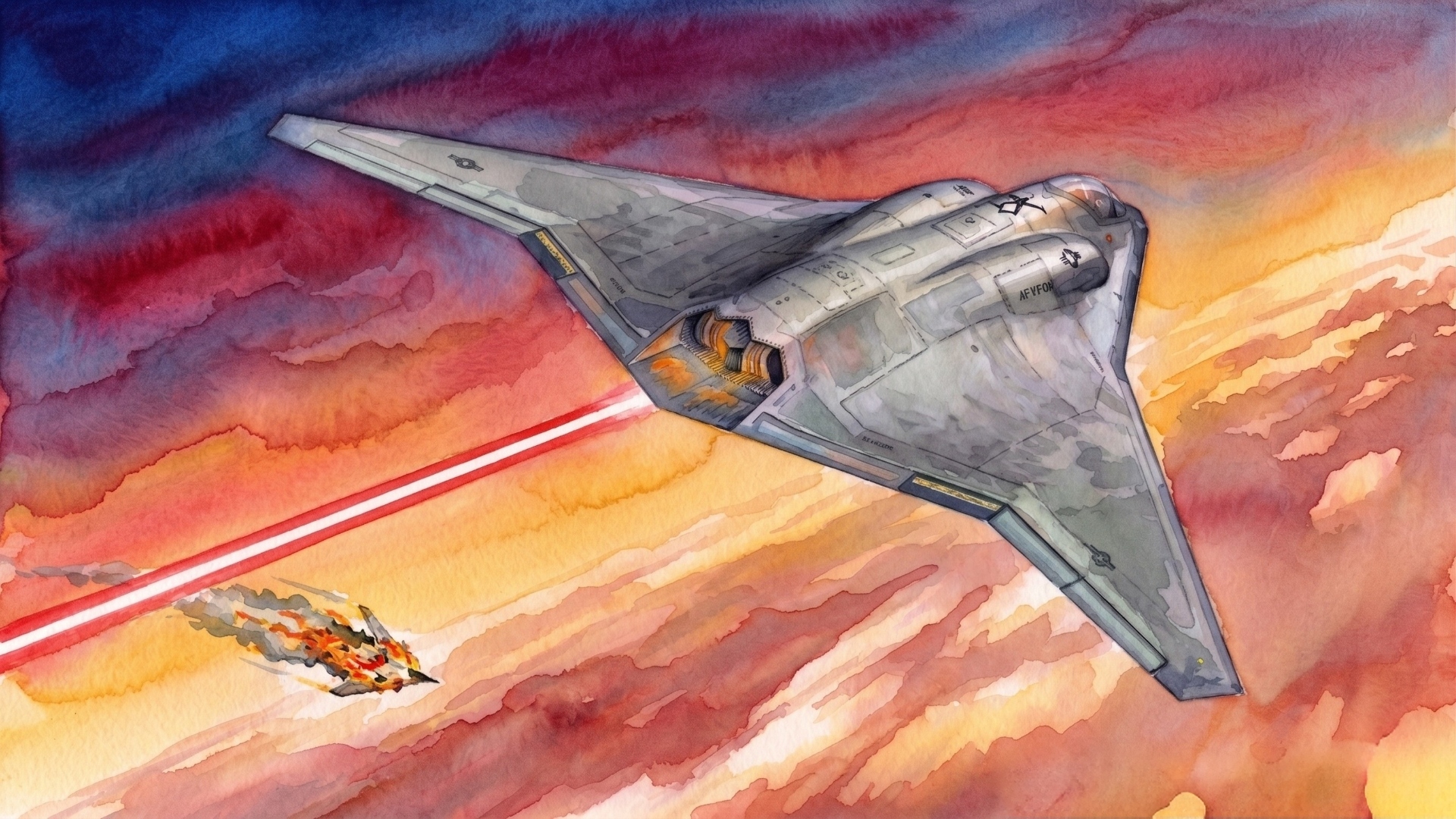
F/A-XX Artist Rendition Mock-Up. Image Credit: Banana Nano.
Two types matter operationally, not just symbolically. A heavy, long-range air-superiority platform and a smaller multirole fighter cover different missions, complicate an opponent’s identification and tracking, and insulate the overall stealth fleet from the groundings or flaws of any single type. It is the same logic that led the United States to pair the F-22 with the F-35. China copied the structure and is now filling it at industrial speed.
Why Quantity Changes The Pacific Math
The reason production numbers translate into strategic consequences is geography, and it deserves to be stated bluntly. Every J-20 and J-35A China builds is permanently based in the theater that matters. The American fifth-generation fleet is scattered across three oceans, European reassurance missions, the Middle East, which consumed a year of combat power, and a training establishment that cannot stop.
On any given day in a Taiwan crisis, the relevant comparison is not the global inventory of American stealth fighters against China’s; it is the number that can generate sorties over the strait from Kadena, from Guam, from carriers inside missile range, and through a tanker bridge that China’s missile force will be attacking from the first hour, against the number China can launch from concrete runways at home. Mass at the point of contact is what wins air campaigns, and the side that builds 100-plus stealth fighters a year for one theater accumulates it faster than the side that builds 156 a year for the entire planet.
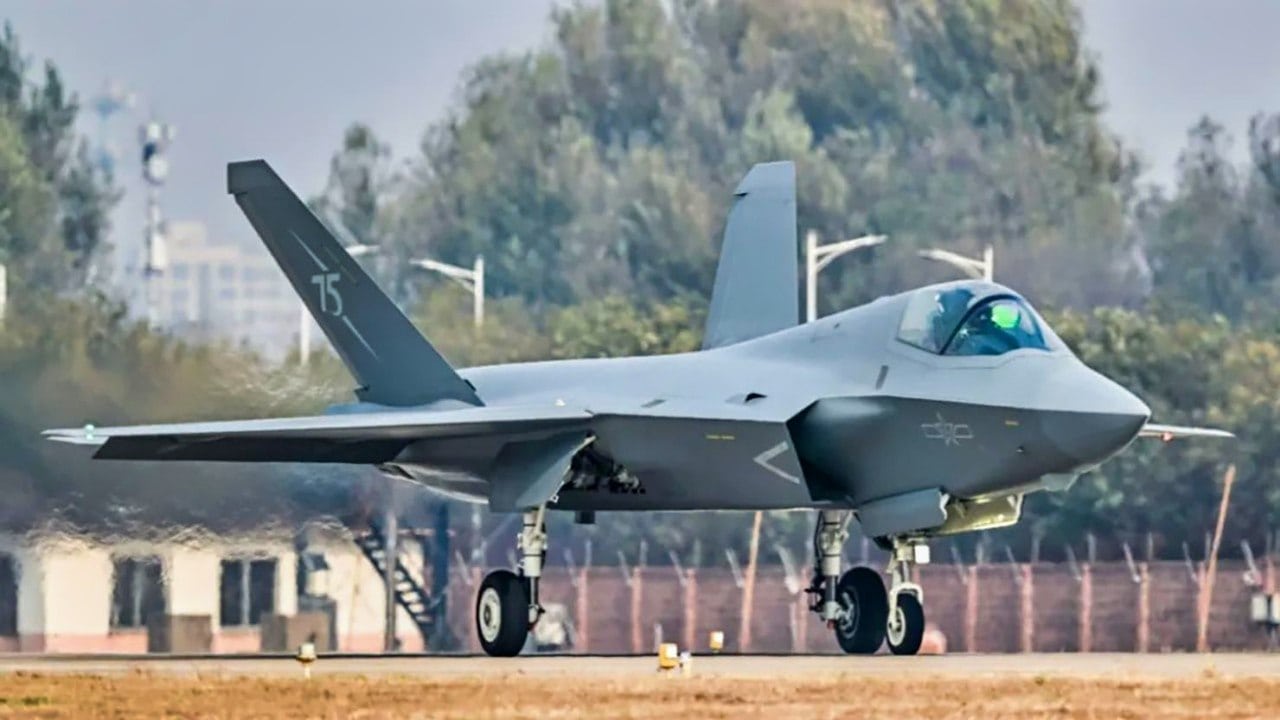
J-35A Fighter from China. Image Credit: Chinese Military
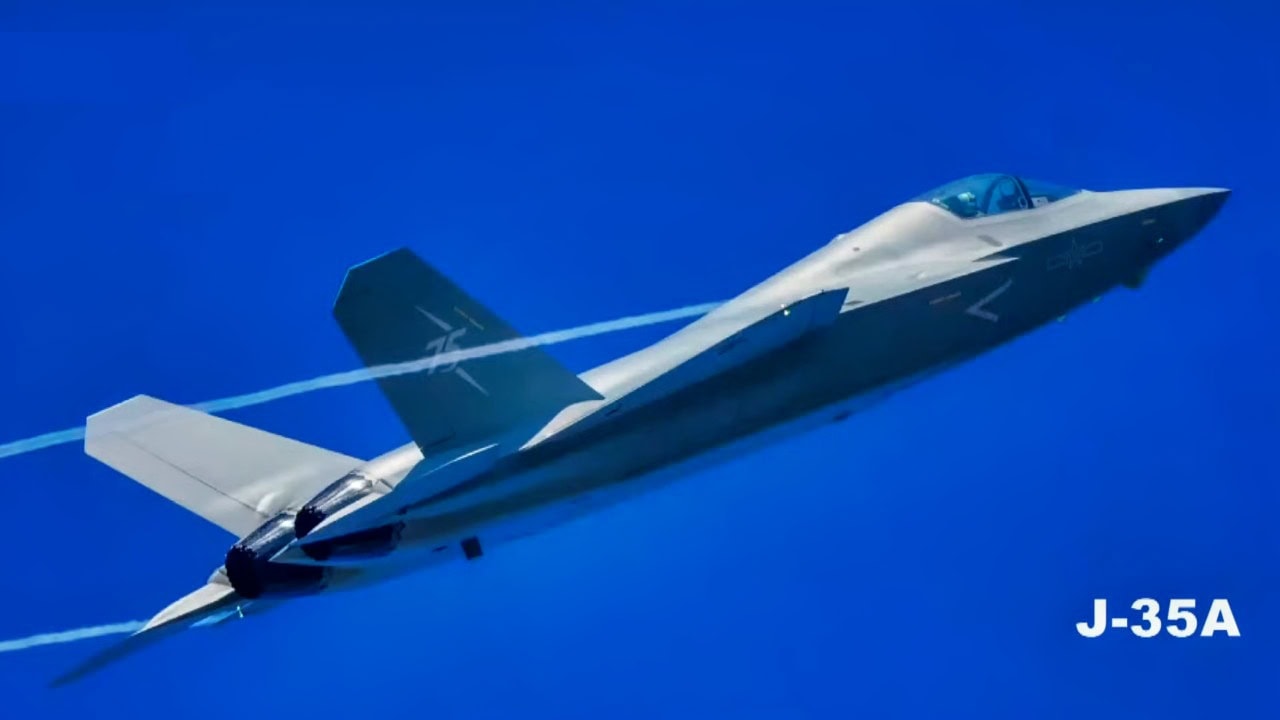
China J-35 Fighter. Image Credit: Creative Commons.
Attrition compounds the problem. Air wars between peers consume aircraft, and the Iran campaign just demonstrated how fast a modern conflict eats munitions, spares, and airframes even against a regional power. A force that loses 50 stealth fighters and replaces them within months is a different strategic animal from a force that loses 50 and waits years. The F-22 fleet is irreplaceable by definition. Every Raptor lost in a Pacific war would be a permanent subtraction from American air superiority, while every J-20 lost would be a production slot. That asymmetry, multiplied across a long war, is the heart of the matter: the Chinese jets do not have to be as good, because the arithmetic forgives them for being worse.
The Air Force has effectively admitted the math. Its own recent force-structure analysis concluded the service needs F-35 production maxed out to roughly 100 aircraft annually just to reach an “acceptable military risk,” language that does not describe a comfortable lead. Washington’s answer, beyond the F-35, is the F-47 sixth-generation fighter, a collaborative combat aircraft meant to multiply each manned jet, and the B-21 line — real programs, all of them, and all of them years from mass production.
The Counterweights: Pilots, Engines, And An Alliance Full Of F-35s
The honest limits of the Chinese position are in full view, because they are substantial. No Chinese pilot has fought anyone in living memory, while American and allied crews have decades of combat employment, including stealth operations as recent as the Iran campaign, where F-35s helped suppress Iranian air defenses during Operation Midnight Hammer and the global fleet passed one million flight hours across nearly 1,300 aircraft.
The J-20’s engine saga — years of underpowered stopgaps before the WS-15 matured — counsels humility about how the jets actually perform versus how they are briefed. Stealth is a discipline of maintenance, coatings, tactics, and mission data as much as it is of shape, and China is two decades behind in the unglamorous parts.
And the raw US-versus-China fleet comparison understates the American side badly, because the F-35 is an alliance, not just an aircraft. Japan, South Korea, and Australia are building toward hundreds of fifth-generation fighters based permanently in the theater, while European operators keep expanding their buys, and NATO F-35s recorded their first combat intercepts over Poland.
China’s stealth force will fight alone; America’s fights as a network of a dozen air forces flying the same jet. Quantity comes in more than one form, and allied mass is the form Beijing cannot replicate.
The Edge Is Real, And It Is Perishable
Put the ledger together honestly, and it reads like this. The United States still operates the best aircraft, has the deepest experience, has the combat record, and has the alliance network. China operates the larger factories, has better geography, and has a steeper production curve, with two stealth types in service, new designs already flying, and a thousand-jet fleet within sight.
Both are true at once, and the second set compounds annually, while the first does not.
MORE – China Can Build a New Aircraft Carrier in Less Than 2 Years
MORE – The U.S. Navy’s Aircraft Carrier Crisis Has No Easy Fix
The American advantage in stealth airpower was built when no one else could play the game at all. That era produced habits — small silver-bullet fleets, closed production lines, complacency about attrition — that made sense against adversaries who could not answer in kind. China is answering in kind, at scale, on its home field. The jets coming off the lines in Chengdu and Shenyang do not need to outfly an F-22 over the Taiwan Strait.
They need to outnumber the F-22s, F-35s, and tankers that can reach the strait on the day it matters, and the satellite photos say Beijing has decided that is a problem solvable with concrete and floor space. The United States solved harder problems than this when it took industrial competition seriously.
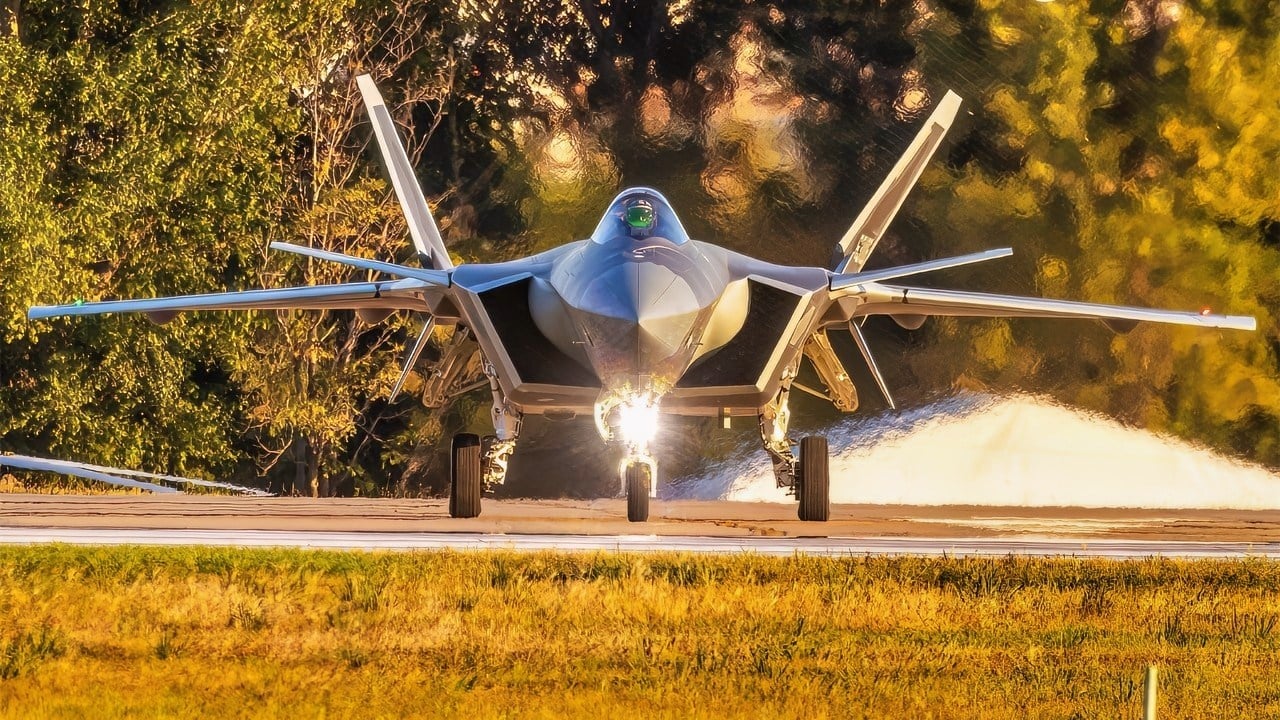
J-20 2026 New Image. Image Credit: PLAAF/Chinese Military.
The factories in those satellite images are China betting that it no longer does.
About the Author: Harry J. Kazianis
Harry J. Kazianis (@Grecianformula) is the former Senior Director of National Security Affairs at the Center for the National Interest (CFTNI), a foreign policy think tank founded by Richard Nixon based in Washington, DC. Harry has over a decade of experience in think tanks and national security publishing. His ideas have been published in the NY Times, The Washington Post, The Wall Street Journal, CNN, and many other outlets worldwide. He has held positions at CSIS, the Heritage Foundation, the University of Nottingham, and several other institutions related to national security research and studies. He is the former Executive Editor of the National Interest and the Diplomat. He holds a Master’s degree focusing on international affairs from Harvard University.

