

The US Navy’s Virginia-class Block V submarines are a significant upgrade to the fleet, incorporating advancements in stealth, sonar, and payload capacity.
Block V Virginia-class submarines are advanced nuclear-powered fast attack submarines designed to replace the retiring Ohio-class guided-missile submarines (SSGNs).
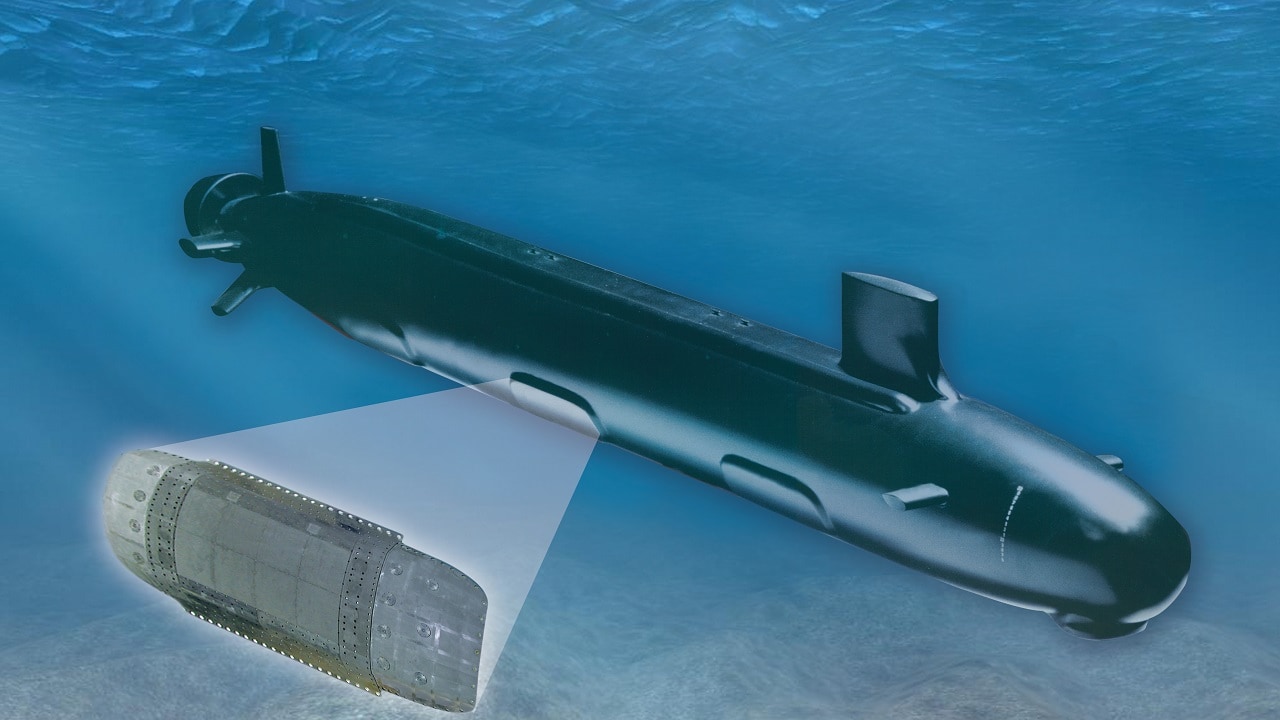
Block IV Virginia-class Submarine.
Their hallmark feature is the 84-foot Virginia Payload Module (VPM), which increases their total Tomahawk cruise missile capacity to 40, bringing the submarine’s length to 461 feet and submerged displacement to 10,200 tons.
General Dynamics Electric Boat (GDEB) has secured a contract modification worth $1.06 billion to procure long-lead-time materials for the construction of Virginia-class Block V submarines.
GDEB is the prime contractor and lead design yard for the Virginia-class. It builds the vessels in a teaming arrangement with HII’s Newport News Shipbuilding.
The Navy currently has 24 Virginia-class boats in service, with another 16 either awaiting delivery or under construction.
Virginia-Class Submarines Can Travel At 25+ Knots
The Virginia class is among the five fastest submarines in the world. A Virginia-class submarine can travel at a submerged speed of 25+ knots (28+ miles per hour).
This is achieved using a nuclear reactor for propulsion and a pump-jet propulsor. They are also designed to remain submerged for extended periods, potentially up to three months, depending on food supplies.
The Seawolf class of the US Navy is the fastest submarine in the world, able to travel at 35 mph under the ocean’s surface.
Features Of the Navy’s Virginia Block V Submarines
Block V variants are significantly larger and more heavily armed than previous iterations of the Virginia-class submarine. The integration of the VPM enables the Navy to deploy advanced payloads, conduct covert intelligence gathering, deploy special operations forces, and enhance land-attack capabilities.
Key specifications for Block V submarines include: Length: 461 feet; Submerged Displacement: 10,200 tons; Speed: 25+ knots; Missile Capacity: Up to 40 Tomahawk missiles; Torpedoes: 4 torpedo tubes with Mk 48 Advanced Capability torpedoes
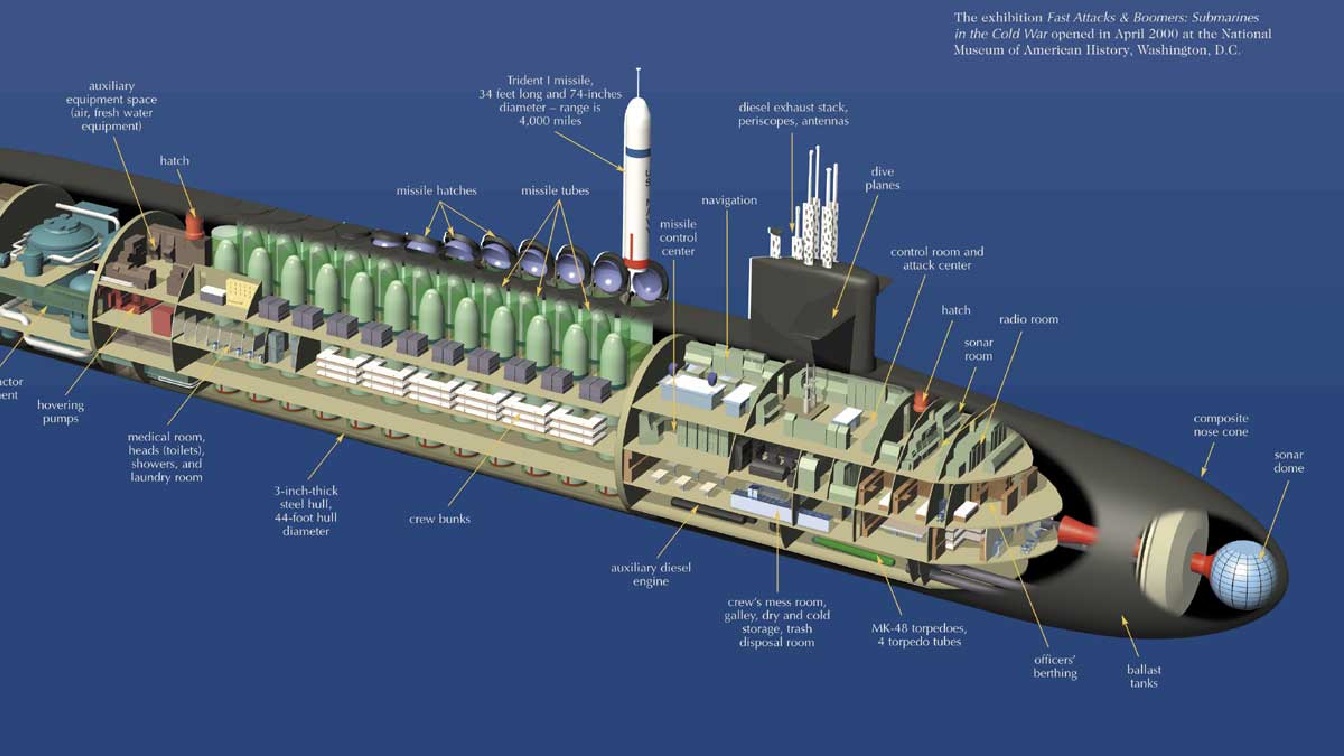
Ohio-Class SSBN. Image Credit: Creative Commons.
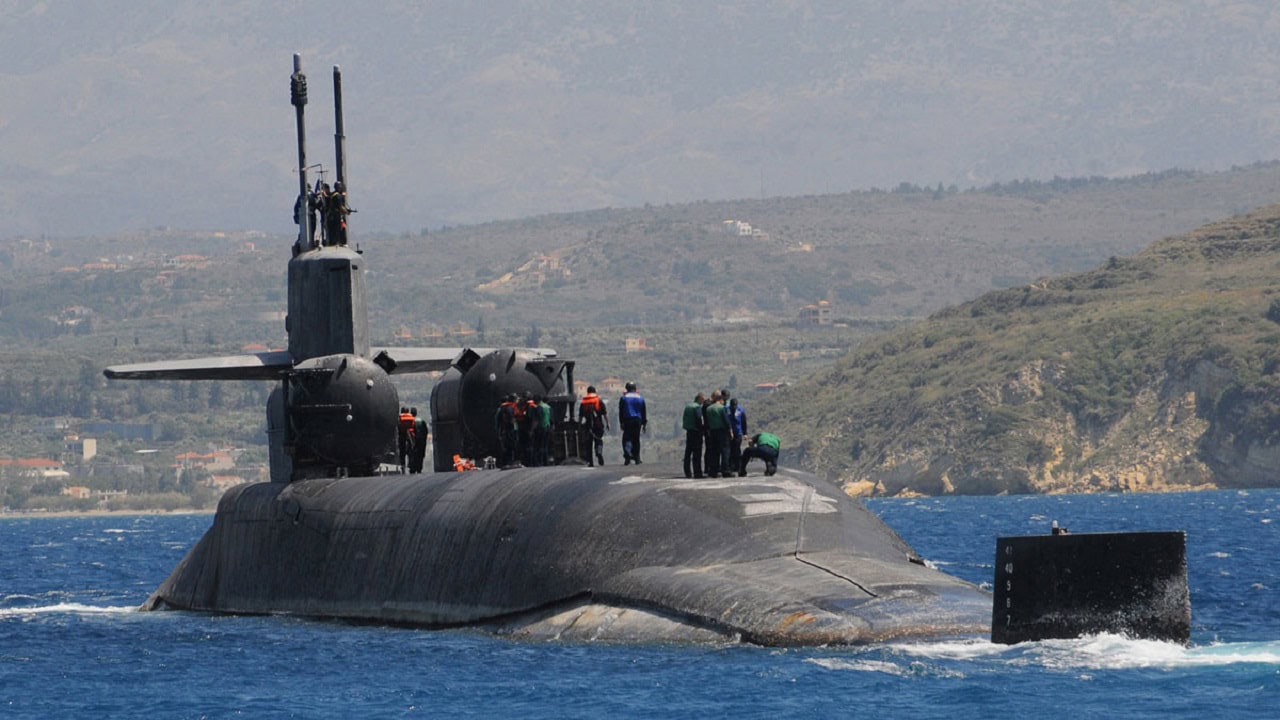
Ohio-Class SSGN. Image Credit: U.S. Navy.
The Navy plans to procure 10 Block V boats (SSNs 802-811). Construction is split between General Dynamics Electric Boat and HII-Newport News Shipbuilding.
Notable milestones include the pressure hull completion of the first Block V vessel, the USS Oklahoma (SSN 802). The VPM is officially incorporated beginning with the second Block V submarine, the PCU Arizona (SSN 803).
Virginia Payload Module
The Block Vs and the Block VI of Virginia-class attack submarines will feature the Virginia Payload Module (VPM), which will meet the Navy’s requirement for a large-scale land strike missile platform after the service decommissions four Ohio-class guided-missile submarines by the end of the decade.
In the last several years, the Ohio guided-missile boats, each capable of fielding 154 Tomahawk Land Attack Missiles, have been a favorite of combatant commanders.
The VPM inserts four Multiple All-up-round Canisters (MAC) in the middle of the submarine in addition to two in the bow.
Each MAC tube can contain seven Tomahawk cruise missiles. The Navy has stated that it will need 20 VPM boats to compensate for the loss of strike missiles when the Ohio-class submarines retire.
The module is 84 feet long — bringing the total length of the Virginia-class subs up from 377 feet to 461 feet, the Navy file said — and can store and launch payloads with diameters larger than the 21-inch diameter of a torpedo or Tomahawk missile. This will increase the Virginia-class boats’ Tomahawk missile capacity from 12 to 40.
Virginia Block V Fills Strategic Investment
By incorporating the VPM into the new Virginia-class boats, the cost of each boat will increase by 15 percent. However, it will triple the firepower of each submarine in the class, thereby mitigating the losses of Ohio-class missiles.
The Block V Virginia-class submarine program is a multi-billion-dollar U.S. Navy strategic investment centered on integrating the Virginia Payload Module (VPM) to replace retiring guided-missile submarines and expand undersea strike capacity.
These submarines are designed for land strike missions, anti-submarine and surface ship warfare, special operations support, and intelligence, surveillance, and reconnaissance (ISR) missions.
New Technology Emerging
The Virginia class has several technological innovations that significantly enhance its warfighting capabilities, including in littoral — or coastal — operations.
Virginia Class SSNs have a fly-by-wire ship control system that provides improved shallow-water ship handling.
This technology allows the operator to order depth and speed, with the software to direct the movement of the planes and rudder to maintain course and depth.
The class has special features to support SOF, including a reconfigurable torpedo room which can accommodate a large number of SOF personnel and all their equipment for prolonged deployments, as well as future off-board payloads.
The class also has a large lockout trunk for divers. In Virginia-class SSNs, traditional periscopes have been supplanted by two photonics masts that host visible and infrared digital cameras atop telescoping arms.
With the removal of the barrel periscopes, the ship’s control room has been moved down one deck and away from the hull’s curvature, affording it more room and an improved layout that provides the commanding officer with enhanced situational awareness.
The US Navy is using strong fiber optic cable to connect undersea submarines to drones able to travel to the surface and interface with surface gateway technologies in position to essentially translate acoustic data gathered by submarines beneath the surface into RF signals and other kinds of data links able to share information with air, surface, and land communications nodes.
This line of communication enables a submarine to use its long-range, high-fidelity acoustic sensors to gather sensitive threat information and network it to a drone, which will surface and interface with gateway systems in real time, sending time-sensitive threat data to surface ships, aircraft, and land bases.
Among the new technologies are the Navy’s hypersonic weapons. The Navy intends to arm its submarines with the Conventional Prompt Strike weapon before 2028. The arrival of undersea-launched hypersonics will ensure the Navy has a high-speed attack advantage.
And once the long-awaited Columbia-class missile boats finally come online, the Virginia Block V boats will give the US Navy continued superiority over near-peer threats from China and Russia.
About The Author: Steve Balestrieri
Steve Balestrieri is a National Security Columnist. He served as a US Army Special Forces NCO and Warrant Officer. In addition to writing on defense, he covers the NFL for PatsFans.com and is a member of the Pro Football Writers of America (PFWA). His work was regularly featured in many military publications.