
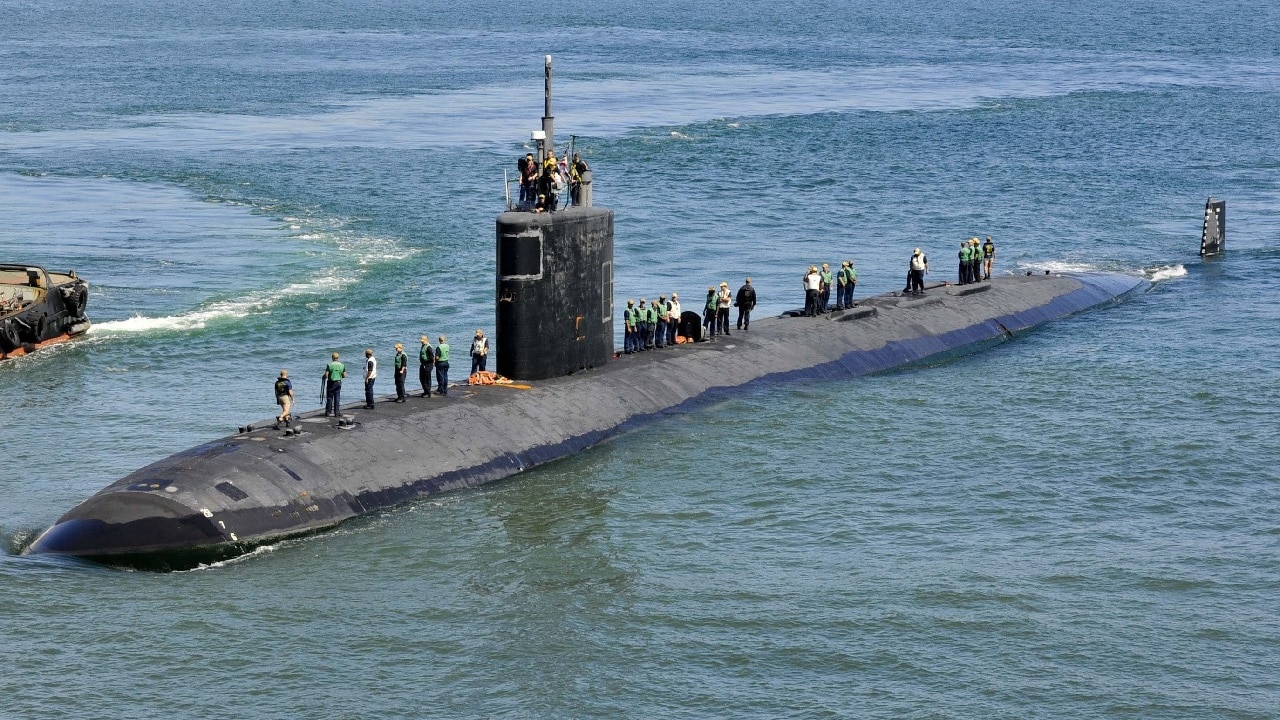
The United States built 62 Los Angeles-class nuclear attack submarines for a Cold War fleet designed to hunt Soviet boats across the Atlantic and Pacific. The class entered service between 1976 and 1996, creating the largest class of U.S. nuclear-powered submarines ever assembled. That production run now presents the Navy with a retirement wave: submarines built in large numbers are leaving faster than Virginia-class replacements arrive. By the start of fiscal 2026, 42 of the original 62 had retired.
The attack-submarine force began fiscal 2026 with 49 boats, including 20 Los Angeles-class submarines. USS Newport News left service in January. USS Alexandria held its inactivation ceremony on June 29 and is scheduled to decommission on August 4. The Navy also decided to inactivate USS Boise after a failed overhaul kept it out of operations for more than a decade.
The Virginia class brings better stealth, sensors, special-operations support and a life-of-ship reactor core. Its construction program has not delivered replacements at the required pace. Congress generally funded two Virginias per year from fiscal 2011 through fiscal 2024, while actual output has remained near 1.1 to 1.2 annually since 2022.
Chief of Naval Operations Adm. Daryl Caudle told lawmakers in May that industry is expected to reach two Virginia deliveries per year around 2032. The Navy’s force goal remains 66 attack submarines, while the inventory is projected to fall to 47 in 2030. A separate reduction follows in the 2030s, when three in-service Virginias are planned for Australia. The trough arrives before the production line reaches its planned rate.
The Cold War Built Los Angeles-Class Submarines in Waves
The Los Angeles class entered production when the Navy maintained roughly 90 attack submarines and planned for more. Electric Boat and Newport News Shipbuilding delivered the boats through several design changes. The later submarines added 12 vertical Tomahawk launch tubes, while the final Improved Los Angeles group received quieter machinery and modifications for under-ice operations.
That scale depended on steady orders, experienced workers and a supplier network serving a larger fleet. The Cold War’s end broke the production rhythm. Seawolf construction stopped after three boats, and Virginia procurement began slowly in 1998. The smaller post-Cold War buying rate created the replacement gap now reaching the fleet. A two-decade procurement surge is becoming a concentrated retirement cycle while the replacement line operates at a fraction of the former industrial pace. That mismatch grows as each older submarine reaches its final overhaul decision.
Two Virginia Purchases Do Not Produce Two Delivered Submarines
Electric Boat and Newport News divide construction modules and assemble completed boats through a joint arrangement. A delay at one yard or supplier moves through the entire schedule, contributing to a backlog measured in decades of cumulative delay.
The Government Accountability Office found that the builders were working at roughly a one-submarine annual pace as of June 2025. Two Virginias accepted during 2025 were each more than three years late. The Navy commissioned USS Massachusetts in March 2026 and USS Idaho in April, but both were ordered years before they entered the fleet.
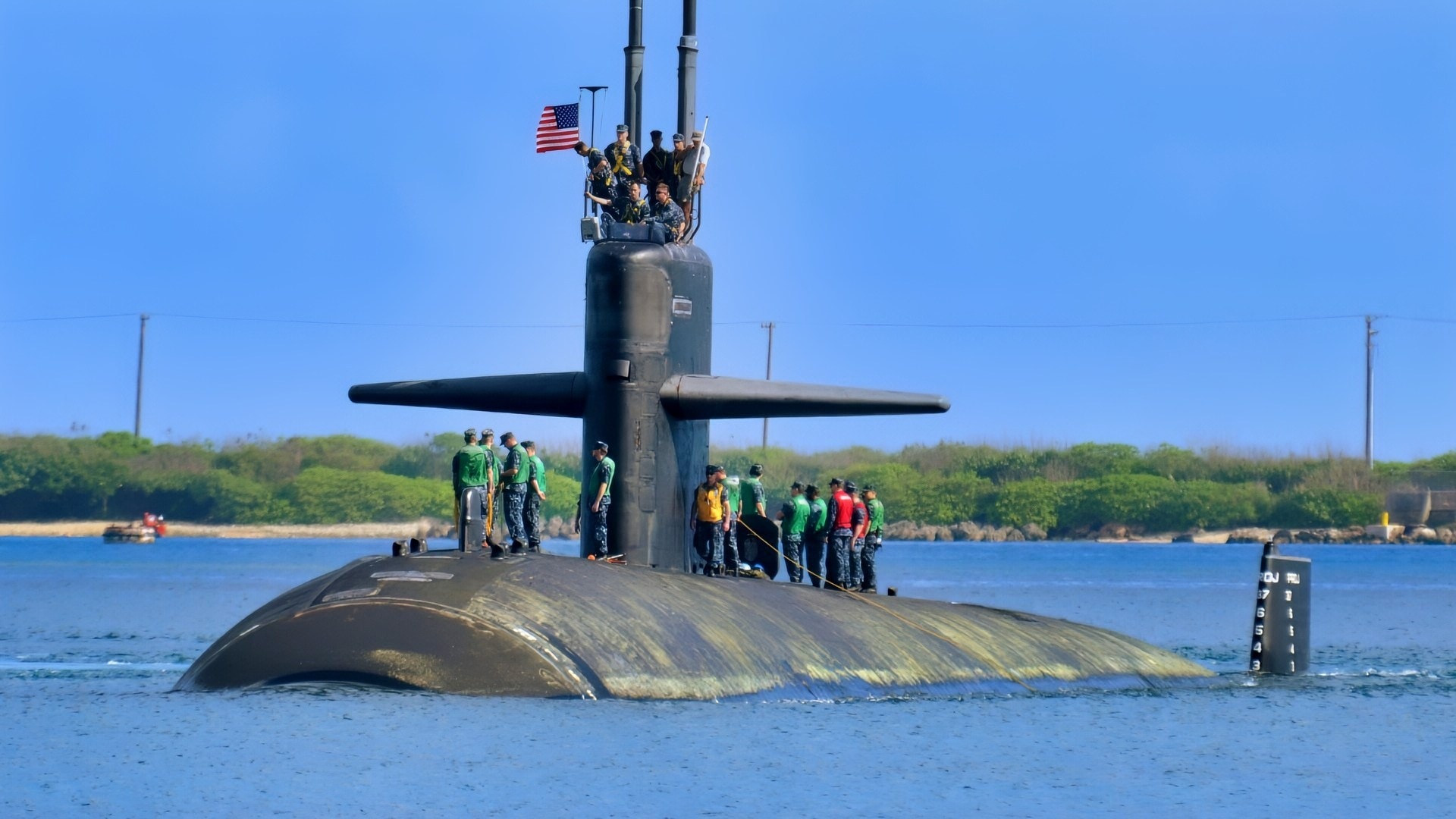
POLARIS POINT, Guam (May 7, 2013) The Los Angeles-class attack submarine USS Albuquerque (SSN 706) arrives in Apra Harbor, Guam, to conduct maintenance and liberty. Albuquerque is conducting operations in the U.S. 7th Fleet area of responsibility. (U.S. Navy photo by Mass Communication Specialist 1st Class Jeffrey Jay Price/Released)
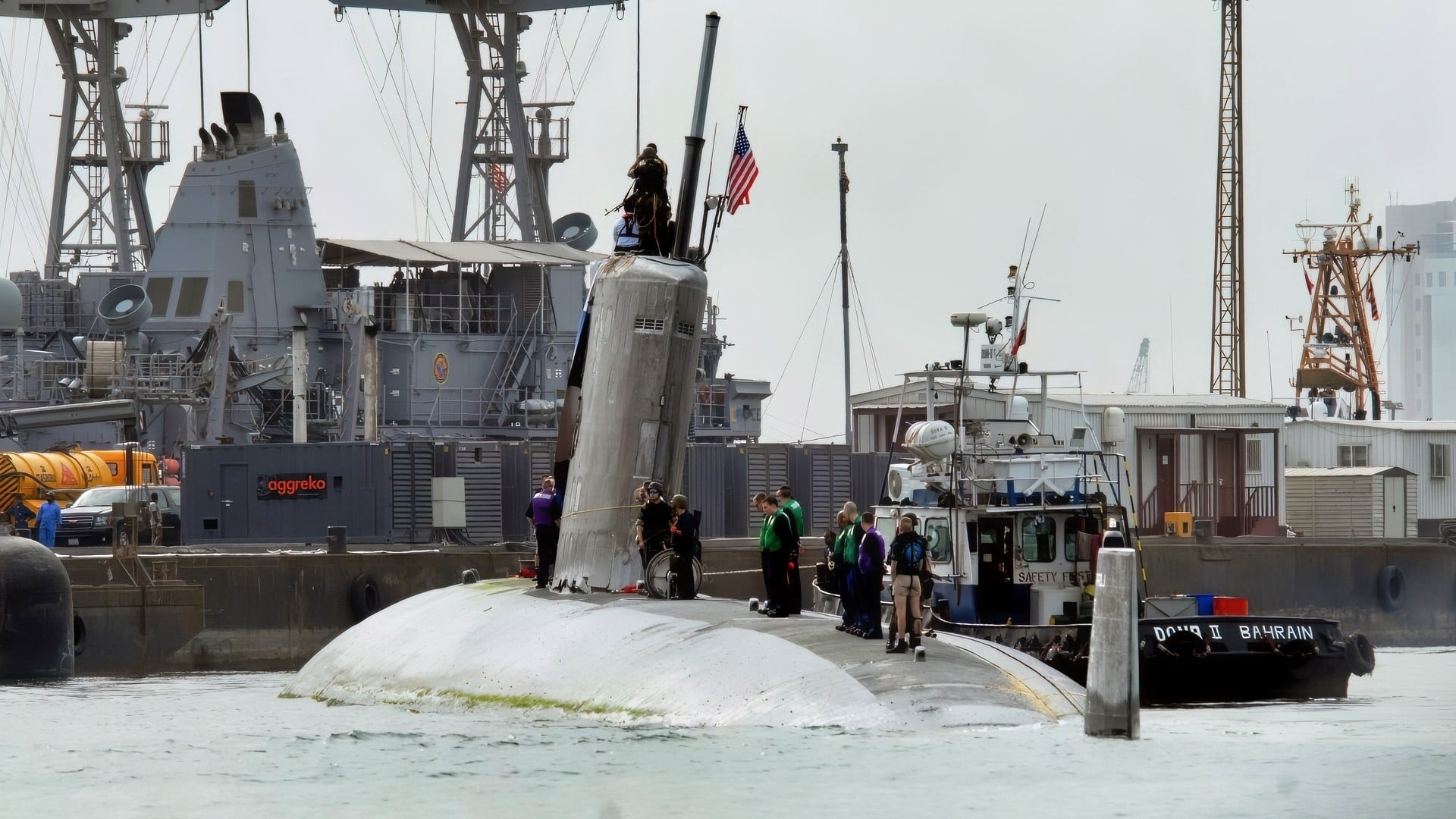
BAHRAIN (March 21, 2009) The Los Angeles-class attack submarine USS Hartford (SSN 768) arrives pier side at Mina Salman pier in Bahrain where U.S. Navy engineers and inspection teams will asses and evaluate damage that resulted from a collision with the amphibious transport dock ship USS New Orleans (LPD 18) in the Strait of Hormuz March 20. Overall damage to both ships is being evaluated. The incident remains under investigation. Hartford is deployed to the U.S. 5th fleet area of responsibility to support maritime security operations. (U.S. Navy photo by Cmdr. Jane Campbell/Released) (c)RoebuckPhoto
The Navy’s Submarine Industrial Base office says capacity has declined by more than 60 percent since the Cold War, with primary nuclear shipbuilding suppliers falling from roughly 17,000 to 5,000. Rebuilding the workforce and supplier network requires years of training, new facilities and enough steady orders to justify private investment.
Columbia-Class Construction Uses the Same Industrial Base
Virginia production is not expanding on an empty factory floor. The same two nuclear shipyards and much of the same supplier base are building Columbia-class ballistic-missile submarines, the Navy’s highest shipbuilding priority. One Columbia requires about two-and-a-half times the work of an early Virginia, while a Virginia fitted with the larger payload module requires about 25 percent more.
The planned annual workload of one Columbia and two payload-module Virginias equals roughly five earlier Virginia submarines. The yards struggled to deliver one Virginia per year before the full workload arrived. Billions invested in facilities, suppliers and workforce programs have not yet restored the industrial capacity lost after the Cold War.
Maintenance Makes the Attack-Submarine Shortage Worse
Hull count overstates the force available to commanders. The Congressional Budget Office reported in April that 33 percent of the Navy’s 48 attack submarines were in maintenance or waiting to enter it. At best, about 32 were available for operations, training or shorter repair periods. The Navy’s goal is to keep no more than 20 percent in major maintenance.
USS Boise shows how maintenance and construction shortages reinforce each other. The submarine last deployed in 2015 and lost its dive certification in 2017. After investing about $1.6 billion in a delayed overhaul, the Navy ended the repair effort and selected the boat for inactivation.
GAO found that the service spent $4.2 billion from fiscal 2016 through 2025 supporting attack submarines sitting idle or delayed in maintenance. It projects 15 attack boats entering inactive idle periods through fiscal 2030 without changes to current plans, adding work to public shipyards already short of employees and dry-dock capacity.
AUKUS Raises the Requirement Above Two Virginias Per Year
Replacing the boats transferred to Australia while rebuilding the U.S. fleet requires production of about 2.33 Virginias annually while Columbia construction continues. That makes AUKUS dependent on an output rate the Virginia program has never sustained. Service-life extensions for selected Los Angeles boats provide temporary relief, but pressure-hull age, reactor life and maintenance condition set firm limits.
There is no near-term substitute for the retiring hulls. USS Alexandria is scheduled to leave service on August 4, 2026. The Navy does not expect the Virginia line to deliver two submarines per year until around 2032.
MORE – The US Air Force Faces a Great F-22 Raptor Shortage
About the Author: Harry J. Kazianis
Harry J. Kazianis (@Grecianformula) was the former Senior Director of National Security Affairs at the Center for the National Interest (CFTNI), a foreign policy think tank founded by Richard Nixon based in Washington, DC. Harry has over a decade of experience in think tanks and national security publishing. His ideas have been published in the NY Times, The Washington Post, The Wall Street Journal, CNN, and many other outlets worldwide. He has held positions at CSIS, the Heritage Foundation, the University of Nottingham, and several other institutions related to national security research and studies. He is the former Executive Editor of the National Interest and the Diplomat. He holds a Master’s degree focusing on international affairs from Harvard University.

