
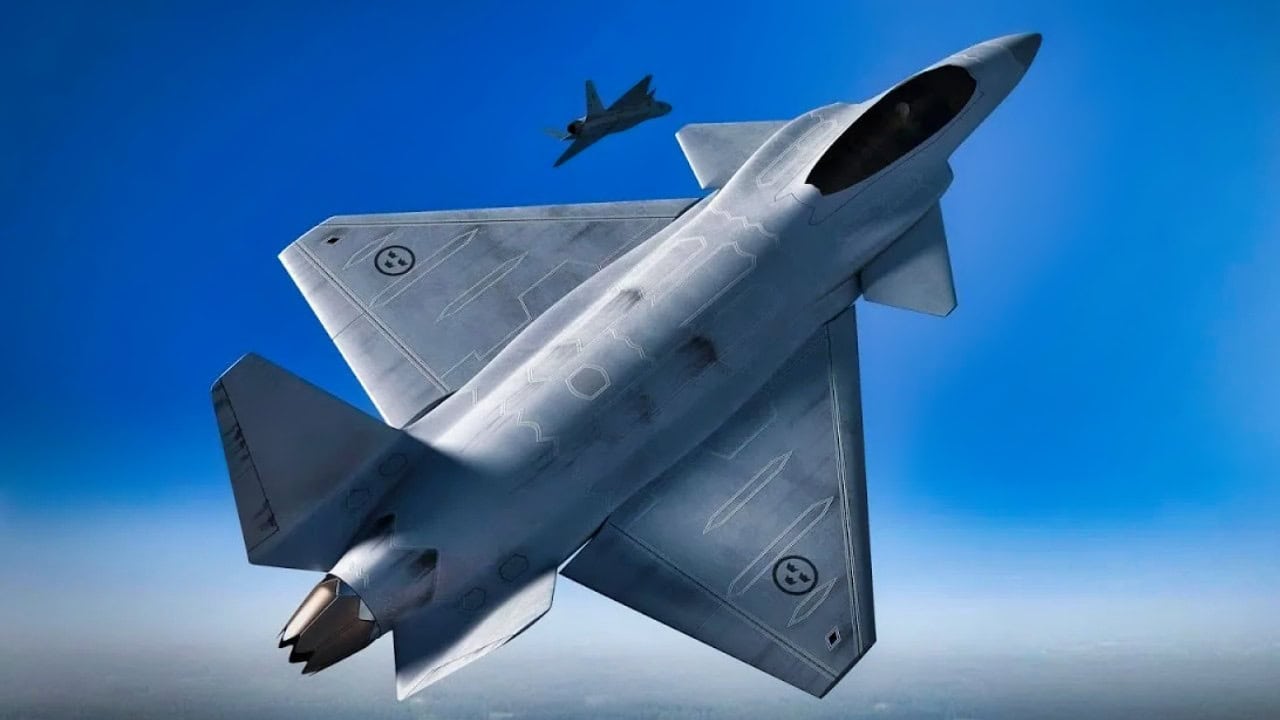
Summary and Key Points: For years, Saab was the outlier in Europe’s sixth-generation fighter thinking, the one major builder openly willing to question whether the answer was even a traditional crewed jet, sketching a fleet of drones instead with a stealthy uncrewed aircraft at its core. That looked eccentric next to the Franco-German FCAS program, Europe’s €100 billion flagship effort to build a conventional next-generation fighter. In June 2026, FCAS’s crewed fighter collapsed without a single prototype ever flying, killed by a corporate turf war, and Saab’s unconventional bet suddenly looks less like eccentricity and more like foresight. Now Airbus, one of FCAS’s own architects, is knocking on Stockholm’s door.
Saab Bet That the Gripen’s Successor Might Not Be a Crewed Fighter at All. Then Europe’s €100 Billion Fighter Program Collapsed Without Building One
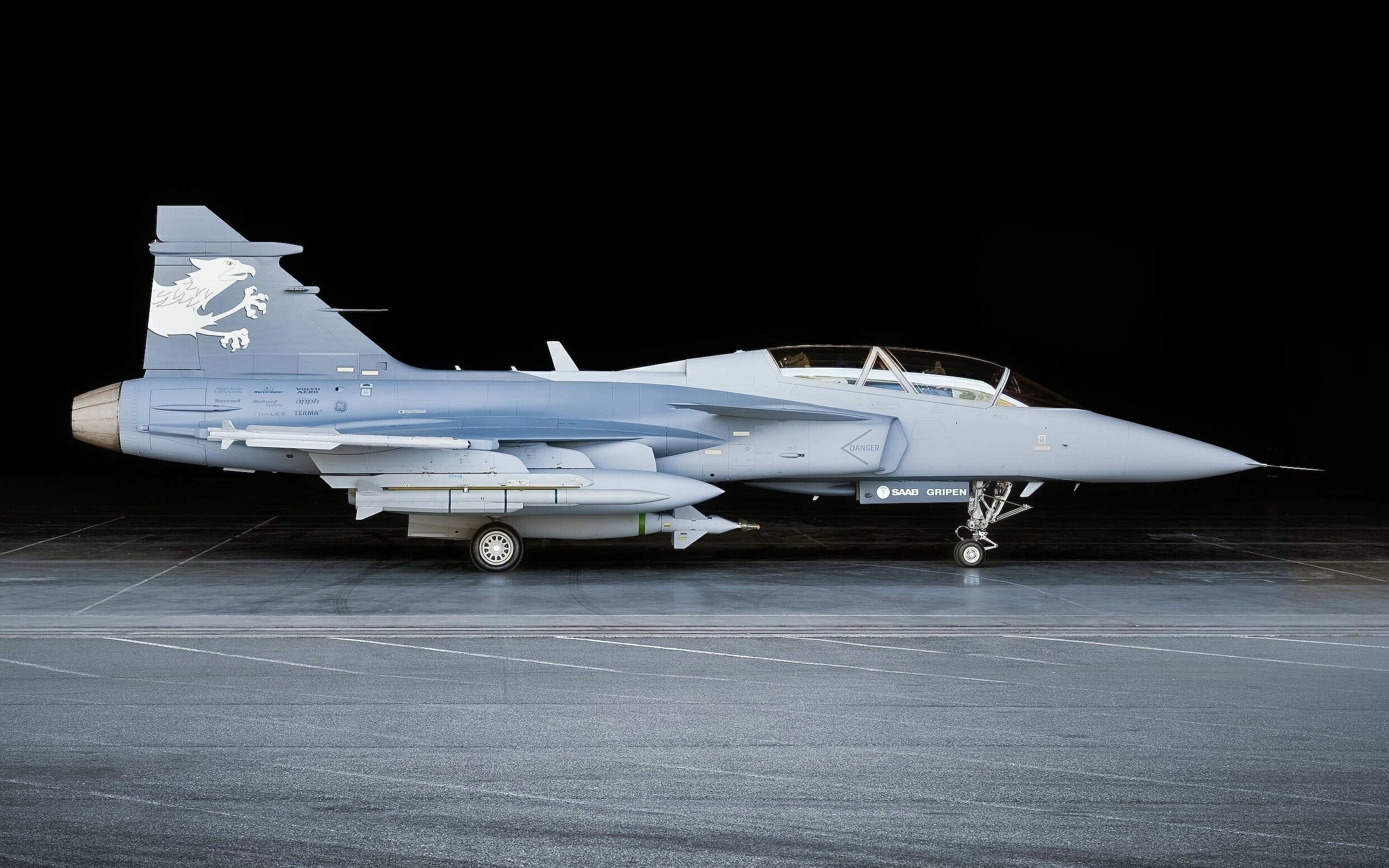
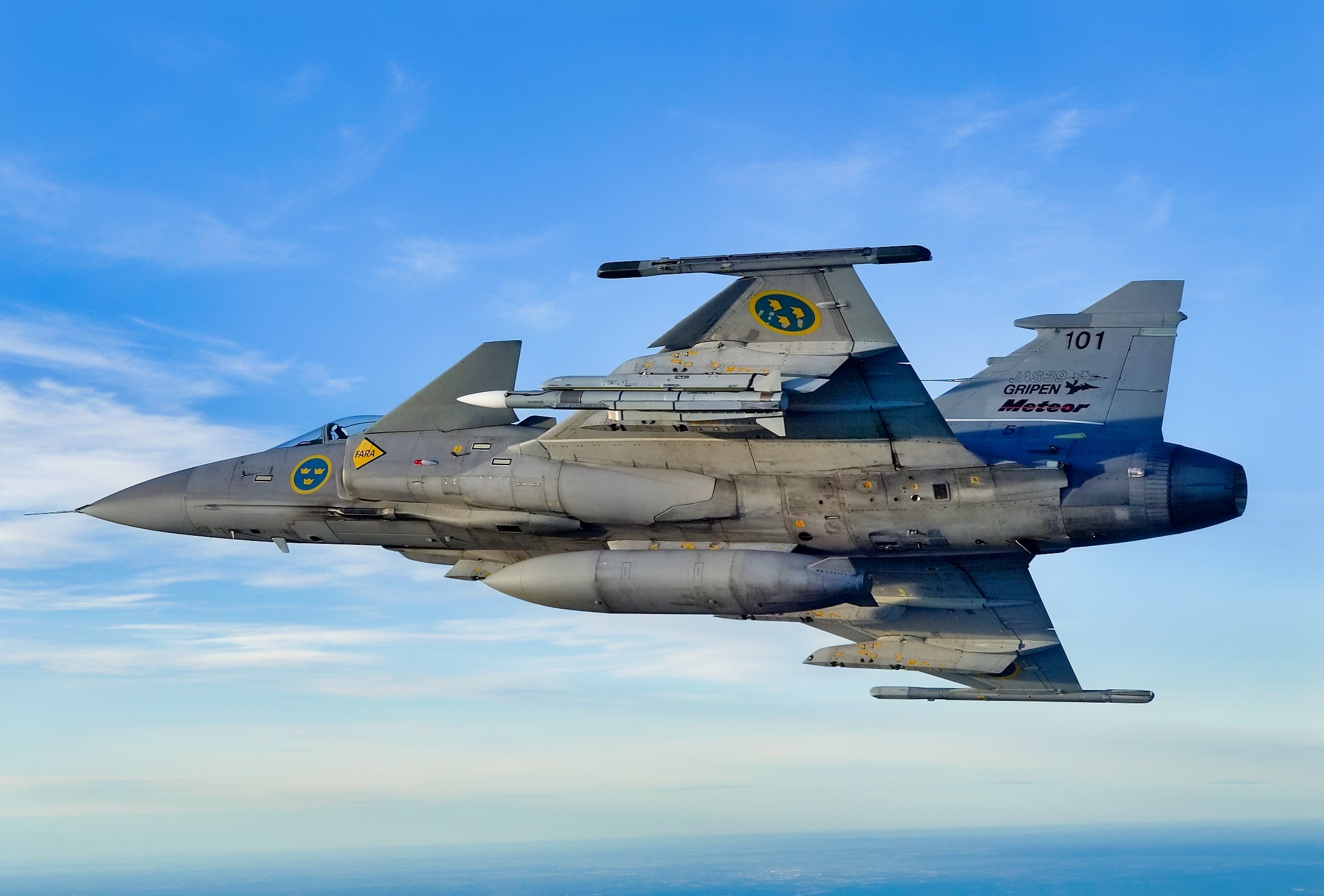
JAS 39 Gripen. Image Credit: Creative Commons.
The question every Western air force is wrestling with is what comes after the fifth-generation stealth fighter, and Sweden’s Saab has spent the past several years answering it differently from everyone else. While Britain, Japan, and the Franco-German bloc all raced to design a bigger, faster, stealthier crewed fighter as the centerpiece of their future forces, Saab quietly advanced a heretical idea: that the crewed fighter might not be the centerpiece at all, and that the successor to its JAS 39 Gripen could be a networked ecosystem of drones in which the piloted jet is optional. For a long time, that approach was treated as a curiosity. The spectacular failure of Europe’s conventional alternative has changed the conversation entirely.
FCAS: The €100 Billion Fighter That Never Flew
To understand why Saab’s bet looks prescient, start with what just happened to the alternative. The Future Combat Air System was launched in 2017 by French President Emmanuel Macron and German Chancellor Angela Merkel as the most ambitious European defense project ever attempted, a sixth-generation fighter meant to replace the Rafale and the Eurofighter Typhoon and anchor European air power for decades. It was valued at somewhere between €80 and €100 billion, and it was conceived, like its rivals, as a networked system pairing a crewed fighter with drones and sensors. Then it consumed nine years and produced nothing.
On June 8, 2026, German Chancellor Friedrich Merz confirmed what analysts had anticipated for months: the crewed fighter at the heart of FCAS, the Next Generation Fighter, was dead. No prototype had ever been built, and no demonstrator had ever flown. The precision matters here because the June 8 decision specifically terminated the crewed aircraft while preserving the program’s Combat Cloud network and parts of its drone effort under a revised Franco-German framework. The fighter died; the networked, uncrewed half survived, which is exactly the half Saab had bet on all along.
The cause was almost embarrassingly mundane. FCAS collapsed not over technology but over a work-share dispute between Airbus and France’s Dassault Aviation about who would lead. Dassault, the maker of the Rafale, insisted on a prime-contractor role and rejected parity with Airbus, arguing it alone had the expertise to build a combat aircraft from start to finish. The two sides also split on requirements, with France demanding a nuclear-capable, carrier-compatible jet that Germany saw no need for. A mediation effort launched after a Macron-Merz dinner collapsed in April 2026 with the conclusion that a jointly built crewed fighter was no longer feasible. German Defense Minister Boris Pistorius was blunt afterward, noting the end had been clear for some time. Europe’s flagship fighter program had been defeated by corporate politics, leaving nothing to show for it.
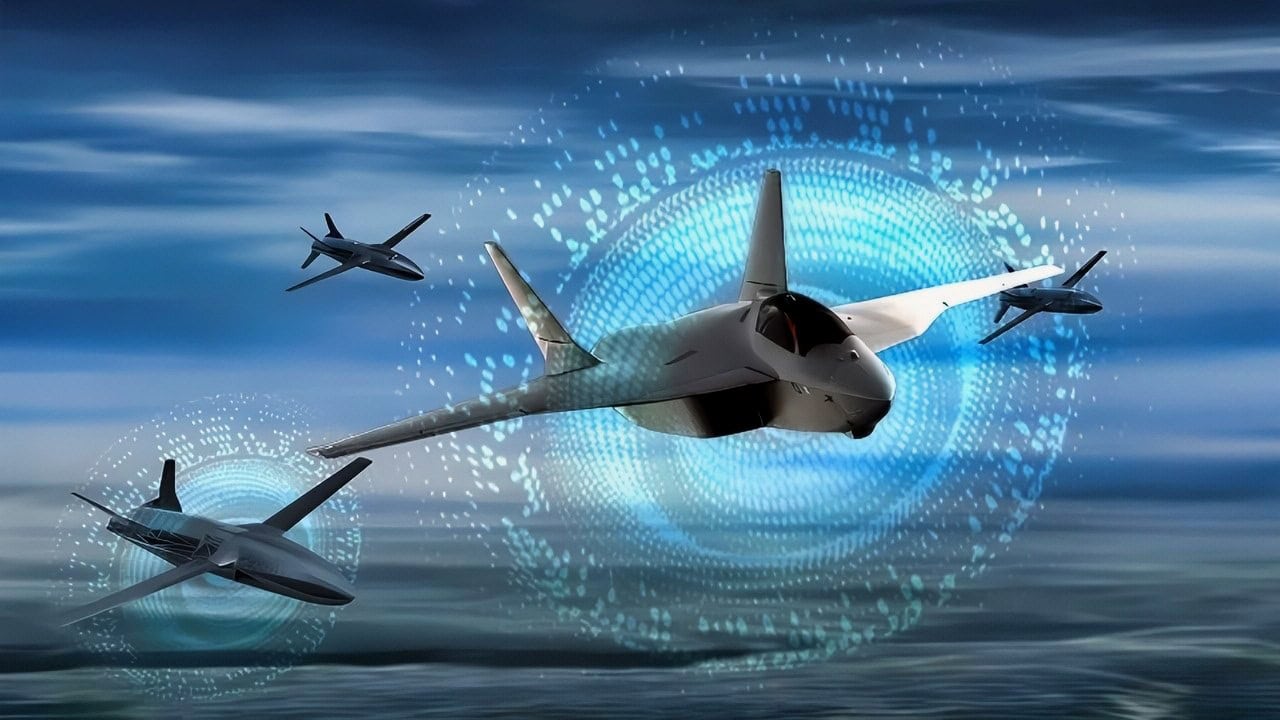
FCAS. Image Credit: Industry Handout.
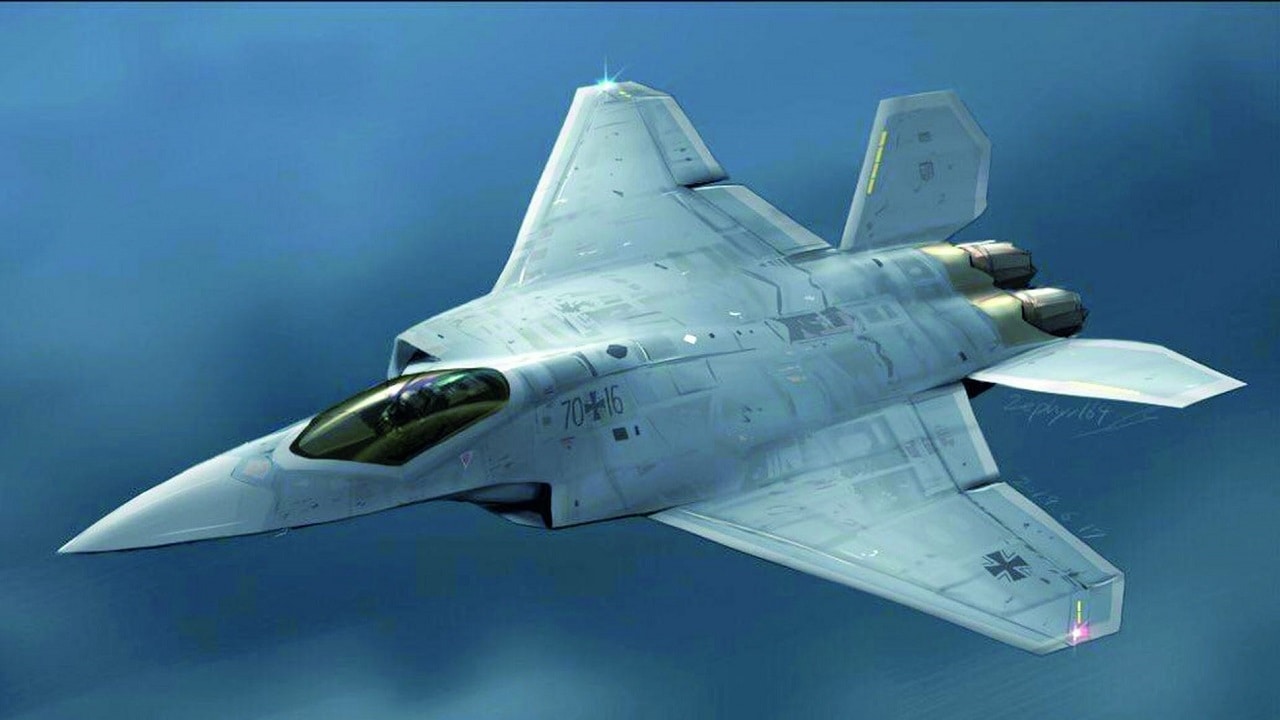
FCAS. Image Credit: Creative Commons.
Saab’s Different Bet: Maybe the Fighter Isn’t the Point
Saab’s future-combat thinking, developed under Sweden’s Concept for Future Air Combat System program, or KFS, starts from a fundamentally different premise. Rather than treating a crewed fighter as the fixed centerpiece to be surrounded by supporting drones, Saab has designed what it calls the F-series, a family of aircraft that includes a crewed fighter alongside three classes of uncrewed platforms: a subsonic drone under five tons, a supersonic drone over five tons, and a low-cost drone under one ton. The most telling feature is where the drones sit in the architecture. In Saab’s concept, the uncrewed platforms are at the heart of the system rather than adjuncts to a manned fighter, an inversion of the emphasis in the British and Franco-German programs, where the crewed jet remained center stage.
Saab has gone further than any of its rivals in one respect. The company has left open the possibility that Sweden might forgo a crewed fighter entirely and field a future combat ecosystem composed only of different categories of drones. That is a genuinely radical position for a nation with a proud history of building its own fighters, and Saab pairs it with a cost-driven engineering philosophy the company has always favored.
JAS 39 Gripen. Image Credit: Creative Commons.
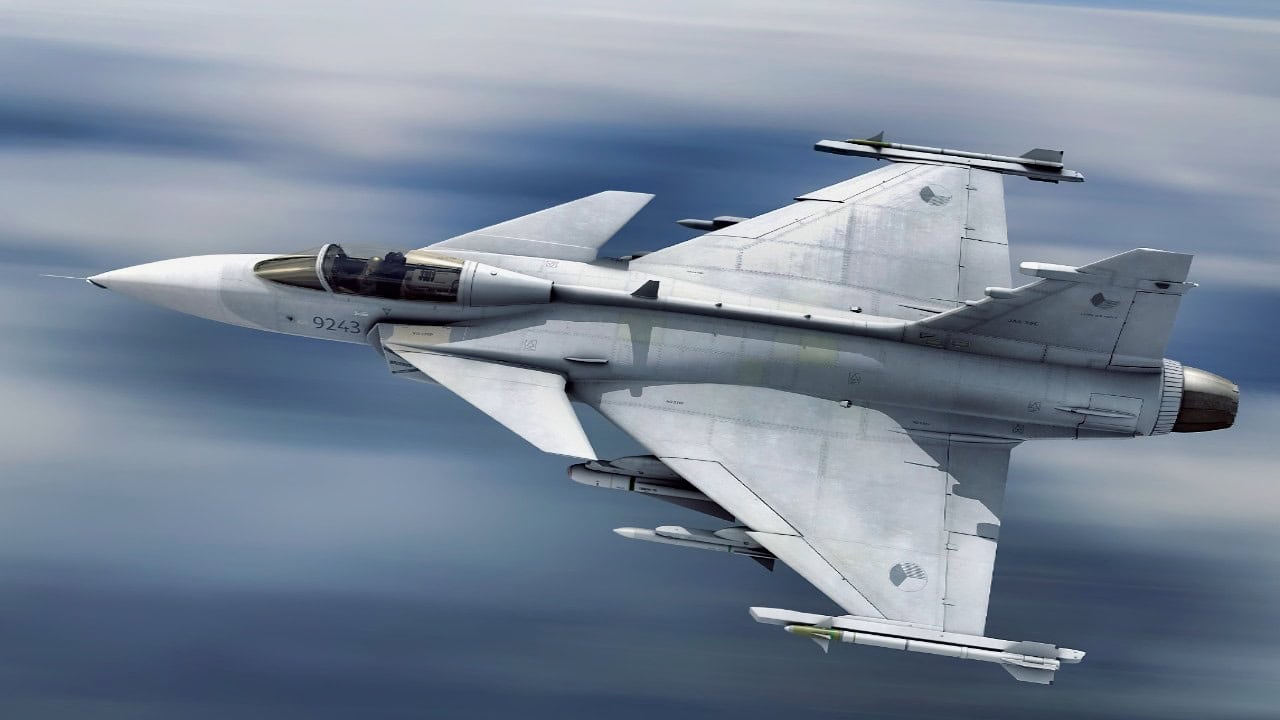
JAS 39 Gripen. Image Credit: Creative Commons.
Its F-series envisions shared components across crewed and uncrewed platforms, including commonality between the existing non-stealthy Gripen E and a new stealthy supersonic drone, an approach meant to drive down development cost and shorten timelines by reusing what already works. Saab has already flight-tested autonomous decision-making, demonstrating a Helsing-developed artificial-intelligence agent making beyond-visual-range choices in the air, and it aims to fly a technology demonstrator as soon as 2027.
This is the same instinct that produced the Gripen itself, a lightweight, single-engine fighter built for a fraction of the cost per flying hour of its heavier Western rivals. Saab’s engineers built a reputation for rapid prototyping and low-cost design, using digital twin modeling to compress development timelines, and the F-series applies that discipline to the sixth-generation problem. Where FCAS aimed for a maximally capable crewed fighter and spent a fortune failing to agree on how to build it, Saab aimed for flexibility and affordability and kept moving.
Why Sweden Walked Its Own Path
Saab’s independence was a deliberate choice made years before FCAS collapsed. Sweden was originally a partner in Britain’s Team Tempest program alongside the UK and Italy, but when that effort merged with Japan’s fighter project in December 2022 to become the Global Combat Air Program, Stockholm chose not to join. Instead, Sweden opted for an independent reassessment of its own strategic needs, shaped by the war in Ukraine, its accession to NATO, and rising defense spending. The decision reflected a Swedish priority that ran deep: retaining the domestic capability to develop its own combat aircraft, an industrial and strategic asset the country has guarded since it built the Viggen and the Gripen.
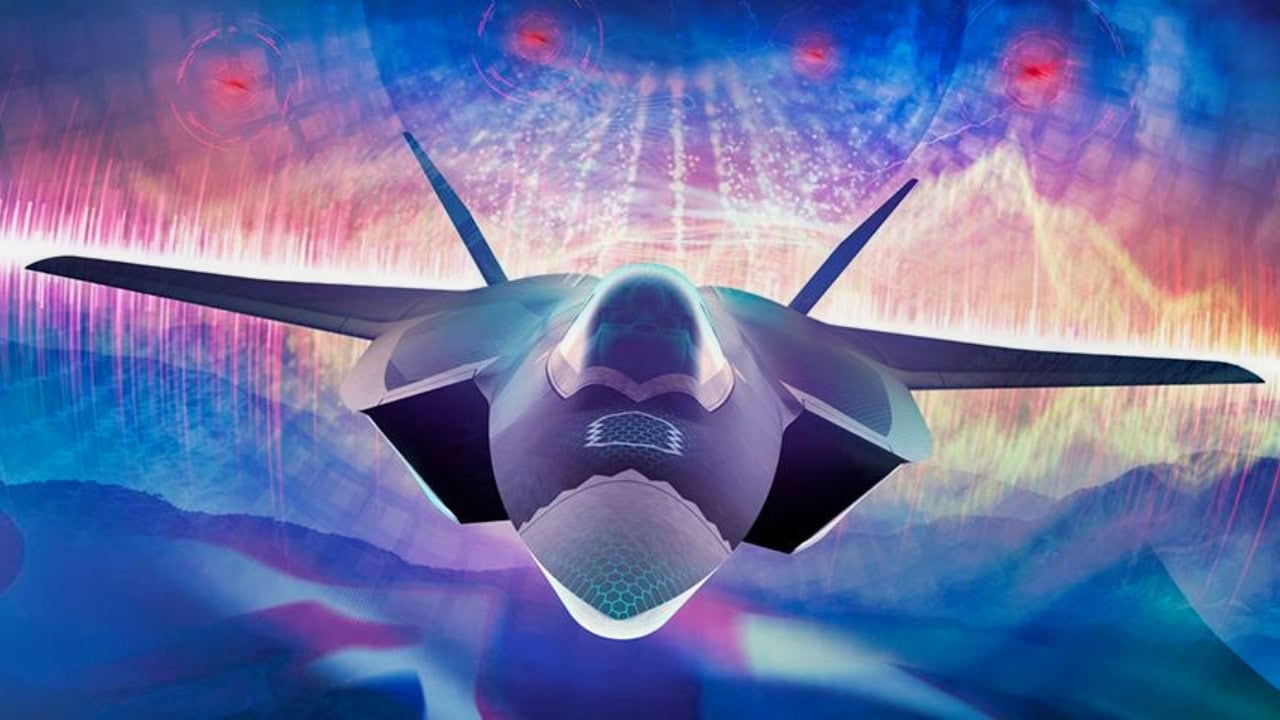
GCAP Fighter. Industry Handout Image.
That independence gave Sweden something its rivals lacked: time and flexibility. Sweden’s future-fighter program, backed by contracts from the Swedish Defense Materiel Administration, runs on a notably relaxed timeline, with a goal of fielding a Gripen successor around 2050 and a plan to spend the years until roughly 2030 evaluating concepts before committing to any single path. Stockholm has explicitly kept its options open, allowing Saab to experiment with several approaches rather than locking into one. The Swedish Air Force has acknowledged that the Gripen, capable as it is, will not be able to hold its own against the sixth-generation crewed fighters entering service in the 2030s, so the pressure to modernize is real, but Sweden has refused to let that pressure force a premature or ruinously expensive commitment. In hindsight, the contrast with FCAS is stark: while Paris and Berlin locked themselves into a fixed crewed-fighter design and then spent nine years fighting over it, Sweden kept deciding what it actually wanted.
The Courtship
The collapse of FCAS has turned Saab from an outlier into a sought-after partner. With the Next Generation Fighter dead, Europe has fractured into competing camps. Dassault will now develop a French sixth-generation fighter on its own, funded in part by money committed to the Rafale F5 upgrade. Airbus, meanwhile, has assembled a consortium of German defense and aviation firms under the banner Team Gen 6, declaring itself ready to take responsibility for a sixth-generation fighter, and it has openly courted Saab, which Berlin regards as a far more cooperative industrial partner than Dassault proved to be. Germany is weighing whether to build a new fighter with Sweden and Spain, join GCAP, or simply buy more American F-35s to fill the gap.
Airbus has been unusually candid about its desire for Saab. Its defense chief has publicly praised Sweden and Saab as candidates with extensive expertise in fighter design and production, and framed the stakes in continental terms, saying he did not want to see sixth-generation fighters bought from the United States as Europe did with the fifth generation. That statement captures why Saab matters now. Europe’s credible fighter-building capacity has narrowed, and Sweden is one of the few Western nations with a living tradition of designing tactical aircraft. Analysts see at least three European paths toward sixth-generation capability now, an Airbus-led project possibly including Saab, a French national effort, and GCAP, with Sweden’s flexible, efficiency-focused approach making it an attractive collaborator precisely because it does not demand the kind of political control that sank FCAS.
The broader shift in air-combat thinking has also moved toward Saab’s view. As drones take on more of the fighting, analysts increasingly describe future crewed jets as command ships rather than independent fighting aircraft, which is close to the role Saab’s architecture assigns its optional crewed node. The idea that the airplane matters less than the network and the drones around it, once a Swedish peculiarity, is becoming conventional wisdom.
The Honest Case Against
None of this means Saab has solved the sixth-generation problem, and the case against its approach is serious. Its concepts remain concepts, with no drone-centric combat ecosystem yet proven in service, and betting that autonomous platforms can replace much of what a crewed fighter does is a genuine wager that could prove wrong if piloted aircraft remain essential to high-end combat.
Saab’s roughly 2050 target is also far slower than its rivals, with GCAP already about 75 percent through building its demonstrator and targeting a 2027 rollout, backed by fresh British funding, which leaves it the only heavy air-superiority sixth-generation fighter currently on the export market. Sweden’s ambition to keep its program financially viable even without export sales seems nearly impossible, given the enormous cost of developing both stealthy crewed and uncrewed aircraft, and the Gripen’s own history shows how hard it is to win export sales against American competition.
It is also important not to overstate Saab’s position. The company has not committed to abandoning the crewed fighter; it has kept the piloted aircraft as one of several options while it studies alternatives. The honest description is that Saab has kept more doors open than anyone else, not that it has chosen drones over pilots. That flexibility is the whole point, and it is why the approach survived the moment that killed its more rigid rival.
What FCAS proved in June 2026 is not that Saab’s specific concepts are correct, but that the conventional path, an expensive, politically negotiated, crewed-fighter-first megaproject, can fail completely and leave a continent with nothing after nine years and a hundred billion euros.
Saab bet that a cheaper, more flexible, drone-centric approach that refused to commit prematurely was the safer way to reach the middle of the century with a credible air force. That bet has not been won. But the most expensive alternative to it just collapsed without building a single airplane, and the builder who questioned whether the fighter was even the point is now the partner everyone in Europe wants to talk to.
About the Author: Harry J. Kazianis
Harry J. Kazianis (@Grecianformula) was the former Senior Director of National Security Affairs at the Center for the National Interest (CFTNI), a foreign policy think tank founded by Richard Nixon based in Washington, DC. Harry has over a decade of experience in think tanks and national security publishing. His ideas have been published in the NY Times, The Washington Post, The Wall Street Journal, CNN, and many other outlets worldwide. He has held positions at CSIS, the Heritage Foundation, the University of Nottingham, and several other institutions related to national security research and studies. He is the former Executive Editor of the National Interest and the Diplomat. He holds a Master’s degree focusing on international affairs from Harvard University.

