
The FCAS Fighter Will Soon Move Forward Or End Up Being a Historical Footnote
Dassault Aviation CEO Eric Trappier has given Europe’s most ambitious defense aviation project yet another deadline to decide its future. Speaking at the War & Peace security conference in Paris on April 1 about the Future Combat Air System (FCAS) program, Trappier said, “We are giving ourselves two to three weeks to try and find an agreement.”
“We all want the ‘Europe of defense,’ but the question is – who is going to lead it?” he added.
The comments refer to the €100 billion Franco-German-Spanish effort to build a next-generation fighter jet, which has been stalled by industrial disputes and political disagreements. The comments come after Germany already imposed its own mid-April deadline to resolve the dispute.
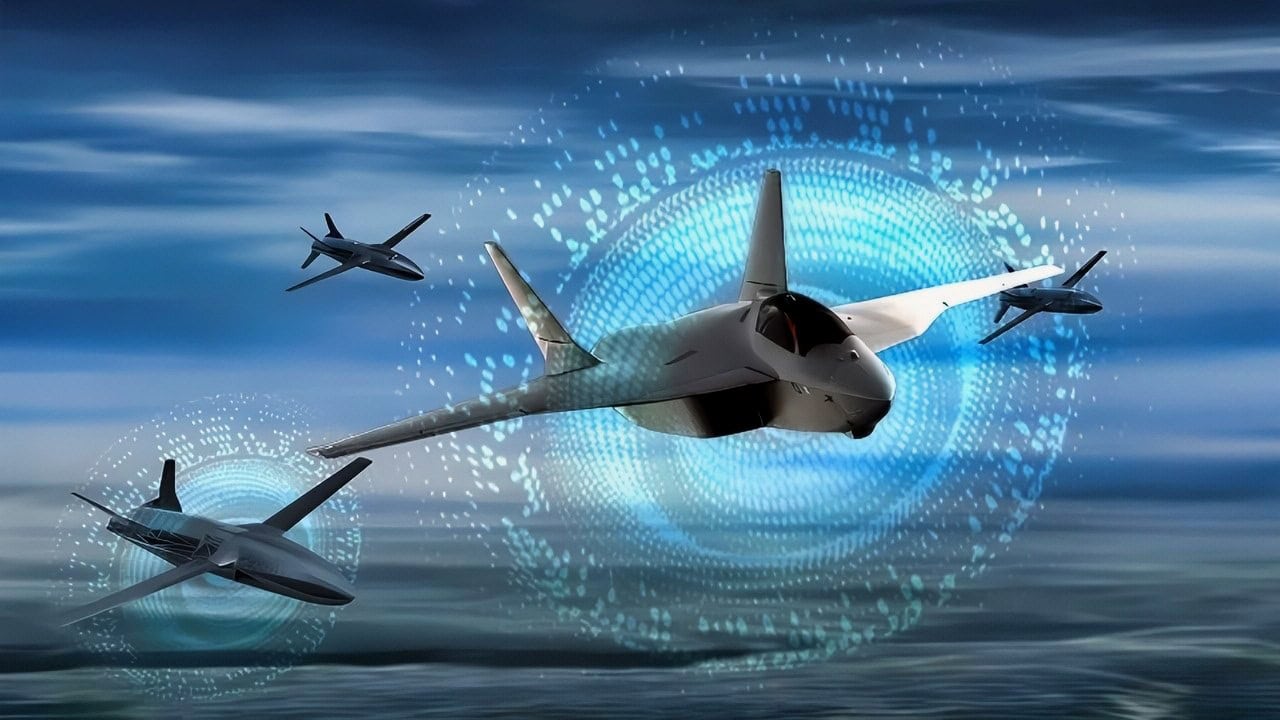
FCAS. Image Credit: Industry Handout.
Dassault Aviation and Airbus, the project’s main industrial partners, remain locked in a dispute over control and leadership of the project, as well as disagreements over intellectual property.
At a moment when European leaders are publicly grappling with the continent’s reliance on the United States for security, FCAS is supposed to be the answer – but as the debates continue, it remains unclear whether it will actually deliver.
What FCAS Is Meant to Achieve
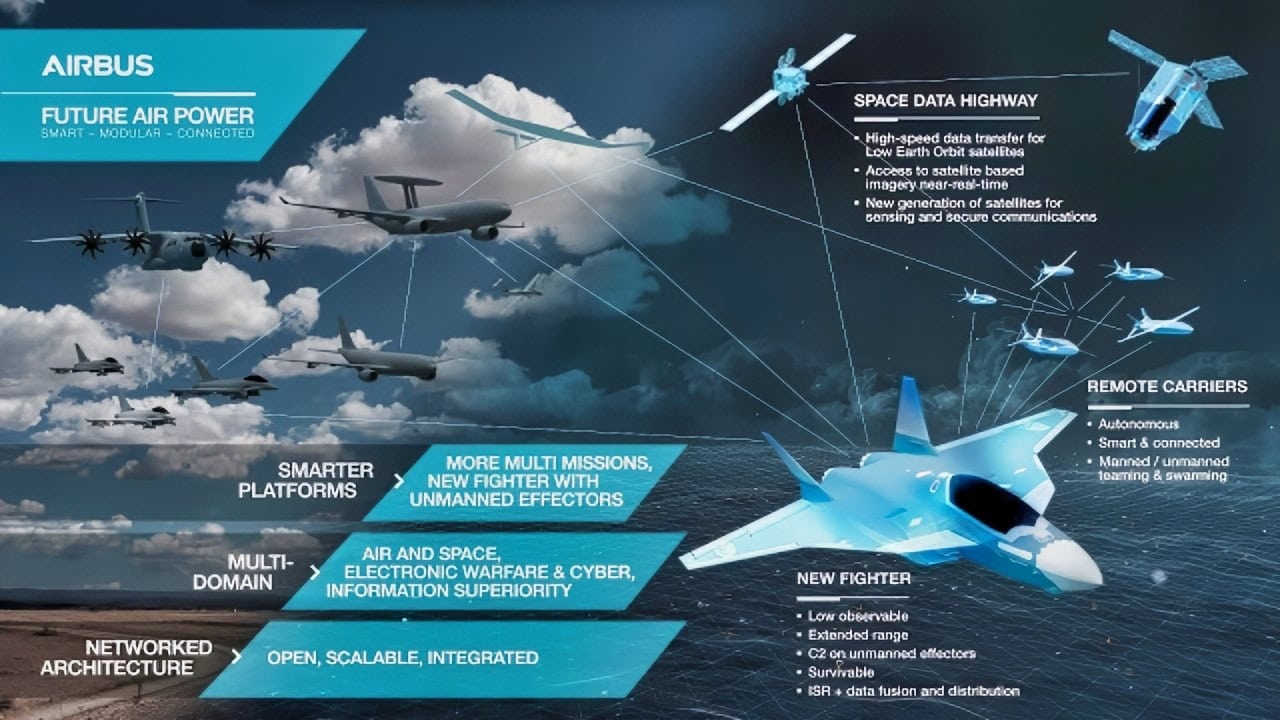
FCAS is expected to develop a multi-layered combat system, which includes a next-generation fighter jet, intended to replace Europe’s current frontline fighters from around 2040.
At the core of the program is the Next Generation Fighter (NGF), which is expected to succeed aircraft such as the Dassault Rafale and the Eurofighter Typhoon. It will work alongside several interconnected systems and components, including remotely piloted “loyal wingman” drones and a digital “combat cloud” that connects sensors, command systems, and other aircraft in real time to create a detailed picture of the combat environment.
The scale of the project is similar to that of the United States’ Next Generation Air Dominance (NGAD) system, and a similar effort by the Chinese.

Shown is a graphical artist rendering of the Next Generation Air Dominance (NGAD) Platform. The rendering highlights the Air Force’s sixth generation fighter, the F-47. The NGAD Platform will bring lethal, next-generation technologies to ensure air superiority for the Joint Force in any conflict. (U.S. Air Force graphic)
The idea is that aircraft will operate as part of a network rather than as standalone platforms, working with AI-assisted targeting and flight, and sensor fusion – capabilities intended to go well beyond current fifth-generation systems.
But the complexity is one of the reasons the program is so difficult to manage between countries with diverging priorities. FCAS is effectively trying to build an entire combat ecosystem across three countries with different industrial bases and shifting political priorities.
The project was launched in 2017 by France and Germany, with Spain joining in 2019, as part of an effort to consolidate and strengthen Europe’s defense industry and reduce fragmentation.
That goal is perhaps more important now than it was even then, but the multinational structure has since become one of its biggest weaknesses.
A Program Bogged Down By Disputes
From the outset, FCAS has been shaped more by industrial and political disagreements than by engineering challenges.
The central issue is control of the NGF fighter itself. France, through Dassault, was designated to lead this element of the program, reflecting its experience developing the Rafale independently. However, Airbus – representing Germany and Spain – has pushed for a more equal role in the project, leading to deadlocks over governance and work-sharing.
By 2023 and 2024, disputes over intellectual property and flight control systems had already delayed the next phase of development, including work on a demonstrator aircraft. And those issues remain unresolved today.
Trappier has repeatedly framed the problem as one of leadership rather than technical capability, noting in March 2026 that the project cannot function under what he described as a fragmented “co-co-co”-leadership model. Trappier even accused Airbus of not respecting the initial agreement, and said that if the company “does not want to work with us,” then the project would end.
Airbus, meanwhile, has explored alternatives, including a controversial proposal to split up the program and develop two separate fighter jets. Speaking during an interview with Euractiv, Airbus CEO Michael Schöllhorn described the idea of fielding separate fighter jets united by a single “combat cloud” as a “viable” option.
And as partners explore alternatives, the political pressure keeps piling on.
Germany’s government has made clear that a resolution must be reached soon, tying the program’s future to its own national budget decisions and warning that delays cannot continue indefinitely. It means that the program remains perfectly possible in terms of technical capabilities and manufacturing capacity, but impossible to even start without a unified vision of what the core fighter component would look like.
Who’s Going to Lead It?
Trappier’s question of who is going to lead it goes right to the heart of the dispute.
France’s position is that Dassault must lead the fighter element of FCAS, maintaining full authority over the design and integration of key technologies. Dassault has built and exported advanced fighters independently, while Germany does not currently have a comparable standalone fighter program.
However, Germany takes a different view. Despite the lack of experience, it has pushed through Airbus for a more distributed model of governance, arguing that a program of this scale should not be dominated by a single national party.
That fundamental disagreement directly affects decisions about flight control software, system architecture, intellectual property, and ultimately export policy, too. These are far more than minor technical details – they determine who controls the aircraft over its entire lifecycle.
Modern fighter programs typically rely on a centralized design authority to manage complexity and ensure integration across systems. Without that, there may be delays and cost overruns on the one hand, and arguably worse, interoperability problems down the line.
That is the underlying concern now facing FCAS. The program is trying to combine multiple national industries into a single development structure without a clear hierarchy. So far, that approach has produced repeated delays and no resolution.
FCAS Matters More Than Ever
FCAS has always been important for Europe’s next-generation combat systems and capabilities, but it is arguably more important now than when it was first envisioned. European governments are now increasingly discussing the need to reduce dependence on U.S. military capabilities, particularly in high-end airpower and logistics. The widespread adoption of U.S.-built systems such as the F-35 has strengthened NATO interoperability but also deepened that reliance in recent years.
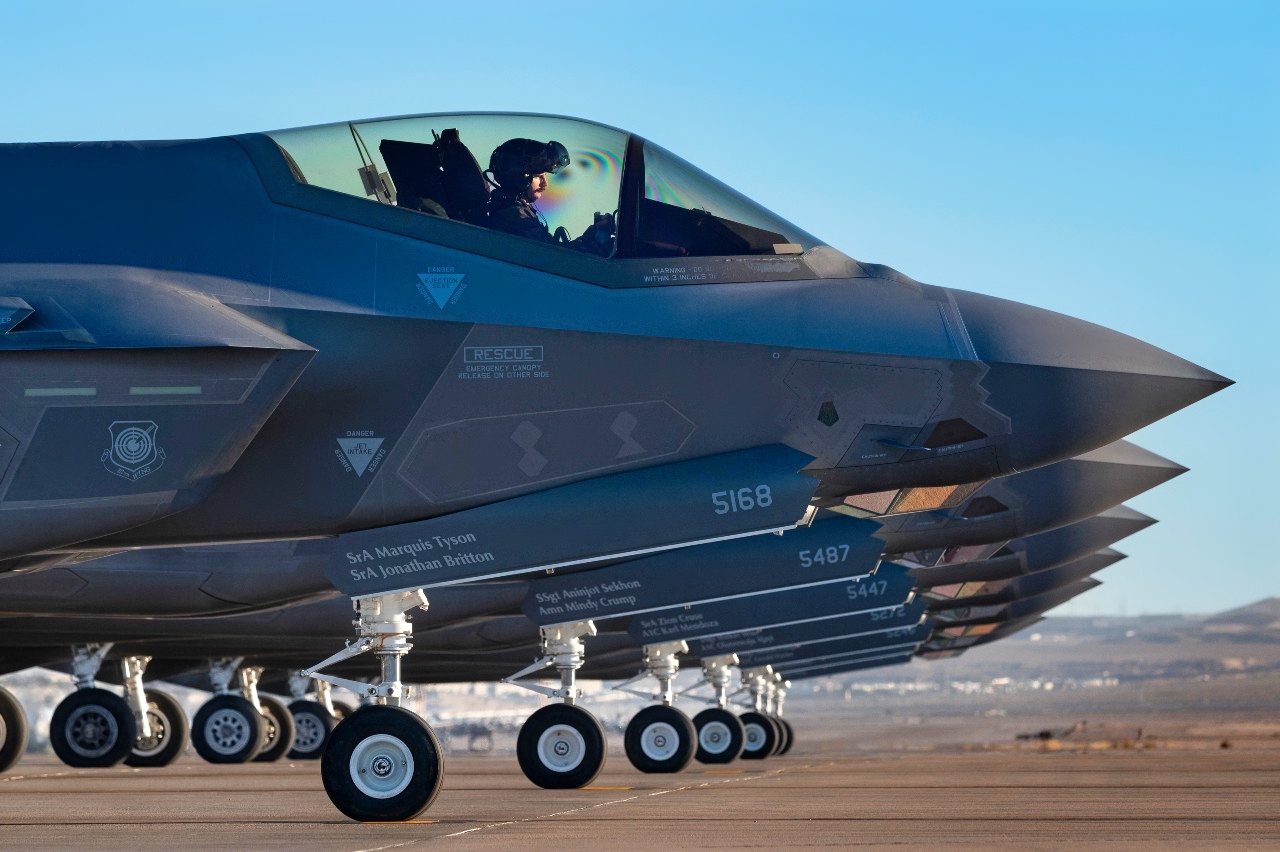
Seven F-35 Lightning II aircraft wait to take off for a U.S. Air Force Weapons School training mission at Nellis Air Force Base, Nevada, Jan. 31, 2024. The U.S. Air Force Weapons School teaches graduate-level instructor courses that provide advanced training in weapons and tactics employment to officers and enlisted specialists of the combat and mobility air forces. (U.S. Air Force photo by William R. Lewis)
In February, British Prime Minister Keir Starmer warned that Europe must shift from overdependence on the United States and towards a more European NATO, calling for strengthened ties with the continent.
“There is no British security without Europe, and no European security without Britain. That is the lesson of history – and it is today’s reality too,” the prime minister said.
Starmer made similar comments on April 1 in a national address coordinated with similar speeches made by other European leaders, calling for closer ties with the European Union – arguably in breach of the 2016 vote to leave the European Union – as tensions with Washington over the Iran conflict deepen.
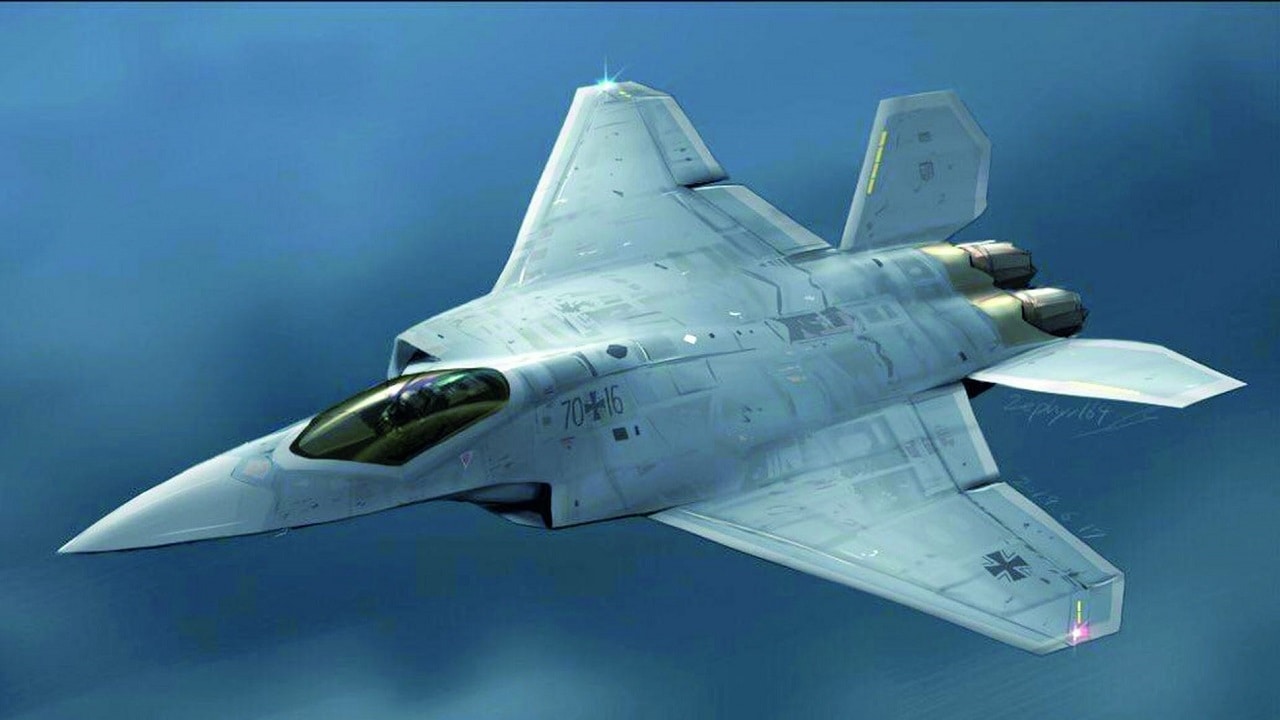
FCAS. Image Credit: Creative Commons.
Those tensions are forcing European leaders to think more seriously about independent capability. As the future of the Strait of Hormuz looks uncertain, FCAS should be making more progress to provide a sovereign European air combat capability and a domestically controlled technological base.
Every day that the program is delayed, the chances of breaking Europe’s reliance on U.S. platforms and support systems weaken.
Without it, Europe could end up with multiple competing sixth-generation programs rather than a single unified system.
About the Author: Jack Buckby
Jack Buckby is a British researcher and analyst specializing in defense and national security, based in New York. His work focuses on military capability, procurement, and strategic competition, producing and editing analysis for policy and defense audiences. He brings extensive editorial experience, with a career output spanning over 1,000 articles at 19FortyFive and National Security Journal, and has previously authored books and papers on extremism and deradicalization.