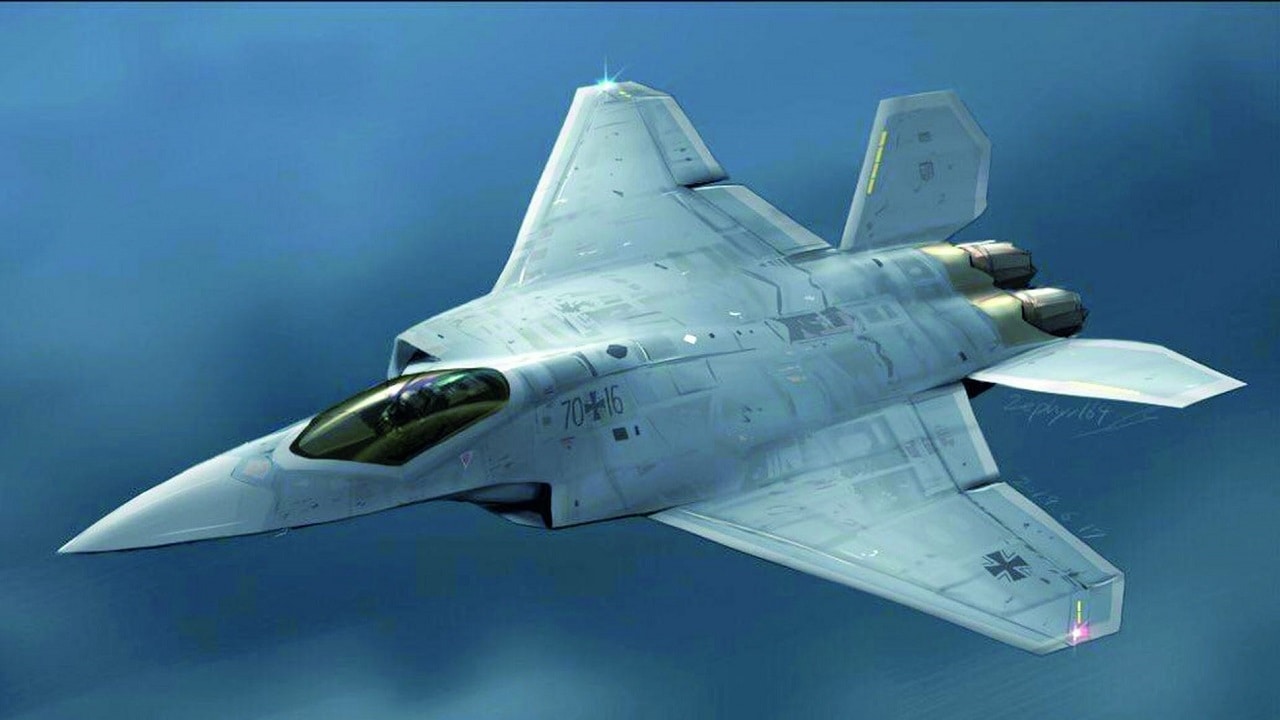
Summary and Key Points: French President Emmanuel Macron is fighting to save Europe’s Future Combat Air System (FCAS) amid rumors of its imminent collapse.
-Despite industrial deadlock between Dassault and Airbus over technology sharing, Macron insists the sixth-generation fighter project remains viable.

FCAS. Image Credit: Industry Handout.
-However, internal reports suggest a “dead” program, with German aerospace lobbyists now pushing for a “dual-fighter” strategy to bypass the stalemate.
-As Spain warns against strategic fragmentation, the pressure is on Macron and German Chancellor Friedrich Merz to salvage the Next Generation Fighter (NGF) before Europe is forced to revert to its reliance on U.S. defense platforms.
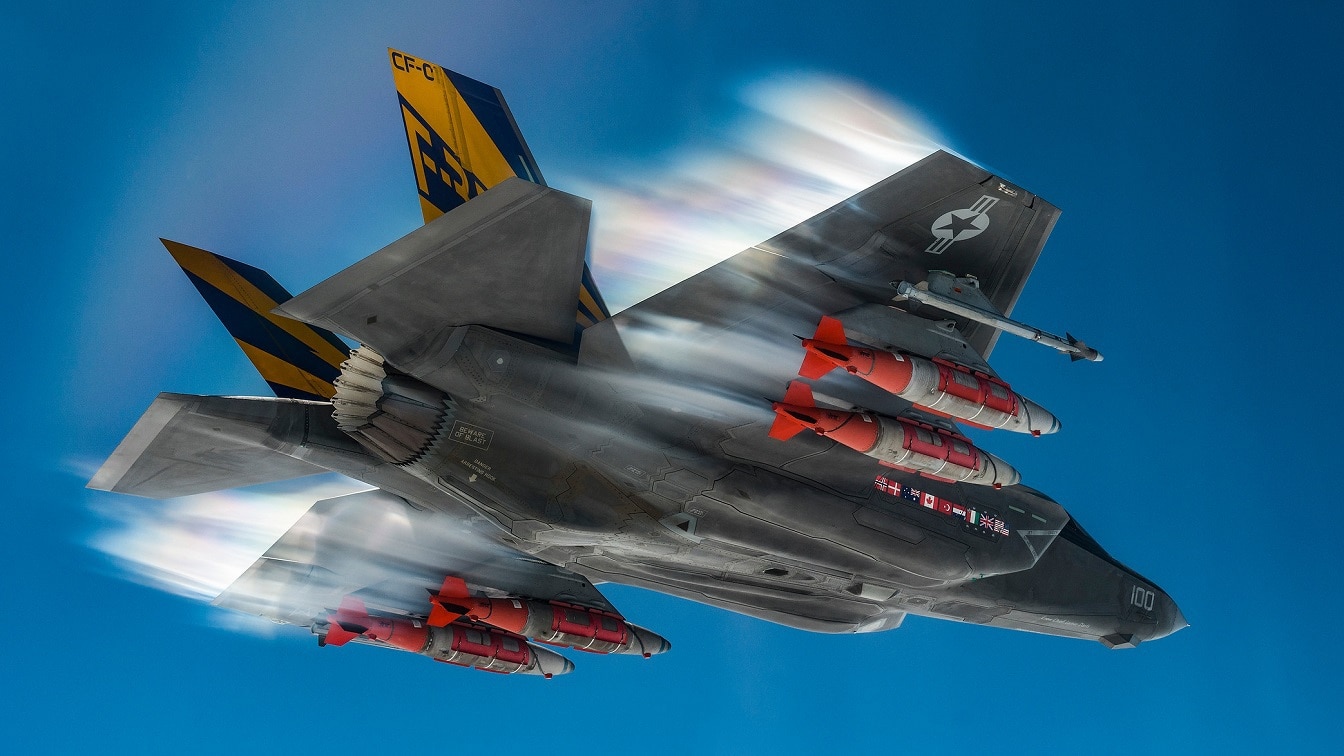
F-35 CF-1 Flt 453 piloted by Lockheed Martin test pilot Mr. Dan Canin flies with external GBU-31 weapons for the first time on an F-35, the test was flown from NAS Patuxent River, MD on 5 Aug 2016
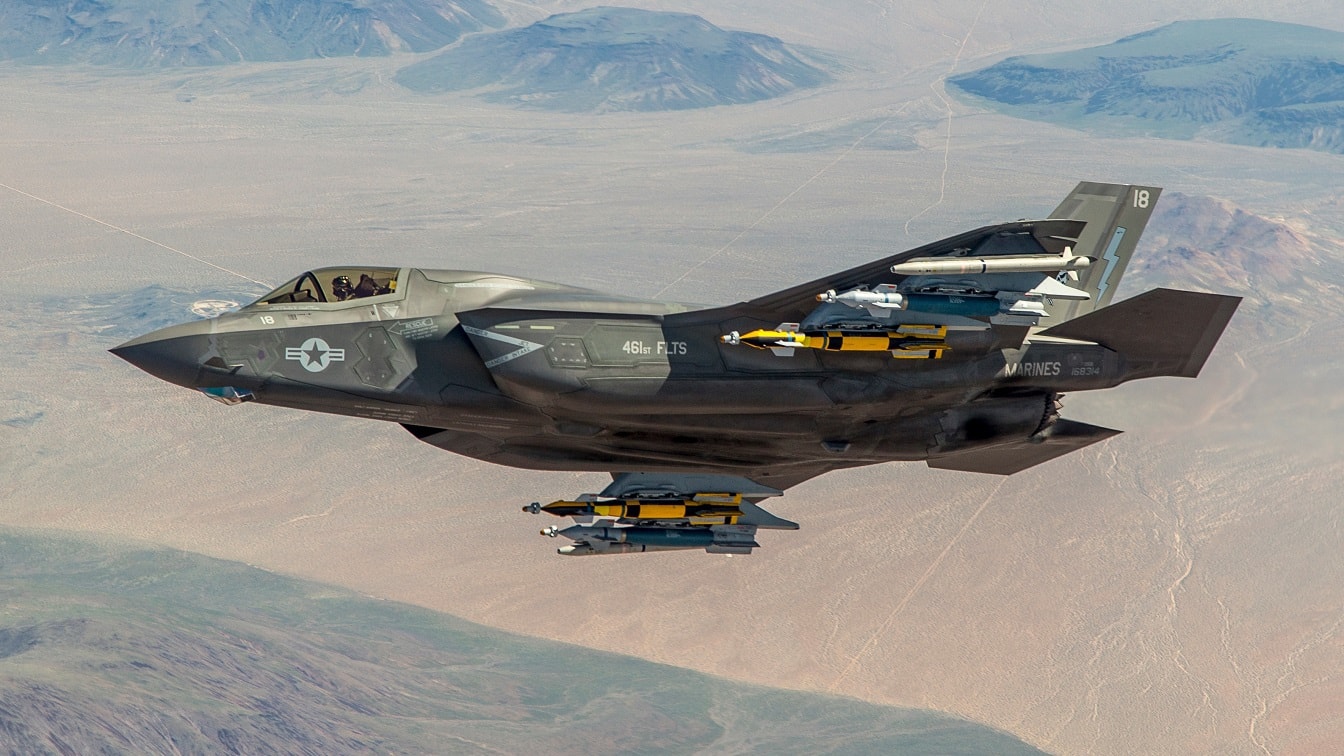
F-35 Stealth Fighter. Image Credit: Lockheed Martin.
Why Macron is Desperately Fighting to Save Europe’s “Dead” FCAS Fighter Jet
French President Emmanuel Macron has pushed back against claims that Europe’s flagship next-generation fighter project is finished. Macron insists the Future Combat Air System (FCAS) is “not dead” despite months of industrial deadlock and public sparring between officials in Paris and Berlin.
Talking to Le Monde and the Financial Times on Tuesday, Macron claimed the FCAS remains “a very good project” and argued he has not heard “a single German voice” saying otherwise. He said he hopes to discuss “plans for progress” soon with German Chancellor Friedrich Merz.
This is the latest in a long line of back-and-forths on this pricey project. Last week, Politico reported that four European officials said FCAS’s full collapse was imminent. A French defense-policy-oriented lawmaker quoted anonymously by the online magazine was even more direct, claiming that “FCAS is dead … but no one wants to say it.”
Why FCAS Matters
This project aims to deliver the Next Generation Fighter (NGF), but it has been delayed by a long-running tug-of-war between Dassault and Airbus over leadership, technology access, and work-sharing arrangements.
The wider FCAS concept is meant to bundle the jet with a “combat cloud” and “remote carriers” (drones), but the NGF has become a tricky political litmus test. If no one can agree on how to deliver the aircraft itself, the rest risks increasingly looking like a program that exists in name only and does not have a concrete agenda.
Pressure is also coming from within Germany’s industrial base.
Aviation Week reported this week that the German aerospace lobby group BDLI is urging a “dual-fighter” strategy—effectively splitting off the fighter component while trying to preserve a veneer of collaboration elsewhere. The idea would work toward a sort of joint custody that would allow the project to oversee development of the cloud and other shared systems, while different sides physically manufacture separate jets.
Even Spain, whose leaders have been less open about their position, has begun publicly venting its frustrations. Speaking at a European Defence Agency conference, Spain’s defence policy secretary-general Juan Martínez Núñez blamed the stalemate on “political audacity and industrial audacity,” warning that Europe drifting into four or five separate fighter programs would be a strategic own-goal.
Macron’s intervention, then, looks less like a victory than a desperate, scrambling bid to stop the project failing spectacularly. FCAS was sold as a key pillar of European strategy going forward. If it fails, the message that Europe is overly reliant on U.S. defense assistance will reverberate loudly and clearly.
About the Author: Georgia Gilholy
Georgia Gilholy is a journalist based in the United Kingdom who has been published in Newsweek, The Times of Israel, and the Spectator. Gilholy writes about international politics, culture, and education. You can follow her on X: @llggeorgia.