
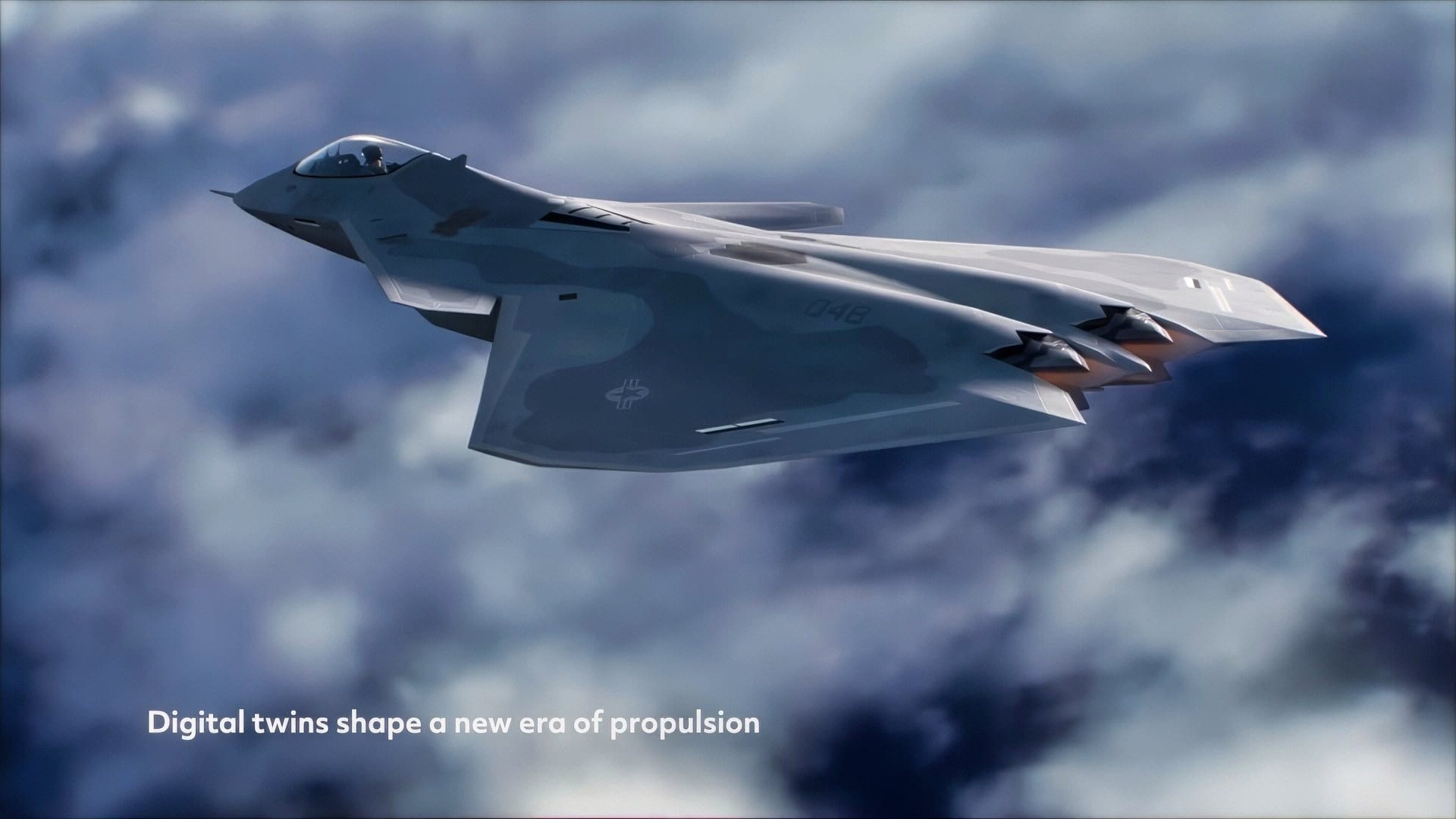
Summary and Key Points: On March 17, 2026, Rep. Rob Wittman, chair of the House Armed Services tactical air and land forces subcommittee, confirmed that the F-47 (NGAD) fighter will not achieve operational availability until the mid-2030s.
-This unavoidable “capability gap” necessitates an immediate strategic pivot to sustain the F-22 Raptor and F/A-18 Super Hornet fleets as essential bridges to the 6th-generation era.
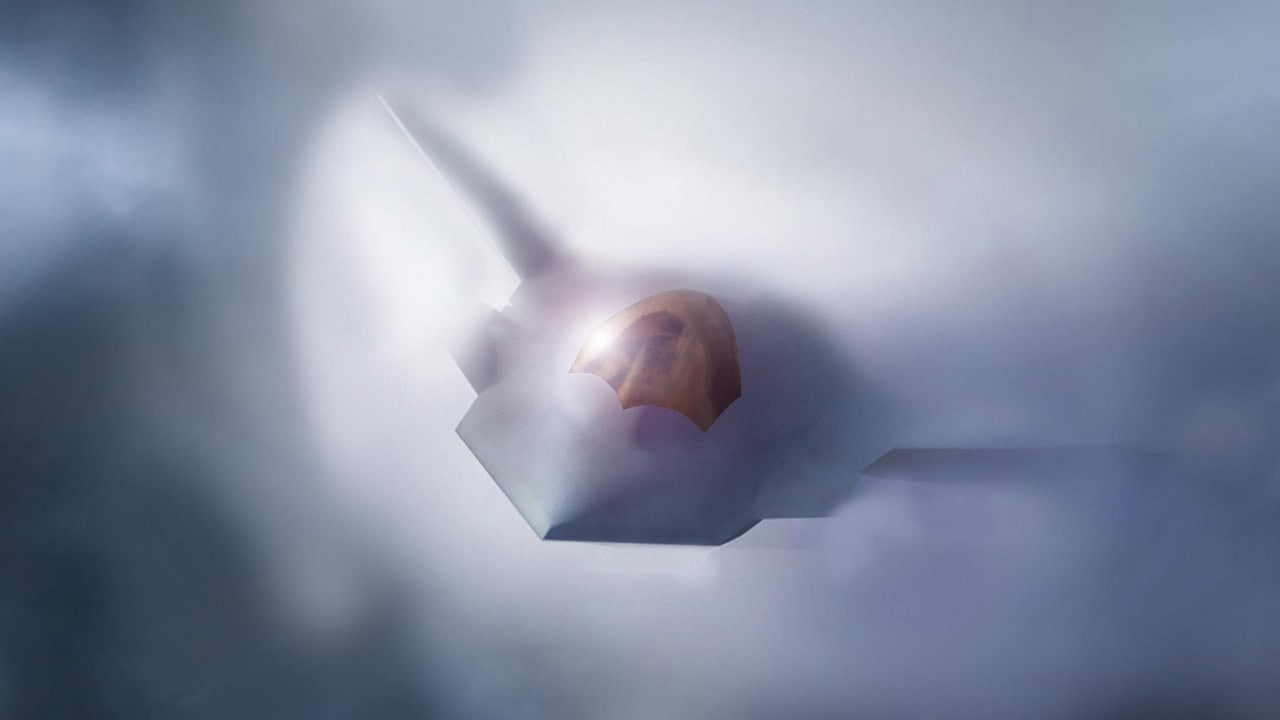
F-47 Fighter. Image Credit: U.S. Air Force.
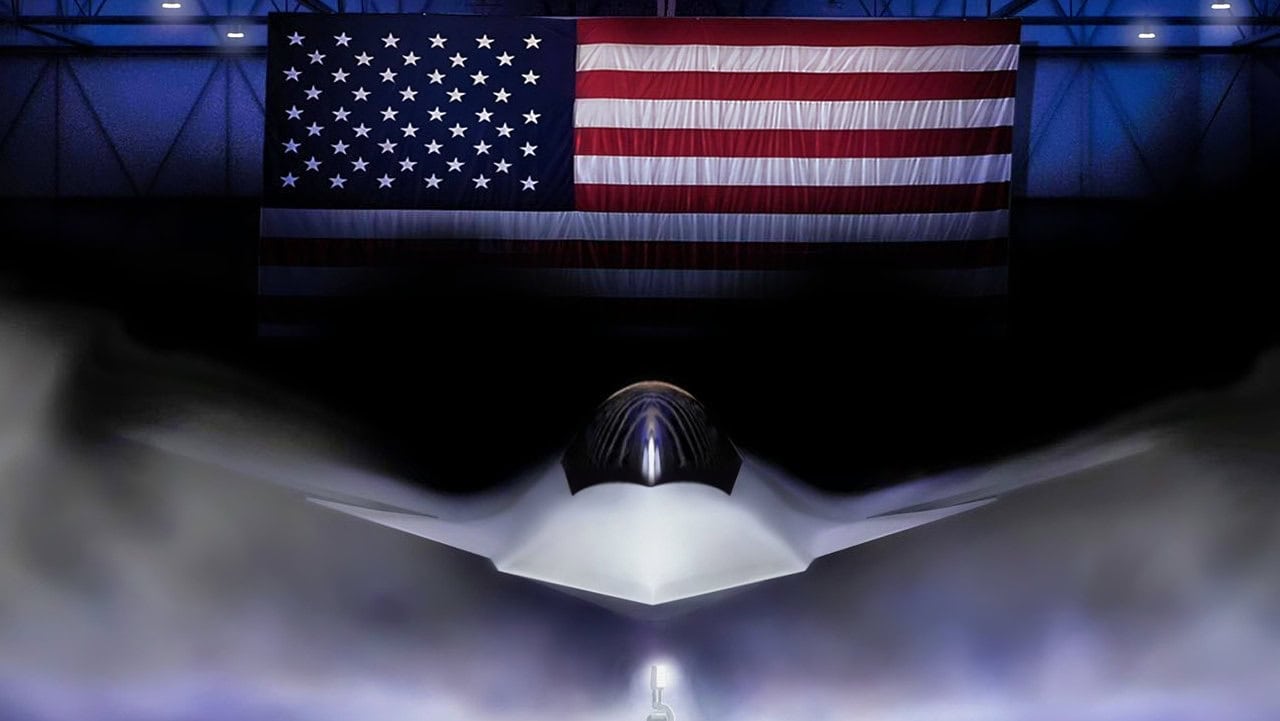
F-47 Fighter from U.S. Air Force.
-Unlike the F-35 program, the F-47 utilizes a government-owned Modular Open Systems Architecture (MOSA) to ensure faster upgrades and avoid contractor-locked intellectual property.
-However, with a 1,000-nautical-mile combat radius and Collaborative Combat Aircraft (CCA) integration still in testing, the U.S. must manage a high-stakes transition while facing advanced Chinese J-20 threats.
The Mid-2030s Reality: Rep. Rob Wittman Confirms the F-47 Capability Gap
A top U.S. lawmaker has confirmed that the U.S. Air Force’s next-generation fighter, known as the F-47 under the Next Generation Air Dominance (NGAD) program, is not expected to be operationally available until the mid 2030s.
At the McAleese Defense Programs Conference on March 17, Rep. Rob Wittman, who chairs the House Armed Services tactical air and land forces subcommittee, made clear that the gap is unavoidable and will require the U.S. forces to keep flying older jets in the meantime.
What Wittman Said
Speaking at the conference, Wittman stressed that the U.S. must now decide how to fill the gap in the meantime, noting, “The question then becomes, what do we do in the meantime?”
“We have to maintain a fleet of F-18s, and then we have to maintain the F-22…that’s the only way we create that bridge to the sixth-generation aircraft,” he said.

An F-22 Raptor performs an aerial demonstration at Naval Air Station Oceana, Virginia, Sept. 19, 2025. Rapid changes in angle of attack create visible vapor around the aircraft, providing a clear view of its aerodynamic performance. This demonstration highlights the F-22’s advanced maneuvering capabilities, showcasing its speed, agility, and thrust-vectoring performance. (U.S. Air Force photo by Staff Sgt. Lauren Cobin)

F-22 Raptor At National Museum of the Air Force. Photo Taken by Harry J. Kazianis for 19FortyFive Back in July 2025.

F-22 Raptor Exhibit Explainer 19FortyFive Photo. Taken By Harry J. Kazianis in July 2025 at the National Museum of the Air Force.

F-22 Raptor Model. Image Credit: 19FortyFive.com
The comments are not so much a revelation as they are a confirmation of existing timelines. Both the Air Force’s NGAD fighter (the F-47) and the Navy’s embattled but parallel F/A-XX program are both expected to reach operational availability sometime in the next decade. That is not unusual by historical standards, either.
The F-35 Lightning II, for example, first flew in 2006 but did not achieve full operational capability across its variants until well into the late 2010s and early 2020s. NGAD is expected to be an even more complex fighter, integrating modern sensor fusion and advanced engines, new stealth technologies, networking capabilities, and manned-unmanned teaming.
The F-47 itself is expected to replace the Air Force’s roughly 180-strong fleet of F-22 Raptor aircraft, which entered service in the mid-2000s.
Early details about the platform suggest that the new fighter will have a combat radius exceeding 1,000 nautical miles, that it will be able to reach speeds above Mach 2, and will operate alongside Collaborative Combat Aircraft (CCA) – semi-autonomous “wingman” drones designed to expand weapons capacity and reduce risk to the aircraft. But even with an ambitious target of a first flight around 2028, that milestone would only mark the beginning of a long development and testing period.
Bridging the Gap Until Then
The consequence of the current timeline for next-generation fighters is that existing aircraft will need to remain in service for longer. Wittman pointed to the need to sustain both Navy F/A-18 Super Hornet aircraft and Air Force F-22’s as a bridge to sixth-generation systems.
That comment is already reflected in Pentagon planning. The Air Force has invested heavily in extending the F-22’s service life, including structural upgrades, avionics improvements, and the integration of new sensor technologies. At the same time, the service continues to procure additional F-35s, despite the well-documented delays in its Technology Refresh-3 (TR-3) upgrade package that’s required for Block 4 versions.
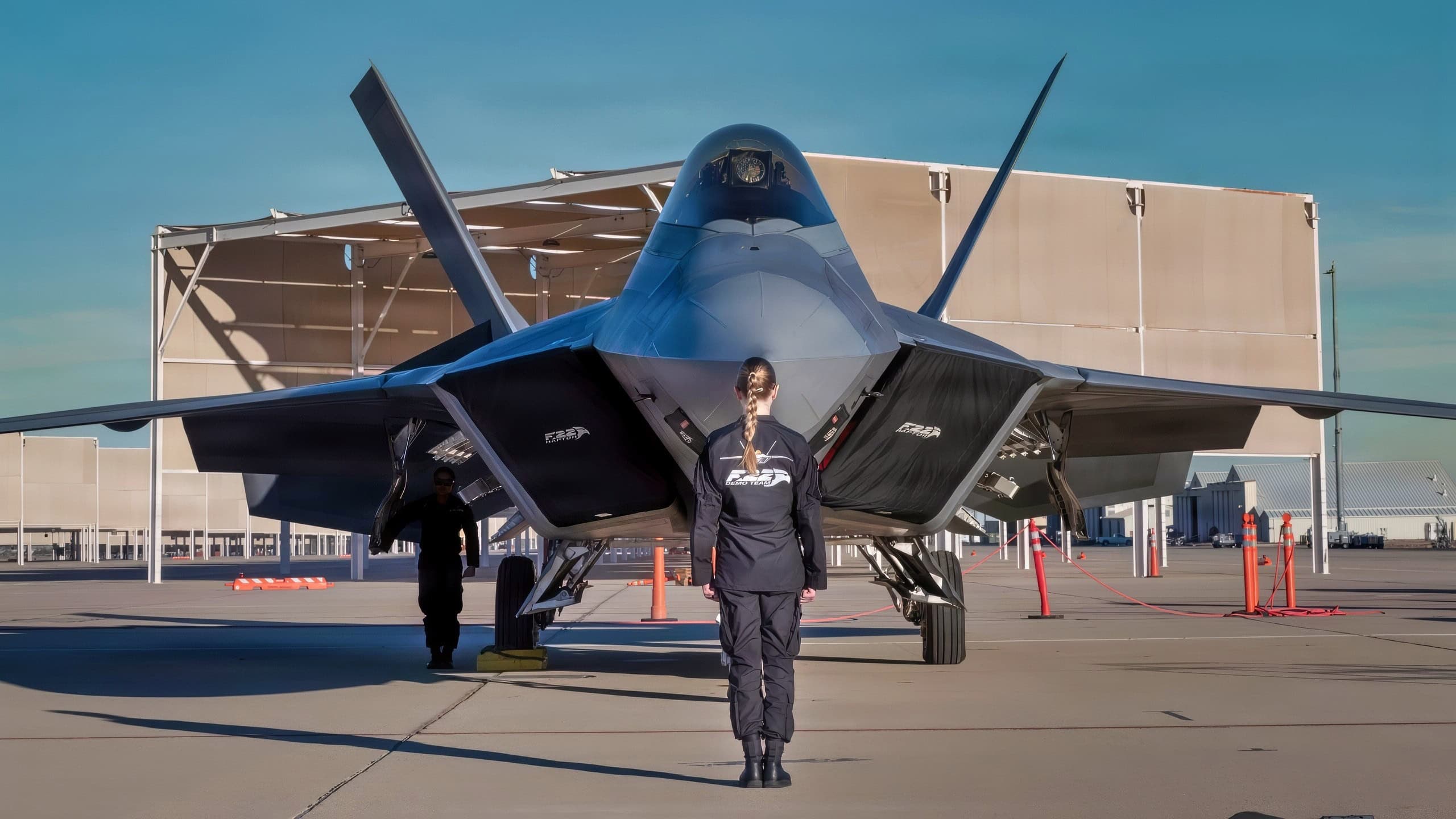
Maintainers assigned to the U.S. Air Force F-22 Raptor Demonstration Team perform preflight inspections on an F-22 during the Heritage Flight Training Course at Davis-Monthan Air Force Base, Arizona, Feb. 26, 2026. The team consists of 14 specialized Airmen who maintain and support the Raptor’s mission of providing undisputed air superiority. (U.S. Air Force Photo by Senior Airman Jhade Herrera)
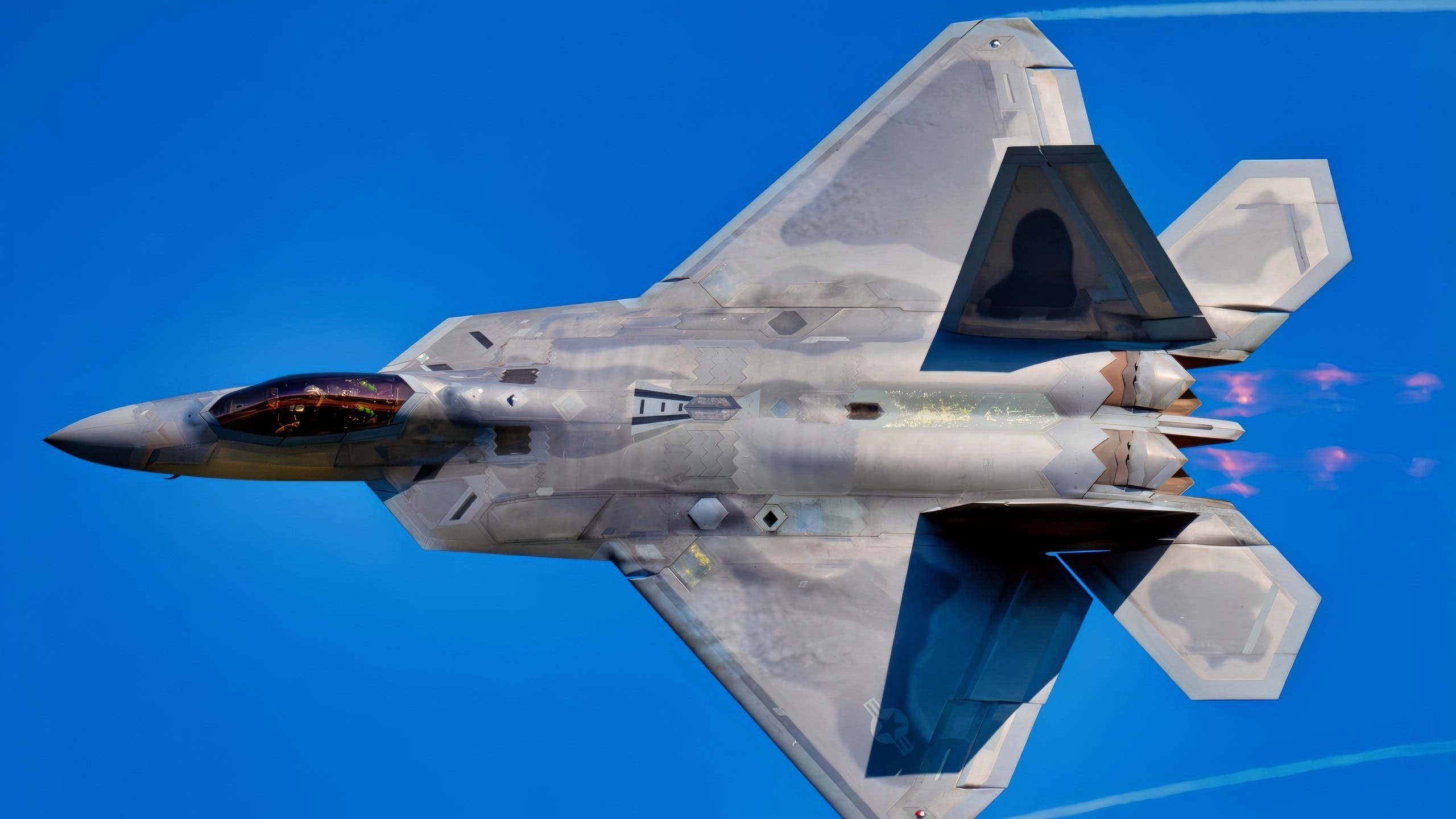
USAF Capt. Nick “Laz” Le Tourneau, F-22 Raptor Aerial Demonstration Team pilot and commander, performs a practice demonstration at Joint-Base Langley-Eustis, 17 March, 2025. Laz is the only F-22 Raptor pilot in the world certified to fly the demonstration. (U.S. Air Force photo by Staff Sgt. Michael Bowman)
The Navy faces similar challenges. Its Super Hornet fleet is undergoing service life modifications to extend operational availability into the 2030s, even as F/A-XX development continues in parallel.
Without these bridges, the U.S. risks a capability gap in air superiority at a time when both China and Russia are beginning to field advanced fighters of their own while improving their air defense systems.
A Different NGAD Acquisition Model
NGAD is different not just in terms of its capabilities, but also in how it is being developed. The aircraft comes amid a move toward a government-owned “reference architecture,” a framework that defines the way systems are designed and integrated, and later upgraded. The new method is designed to avoid some of the constraints experienced in the F-35 program, where the prime contractor retained control over key intellectual property and software systems.
What that means is that the Air Force is now effectively defining the digital backbone of the aircraft itself – particularly the mission systems and software interfaces – rather than leaving those things to a single contractor.
In NGAD, this is expected to take the form of a modular open systems architecture (MOSA), where components such as sensors and software applications can be developed and completed separately and then integrated through standardized interfaces.
That allows the service to upgrade individual subsystems on shorter timelines without redesigning the entire aircraft, and to bring in multiple vendors over the life of the platform.
Is the U.S. At Risk?
The fact that the F-47 is years away isn’t so much the problem as what happens in the meantime.
The United States is entering a period in which demand for airpower is only increasing, amid ongoing operations in the Middle East and long-term competition in the Indo-Pacific.
At the same time, adversaries are fielding systems specifically designed to challenge U.S. air superiority, including China’s J-20 stealth fighter and advanced integrated air defense networks.
That creates a problem because the U.S. must invest heavily in future capabilities like NGAD while sustaining and even expanding its current fleet to meet near-term operational demands.
So, is the U.S. at risk? Unless NGAD is delayed further or budgetary and industrial constraints prevent current plans for fifth-generation expansion, it may not happen for now.
About the Author: Jack Buckby
Jack Buckby is a British researcher and analyst specialising in defence and national security, based in New York. His work focuses on military capability, procurement, and strategic competition, producing and editing analysis for policy and defence audiences. He brings extensive editorial experience, with a career output spanning over 1,000 articles at 19FortyFive and National Security Journal, and has previously authored books and papers on extremism and deradicalisation.