
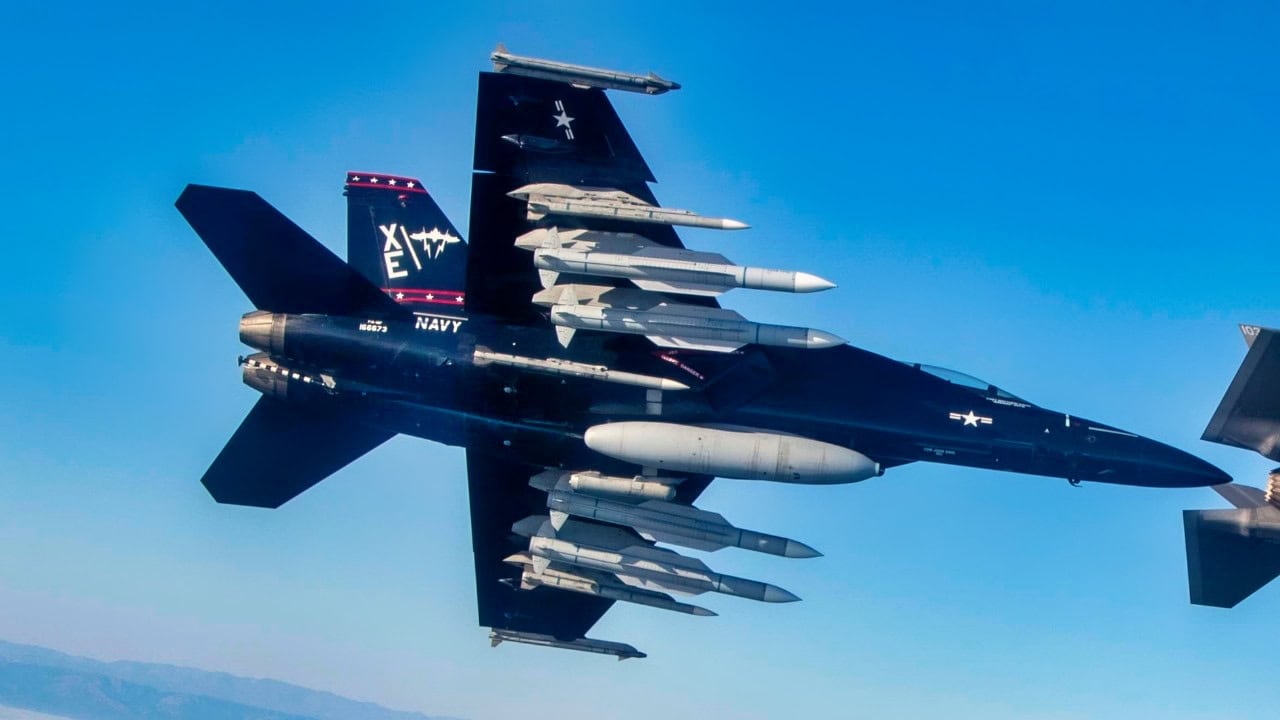
Summary and Key Points – The U.S. Navy faces a critical capability gap as its sixth-generation F/A-XX fighter program remains on indefinite pause due to funding competition with the Air Force’s Boeing F-47 NGAD.
-With F/A-18 E/F Super Hornet production set to end in 2027 and only 17 new jets recently ordered, the Navy risks falling behind China’s emerging J-35 stealth fighter capabilities.
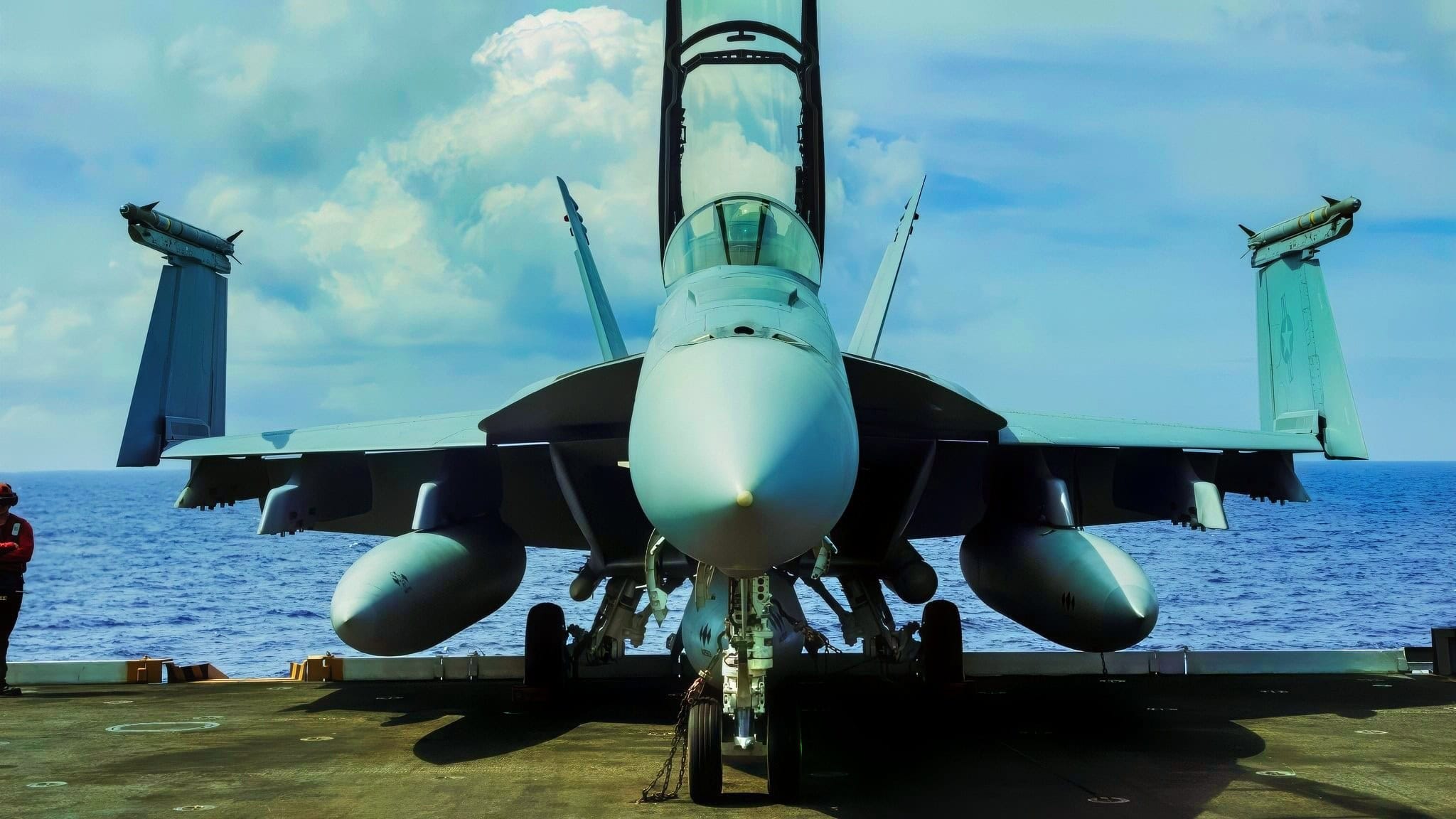
Capt. Tim Waits, commanding officer of Nimitz-class aircraft carrier USS George Washington (CVN 73), climbs into an F/A-18F Super Hornet, attached to Strike Fighter Squadron (VFA) 102, while underway in the South China Sea, Nov. 24, 2025. George Washington is the U.S. Navy’s premier forward-deployed aircraft carrier, a long-standing symbol of the United States’ commitment to maintaining a free and open Indo-Pacific region, while operating alongside allies and partners across the U.S. Navy’s largest numbered fleet. (U.S. Navy photo by Mass Communication Specialist 2nd Class Geoffrey L. Ottinger)
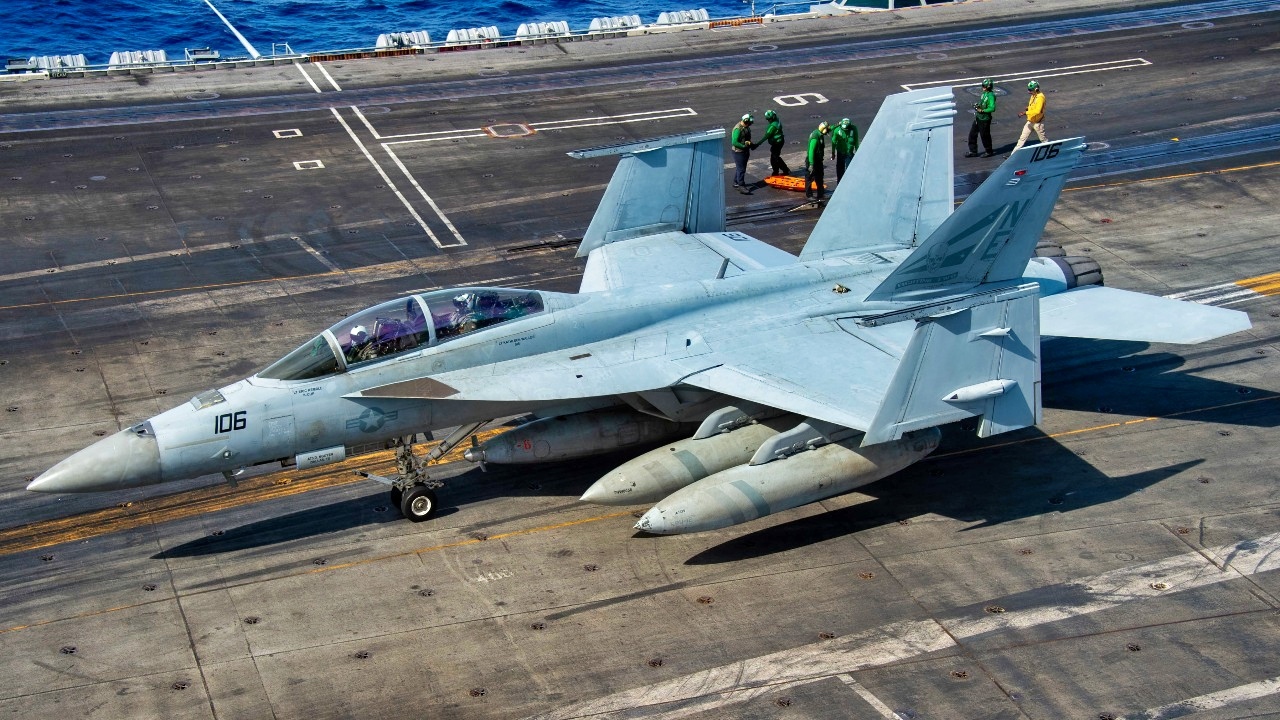
(Dec. 30, 2021) An F/A-18F Super Hornet, assigned to the “Bounty Hunters” of Strike Fighter Squadron (VFA) 2, taxis on the flight deck of Nimitz-class aircraft carrier USS Carl Vinson (CVN 70), Dec. 30, 2021. Carl Vinson Carrier Strike Group is on a scheduled deployment in the U.S. 7th Fleet area of operations to enhance interoperability through alliances and partnerships while serving as a ready-response force in support of a free and open Indo-Pacific region. (U.S. Navy photo by Mass Communication Specialist 3rd Class Jeff D. Kempton)
-Service leaders are now grappling with the “conundrum” of relying on the aging, non-stealthy Super Hornet fleet into the 2030s unless the Trump administration shifts focus to fund a second carrier-based stealth fighter.
U.S. Navy Is In a Conundrum About the Future of F/A-18 E/F Super Hornet Program
Has the U.S. Navy’s F/A-18 E/F Super Hornet lost its sting?
With the high-end next-generation F/A-XX fighter on indefinite pause, the Super Hornet may have to serve into the 2030s despite growing long in the tooth. The Navy desperately wants two stealth fighters to fly off aircraft carriers, but the Air Force’s F-47 NGAD program is sucking up all the oxygen.
President Donald Trump is fully behind the F-47, and Secretary of Defense Pete Hegseth does not believe there is enough time, money, or bandwidth to produce both the F-47 and F/A-XX.
Why the Super Hornet Is Great
That leaves the Super Hornet in the lurch. The Navy may have to make do with the trusty aircraft that is fast, capable, and combat-proven, but does not have ample stealth attributes.
One has to give the Boeing F/A-18 program a lot of credit for creating such an updatable carrier-borne warbird. The various upgrades over the years have been marvelous. This is a pilot-friendly jet. Just ask a Blue Angel aviator how they like flying the Super Hornet, and you will get a positive and enthusiastic answer.
However, clouds are on the horizon. Boeing has admitted that the F/18-E/F may end its production run with the last order taking place in 2027.
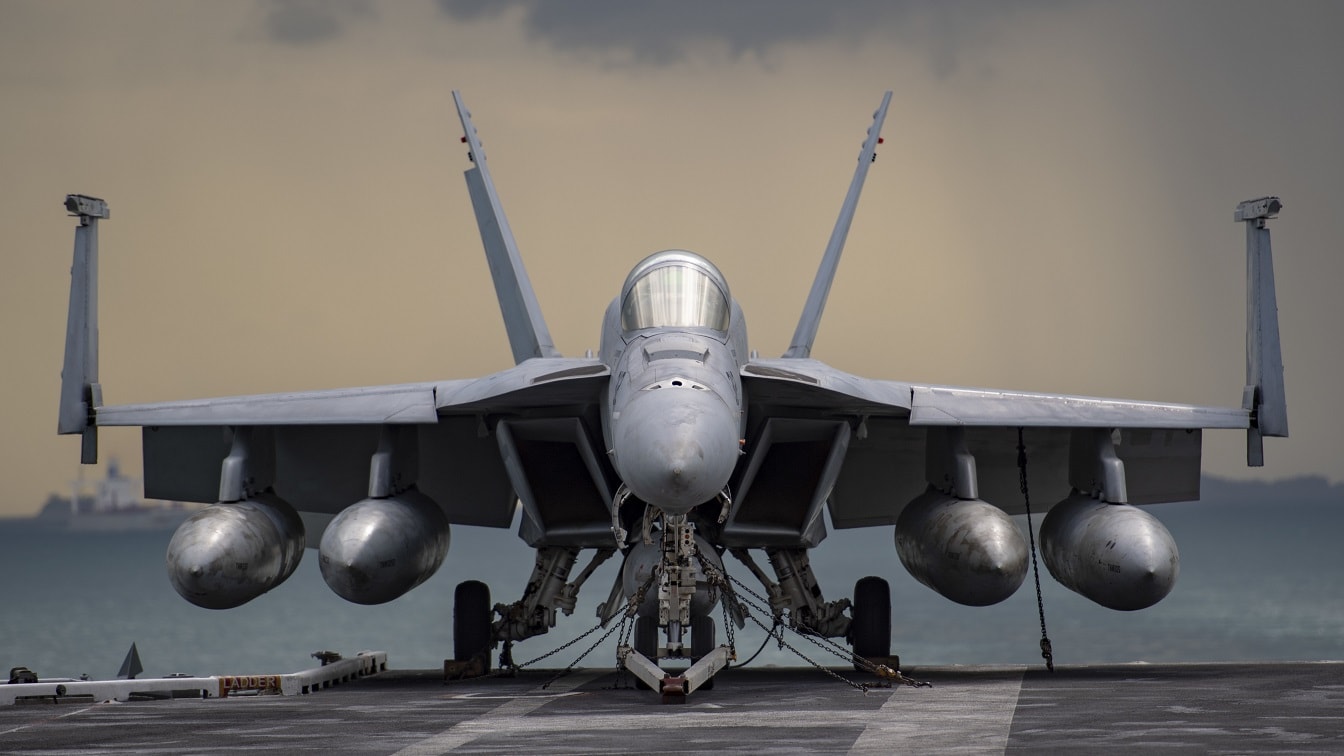
A (Feb. 5, 2021) An F/A-18E Super Hornet, from the “Kestrels” of Strike Fighter Squadron (VFA) 137, rests on the flight deck of the aircraft carrier USS Nimitz (CVN 68) during a strait transit. Nimitz is part of the Nimitz Carrier Strike Group and is deployed conducting maritime security operations and theater security cooperation efforts. (U.S. Navy photo by Mass Communication Specialist 3rd Class Elliot Schaudt/Released)
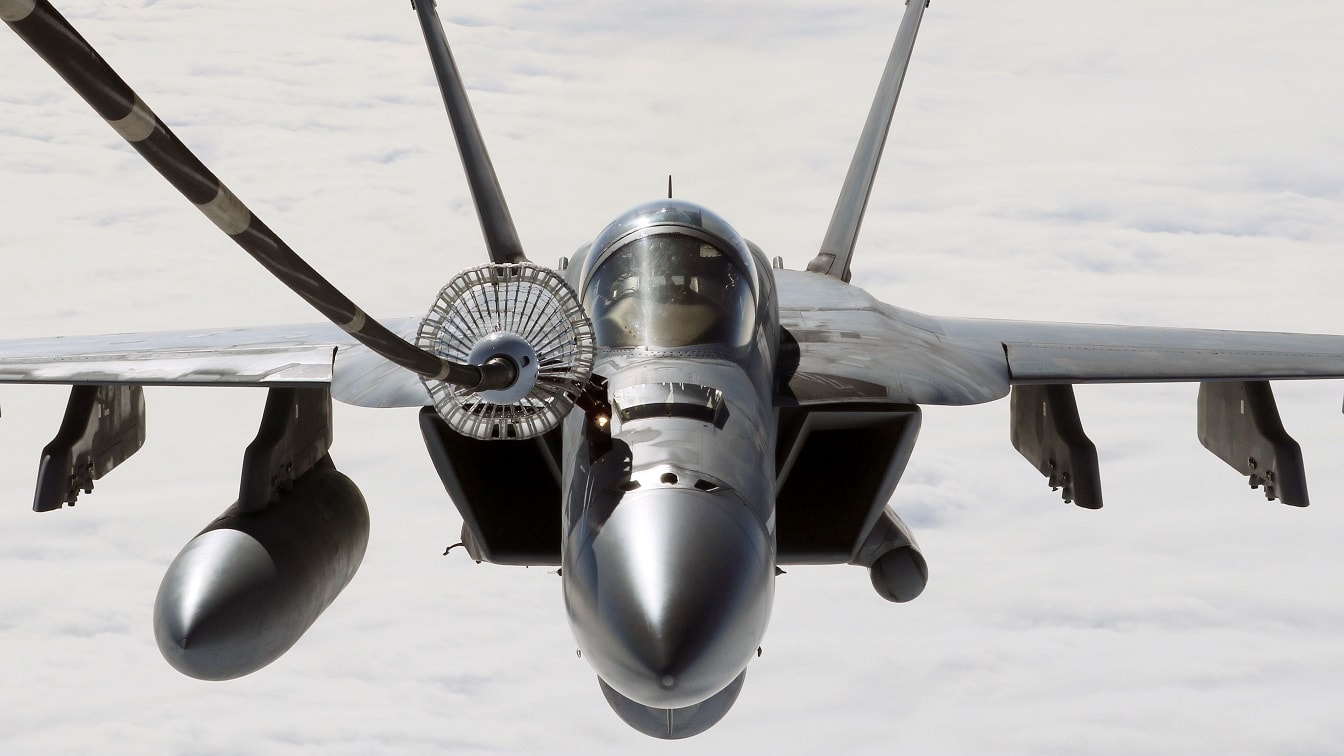
PACIFIC OCEAN (Feb. 26, 2017) An F/A-18E Super Hornet assigned to the “Eagles” of Strike Fighter Squadron (VFA) 115 conducts aerial refueling operations with a U.S. Air Force KC-10A Extender. VFA-115 is traveling from Naval Air Facility Atsugi, Japan, to Naval Air Station Fallon, Nevada, to complete the strike fighter advanced readiness program. (U.S. Navy photo by Lt. Chris Pagenkopf/Released)170226-N-CF980-006
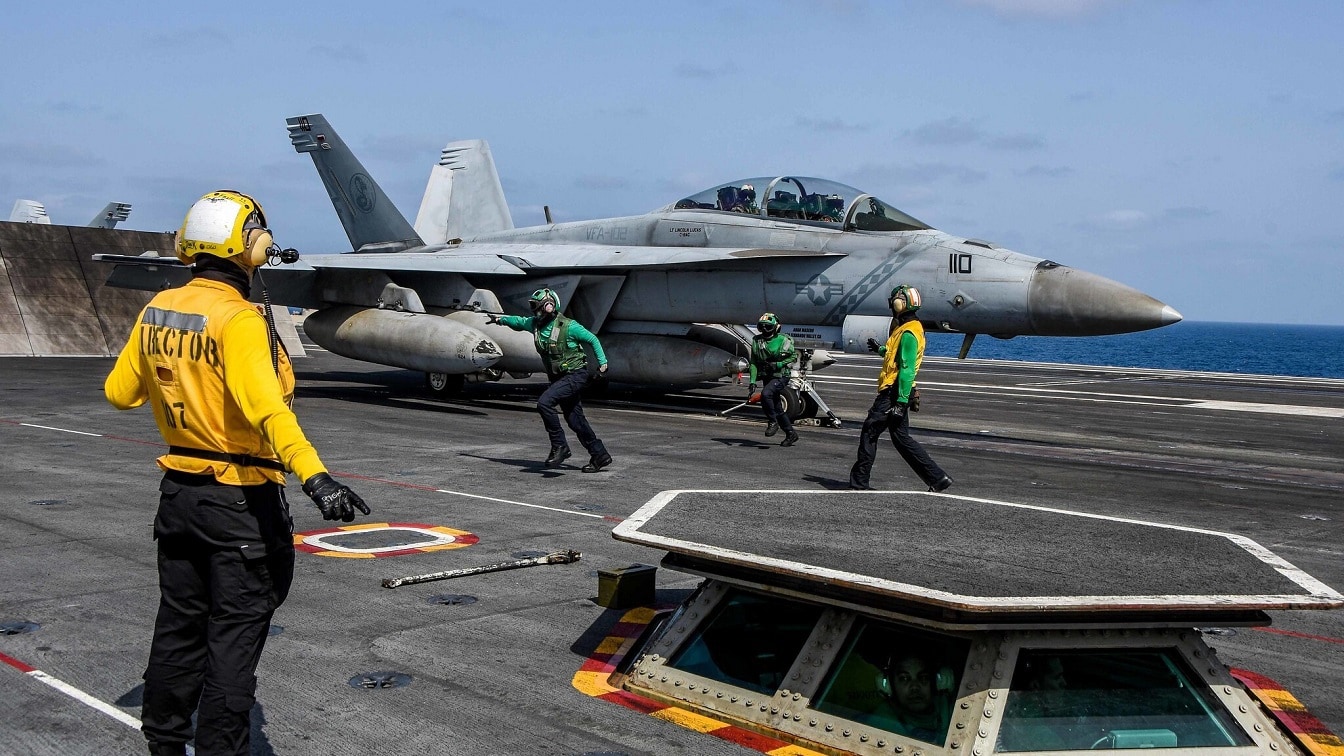
ARABIAN SEA (June 28, 2021) Sailors prepare an F/A-18F Super Hornet attached to the “Diamondbacks” of Strike Fighter Squadron (VFA) 102 for launch on the flight deck of the aircraft carrier USS Ronald Reagan (CVN 76) during flight operations in the Arabian Sea, June 28, 2021. Ronald Reagan is deployed to the U.S. 5th Fleet area of operations in support of naval operations to ensure maritime stability and security in the Central Region, connecting the Mediterranean and Pacific through the western Indian Ocean and three strategic choke points. (U.S. Navy photo by Mass Communication Specialist Seaman Oswald Felix Jr.) 210628-N-BR419-1062
“We ran a number of international campaigns or competitions that we were unsuccessful in previous years,” Mark Sears, Boeing vice president for warplanes, said in an interview with Breaking Defense. “Those kind of played out and there are no active discussions with the Navy about additional F-18s beyond these.”
Can the F/A-18 E/F Keep Up With the Times?
The Super Hornet entered active duty with the Navy in 1999 and propped up the F-14 Tomcat program, which was retired in 2006.
That’s 25 years of flying. Could the Super Hornet last another ten years if the F/A-XX does not come to fruition?
That’s a difficult question for the Navy, as China has a fifth-generation carrier-borne aircraft, the J-35, coming online in full by the end of the year.
Boeing Has Its Hands Full
Boeing is busy with the F-47, the F-15EX, and the MQ-25 tanker drone. It may not have the production capabilities to produce another Super Hornet batch past 2027.
However, more funding may be pumped into the program to extend its life, especially if Trump is able to substantially increase the defense budget to $1.5 trillion a year.
What About the F/A-XX
This would provide the Navy with funding for the F/A-XX and extend the Super Hornet’s life beyond 2027 until the F/A-XX is ready. In 2024, the Navy announced a service life extension plan for the Super Hornet. This would add additional F/A-18E/F aircraft to the fleet in future years.
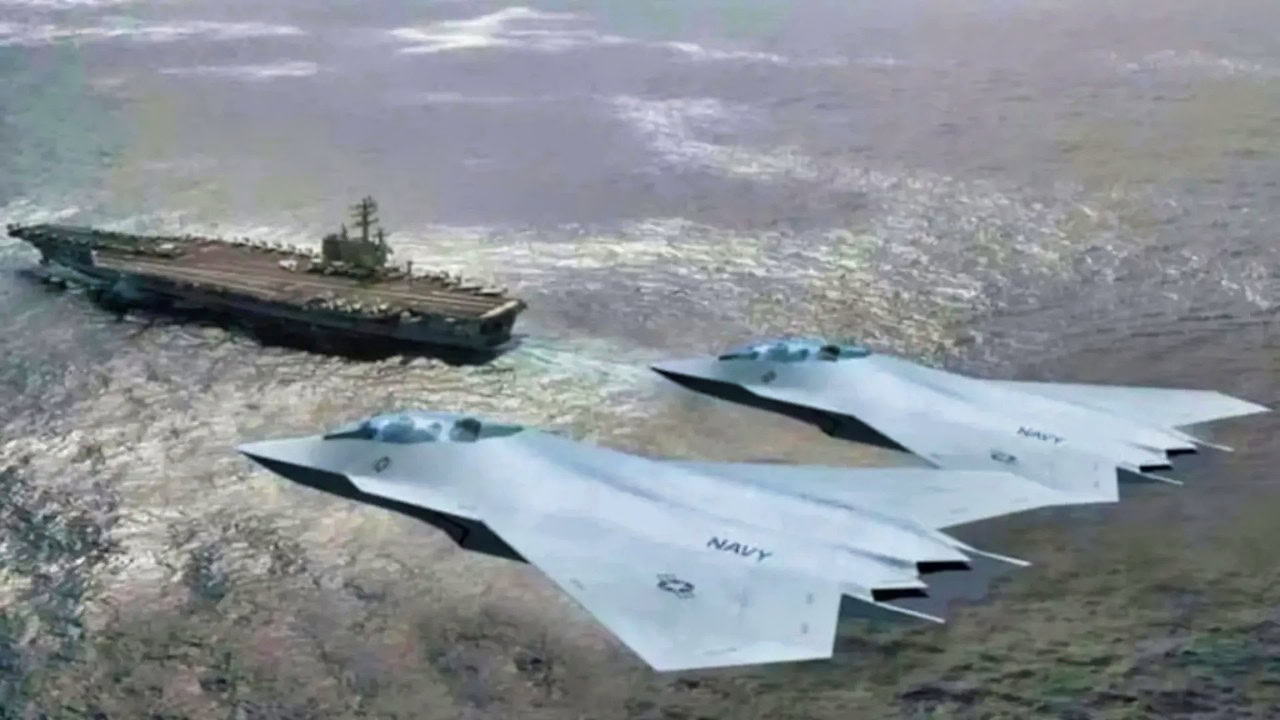
F/A-XX Fighter for US Navy. Navy graphic mockup.
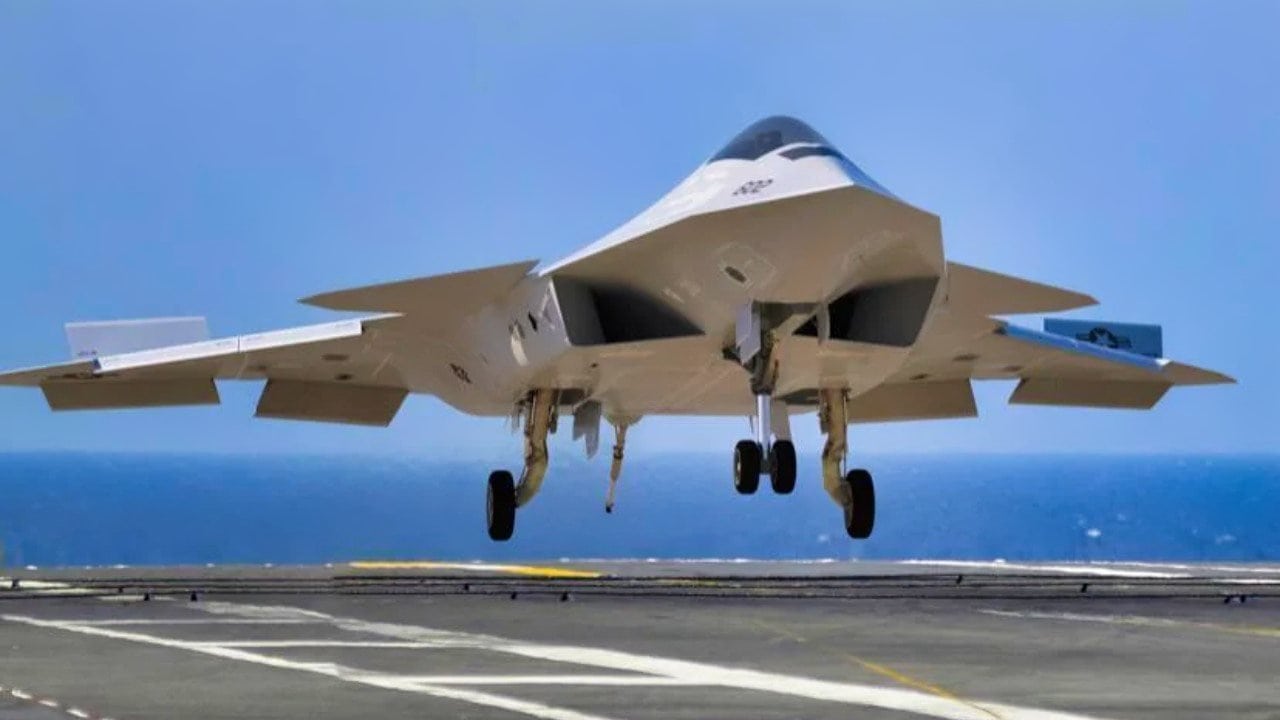
F/A-XX. Image Credit: Creative Commons.
Two Stealth Fighters Are Better Than One
I love the Super Hornet, but it needs to be replaced.
The Navy has flown the fifth-generation F-35C off carriers effectively. Having two stealth fighters on board is better than just deploying one. That’s why Hegseth may give the green light to the F/A-XX and retire the Super Hornet by 2035.
Could the F/A-18 program live for another 10 years?
Just 17 New Super Hornets?
The Block III upgrades will grant the Super Hornet an additional 4,000 flight hours. In 2024, the DOD awarded Boeing a $1.3 billion contract for 17 additional F/A-18 Super Hornets.
That is not many new jets. In fact, it averages about one or two new Super Hornets for each carrier. That hardly makes a difference.
Therefore, the Navy has to make a difficult decision. Go with the existing number of Super Hornets, continue upgrades and orders past 2027, or build the F/A-XX.
Frustration Is Mounting
The hold on the sixth-generation fighter is frustrating for the Navy. So now what?
The Super Hornet could use some international orders to increase funding for the program and keep production lines open, but the export market has been difficult. Eight countries fly the Hornet or Super Hornet. What if Boeing throws up the white flag and deems it not possible to run more orders on an aging production line?
The Navy is in a tough situation. It is gambling that the DOD will give the green light to the F/A-XX. There are no orders for the Super Hornet beyond 2027. New international deals are not forthcoming. Not enough Super Hornets are being built to satisfy the needs of the maritime branch.
Who Can Save the Day?
There must be a solution in here somewhere. A champion in Congress must emerge to ensure the Navy has the aircraft it needs to dominate. Boeing is too busy. The fate of the F/A-XX is unknown, and the current lot of Super Hornets will not really help the Navy. Seventeen is not enough.
The Trump national security team must listen to the Navy and develop a solution. Producing the F/A-XX makes the most sense. If not, the DOD should order more Super Hornets and make plans to keep the old ones flying. China is forging ahead with carrier aviation programs that could challenge the Americans, and time is wasting on the F/A-XX program.
The F/A-18 E/F must live to fight another ten years, and this will keep admirals up at night wondering what the future holds for carrier flight operations.
The Navy needs two stealth fighters, and it doesn’t look like this will happen anytime soon.
About the Author: Brent M. Eastwood
Author of now over 3,000 articles on defense issues, Brent M. Eastwood, PhD is the author of Don’t Turn Your Back On the World: a Conservative Foreign Policy and Humans, Machines, and Data: Future Trends in Warfare plus two other books. Brent was the founder and CEO of a tech firm that predicted world events using artificial intelligence. He served as a legislative fellow for US Senator Tim Scott and advised the senator on defense and foreign policy issues. He has taught at American University, George Washington University, and George Mason University. Brent is a former US Army Infantry officer. He can be followed on X @BMEastwood.