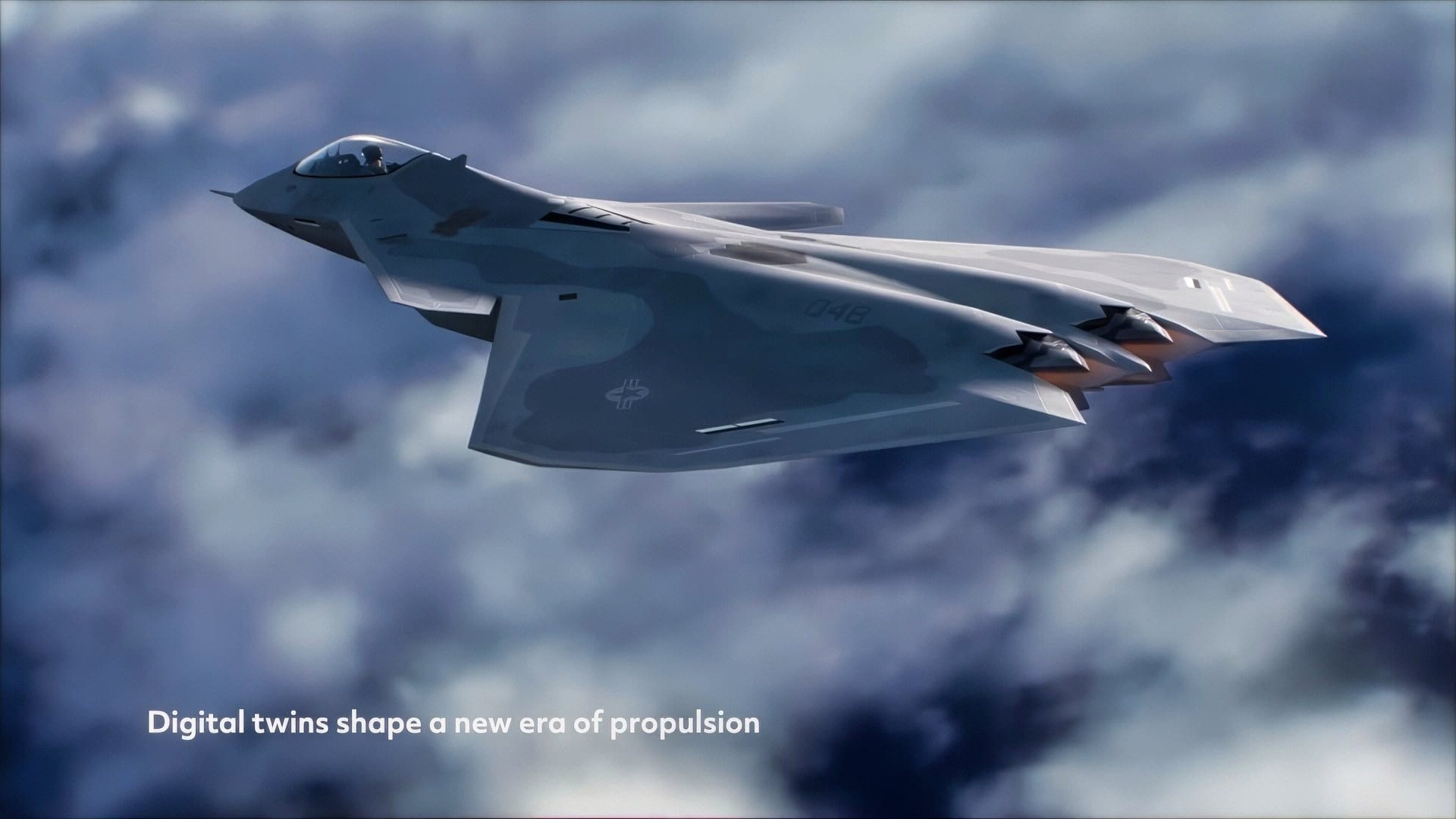
Summary and Key Points: Reuben F. Johnson, a veteran defense technology analyst and Casimir Pulaski Foundation director, scrutinizes the Pratt & Whitney XA103 adaptive cycle engine reveal.
-As the U.S. Air Force prepares for the Boeing F-47 (NGAD) maiden flight in 2028, this propulsion technology represents a generational leap over the F135 and F119.
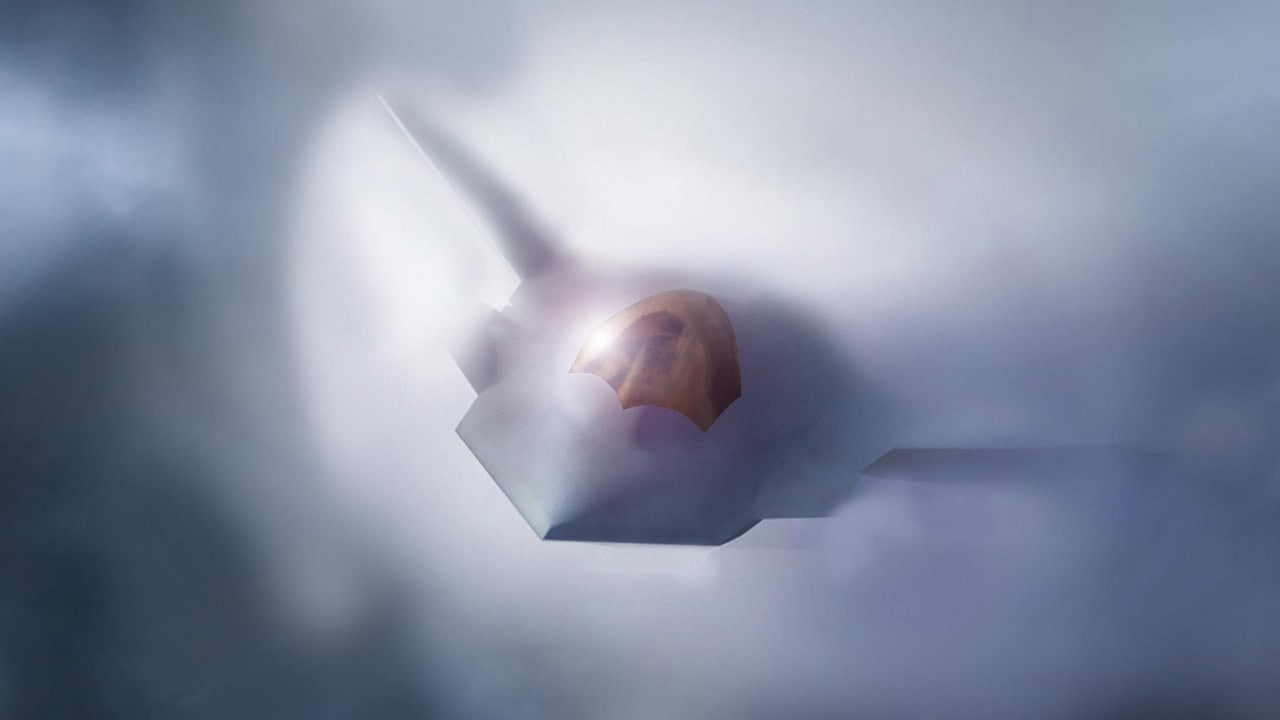
F-47 Fighter. Image Credit: U.S. Air Force.
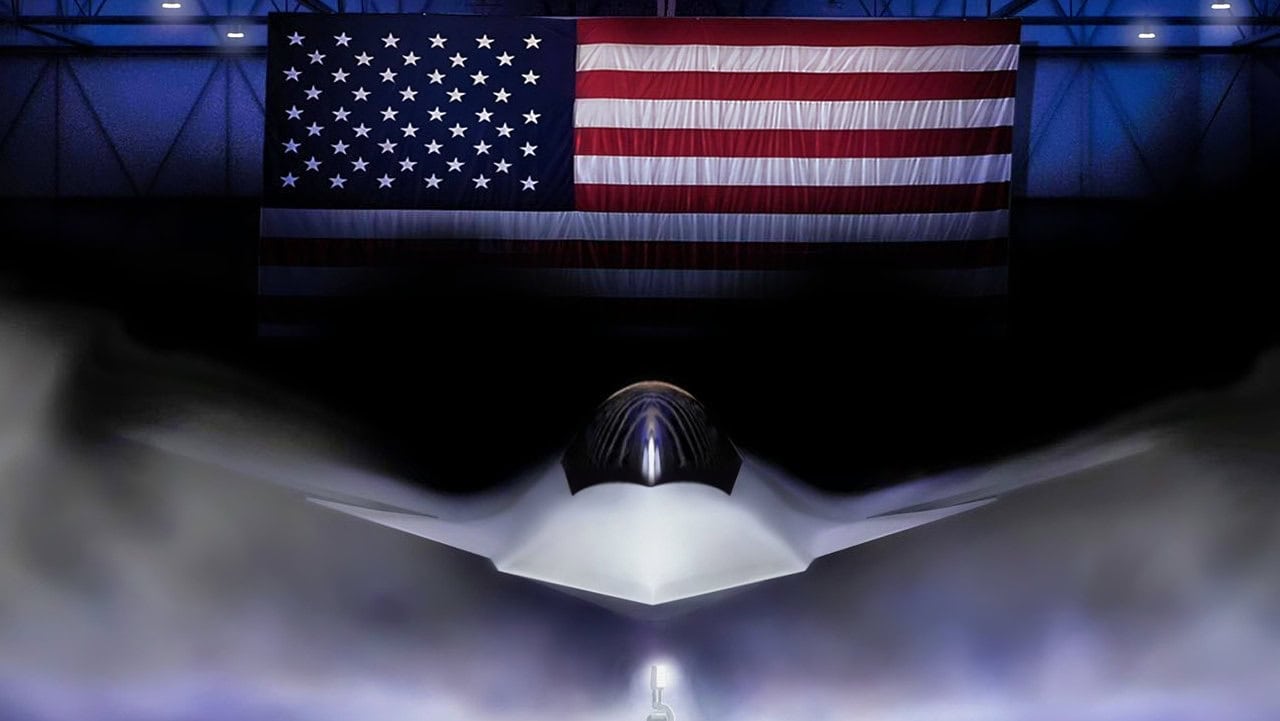
F-47 Fighter from U.S. Air Force.
-This 19FortyFive report evaluates whether the video’s conceptual rendering—a tailless, twin-engine aircraft with trapezoidal wings—reveals classified stealth signatures, while analyzing the “variable stream” architecture that allows the engine to switch between high-thrust combat modes and high-efficiency loitering.
The F-47’s “Flat” Nozzle Secret: What the NGAP Propulsion Video Actually Disclosed
The combat-aircraft world is buzzing over a Pratt & Whitney video about the development of its XA103 adaptive cycle engine. The engine is one of the two competing designs—the other being General Electric’s X102—competing under the U.S. Air Force’s Next-Generation Adaptive Propulsion (NGAP) program.
But did this computer-generated footage reveal anything meaningful—something an adversary might be keen to see?
The video was created to showcase the technology and the generic advantages offered by an adaptive-cycle engine design—the F-47 itself was not the focus.
The adaptive cycle concept has also been widely discussed for more than three years now, as an earlier proposal was eventually dropped for an adaptive-cycle engine to replace the F135 installed in the F-35 stealth fighter. Very little of the overall concept of this new-generation engine remains unknown in the open-source sphere.
The future engine will be a generational leap beyond the power plants flown in fifth-generation fighter aircraft. Whichever contractor’s engine is selected will be the powerplant for the Next-Generation Air Dominance (NGAD) initiative – the Boeing sixth-generation F-47 fighter that was selected last year as the successor to the F-22 Raptor.
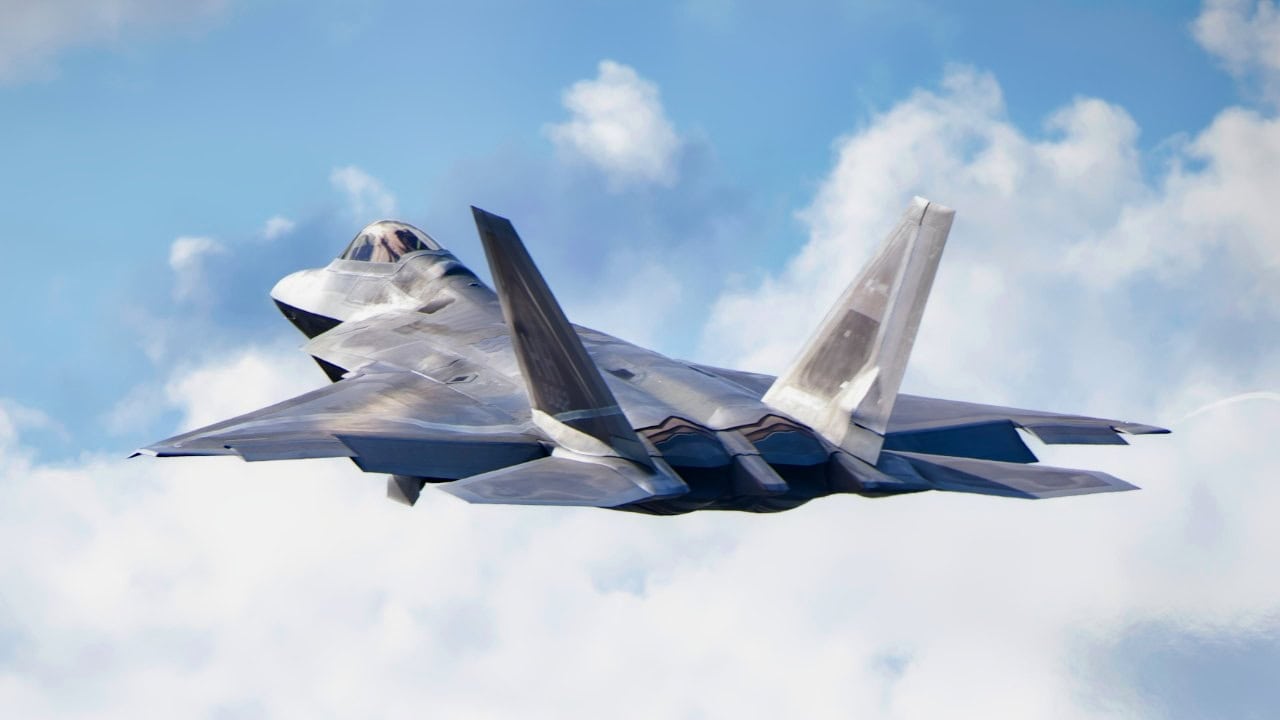
An F-22 Raptor aircraft takes off from Joint Base Pearl Harbor-Hickam, Hawaii, Aug. 8, 2024. The F-22 Raptor is a fifth-generation stealth fighter designed for air dominance, with capabilities in precision attack, advanced avionics, and unparalleled maneuverability. (U.S. Air National Guard photo by Tech. Sgt. Joseph Pagan)
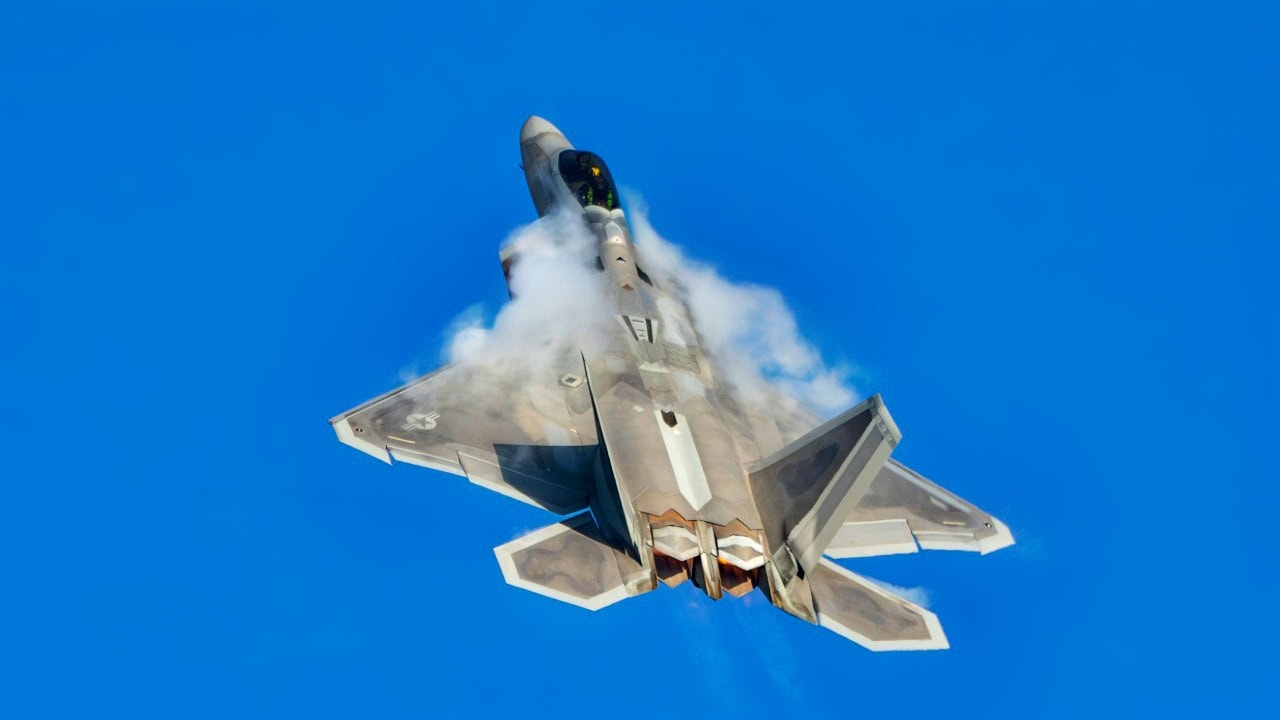
A U.S. Air Force F-22 Raptor, assigned to the F-22 Demonstration Team, executes precision aerial maneuvers during a practice airshow at Hill Air Force Base, Utah, Dec. 5, 2024. The practice session helps ensure the team maintains peak performance and readiness during the off-season. (U.S. Air Force photo by Senior Airman Nicholas Rupiper)
Industry materials state that the engines “reconfigure themselves in flight depending on the needs of the moment – switching, for example, from high thrust to high efficiency.”
This next generation of engine technology finally frees the propulsion design team from having to choose between an engine that delivers the efficiency required to produce extended operational range and remain stealthy, or a powerful propulsion system that delivers dramatic and rapid increases in thrust.
6th-Generation Fighter Aircraft
So, does the Pratt & Whitney video show anything integral and previously unknown about the F-47’s design? The basic requirements of a sixth-generation fighter, after all, are already out there for anyone to read.
In their external appearance, there are no vertical tails or other vertical control surfaces. Major improvements will have been made in stealth-enhancing external materials and coatings or treatments of the air frame. There should be no direct line-of-sight from the air intake inlets to the front fan frame of the engine, and the aircraft should have a properly aligned overall shape that eliminates almost any chance of radar-reflective surfaces.
Moreover, the sixth-generation fighter programs being designed by European-led consortiums—the Future Combat Air System and the Global Combat Air Program—have displayed full-scale mock-ups of their current design concepts.
Almost nothing about what makes a fighter sixth-generation that can be discerned from external appearance or a computer-generated image remains unknown. Additionally, there is little chance that the aircraft seen in this video is anything more than a notional or conceptual rendering. What the video shows is a fairly generic twin-engine, single-seat, tailless aircraft with a trapezoidal wing and forward-positioned canard foreplanes.
What We Are Likely to See in the Future
The generic aspects of this rendering that are likely also to be seen in the eventual F-47 are limited to a similar air intake placement and configuration. Also, the engine’s exhaust nozzles may also be of the same “flat” design as the F-22.
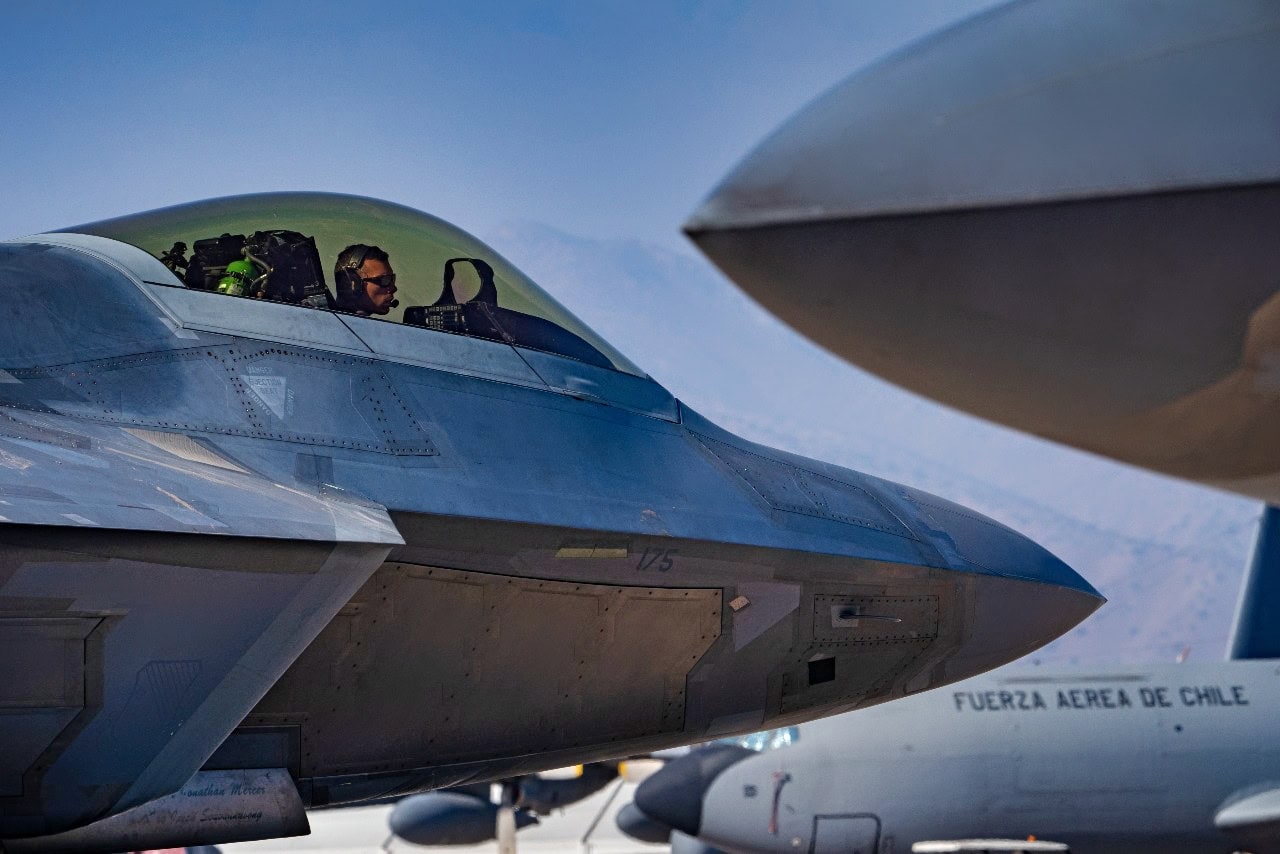
U.S. Air Force Technical Sgt. Fernando Llama, F-22 Demo Team avionics specialist, preforms an engine run to check all aircraft systems are good-to-go for the 2022 FIDAE Air & Trade Show, April 3, 2022 in Santiago, Chile. Avionics specialists like Llama are responsible for the maintenance of the onboard flight computers, integrated avionics, and many electrical systems and components. (U.S. Air Force photo by Staff Sgt. Don Hudson)
One question is whether the image is accurate about the placement, or even existence of, canards in the future F-47. Informed speculation about Lockheed Martin’s proposed aircraft, which was not selected, suggests their solution would have been a fighter with no canards at all. The design team’s overall position, said one retired Pentagon official, is that “aircraft with canards are never going to be stealthy no matter what stealthy materials they are covered with.”
The next phase of the program will be the adaptive cycle engine’s Assembly Readiness Review, followed by prototype assembly and testing. According to the program plan, the first F-47 is scheduled to make its maiden flight in 2028. But there is the distinct possibility that any early-production aircraft would be powered with a “temporary” engine until final designs of both the Pratt & Whitney and General Electric adaptive-cycle engines are available for flight test.
What History Says
The temporary engine could be either a modified F119 engine (the F119 is used in the F-22), or a pre-production prototype of an adaptive-cycle design. There is a precedent for this. The YF-22 and YF-23 prototypes flew with only partially complete designs of the PW F119 and GE F120. What became the F-22’s F119 engine only flew years later.
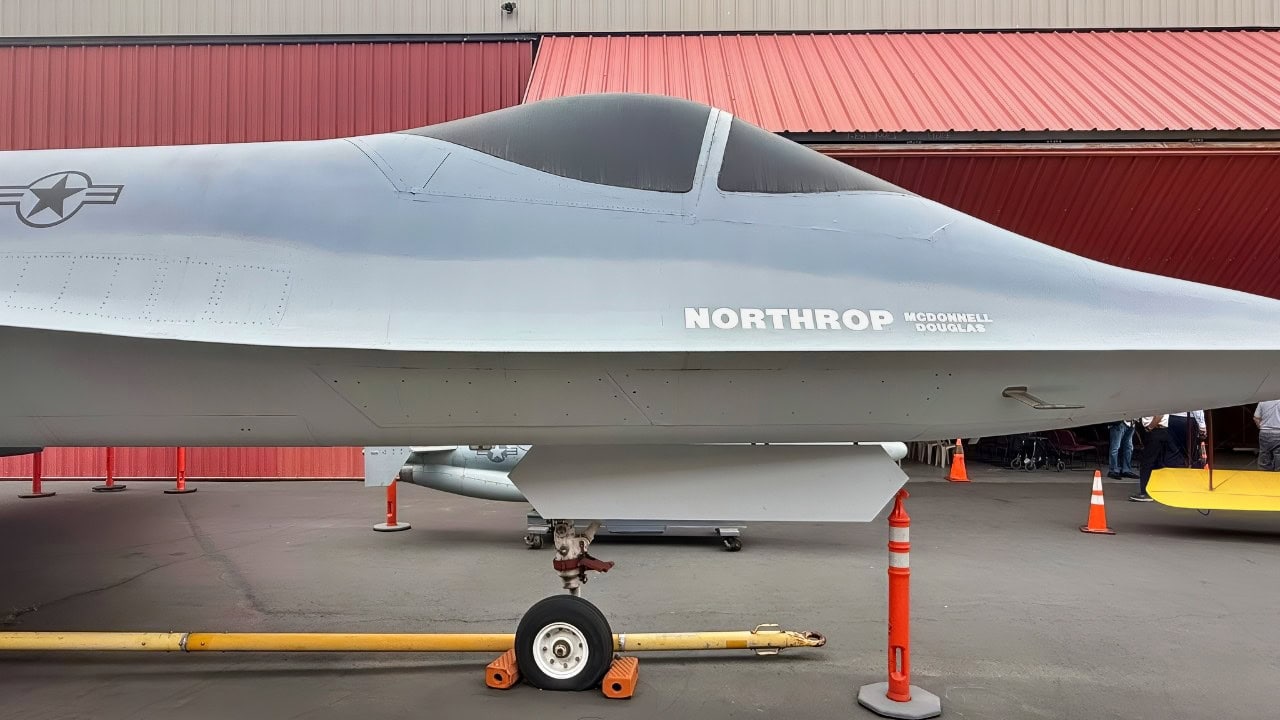
YF-23A Black Widow II 19FortyFive Image Taken by Harry J. Kazianis.
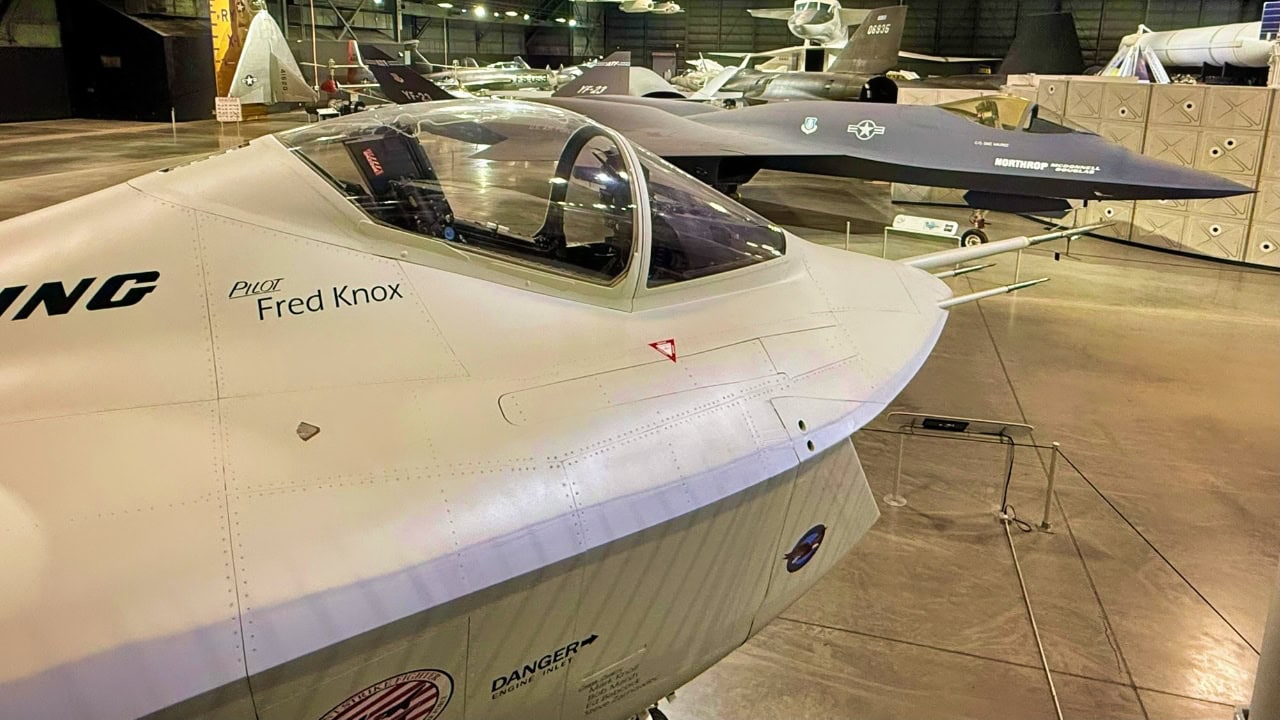
X-32 and YF-23 Together at U.S. Air Force Museum. 19FortyFive.com Image.
About the Author: Reuben F. Johnson
Reuben F. Johnson has thirty-six years of experience analyzing and reporting on foreign weapons systems, defense technologies, and international arms export policy. Johnson is the Director of Research at the Casimir Pulaski Foundation. He is also a survivor of the Russian invasion of Ukraine in February 2022. He worked for years in the American defense industry as a foreign technology analyst and later as a consultant for the U.S. Department of Defense, the Departments of the Navy and Air Force, and the governments of the United Kingdom and Australia. In 2022-2023, he won two awards in a row for his defense reporting. He holds a bachelor’s degree from DePauw University and a master’s degree from Miami University in Ohio, specializing in Soviet and Russian studies. He lives in Warsaw.