
Summary and Key Points: Christian D. Orr, Senior Editor and former Air Force Security Forces officer, analyzes the technical bridge between the Boeing F-47 and Pratt & Whitney’s XA103 engine.
-Following the March 21, 2025, contract award by the Trump Administration, the Next Generation Air Dominance (NGAD) program is centering on a “tailless” design optimized for Next Generation Adaptive Propulsion (NGAP).
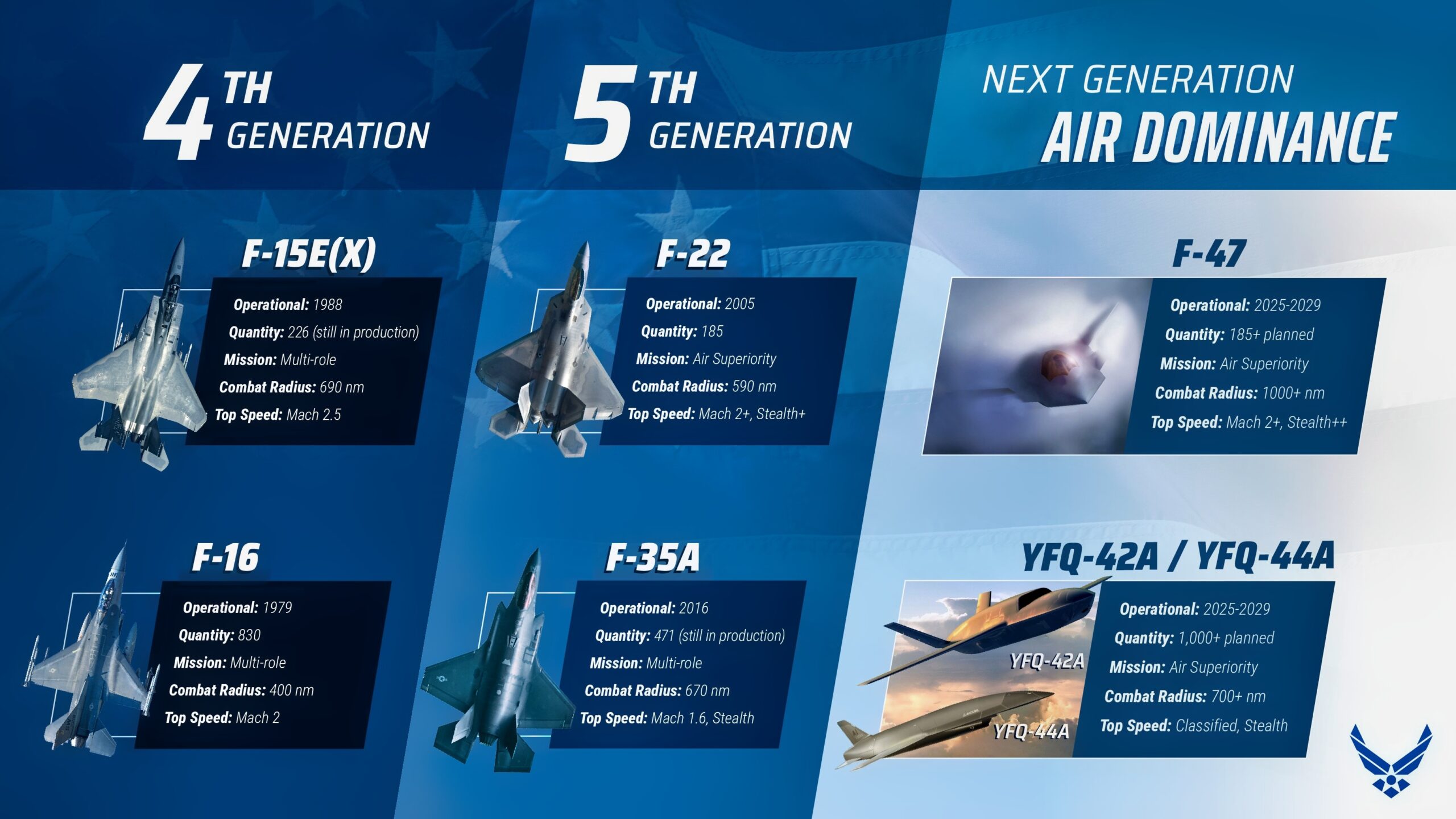
F-47 Infographic. Image Credit: U.S. Air Force
-This 19FortyFive analysis explores how the XA103’s three-stream architecture delivers a 25% boost in fuel efficiency and 20% more thrust, ensuring the F-47 maintains dominance over Chinese 6th-generation threats in highly contested environments.
The F-47 NGAD Revealed? Why Pratt & Whitney’s New XA103 Video Is Important
Next month will mark the one-year anniversary of the U.S. Air Force’s decision to award the F-47 Next Generation Air Dominance (NGAD) sixth-generation fighter jet contract to Boeing. The warbird still has to be built and tested, so we don’t know yet what the NGAD will look like, and are left to rely on educated guesswork and artists’ renderings.
Well, an intriguing new speculative artist’s rendering has come to us courtesy of a time-honored aircraft engine manufacturer. You could call it “The NGAP for the NGAD.”
Bottom Line Up Front (BLUF): The NGAD-NGAP Nexus
NGAP stands for “Next Generation Adaptive Propulsion,” and the manufacturer in question is the prestigious Pratt & Whitney, which is competing against General Electric (G.E.) Aerospace in the NGAP bidding battle.
The story comes to us from Stefano D’Urso and David Cenciotti of The Aviationist:
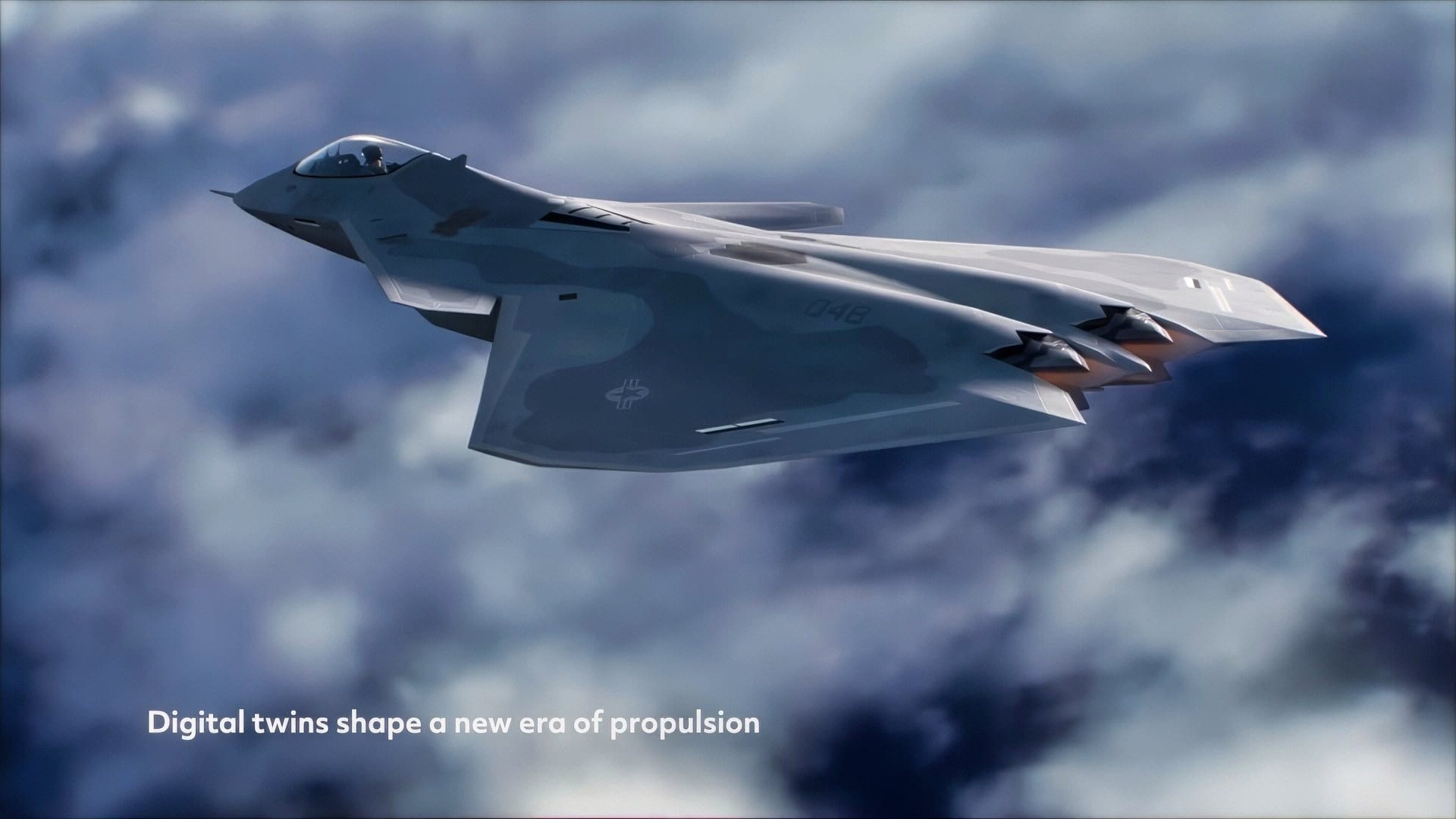
“On Feb. 18, 2026, Pratt & Whitney shared, a new video about the XA103 being developed for the Next Generation Adaptive Propulsion (NGAP) program…Interestingly, the final part of the video is the one attracting most of the attention online, as it shows a computer-generated rendition of what could be an F-47-inspired design. In fact, the aircraft appears to have both some similarities and differences when compared to the official F-47 renderings.”
D’Urso and Cenciotti hasten to temper any premature excitement by reminding readers that it’s still just a notional fighter being depicted in the video.
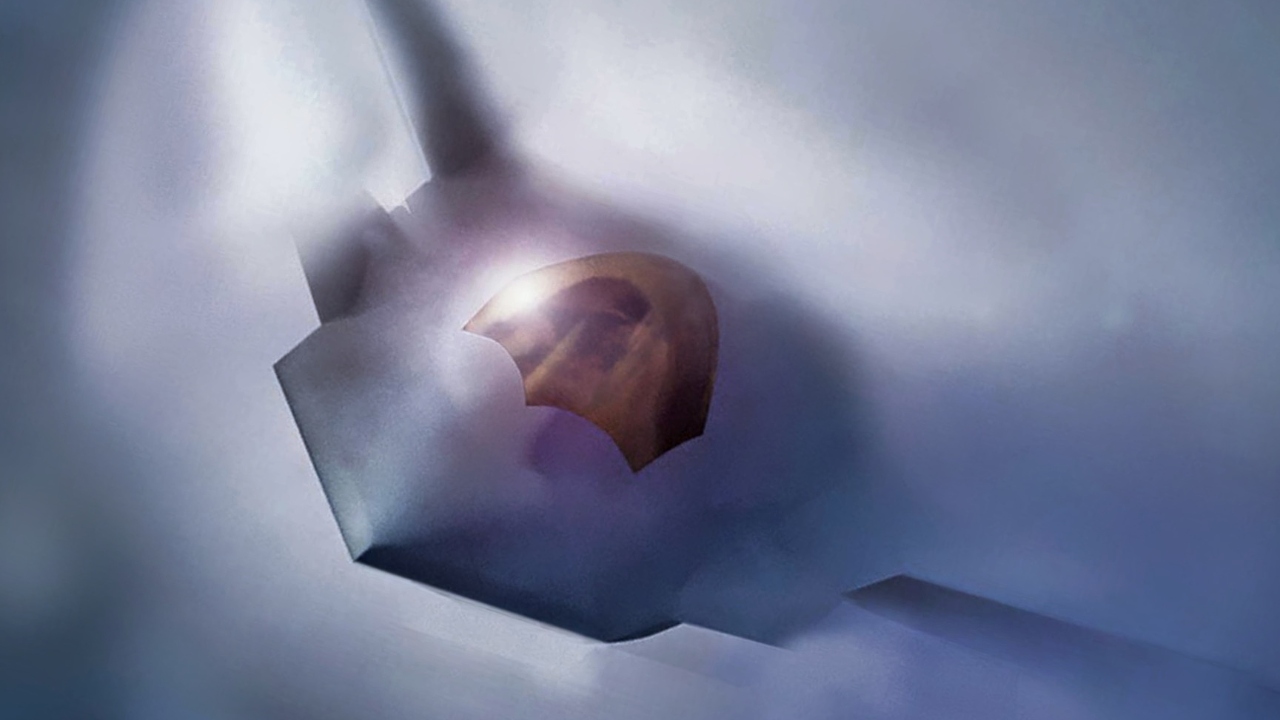
Shown is a graphical artist rendering of the Next Generation Air Dominance (NGAD) Platform. The rendering highlights the Air Force’s sixth generation fighter, the F-47. The NGAD Platform will bring lethal, next-generation technologies to ensure air superiority for the Joint Force in any conflict. (U.S. Air Force graphic)
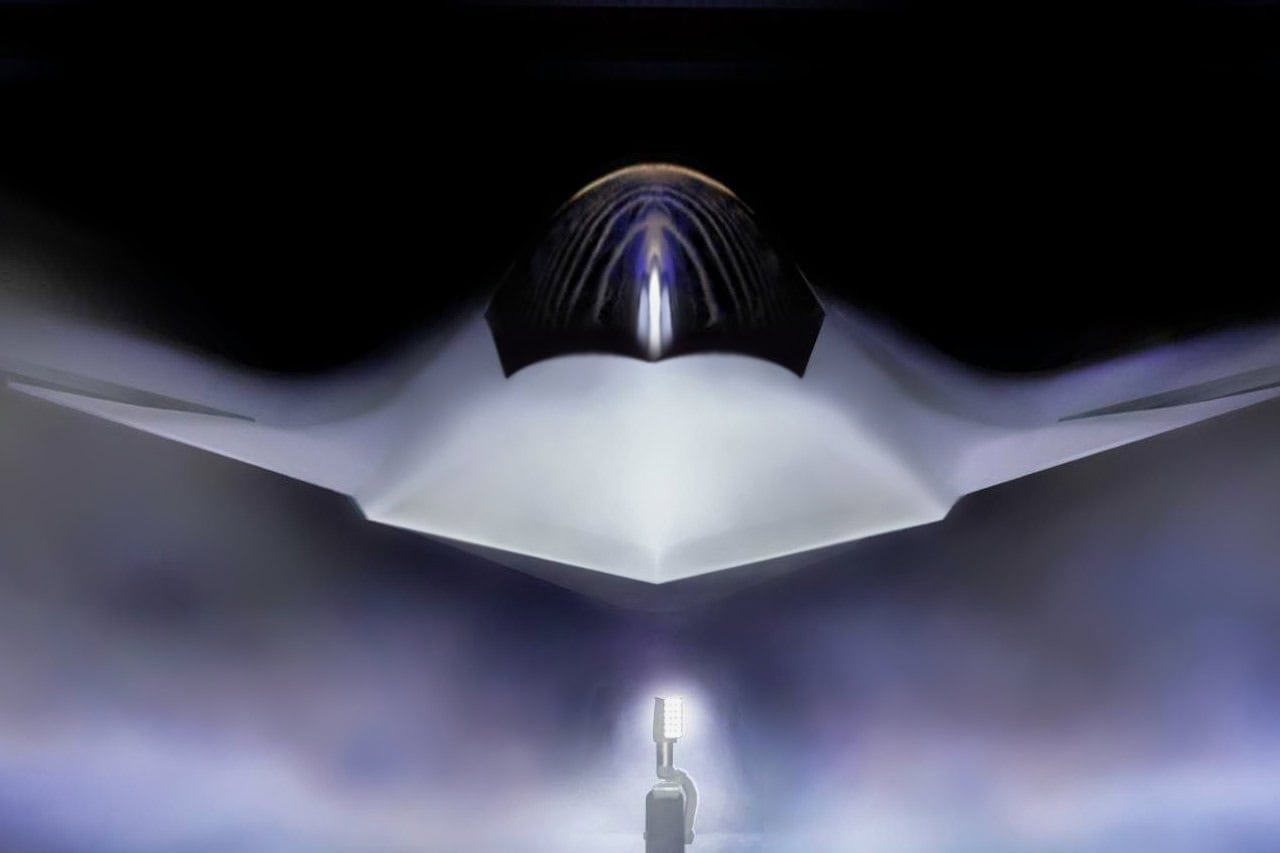
Shown is a graphical artist rendering of the Next Generation Air Dominance (NGAD) Platform. The rendering highlights the Air Force’s sixth generation fighter, the F-47. The NGAD Platform will bring lethal, next-generation technologies to ensure air superiority for the Joint Force in any conflict. (U.S. Air Force graphic)
Visual Details
Notional or not, the video shows some eye-catching details, such as:
-a twin-engine single seat tailless aircraft, based on a trapezoidal wing planform and canard foreplanes
-Twin engines with F-22-like 2D thrust vectoring and two air inlets below the canard foreplanes
-A cockpit that appears to be in an advanced position, compared to current fighters, although the nose appears different from the shovel-like one previously depicted
-Boom receptable door and markings for air refueling and the livery inspired by the F-15C’s Compass Ghost Gray camouflage
-“A perhaps curious detail is the serial number, whose final digits are 048, possibly a hint to the F-47’s being the aircraft which would be powered by NGAP”
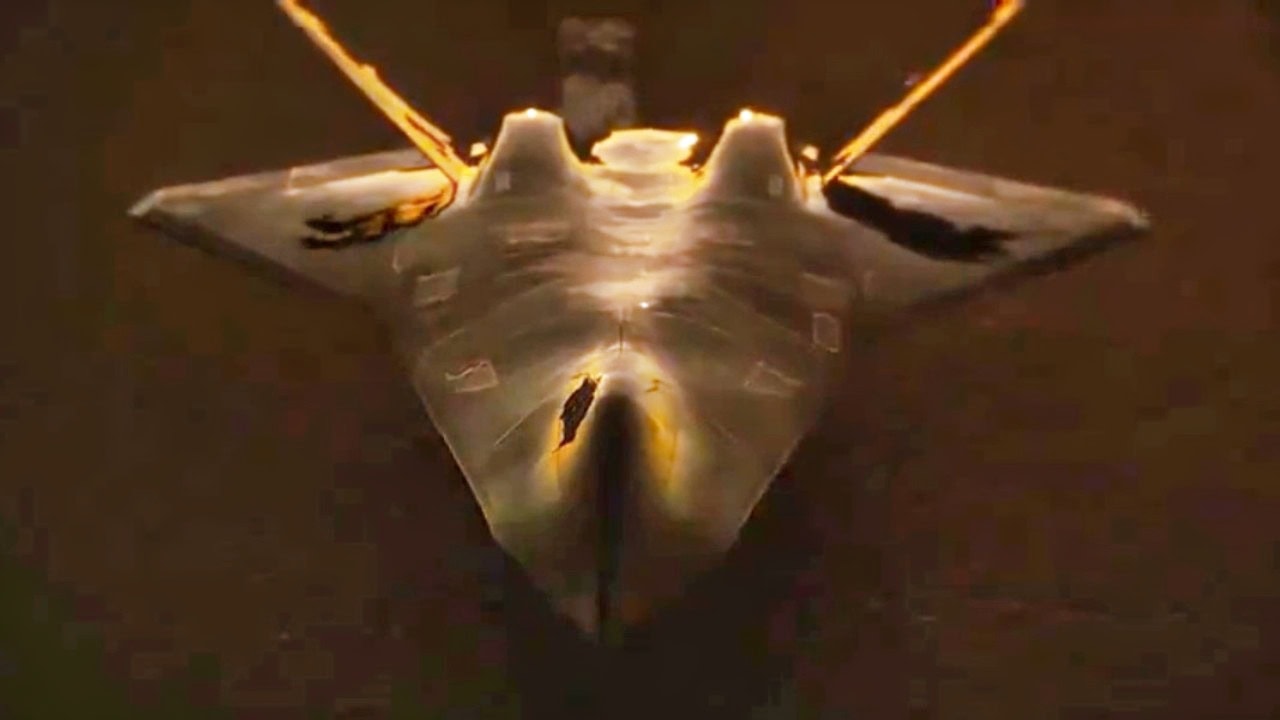
F-47 Fighter from Boeing. Image Credit: U.S. Air Force Screenshot.
XA103/NGAP Speculative Specifcs
Okay, some of readers are probably thinking, those new notional depictions of the NGAD plane are all well and good, but what about this NGAP engine program?
A fair question.
According to the Pratt & Whitney official product info page, the XA103 engine is still a work in progress, with the company having completed both the preliminary design review and the detailed design review. The next phase of the contract is currently underway—procuring hardware for the construction of a prototype ground demonstrator, which is expected to test in the late 2020s.
As far as tech specs and capabilities, here’s what the manufacturer has to say:
“The engine’s adaptive architecture actively adjusts components to provide optimized fuel efficiency, survivability, and power and thermal management. This step change in technology enables the required range, weapon and sensor capability, and the persistence that future air dominance platforms will require to meet challenging operational needs.”
Pratt & Whitney History in Brief
Time will tell if Pratt & Whitney ends up beating out G.E. Aerospace for the NGAP contract. Meanwhile, a brief history of the company is in order.
The firm was founded in 1925 by Frederick & Gordon Rentschler, Edward Deeds, and George J. Mead.
Fortuitously founded in the middle of the roaring twenties, Pratt & Whitney’s first major invention was the 425-horsepower R-1340 Wasp, which was completed on Christmas Eve 1925 and whose performance and reliability revolutionized U.S. aviation. Among other things, the Wasp powered the aircraft of Wiley Post, Amelia M. Earhart, and many other record flights.
The company weathered the Great Depression and gained additional prominence during World War II by building the engines for the Republic P-47 Thunderbolt—the fighter used by America’s two aces of the European Theatre of WWII—and the Vought F4U Corsair (the “Whistling Death” fighter that was used to deadly effect by the U.S. Marine Corps’ legendary Black Sheep Squadron in the Pacific Theater).
Moving onto the jet age, Pratt & Whitney built engines for myriad legendary fighter jets, such as:
–Grumman F9F Panther/Cougar (1947/1951): One of the U.S. Navy’s first carrier-based jet fighters, and a mainstay of the Korean War.
–Lockheed F-94C Starfire (1950): Designed to kill long-range Soviet bombers, a mission it never got to carry out. Like the Panther, scored several air-to-air kills during the Korean War.
-North American Aviation F-100 Super Sabre (1953): A direct descendant of the F-86 Sabre that turned the tide of the aerial phase of the Korean War, it made history as the first supersonic fighter jet in the world.
-McDonnell-Douglas (now Boeing) F-15 Eagle (1972): A fourth-generation fighter still going strong after 54 years, with an unmatched 104:0 aerial kill ratio.
-Lockheed Martin F-16 Fighting Falcon (1976); another fourth-generation fighter still going strong after five decades, with 25 countries’ air forces still using it.
-Israel Aircraft Industries Lavi (1986). With a name that translates to “Young Lion,” the Lavi was Israeli’s entirely indigenously designed, clean-sheet-of-paper fighter.
-Lockheed Martin F-22 Raptor (1997): The world’s first operational fifth-generation stealth fighter.
-Lockheed Martin F-35 Lightning II (2006): America’s (and the world’s) second operational fifth-generation stealth fighter (and the first to be used in combat, albeit by the Israelis).
In April 2020, Pratt & Whitney merged with Raytheon and Collins Aerospace to form Raytheon Technologies Corporation (RTX)—Pratt & Whitney now functions as a subsidiary of RTX. It is headquartered in East Hartford, Connecticut, and the current president is Shane Eddy.
About the Author: Christian D. Orr
Christian D. Orr is a Senior Editor. He is a former Air Force Security Forces officer, Federal law enforcement officer, and private military contractor (with assignments worked in Iraq, the United Arab Emirates, Kosovo, Japan, Germany, and the Pentagon). Chris holds a B.A. in International Relations from the University of Southern California (USC) and an M.A. in Intelligence Studies (concentration in Terrorism Studies) from American Military University (AMU). He is also the author of the newly published book “Five Decades of a Fabulous Firearm: Celebrating the 50th Anniversary of the Beretta 92 Pistol Series.”