
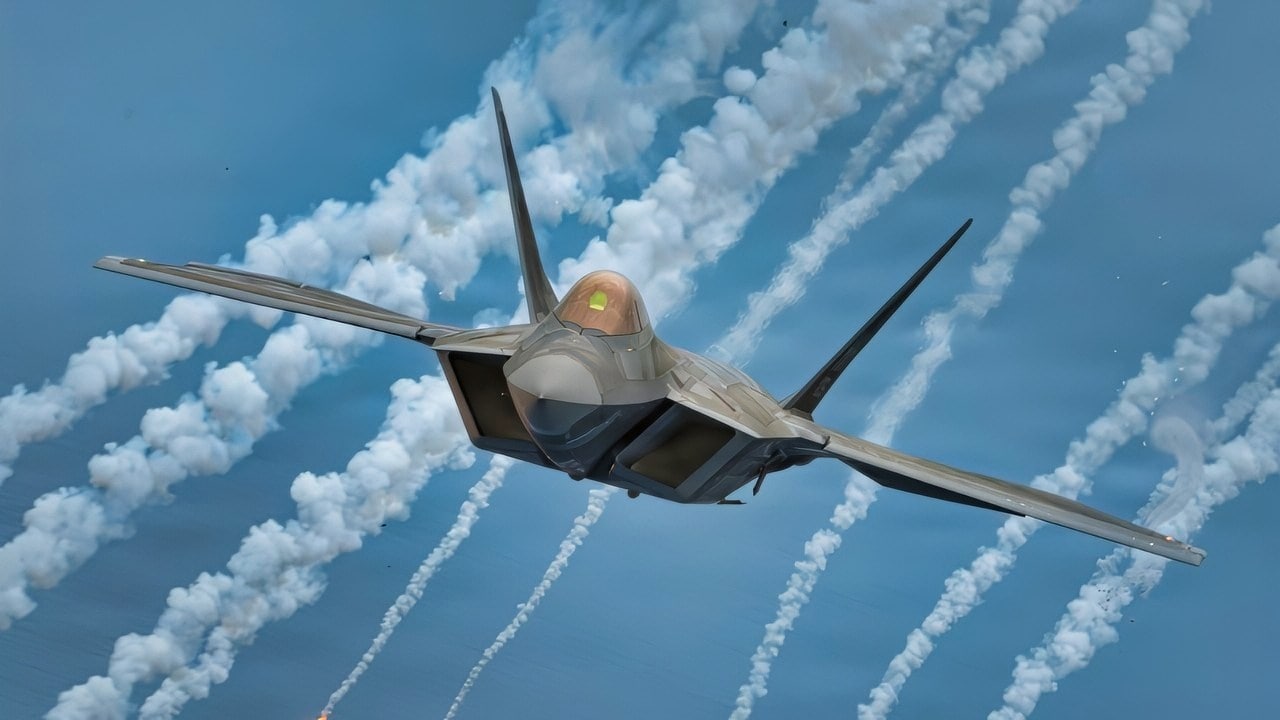
Synopsis: The U.S. Air Force is considering pursuing an unprecedented three-tiered air dominance strategy: the upgraded “Super” F-22, the modernized Block 4 F-35, and the sixth-generation F-47 NGAD.
-While the F-22 remains the premier air-to-air specialist and the F-35 serves as the networked “Ferrari” of data fusion, the F-47 is being developed as a “family of systems” to penetrate advanced Chinese A2/AD networks.
-However, the financial reality of 2026 suggests a looming tradeoff.
-Scaling the $300M-per-tail F-47 while simultaneously funding F-22 life extensions and F-35 Technology Refresh-3 upgrades could force the Air Force to choose between quantity and generational superiority.
Super F-22, F-35, and F-47: Can the Air Force Afford All Three?
The U.S. Air Force maintains its global air superiority through a layered system built on decades of technological evolution.
At the oldest end is the F-22 Raptor, a fighter jet that entered operational service in 2005.
It was the world’s first operational stealth air superiority fighter. The F-25 Lightning II, meanwhile, represents the current generation, combining sensor fusion and stealth with multirole combat capability. That aircraft currently serves as the backbone of U.SS. tactical aviation.
And now, the future is coming in the form of the F-47 – the Air Force’s sixth-generation Next Generation Air Dominance (NGAD) fighter, which is expected to surpass current stealth aircraft in terms of capability and will operate alongside drones to ensure air superiority into the coming decades.
The Air Force’s strategy cannot be – and is not – to simply replace older aircraft with new ones. Instead, it involves upgrading legacy fighters, continuously modernizing current platforms, and developing entirely new generations of aircraft simultaneously.
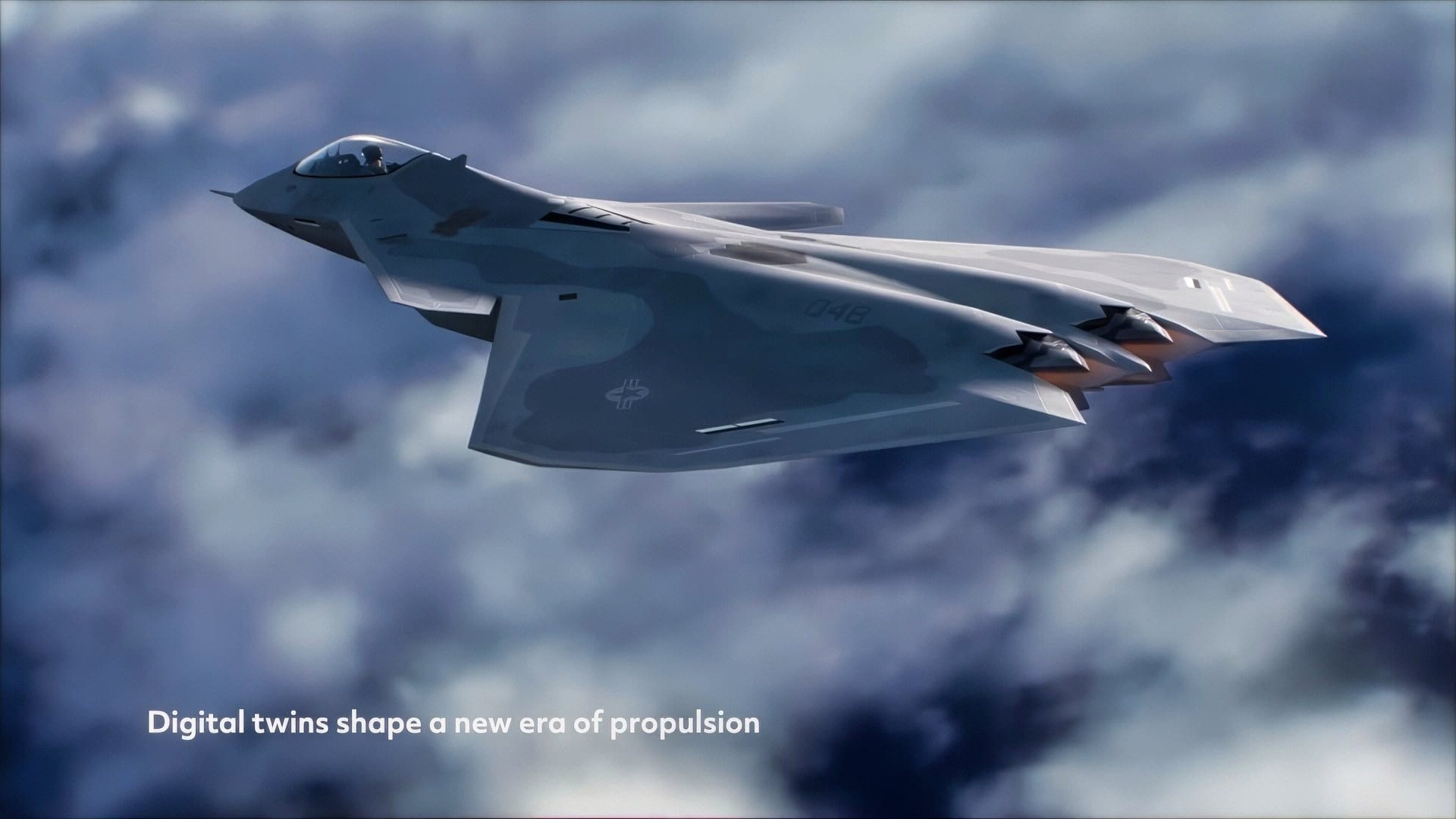
F-47 NGAD Fighter Possible Image. Image Credit: Screenshot.
Budget realities often force tradeoffs between those priorities – but if funding and development timelines allow all three aircraft – the upgraded F-22, the modernized F-35, and the new F-47 – to co-exist at full capability, the result would be a layered air dominance structure capable of overwhelming advanced adversaries like China.
The “Super” F-22
When the F-22 Raptor entered service in December 2005, it represented a revolutionary leap in air combat capability. Designed specifically for air dominance missions, the aircraft combined stealth, supercruise, thrust vectoring, and integrated avionics to detect and destroy enemy aircraft before being detected itself.
Its ability to cruise at supersonic speeds without afterburners, combined with advanced sensors and stealth shaping, allowed it to operate deep inside hostile airspace while maintaining decisive advantages in range, survivability, and lethality.
Despite being nearly two decades old, the F-22 remains one of the most capable air superiority fighters ever built. However, with production capped at just 183 aircraft and airframes aging, the Air Force has increasingly focused on upgrading the fleet rather than replacing it outright.
Modernization efforts include integrating new weapons, improving radar and sensor capabilities, and incorporating technologies derived from newer fighter development programs.
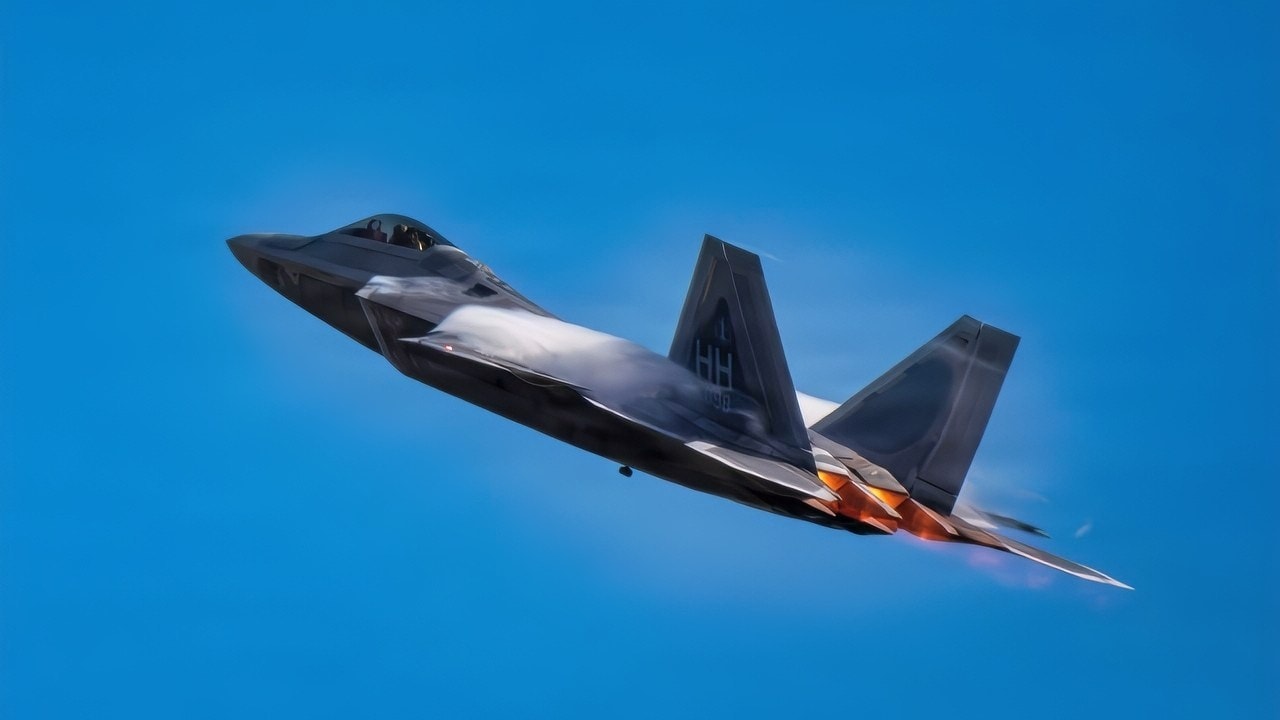
A U.S. Air National Guard F-22 Raptor from the 199th Fighter Squadron, Hawaii Air National Guard, takes off during exercise Sentry Aloha 26-1 at Joint Base Pearl Harbor-Hickam, Hawaii, Jan. 26, 2026. The training demonstrates the 154th Wing’s capability to lead large-force employment exercises, reinforcing the Guard’s position as a vital component of the nation’s operational force. (U.S. Air National Guard photo by Senior Master Sgt. Mysti Bicoy)
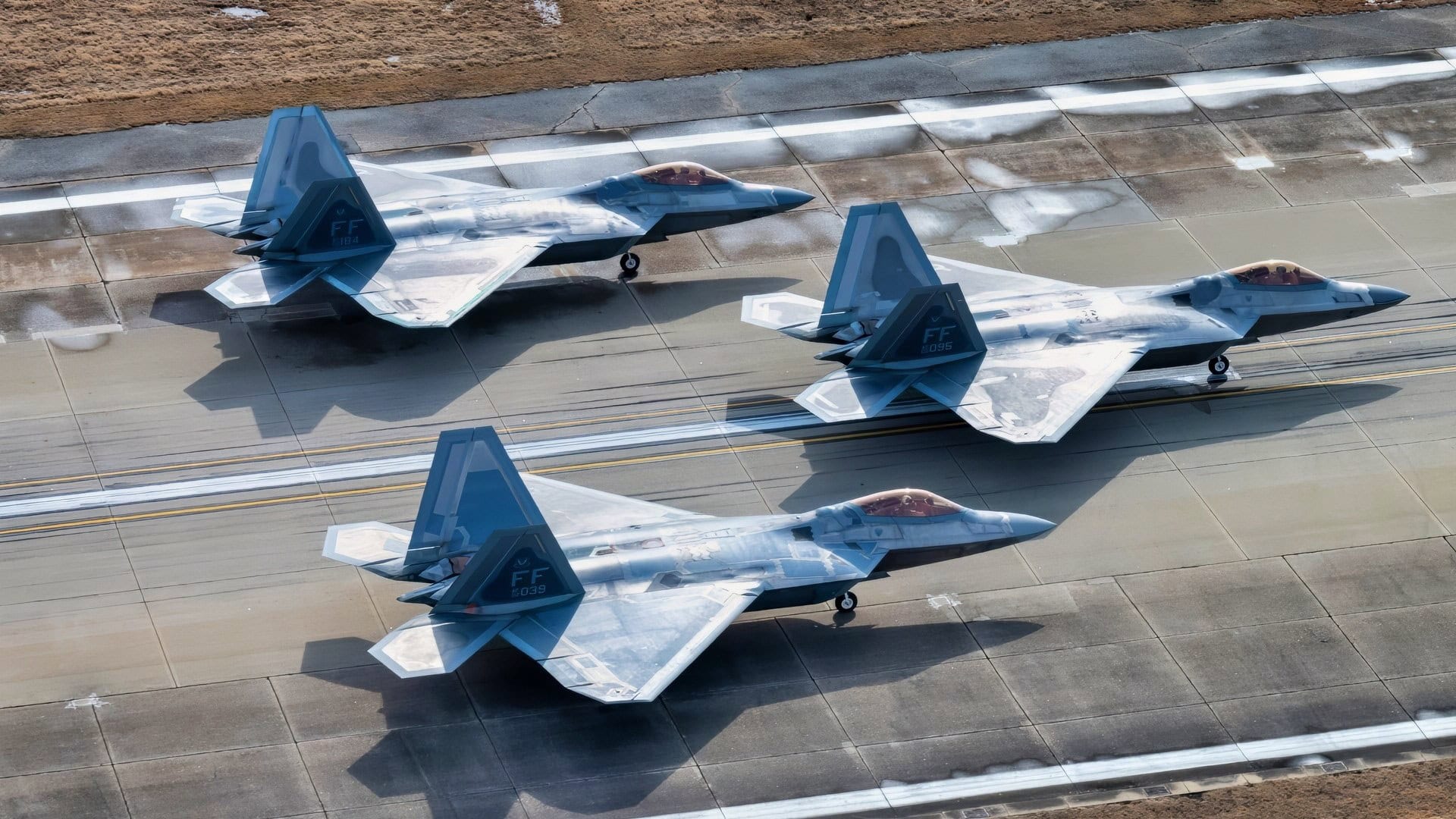
LANGLEY AIR FORCE BASE, Va. – F-22 Raptors from the 1st Fighter Wing sit in position on the runway fduring the Elephant Walk at Langley Air Force Base, Virginia, Jan. 31, 2025. The surge was designed to showcase the wing’s operational readiness and its ability to rapidly mobilize airpower. The 1st FW operates F-22 Raptors and T-38 Talons, maintaining combat capabilities that enable the U.S. Air Force to execute missions across the globe. With a focus on air superiority, the 1st FW plays a critical role in defending the nation’s interests. (U.S. Air Force photo by Tech Sgt. Matthew Coleman-Foster)
These upgrades are part of a wider strategy to extend the F-22’s relevance well into the 2030s. Lockheed Martin has described plans to evolve the aircraft toward a “fifth-generation plus” standard by integrating advanced sensors and long-range weapons originally developed for next-generation fighters.
The result is effectively a “Super F-22” that’s capable of maintaining air superiority roles while also serving as a bridge between older and newer generations of stealth aircraft.
The “Ferrari” F-35
If the F-22 was designed to win air superiority battles, the F-35 was designed to win entire wars. Entering service in the 2010s, the F-35 combines stealth, advanced sensors, and unprecedented data fusion capabilities, allowing pilots to gather, process, and share battlefield information in ways older fighters cannot.

Ferrari at Mecum Auctions, January 17, 2026. Image Credit: Harry J. Kazianis.
Its defining strength is not just stealth or speed, but its ability to act as a flying command center – detecting threats, sharing data across networks, and coordinating strikes with other aircraft and forces.
The F-35’s advanced sensor suite and onboard computing power enable it to fuse data from multiple sources, providing pilots with unparalleled situational awareness.

F-35D of Ferrari F-35 Fighter Mock Up Illustration. Image Created with Ideogram.
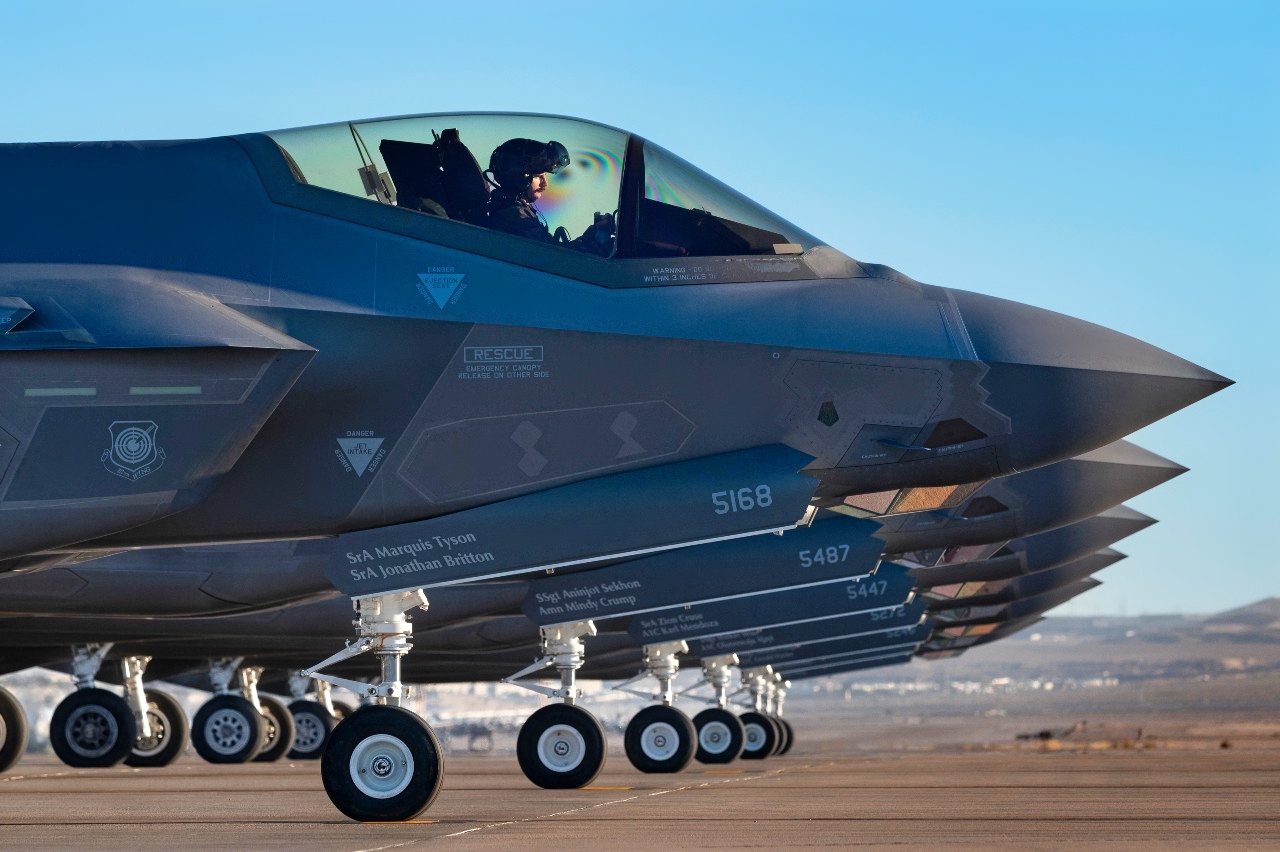
Seven F-35 Lightning II aircraft wait to take off for a U.S. Air Force Weapons School training mission at Nellis Air Force Base, Nevada, Jan. 31, 2024. The U.S. Air Force Weapons School teaches graduate-level instructor courses that provide advanced training in weapons and tactics employment to officers and enlisted specialists of the combat and mobility air forces. (U.S. Air Force photo by William R. Lewis)
The aircraft is now undergoing its most significant upgrade effort: the Block 4 modernization program. That program aims to introduce more than 50 software and hardware improvements spanning sensors, enhanced electronic warfare systems, and expanded weapons capabilities, in addition to advanced computing power through the Technology Refresh-3 upgrade.
Then there is the actual Ferrari F-35, which takes all of this a step further: Lockheed Martin has even suggested that upgraded F-35s could achieve up to 80% of the capabilities of sixth-generation fighters like the F-47 at a significantly lower cost.
F-47 NGAD
While upgraded F-22s and modernized F-35s would represent the present and near future, the F-47 NGAD represents the next leap forward. Announced in 2025, the F-47 is being developed as part of the Next Generation Air Dominance program, which aims to replace the F-22 and ensure U.S. air superiority in future conflicts.
Unlike previous fighters, the F-47 is part of a “family of systems” that includes drones and advanced networking capabilities. The aircraft is designed to coordinate with unmanned aircraft, extending its sensor range, increasing survivability, and multiplying its combat effectiveness.
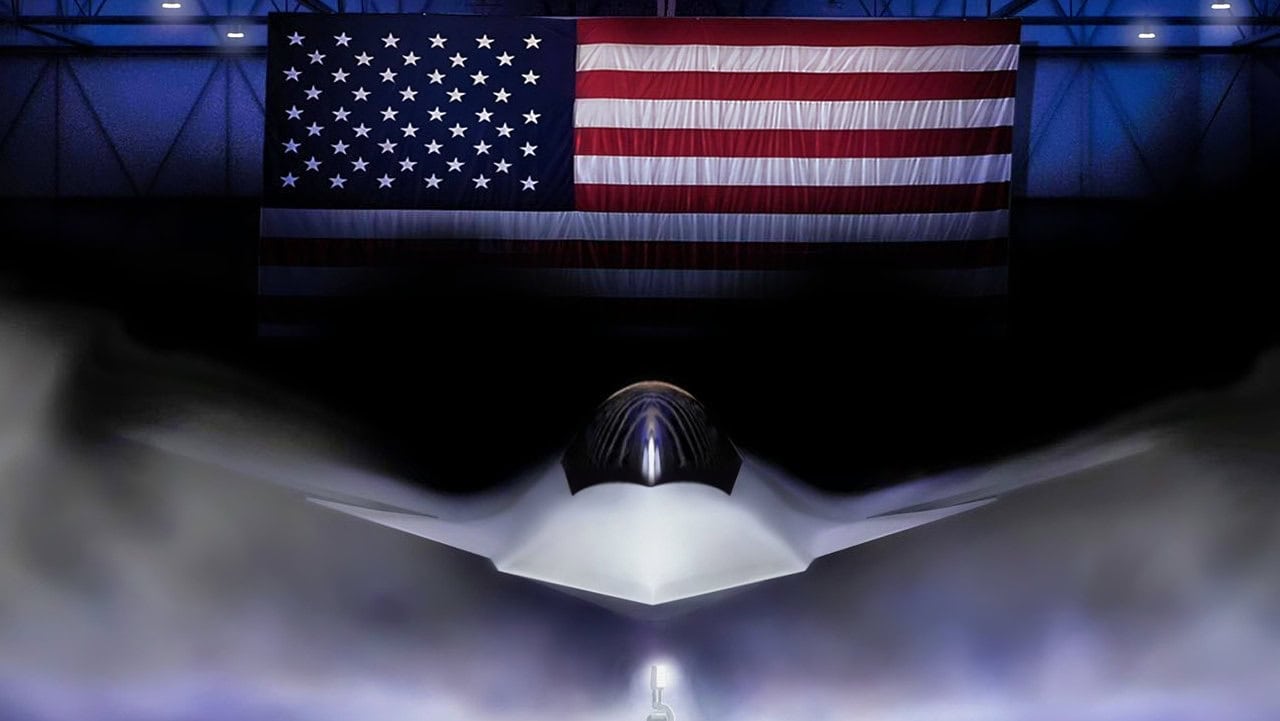
F-47 Fighter from U.S. Air Force.
The program has already reached major milestones, including the flight of prototype aircraft and the award of engineering development contracts.
What Happens if the U.S. Fields All Three?
If the Air Force successfully upgrades the F-22, fully modernizes the F-35, and deploys the F-47 simultaneously, the result would be an unprecedented layered air dominance structure. Each aircraft would serve a distinct role. The upgraded F-22 would remain the premier air superiority fighter for defeating enemy aircraft. The F-35 would provide scalable and networked combat capability across a wide range of missions. And the F-47 would serve as the spearhead of future air dominance operations, capable of penetrating the most advanced enemy defenses.
However, achieving this three-tiered force structure depends heavily on budget decisions. Sixth-generation fighters like the F-47 will be extremely expensive, and the Air Force must also fund both ongoing F-35 upgrades and F-22 modernization.
If fully implemented, the combination would ensure overwhelming U.S. air superiority well into the 2030s and beyond. But whether the Air Force can afford to build and sustain all three aircraft at full capability remains one of the most consequential defense planning questions of the decade.
About the Author: Jack Buckby
Jack Buckby is a British researcher and analyst specialising in defence and national security, based in New York. His work focuses on military capability, procurement, and strategic competition, producing and editing analysis for policy and defence audiences. He brings extensive editorial experience, with a career output spanning over 1,000 articles at 19FortyFive and National Security Journal, and has previously authored books and papers on extremism and deradicalisation.