
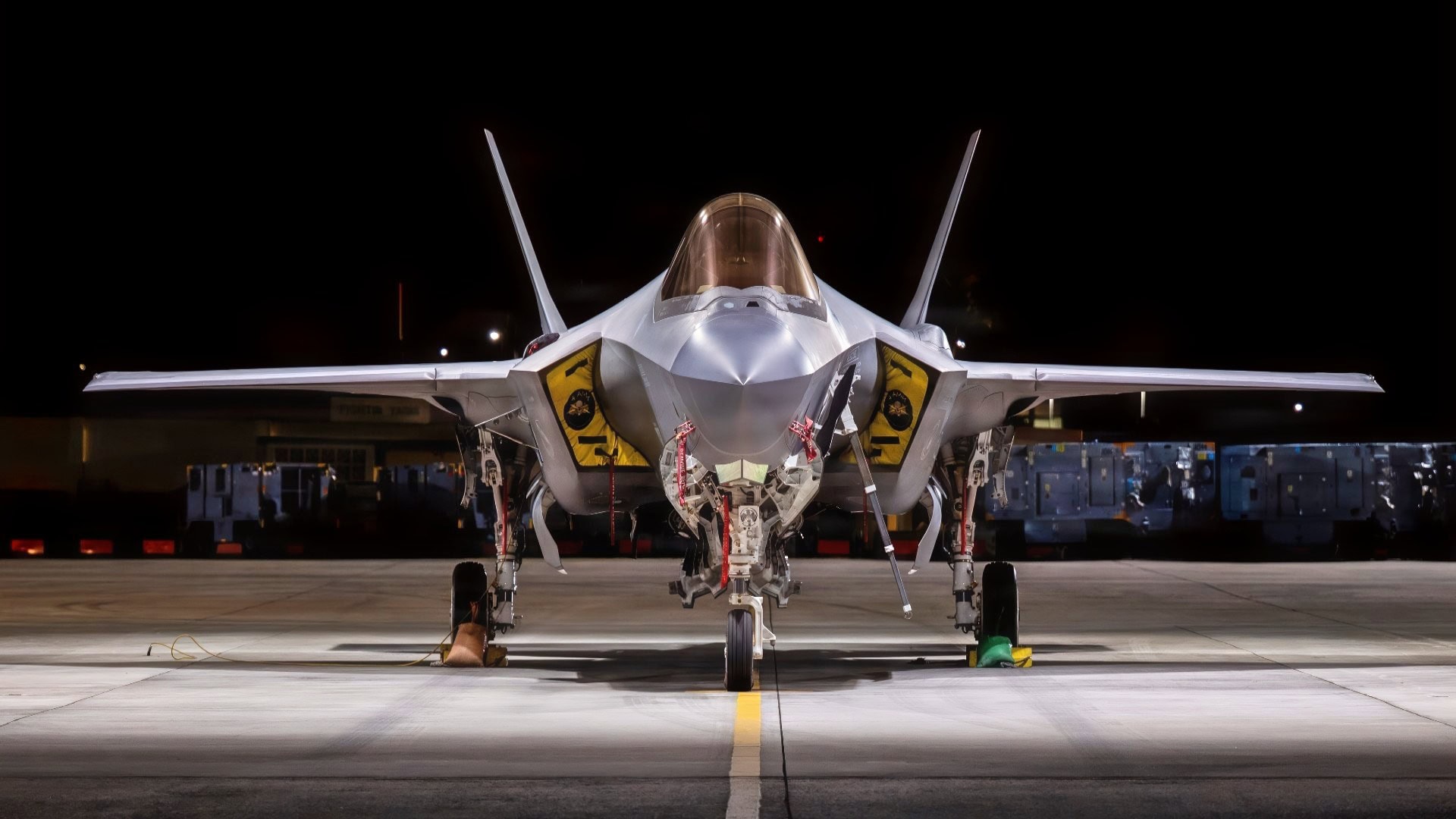
Summary and Key Points: Lockheed Martin is in high-level talks with the Department of Defense over a “Ferrari” F-35 concept—an upgraded Lightning II meant to deliver a major jump in performance and combat utility even as the Air Force moves toward the sixth-generation F-47.
-While details remain guarded, the concept points toward a wider range, stronger propulsion, improved sensors, and refined low observability, paired with faster software-driven weapons integration.

Ferrari at the Mecum Car Auction. Image Credit: Harry J. Kazianis
-The F-35’s long-term edge is its upgrade path: new blocks can rapidly add capabilities, including advanced munitions and improved networking.
-The goal is a fifth-generation-plus boost that scales with evolving threats.
With 1,000-Plus Built, The F-35 Isn’t Done Yet—Now Comes The “Ferrari” Upgrade
The U.S. Air Force and Navy are striving to bring next-generation fighter jets into being, but that does not mean either service is done upgrading its existing fleets. In fact, F-35 manufacturer Lockheed Martin is working to implement a more powerful variant of its fifth-generation stalwart.
This fall, Lockheed revealed it was in “very active” talks with the Department of Defense regarding a concept described as the “Ferrari” F-35. “There’s a very active engagement at an extremely high level with the Department of Defense, and I expect it’ll be taken to the White House sometime soon, hopefully, to consider this kind of concept,” Lockheed Martin chief executive Jim Taiclet announced at a conference at the time.

Ferrari at Mecum Auctions January 17, 2026. Image Credit: Harry J. Kazianis.
“We’ve gotten encouraging feedback. … There’s significant interest in the government about discussing aircraft modernization writ large, all the way up to the administration level, the White House level, and we’re in the middle of that with them, and we’re getting heard. We’re hearing back, and it’s pretty active.”
What About the F-47?
Lockheed was outbid by competitor Boeing to produce the Air Force’s Next-Generation Air Dominance (NGAD) fighter jet.
President Donald Trump revealed in March 2025 that the sixth-generation fighter component of NGAD would be designated the F-47.
Representing the manned portion of the future family of systems, the next-generation jet will be built with the latest available technologies.
Although the F-47 will be the centerpiece of the Air Force’s aerial strategy when it is officially introduced, an improved Lightning II also would elevate the fleet’s lethality and versatility.
An Overview of the F-35
The F-35 Joint Strike Fighter is arguably the most coveted airframe in service. From stealth and speed to sensors and data link connectivity, the U.S.-made jet is one of a kind. More than 20 nations currently fly the platform, making it an essential component of the U.S. Air Force and allied air services.
The Joint Strike Fighter (JSF) first emerged in 1993 as the Joint Advanced Strike Technology program, following the cancellation of the Air Force’s Multi-Role Fighter and the Navy’s Advanced Fighter-Attack programs.
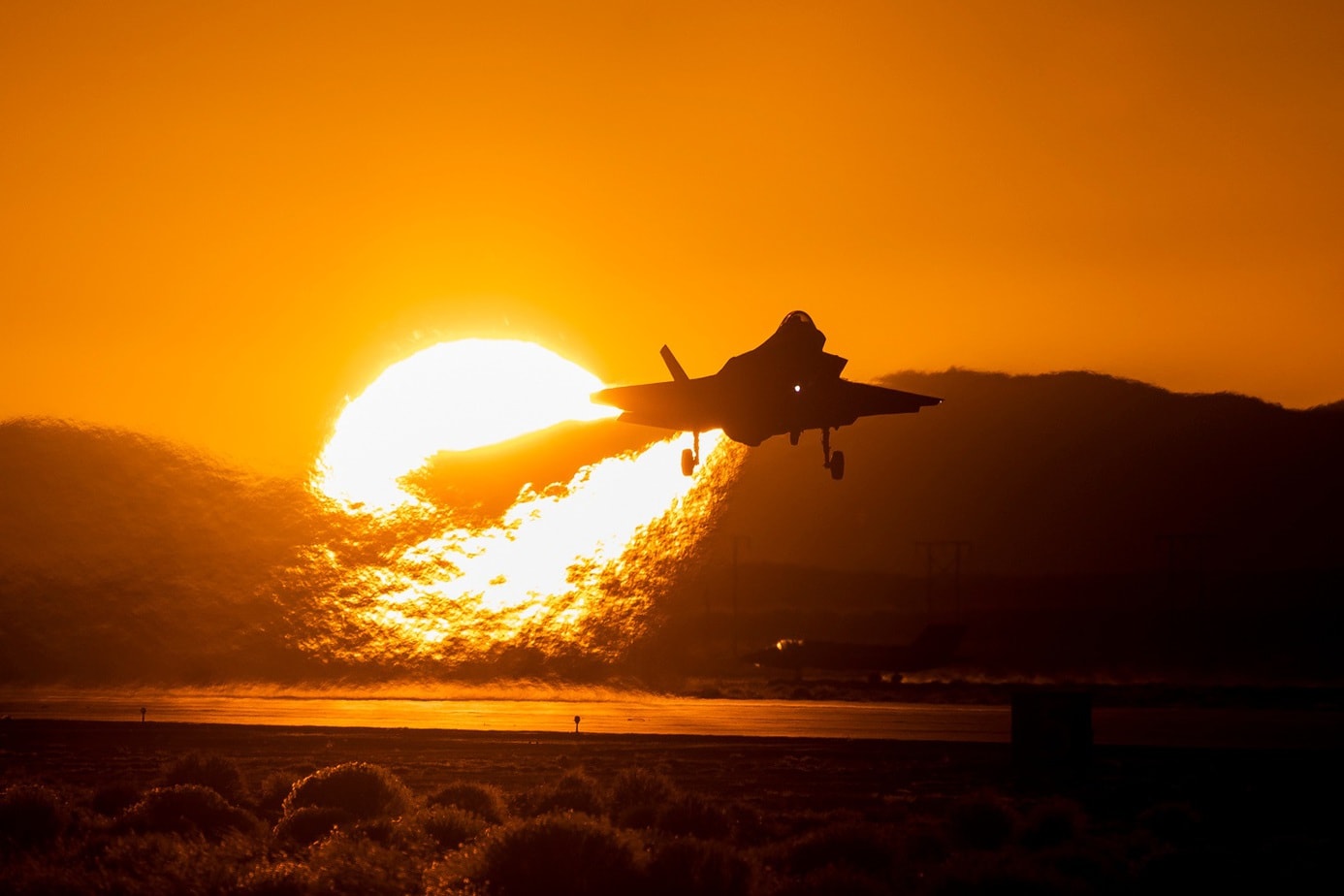
Fourship of F-35s takeoff out of the sunset, F-35 ITF Edwards AFb, Ca., 26 January 2022
All the big-name manufacturers competed to secure the JSF bid. Lockheed Martin’s platform prevailed.
The F-35 Lightning II’s (F-35A) Specifications
Year Introduced: 2015
Number Built: 1,000+, all variants (A, B, and C)
Length: 51 ft 4 in (15.7 m)
Height: 14 ft 4 in (4.36 m)
Wingspan: 35 ft (10.7 m)
Weight (MTOW): 70,000 lb (31,800 kg)
Engines: One Pratt & Whitney F135-PW-100 afterburning turbofan
Top Speed: ~1,200 mph (1,930 km/h) / Mach 1.6
Range: ~1,380 mi (2,220 km) with internal fuel
Service Ceiling: 50,000 ft (15,240 m)
Loadout:
1 × GAU-22/A 25 mm rotary cannon (internal on F-35A only)
Internal bays: Up to 4 × AIM-120 AMRAAMs or 2 bombs + 2 AMRAAMs
External hardpoints: Up to 18,000 lb (8,160 kg) of ordnance (compromises stealth)
Aircrew: 1
In addition to the specs listed above, the F-35 is built to be able to easily integrate new technologies as they are developed. This cost-saving measure alone will ensure the Lightning II remains in active service for decades to come.
What Could a “Ferrari” F-35 Variant Look Like?
Though details are not available on what a “Ferrari” version would include, we can make some guesses. An enhanced prototype would probably be equipped with new sensors, even lower observability, more powerful engines, an increased weapons load, and greater range.
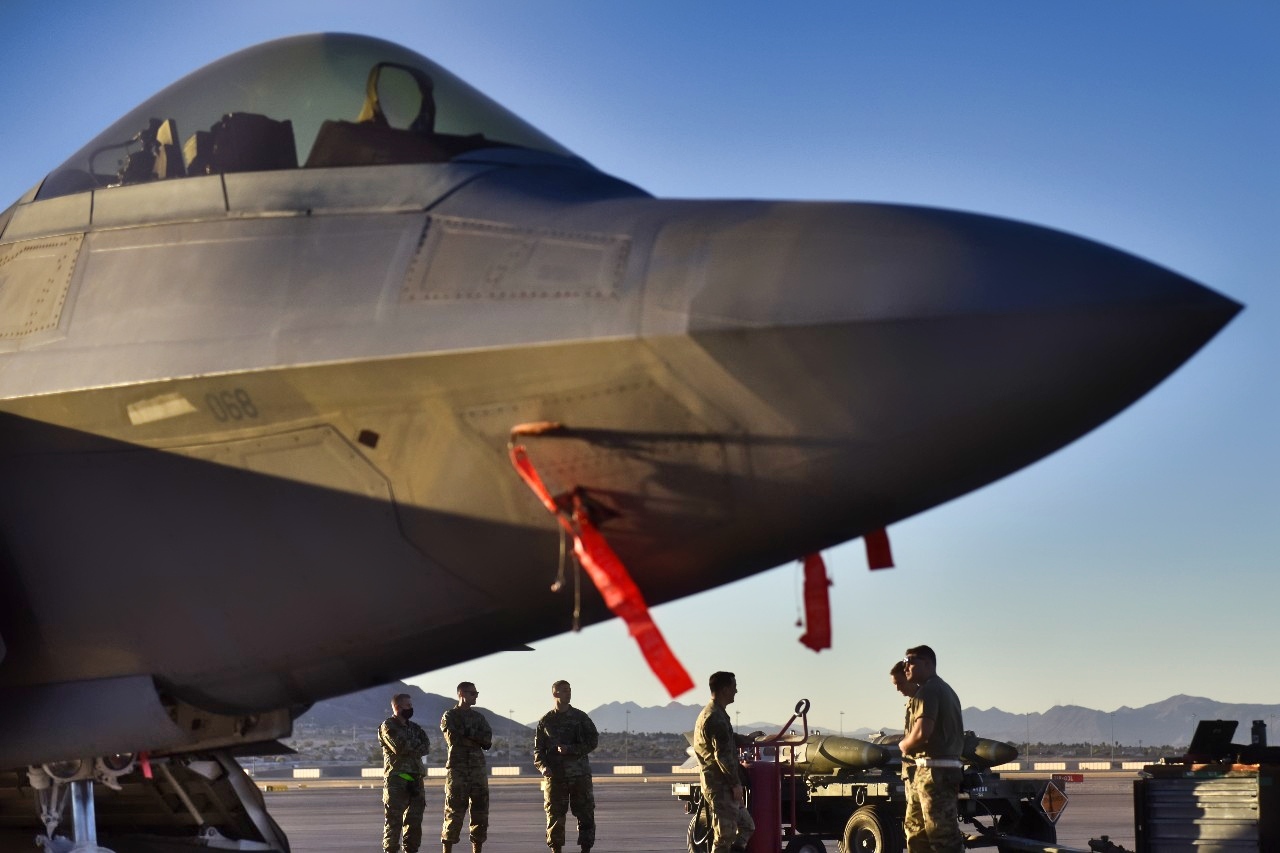
Airmen from the 757th Aircraft Maintenance Squadron talk about their execution plan next to an F-35 Lightning prior to the start of weapons load crew competition at Nellis Air Force Base, Nevada, Oct. 16, 2020. Throughout the year weapons crews are put to the test of safely loading and unloading ordinance to their respective aircraft in front of their peers while being timed. At the end of the year, the winners from each event are pitted against each other to see which team is the best. (U.S. Air Force photo by Tech. Sgt. Alexandre Montes)
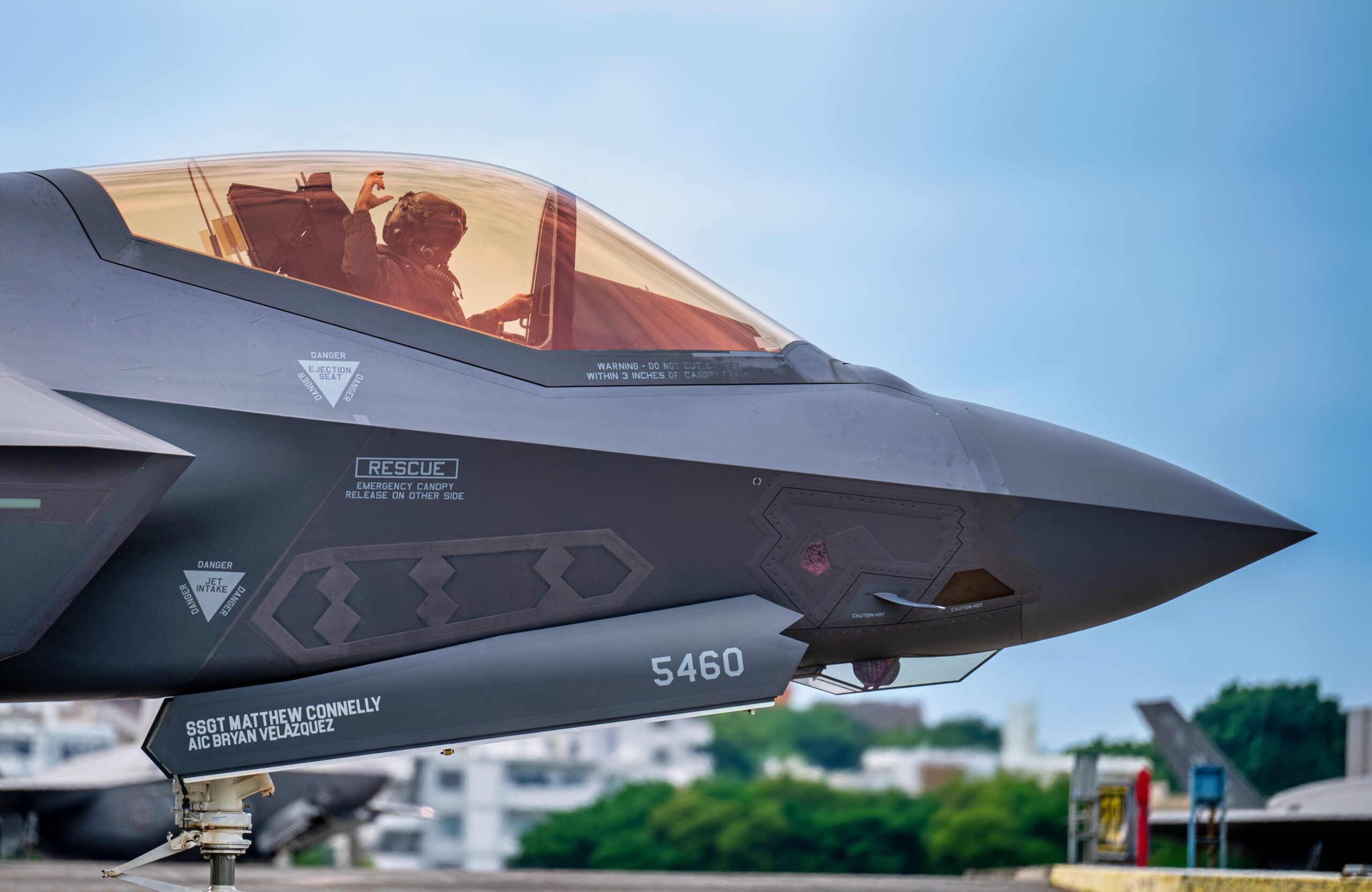
A U.S. Air Force F-35A Lightning II pilot assigned to the 355th Expeditionary Fighter Squadron taxis on the flightline at Marine Corps Air Station Futenma, Japan, during a routine 18th Wing readiness exercise at Kadena Air Base, Japan, May 6, 2025. The U.S. Air Force continues to work on its ability to meet new challenges in dynamic environments. In line with this direction, U.S. Pacific Air Forces is constantly evaluating and validating new warfighting concepts. (U.S. Air Force photo by Senior Airman Catherine Daniel)
Lockheed Martin has already begun testing its highly classified AIM-260 Joint Advanced Tactical Missile, which the manufacturer plans to incorporate into some of its F-22 fighters. According to Air and Space Forces, “The JATM—a very long-range air-to-air missile meant to restore parity with China’s long-range missiles—was supposed to become operational in 2022 or 2023, but the Air Force has steadfastly resisted providing any public information about its progress. Service officials have only acknowledged that the weapon entered testing in 2023.”
Integrating such future weapons, as well as additional improvements, could make the F-35 unstoppable as a fifth-generation-plus multirole fighter.
About the Author: Maya Carlin
Maya Carlin, national security writer with 19FortyFive, is an analyst with the Center for Security Policy and a former Anna Sobol Levy Fellow at IDC Herzliya in Israel. She has over 1,000 articles published over the last several years on various defense issues. Carlin has bylines in many publications, including The National Interest, Jerusalem Post, and Times of Israel. You can follow her on Twitter: @MayaCarlin.