
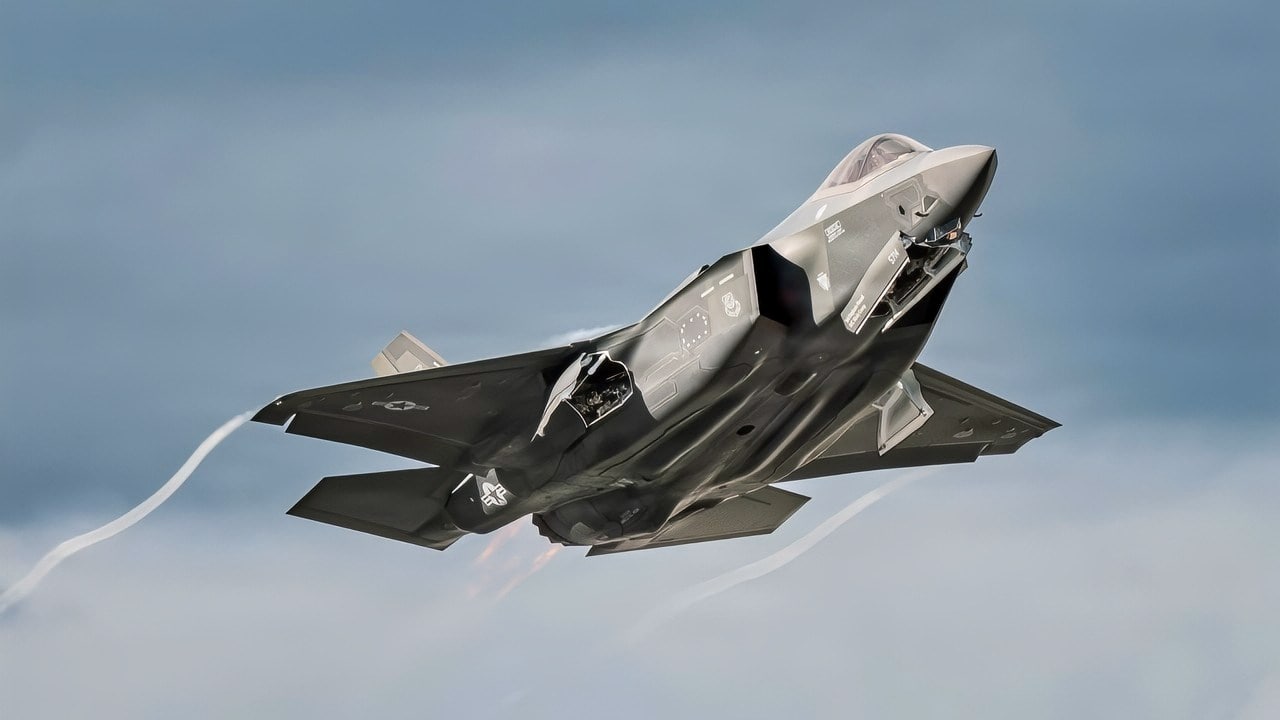
F-35 In 2025: 191 Delivered, 1,300 Flying, And A New Era Of Scale
In 2025, Lockheed Martin delivered 191 F-35s, a number that exceeds the combined production of all other allied fighter jets. The F-35 has clearly crossed a threshold, from a troubled development story to a mature, industrial-scale weapons system.
Today, nearly 1,300 F-35s are in service across 12 nations, speaking to the program’s scale and standardization, an example of how modern air power is increasingly built around networks rather than one-off platforms.
Breaking the Production Curve
In the early years, the stealth fighter program suffered from cost overruns, delays, and software shortfalls. The entire program was beginning to look like a vastly overpriced failure; critics questioned whether the program would ever stabilize.
The year 2026 seems to offer a turning point, however. Production tempo has sustained; supply chains have normalized; deliveries are now predictable. This matters because advanced fighters are often built in small numbers, i.e., the F-22 Raptor, at boutique production rates. The F-35 breaks that model, with production at Cold War-era volume, despite having fifth-generation complexity.
2025: By the Numbers
Lockheed Martin delivered 191 aircraft in a single year. Production was centered at Fort Worth, Texas, with global supplier inputs. The production rate was roughly five times higher than that of any other Allied fighter.
There is still a backlog of 416 confirmed aircraft, with total planned production for just under 3,000 aircraft. This means the program is not even halfway complete, is not yet at its peak, but is still ramping up.
Who’s Buying the F-35 Stealth Fighter and Why
With the global fleet nearing 1,300 aircraft, the F-35 is being operated across Europe, North America, and the Indo-Pacific. Key 2025 milestones include the completion of Norway’s initial order; Finland and Belgium accepting their first deliveries; and expanded commitments from Italy, Denmark, and the United Kingdom.
Canada, of course, is still considering follow-on buys, a process that has become laborious. Regardless, what the program trends are beginning to reflect are long-term political buy-in, in large part due to interoperability incentives. Once a country commits, exit costs are high and integration benefits compound. The F-35 creates lock-in by design. Creepy but lucrative.
Operational Use of the F-35
In 2025, the fleet surpassed 1 million cumulative flight hours. This indicates that partner nations aren’t just buying the F-35; they are flying it sustainably. The fleet reached a new operational milestone, too, being used for real-world air defense missions. For example, Polish F-35s intercepted hostile drones.
This marks a shift from “initial operating capability” to routine frontline employment, meaning the jet is no longer theoretical—it is being used as a part of everyday air policing and defense missions.
Strategic Implications
The F-35’s biggest advantage may no longer be stealth alone—it is pure quantity. Compared globally, the F-35 now outnumbers all rival fifth-generation fighters combined.
By contrast, only 187 F-22s were produced; the comparison may not be entirely appropriate, as the F-22 was excluded from export, but the scale is fractional compared with the 1,300 F-35s currently in operation. The F-35’s scale isn’t just an industrial win—it enables shared tactics, shared software updates, and shared sensor data.
The aircraft’s value grows as more nations operate it and the network thickens. This changes air combat planning, with fewer bespoke national fleets and more coalition-based air power. In effect, the F-35 becomes less a jet and more a distributed combat system.
Why the Program Endures
The F-35’s high production rates create jobs, political insulation, and strategic dependency. The supply chain now spans multiple countries, multiple legislatures, and many, many elected officials. Cancelling or replacing the F-35 at scale now becomes economically disruptive and politically toxic. This gives the program resilience.
Even critics of the program must now account for sunk costs and operational resilience. The F-35 is no longer just a Pentagon program but an embedded factor of allied defense planning for the foreseeable future.
Scale Isn’t Everything
Let’s acknowledge a few counterpoints, despite the F-35’s impressive 2025 run. Large fleets do create vulnerabilities, with common-mode failures and software risks. The monopolization of allied air power allows adversaries to study one aircraft and counter many operators simultaneously—not so when the same allied force is dependent upon the F-22 and F-35 and Rafale and Typhoon and Tornado, et cetera.
And now, allies rely heavily on single-networking and logistics, raising questions about attrition in major war and sustainment under fire. Essentially, the allies have placed all their eggs in one basket because the F-35 is now, quantifiably, the backbone of allied tactical air power.
F-35: A Story in Photos
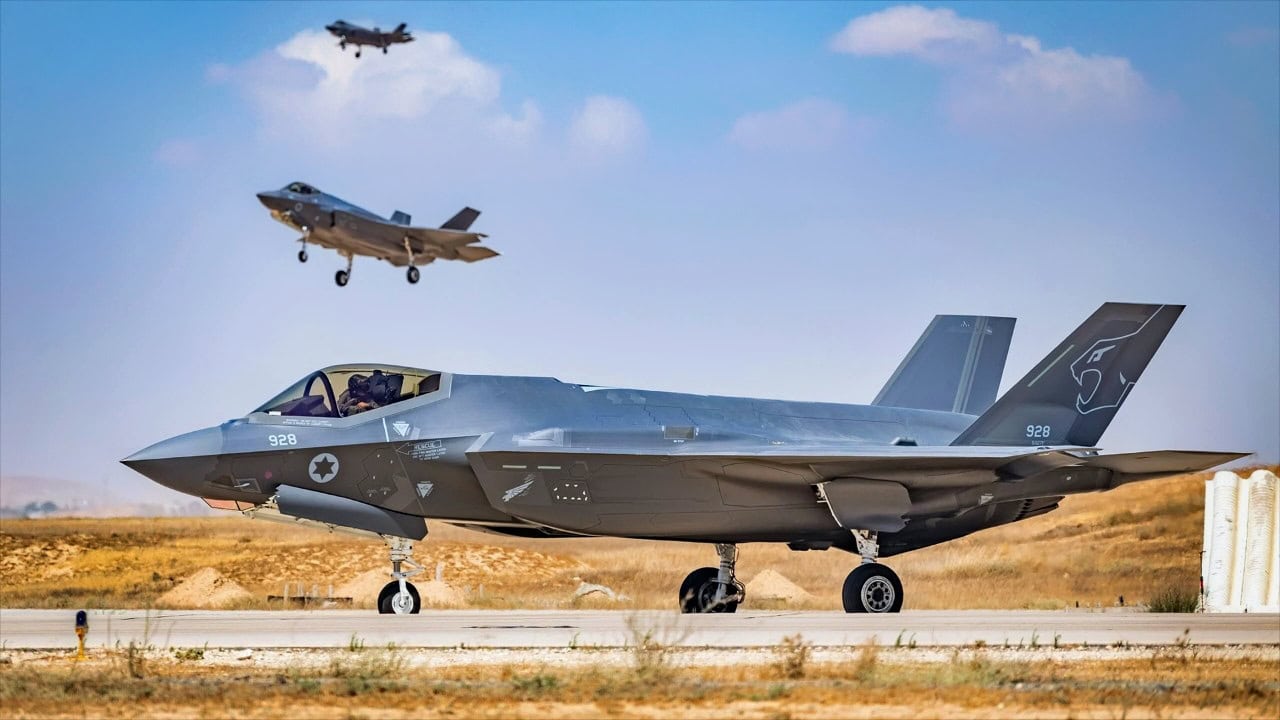
F-35I Adir. Image Credit: Creative Commons.
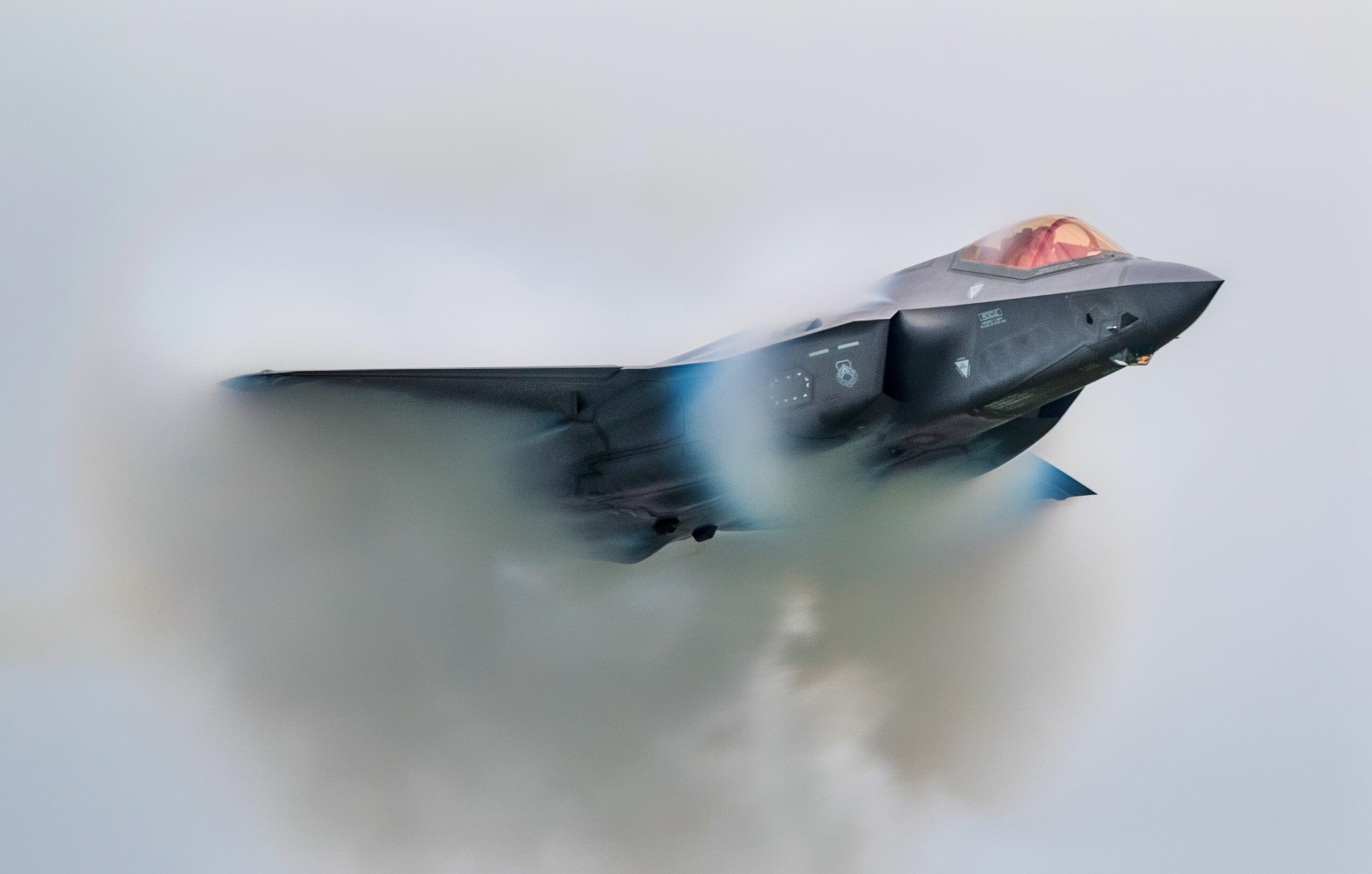
Capt. Andrew “Dojo” Olson, F-35 Demo Team pilot and commander performs aerial maneuvers during the Aero Gatineau-Ottawa Airshow in Quebec, Canada, Sept. 7, 2019. The team consists of 10 Airmen who help showcase the world’s most technologically advanced fifth-generation fighter jet. (U.S. Air Force photo by Senior Airman Alexander Cook)
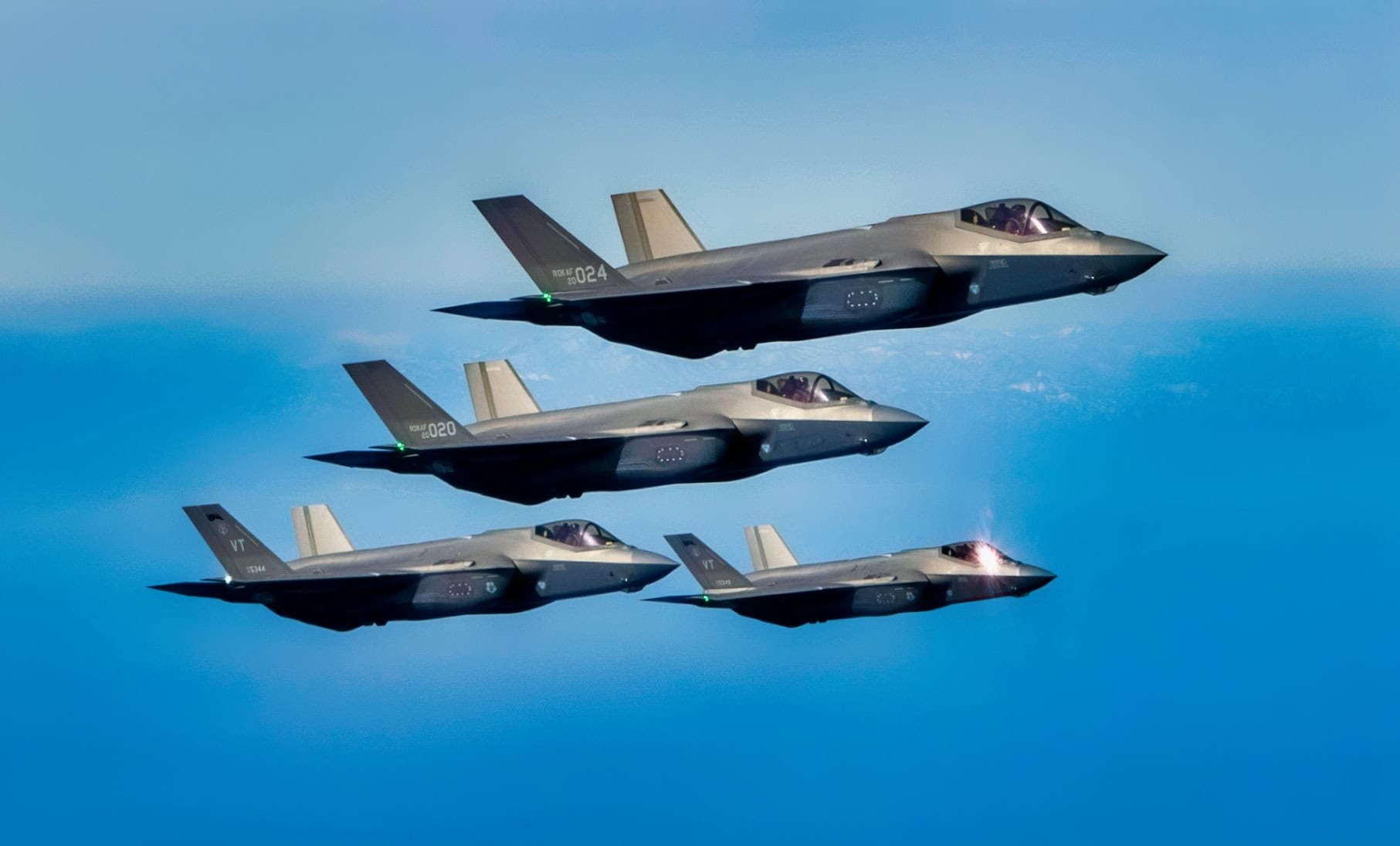
Two U.S. Air Force F-35A Lighting IIs fly in formation with two ROKAF F-35As during Freedom Shield 25, a defense-oriented exercise featuring live, virtual, and field-based training, March 13, 2025. The aircraft participated in dynamic targeting and aerial refueling training, validating the capability of ROK and U.S. Air Forces, to find, fix, and defeat a range of threats. (Photo courtesy of Republic of Korea Air Force)
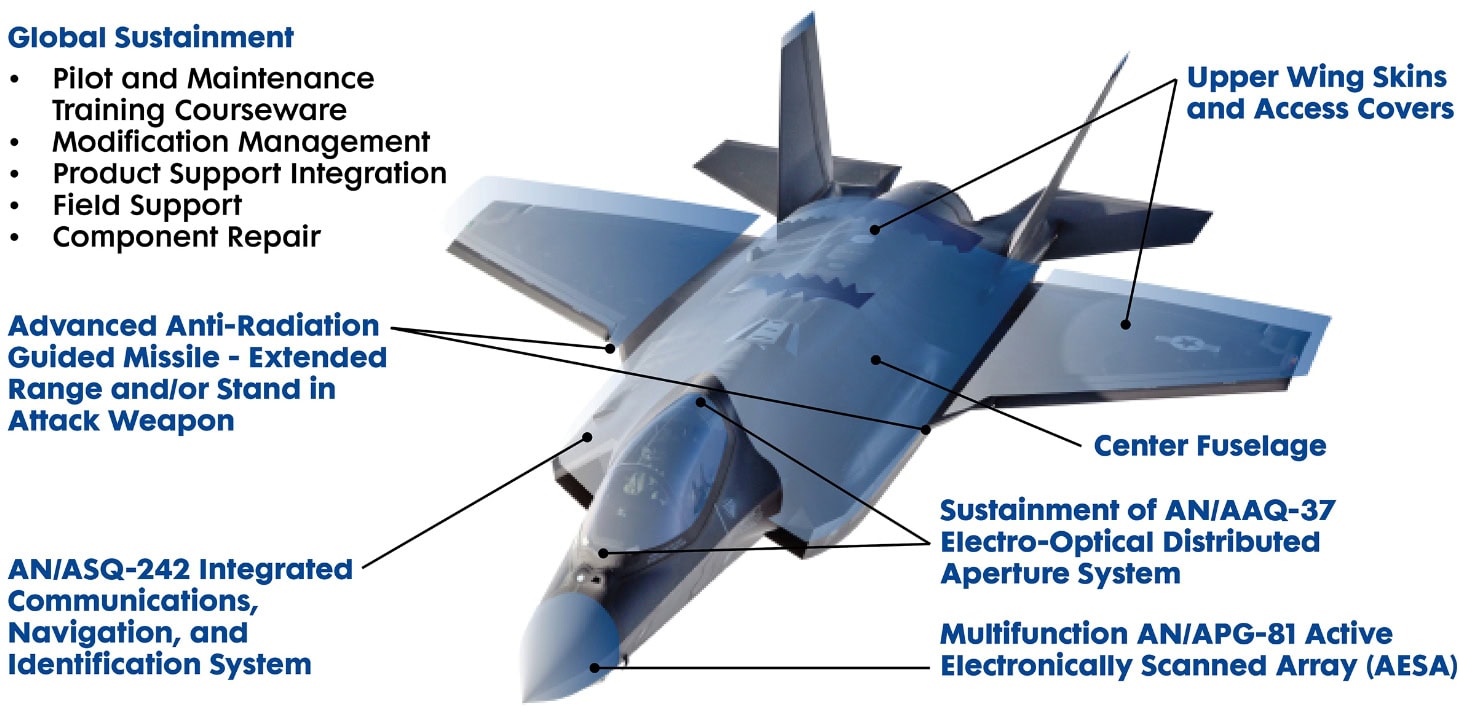
F-35 Fighter. Image Credit: Industry Handout.
About the Author: Harrison Kass
Harrison Kass is an attorney and journalist covering national security, technology, and politics. Previously, he was a political staffer and candidate, and a US Air Force pilot selectee. He holds a JD from the University of Oregon and a master’s in global journalism and international relations from NYU.