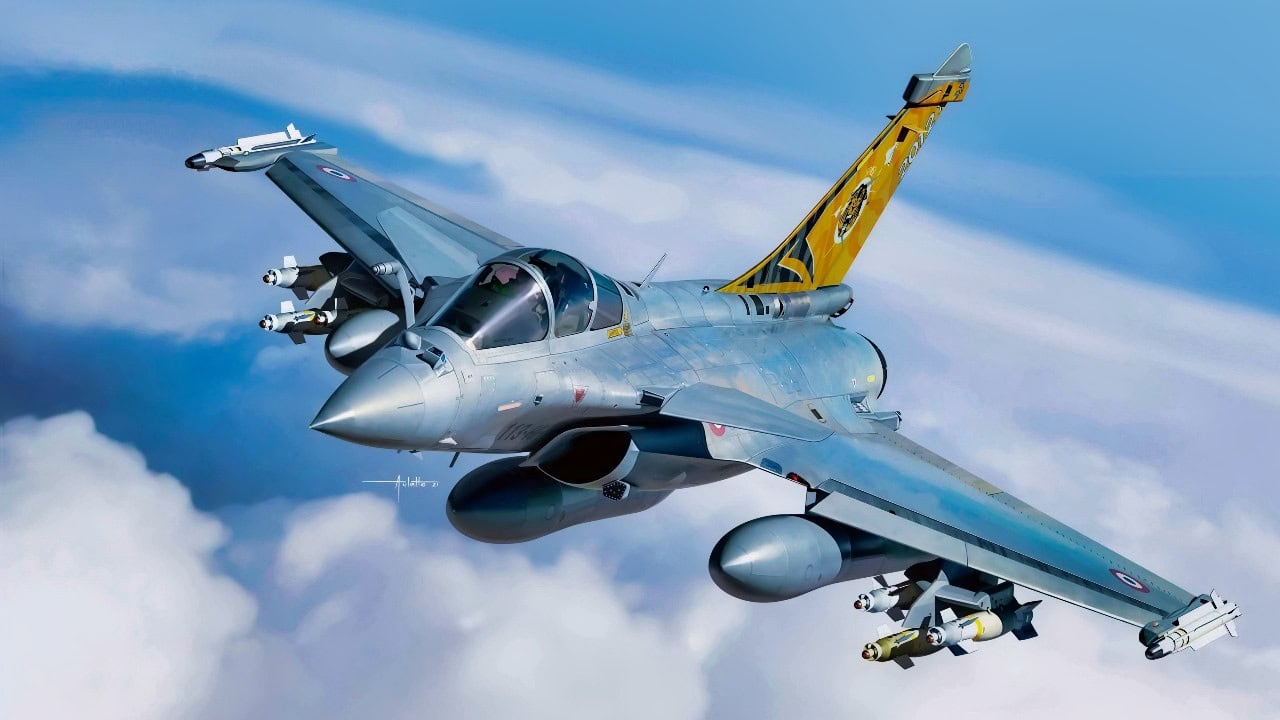
Summary and Key Points: Once constrained by a thin order book, Dassault’s Rafale fighter is now in a sustained production upswing.
-The company produced 26 aircraft in 2025 and is expanding capacity to 36 per year, with a planned ramp toward 48–60 annually as export demand remains strong.
-That larger run is also making staged upgrades more affordable. Safran’s latest M88 T-REX engine aims for roughly 20 percent more afterburner thrust while keeping the same overall dimensions.
-Thales is developing a GaN-based RBE2-XG AESA radar with greater range and improved anti-jam performance, paired with an upgraded EW suite.
Dassault Hits Rafale #300—and Ramps Output as Export Orders Pile Up
A few years ago, rolling as many as 26 Rafale aircraft off Dassault Aviation’s production line in Bordeaux-Mérignac in one year’s time would seem unlikely. A decade ago, the Rafale order book was so anemic that production rates dropped as low as 1.1 aircraft per month.
But the fortunes of the twin-engine omnirole fighter jet have turned around lately, and the 300th Rafale was produced all the way back in October. According to Dassault, the fuselage for number 300 had been assembled only a few days earlier.
Although Dassault is the official manufacturer, Dassault Rafale production unites approximately 400 French companies and suppliers. The Mérignac facility is “a central hub for the French aerospace industry, hosting key partners like Safran and Thales in the Bordeaux region. It is the cornerstone of France’s industrial and military sovereignty, thanks to the development of critical technologies and its export success,” Dassault said in a statement.
In 2025 Dassault exceeded the targets for Rafale production, producing 26 aircraft instead of the planned 25. This signals the beginning of an increase of production rates after a dramatic jump in new orders.
Dassault is now implementing a program to expand its production capacity, initially to 36 fighters per year. The plan is for a steady increase in production to 48–60 aircraft annually.
This ramp-up is driven by expanding and stable export demand. Future builds will also incorporate numerous improvements over the current Rafale design.
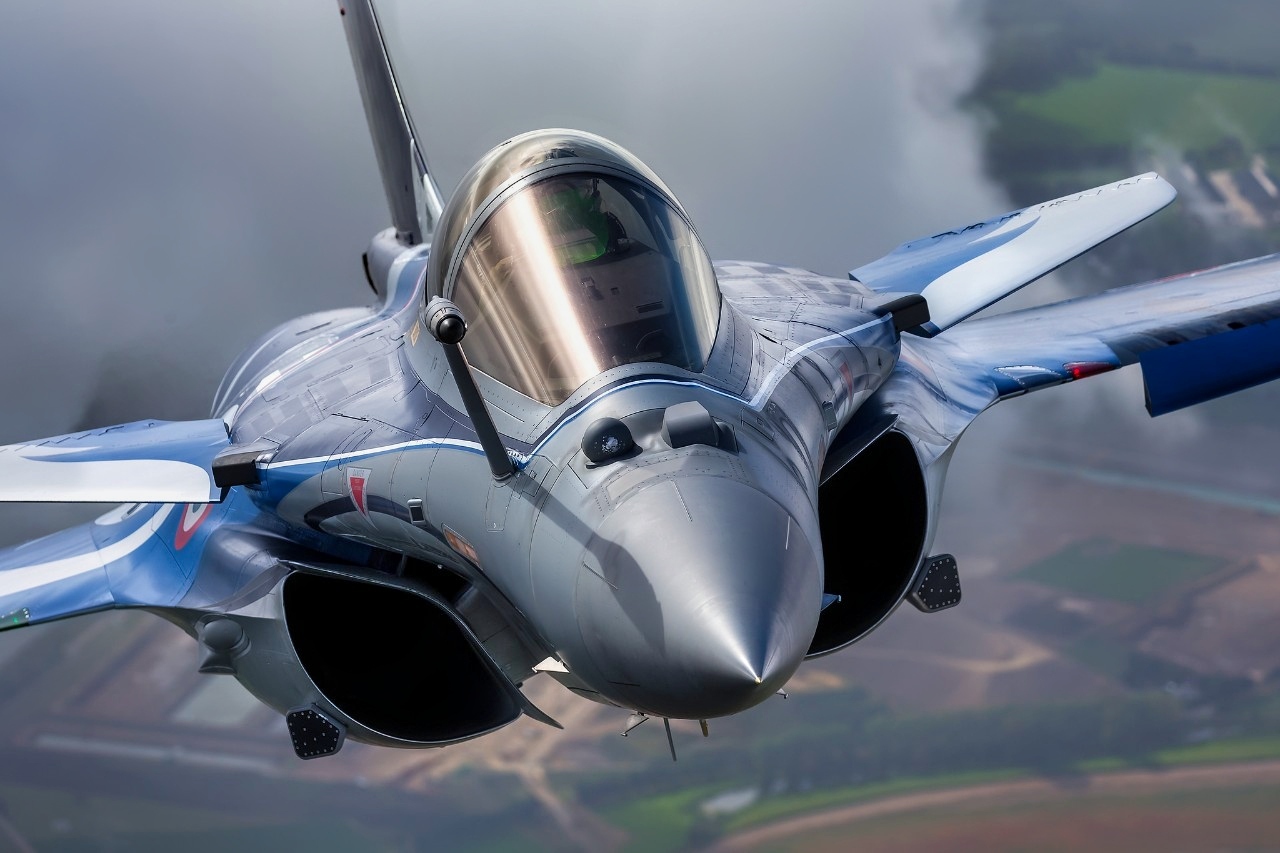
Dassault Rafale Fighter. Image Credit: Creative Commons.
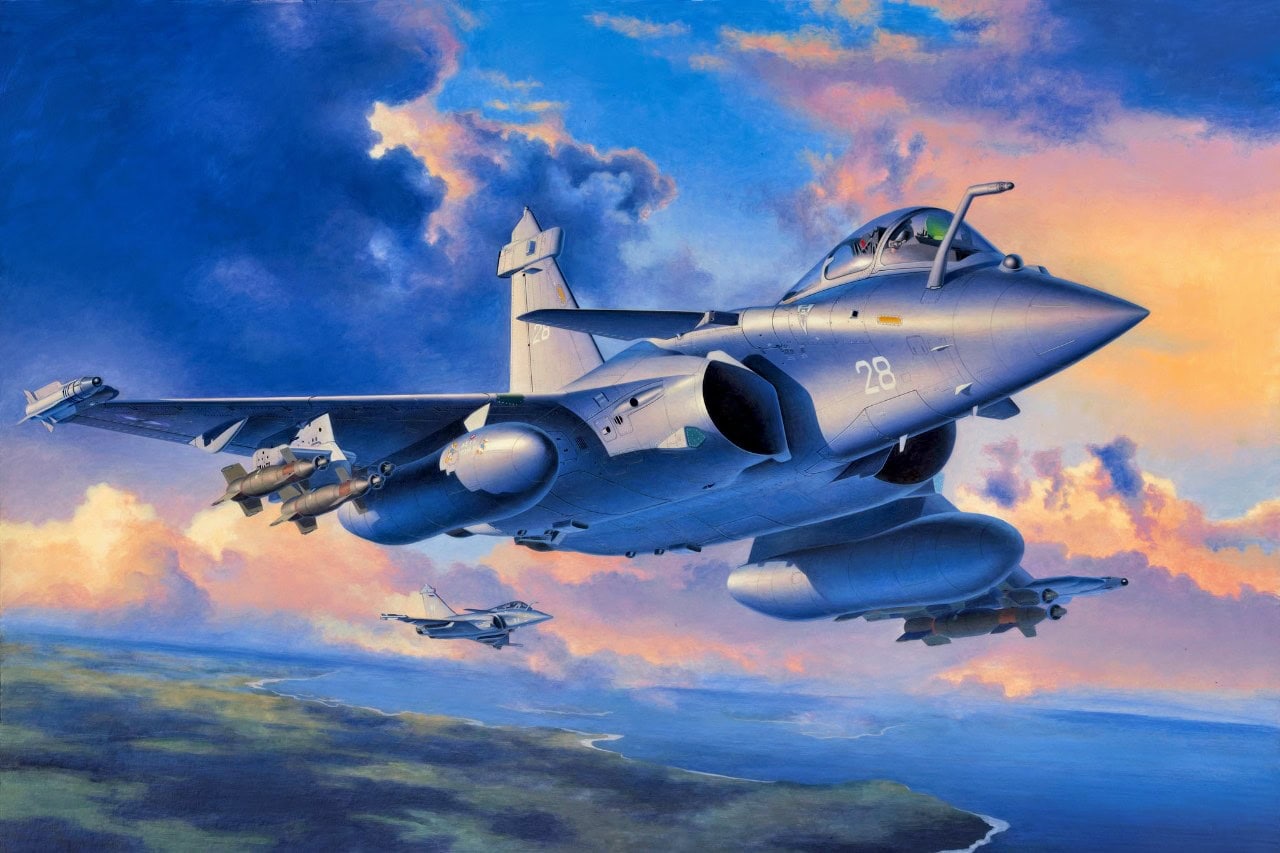
Dassault Rafale. Image Credit: Creative Commons.
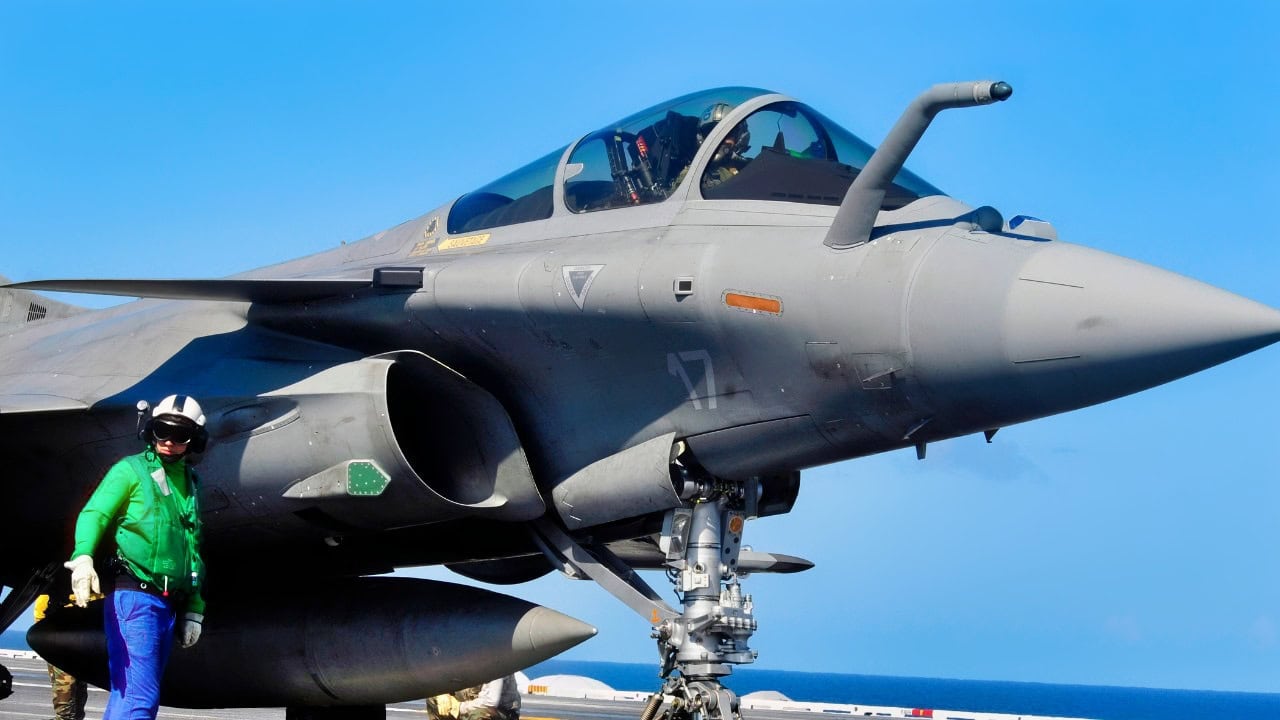
ATLANTIC OCEAN (July 19, 2008) A French F-2 Rafale fighter prepares to launch during combined French and American carrier qualifications aboard the aircraft carrier USS Theodore Roosevelt (CVN 71). This event marks the first integrated U.S. and French carrier qualifications aboard a U.S. aircraft carrier. The Theodore Roosevelt Carrier Strike Group is participating in Joint Task Force Exercise “Operation Brimstone” off the Atlantic coast until the end of July. (U.S. Navy photo by Mass Communication Specialist 3rd Class Christopher Hall/Released)
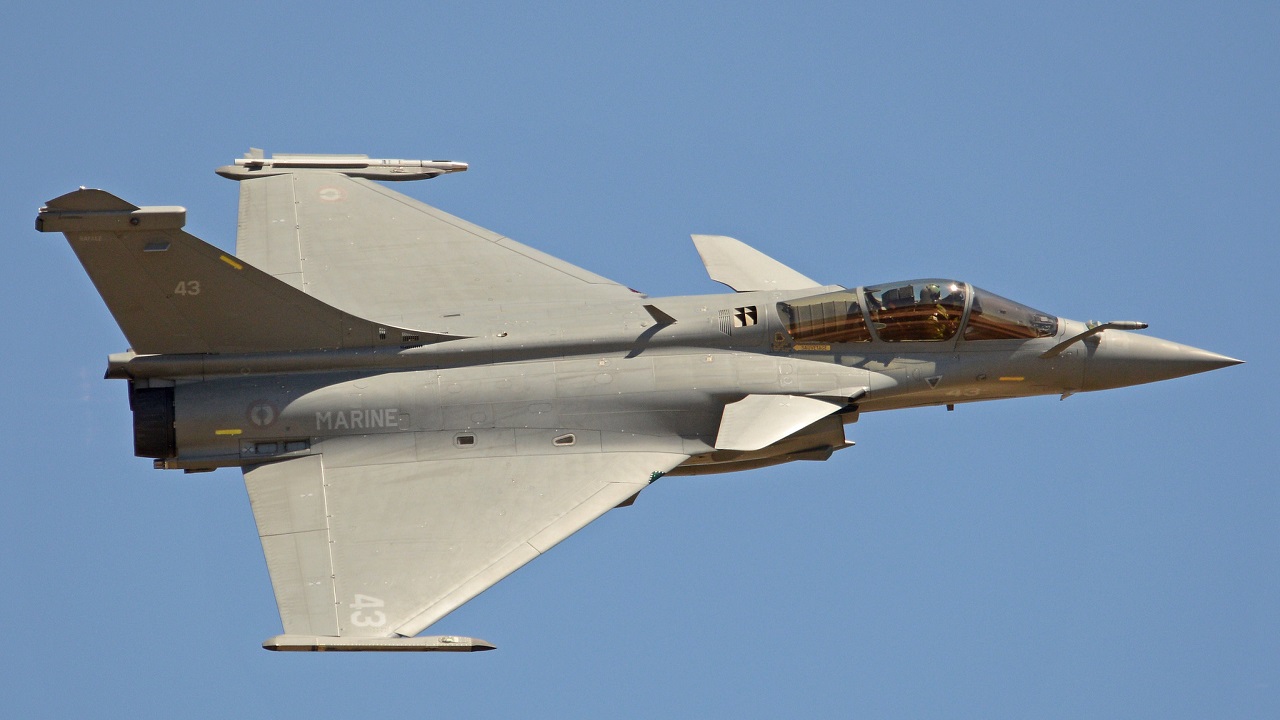
Operated by Flottille 12F, Aeronavale, based at Landivisiau.
Seen during a practice display routine at Zaragoza Air Base, Spain, during the 2016 NATO Tiger Meet (NTM).
The steady increase in new orders for the aircraft and the tempo for staged modernization of its configuration have spawned advances to the aircraft’s major subsystems. The increase in Rafale orders makes these improvements more economically feasible by amortizing R&D across a larger production run.
More Thrust
Safran supplies the aircraft’s M-88 jet engine, which is now in its third iteration. The latest design of the propulsion system is designated the M88 T-REX and was first announced last June. The new engine will produce 9 metric tons of thrust in afterburner, an increase of 20 percent over the standard M88 model.
Among other changes, the newer engine increases the air intake and will have an improved low-pressure compressor.
The Safran design team states that despite the significant increase in thrust, the baseline engine’s shape and dimensions are retained, which will permit the Rafale 5 to maintain its airframe’s aerodynamic design.
That new version is being called the “Super Rafale,” similar to how the latest iterations of the F/A-18 were relabelled the “Super Hornet.”
Electronic Systems
Thales, another major partner in the Rafale program, is now developing the RBE2-XG, a next-generation active electronically scanning array (AESA) radar. This radar will feature transmit/receive modules (TRMs) based on gallium nitride technology. The first-generation AESA designs functioned with older technology and less efficient TRMs based on gallium arsenide.
The RBE2-XG is an evolution of the current RBE2-AA active array radar that will detect targets at a 30-percent greater range. It will also feature better processing for multiple tracks and improved resistance to jamming.
These changes are coupled with an improved electronic warfare (EW) system that builds on the lessons learned with the existing SPECTRA suite. The new EW suite design is supposed to exhibit stronger jammers, broader frequency coverage, more powerful threat geolocation, and better integration with drones for coordinated cyber-electronic attacks.
Taken together, these improvements will provide greater multi-spectral detection and defense against modern radars and missiles, an increase in situational awareness, and survivability against advanced threats. The Rafale’s aerodynamic shape is not a blended-body, stealthy design. It will compensate for its lack of stealth with an emphasis on network-centric operations and digital integration.
There are so many more new orders for the aircraft that in 2025 that Dassault opened a new plant in France for the first time in 50 years. In India, Tata is launching production of Rafale fuselage elements at its facilities.
Meanwhile, the aircraft continues to find new markets. According to recent reports, Iraq and France are in the final stages of negotiations on the purchase of Rafale fighters.
About the Author: Reuben F. Johnson
Reuben F. Johnson has thirty-six years of experience analyzing and reporting on foreign weapons systems, defense technologies, and international arms export policy. Johnson is the Director of Research at the Casimir Pulaski Foundation. He is also a survivor of the Russian invasion of Ukraine in February 2022. He worked for years in the American defense industry as a foreign technology analyst and later as a consultant for the U.S. Department of Defense, the Departments of the Navy and Air Force, and the governments of the United Kingdom and Australia. In 2022-2023, he won two awards in a row for his defense reporting. He holds a bachelor’s degree from DePauw University and a master’s degree from Miami University in Ohio, specializing in Soviet and Russian studies. He lives in Warsaw.