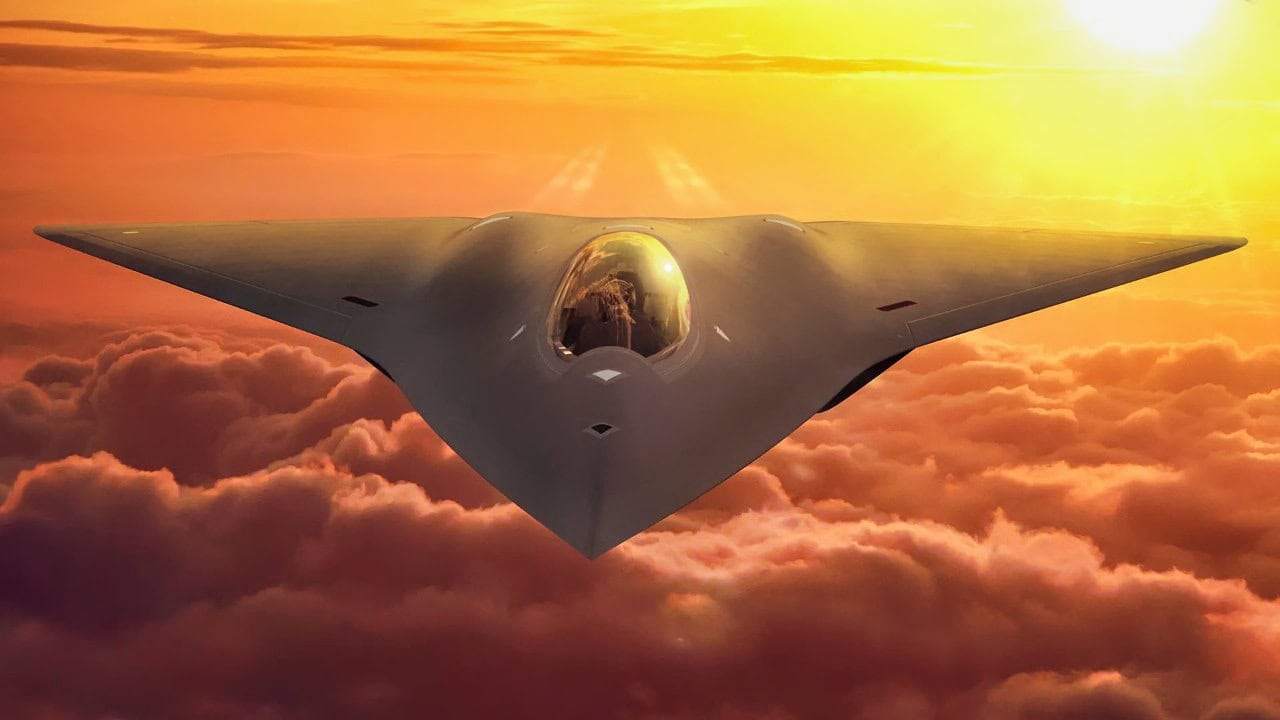
Summary and Key Points: Trump’s administration awarded Boeing NGAD; Trump unveiled the sixth-generation fighter as F-47, linking it to his presidency.
-At Davos, he suggested he might change the designation, signaling discomfort with being tied to a program facing steep technical and budget hurdles.
-The aircraft is expected to pursue adaptive-cycle propulsion, next-gen sensors, weapons, and far greater connectivity, while aiming for a 1,000-nautical-mile combat radius.
-Chinese commentators say their J-36 and J-50 prototypes are already flying and argue the F-47’s canards could compromise stealth compared with tailless designs.
-A December 2025 Department of War report projects Chinese initial operational capability in the mid-2030s, tightening the strategic clock.
China’s Critique of the F-47: Canards Could Hurt Stealth
Fort Lauderdale, Florida, USA – One of the first major acts of his administration was Trump’s awarding the US Air Force’s Next-Generation Air Dominance (NGAD) 6th-generation fighter program to Boeing.
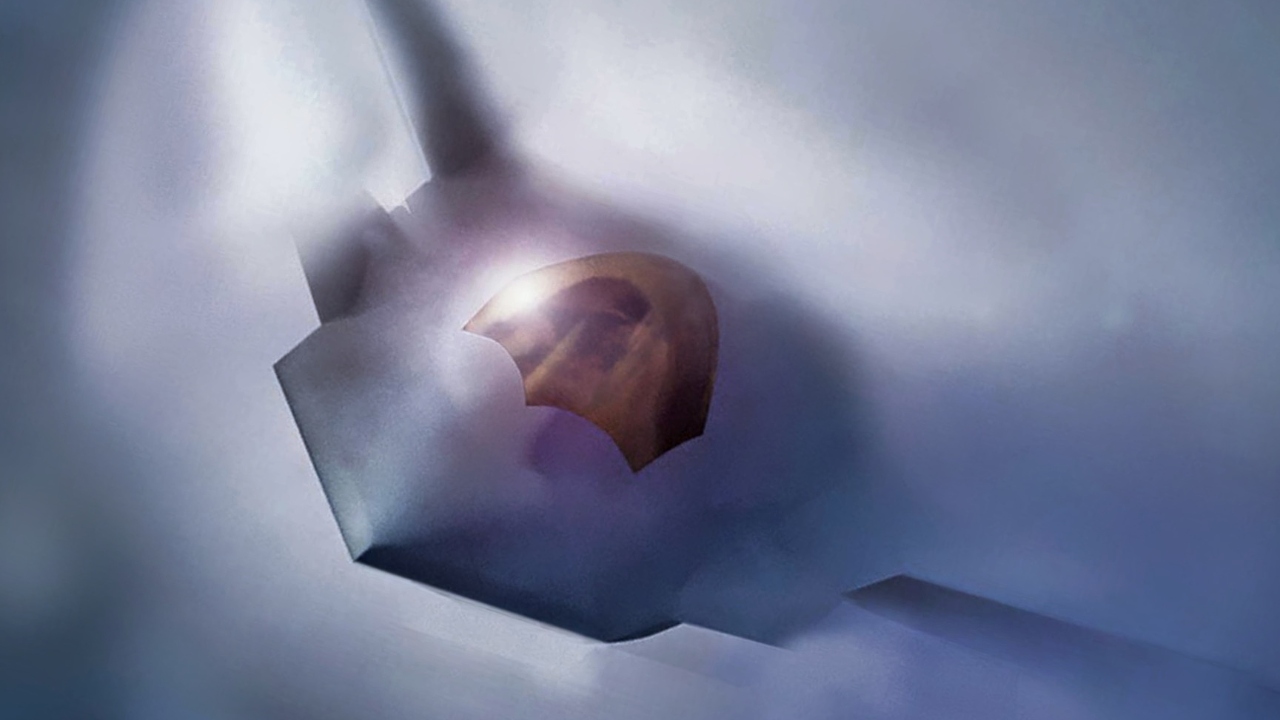
Shown is a graphical artist rendering of the Next Generation Air Dominance (NGAD) Platform. The rendering highlights the Air Force’s sixth generation fighter, the F-47. The NGAD Platform will bring lethal, next-generation technologies to ensure air superiority for the Joint Force in any conflict. (U.S. Air Force graphic)
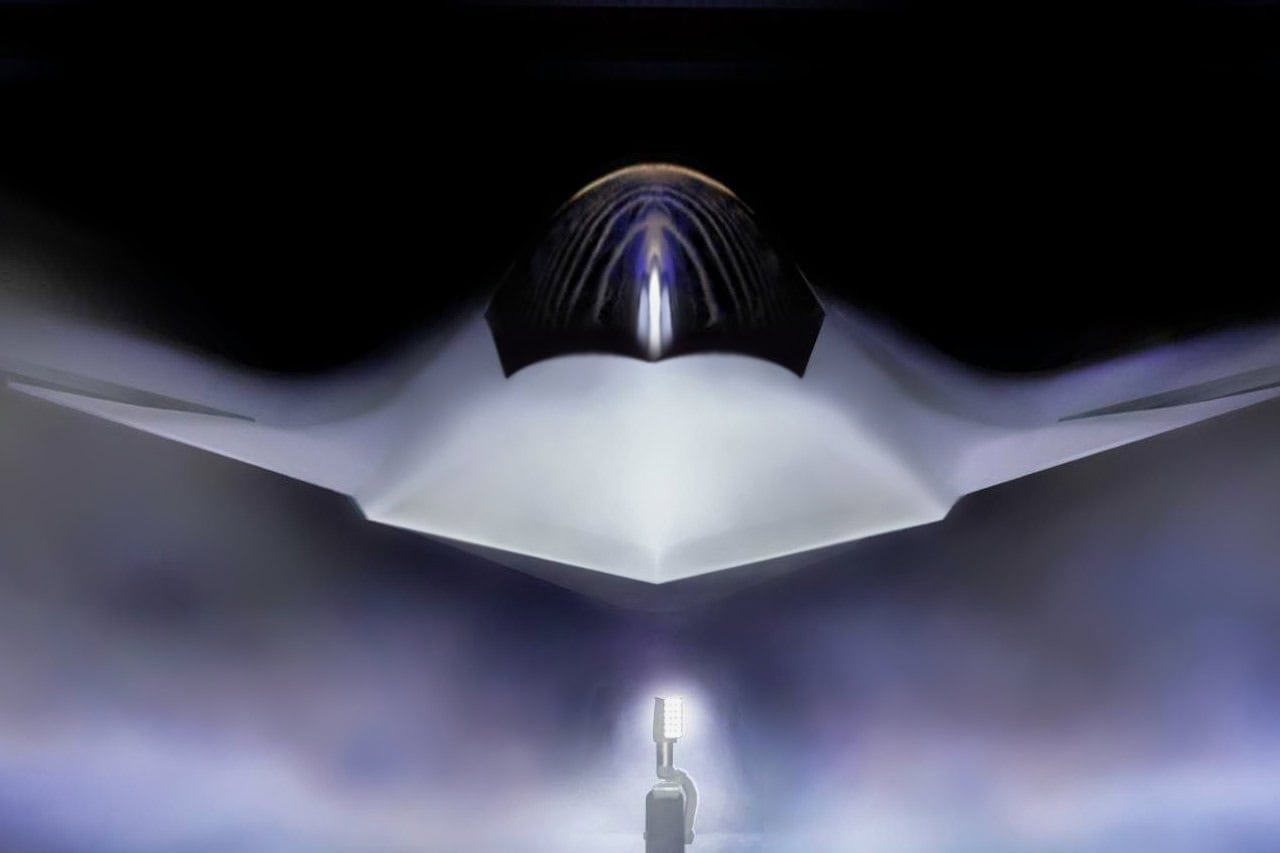
Shown is a graphical artist rendering of the Next Generation Air Dominance (NGAD) Platform. The rendering highlights the Air Force’s sixth generation fighter, the F-47. The NGAD Platform will bring lethal, next-generation technologies to ensure air superiority for the Joint Force in any conflict. (U.S. Air Force graphic)
The designation for the aircraft, he announced at the time, was F-47. This assigned designator, given to the aircraft by the 47th US President, seemed at the time like an event made for a Hollywood movie.
“Nothing in the world even comes close to it, and it will be known as the F-47,” he said. The generals chose the name, and it is a beautiful number,” he had stated during the presentation of the contract award.
But at this week’s World Economic Forum in Davos, Switzerland, Trump seemed to cast doubt on the program’s future.
“They say it is the F-47, the most destructive aircraft ever built. They named it 47. If I do not like it, I will remove it [that designation].”
It is unclear what prompted the US President to suddenly seem to suggest disassociating himself from the program and possibly changing the number assigned to that platform.Trump is sometimes credited with having “saved” the NGAD after being lobbied by both the US Air Force (USAF) and Navy (USN) in a time when there were those calling for it to be scaled back.
The program faced several challenges, including budgetary constraints and ongoing reservations from some air power experts about the practicality of manned 6th-generation fighters.
F-47 Performance
Nothing has been publicly stated by the US president, but some sense he is not eager to have his name and the next-generation fighter linked forever.
This may be due to concerns that the program still faces significant technological hurdles and programmatic questions.
On the technology side, the main challenges include developing an adaptive-cycle engine that can switch to the most efficient configuration, advanced sensors, an entirely new generation of weapons, and data connectivity that goes far beyond current-day datalink systems.
The F-47’s mission itself is also a tall order.
It is supposed to take on the People’s Liberation Army Air Force (PLAAF) in the Indo-Pacific theatre, rewriting the textbooks on air combat.
The aircraft is also supposed to carry enough internal fuel to provide a combat radius of 1,000 nautical miles or more.
That increased range will allow the aircraft to operate for longer periods in contested areas and will represent a major upgrade compared to US 5th-generation aircraftcurrently in the USAF inventory.
In comparison, the F-22 Raptor has a combat radius of approximately 590 nautical miles, and the F-35 Lightning II can reach 670 nautical miles.
Why the PRC is Not Impressed with the F-47
The People’s Republic of China (PRC) is not so impressed with NGAD to date for several reasons.
One is that it has been flying two 6th-generation fighters – Chengdu’s J-36 and the Shenyang J-50/XDS – since December 2024.
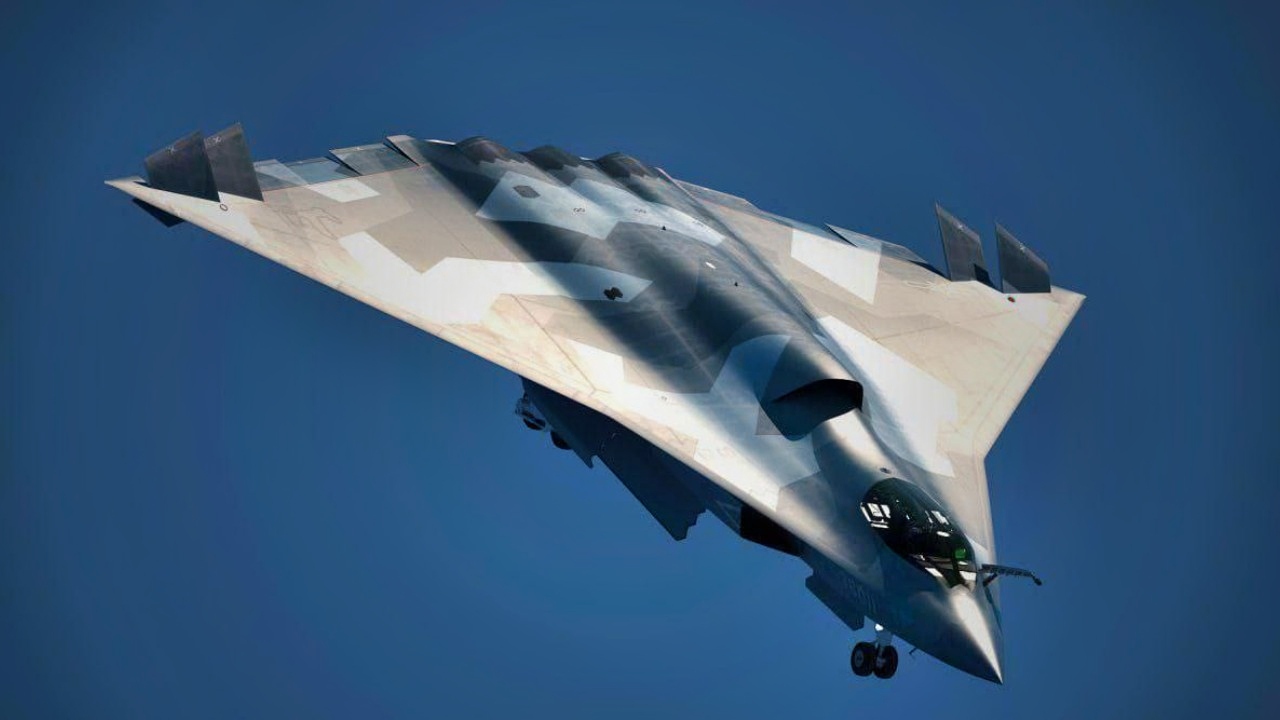
J-36 Fighter Artist Rendition. X Screenshot.
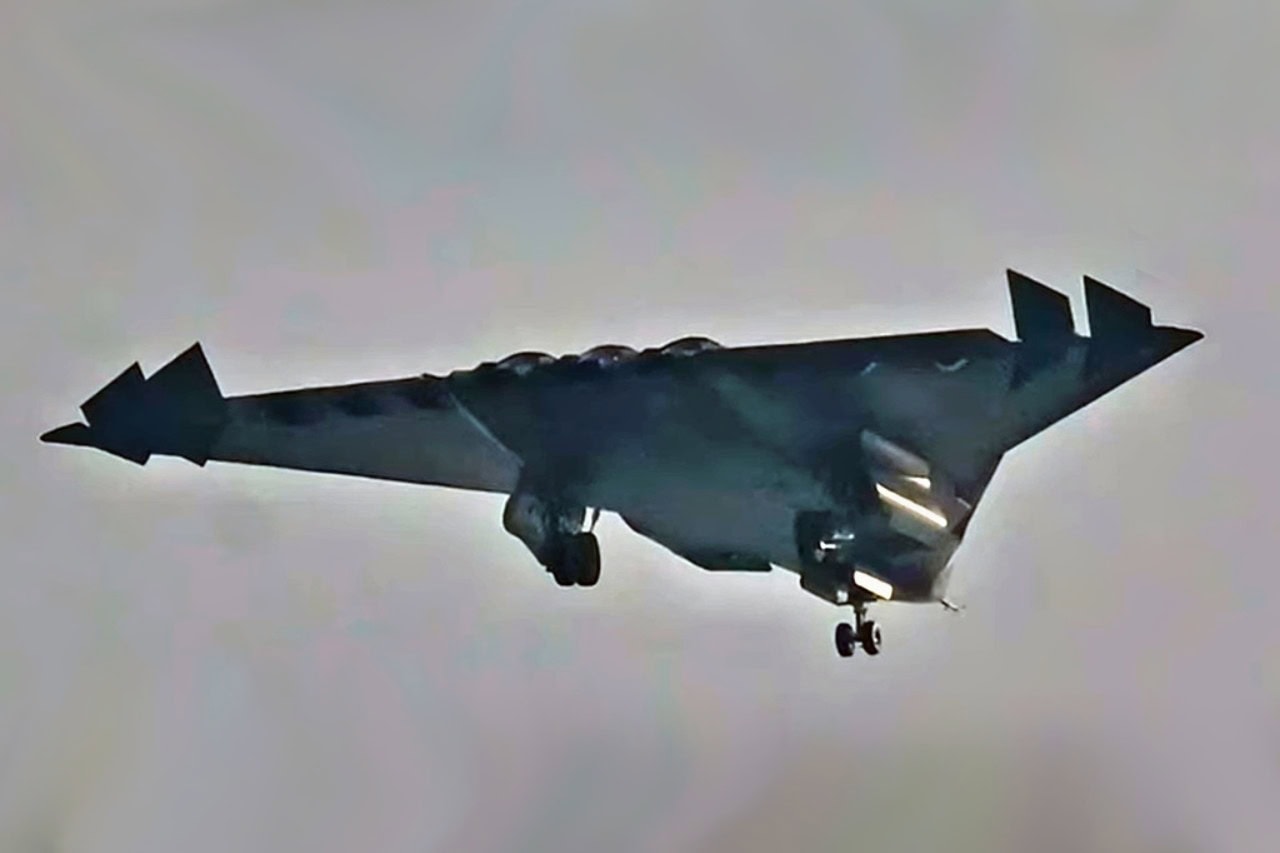
J-36 Fighter from China. Image Credit: Creative Commons.
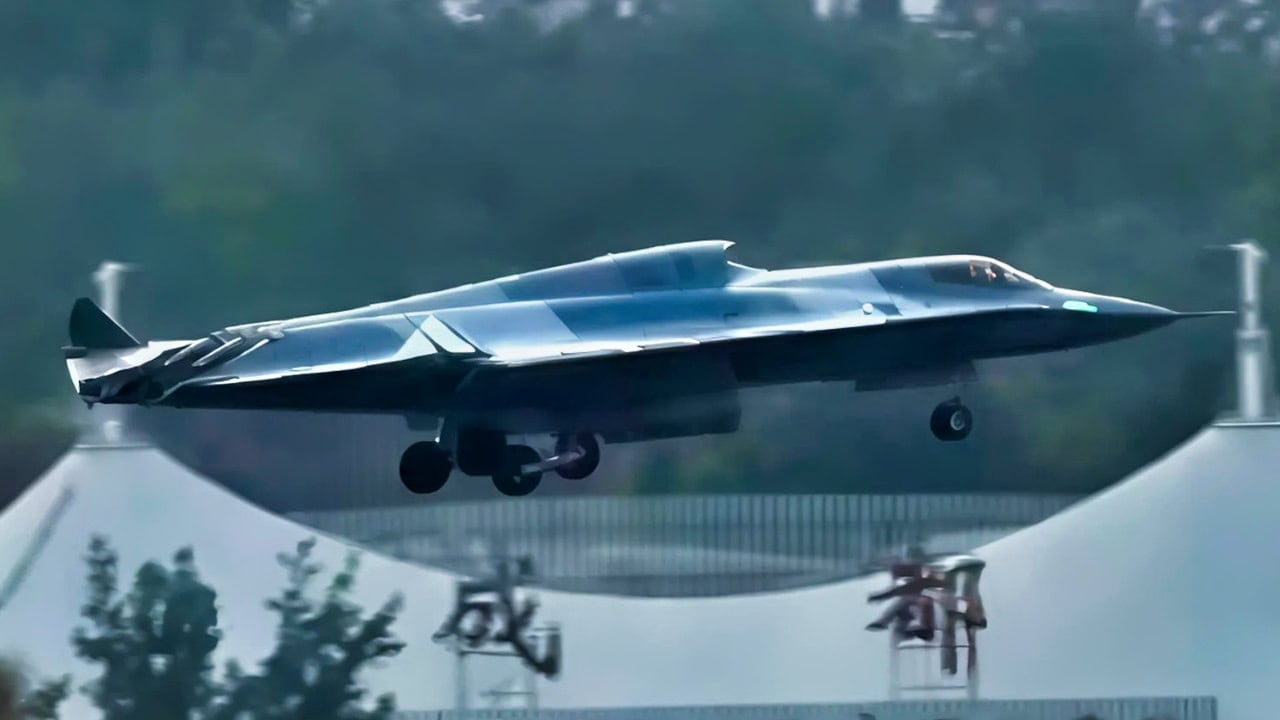
J-36 Fighter from X/Screenshot.
Since that time, Beijing has been busy building additional prototype aircraft and testing new configuration concepts with them at a speed that outstrips any comparable US effort.
A US Department of War report from December 2025 concludes that those PRC programs are no longer in their initial conceptual or design and development phases.
These two fighter aircraft concepts are considered to have entered the active flight-test phase and are fully supported by the country’s top aerospace industrial enterprises. The IOC for both platforms is projected to be in the mid-2030s.
A frequently quoted Chinese military analyst Zhang Xuefeng, a Chinese military affairs expert, has asserted in PRC state-controlled media that the F-47’s appearance appears generically to be a 6th-generation fighter jet concept.
He did point out that the aircraft lacks vertical tails to reduce its stealth signature across all aspects, that the fuselage is a lifting body, and that the nose is flat—all consistent with the requirements for a 6th-gen fighter shape.
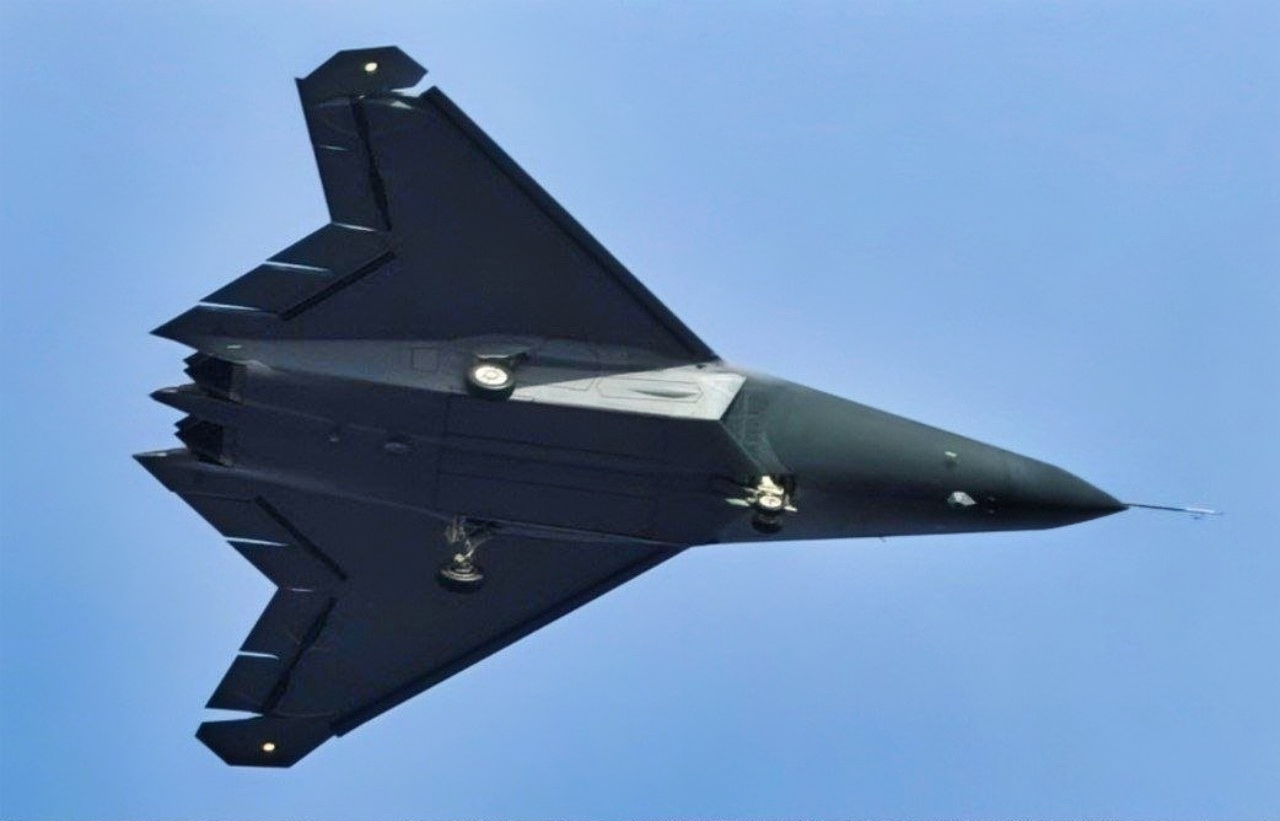
J-50 Fighter. Image Credit: Creative Commons.
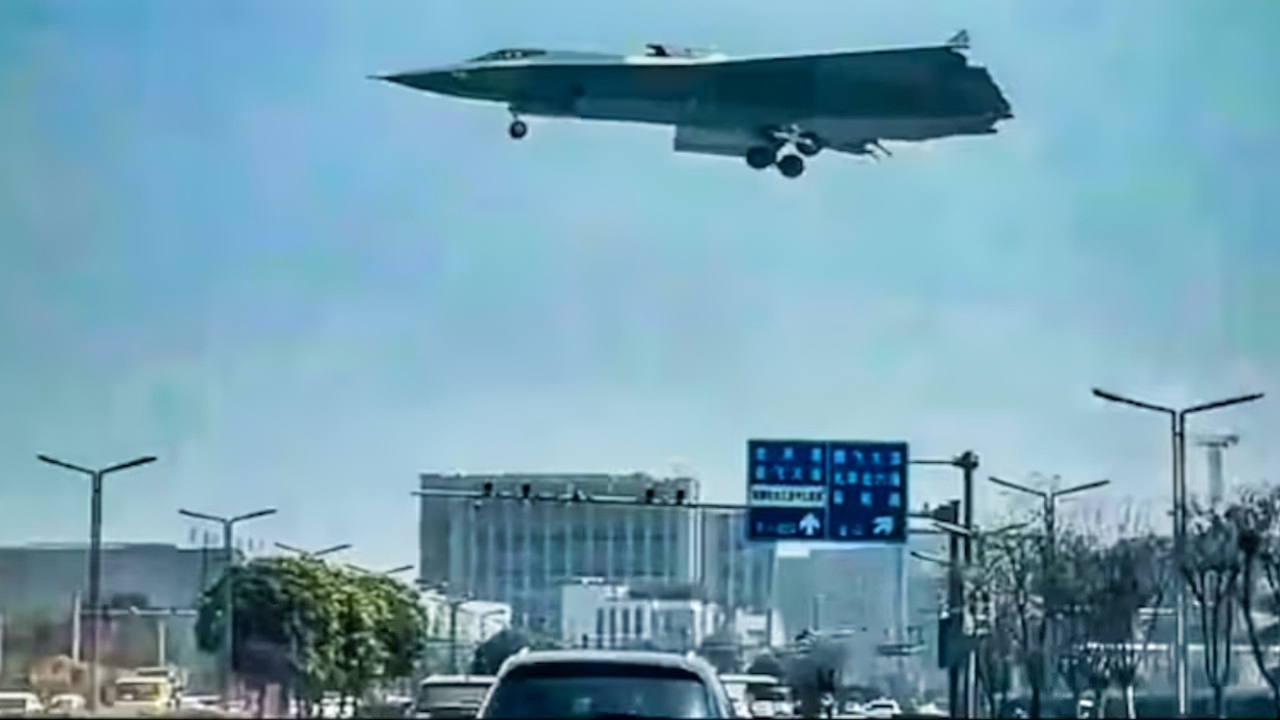
J-50 Fighter from the Road. Image Credit: Creative Commons/Screenshot.
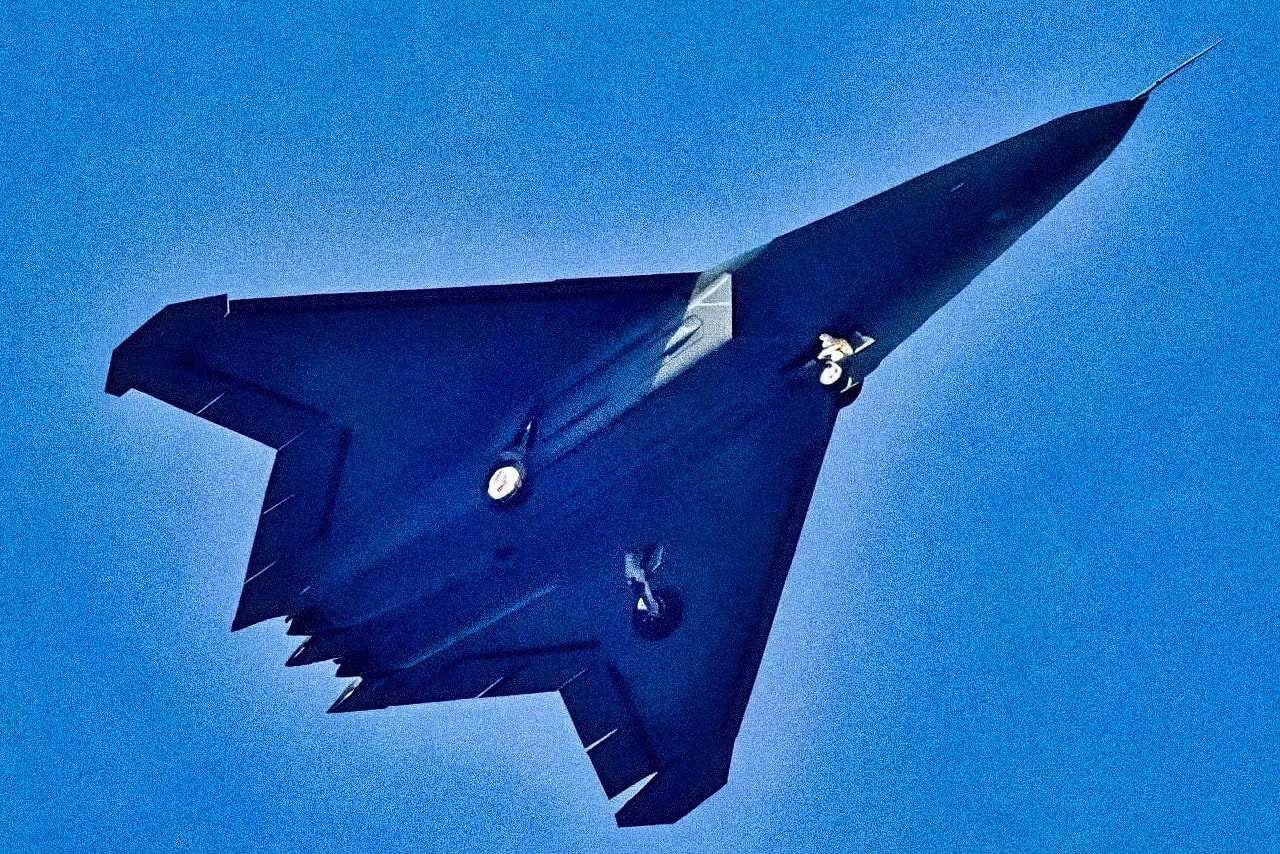
J-50 Fighter. Image Credit: Creative Commons/Screenshot.
But another PRC analyst and expert stated that the F-47’s signature will be somewhat compromised by the two canards visible in front of its main wings.
Zhang also stated that eliminating vertical tails and adopting a supersonic flying-wing structure to enhance stealth is one of the main trends in 6th-generation fighter aircraft, but that canards may counteract that signature-reduction technique by replacing vertical control surfaces with other reflective appendages.
In his view, the innovations seen in the J-36 and J-50, such as movable wingtips, are required in place of vertical tails to maintain aircraft control stability.
The F-47 designers, if the renditions seen to date are accurate, have chosen to employ canards, which the Chinese design teams regard as an outdated technique from previous generations and no longer an optimal solution.
About the Author: Reuben F. Johnson
Reuben F. Johnson has thirty-six years of experience analyzing and reporting on foreign weapons systems, defense technologies, and international arms export policy. Johnson is the Director of Research at the Casimir Pulaski Foundation. He is also a survivor of the Russian invasion of Ukraine in February 2022. He worked for years in the American defense industry as a foreign technology analyst and later as a consultant for the U.S. Department of Defense, the Departments of the Navy and Air Force, and the governments of the United Kingdom and Australia. In 2022-2023, he won two awards in a row for his defense reporting. He holds a bachelor’s degree from DePauw University and a master’s degree from Miami University in Ohio, specializing in Soviet and Russian studies. He lives in Warsaw.