
Why the Nimitz-Class Aircraft Carriers are So Special: There is a particular kind of warship that gets rarer the longer you study naval history. A class designed for one war, that fights a different one, that fights a third one a decade later, that fights a fourth and a fifth, and never stops being the most useful tool in the toolkit. A class that survives the disappearance of the adversary it was built to defeat. A class whose lead ship is so structurally and operationally sound that fifty years after her commissioning, the Navy has to extend her service life because the replacement is not yet ready to take her place.
The Nimitz-class aircraft carrier is that kind of warship. As one retired U.S. Navy warship captain told me a few months ago, “those Nimitz-class supercarriers might not be replaceable as they were built to take on anything and, to be frank, we don’t seem to build carriers like that anymore.”
The Nimitz-Class: Just Pure Legend
Ten hulls. Fifty-one years between the commissioning of USS Nimitz in May 1975 and the moment in March 2026 when she sailed out of Naval Base Kitsap-Bremerton for what was supposed to be her final voyage — only to have the Navy extend her active service through March 2027 one week later because the carrier scheduled to replace her, USS John F. Kennedy, was not yet ready to enter the fleet.
The Nimitz-class has now outlived the Cold War it was built to fight, the Soviet adversary it was built to deter, four generations of carrier-borne fighters, and at least two attempts by the Navy to replace it.
It might be the best aircraft carrier class ever put to sea. Here is why.
Why The Navy Built Them
The Nimitz-class was conceived in the mid-1960s as a replacement for the aging Midway, Forrestal, and Kitty Hawk-class carriers, and as a more producible alternative to the one-off USS Enterprise (CVN-65), which had been commissioned in 1961 as the world’s first nuclear-powered aircraft carrier. Enterprise was a triumph of nuclear propulsion. She was also a triumph of cost and complexity — eight reactors, an enormous engineering plant, and a unit price that made it clear no one was going to build a second Enterprise on the same architecture.
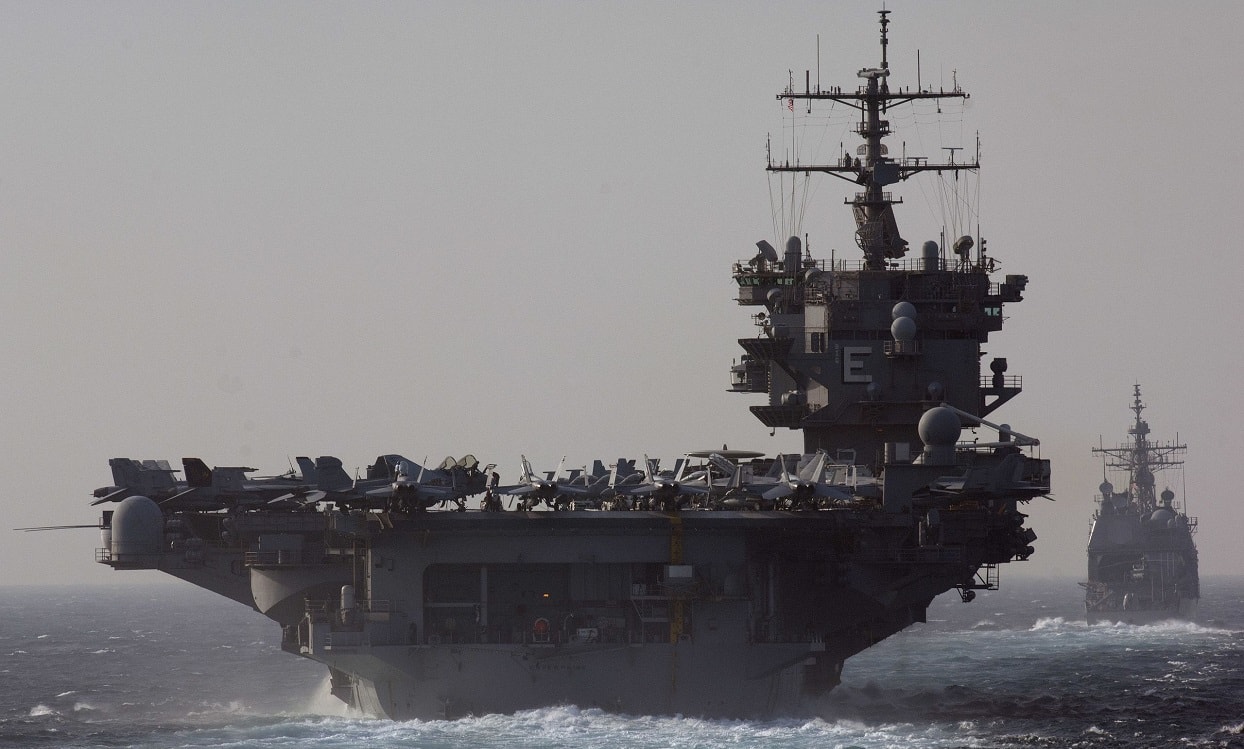
Image: Creative Commons.
The Navy’s challenge in 1967, when the lead ship was authorized by Congress, was to take the strategic advantages of nuclear propulsion — unlimited range, multi-decade fuel cycles, and dramatically increased internal volume for aviation fuel and ordnance — and combine them with a producible design that could roll off the slipway at Newport News Shipbuilding in serial production. The team at Newport News delivered a hull that consolidated Enterprise’s eight reactors into two, freeing internal volume that the design then spent on more aviation fuel and bigger magazines.
Vietnam shaped the requirements. American carriers in Southeast Asia were being used to generate sortie volume, not to absorb damage, and the lessons from those operations pushed the Nimitz design toward larger fuel and ordnance capacity rather than additional armor. A Nimitz could carry roughly 90 percent more aviation fuel and 50 percent more ordnance than the Forrestal-class she was replacing. With nuclear propulsion eliminating the bunker fuel required by the older oil-fired carriers, the additional internal volume was used for things the air wing actually needed.
The Navy also built the class to last. Each Nimitz-class hull was designed for an approximately 50-year service life with one mid-life Refueling and Complex Overhaul (RCOH) — typically conducted at roughly the 23-to-25-year mark — that replaced the reactor cores and modernized the ship’s combat systems. The 50-year design life was, at the time of authorization in 1967, an aggressive goal. The lead ship has now operated past that mark. Several others will too.
USS Nimitz herself was laid down on June 22, 1968, and commissioned at Naval Station Norfolk on May 3, 1975, by President Gerald Ford. Nine sister ships followed, with construction continuing across four decades.
All ten were built at Newport News Shipbuilding in Virginia, making the yard the single most important defense industrial asset in the United States throughout the Cold War and post-Cold War periods.
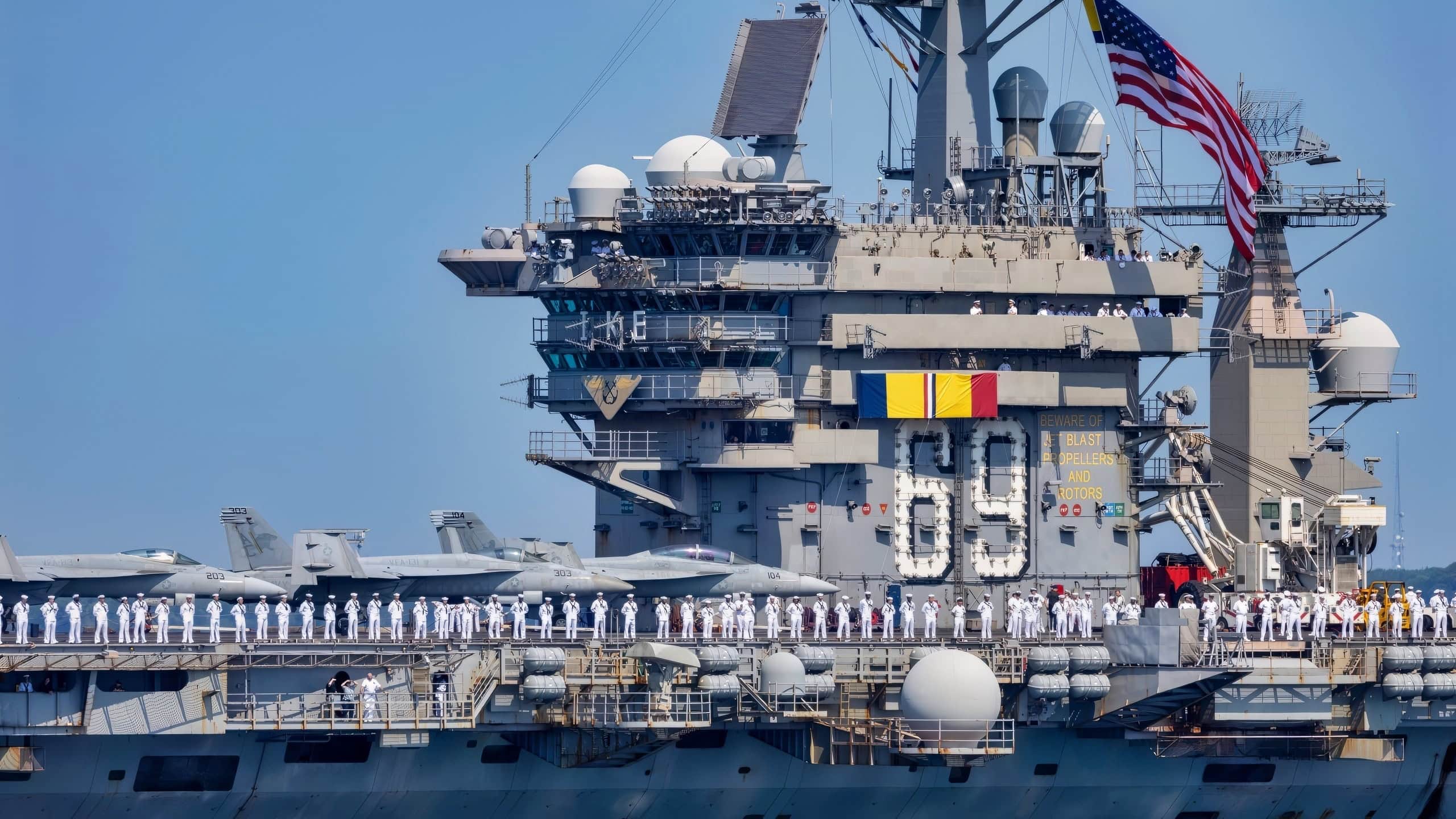
(July 14, 2024) The Nimitz-class aircraft carrier USS Dwight D. Eisenhower (CVN 69) returns to Naval Station Norfolk, July 14, 2024, concluding a nine-month deployment to the Atlantic. Eisenhower, the flagship of the Ike Carrier Strike Group, departed Norfolk October 14, 2023 to conduct a scheduled deployment to U.S. 5th and 6th Fleet area of operations in support of maritime security operations, theater security cooperation efforts, and enhanced vigilance activities operations with NATO Allies and Partners. (U.S. Navy Photo by Mass Communication Specialist 2nd Class Hunter Day)
The Specifications That Defined A Generation
A Nimitz-class carrier displaces roughly 100,000 long tons at full load. The flight deck runs 332.9 meters — over a thousand feet — and the ship carries a typical complement of more than 6,000 personnel, including the air wing. Two A4W pressurized water reactors generate roughly 260,000 shaft horsepower, driving four shafts and giving the class a top speed in excess of 30 knots.
The flight deck uses a CATOBAR arrangement — Catapult Assisted Takeoff But Arrested Recovery — with four steam catapults forward and arresting wires aft, permitting simultaneous launch and recovery operations. The hangar deck is divided into three bays by thick steel fire doors. Four large elevators move aircraft between the hangar and the flight deck. From USS Theodore Roosevelt onward, the ships were built with 2.5-inch Kevlar armor over vital spaces.
A Nimitz air wing typically carries somewhere between 60 and 90 aircraft — F/A-18E/F Super Hornets, EA-18G Growlers for electronic warfare, E-2 Hawkeyes for airborne early warning, MH-60 Seahawks for anti-submarine and search-and-rescue, and increasingly F-35C Lightning II strike fighters as the carrier air wing transitions to fifth-generation aviation. Across her service life, a single Nimitz hull has typically operated F-4 Phantoms, F-14 Tomcats, A-6 Intruders, A-7 Corsair II, S-3 Vikings, and the F/A-18 family — the entire post-Vietnam evolution of American carrier aviation.
Defensive armament is deliberately minimal: short-range Sea Sparrow or Evolved Sea Sparrow surface-to-air missiles, RIM-116 Rolling Airframe Missiles, and Phalanx 20mm close-in weapon systems. A carrier does not defend itself. The strike group around her does.

F-14 Tomcat at Aviation Museum of Kentucky. Taken on March 1, 2026. By Christian D. Orr.
The Combat Record
The Nimitz-class operational history is, in effect, the United States Navy’s operational history from the late Cold War to the present.
The Cold War. USS Nimitz herself deployed to the Indian Ocean in 1979-1980 in response to the Iran hostage crisis and provided the launching platform for Operation Eagle Claw, the failed rescue attempt at Desert One. The class operated continuously across the Mediterranean and Western Pacific through the 1980s, including the 1981 Gulf of Sidra incident with Libyan forces and standard Soviet shadowing missions across two oceans.
Desert Storm and the 1990s. Nimitz-class carriers participated in Operation Desert Storm in 1991, Operation Southern Watch enforcement of Iraq’s no-fly zones throughout the 1990s, NATO operations in Bosnia and Kosovo, and humanitarian responses to the 2004 Indian Ocean tsunami. In March 1996, USS Nimitz transited the Taiwan Strait during the Third Taiwan Strait Crisis — the first American warship to do so since 1976 — sending an unambiguous signal during Chinese missile tests around the island.
The post-9/11 era. Nimitz-class carriers were the platforms for sustained American air operations against Afghanistan starting in October 2001, Iraq in 2003, and ISIS targets across Iraq and Syria from 2014 onward. USS Nimitz herself participated in strikes against ISIS positions in Iraq, Syria, and as recently as her final deployment in 2025, against ISIS targets in Somalia. Her last cruise generated more than 8,500 aircraft sorties and approximately 17,000 flight hours.
Humanitarian operations. Nimitz-class carriers responded to Hurricane Katrina in 2005, the Haitian earthquake in 2010, and dozens of smaller disaster-relief missions where the ship’s nuclear power, fresh water generation capacity, and helicopter operating capability made it a uniquely useful platform. A carrier strike group anchored offshore is one of the few American military assets that can deliver substantial aid to a coastline whose airports and ports have been destroyed.
The class never lost a ship. Across fifty-one years of operations, ten hulls, hundreds of deployments, and operations in every theater of American military activity, no Nimitz-class carrier has ever been lost to enemy action, accident, or fire. Compare that record against any other major surface combatant program in modern naval history.
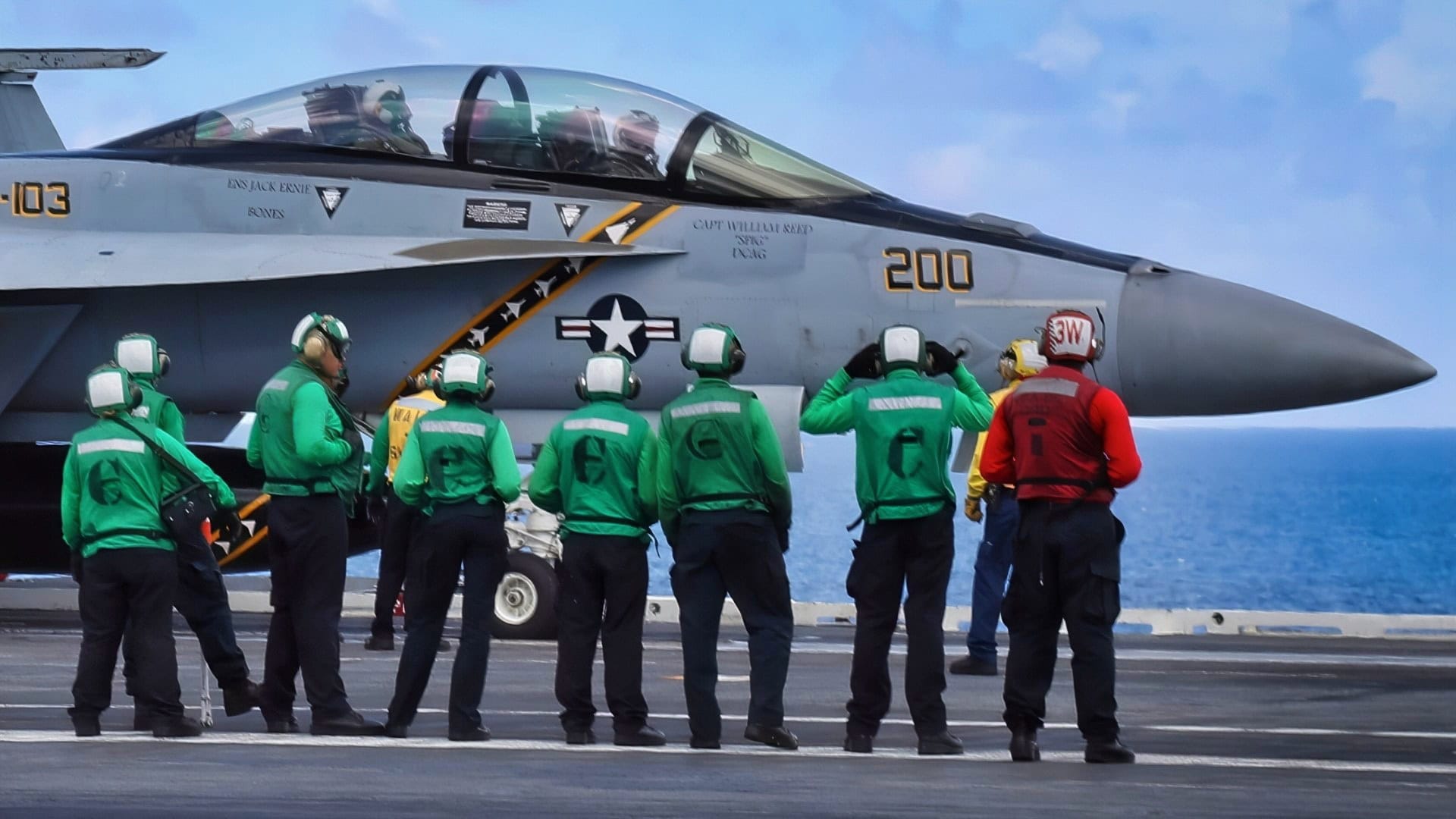
ATLANTIC OCEAN (Aug. 1, 2018) Sailors stand by as an F/A-18E Super Hornet from Strike Fighter Squadron (VFA) 103 taxies to a catapult on the flight deck aboard the Nimitz-class aircraft carrier USS Abraham Lincoln (CVN 72). (U.S. Navy photo by Mass Communication Specialist 3rd Class Jeff Sherman)
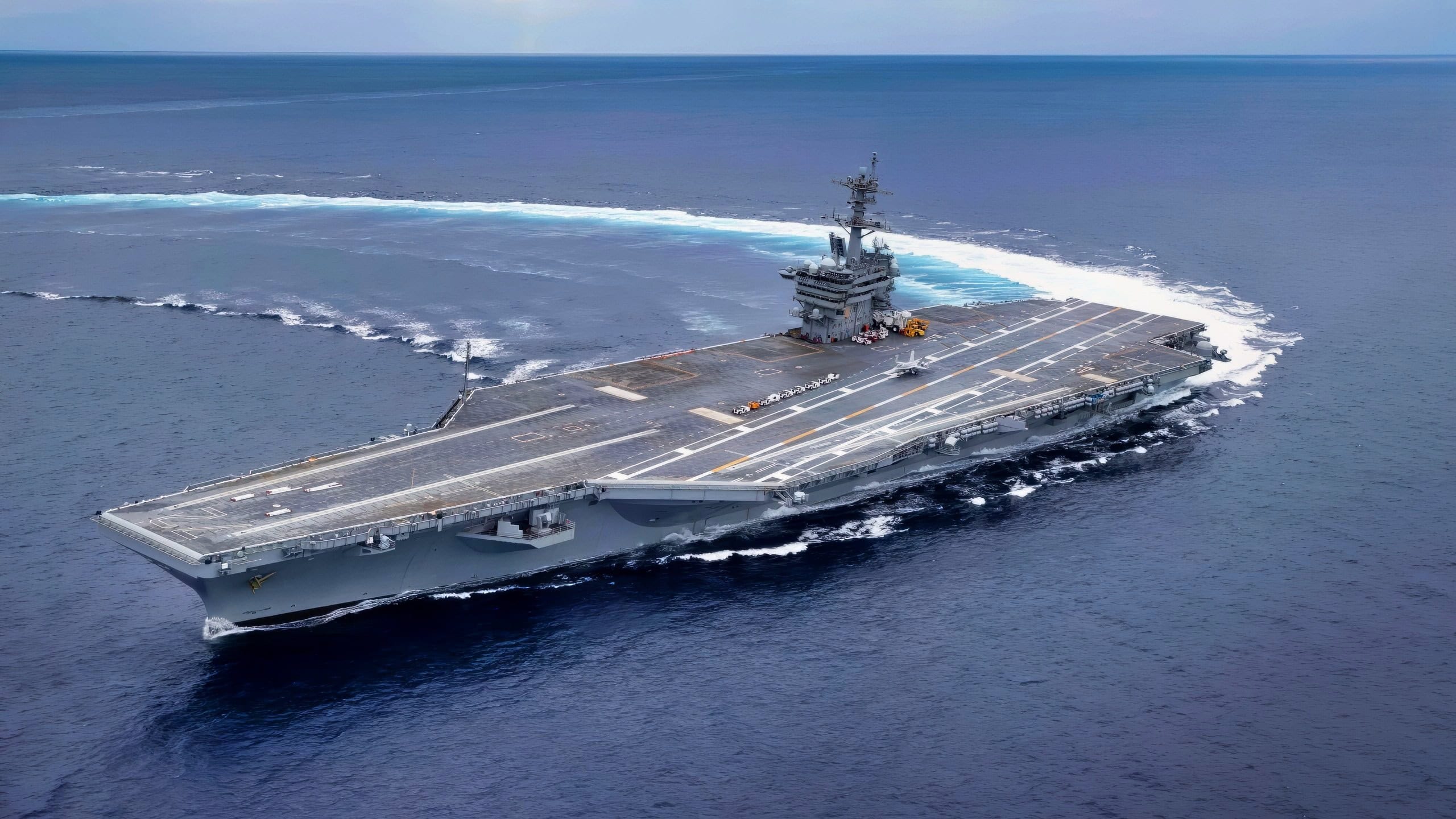
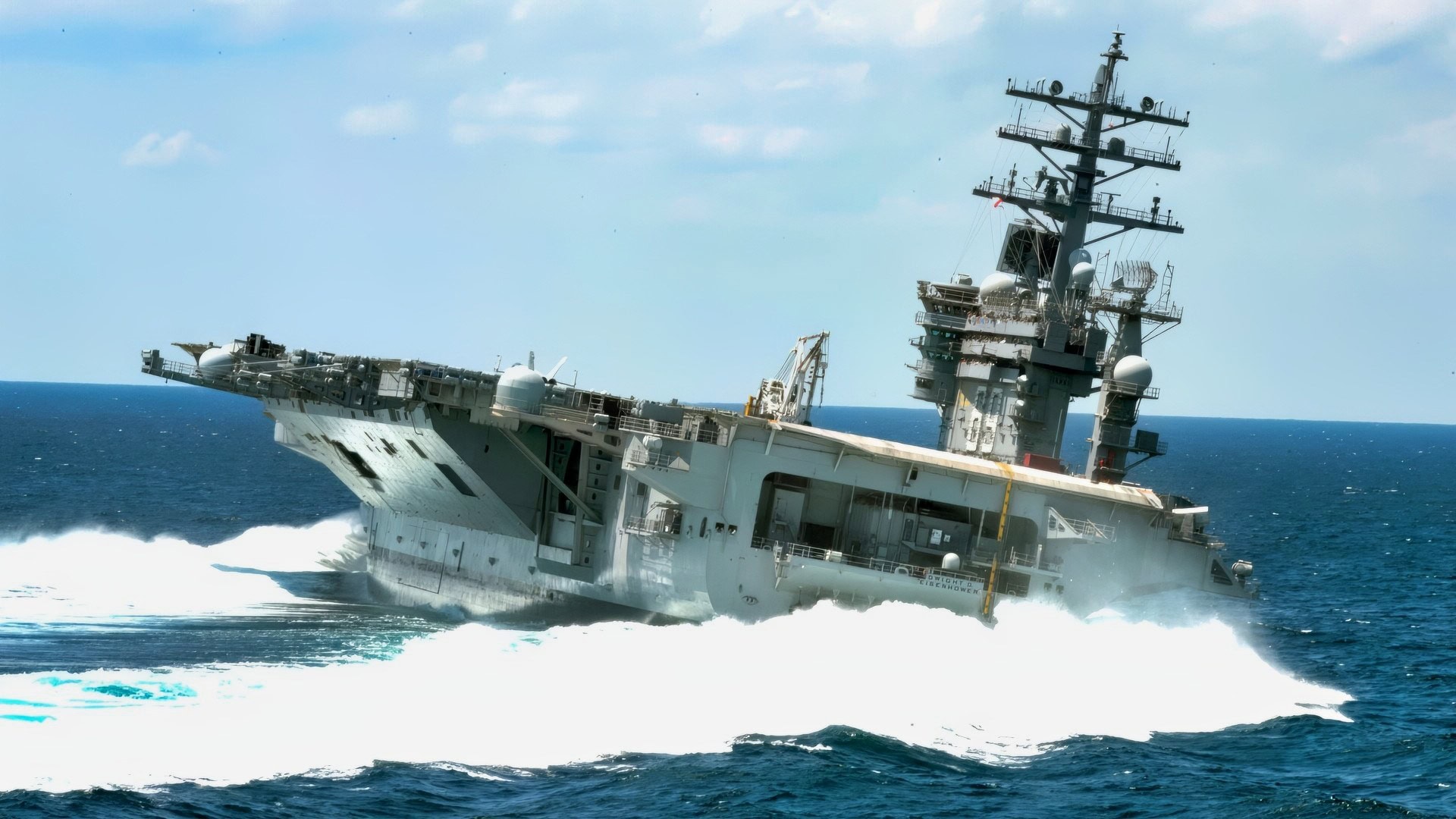
(May 11, 2017) Nimitz-class aircraft carrier USS Abraham Lincoln (CVN 72), conducts high-speed turn drills during sea trials. Abraham Lincoln is underway after successfully completing its mid-life refueling and complex overhaul and will spend several days conducting sea trials, a comprehensive test of many of the ship’s key systems and technologies. (U.S. Navy photo by Mass Communication Specialist 3nd Class Juan A. Cubano/Released)
March 2026: The Retirement That Did Not Happen On Time
USS Nimitz was supposed to retire in May 2026.
The Navy had planned the inactivation for years. The ship’s final operational deployment ended in December 2025. Her replacement, USS John F. Kennedy, the second Ford-class carrier, was scheduled to enter the fleet. The math worked.
It did not work in time.
USS Nimitz departed Naval Base Kitsap-Bremerton on March 7, 2026, bound for Naval Station Norfolk via Cape Horn — because at over 100,000 tons full load, she was too large to transit the Panama Canal. The 12,400-nautical-mile route around South America would take roughly two to three weeks, with the carrier participating in the Southern Seas 2026 exercises along the way. Sailors lined the rails as she departed Bremerton for the last time. The Navy treated it as a final voyage.
One week later, on March 14, 2026, the Navy extended her active service through March 2027 — adding ten months to the careers of every sailor aboard and pushing decommissioning back into the following fiscal year. The reason was straightforward: federal law requires the Navy to maintain at least 11 active aircraft carriers, and USS John F. Kennedy is not expected to commission until March 2027.
Allowing Nimitz to retire on the original schedule would have created what defense analysts have begun calling the Nimitz Gap — a period of up to a year during which the Navy would operate ten carriers rather than the legally mandated eleven.
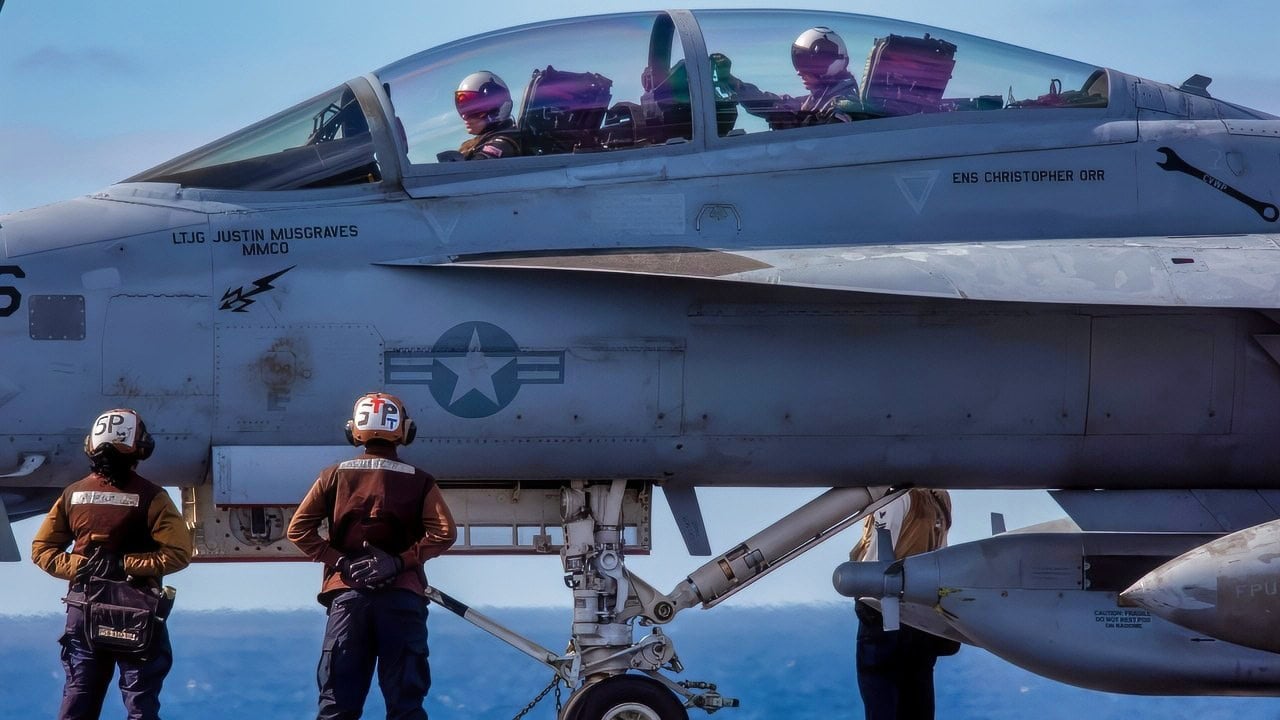
U.S. Navy Sailors prepare to taxi an EA-18G Growler, attached to Electronic Attack Squadron (VAQ) 133, on the flight deck of Nimitz-class aircraft carrier USS Abraham Lincoln (CVN 72) on Nov. 24, 2025. USS Abraham Lincoln (CVN 72), flagship of the Abraham Lincoln Carrier Strike Group, is underway conducting routine operations in the U.S. 3rd Fleet area of operations, demonstrating the U.S. Navy’s long-term commitment to a free and open Indo-Pacific. (U.S. Navy photo by Mass Communication Specialist Seaman Daniel Kimmelman)
The extension does not mean the ship is going back to combat. The Aviationist noted that the Nimitz remains constrained by her finite reactor fuel, 25 years past her last refueling, and that further operational deployments outside a genuine emergency are unlikely. What the extension means is that the United States Navy could not afford to let the lead ship of the Nimitz-class retire on her original schedule. Five decades after she was commissioned, she is still strategically necessary.
The Ford-Class Replacement Just Came Under Review
The other half of the story is what is happening to the program meant to replace the Nimitz-class.
The Gerald R. Ford-class — designated CVN-78 through CVN-83, with three hulls in service or under construction and three more planned — was supposed to be a generational leap forward. Electromagnetic Aircraft Launch Systems (EMALS) are replacing steam catapults. Advanced Arresting Gear. New A1B reactors generating roughly three times the electrical power of the A4W reactors aboard the Nimitz-class. Higher sortie generation rates. Reduced manpower requirements. The Navy’s stated savings target was around $5 billion per hull over the ship’s service life, achieved through reduced crew size and lower maintenance costs.
The reality has been more complicated.
USS Gerald R. Ford was delivered roughly three years late and way above original cost projections. The unit cost is now roughly $13 billion per hull. EMALS, weapons elevators, and the Dual Band Radar have all suffered serious reliability problems. The lead ship has been on a marathon deployment that has lasted roughly eleven months — the longest American carrier deployment since the Vietnam War — across operations in the Caribbean during the Maduro extraction, the Mediterranean, and the Iran war. In March 2026, a fire in Ford’s laundry area burned for 30 hours, forcing the ship to break off from Iran war operations and put into Souda Bay, Crete, for repairs.
In April 2026, then-Secretary of the Navy John Phelan announced a comprehensive review of the Ford-class program. The review, scheduled for completion by the end of May 2026, is examining whether the cost premium of the Ford-class over the Nimitz-class actually delivers proportionate operational improvements. Phelan’s question, posed at the Sea-Air-Space symposium, was direct: “Is the sortie rate generation that much greater? And then what are the cost implications of this electric catapult? Did it really generate the savings?”
The review specifically targets CVN-82 and CVN-83 — the future USS William J. Clinton and USS George W. Bush, neither of which has begun construction or had its contract awarded. Cancellation of those two hulls, or a transition to a modified or different design, is now formally on the table.
Phelan himself was removed from his position as Secretary of the Navy the day after announcing the review. The review continues.
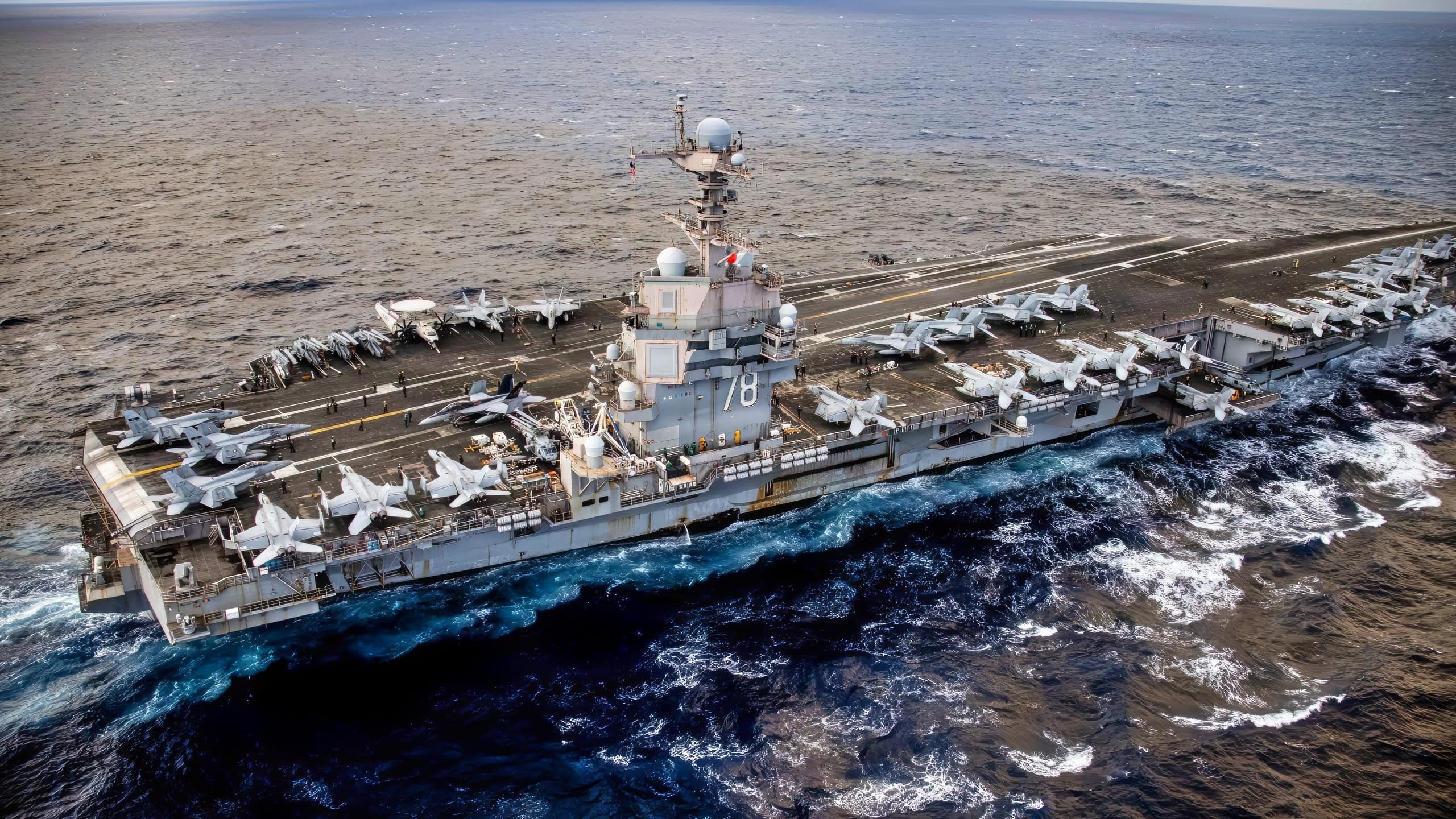
The world’s largest aircraft carrier, USS Gerald R. Ford (CVN 78), transits the Eastern Mediterranean Sea, March 22, 2026. Gerald R. Ford is on a scheduled deployment in the U.S. 6th Fleet area of operations to support the warfighting effectiveness, lethality and readiness of U.S. Naval Forces Europe Africa, and defend U.S., Allied and partner interests in the region. (U.S. Navy photo by Mass Communication Specialist 2nd Class Tajh Payne)
What The Nimitz-Class Will Leave Behind
Fifty-one years. Ten hulls. Five decades of operations across every theater that mattered. No ships lost. A combat record that spans from the Iran hostage crisis to the war against ISIS. A design so robust that the lead ship’s retirement had to be delayed because the replacement was not ready — and the replacement is now itself under formal review.
The Nimitz-class is not coming back. The yards that built her — Dry Dock 11 and Dry Dock 12 at Newport News — are now building the Ford-class hulls. The institutional knowledge required to build a new Nimitz-class carrier on the original drawings is, at this point, mostly gone.
The Navy’s decision in the 1990s to commit to the Ford-class as the successor program was not a casual one, and it cannot easily be unwound.
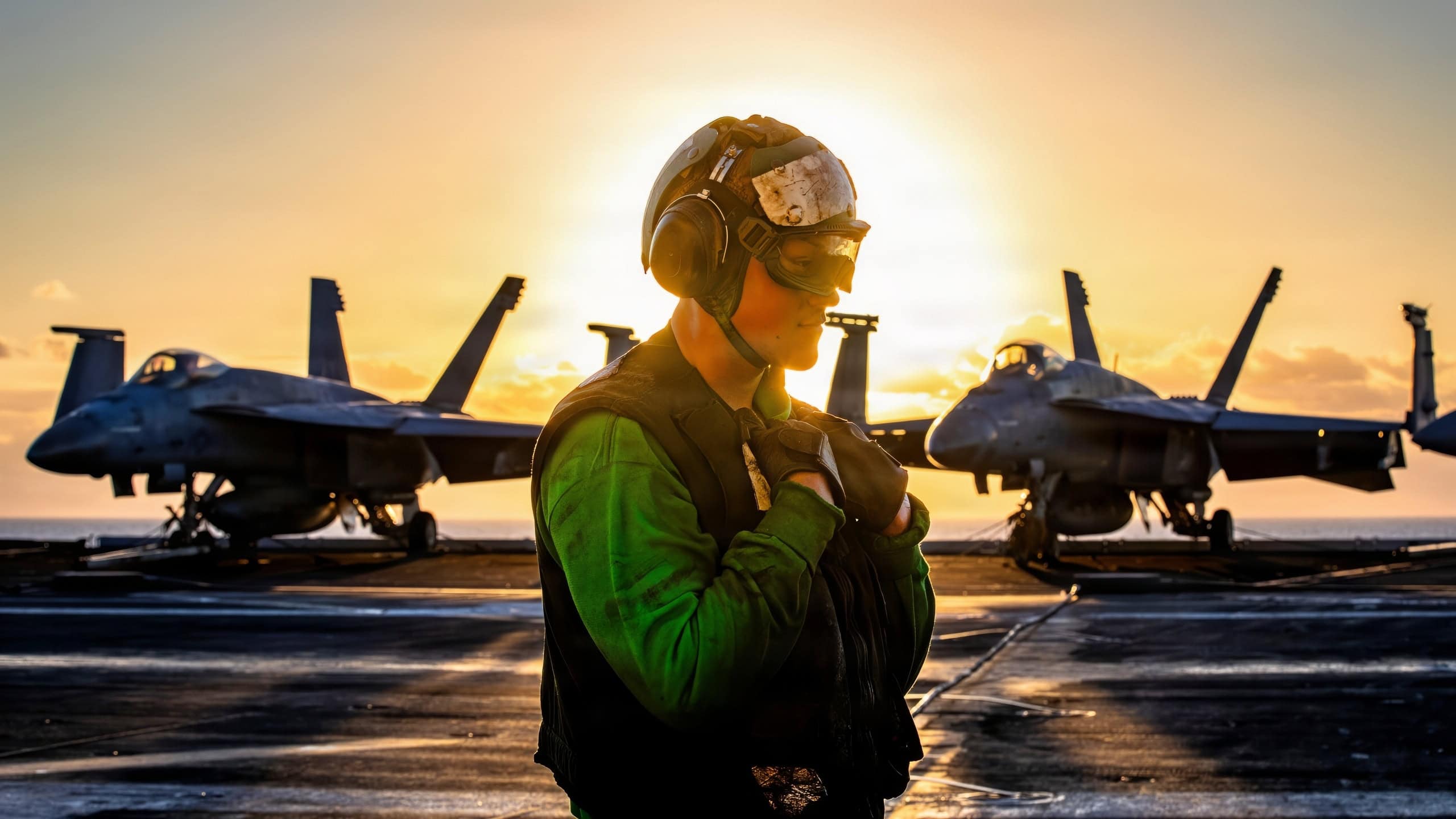
A U.S. Sailor observes flight deck operations on the flight deck of the world’s largest aircraft carrier, USS Gerald R. Ford (CVN 78), during Operation Epic Fury, Feb. 28, 2026. (U.S. Navy photo)
But the question Phelan raised in April 2026 — whether the Ford-class is genuinely better than the Nimitz-class by enough margin to justify the cost premium — is the question the Navy is going to be asking for the next several years.
And the standard against which that comparison will be judged is a class that delivered fifty years of operational excellence across five wars and several humanitarian disasters, on a hull design that was finalized when Lyndon Johnson was still in the White House.
The Nimitz-class might be the best aircraft carrier ever put to sea. It is at least the most successful one America has ever built. The Ford-class will have to prove it can do better.
The proof, as of this writing, is still pending. Personally, I feel a little uneasy.
About the Author: Harry J. Kazianis
Harry J. Kazianis (@Grecianformula) was the former Senior Director of National Security Affairs at the Center for the National Interest (CFTNI), a foreign policy think tank founded by Richard Nixon based in Washington, DC. Harry has over a decade of experience in think tanks and national security publishing. His ideas have been published in the NY Times, The Washington Post, The Wall Street Journal, CNN, and many other outlets worldwide. He has held positions at CSIS, the Heritage Foundation, the University of Nottingham, and several other institutions related to national security research and studies. He is the former Executive Editor of the National Interest and the Diplomat. He holds a Master’s degree focusing on international affairs from Harvard University. Kazianis is Editor-In-Chief of 19FortyFive.

