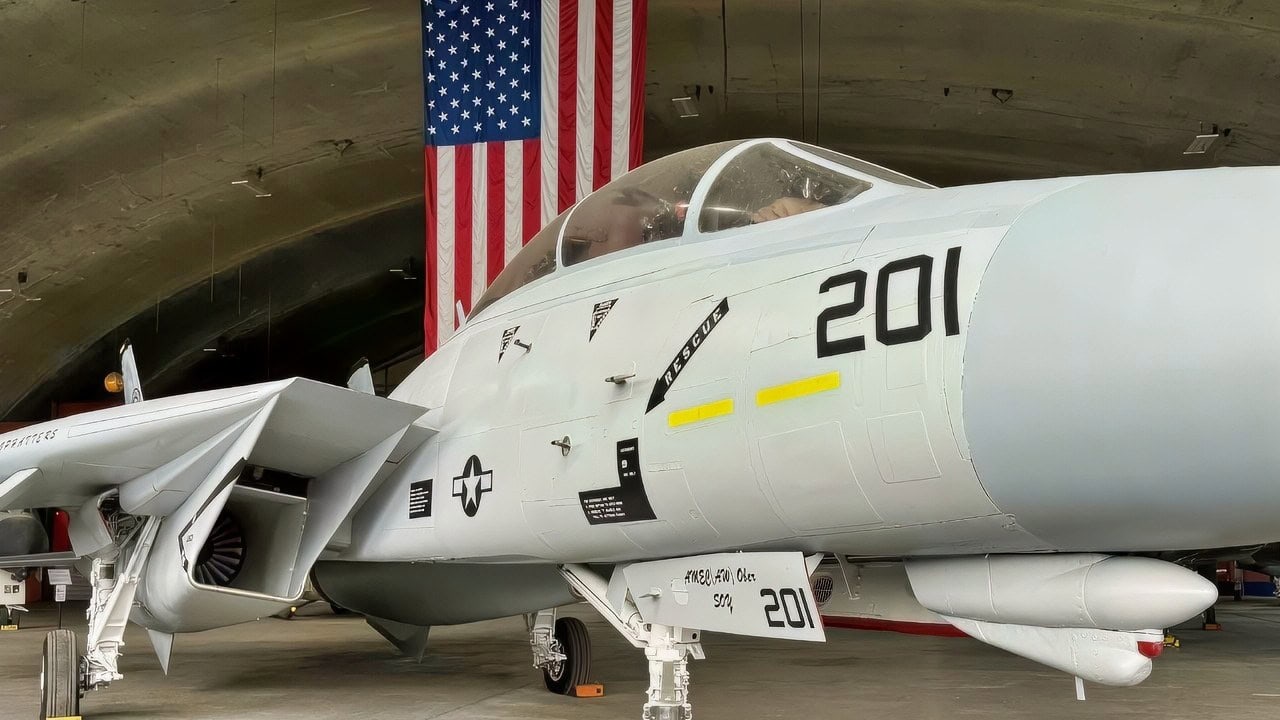
Having dominated the unfriendly skies for the Navy from 1974 to 2006, the variable-sweep “swing wing” plane was meant to protect US carriers and their battle groups from Soviet bombers. Ultimately, these iconic warplanes were replaced by the F/A-18E/F Super Hornet, which is still in service today.
Unlike today’s F/A-18s and F-35C Lightning II fifth-generation multirole warplanes that serve the Navy’s carriers, the F-14 Tomcat was a two-person plane. There was a pilot and a Radar Intercept Officer (RIO) who flew in the back of the plane. F-14s were equipped with advanced (for their time) AN/AWG-9 radars that could track 24 targets and engage six simultaneously at ranges over 90 miles using the lethal AIM-54 Phoenix missile. These birds also carried Sparrow and Sidewinder missiles along with an internal 20mm M61A1 Vulcan cannon.
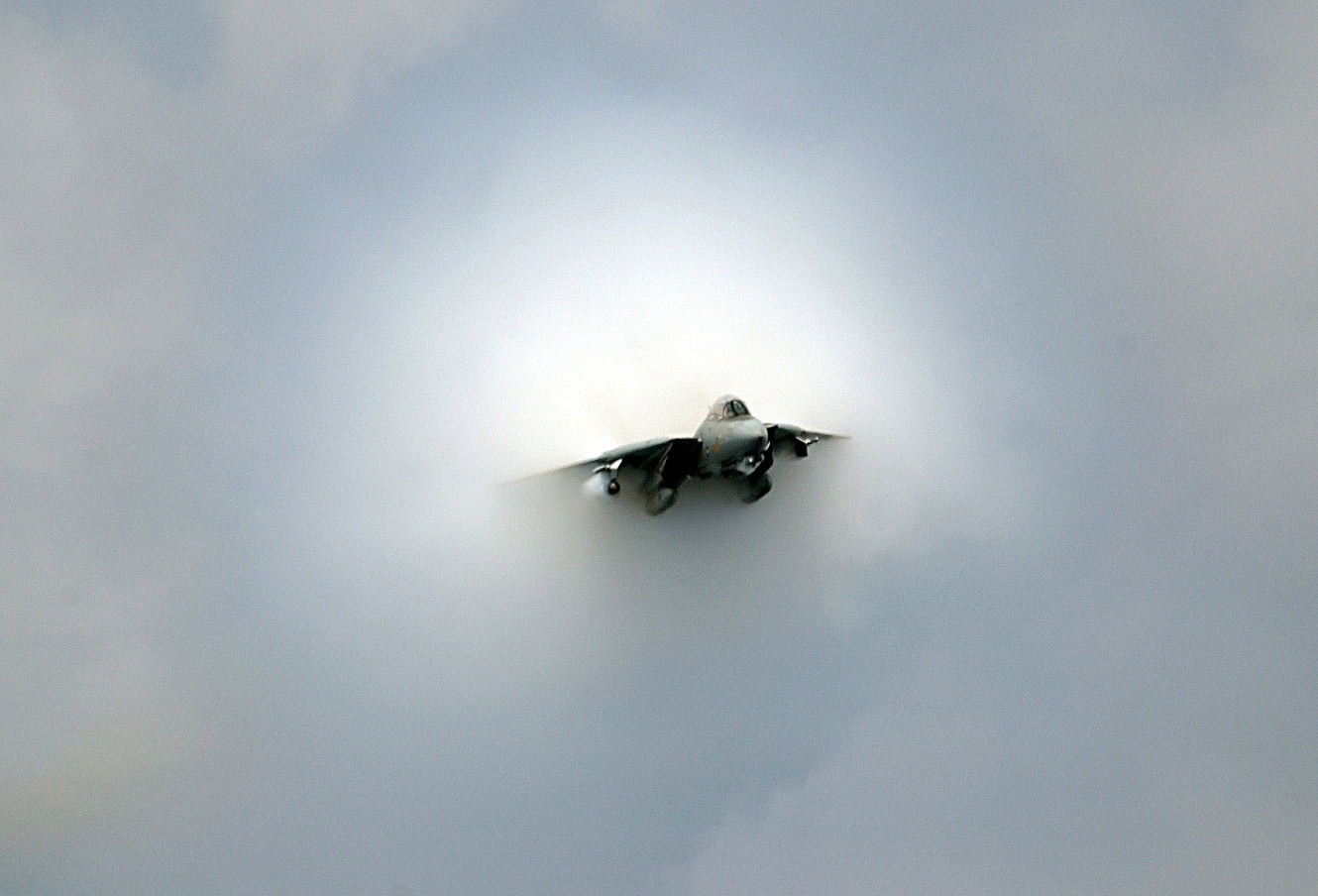
A Navy F-14D Tomcat makes a near supersonic fly-by above the flight deck of the USS Theodore Roosevelt (CVN 71) during the final launch of Tomcats as the ship operates in the Atlantic Ocean on July 28, 2006. The F-14 will officially retire in September 2006 after 32 years of service to the fleet. This Tomcat is assigned to Fighter Squadron 31.
(DoD photo by Petty Officer 3rd Class Nathan Laird, U.S. Navy. (Released))
What’s more, the plane’s “swing wings” allowed for the F-14 to operate efficiently at high speeds (of up to Mach 2) and low speeds, making it perfect for dicey carrier landings.
Even an iconic and battle-tested plane, like the F-14, had its share of mishaps over its long service to the United States Navy, though. While there are many to choose from, three accidents involving the F-14 come to mind.
Accident #1: Midair Disintegration
In March of 1993, an F-14B Tomcat operating 32 miles off the coast of North Carolina essentially broke apart after the pilot had engaged the plane’s powerful afterburners. The pilot was conducting a high-speed, high-G maneuver when he attempted to accelerate his plane to Mach 1.1, at which point the entire bird disintegrated around him and his RIO in the back seat.
An in-depth Navy investigation found that the aircraft’s repair schedule had fallen behind, prompting a flurry of questions for the maintenance crew and leading to the discovery that the plane had been poorly maintained.
This led investigators to question the maintenance of the rest of the F-14 fleet.
The final determination of the investigation into the midair disintegration found that severe structural failure resulted from the significant stresses the plane experienced once the pilot engaged in his high-G, high-speed maneuver.
It highlighted an ongoing problem affecting the F-14 fleet at the time: many questions about the Navy’s commitment to maintaining these planes, which were put under serious strain by their service on carriers.
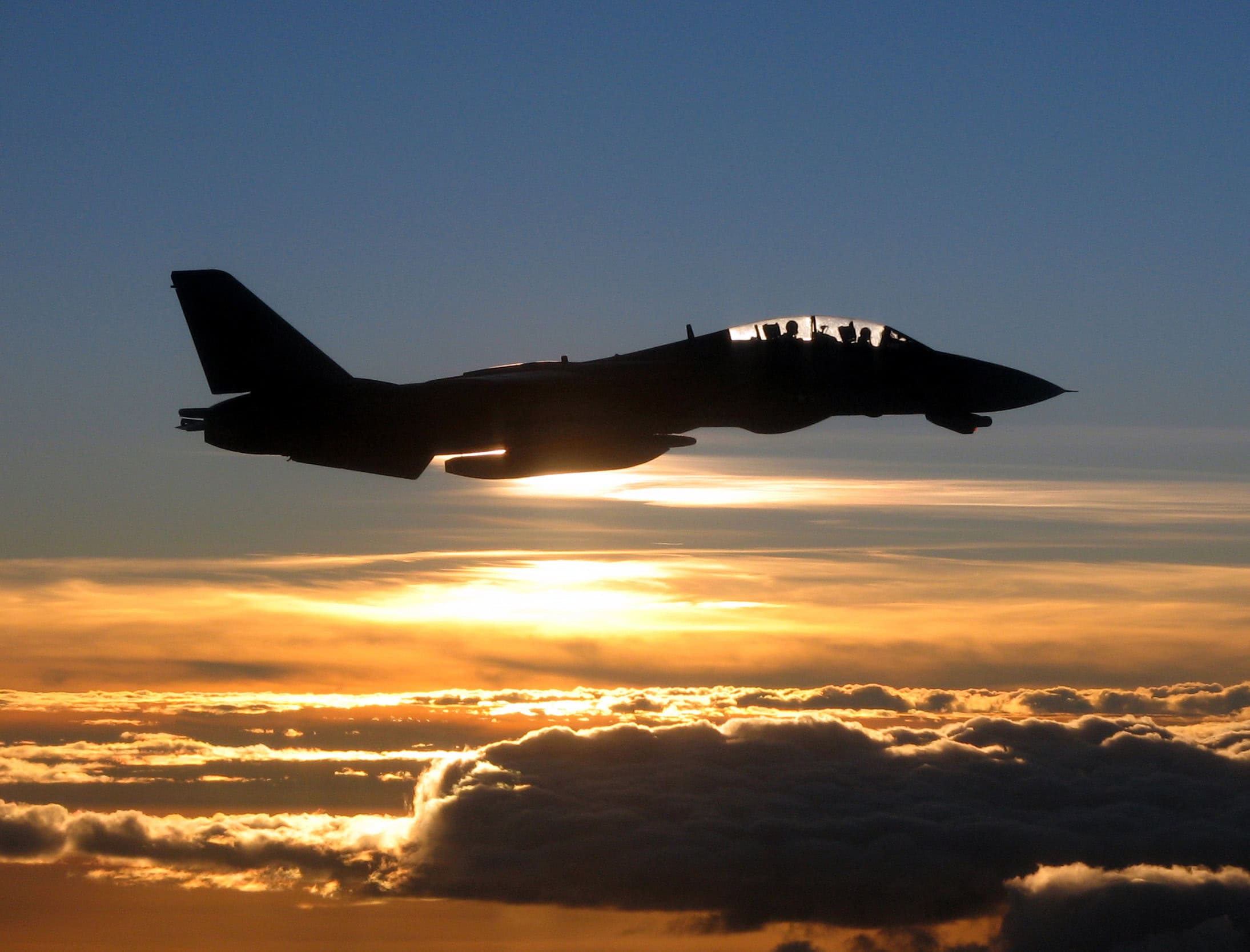
A Navy F-14D Tomcat is silhouetted against the sun as it flies a mission over the Persian Gulf on Dec. 4, 2005. The Tomcat and its crew are assigned to Fighter Squadron 213 and are operating off of the aircraft carrier USS Theodore Roosevelt (CVN 71). Roosevelt and its embarked Carrier Air Wing 8 are conducting maritime security operations in the Persian Gulf.
(DoD photo by Lt. j.g. Scott Timmester, U.S. Navy. (Released))
Accident #2: The Kitty Hawk Deck Crash
A year after the North Carolina crash, another F-14 Tomcat experienced a catastrophic event, this time from the USS Kitty Hawk, a US aircraft carrier. The Navy referred to the event as a “ramp strike,” which is basically when a plane misses its mark during a carrier landing and crashes into the flight deck. The F-14 in question broke in two and landed in a burning fuel fire.
Carrier landings are notoriously difficult even under the best of circumstances.
At night, things get even more complicated. On July 11, 1994, the night of the accident, the Kitty Hawk was in rough seas while the pilot of the F-14 in question was attempting a night landing.
That pilot fell below the glide slope and slammed into the carrier’s stern before ultimately sliding down the deck in flames.
The plane carried only a pilot in this case, and he managed to eject from the burning plane.
Despite ejecting, however, the pilot was not out of danger, as his parachute had caught fire. Fortunately for the pilot, the deck crew of the Kitty Hawk was not going to leave him to be consumed by the raging fire on the flight deck. They ran into the cauldron, retrieved the badly burned Tomcat pilot, and got him to safety.
Ultimately, the pilot made a full recovery despite severe burns. No other major injuries and no deaths resulted from this disaster.
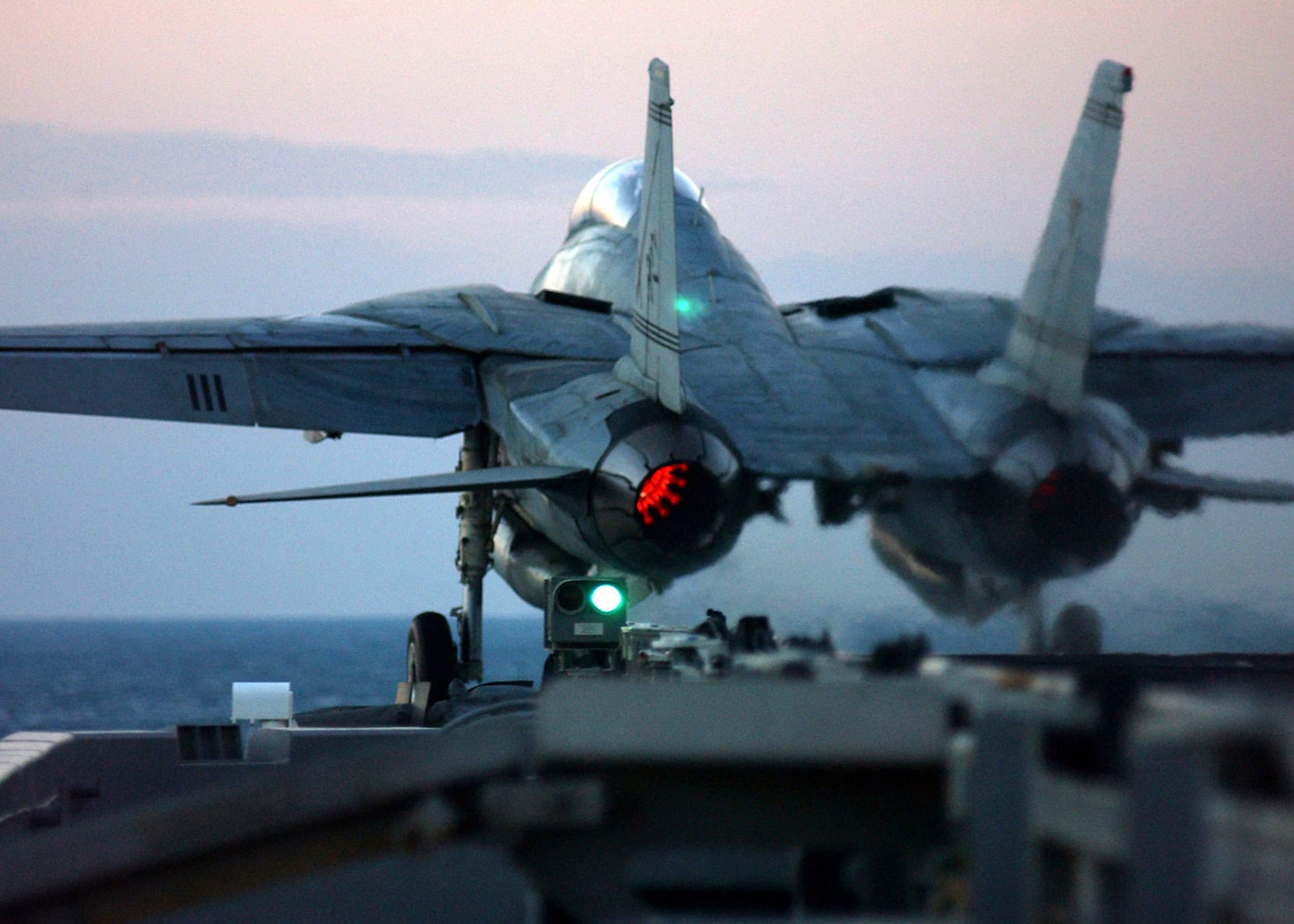
An F-14B Tomcat is catapulted from the flight deck of the aircraft carrier USS Harry S. Truman (CVN 75) during evening flight operations in the Persian Gulf on Dec. 4, 2004. Truman and its embarked Carrier Air Wing 3 are providing close air support and conducting intelligence, surveillance, and reconnaissance missions over Iraq. The Tomcat is assigned to Fighter Squadron 32.
(DoD photo by Airman Kristopher Wilson, U.S. Navy. (Released))
Accident #3: The Loss of the Navy’s First Female F-14 Pilot
Another incident involving the F-14 occurred in 1994, just three months after the previous crash on the Kitty Hawk mentioned above. This time, the accident caused the death of the Navy pilot. In fact, the pilot was none other than Navy Lt. Kara Hultgreen, who had made history as the first female F-14 Tomcat combat pilot.
While operating off the coast of San Diego, Calif., Lt. Hultgreen was attempting to land her plane on the deck of the USSAbraham Lincoln. The cause of the crash is believed to have been a severe engine compressor stall. The F-14A Hultgreen was powered by the TF30 engine and was known to struggle with compressor stalls.
A trained pilot, like Hultgreen, might have been able to pull out of the compressor stall or even eject to safety had it not been for the fact that she was on a final, low-altitude approach to the Abraham Lincoln’s flight deck.
It is believed that Hultgreen caused the compressor stall when she attempted to correct a mistake during her final approach, which would have resulted in an overshoot of the flight deck.
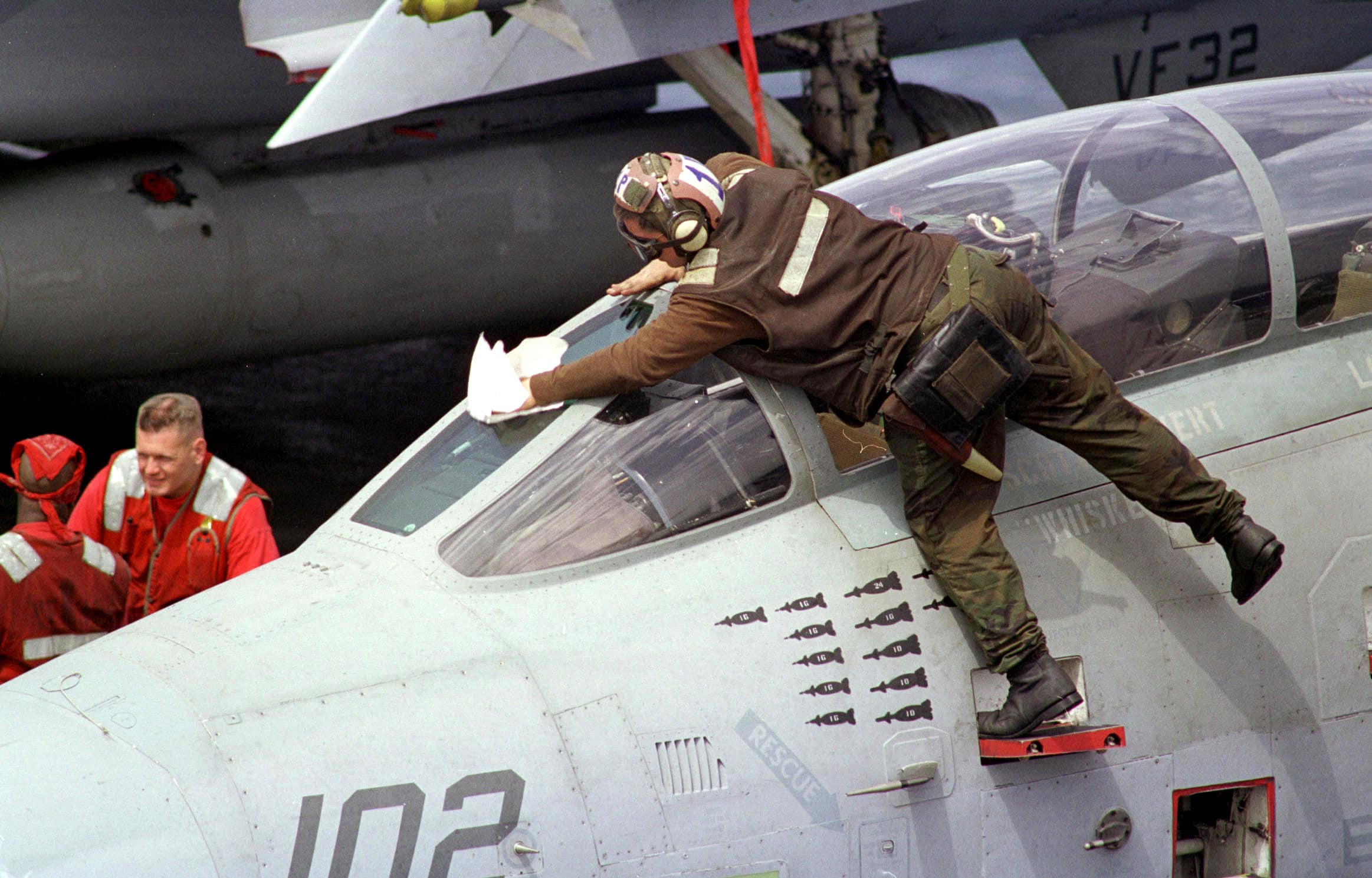
The plane captain of an F-14B Tomcat wipes down the canopy prior to flight operations from the flight deck of the USS Enterprise (CVN 65) on April 8, 1999. Enterprise and its embarked Carrier Air Wing 3 are on station in the Persian Gulf in support of Operation Southern Watch, which is the U.S. and coalition enforcement of the no-fly-zone over Southern Iraq.
(DoD photo by Airman Darryl I. Wood, U.S. Navy. (Released))
To correct this mistake, Hultgreen applied the left rudder, disrupting airflow to the left engine and causing the compressor to stall. There was an immediate drop in the left-wing. Hultgreen’s RIO ejected to safety, but the trailblazing pilot was killed because she attempted an ejection after the plane exceeded a 90-degree roll.
Hultgreen’s body was eventually recovered a month after the accident at 4,000 feet beneath the Pacific Ocean. An investigation by the Navy determined that the crash was not only Hultgreen’s fault but the result of both pilot error and engine failure.
Her tragic passing evoked a flurry of consternation and debate among military experts and women’s rights activists in the United States as to whether there should have been different requirements for female pilots versus requirements for men.
The Legacy: Powerful, proven—But Flawed
The F-14 Tomcat served this country for 32 years. Although it became a movie star and was beloved by the pilots and maintainers who flew and maintained these warplanes, it had its share of disasters.
What’s more, when the F-14 initially entered service, there were many problems with the plane that had to be overcome by both the pilots and the designers. By the time it was retired, the plane had more than proven itself.
Nevertheless, these accidents described here (a list that is far longer than just these three incidents) help to explain better why the F-14’s life was not ultimately extended and why the F/A-18 Super Hornet ultimately replaced the F-14 after 2006.
About the Author: Brandon J. Weichert
Brandon J. Weichert is the Senior National Security Editor at 19FortyFive.com. Recently, Weichert became the editor of the “NatSec Guy” section at Emerald.TV. He was previously the senior national security editor at The National Interest. Weichert is the host of The National Security Hour on iHeartRadio, where he discusses national security policy every Wednesday at 8 pm Eastern. He hosts a companion show on Rumble entitled “National Security Talk.” Weichert consults regularly with various government institutions and private organizations on geopolitical issues. His writings have appeared in numerous publications, among them Popular Mechanics, National Review, MSN, and The American Spectator. And his books include Winning Space: How America Remains a Superpower, Biohacked: China’s Race to Control Life, and The Shadow War: Iran’s Quest for Supremacy. Weichert’s newest book, A Disaster of Our Own Making: How the West Lost Ukraine, is available for purchase wherever books are sold. He can be followed via Twitter/X @WeTheBrandon.