
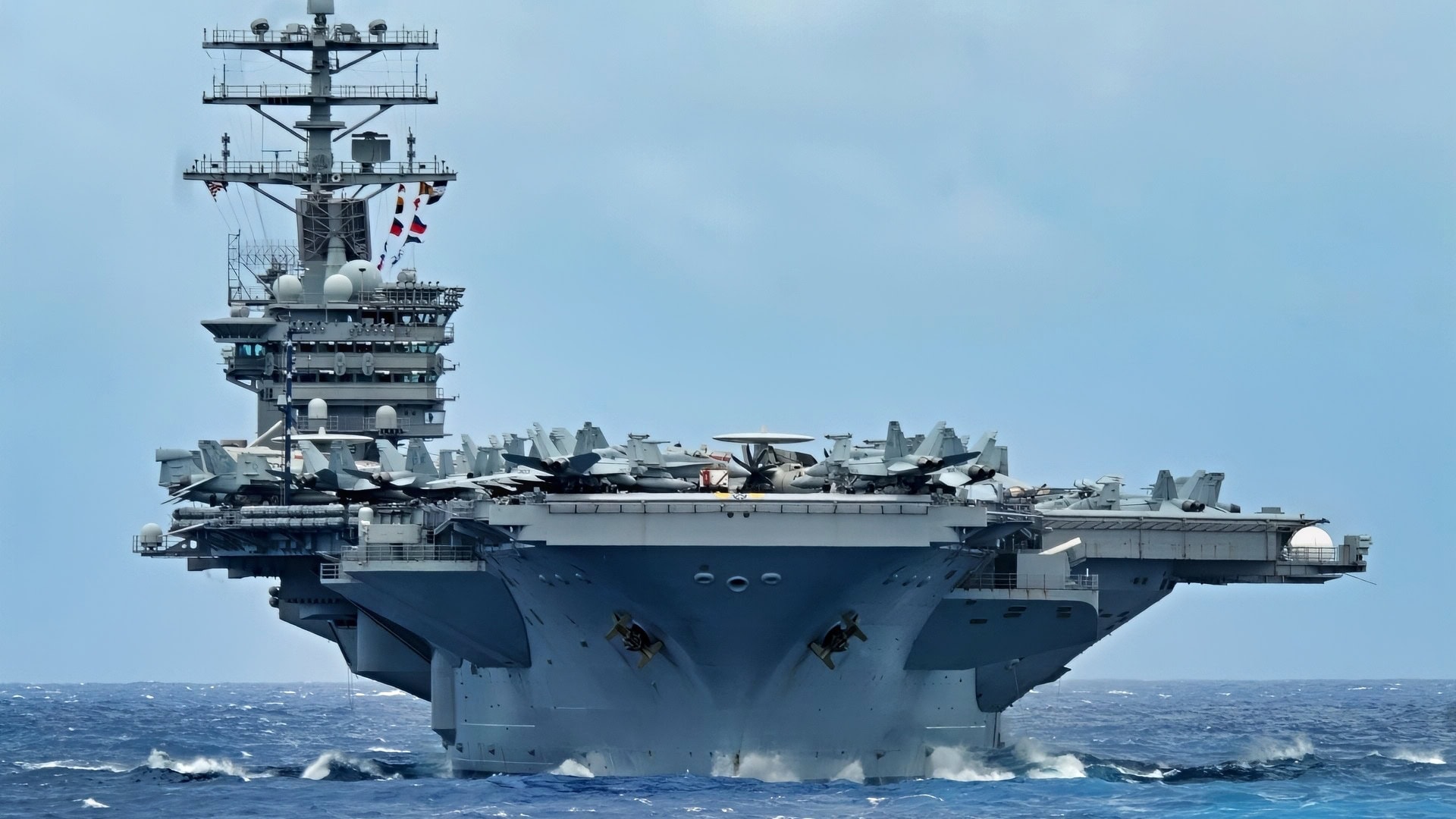
The USS Nimitz (CVN-68), the United States Navy’s oldest active aircraft carrier, departed Naval Base Kitsap on March 7, 2026, for the final time in its 51-year service history, beginning a last operational deployment that will take the ship around South America en route to Naval Station Norfolk for decommissioning. The nuclear-powered carrier is conducting the transit as part of a scheduled homeport move and Southern Command deployment, with the Navy confirming it will participate in operations in the U.S. Southern Command area of responsibility before beginning the multi-year inactivation process.
Commissioned on May 3, 1975, Nimitz has served as a cornerstone of U.S. naval power for nearly five decades. Its retirement marks the gradual removal of a class of platforms that defined American global power projection since the Cold War, at a time when carrier availability is already under pressure.
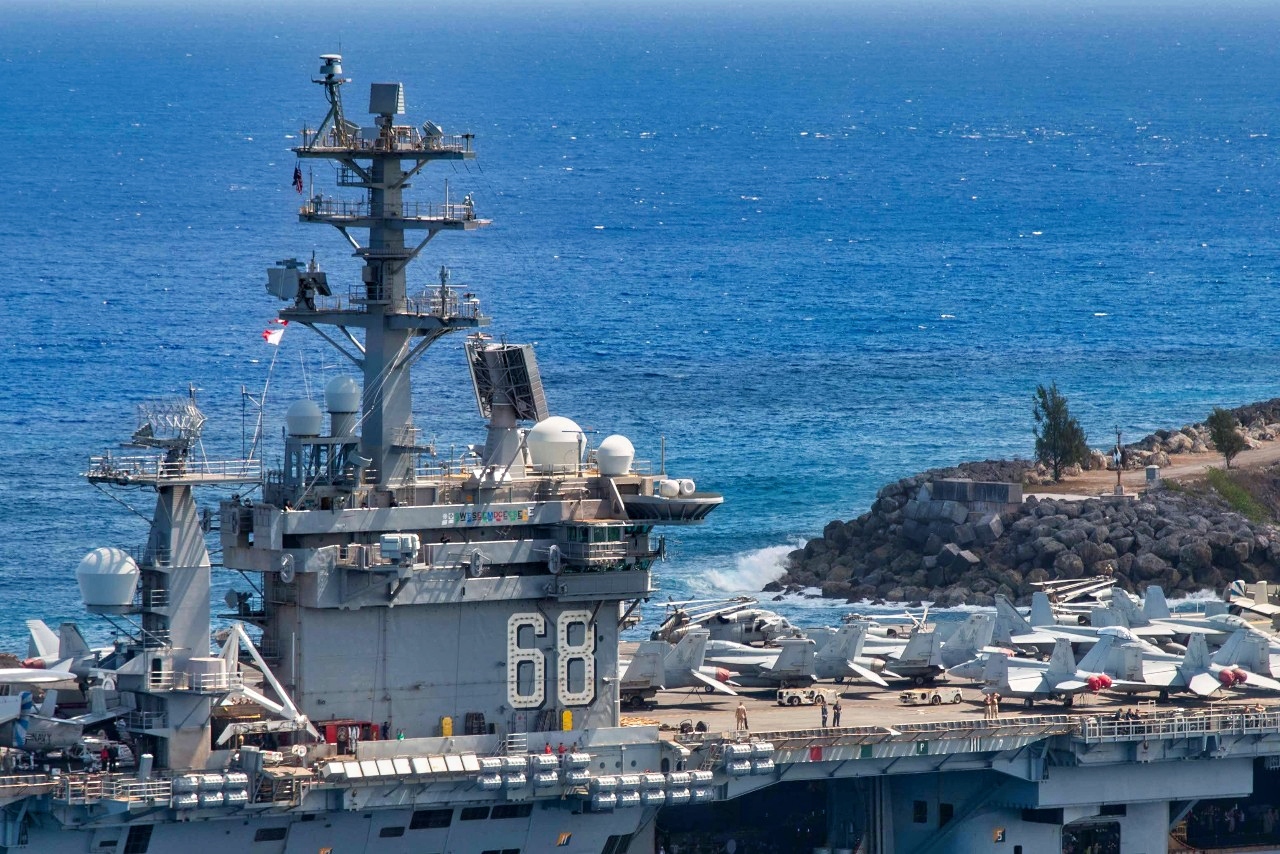
APRA HARBOR, Guam (April 18, 2025) Nimitz-class aircraft carrier USS Nimitz (CVN 68) arrived in Guam for a scheduled port visit, April 18. Nimitz is underway in the U.S. 7th Fleet area of operations on a scheduled deployment, demonstrating the U.S. Navy’s unwavering commitment to a free and open Indo-Pacific. (U.S. Navy Photos by Mass Communication Specialist 1st Class Samantha Jetzer)
USS Nimitz Aircraft Carrier: A 50-Year History
The USS Nimitz was commissioned in 1975 as the lead ship of the Nimitz-class aircraft carrier, a fleet of 10 nuclear-powered supercarriers that formed the backbone of U.S. naval aviation for decades.
Displacing approximately 97,000 tons and powered by two A4W nuclear reactors, the ship was designed to operate for extended periods without refueling, enabling sustained global deployments unmatched by conventional carriers.
From the beginning, Nimitz embodied the concept of a modern carrier strike group: a mobile, self-contained force capable of projecting air power anywhere in the world without reliance on host-nation basing.
Its embarked air wing – usually consisting of more than 60 aircraft, including F/A-18 strike fighters, E-2D airborne early warning aircraft, and electronic warfare platforms – extended U.S. reach hundreds of miles beyond the ship itself.
Throughout its operational life, Nimitz participated in major U.S. military operations spanning multiple eras.
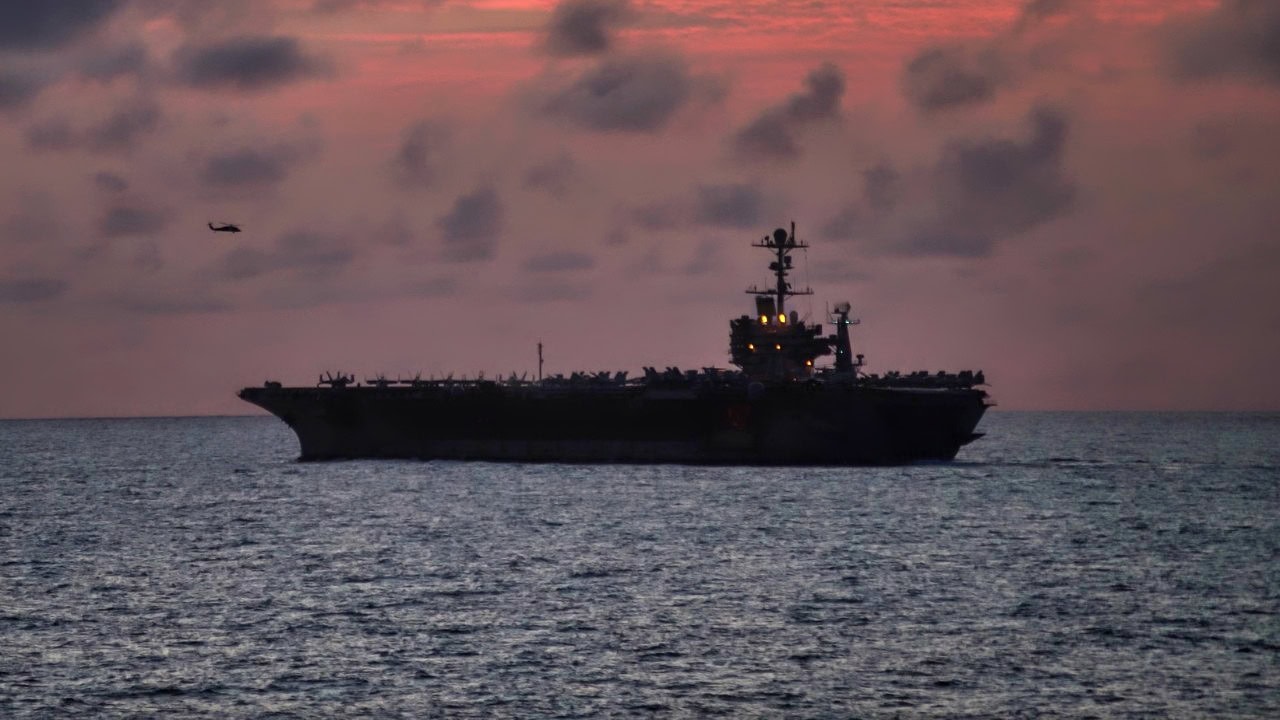
USS Nimitz. Image Credit: Creative Commons.
It supported early post-Vietnam deployments during the Cold War and played roles in operations in the Middle East.
Later, it conducted sustained combat operations during the Global War on Terror. In 2017, aircraft from Nimitz also conducted strike missions against ISIS targets in Iraq and Syria, proving the continued relevance of carrier-based aviation decades after the ship was commissioned.
More recently, the carrier completed its final global deployment in 2025, operating across the Indo-Pacific and the Middle East, before returning to Bremerton in December 2025 after months at sea.
In that deployment alone, the Nimitz Carrier Strike Group conducted over 8,500 sorties and logged 17,000 flight hours. It sailed 82,000 nautical miles.
The Nimitz’s Final Voyage
The Nimitz’s final voyage proves how ships like this can even be useful as they are preparing to end their service life.
Because of its size, the carrier cannot transit the Panama Canal, and must instead undertake a roughly 12,400-nautical-mile journey around Cape Horn at the southern tip of South America before heading back to Norfolk.
That route means the carrier will be in the U.S. Southern Command area of responsibility, where it will become an active participant in the Southern Seas 2026 deployment.
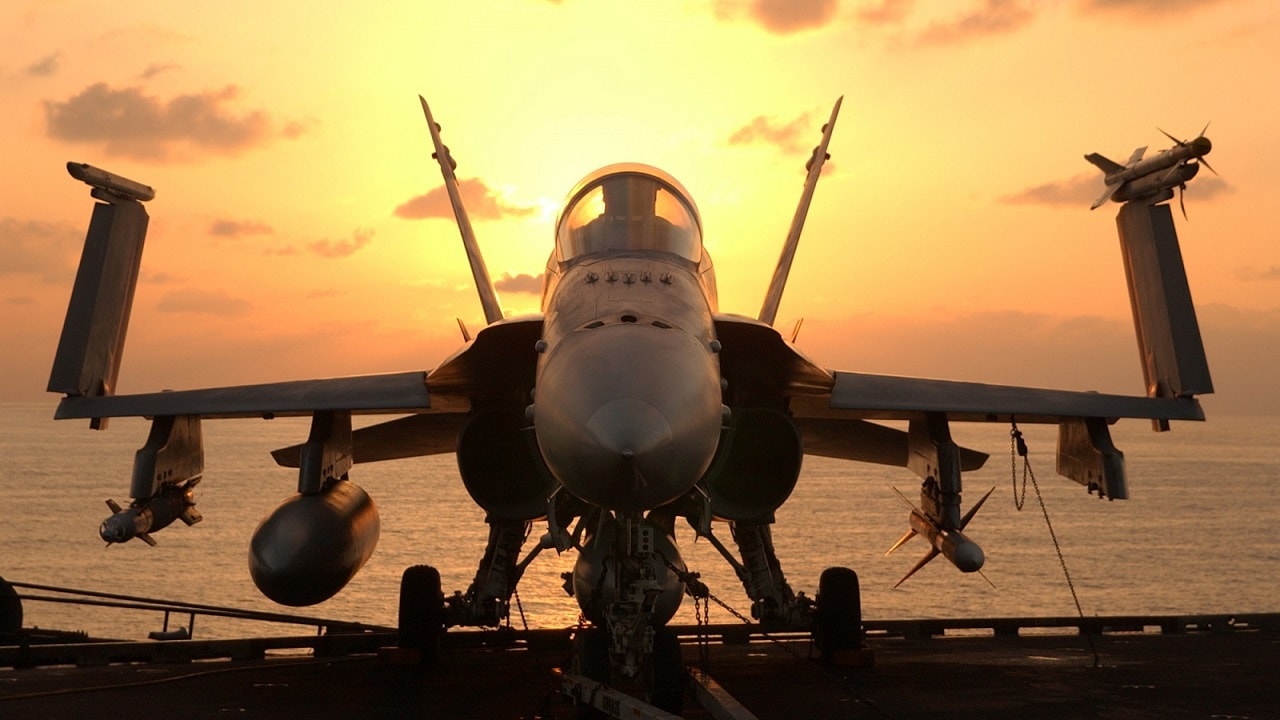
At sea aboard USS John C. Stennis, December 18, 2001 – After an early morning round of flight operations, an F/A-18 Hornet awaits the next round of combat flight operations aboard the USS John C. Stennis (CVN 74). Stennis and her embarked Carrier Air Wing Nine (CVW-9) are supporting Operation Enduring Freedom. U.S. Navy photo by Photographer’s Mate 3rd Class Jayme Pastoric
The deployment will include multinational exercises and engagements with regional partners, building on previous Southern Seas missions that have involved port visits and joint operations with navies across Latin America.
Those exercises usually mirror the structure of UNITAS, the longest-running multinational naval exercise in the world, which focuses on interoperability and coordinated maritime operations.
Nimitz will be deployed as the flagship of a carrier strike group, including guided-missile destroyers responsible for air defense and anti-submarine warfare.
The ships form a layered defensive perimeter, thereby allowing the carrier to conduct sustained flight operations in contested or complex maritime environments.
Despite its nuclear propulsion, the strike group is dependent on logistics support. Throughout the transit, Nimitz will lean on replenishment ships operated by the Military Sealift Command.
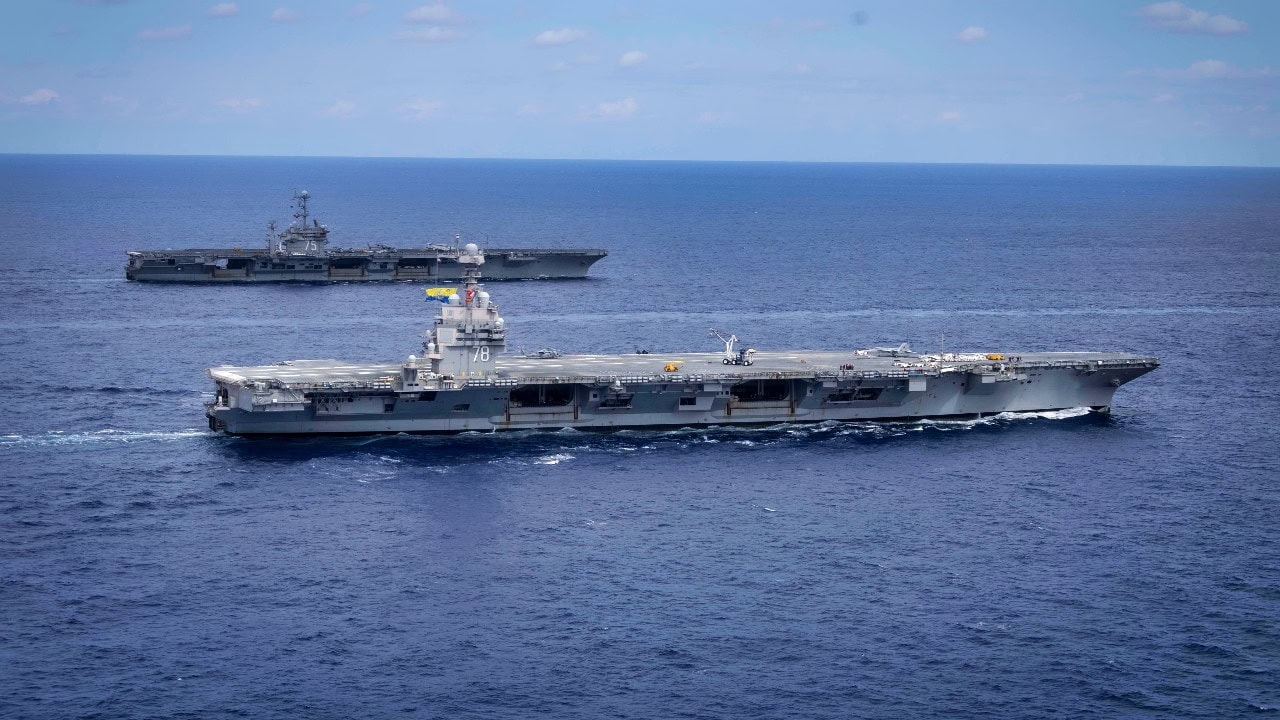
ATLANTIC OCEAN. (Aug. 24, 2024) The Nimitz-class aircraft carriers USS Harry S. Truman (CVN 75), back, and the world’s largest aircraft carrier, USS Gerald R. Ford (CVN 78), sail in formation in the Atlantic Ocean, Aug. 24, 2024. USS Gerald R. Ford is the flagship of the Gerald R. Ford Carrier Strike Group. The aircraft carrier is underway in the Atlantic Ocean to further develop core unit capabilities and skills such as fuels certification and ammunition on-load during its basic phase of the optimized fleet response plan. (U.S. Navy photo by Mass Communication Specialist 2nd Class Maxwell Orlosky).
Those support ships will conduct replenishment operations, transferring everything from aviation fuel and food to spare parts via connected hoses and cables while both ships are moving. Those logistical requirements have been perfected over the decades, but logistical support becomes more complex in the waters around Cape Horn, one of the most challenging maritime regions in the world, known for high winds and rough seas. The extended route also increases the number of replenishment operations required.
The Looming Retirement Process
Upon arrival at Naval Station Norfolk, the USS Nimitz will begin a phased decommissioning process that will take years to complete.
The first stage involves the Ship Terminal Off-load Program (STOP), during which weapons systems, equipment, and supplies are removed from the vessel. This is followed by defueling of the ship’s nuclear reactors – one of the most complex aspects of carrier decommissioning.
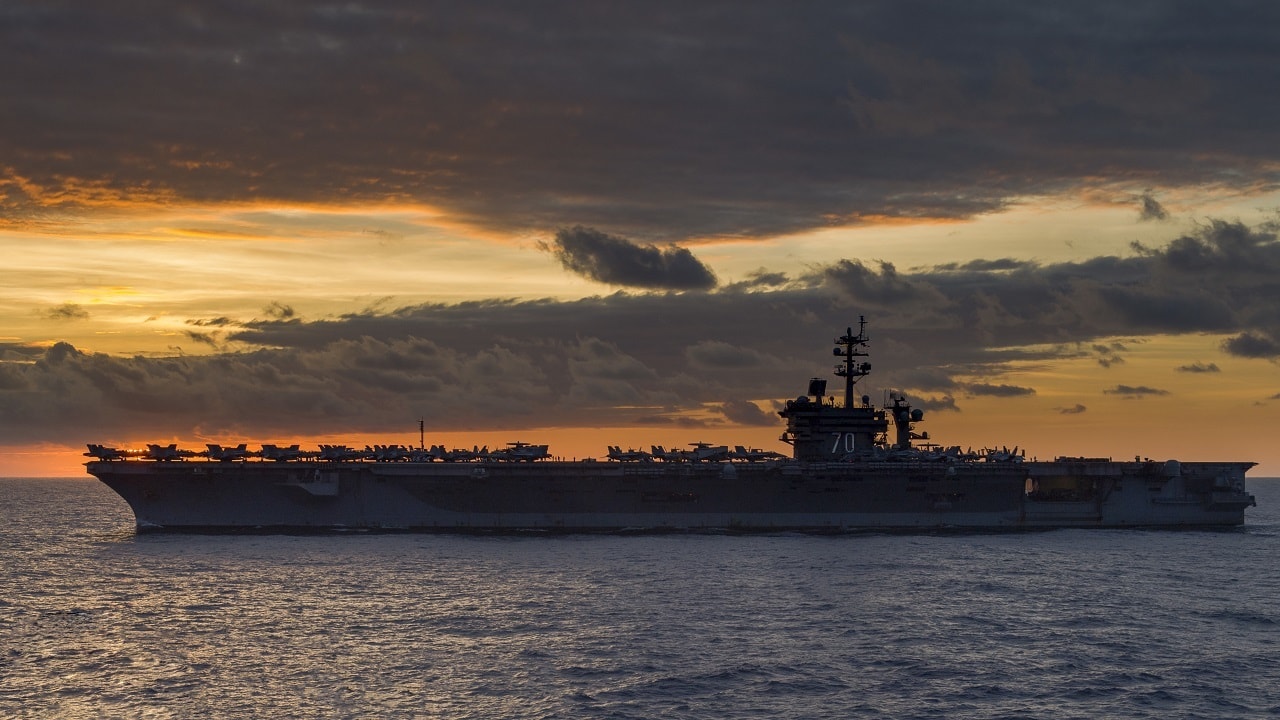
(Feb. 10, 2018) The Nimitz-class aircraft carrier USS Carl Vinson (CVN 70) transits the South Chna Sea. The Carl Vinson Strike Group is currently operating in the Western Pacific as part of a regularly schedule deployment. (U.S. Navy photo by Mass Communication Specialist Third Class Jasen Morenogarcia/Released)
After defueling, the ship will undergo dismantling and disposal, with reactor compartments handled under strict safety and environmental regulations.
The retirement is overdue, too. Originally, the Navy planned to retire Nimitz in fiscal year 2025, but delays in introducing replacement carriers have pushed that date to 2027.
In March 2026, the Navy extended the ship’s service life to maintain its statutory requirement for an 11-carrier fleet while awaiting the delivery of newer platforms. Those replacements include the Gerald R. Ford-class aircraft carrier – a new generation of carriers that dramatically improves on efficiency and sortie generation.
The new Ford-class carriers also introduce electromagnetic aircraft launch systems (EMALS), advanced arresting gear, upgraded systems architecture and redesigned flight decks intended to increase operational tempo while also reducing crew size.
Those ships, however, have faced well-documented development challenges, including delays in key systems such as weapons elevators. Those delays have slowed the transition from Nimitz-class carriers and forced older ships to remain in service longer.
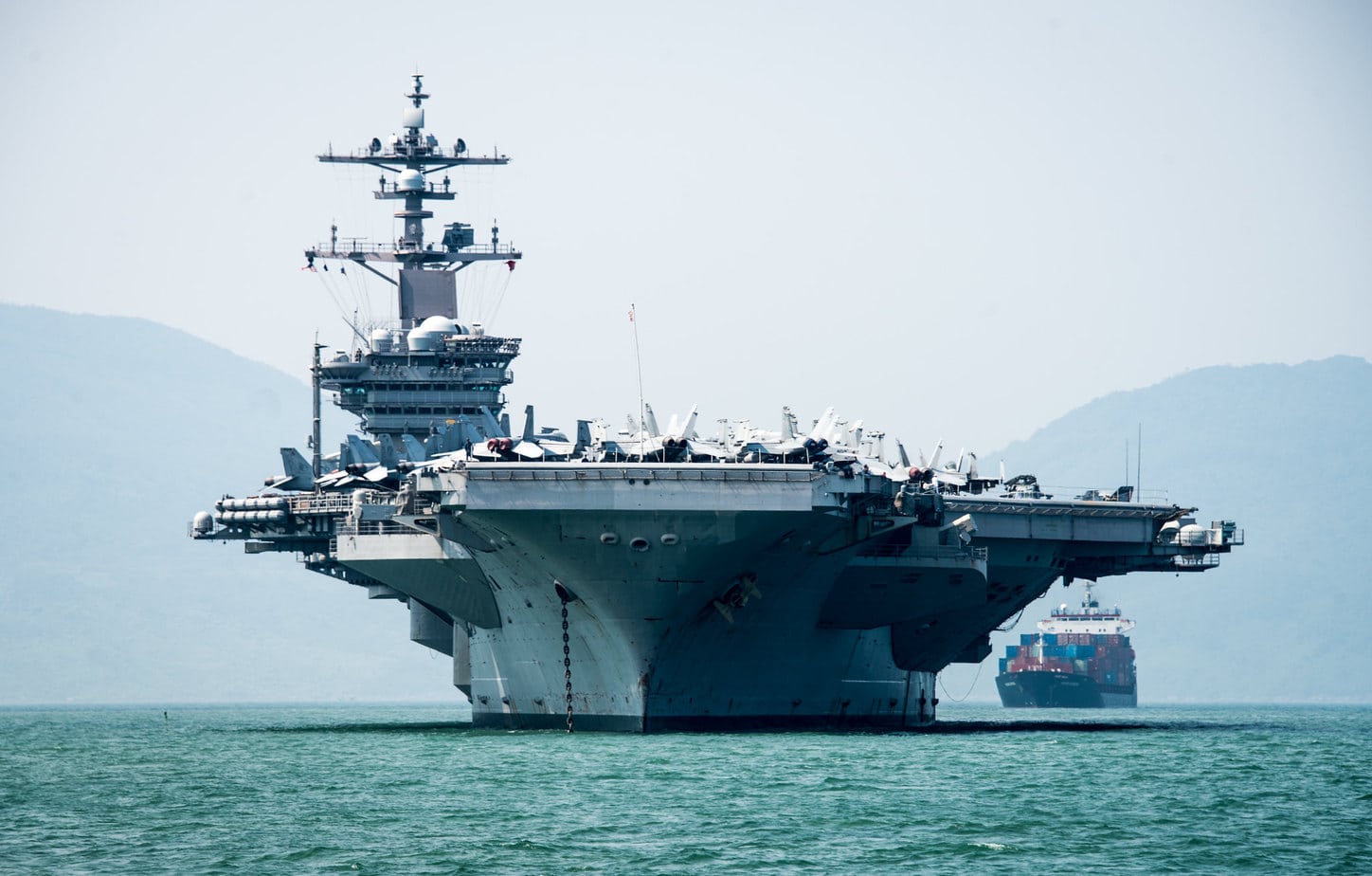
DA NANG, Vietnam (March 5, 2018) The Nimitz-class aircraft carrier USS Carl Vinson (CVN 70) arrives in Da Nang, Vietnam for a scheduled port visit. The Carl Vinson Strike Group is in the Western Pacific as part of a regularly scheduled deployment.
Aircraft Carriers Are Still Vital to Global U.S. Operations
Even as the USS Nimitz begins its final voyage, the role it has played for decades is still central to American global power projection. Carriers are still very much relevant – and essential.
Since last year, U.S. carriers have been responsible for a historic operation in Venezuela and have since moved to the Middle East, where they have been heavily engaged in Operation Epic Fury. As the conflict with Iran escalated in late February, the U.S. Navy concentrated one of the largest naval forces postured in the Middle East in years.
The USS Abraham Lincoln (CVN-72) was among the first to be repositioned, arriving in the region in late January with its strike group to support deterrence and potential strike operations against Iranian targets.
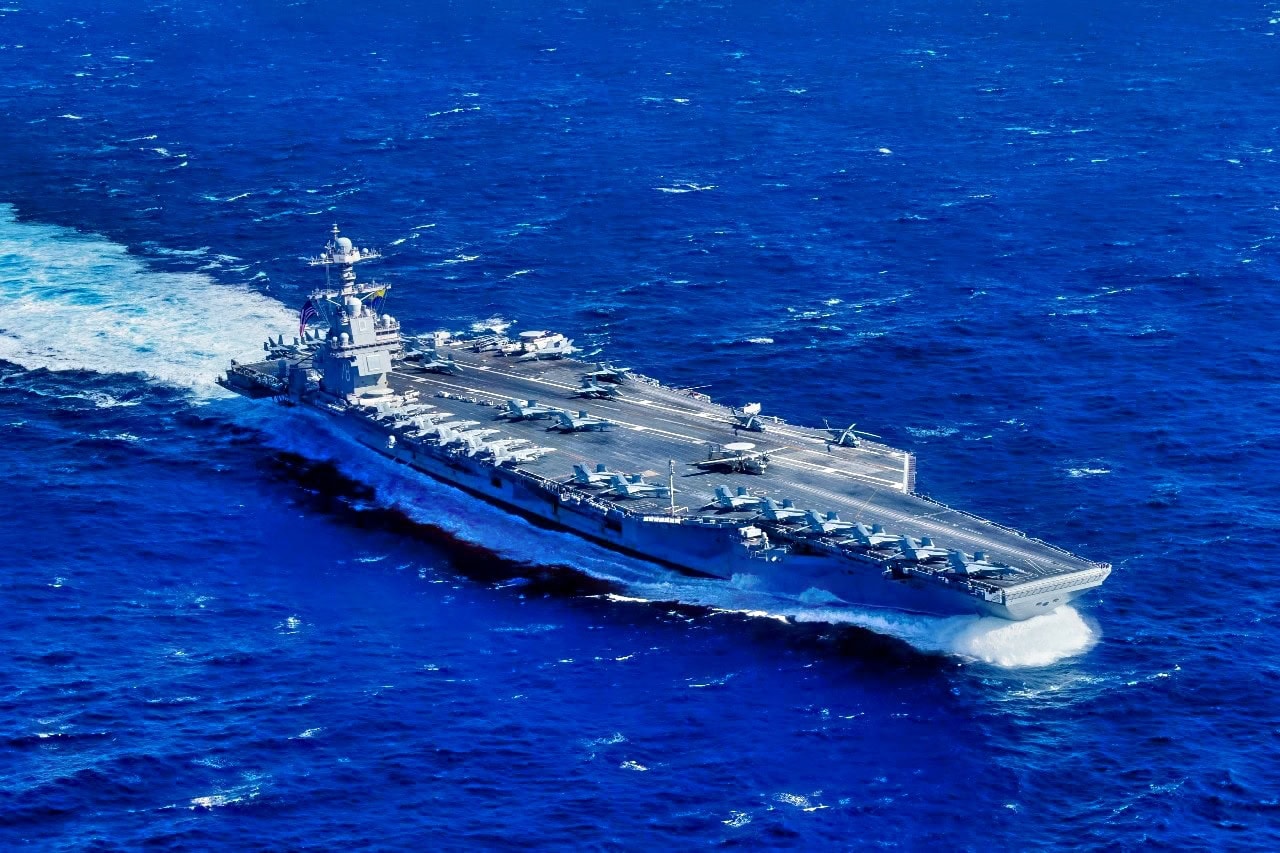
The world’s largest aircraft carrier, USS Gerald R. Ford (CVN 78), sails in formation with the Arleigh Burke-class guided missile destroyers USS Winston Churchill (DDG 81), USS Mitscher (DDG 57), USS Mahan (DDG 72), USS Bainbridge (DDG 96), and USS Forrest Sherman (DDG 98) in the Atlantic Ocean, Nov. 12, 2024. The Gerald R. Ford Carrier Strike Group is underway in the Atlantic Ocean completing Group Sail. Group Sail is the first at-sea integrated phase training event during a routine deployment training cycle. It is designed to challenge the Gerald R. Ford CSG’s ability to use the capabilities of the USS Gerald R. Ford (CVN 78), USS Winston S. Churchill (DDG 81), Carrier Air Wing (CVW) 8, Destroyer Squadron (DESRON) 2, and embarked Information Warfare team as a cohesive Strike Group to meet Navy and Joint Warfighting requirements that increases warfighting capability and tactical proficiency across all domains. (U.S. Navy photo by Mass Communication Specialist 2nd Class Maxwell Orlosky)
By February, that presence had expanded significantly. The USS Gerald R. Ford (CVN-78), the Navy’s newest and most advanced carrier, was ordered into the Eastern Mediterranean before transiting toward the Red Sea and U.S. Central Command’s area of responsibility.
Even as the Nimitz heads toward retirement, the U.S. Navy is betting big on carriers as a concept, with the Gerald R. Ford-class carrying the mission forward. Even with long-range missile and drone threats increasing, the United States still requires forward-deployed airpower that can operate without reliance on host-nation bases.
MORE – The F-22 Raptor Was Beaten In a Dog Fight By the Eurofighter
MORE – The Army Can’t Replace the Bradley Fighting Vehicle
That has always been true, but it is particularly relevant at a time when Washington is signaling its potential withdrawal from NATO and the closure of American bases in multiple European countries.
About the Author: Jack Buckby
Jack Buckby is a British researcher and analyst specializing in defense and national security, based in New York. His work focuses on military capability, procurement, and strategic competition, producing and editing analysis for policy and defense audiences. He brings extensive editorial experience, with a career output spanning over 1,000 articles at 19FortyFive and National Security Journal, and has previously authored books and papers on extremism and deradicalization.