
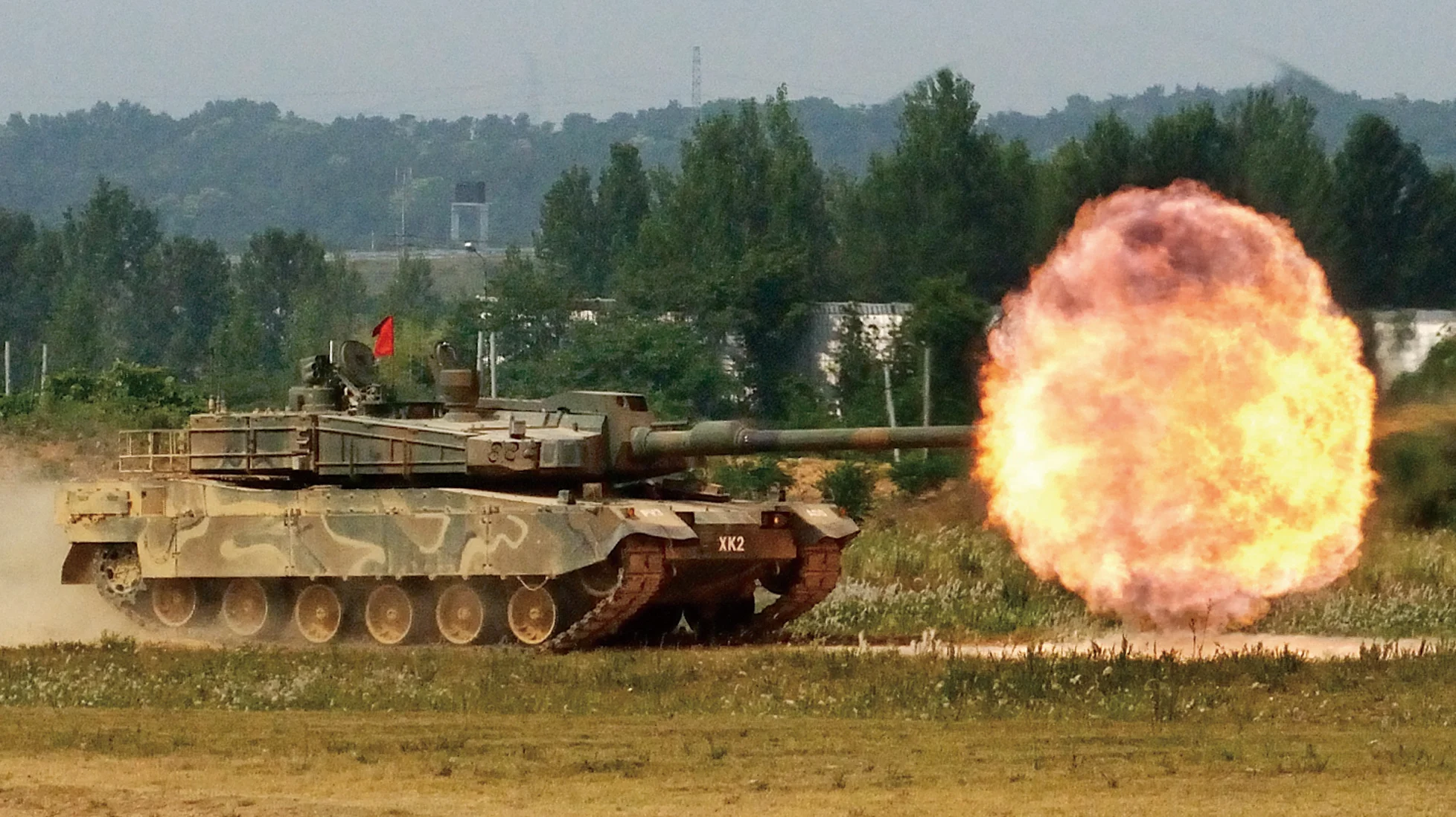
Summary and Key Points: Poland’s deal for as many as 1,000 K2 Black Panther tanks made it the heaviest armored power in Western Europe, but the tanks were never the whole point. Written into the framework was a commitment to build most of them inside Poland, under license, at a state-owned plant that had nearly gone dormant. In April 2026, that plan moved from paper to the factory floor. Warsaw is using its largest-ever arms purchase to rebuild a domestic tank industry from the ground up, and to turn itself from a buyer of tanks into a builder — and perhaps an exporter — of them.
Poland Loves South Korea’s K2 Black Panther Tank
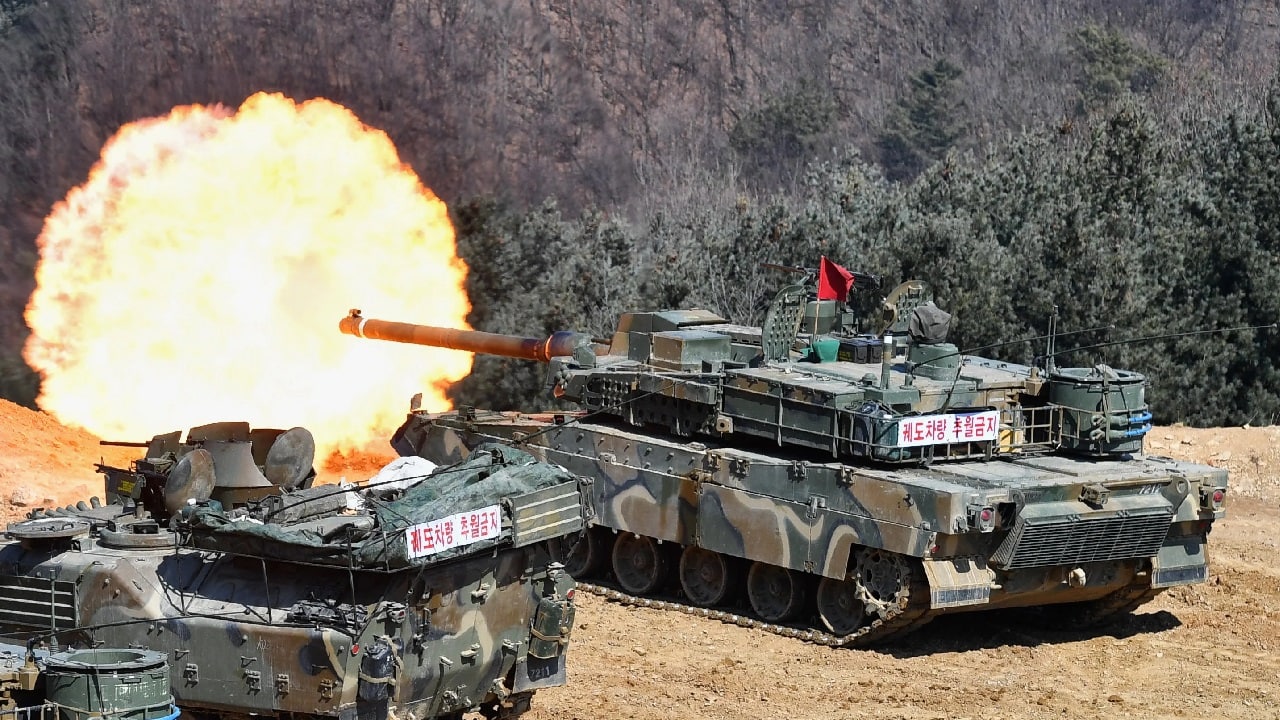
K2 Black Panther. Image Credit: Creative Commons.
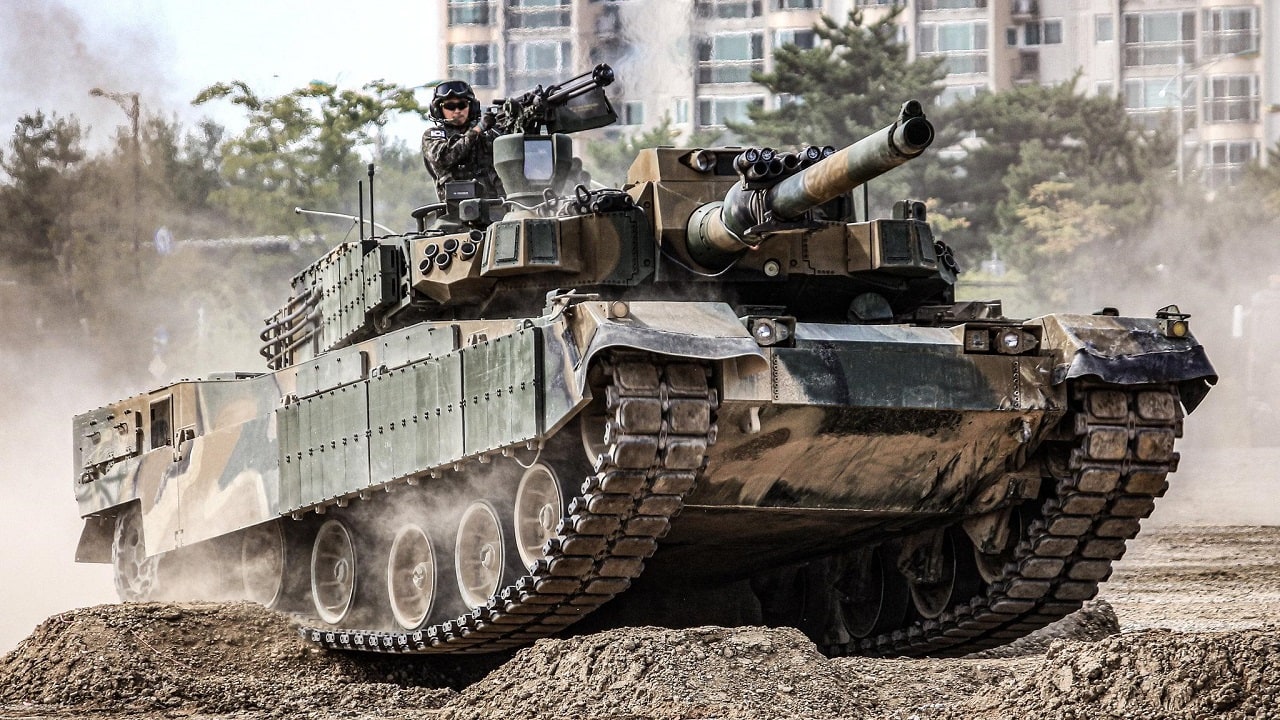
K2 Black Panther. Image Credit: Creative Commons.
When Poland committed to South Korean armor in 2022, the attention went to the numbers: up to 1,000 K2 Black Panthers, enough to make Warsaw the largest tank force in Western Europe. The figure that mattered more was smaller and harder to see. Written into the framework agreement was a pledge to build the bulk of those tanks, 820 of them, inside Poland, under license, at Polish facilities with Polish workers. The tanks were the visible half of the deal. The industry was the strategic half, and this spring it finally started to take physical shape.
Defense Industry: The Deal Was Always About Technology, Not Just Tanks
Poland’s turn to Seoul in 2022 is usually explained by speed, and speed was real: after donating its Soviet-era T-72 and PT-91 fleets to Ukraine, Warsaw needed armor immediately, and South Korea’s Hyundai Rotem could deliver from a hot production line while Germany’s Leopard 2 line sat effectively dormant. But the factor that sealed the deal, and that Berlin was unwilling to match, was the willingness to share the technology itself.
The K2 came bundled with an arrangement built around genuine technology transfer and the expansion of Poland’s own defense industry: Seoul offered not just to sell tanks but to hand over the means to build them, a rarity in the arms trade, and the offer that turned a purchase into a partnership.
The structure reflected that from the start. The July 2022 framework agreement between the Polish Armaments Group and Hyundai Rotem was split into two phases: 180 tanks built in South Korea in the K2GF “Gap Filler” configuration to plug the hole fast, and up to 820 of a Polish variant, the K2PL, to be produced in Poland under license. The first phase was executed at a remarkable pace, with all 180 Korean-built tanks delivered by late 2025 and Poland’s first K2 battalion standing up in early 2024. The second phase is where the industry gets built.
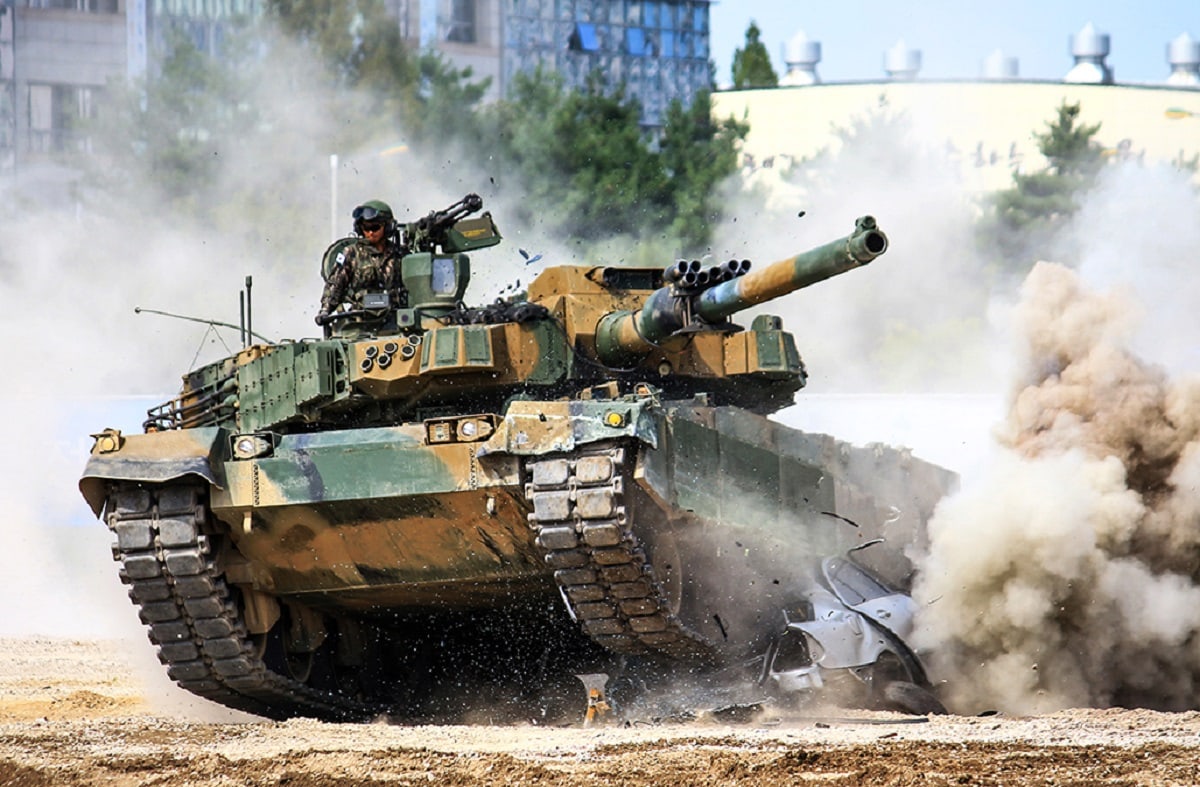
K2 Black Panther. Image: Creative Commons.
Built in Poland: From Paper to the Factory Floor
The second executive contract, signed in August 2025 and worth about $6.5 billion, is the hinge. It covers 180 more tanks, 116 Korean-built K2GFs and 64 of the new K2PL, and this time the production geography shifts. After the first three K2PLs are assembled in South Korea, the remaining 61 will be built in Poland at the Bumar-Łabędy plant in Gliwice, a subsidiary of the state-owned defense group, along with all 81 accompanying armored support vehicles.
That transfer stopped being theoretical in the spring. On April 27, 2026, Bumar-Łabędy and Hyundai Rotem signed a subcontracting agreement governing the assembly, servicing, and localization of the K2PL, with additional subcontracts awarded to Polish electronics and optics firms. A Polish official at the signing called it a strategic undertaking meant to become a showcase for the country’s defense industry.
The plan runs deep. Polish assembly of the K2PL is expected to begin around 2028 and continue through roughly 2035, with output ramping toward as many as 50 tanks per year, with up to 820 ultimately built domestically. The localization extends to the whole family: Polish-made recovery vehicles, engineering vehicles, and bridge-layers built on the K2 chassis, several developed with European partners.
The K2PL itself is not a straight copy but a Polish redesign shaped by the war next door. It adds a hard-kill active protection system, an anti-drone electronic-warfare suite, extra composite and reactive armor, a remote-controlled heavy machine gun, and Polish battle-management systems with NATO-standard communications, modifications drawn directly from Ukraine’s armored-warfare lessons, where anti-tank missiles and cheap drones have made survivability the defining problem of modern armor. Building it in Poland means the Polish industry absorbs not just assembly work but the engineering behind those systems.
From Buyer to Hub: The Strategic Prize
The reason a government pays a premium to build at home rather than buy off a running foreign line is that the factory is worth more than the tanks. Poland’s defense ministry projects the K2 program will create more than 10,000 jobs over a decade and rebuild an industrial base that had been fading. Bumar-Łabędy, once the heart of Poland’s Cold War tank production, had drifted toward dormancy before the K2 deal gave it a future. Local production also means sovereign sustainment: the ability to maintain, repair, overhaul, and eventually upgrade the fleet without depending on a supplier an ocean away, a form of supply-chain independence distinct from the politics of who sells the platform.
The larger ambition is bigger still. Hyundai Rotem’s stated goal is to make Poland the European production and maintenance hub for the K2, the place where the tank is not only assembled but serviced for other European operators and potentially re-exported. That would turn Warsaw from Seoul’s biggest customer into its manufacturing partner on the continent, with an industrial base that could bid for future orders in its own right.
The K2’s design is already proving licensable: Turkey’s Altay main battle tank is a K2-derived design built with South Korean technology, a preview of how far the platform can spread. Poland’s bet is that it can be a node in that spread rather than merely a buyer at the end.
The Counterpoints: A Factory Is Harder Than a Purchase
The industrial promise carries industrial risk. Technology-transfer programs of this scale routinely slip, and the Polish-built portion of the deal is precisely the part that has not happened yet: the fast, proven half is the Korean-built K2GF, while domestic K2PL production is a 2028 projection resting on tooling, training, and a supply chain that Bumar-Łabędy still has to stand up.
Building tanks at home is also more expensive per unit than buying them off Korea’s high-volume line, and it is slower, since the localization that delivers the industrial payoff is the same thing that pushes the last deliveries toward the mid-2030s.
And Poland’s ambition to become a re-exporter runs into an obvious competitor in South Korea itself, which has every incentive to keep the most lucrative orders on its own lines. Whether Warsaw ends up a genuine manufacturing partner or simply a licensed assembler is a question the next five years will answer.
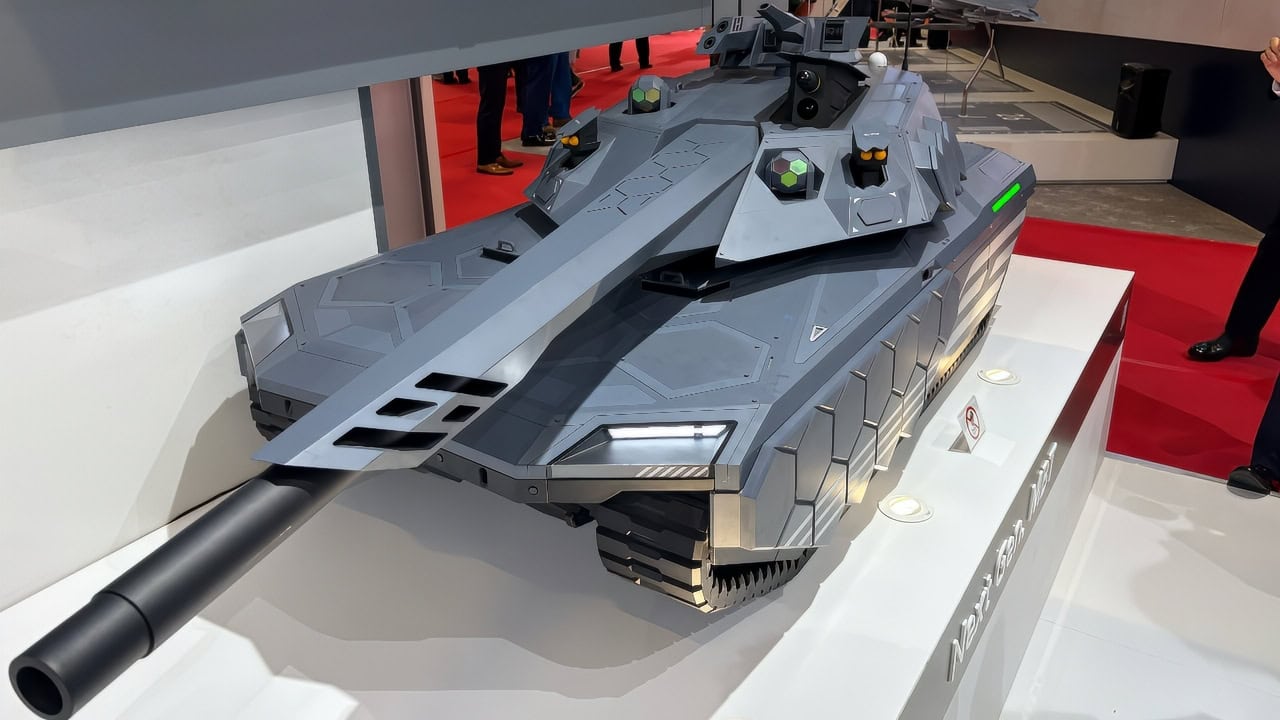
K3 Black Panther Photo. Image Credit: Reuben F. Johnson.
Even so, the significance of what Poland has attempted is easy to miss if the story is told only as a shopping list. Plenty of countries have bought advanced tanks. Poland is trying to buy the capacity to build them, converting an emergency rearmament forced by a war on its border into a permanent industrial asset. The tanks rolling out of Gliwice toward the end of this decade will be the visible result. The factory that builds them, and whether it can stand on its own, is the prize Warsaw was actually after.
MORE – The B-2 Spirit Stealth Bomber Can Now Sink China’s Navy
About the Author: Harry J. Kazianis
Harry J. Kazianis (@Grecianformula) was the former Senior Director of National Security Affairs at the Center for the National Interest (CFTNI), a foreign policy think tank founded by Richard Nixon based in Washington, DC. Harry has over a decade of experience in think tanks and national security publishing. His ideas have been published in the NY Times, The Washington Post, The Wall Street Journal, CNN, and many other outlets worldwide. He has held positions at CSIS, the Heritage Foundation, the University of Nottingham, and several other institutions related to national security research and studies. He is the former Executive Editor of the National Interest and the Diplomat. He holds a Master’s degree focusing on international affairs from Harvard University.

