
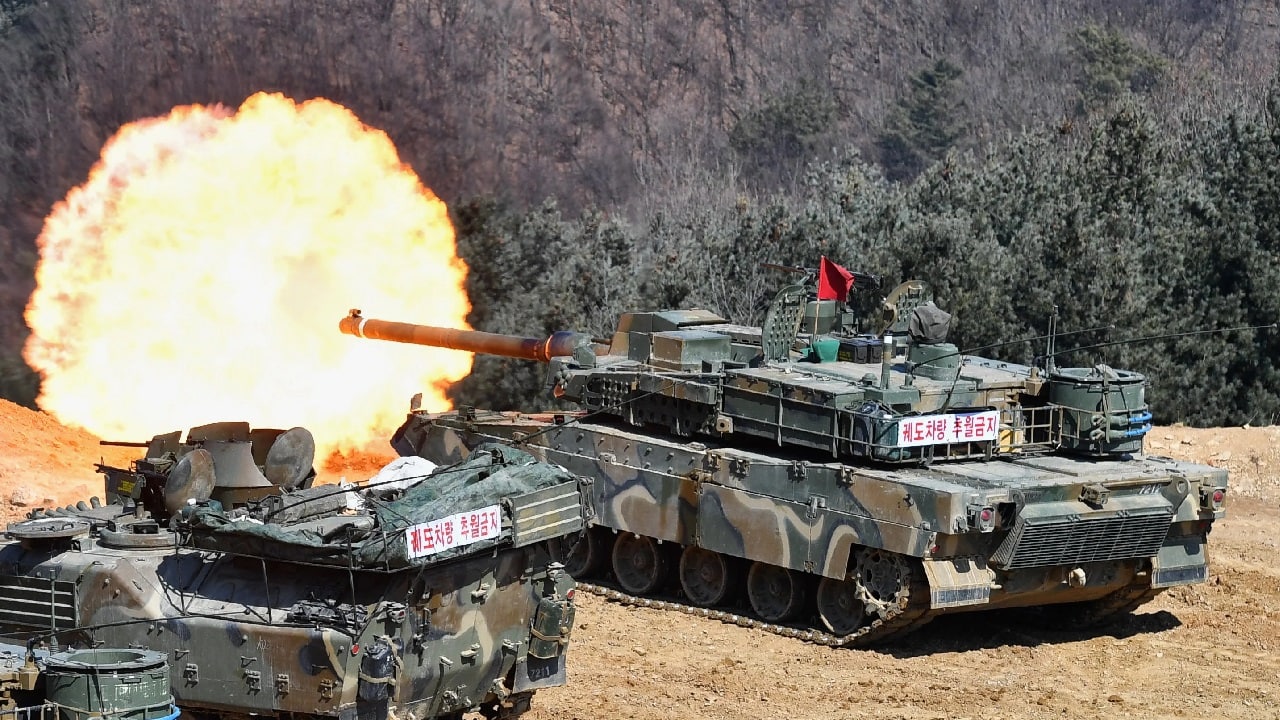
Summary and Key Points: South Korea’s K2 Black Panther is a proven, in-service tank built for fast, networked operations, pairing a 120 mm L/55 gun, autoloader, and advanced fire control with strong mobility at a lighter combat weight. The U.S. Army’s M1E3 is an earlier-stage program that aims to reinvent the Abrams with reduced weight, a modular open architecture, and a new layout featuring an unmanned turret, an autoloader, and a crew protected in the hull.
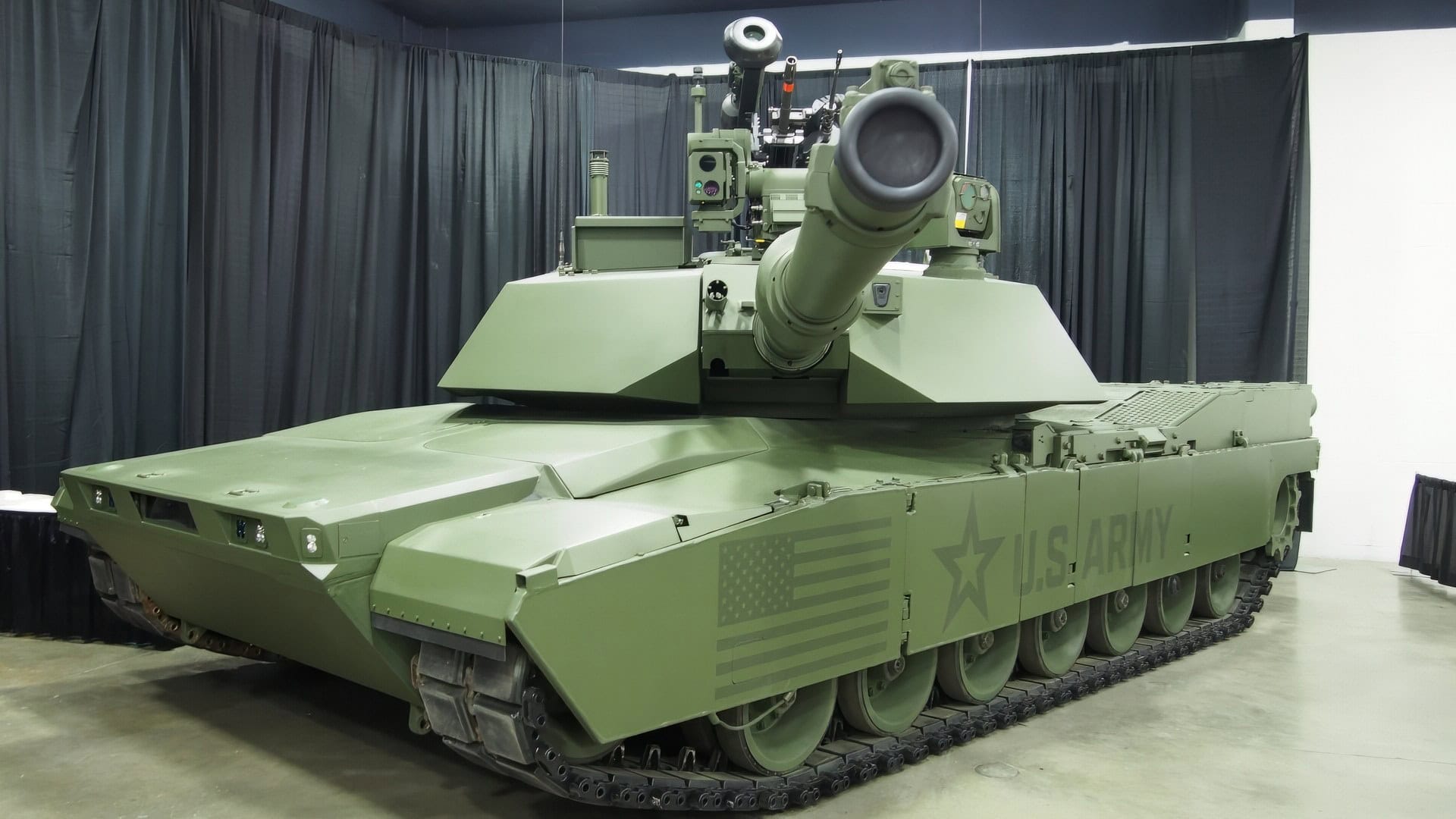
Photo taken on 1/17/2026 of the M1E3 Tank at the Detroit Auto Show. Image by 19FortyFive, All Rights Reserved.
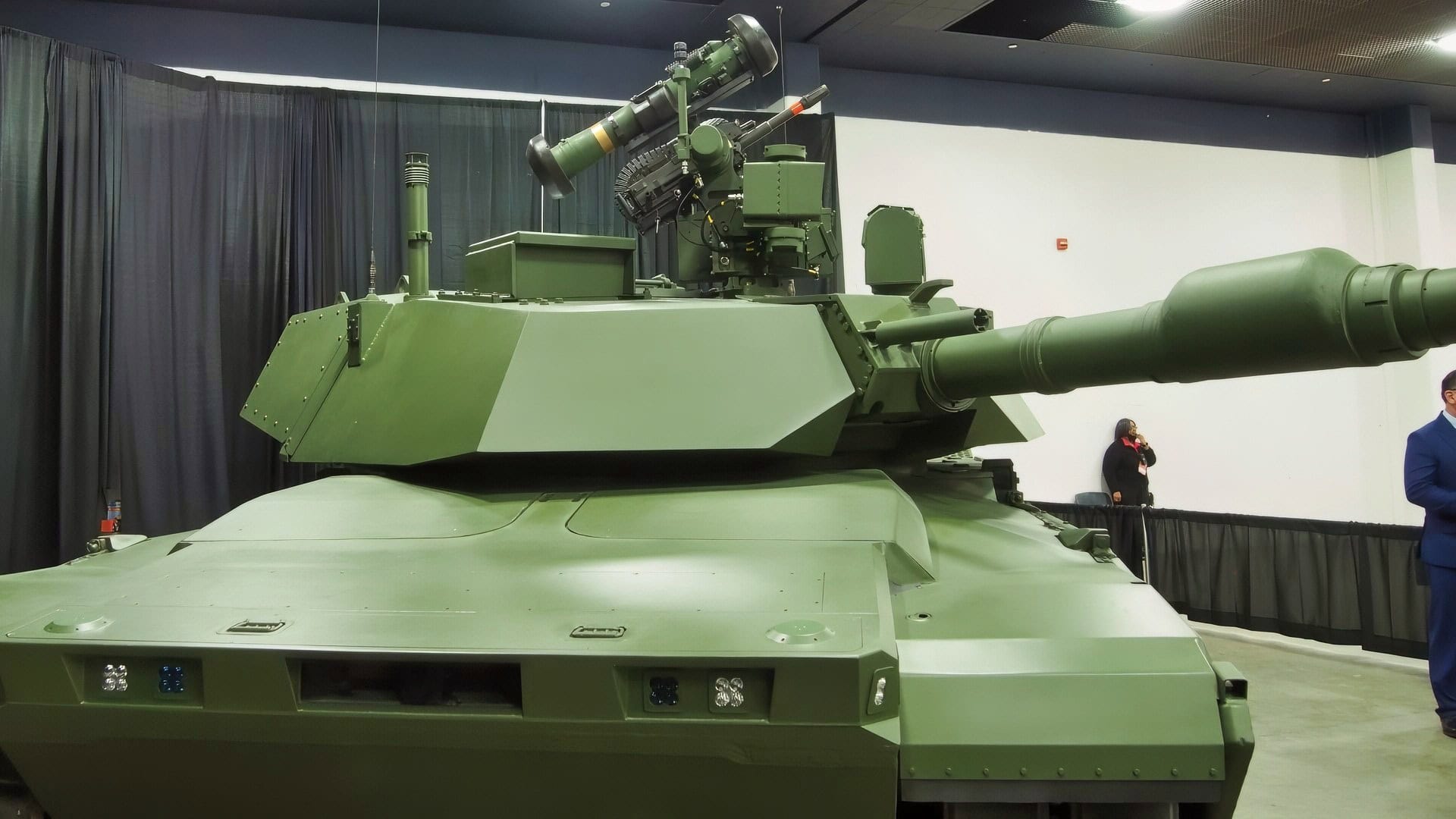
M1E3 Tank from the Detroit Auto Show. Photo Taken By 19FortyFive Staff on 1/17/2026.
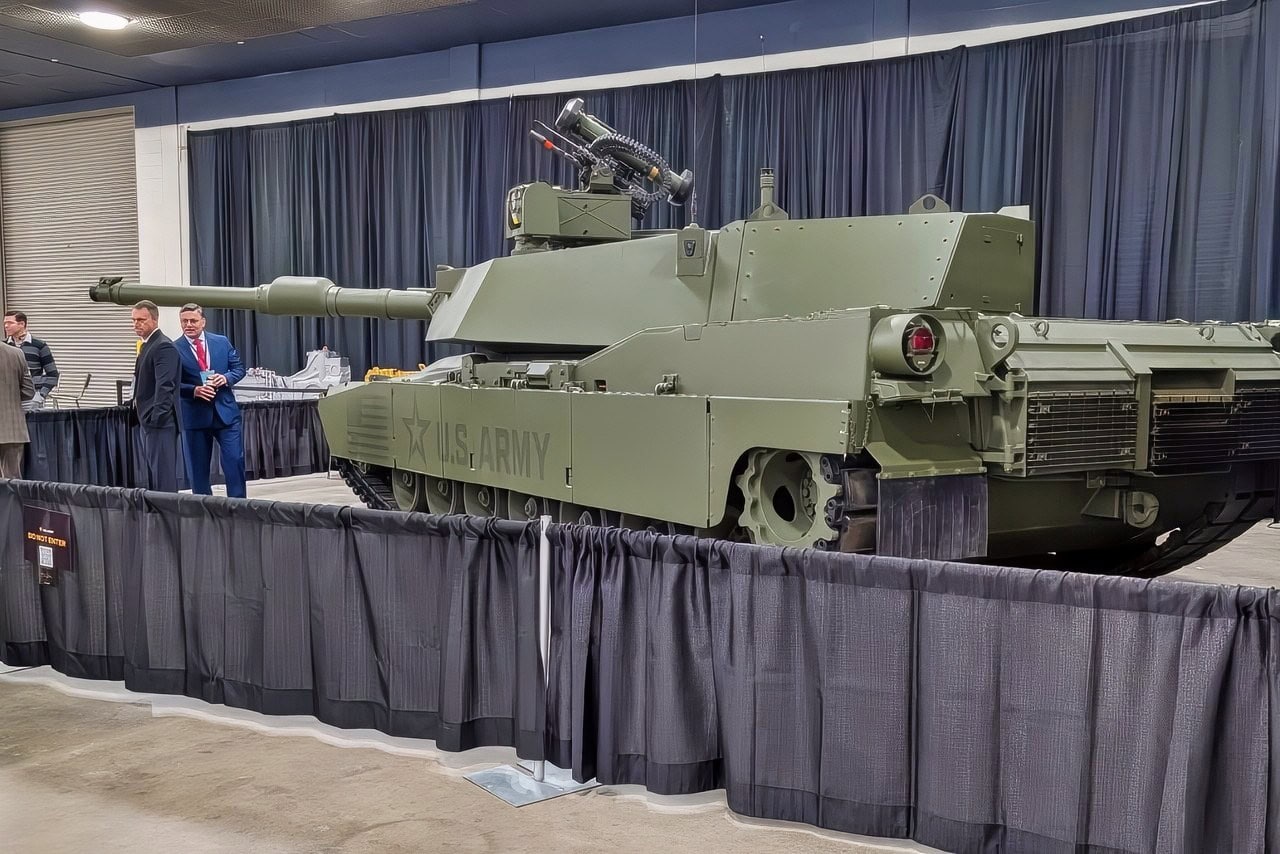
M1E3 Tank at the Detroit Auto Show. Image Credit: 19FortyFive.
-The K2 looks like the better near-term choice because it exists in numbers now, but the M1E3’s proposed protection and upgrade path could overtake it as the design matures.
K2 Black Panther vs. M1E3 Abrams: Which Tank Is Really Better?
The K2 Black Panther is a popular pick as the most advanced tank in current service.
The K2 boasts exceptional armor, good maneuverability, and excellent onboard electronic systems that make it ideal for network-centric warfare. While it is debatable whether the K2 is better than the Abrams, many make that claim. But how does it compare to the newest iteration of the Abrams?
The M1E3 is still in its early stages of development—only a pre-prototype has been displayed. But the U.S. Army is transparent about its goals for the future Abrams iteration. Does the M1E3 beat the K2, or does the Black Panther still stand tall as the most advanced tank in the world?
The K2 Black Panther vs the M1E3
The South Korean K2 is a mature operational fourth-generation main battle tank that has been produced in multiple batches since 2014. It is already in frontline service with South Korea and Poland.
Its design reflects the Republic of Korea Army’s need for a high-speed, networked platform that can maneuver across mountainous and mixed terrain. It integrates an autoloader, advanced fire control, and modular armor.
The M1E3 is the U.S. Army’s ambitious redesign of the Abrams line. The program was created in 2023, after the M1A2 SEPv4 project was discontinued. The Army closed out the SEPv4 effort and initiated the M1E3 with the explicit intent of reducing weight, increasing protection, and adopting a modular open systems architecture for fast future upgrades. Since then, the program has accelerated, with early prototypes delivered in December 2025 and public demonstrations in January 2026; but it remains a pre-production effort, and its exact configuration is still being refined.
Firepower and Fire Control Systems
Both tanks mount 120-mm cannons for firepower. The K2 employs the CN08 120-mm L/55 gun, which offers higher muzzle velocities than shorter barrels. An advanced fire-control suite includes a radar, laser rangefinder, and crosswind sensor.
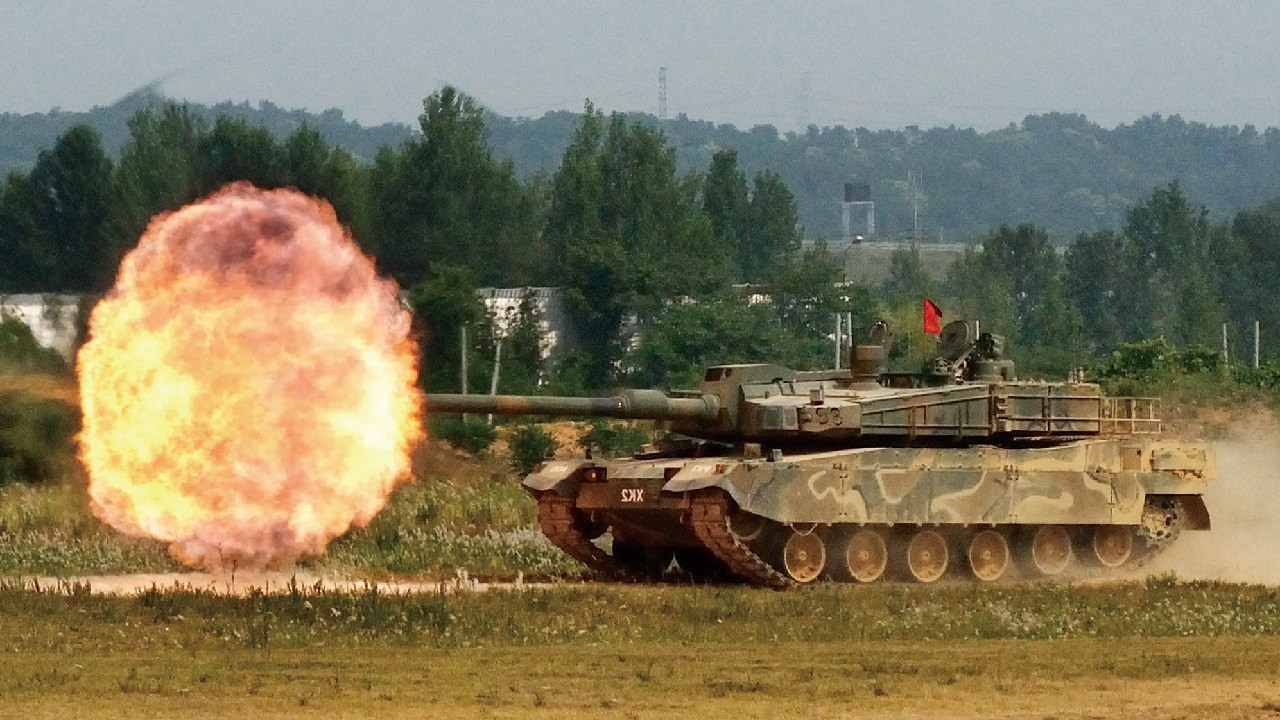
K2 Black Panther. Image Credit: Creative Commons.
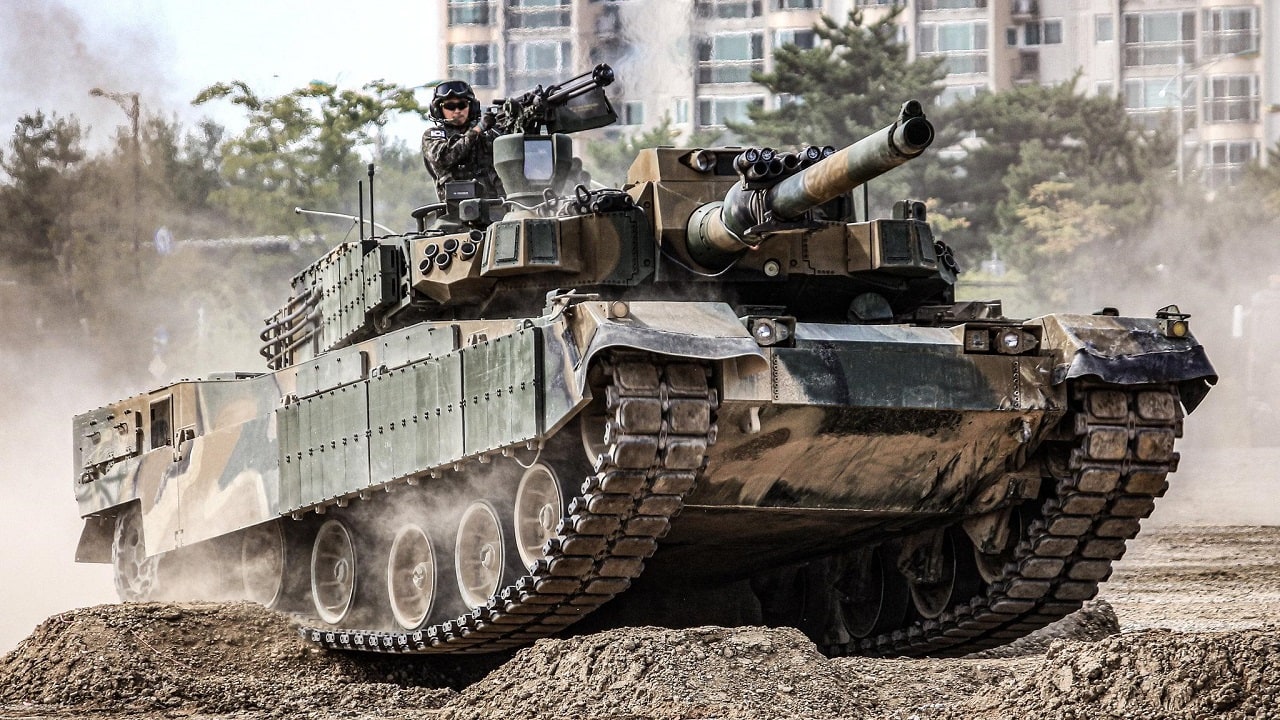
K2 Black Panther. Image Credit: Creative Commons.
It also fields the KSTAM anti-tank guided missile—a top-attack, fire-and-forget munition capable of engaging enemy armor from above cover. A bustle-mounted autoloader feeds the gun, similarly to the Leclerc MBT. It has a three-person crew and a high theoretical rate of fire.
The M1E3 retains the familiar M256 120-mm smoothbore gun. What changes is the turret architecture and crew layout. The M1E3 shifts to an unmanned turret and an autoloader with the crew moved into the hull. This configuration makes for better internal volume use and integrates protection more coherently. While the Army has not announced a new gun caliber or confirmed any new ammunition type, the open-architecture design explicitly aims to facilitate rapid insertion of new sensors and rounds. The move to an autoloader would also align the Abrams lineage with peer MBTs that have long used three-person crews.
Protection and Mobility
Abrams traditionally emphasizes passive protection, including highly classified composite-armor stacks and, in U.S. service, depleted uranium layers. This made for extraordinary battlefield resilience but greater weight.
The M1E3 seeks integrated protection from within, addressing new kinetic threats such as top-attack profiles and loitering munitions. The K2’s survivability approach deliberately trades mass for modularity and agility.
It uses a composite armor with silicon-carbide ceramics and can take added reactive-armor packages as needed. The K2 also employs a soft-kill active protection system (APS) that automatically deploys smoke grenades when an enemy locks onto the tank. Currently, the K2 does not use hard-kill APS like the M1E3, but future variants are likely to field a domestically made hard-kill system.
For mobility, the K2 runs a 1,500-hp diesel engine paired with advanced transmissions. At roughly 55–56 metric tons of combat weight, it boasts an excellent power-to-weight ratio of approximately 27 hp/ton, high road speeds, and very strong cross-country agility.
The M1E3, meanwhile, departs from the famous Abrams turbine heritage to pursue hybrid-electric propulsion, with the stated goals of reducing fuel consumption, enabling silent watch, and reducing heat signature.
Based on the initial pre-prototype, the E3 uses a CAT C13D Inline 6-cylinder engine, which provides somewhere between 1,000–1,500 horsepower. Granted, this is subject to change, and the tank’s actual performance specs have not been revealed.
Which Tank is Better?
The K2 Black Panther right now is the better tank for immediate deployment. It is lighter, already fielded in numbers, integrates a long-barrel 120 mm gun with an autoloader and unique top-attack ammunition, and delivers excellent mobility and credible protection.
All of these qualities are available to operators right now, which matters more than the promise of features not yet in service. That being said, The M1E3 as proposed would offer stronger overall protection with its unmanned turret, armored crew compartment, and integrated APS.
In its current iteration, the M1E3 may be the inferior choice, but as the program matures, that conclusion is likely to change.
About the Author: Isaac Seitz
Isaac Seitz, a Defense Columnist, graduated from Patrick Henry College’s Strategic Intelligence and National Security program. He has also studied Russian at Middlebury Language Schools and has worked as an intelligence Analyst in the private sector.