Summary and Key Points: National security editor Brandon J. Weichert analyzes the U.S. Navy’s decision to freeze the decommissioning of the USS Nimitz (CVN-68).
-Amid the ongoing conflict with Iran, known as Operation Epic Fury, the Navy faces critical resource shortages and a legal mandate to maintain 11 aircraft carriers.
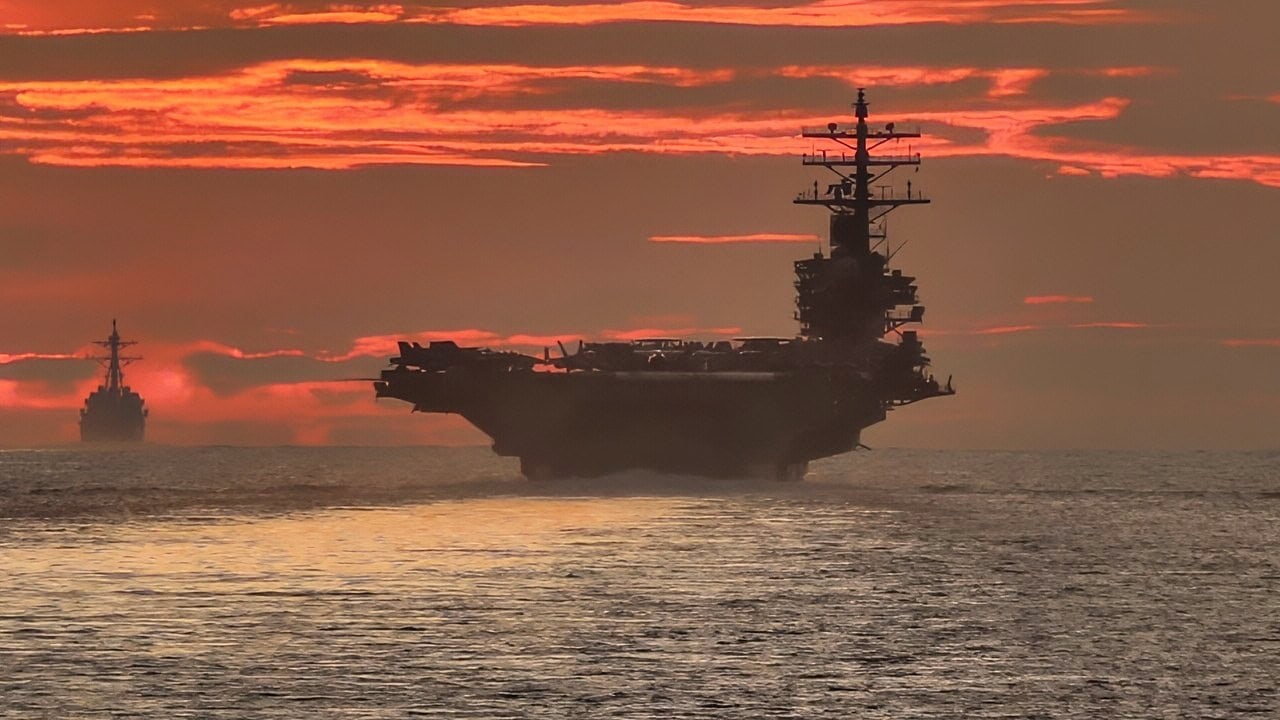
The Nimitz-class aircraft carrier USS George H.W. Bush (CVN 77) sails in the Atlantic Ocean, Feb. 6, 2026. The George H.W. Bush Carrier Strike Group is at sea as an integrated warfighting team. Composite Training Unit Exercise (COMPTUEX) is the Joint Force’s most complex integrated training event and prepares naval task forces for sustained high-end Joint and combined combat. Integrated naval training provides combatant commanders and America’s civilian leaders highly capable forces that deter adversaries, underpin American security and economic prosperity, and reassure Allies and partners. (U.S. Navy photo by Mass Communication Specialist 3rd Class John R. Farren)

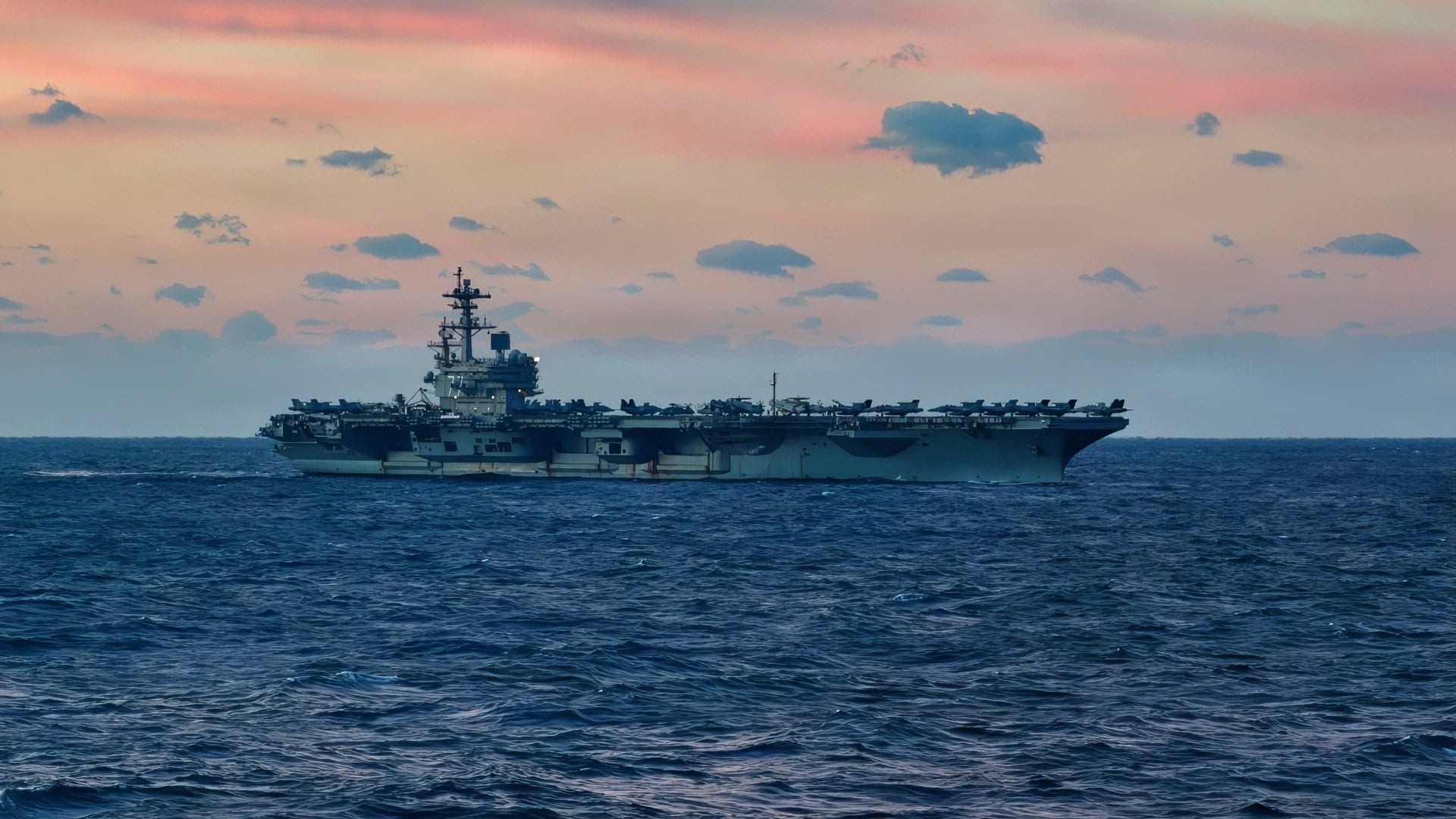
The Nimitz-class aircraft carrier USS George H.W. Bush (CVN 77) sails in the Atlantic Ocean, Feb. 14, 2026. The George H.W. Bush Carrier Strike Group is at sea training as an integrated warfighting team. Composite Training Unit Exercise (COMPTUEX) is the Joint Force’s most complex integrated training event and prepares naval task forces for sustained high-end Joint and combined combat. Integrated naval training provides combatant commanders and America’s civilian leaders highly capable forces that deter adversaries, underpin American security and economic prosperity, and reassure Allies and partners. (U.S. Navy photo by Mass Communication Specialist 3rd Class Mark Peña)
-While the USS Gerald R. Ford and USS Abraham Lincoln navigate lethal A2/AD zones—including drones and hypersonic threats—the Nimitz serves as a vital stopgap.
-With the USS George H.W. Bush surging to the CENTCOM AOR, the aging Nimitz ensures readiness as China and North Korea ramp up Indo-Pacific tensions.
The USS Nimitz Lifeline: Why the U.S. Navy Froze the Decommissioning of its Oldest Carrier
The United States Navy giveth and the Navy taketh away, but then the Navy finds itself in a most unwanted war with Iran. So now the Navy giveth again. The USS Nimitz, the first of her iconic nuclear-powered aircraft carrier class, was set to be decommissioned this month.
A Rapid Strategic Decline
Her glorious service to the United States during the height of the US Navy’s surface power projection during the Cold War was coming to an inauspicious end: she was to be mothballed primarily because the Navy needed to cannibalize funds supporting the Nimitz to pay for its (overpriced) new Ford-class carriers.
Here’s the problem, though: the US Navy’s global responsibilities exceed its current capabilities. Congress requires the Navy to maintain a fleet of 11 aircraft carriers. There are commitments the Navy must not only keep the global sea lanes open, but also assist key allies in the Indo-Pacific, the Middle East, Europe, and Latin America from threats. Although the Navy does have a force of 11 carriers and attendant warships and submarines, not all 11 are ready for operations at once.
The Navy can maintain four operational carriers at once—and that’s often a serious strain on its finite resources.
Failure to Thrive
Then there’s the added complication of America’s declining naval shipyards. There are workforce shortages, budgetary woes, limited space, aging infrastructure, and bureaucratic rot that have conspired to turn America’s once-glorious naval shipyards into shadows of their former selves.
Today, there is a major backlog in the production of key systems.
What’s more, the new warships and submarines the Navy wants to build to remain competitive globally are complex and therefore expensive.
Add in costly maintenance schedules for existing units, and the Navy is in a real pinch strategically.
They cannot meet the current exorbitant demands on the force. And there’s no way the Navy can get more ships out of the shipyard to handle the increased workload. So, after much thought, the Navy has decided to freeze the decommissioning of the Nimitz for another year, essentially.
Anti-Access/Area-Denial (A2/AD) Nightmares
By doing this, the Navy ensures that it is not in violation of the Congressional edict to maintain a fleet of 11 carriers. What’s more, they keep a very capable (despite its age) carrier in reserve.
More importantly, though, this decision highlights just how significant a crisis the Navy finds itself in, both in terms of its resource scarcity and the very real strategic threat that current enemy anti-access/area-denial (A2/AD) systems pose to US aircraft carriers (and other surface warships).
Two years ago, during the inconclusive fight with Iranian-backed Houthis in Yemen, multiple ship commanders in the United States Navy told the media that they had never experienced missile attacks at the level they did fighting the Houthis in all their careers. In fact, some have suggested that the Navy fighting the Houthis had not encountered such resistance since the Second World War.
And that was a ragtag group of rebels in the foothills of Yemen.
The War in Iran is Going Badly for Uncle Sam
Today, the United States is at war with Iran.
Contrary to what many have argued, the administration has claimed that the war is going swimmingly; it has dragged on far longer than the president and his top advisers had planned.
With Iranian A2/AD systems now in full force, the US Navy fears that its carriers, the USS Abraham Lincoln and the newer USS Gerald R. Ford, are in danger from shore-to-ship missiles, drones, and possibly even hypersonic vehicles.
Not to sound too worried here, but there is a growing possibility that one of America’s vital aircraft carriers currently fighting against Iran will be damaged.
Hence, the Navy has again ordered the older Abraham Lincoln to effectively hide behind the mountains of Oman, 1,000 kilometers from Iran and outside the known range of Iranian ASBMs.
It’s why the Trump administration has desperately surged the USS George H.W. Bush from its East Coast homeport and is moving it into the CENTCOM area of responsibility (AOR) as well.
But having three carriers on station, even if they are relatively protected from Iranian strikes, is a costly endeavor.
We’ll See Nimitz Sail Once Again
Further, it places great strain on these expensive and complex warships. In fact, the George H.W. Bush is likely being deployed to the CENTCOM AOR to relieve either the Gerald R. Ford or the Abraham Lincoln.
If one of those carriers is set to be relieved, that would mean two of America’s three operational carriers are tied down for however long the Iran War lasts, with the third laid up in port for a protracted period, receiving much-needed maintenance.
So, effectively boxing the Nimitz and keeping it active and in reserve, gives the Navy a stopgap, should something catastrophic happen in the Middle East—or should greater deterrence be needed in another part of the world, such as the Indo-Pacific, where already the Chinese military has increased their threat to Taiwan and North Korea has started launching cruise missiles over South Korean territory.
While not a total solution to the Navy’s woes, keeping the Nimitz combat-ready for another year is the best of the bad options. We will likely see the Nimitz redeployed within the year as the global situation continues deteriorating.
About the Author: Brandon J. Weichert
Brandon J. Weichert is the Senior National Security Editor at 19FortyFive.com. Recently, Weichert became the editor of the “NatSec Guy” section at Emerald.TV. He was previously the senior national security editor at The National Interest. Weichert is the host of The National Security Hour on iHeartRadio, where he discusses national security policy every Wednesday at 8pm Eastern. He hosts a companion show on Rumble entitled “National Security Talk.” Weichert consults regularly with various government institutions and private organizations on geopolitical issues. His writings have appeared in numerous publications, among them Popular Mechanics, National Review, MSN, and The American Spectator. And his books include Winning Space: How America Remains a Superpower, Biohacked: China’s Race to Control Life, and The Shadow War: Iran’s Quest for Supremacy. Weichert’s newest book, A Disaster of Our Own Making: How the West Lost Ukraine, is available for purchase wherever books are sold. He can be followed via Twitter/X @WeTheBrandon.