
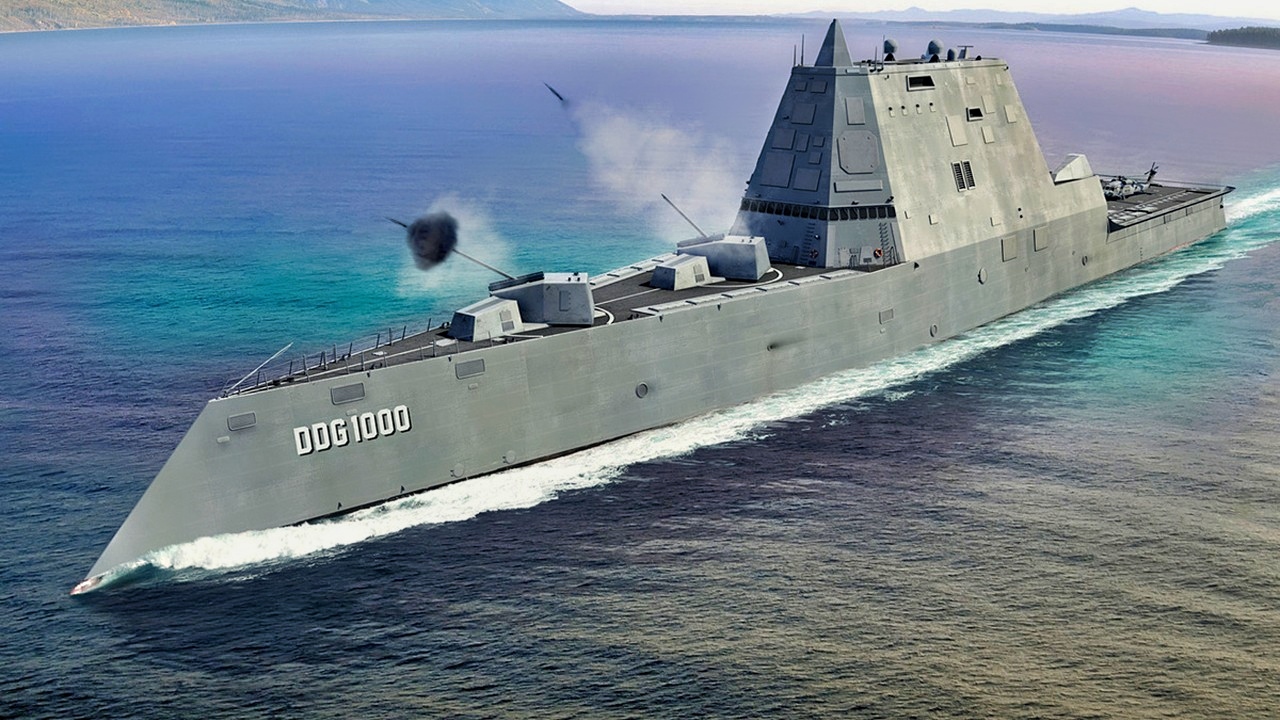
Summary and Key Points: As of February 2026, the USS Zumwalt has successfully transitioned from a failed littoral gunship to a premier hypersonic strike platform.
-Originally “sunk” by the exorbitant $800,000 cost of its LRLAP shells, the class was reduced from 32 ships to just three.
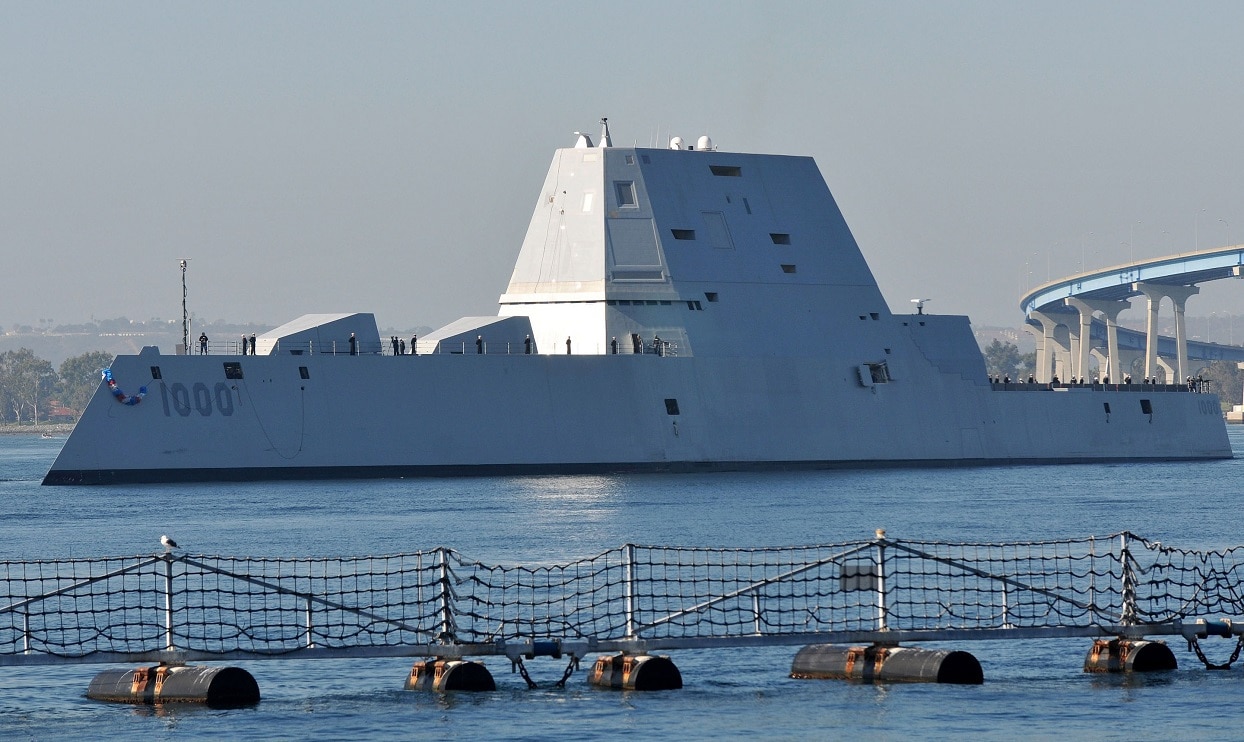
FROM 2016: The U.S. Navy’s newest warship, USS Zumwalt (DDG 1000) passes Coronado bridge on its way to Naval Base San Diego. Zumwalt is the lead ship of a class of next-generation multi-mission destroyers, now homeported in San Diego. (U.S. Navy photo by Petty Officer 3rd Class Anthony N. Hilkowski/Released)

-However, a 2023 refit replaced its two unusable 155mm guns with Conventional Prompt Strike (CPS) launchers.
-Following successful sea trials in January 2026, the Zumwalt is now a stealthy “intercontinental” asset. This evolution honors the legacy of Admiral Elmo Zumwalt Jr., the social and technical reformer who modernized the 20th-century Navy.
Saved by Hypersonics: How the U.S. Navy Resurrected the $8 Billion USS Zumwalt Destroyer
Admiral Elmo Zumwalt Jr. was one of the most beloved U.S. Navy officers ever to hold the position of Chief of Naval Operations (CNO). In fact, he was revered enough to have an entire class of warships named in his honor, namely the Zumwalt-class guided missile destroyers (DDGs).
Alas, these destroyers initially seemed unworthy of the Admiral’s good name; they were a disappointing economic and technical boondoggle. However, in the spirit of “Don’t Give Up the Ship,” just when it seemed the Zumwalts were completely dead in the water, new developments saved them. In a nutshell, the Zumwalt-class warships’ service life story could be summed up as “sunk’ by their own ammo, saved by hypersonic missiles.”
Part I: Sunk
The Zumwalt equipped the Advanced Gun System (AGS) consisting of two 155-mm guns. These were a definite step up in size and power from the 5-inch main guns that have been standard for Navy destroyers for many years. The manufacturer, BAE Systems, claimed these advanced guns had a reach of 83 nautical miles, with a rate of fire of 10 rounds per minute.
However, the AGS didn’t quite live up to the manufacturer’s claims. It only reached two-thirds the forecast range (around 70 miles).
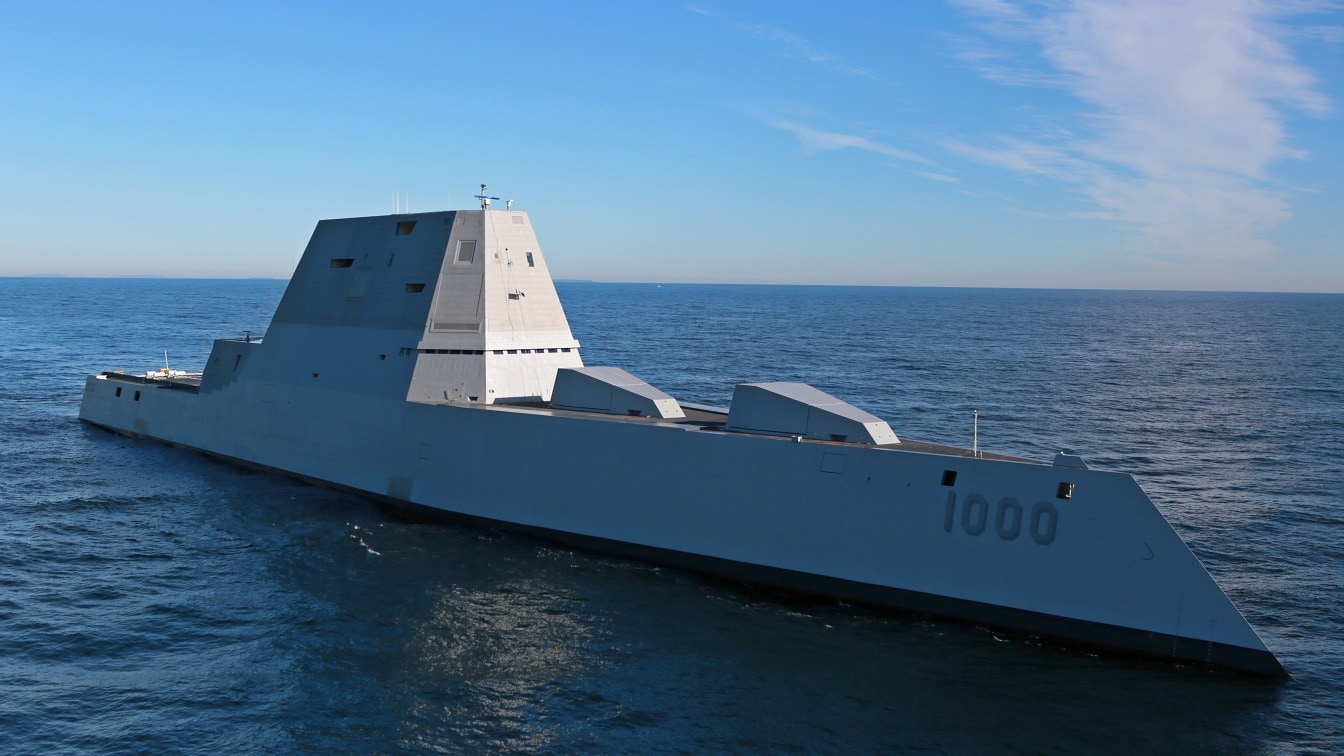
(Dec. 7, 2015) The future USS Zumwalt (DDG 1000) is underway for the first time conducting at-sea tests and trials in the Atlantic Ocean Dec. 7, 2015. The multimission ship will provide independent forward presence and deterrence, support special operations forces, and operate as an integral part of joint and combined expeditionary forces. (U.S. Navy photo courtesy of General Dynamics Bath Iron Works/Released). Zumwalt-Class
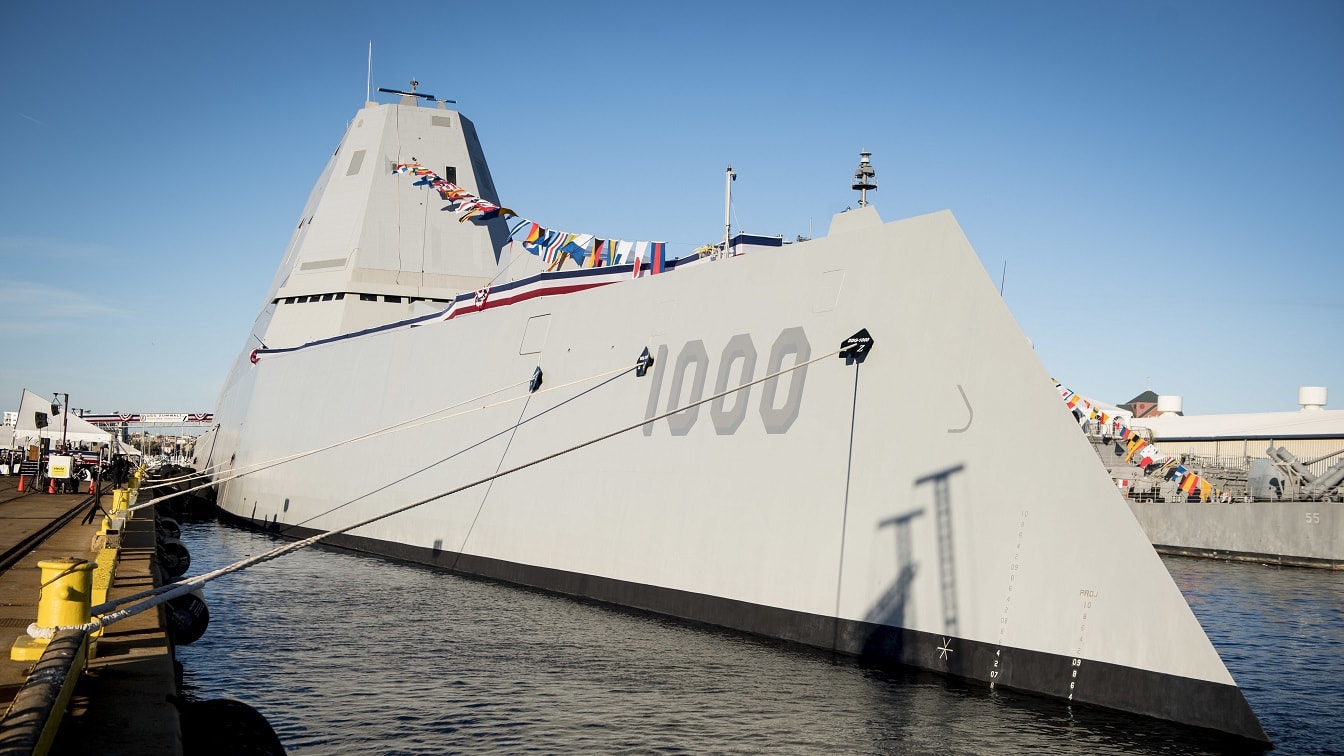
(Oct. 15, 2016) The Navy’s newest and most technologically advanced warship, USS Zumwalt (DDG 1000), is moored to the pier during a commissioning ceremony at North Locust Point in Baltimore. (U.S. Navy photo by Petty Officer 1st Class Nathan Laird/Released)
Meanwhile, its rocket-boosted Long Range Land Attack Projectiles (LRLAP) GPS-guided shells cost $800,000 each—nearly as pricey as more precise, longer-range and harder-hitting cruise missiles. The Navy finally canceled the exorbitantly expensive ordnance, leaving the Zumwalt with two huge guns it couldn’t fire. And without ammo, any gun is just a paperweight.
Accordingly, out of 32 hulls originally planned, only three were actually built and commissioned. (Shades of the sad Seawolf submarine story!)
Part II: Saved
The Zumwalts’ resurrection story began in 2023, when the Navy committed to a radical solution: Remove both of those troublesome AGS gun systems entirely and convert the ships to carry the Conventional Prompt Strike (CPS) hypersonic missile.
The CPS weapons system uses a two-stage solid rocket booster to accelerate a Common Hypersonic Glide Body (C-HGB) to speeds greater than Mach 5 before it separates and maneuvers toward its target.
Lockheed Martin was given a chance to redeem itself when it was awarded a $1.1 billion initial contract to develop the CPS. To make this ambitious plan a reality, the forward gun housing was completely scrapped to create space for hypersonic missiles’ cells, while the second gun emplacement was gutted internally, freeing up substantial volume belowdecks for additional systems and future growth.
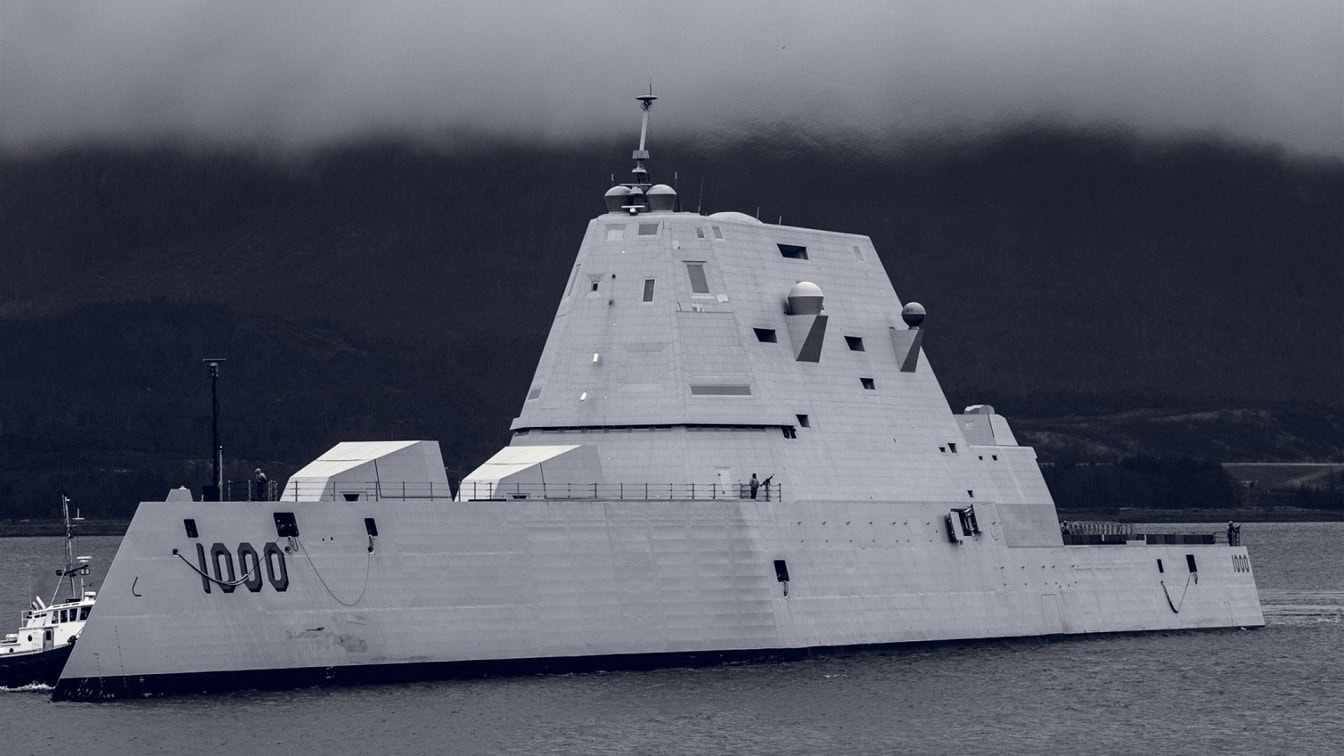
Zumwalt-Class. Image Credit: Creative Commons.
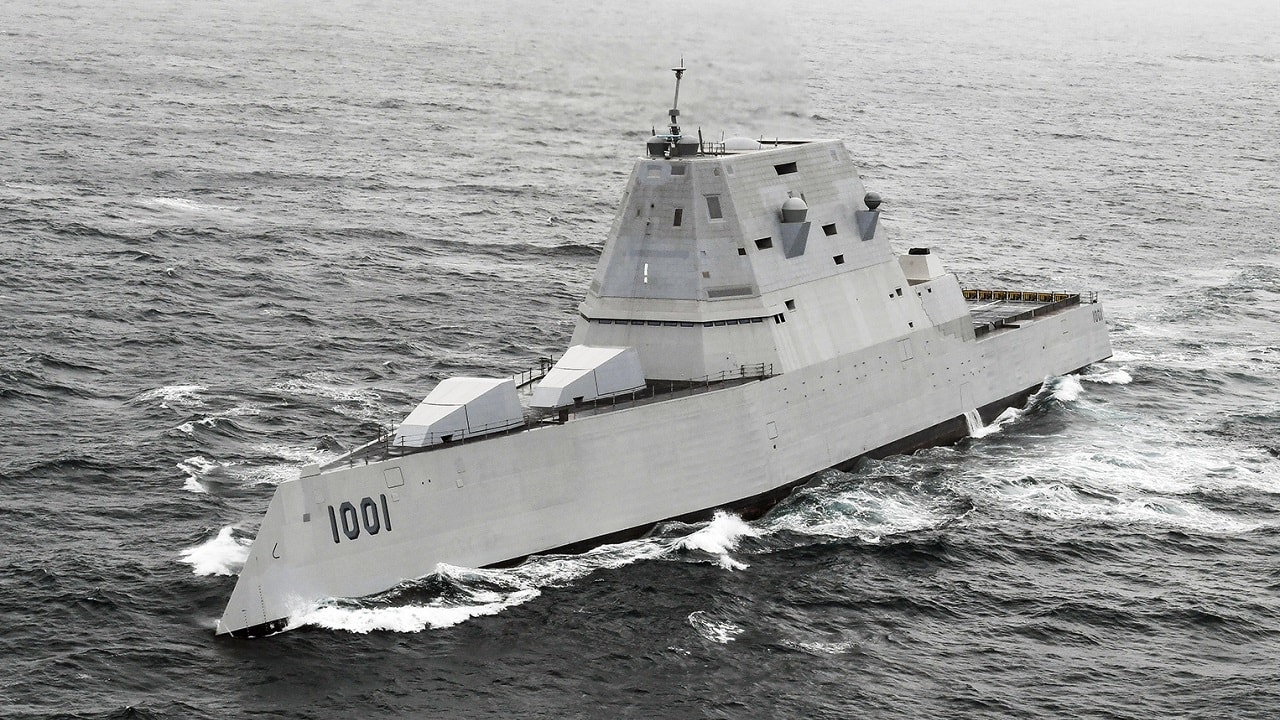
210421-N-FC670-1062 PACIFIC OCEAN (April 21, 2021) Zumwalt-class guided-missile destroyer USS Michael Monsoor (DDG 1001) participates in U.S. Pacific Fleet’s Unmanned Systems Integrated Battle Problem (UxS IBP) 21, April 21. UxS IBP 21 integrates manned and unmanned capabilities into challenging operational scenarios to generate warfighting advantages. (U.S. Navy photo by Chief Mass Communication Specialist Shannon Renfroe)
Fast-forward to January 18, 2026, and we get this update from Aditya Kumar of The Defense News:
“After years of uncertainty, redesign, and deep refit, the U.S. Navy’s most controversial surface combatant has returned to open water. USS Zumwalt (DDG-1000), the lead ship of the Zumwalt-class destroyers, has departed Pascagoula, Mississippi, to begin sea trials—marking its emergence as the world’s first destroyer configured to carry long-range hypersonic missiles…The trials represent a pivotal moment not only for Zumwalt herself, but for the future of U.S. naval strike doctrine. Once envisioned as a next-generation gunship for littoral warfare, the 15,000-ton stealth destroyer has now been repurposed into a platform for intercontinental-range conventional strike, placing it at the center of America’s effort to field operational hypersonic weapons at sea.”
The Way Forward for the Zumwalts and the U.S. Navy
Kumar points out that so far, only the lead ship, DDG-1000, has received the CPS retrofit. Work on the USS Zumwalt was completed in late 2025, with installation of the hypersonic payload modules finalized that November. As for her two sister ships, “USS Michael Monsoor (DDG-1001) and USS Lyndon B. Johnson (DDG-1002) are scheduled to receive the same 12-missile CPS configuration
“Work on Lyndon B. Johnson has already begun, with the forward gun mount removed and major ‘rip-out’ activities completed to strip obsolete equipment. The ship is expected to return to service before Michael Monsoor enters dry dock in 2027 for her own modernization period.”
Looking Back on the Zumwalt Namesake
Now that the warship class is living up Admiral Zumwalt’s name, this is a good time to briefly revisit his illustrious career.
Zumwalt was born in San Francisco, California, the son of Elmo Russell Zumwalt Sr. and his wife, Frances Pearl (née Frank) Zumwalt, both country doctors.
Elmo Jr. was appointed to the U.S. Naval Academy at Annapolis in 1939, graduating with distinction a year early in 1942 and being commissioned as Ensign two years early, as happened in World War II. (Previously, new USNA graduates were required to serve two years of sea duty before receiving their commissions.) His early sea tours included service aboard four destroyers as well as the legendary Iowa-class battleship USS Wisconsin (BB-64).
Zumwalt went on to command the destroyer escort USS Tills (DE-748), the destroyer USS Arnold J. Isbell (DD-869), the guided missile destroyer USS Dewey (DDG-45), Cruiser-Destroyer Flotilla Seven, and Naval Forces, Vietnam.
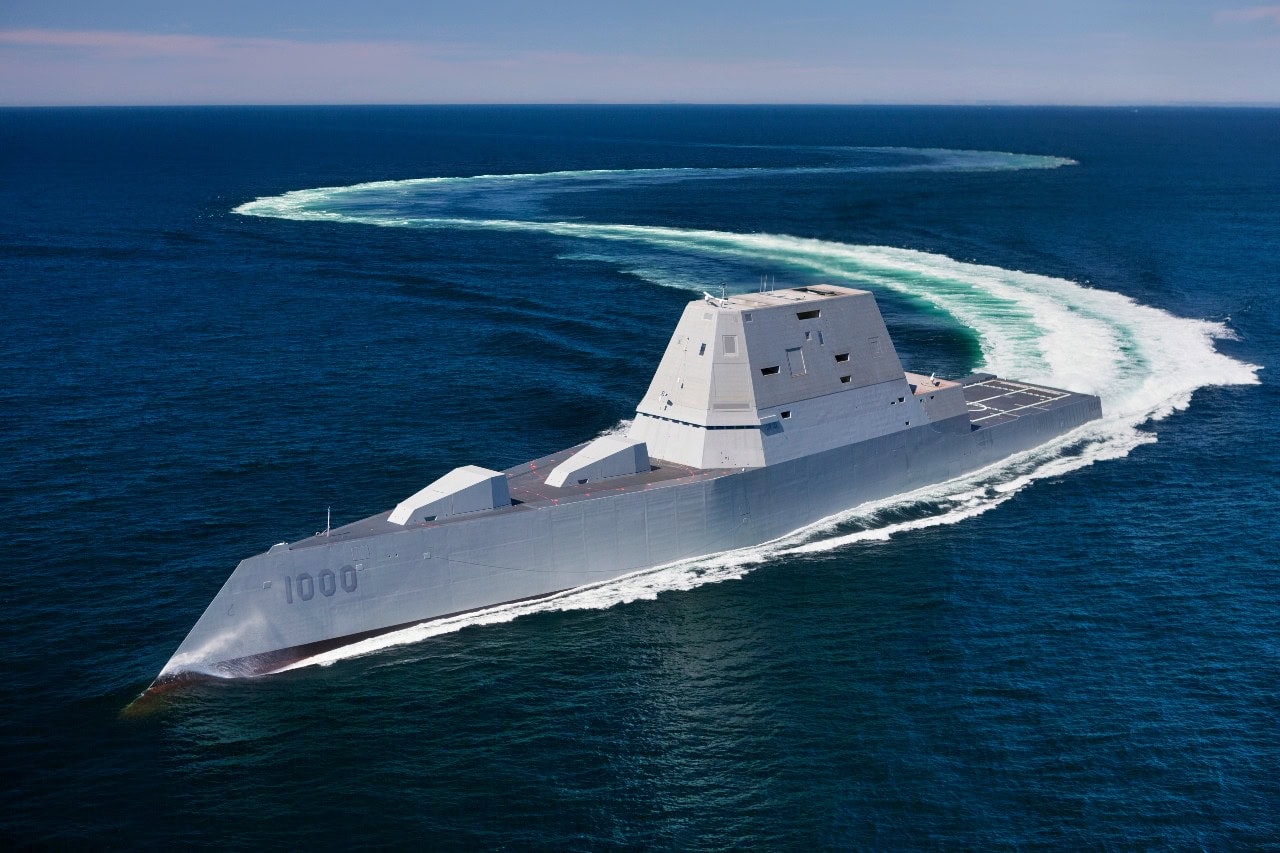
Zumwalt-Class Destroyer U.S. Navy.
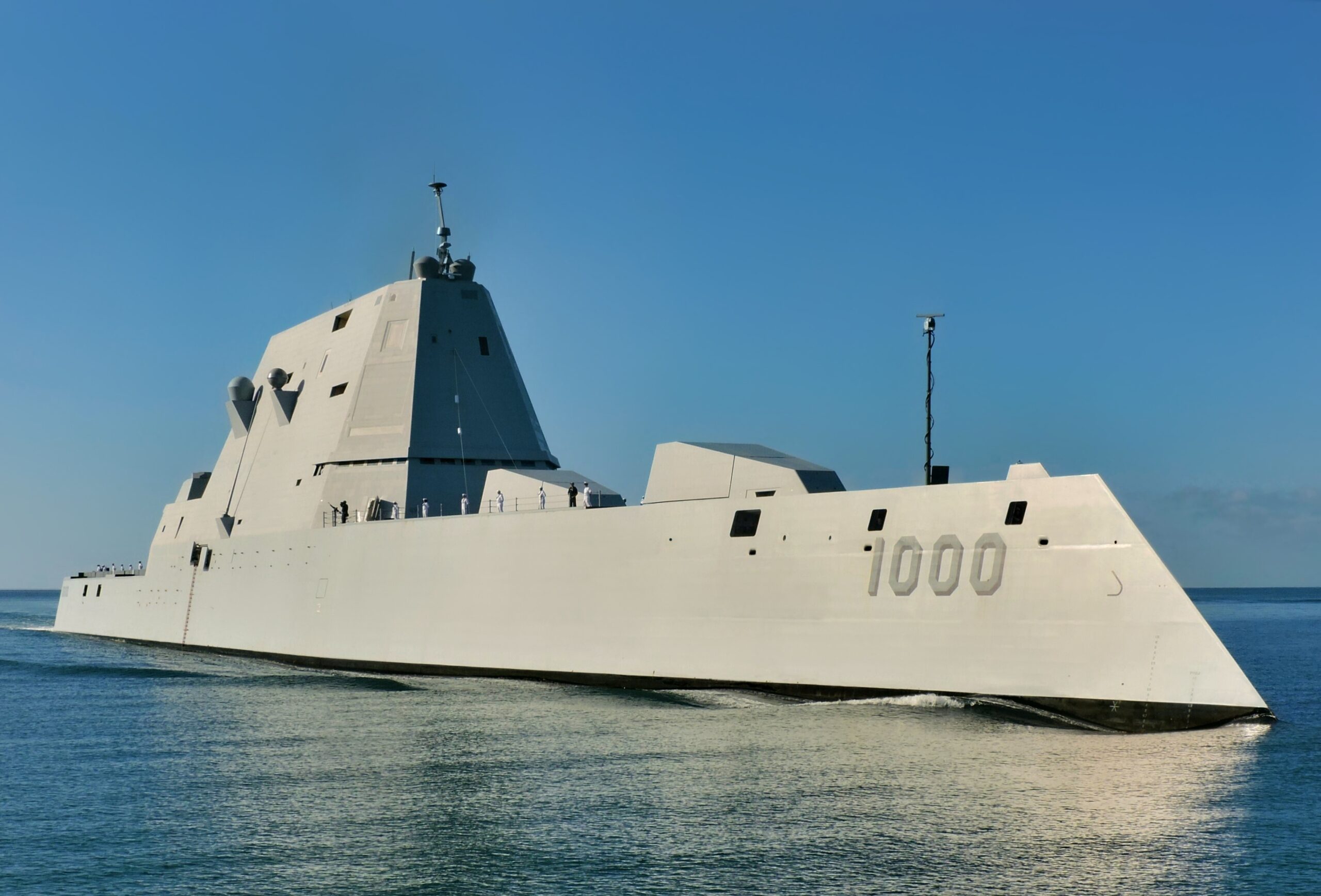
Zumwalt-Class Destroyer U.S. Navy. Image Credit: Creative Commons.
Zumwalt first attained flag rank on July 1, 1965. A mere five years later he reached the pinnacle of his naval career, as then-President Richard Nixon tapped him to be the 19th CNO in July 1970. At the age of 49, he became the youngest officer ever named to the post.
Admiral Zumwalt would retire exactly five years later. His impressive array of accomplishments during his stint as CNO included:
-The commissioning of the Oliver Hazard Perry-class guided-missile frigates (FFGs).
-The creation of the Ohio-class ballistic missile submarines.
-Championing of the F-14 Tomcat as the USN’s replacement for the F-4 Phantom II.
-“Z-gram” Z-66, which improved career opportunities for minorities within the Navy; in the good Admiral’s own words, “There is no black Navy, no white Navy—just one Navy—the United States Navy.”
-“Z-gram” Z-116: Equal Rights and Opportunities for Women in the Navy, which opened ratings to enlisted women, established a pathway for women to be assigned to ships, and opened all staff corps and restricted line communities to women.
Admiral Zumwalt passed away at age 79 at the Duke University Medical Center in Durham, North Carolina, from mesothelioma. His funeral service was held at the Naval Academy Chapel, and he was laid to rest at Section 3, Lot 3082 of the USNA Cemetery.
About the Author: Christian D. Orr, Defense Expert
Christian D. Orr is a Senior Defense Editor. He is a former Air Force Security Forces officer, Federal law enforcement officer, and private military contractor (with assignments worked in Iraq, the United Arab Emirates, Kosovo, Japan, Germany, and the Pentagon). Chris holds a B.A. in International Relations from the University of Southern California (USC) and an M.A. in Intelligence Studies (concentration in Terrorism Studies) from American Military University (AMU). He is also the author of the newly published book “Five Decades of a Fabulous Firearm: Celebrating the 50th Anniversary of the Beretta 92 Pistol Series.”