
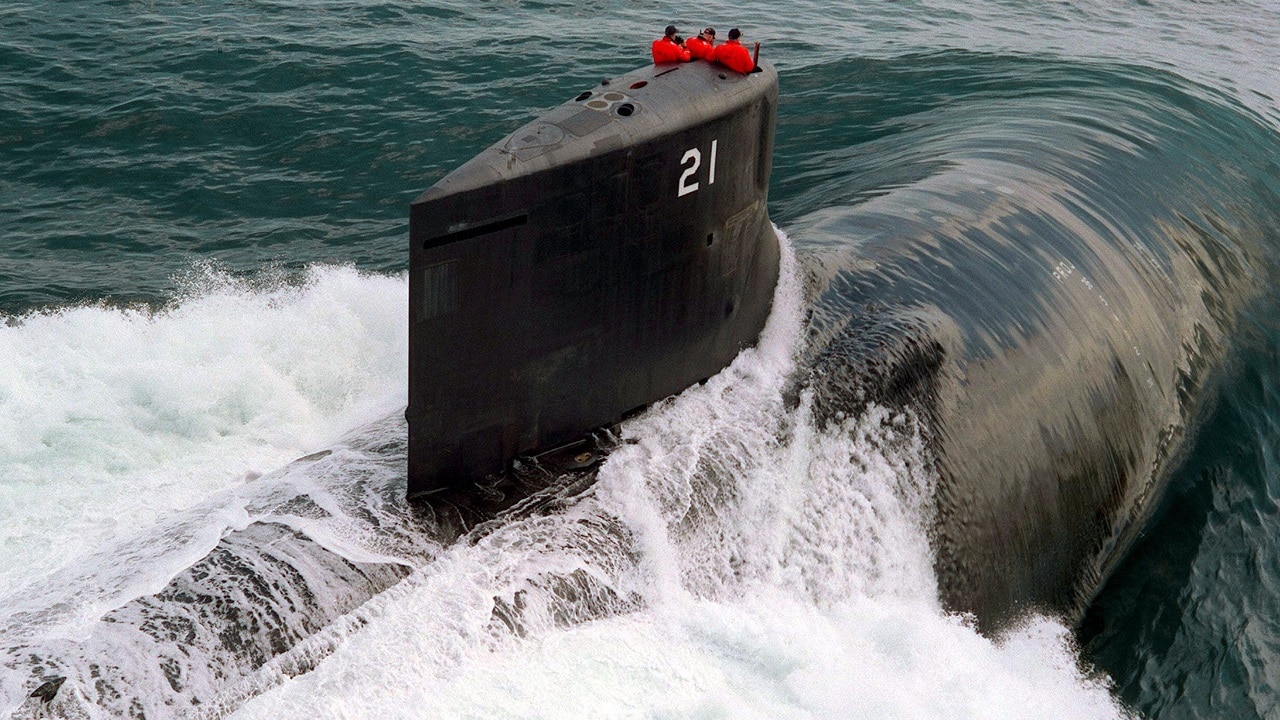
Summary and Key Points: Why the U.S. Navy Built Only 3 Seawolf-class Submarines
-The Seawolf-class was built to be the Navy’s next leap in undersea dominance: stronger HY-100 steel, extreme depth capability, a larger weapons load, and a design focused on hunting the most dangerous Soviet submarines.
-The original plan envisioned a large fleet, but the Cold War ended, budgets tightened, and the program’s roughly $3 billion-per-boat price tag helped sink production after only three hulls.
-That choice looks sharper today as Los Angeles-class submarines retire and Virginia-class production struggles to keep pace.
-The Navy now squeezes maximum value from the three Seawolves still in service.
Seawolf-Class: The $3 Billion Sub the Navy Couldn’t Afford to Keep Buying
In ichthyology, “seawolf” is another name for the Atlantic Wolffish (Anarhichas lupus), a frightful-looking sea creature that makes its home in waters with temperatures as low as 30.2 to 51.8 degrees Fahrenheit and feeds hardshell crustaceans, mollusks, and other intertesting items.
Unsurprisingly, the fish inspired the name of the U.S. Navy’s Seawolf-class of nuclear-powered fast-attack submarines (SSNs). Like their namesakes, the steel Seawolves can also survive extremely cold waters, and they are deadly predators to their mechanical prey: adversaries’ warships. Old-school video games buffs, meanwhile, might remember the 1976-vintage game Sea Wolf, a submarine warfare-themed game manufactured by Midway.
The Seawolf boats are extremely impressive warships. Back in the day, they seemed like the next big thing in undersea warfare. However, now they might qualify for the Endangered Species List—only three were commissioned, in 1997, 1998, and 2005. It is fair to wonder why so few of these blockbuster boats were built.
Spawning the Seawolf Submarine: Initial History, Premise, and Promise
The Seawolf-class showed a lot of promise. The boats wereenvisioned as the “better, faster, stronger,” and quieter successors to the Navy’s venerable Los Angeles-class SSNs, which were commissioned between 1974 and 1996.
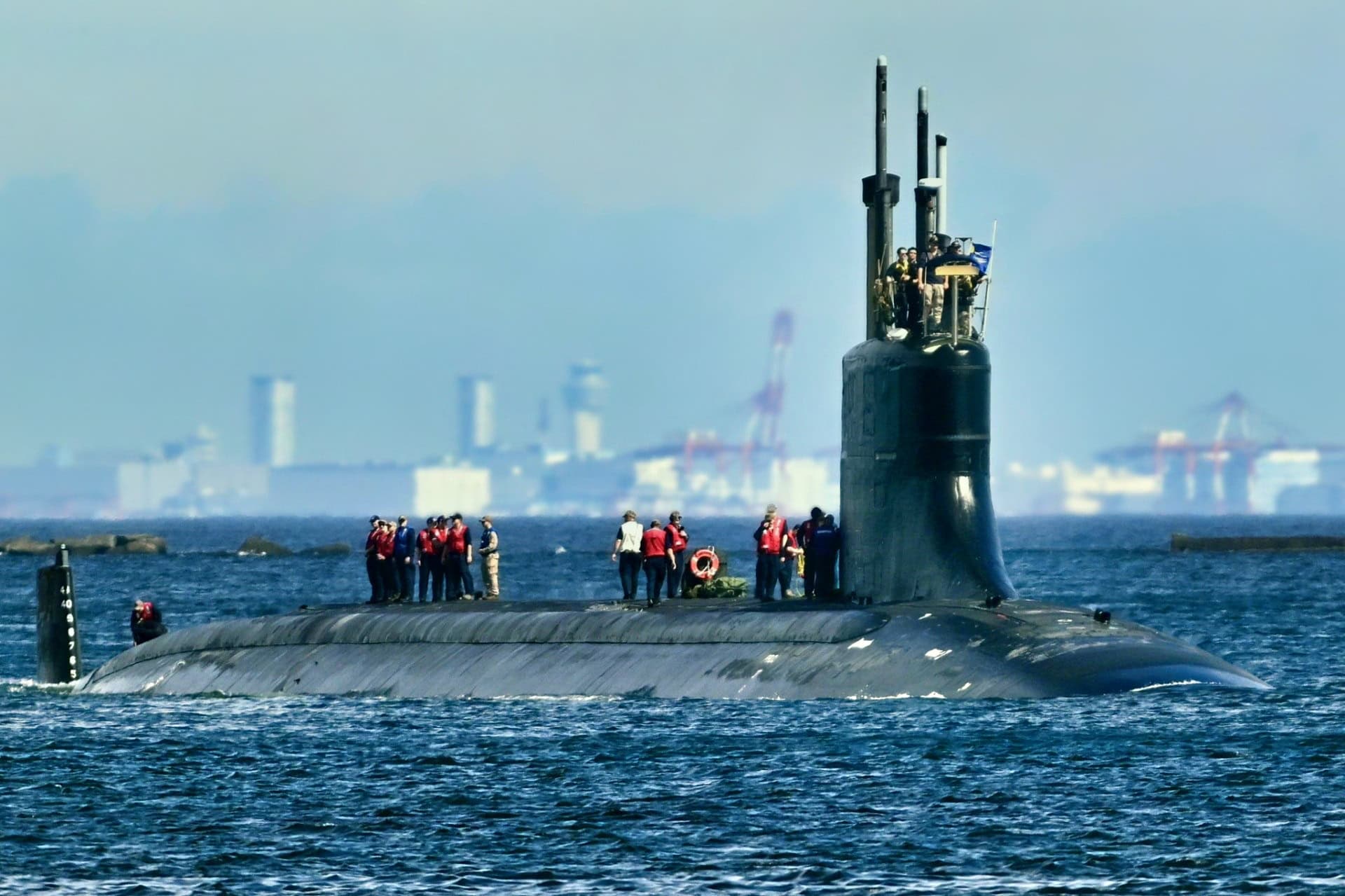
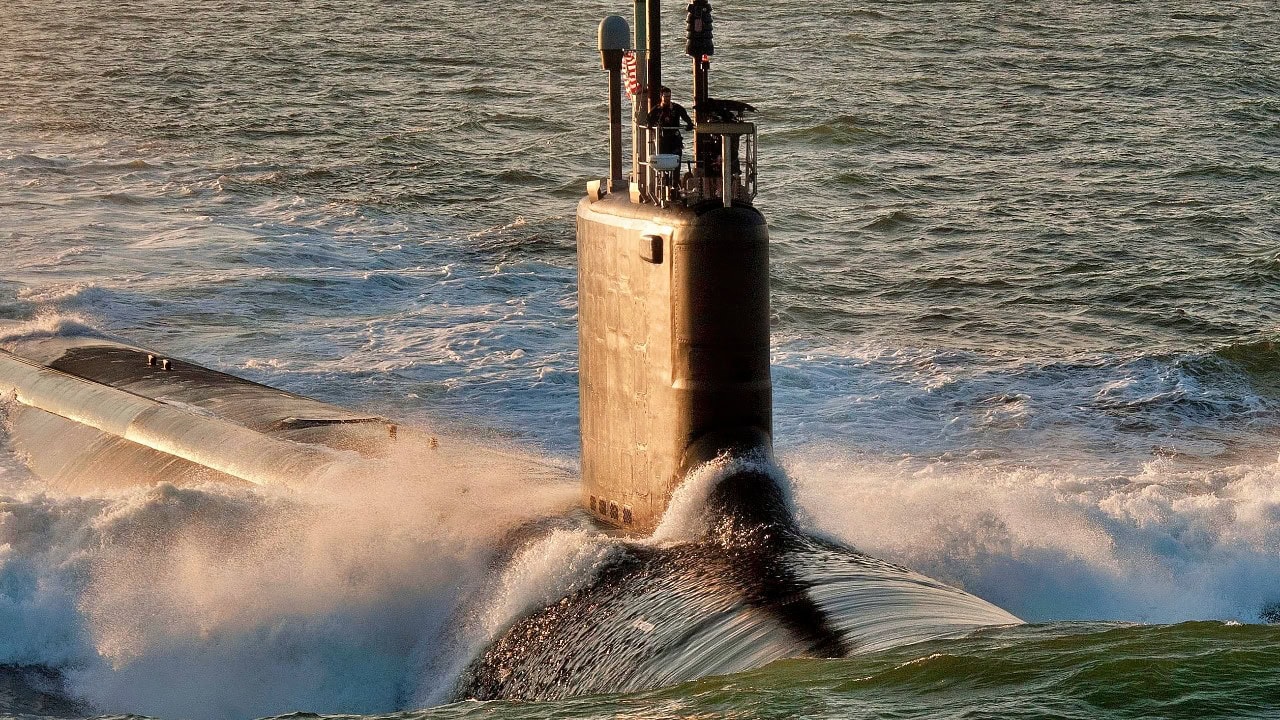
Seawolf-Class Submarine. Image Credit: Creative Commons.
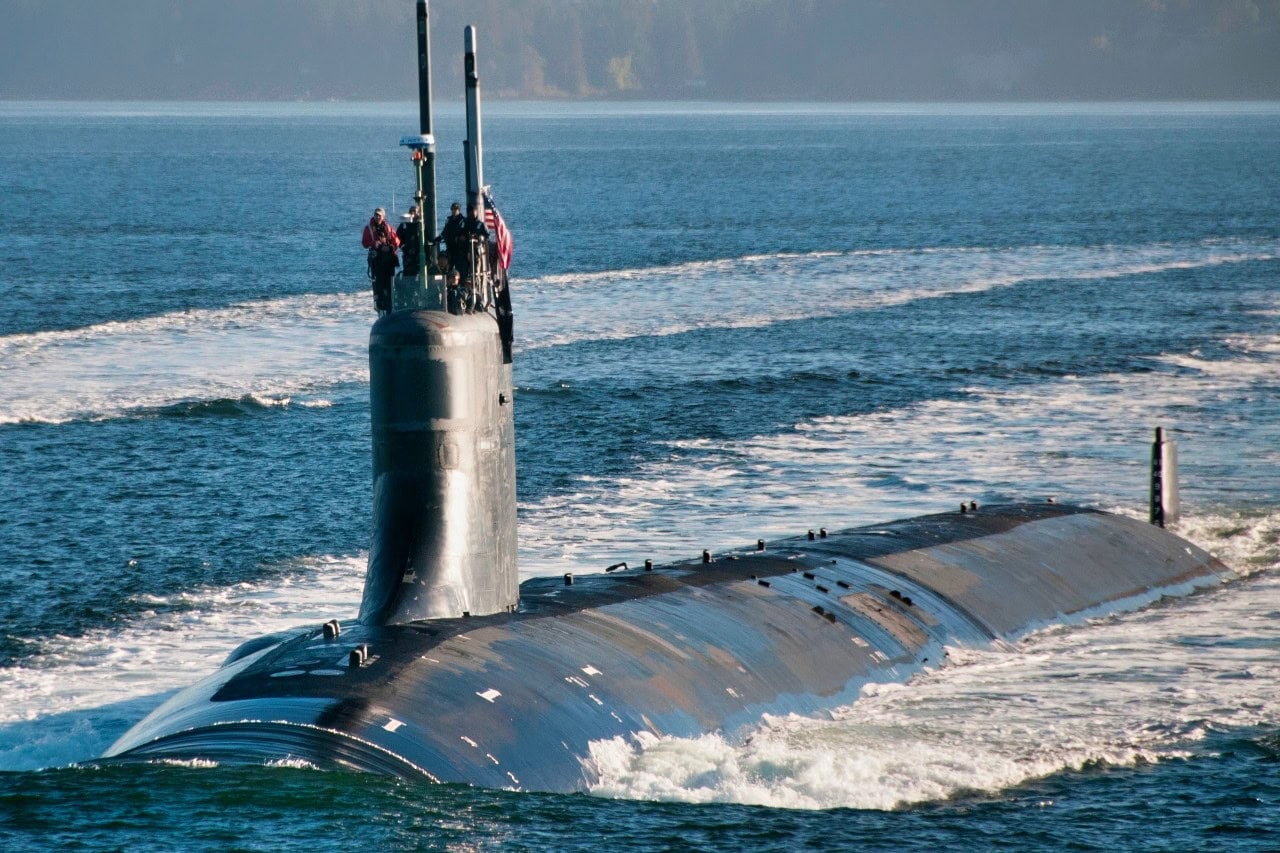
PUGET SOUND, Wash. (Sept. 11, 2017) The Seawolf-class fast-attack submarine USS Jimmy Carter (SSN 23) transits the Hood Canal as the boat returns home to Naval Base Kitsap-Bangor. Jimmy Carter is the last and most advanced of the Seawolf-class attack submarines, which are all homeported at Naval Base Kitsap. (U.S. Navy photo by Lt. Cmdr. Michael Smith/Released)
The Seawolf-class hulls were constructed from HY-100 steel, which is stronger than the HY-80 steel employed in previous classes, in order to withstand water pressure at greater depths. The official unclassified test depth is 1,600 feet, at which depth the water pressure is 689 pounds per square inch. For every 33 feet (10 meters) an object descends in water, the pressure increases by 14.6 pounds per square inch, which equates to one “atmosphere.” So, at 1,600 feet, we’re talking 47.2 atmospheres.
The Seawolf also could carry more weapons—including up to 50 UGM-109 Tomahawk cruise missiles—and had twice as many torpedo tubes.
Design work at the General Dynamics Electric Boat company began in 1983, with the notional intention of going toe-to-toe with the Soviet ballistic missile submarines (SSBNs) such as the Typhoon-class and attack subs such as the Akula-class boats.
Semantic Sidenote
The naming of the Seawolf harkened back to the first half of the 20th century, when it was common practice for the Navy to name its submarines for fish and other aquatic creatures. However, Admiral Hyman G. Rickover (“the Father of the Nuclear Navy”) ended that naming convention with the assertion that “fish don’t vote.” Luckily for fish lovers everywhere, Rickover retired in 1982, seven years before the USS Seawolf (SSN-21) had her keel laid, thus allowing for a brief revival of the old tradition.
However, the remaining two Seawolf-class boats, the USS Connecticut (SSN-22) and USS Jimmy Carter (SSN-23), still ended up without “fishy” individual names.
So, What Went Wrong?
Originally, a fleet of 29 was to be built over a decadelong period, but that was reduced to 12 hulls.
Then came the collapse of the Soviet Union in 1991 that officially ended the Cold War. The resulting “peace dividend” cast some serious doubts on the future viability of the Seawolf project. As the Seaforces-online website explains, “This, in turn, led to the design of the smaller Virginia class. The Seawolf class cost about $3 billion per unit ($3.5 billion for USS Jimmy Carter), making it the most expensive SSN submarine and second most expensive submarine ever, after the French SSBN Triomphant class… The projected cost for 12 submarines of this class was $33.6 billion.”
The “peace dividend” wound up cutting the U.S. armed forces as a whole to pieces. The Seawolf program was far from the only budgetary casualty of the end of the Cold War, as multiple battle-proven weapons systems as well as promising new technologies were either put on the chopping block or put out to pasture. The Iowa-class battleships were a prime example. Less than a year before the Cold War ended, during the 1991 Persian Gulf War, the Iowas once again demonstrated their devastating effectiveness, yet they were abruptly decommissioned and mothballed.
Well, as the one saying goes, “Penny wise and pound foolish.” That “peace dividend” turned out to be a relatively short-lived pipe dream, as 20/20 hindsight now soberingly shows us. America’s great power competitors, Russia and China, continue to expand and modernize their submarine fleets, while the United States’ submarine force is left trying to play catchup.
-Only 23 of the original 62 Los Angeles-class subs currently remain in service, and three more of the venerable boats (USS Scranton [SSN-756]; USS Alexandria [SSN-757]; and USS Annapolis [SSN-760]) are slated for retirement this year and the next.
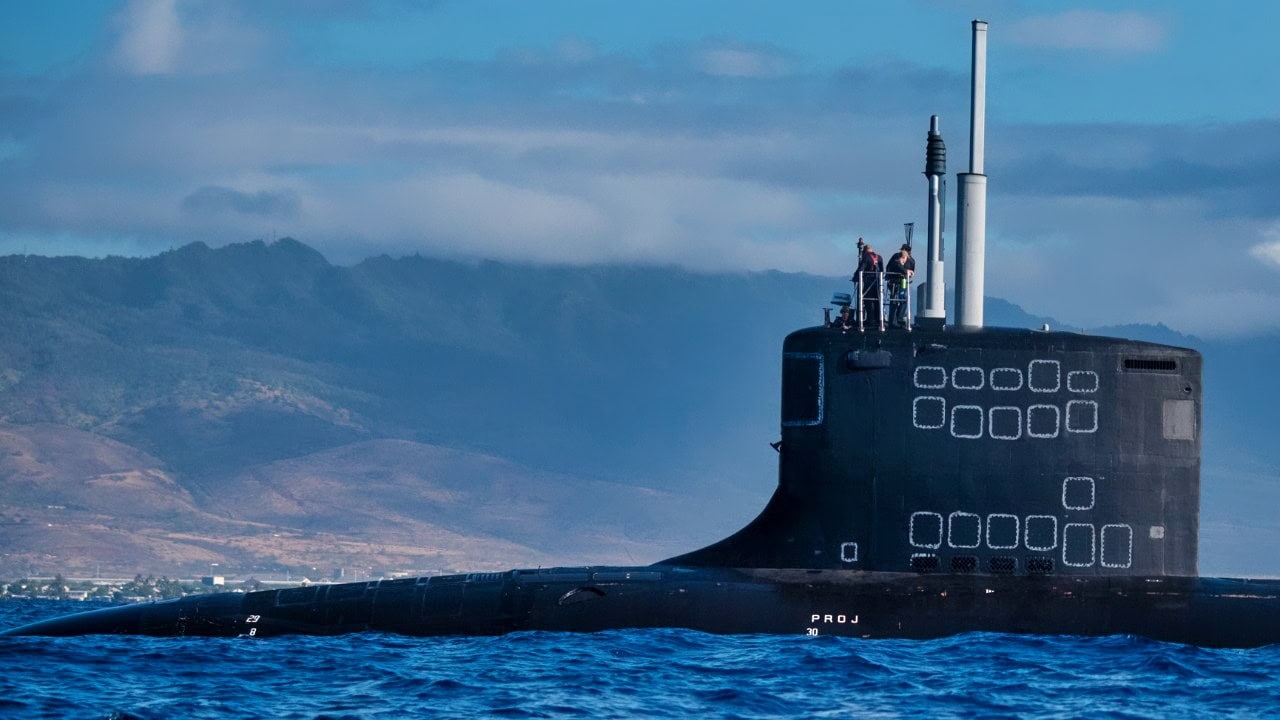
(July 9, 2018) – Multi-national Special Operations Forces (SOF) participate in a submarine insertion exercise with the fast-attack submarine USS Hawaii (SSN 776) and combat rubber raiding craft off the coast of Oahu, Hawaii during Rim of the Pacific (RIMPAC) exercise, July 9. Twenty-five nations, 46 ships and five submarines, about 200 aircraft, and 25,000 personnel are participating in RIMPAC from June 27 to Aug. 2 in and around the Hawaiian Islands and Southern California. The world’s largest international maritime exercise, RIMPAC provides a unique training opportunity while fostering and sustaining cooperative relationships among participants critical to ensuring the safety of sea lanes and security of the world’s oceans. RIMPAC 2018 is the 26th exercise in the series that began in 1971.` (U.S. Navy photo by Mass Communication Specialist 1st Class Daniel Hinton)
U.S. Navy Virginia-Class Submarine.
-Meanwhile, the Virginia-class SSNs are coming along at a snail’s pace, with only 24 activated thus far out of the 69 planned, and 10 more under construction.
-The Navy is facing a severe shortage of the estimated 100,000 skilled workers needed build to build the new boats, so they’ve been running a BuildSubmarines recruiting push since November 2022.
Even a measly baker’s dozen Seawolves (let alone 29) would’ve gone a long way in mitigating the current shortfall of Navy fast-attack subs.
In short, the Seawolf submarine shortage simply sucks.
Seawolf Subs: Where Are They Now, and Where to From Here?
The USS Seawolf is currently homeported at Naval Base Kitsap in the state of Washington; ditto for her two sister ships.
As another saying goes, “When life deals you lemons, make lemonade!” Despite the financial challenges, the Navy is making the most of the available boats. Case in point: In July 2020, the USS Seawolf deployed into the Arctic area of responsibility, where she conducted special operations and pulled into multiple European ports, thus making history as the first U.S. Navy deployment during the pandemic.
As far as this writer has been able to ascertain, there are no plans to retire the Seawolf-class.
About the Author: Christian D. Orr, Defense Expert
Christian D. Orr is a Senior Defense Editor. He is a former Air Force Security Forces officer, Federal law enforcement officer, and private military contractor (with assignments worked in Iraq, the United Arab Emirates, Kosovo, Japan, Germany, and the Pentagon). Chris holds a B.A. in International Relations from the University of Southern California (USC) and an M.A. in Intelligence Studies (concentration in Terrorism Studies) from American Military University (AMU). He is also the author of the newly published book “Five Decades of a Fabulous Firearm: Celebrating the 50th Anniversary of the Beretta 92 Pistol Series.”