

Summary and Key Points: USS George Washington’s midlife Refueling and Complex Overhaul ballooned into a nearly six-year, 2,117-day stretch in port, driven by stoppages, pandemic-era workforce shortages, and supply chain delays.
-The ship’s return came with a steep bill—$2.8 billion and roughly 26 million man-hours—and a bruising readiness cost as crews turned over repeatedly, leaving most sailors without deployment experience when the carrier reentered service.
-The most painful legacy was a string of suicides that exposed quality-of-life failures during prolonged yard periods. The episode pushed renewed emphasis on mental health support, living conditions, and tighter oversight of RCOH timelines.
USS George Washington’s Six-Year Overhaul: The Human Toll That Forced the Navy to Rethink RCOH
What would cause a modern U.S. Navy aircraft carrier to be out of action for nearly six years? Nuclear-powered carriers require a midlife refueling and maintenance period that can sometimes stretch for that long.
At one point in the late ‘teens and early 2020s, the USS George Washington, a Nimitz-class flat-top, underwent a long-term RCOH or Refueling and Complex Overhaul procedure.
This Turned Into a Tragic Tale
This had its share of stops and starts, and the sailors attached to the George Washington went through a tragic period of mental health challenges that caused nearly a dozen suicides due to poor quality of life when sailors were assigned to the carrier during the six-year period.
What Did the Navy Learn from This Debacle?
The Navy had to make adjustments and hold an after-action review of the proceedings. Was there any way to shave time off of this process?
Six years is just too long to wait for a carrier’s RCOH. Plus, the expenses were growing out of control.
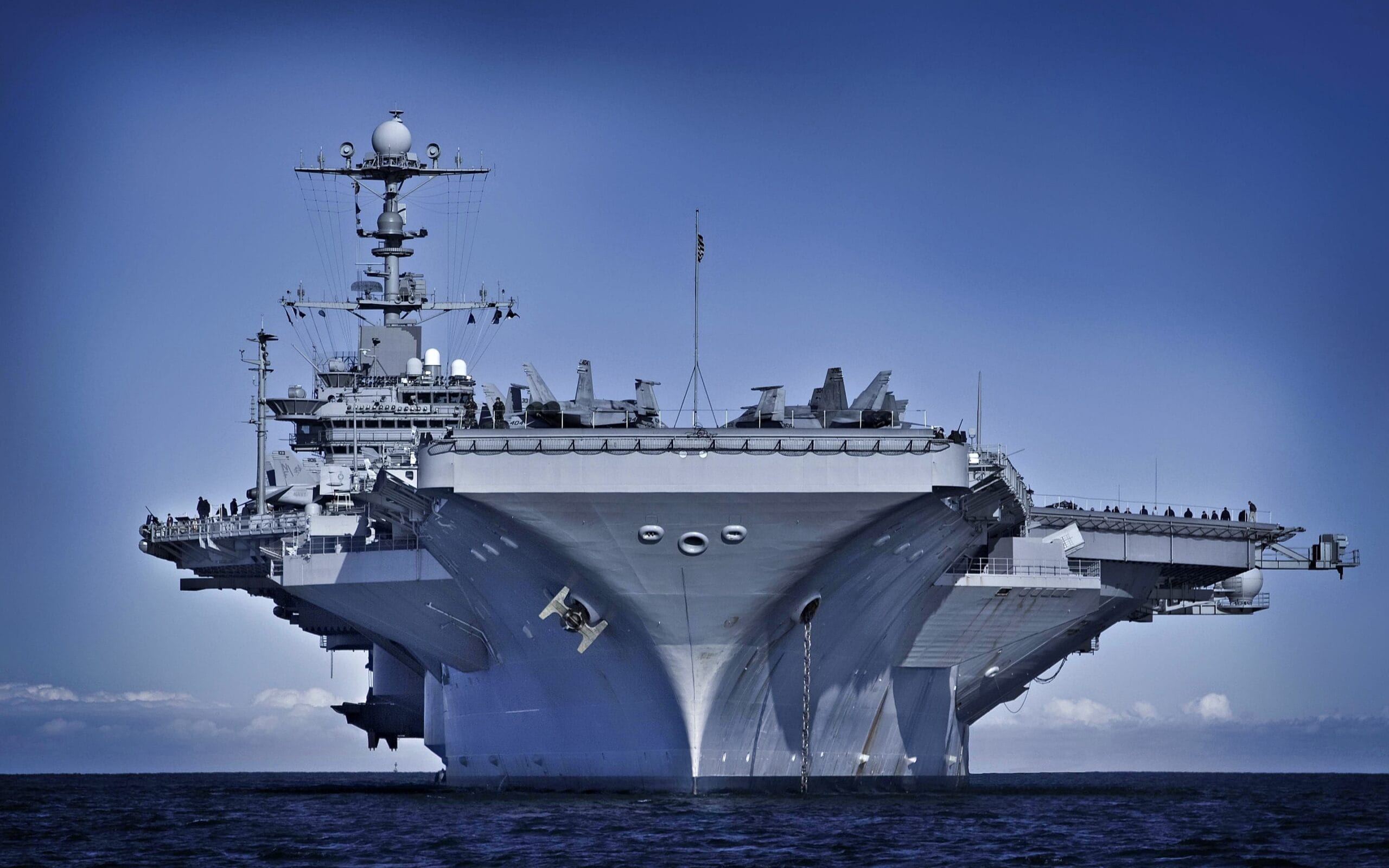
NRL is currently working with Naval Sea Systems Command, Naval Systems Engineering Directorate, Ship Integrity & Performance Engineering (SEA 05P) to transition the new pigment combination into a military specification. The most recent vessel to receive it was USS George Washington (CVN 73).
Yes, there was the pandemic to deal with, and this took many workers out of action, but the Navy knows it has a problem with these long delays.
There must be some kind of reckoning for lengthy port periods. The complex overhauls must be conducted at the midlife of carriers, but the United States needs as many flat-tops as possible at sea at all times.
More Aircraft Carriers Are Needed on Active Duty
Look at the USS Gerald R. Ford supercarrier.
It is being pushed to the limit by long deployments simply because other carriers can’t answer the call in a timely fashion.
The Gerald R. Ford just completed a cruise in the Western Hemisphere by patrolling the Caribbean in a counter-narcotics mission that led to the snatching of narco-terrorist Venezuelan President Nicolas Maduro. Now it is on to the Middle East in its latest deployment to face down Iran. The Ford has been at sea for eight months already.
This long RCOH for the George Washington was bad news for the Navy, and Congress must get involved for effective oversight.
Government watchdogs should sink their teeth into this case study.
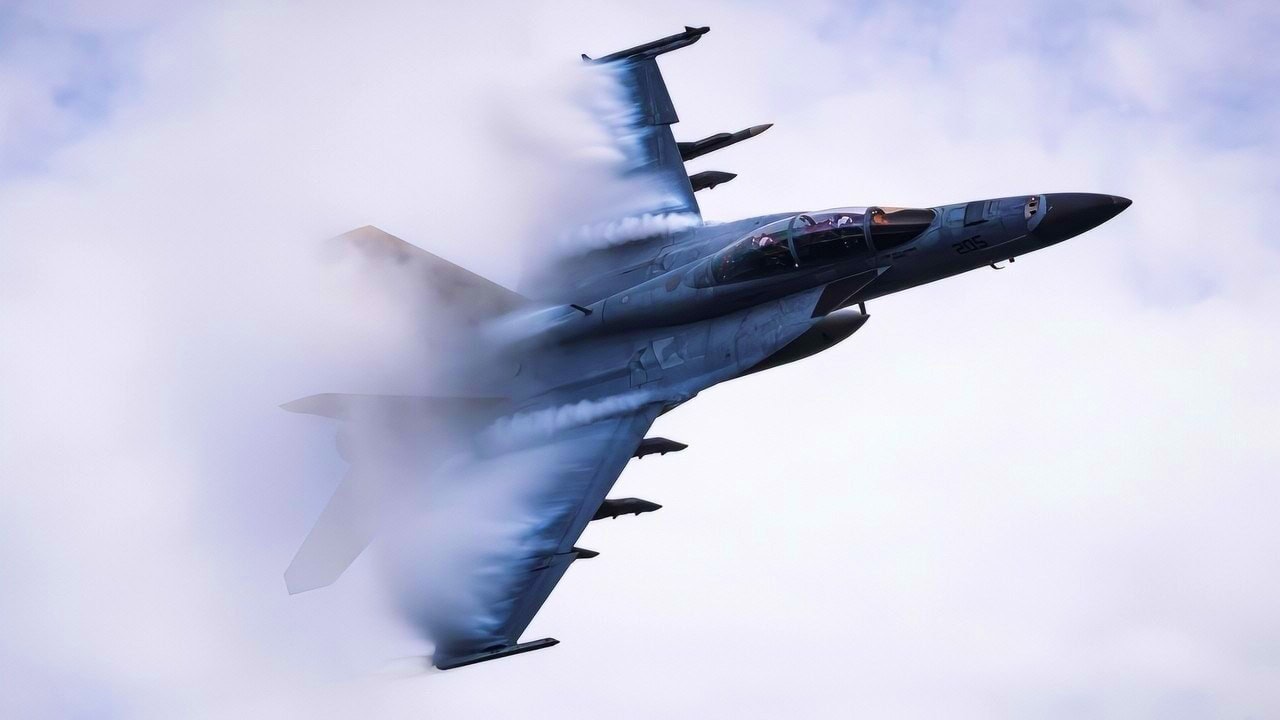
USS George Washington Aircraft Carrier Super Hornet. Image Credit: Creative Commons.
USS George Washington Crisis: When the RCOH Is Delayed for So Long
The George Washington re-fueling period was delayed by two years. This shows how destructive Covid was for shipyard workers.
But perhaps the entire RCOH procedure should be examined now that aircraft carriers are needed for a high operational tempo due to the threats from Iran, China, Russia, and North Korea.
This Hurt the Crew’s Readiness
The RCOH for the George Washington lasted so long that new sailors ended their tours, were reassigned, or retired.
The crew was turned over three times, and by the time the Nimitz-class carrier was ready for active duty in 2023, 85 percent of the shipmates had never been deployed on a ship.
That’s what happens after so many years at port.
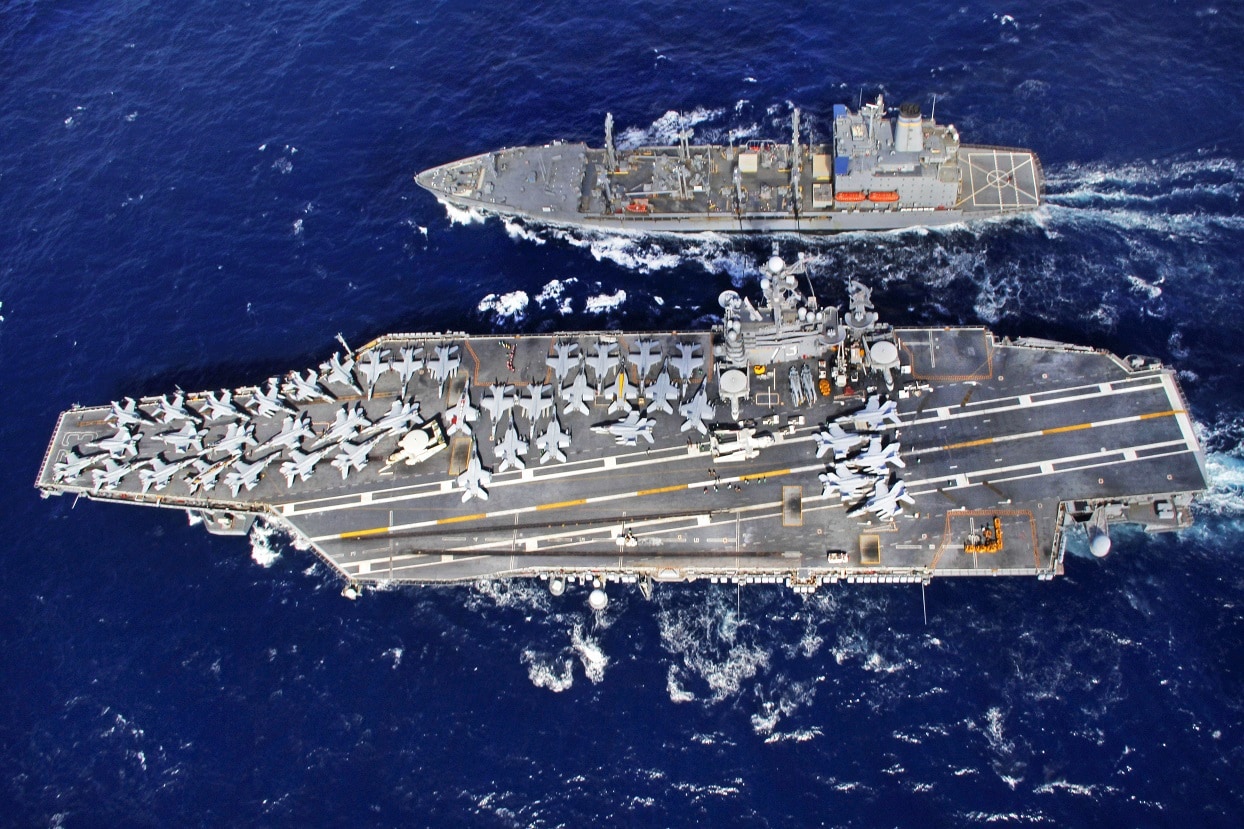
(July 19, 2013) The aircraft carrier USS George Washington (CVN 73) conducts a replenishment-at-sea with the Military Sealift Command fleet replenishment oiler USNS Yukon (T-AO 202) during Talisman Saber 2013. The exercise is a biennial training event aimed at improving Australian Defense Force and U.S. combat readiness and interoperability as a combined joint task force. (U.S. Navy photo by Mass Communication Specialist 2nd Class Benjamin K. Kittleson/Released)
Teamwork Makes the Dream Work
On any ship, teamwork is paramount. Carriers require an intricate choreography to launch and land aircraft. Sometimes, aviation operations can run 24/7.
The crew must be expert at their jobs and ready to recover from mistakes that can sometimes happen on the flight deck. Maintenance personnel are busy. Ordnance handlers must be accurate and experienced.
Officers need to be highly-trained and confident. When there are long delays, a carrier can suffer from manpower and human capital issues. Long delays at the port can be destructive.
But Supercarriers Do Need Mid-life Refurbishment
However, carriers still need tender loving care.
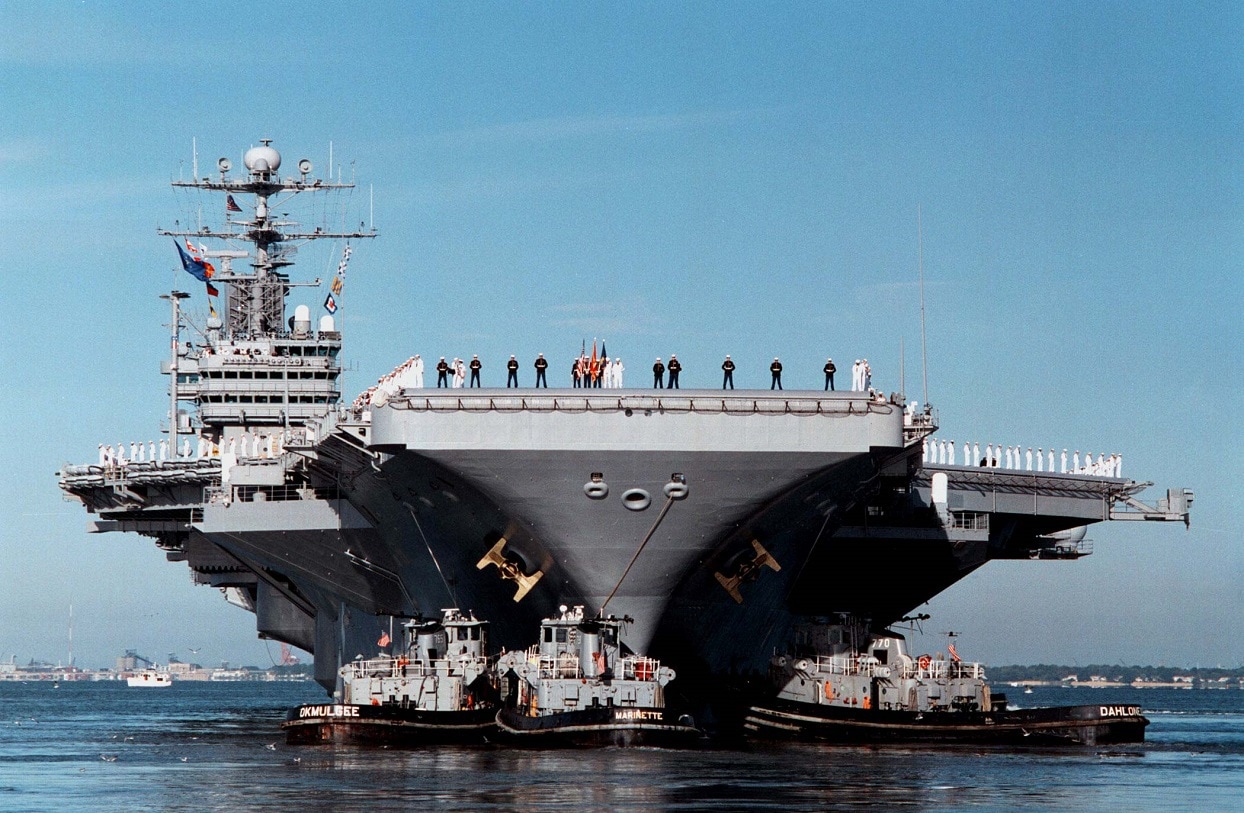
Sailors and Marines man the rail as three harbor tugs push the aircraft carrier USS George Washington (CVN 73) away from Pier 11 at Norfolk Naval Base on Oct. 3, 1997, for a scheduled six-month deployment. The George Washington will relieve the USS John F. Kennedy (CV 67) to conduct operations in the Mediterranean Sea. DoD photo by Petty Officer 2nd Class Christopher Vickers, U.S. Navy.
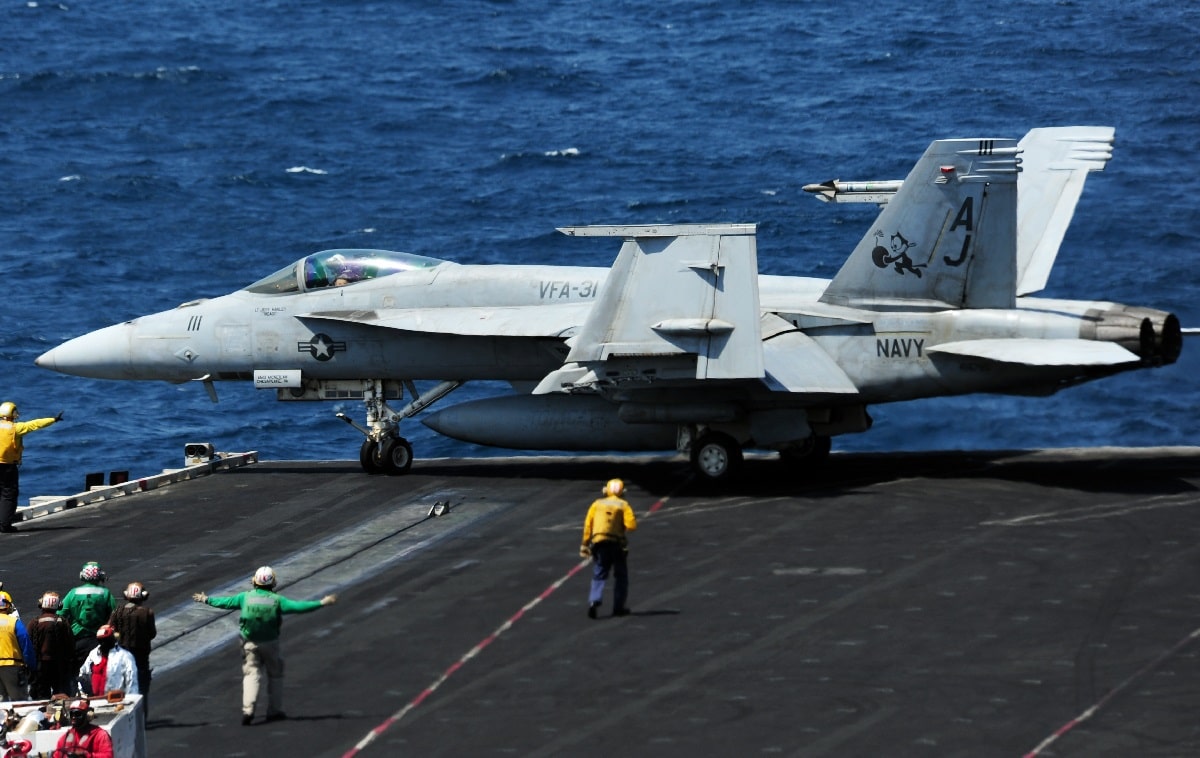
ARABIAN GULF (Sept. 11, 2014) Sailors direct an F/A-18E Super Hornet attached to the Tomcatters of Strike Fighter Squadron (VFA) 31 on the flight deck of the aircraft carrier USS George H.W. Bush (CVN 77). George H.W. Bush is supporting maritime security operations and theater security cooperation efforts in the U.S. 5th Fleet area of responsibility. (U.S. Navy photo by Mass Communication Specialist 3rd Class Joshua Card/Released) 140911-N-CZ979-008
They are expected to serve 40 years or more, and at midlife, it is time to stop and undergo an extended period of maintenance. The nuclear propulsion system needs refueling and workup. Engineers must diagnose problems, and technicians must be sharp, looking for even the slightest defects or issues. The weapons systems and the shipmates who operate them must also be functioning in tip-top shape.
26 Million Man Hours
“George Washington’s RCOH represents 26 million man-hours of work, which involved refitting and installing a new main mast, updating the ship’s shafts, refurbishing propellers, and modernizing aircraft launch and recovery equipment,” said Capt. Mark Johnson, manager of the PEO Aircraft Carriers In-Service Aircraft Carrier Program Office.
Long Periods to Make It Ship-shape
This comes down to working on the hull, screws, and rudder. Nothing is forgotten or forsaken. The entire process should take four years, but due to the pandemic, it was delayed by worker shortages caused by quarantines and orders to stop work. Spare parts and components were difficult to acquire due to the supply chain problems.
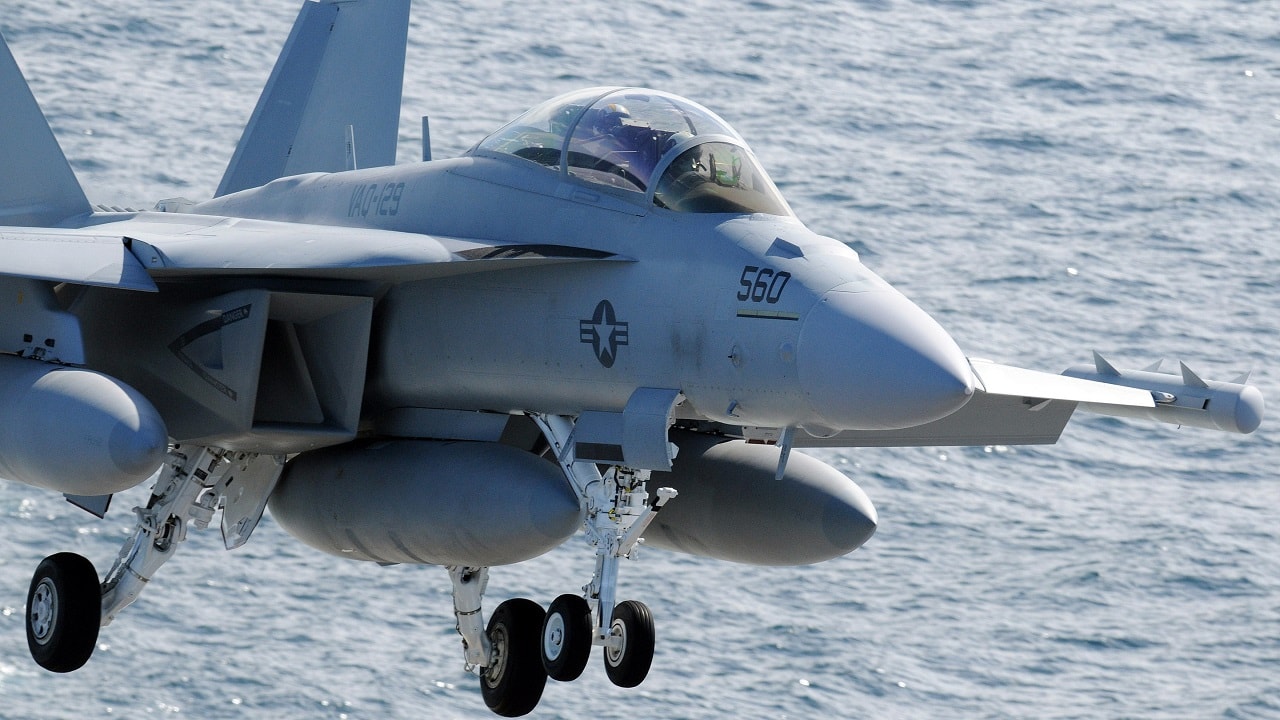
(Feb. 17, 2009) An EA-18G Growler assigned to the “Vikings” of Tactical Electronic Warfare Squadron (VAQ) 129 aligns itself for an at sea landing aboard the Nimitz-class aircraft carrier USS Ronald Reagan (CVN 76). The Growler is the replacement for the EA-6B Prowler, which will be replaced in the 2010 timeframe. Ronald Reagan is underway performing Fleet Replacement Squadron Carrier Qualifications in the Pacific. (U.S. Navy photo by Mass Communication Specialist 3rd Class Torrey W. Lee/Released).
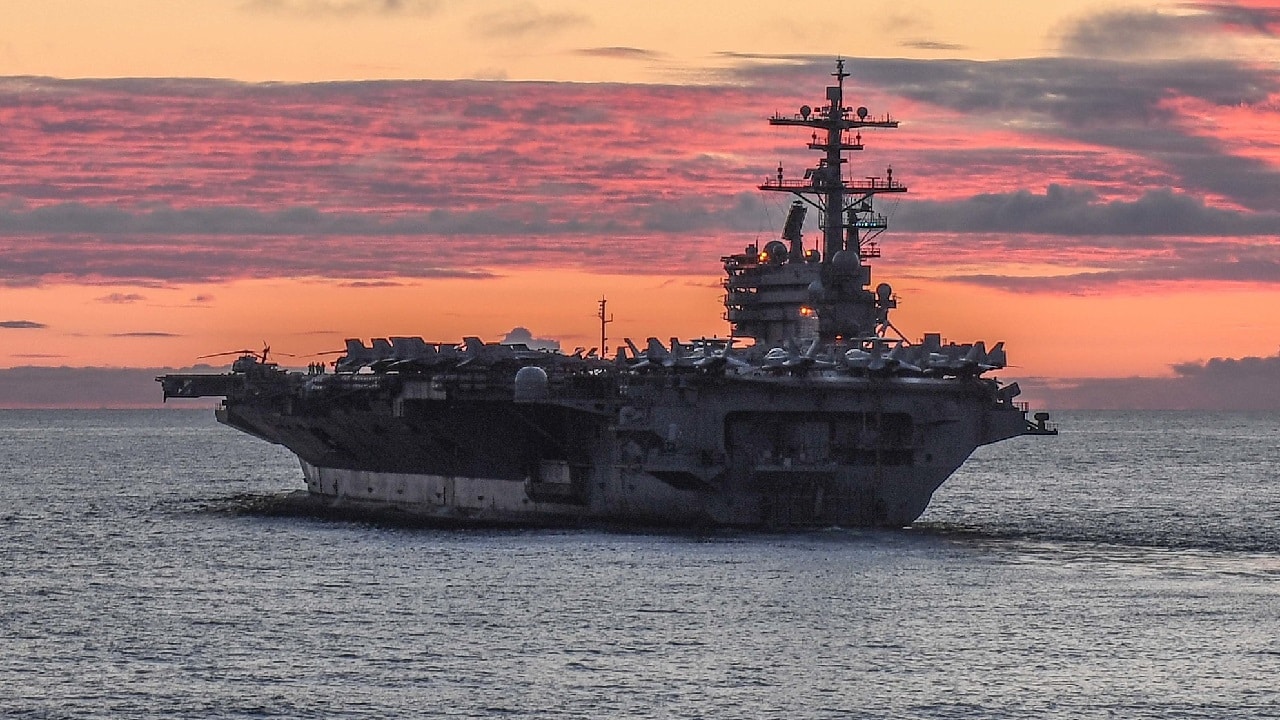
170808-N-FP878-008.ATLANTIC OCEAN (Aug. 8, 2017) The Arleigh Burke-class guided-missile destroyer USS Donald Cook (DDG 75) maneuvers between the Ticonderoga-class guided-missile cruiser USS Philippine Sea (CG 58), left, and the Nimitz-class aircraft carrier USS George H. W. Bush (CVN 77), right, for a photo exercise during exercise Saxon Warrior 2017, Aug. 8. Saxon Warrior is a United States and United Kingdom co-hosted carrier strike group exercise that demonstrates allied interoperability and capability to respond to crises and deter potential threats. (U.S. Navy photo by Mass Communication Specialist 1st Class Theron J. Godbold /Released).
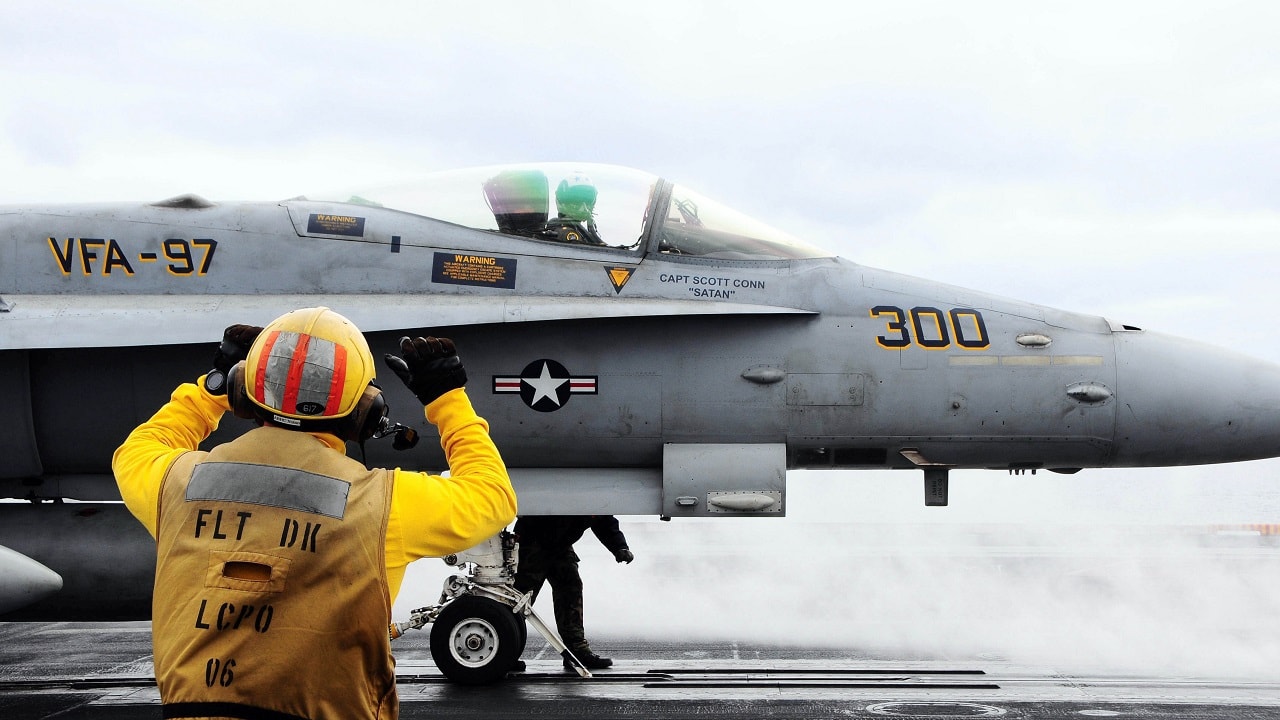
A Chief Aviation Boatswain’s Mate guides an F/A-18C Hornet assigned to the “Warhawks” of Strike Fighter Squadron 97 into place on catapult three aboard the aircraft carrier USS Nimitz. Nimitz and Carrier Air Wing 11 are conducting a Composite Training Unit Exercise off the coast of Southern California in preparation of a scheduled deployment to the western Pacific Ocean.
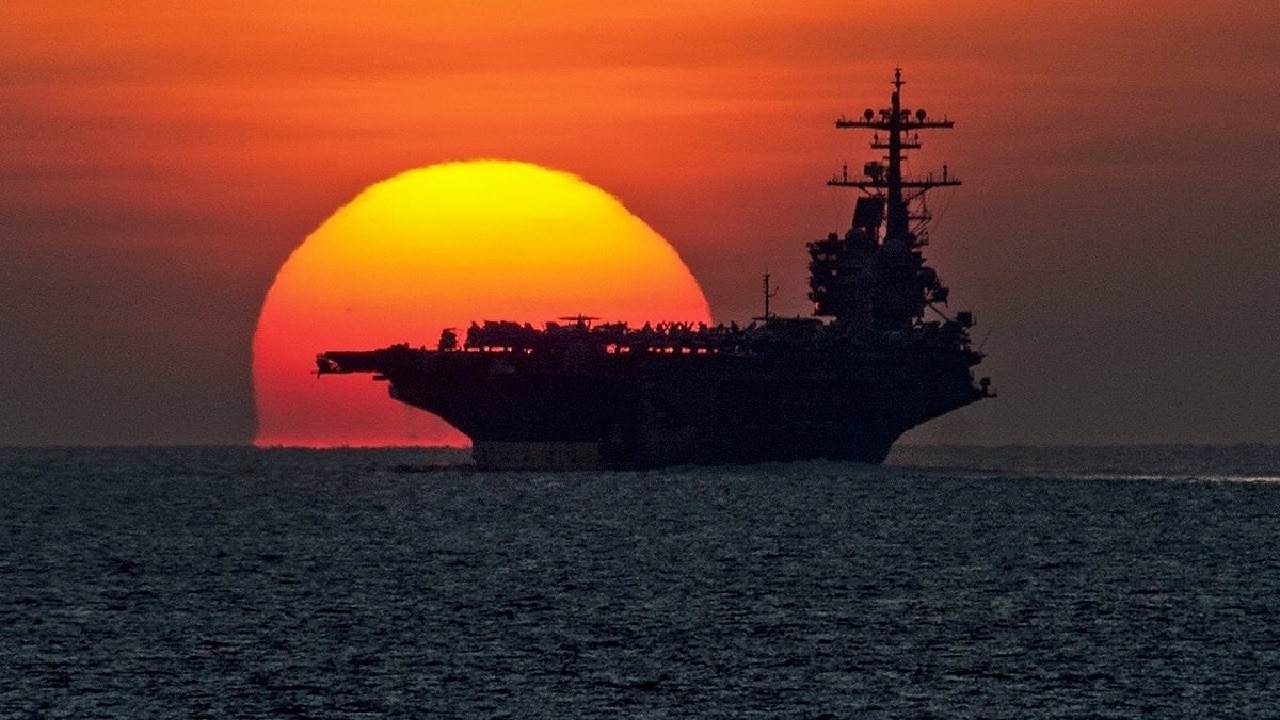
US Navy Nimitz-class Aircraft Carrier. Image Credit: Creative Commons.
The Long Period Devastated the Shipmates
Meanwhile, sailors suffered. Their quality of life lagged. Many surface fleet personnel yearn for a life at sea and for deployments that allow them to showcase their expertise. Dwelling on the shore can promote a high level of boredom and depression.
The RCOH stretched to 2,117 days and cost the Navy $2.8 billion, but it also took a toll on the crew. Tragedy struck during the inactive time. The crew had difficulty with mental health issues. Food was poor, and there was little to do when sailors were taking time off from work.
Tragedy Reared Its Head
Then tragedy struck, and 11 sailors died by suicide – nine of them with a firearm. The Navy decided that improvements were needed in mental health services, recreational options, gyms to reduce stress, and food that would be delicious rather than stomach-churning.
Indo-Pacific Deployment
The USS George Washington is now in Yokosuka, Japan, and is the flagship for Carrier Strike Group 5 and the U.S. 7th Fleet. It is always ready to conduct cruises in the East and South China Seas for freedom-of-navigation exercises that signal to China that the United States means business in the region.
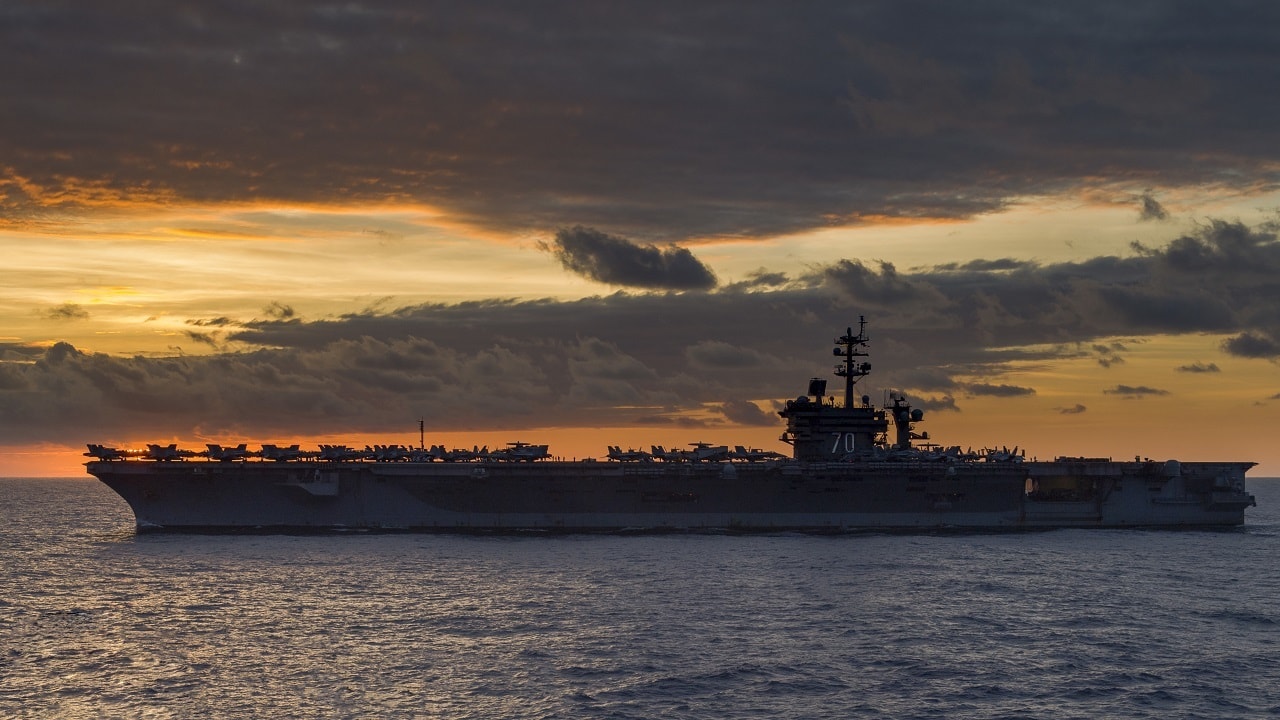
(Feb. 10, 2018) The Nimitz-class aircraft carrier USS Carl Vinson (CVN 70) transits the South Chna Sea. The Carl Vinson Strike Group is currently operating in the Western Pacific as part of a regularly schedule deployment. (U.S. Navy photo by Mass Communication Specialist Third Class Jasen Morenogarcia/Released)
The Navy has learned from the disastrous RCOH and wants more professional shipyard workers to complete the work, rather than relying so much on sailors to bear the costs. Mental health and depression will be addressed, and the quality of life for sailors is now emphasized more. RCHOs will still require a complete overhaul, but the Navy will now be more aware of delays and cost overruns, better able to get spare parts on time, and more likely to create a stronger sense of urgency to get things done quickly and more efficiently.
About the Author: Brent M. Eastwood
Author of now over 3,000 articles on defense issues, Brent M. Eastwood, PhD is the author of Don’t Turn Your Back On the World: a Conservative Foreign Policy and Humans, Machines, and Data: Future Trends in Warfare plus two other books. Brent was the founder and CEO of a tech firm that predicted world events using artificial intelligence. He served as a legislative fellow for US Senator Tim Scott and advised the senator on defense and foreign policy issues. He has taught at American University, George Washington University, and George Mason University. Brent is a former US Army Infantry officer. He can be followed on X @BMEastwood.