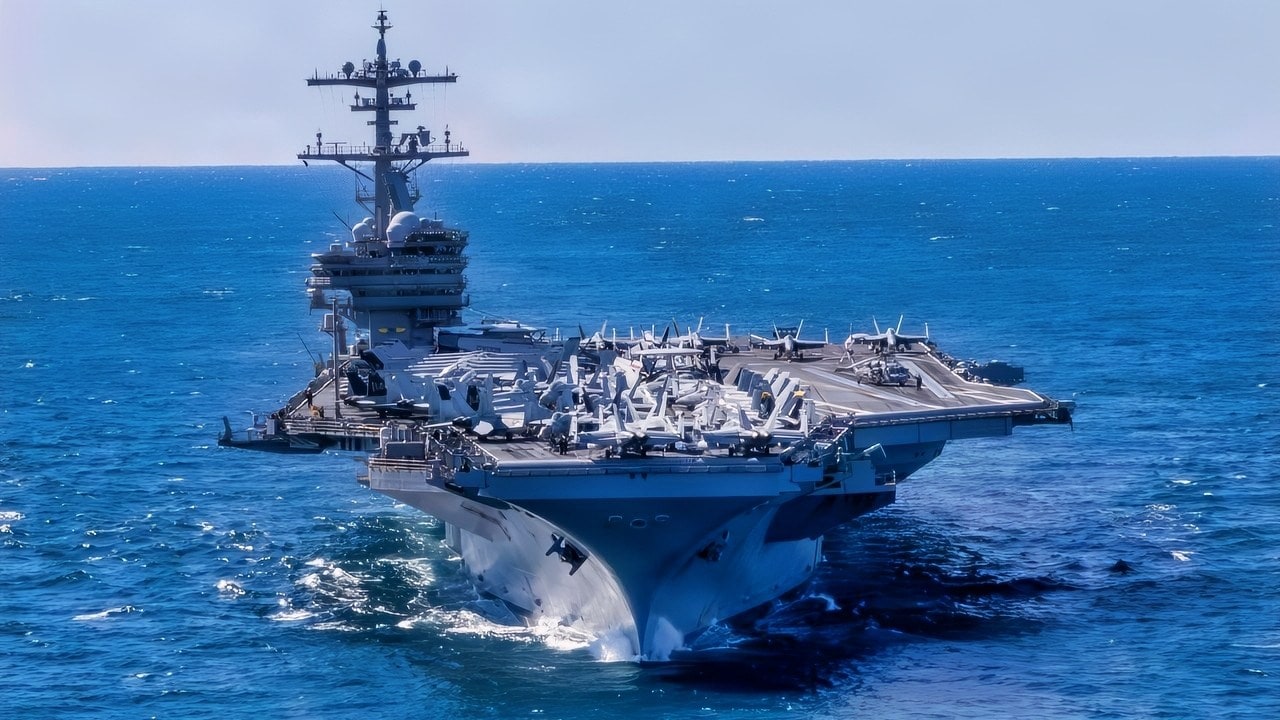
Summary and Key Points: President Donald Trump is openly floating Iran regime change while ordering the USS Gerald R. Ford carrier strike group to the Middle East to join the USS Abraham Lincoln.
-The move comes as U.S.-Iran talks are set for Geneva, with Oman positioned as mediator and U.S. envoys juggling multiple negotiation tracks.

The HMS Prince of Wales (R09) aircraft carrier flight deck officer “shoots” an F-35B Lightning II short takeoff vertical landing (STOVL) variant fighter jet for a STO launch from a ski jump aboard the U.K.’s newest carrier Oct. 24, 2023. The 5th generation strike aircraft for Navy, Air Force, Marines, and allies is aboard to conduct developmental test phase 3 (DT-3) flight trials, which continue today. During the ship’s deployment to the U.S. Eastern Seaboard for WESTLANT 2023, a Pax River F-35 Integrated Test Force (Pax ITF) team is working closely with the ship’s company to conduct the sea trials that continue pushing the boundaries of carrier aviation. (Photo by Michael D. Jackson)
-The posture signals leverage: a shorter, coercive strike focused on IRGC/Basij targets versus a wider, sustained campaign aimed at forcing major shifts on nuclear and missile policy.
-The timeline matters—an extended Ford deployment could strain crews and challenge readiness planning.
Two U.S. Aircrat Carriers Near Iran: USS Gerald R. Ford Joins USS Abraham Lincoln as Geneva Talks Near
WARSAW, POLAND – US President Donald Trump now appears to be in favor of regime change in Iran. This past Friday, he ordered the world’s largest and most modern aircraft carrier, the USS Gerald R. Ford, to the Middle East. “Tremendous power” will soon be in the Middle East, said Trump as he cut orders for the Pentagon to send the second aircraft carrier to the region.
The Ford and its escort vessels, which have been operating in the Caribbean, will join the USS Abraham Lincoln, which has been on station in the region since the end of January 2026. Trump’s sabre-rattling comes as both Washington and Tehran prepare to hold talks in Geneva. These discussions are seen as a last-minute attempt to keep the diplomatic dialogue alive and avert a major US attack on the Islamic Republic.
A US source who had been briefed on the situation told the Reuters news service that the two US envoys, Steve Witkoff and Jared Kushner, were scheduled to hold negotiations with Iranian representatives on Tuesday, and that representatives from the Gulf state of Oman would act as mediators.
The source also said Witkoff and Kushner would be doing double duty, as they are also scheduled to meet officials from Russia and Ukraine on Tuesday in Geneva, in a parallel set of negotiations aimed at bringing an end to the war in Ukraine.
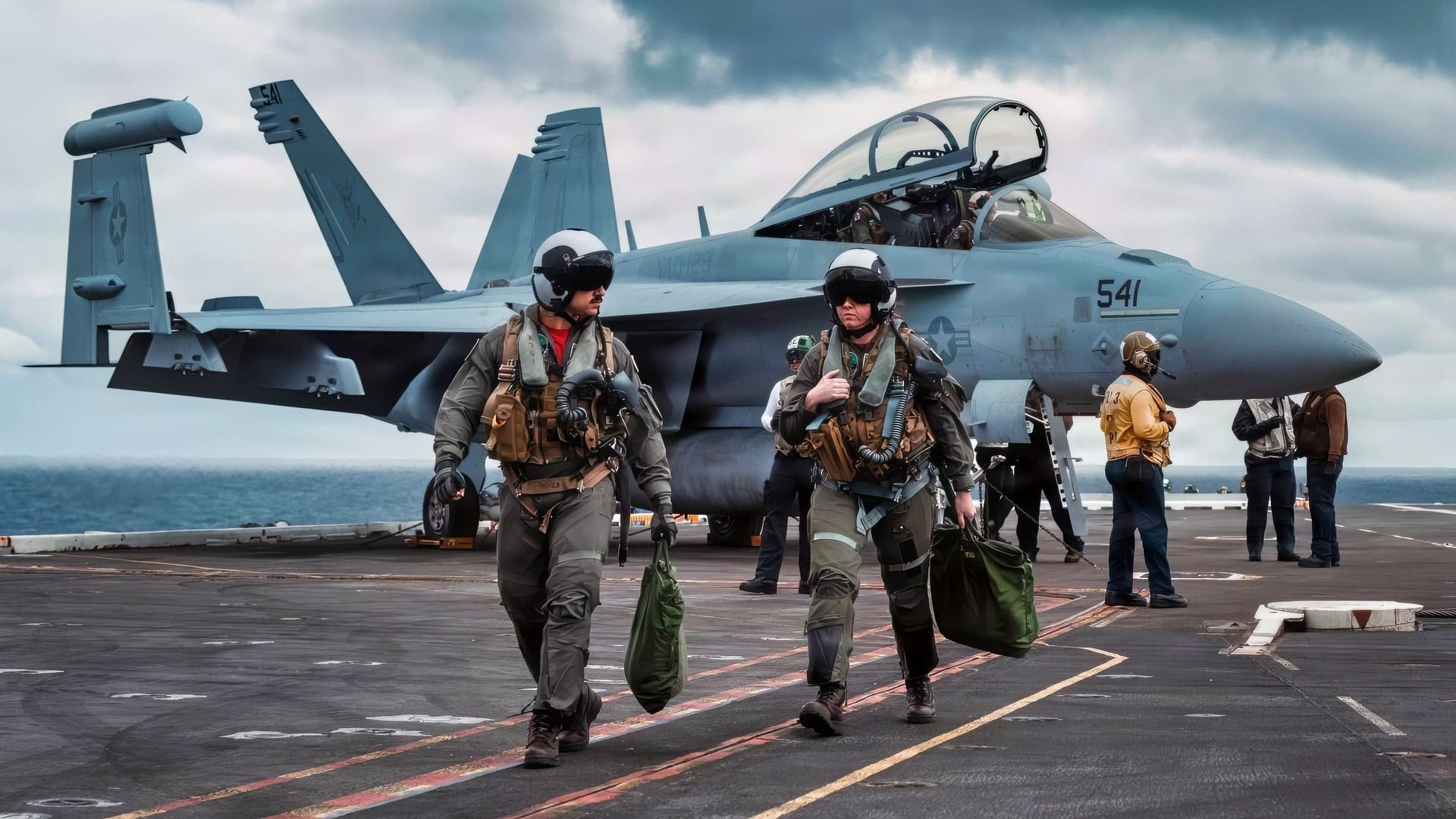
PACIFIC OCEAN (Jan. 24, 2026) – U.S. Navy Lt. Patrick Urrutia, left, and U.S. Navy Lt. Jg. Gabriela Patrick depart a U.S. Navy EA-18G Growler attached to Electronic Attack Squadron (VAQ) 129 on the flight deck of the Nimitz-class aircraft carrier USS Theodore Roosevelt (CVN 71), Jan. 24, 2026. Theodore Roosevelt, flagship of Carrier Strike Group (CSG) 9, is underway conducting exercises to bolster strike group readiness and capability in the U.S. 3rd Fleet area of operations. (U.S. Navy photo by Mass Communication Specialist Seaman Apprentice Cesar Nungaray)
Brutality Without Limit
Washington’s conflict with Iran has both long- and near-term aspects. In the long term, the US has long been involved in a long-running dispute over Tehran’s nuclear program that has long been assessed as an effort by the mullahs to develop nuclear weapons.
But in a more recent time frame, pressure has been mounting on the US to take punitive action against Iran for its support of regional armed formations like Hamas, the Houthis, and Hezbollah. Additionally, the constant slaughter of unarmed protestors in the streets in Iran may have killed 50,000 or more civilians in recent weeks.
Numbers this high have not been confirmed, but the mounting death tolls are based on the calculation, said an Iranian physician using the assumed name of Dr. Ahmadi, that “officially registered deaths related to the crackdown likely represent less than 10 per cent of the real number of fatalities”.
In describing the violence inflicted on the protestors, Ahmadi said, “from a medical standpoint, the injuries we observed demonstrate a brutality without limit – both in scale and in method,” he says. Another doctor, who is based in Tehran, tells the Guardian: “I am on the verge of a psychological collapse. They’ve mass murdered people. No one can imagine … I saw just blood, blood and blood.”
Accounts in the UK Guardian newspaper state that “testimony from morgues, graveyards and hospitals around the country reveal concerted efforts by authorities to conceal the true size of the toll: bodies being transported in ice-cream vans and meat trucks; piles of the dead being hastily buried; and hundreds of bodies apparently disappearing from Iran’s network of forensic facilities.”
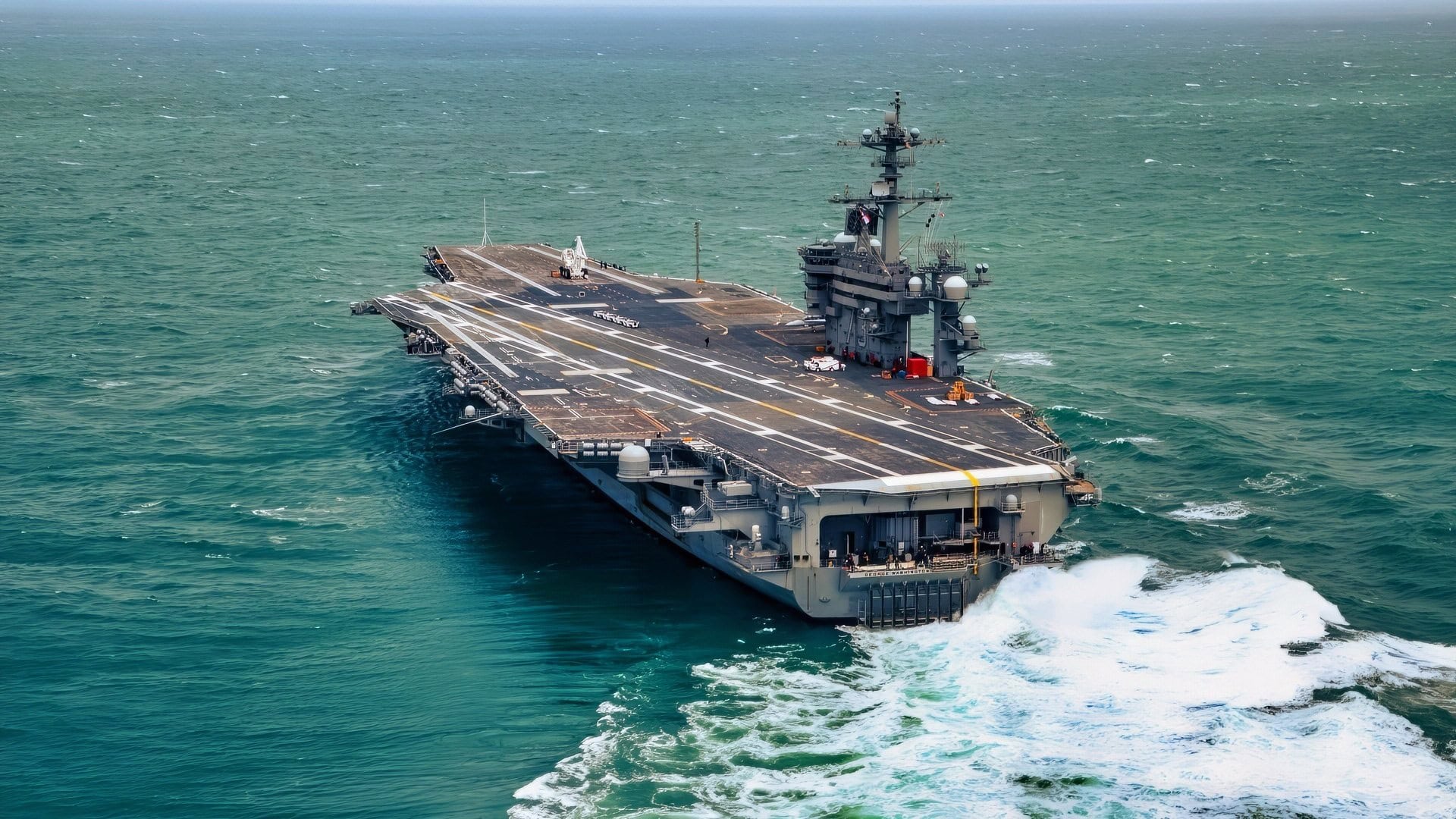
The Nimitz-class aircraft carrier USS George Washington (CVN 73) transits through the Atlantic Ocean May 25, 2023. George Washington was underway after completing its mid-life refueling and complex overhaul and sea trials, a comprehensive test of the ship’s system and technologies. (U.S. Navy photo by Mass Communication Specialist 3rd Class Nicholas A. Russell)
Military Options
Most objective assessments of how diplomatic interactions might play out paint a picture of the timelines required for those negotiations to produce results, which exceed the duration for the Ford to remain on station in the Arabian Sea. Trump has stated that he believes any diplomatic interactions should be wrapped up in the coming month.
Still, the consensus is that this is unlikely without one side or the other agreeing to major concessions.
The US President seems to have fully embraced the idea of regime change and has said in a recent interview that it “seems like that would be the best thing that could happen.” He would not say whether he favors a government run by exiled Crown Prince Reza Pahlavi or if he had other candidates in mind to take over in Iran, but did say, “There are people.”
“For 47 years, they’ve been talking and talking and talking,” Trump said following a military event at Fort Bragg, North Carolina. “In the meantime, we’ve lost a lot of lives while they talk. Legs blown off, arms blown off, faces blown off. We’ve been going on for a long time.”
Military options are assessed as falling into two categories, which is where the two carriers come in. One would be a “limited coercive strike”, as a recent Atlantic Council analysis describes it.
This would involve hitting the Islamic Revolutionary Guard Corps and the Basij militia compounds. Taking out those organizations would give Trump the ability to say he had acted on his red line over the regime killing protesters and forcing Iran back to negotiations. Whether this would work in bringing down the regime is questionable, however, and Iran has also stated that it is prepared to conduct retaliatory actions following any strike.

120511-N-WO496-003 STRAIT OF HORMUZ (May 11, 2012) Guided-missile cruiser USS Cape St. George (CG 71) and aircraft carrier USS Abraham Lincoln (CVN 72) transit the Strait of Hormuz. Both ships are deployed to the U.S. 5th Fleet area of responsibility conducting maritime security operations, theater security cooperation efforts and support missions as part of Operation Enduring Freedom. (U.S. Navy Photo by Mass Communication Specialist 3rd Class Alex R. Forster/Released)
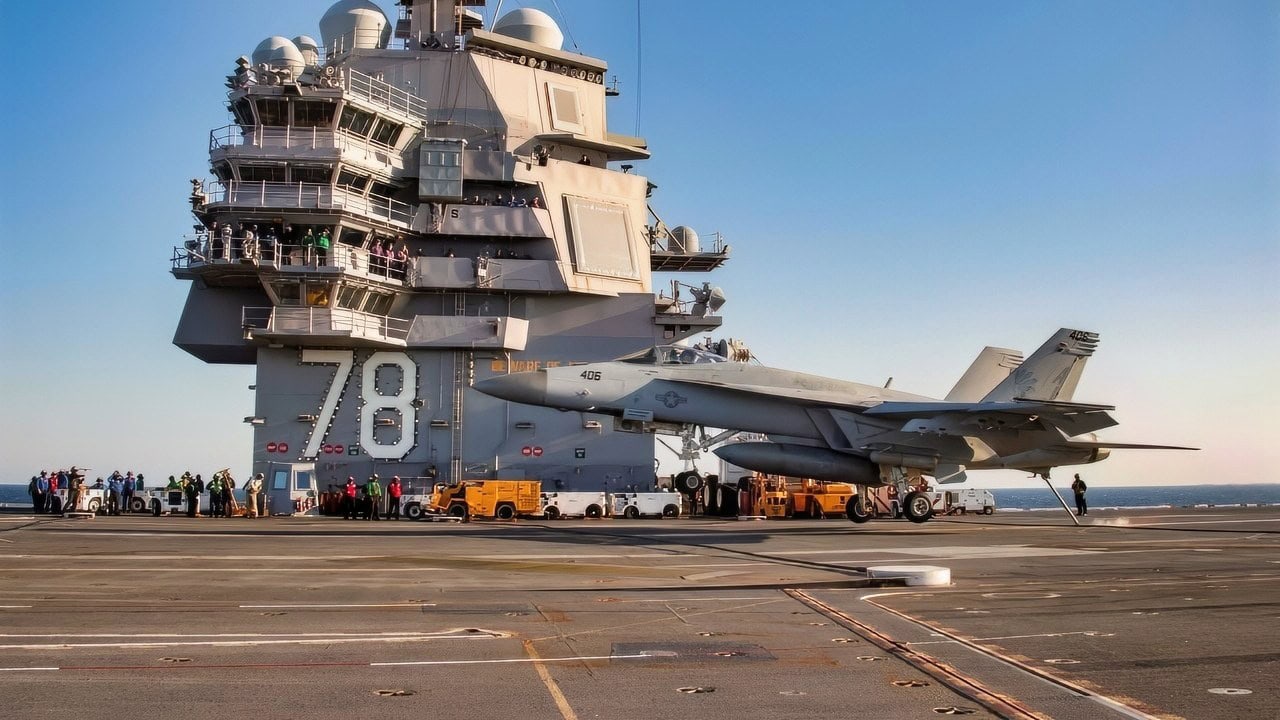
USS Gerald R. Ford Supercarrier Flight Deck. Image Credit: Creative Commons.
A second option would involve a wider and longer campaign that would be aimed at forcing fundamental changes in the current regime’s positions on its nuclear and missile programs. For this approach to be effective, the regime would have to believe that its survival is somehow threatened. This would require a sustained and synchronized military campaign supported by regional allies.
Which course will be taken is still up in the air. When asked why the Ford was being dispatched to the Middle East, Trump responded, “In case we don’t make a deal, we’ll need it … if we need it, we’ll have it ready.” In the meantime, the carrier has been at sea since June 2025 and cannot stay in the region indefinitely.
The standard duration of carrier deployments is about 9 months, but they are not unusual to be extended during periods of increased US military action. If the Ford Carrier Strike Group is still deployed after April 15, it will break the 294-day post-Vietnam War record for carrier deployments set by the Lincoln in 2020.
US Navy officials, in the meantime, have repeatedly cautioned the White House that long sea deployments can damage morale on ships.
About the Author: Reuben F. Johnson
Reuben F. Johnson has thirty-six years of experience analyzing and reporting on foreign weapons systems, defense technologies, and international arms export policy. Johnson is the Director of Research at the Casimir Pulaski Foundation. He is also a survivor of the Russian invasion of Ukraine in February 2022. He worked for years in the American defense industry as a foreign technology analyst and later as a consultant for the U.S. Department of Defense, the Departments of the Navy and Air Force, and the governments of the United Kingdom and Australia. In 2022-2023, he won two awards in a row for his defense reporting. He holds a bachelor’s degree from DePauw University and a master’s degree from Miami University in Ohio, specializing in Soviet and Russian studies. He lives in Warsaw.