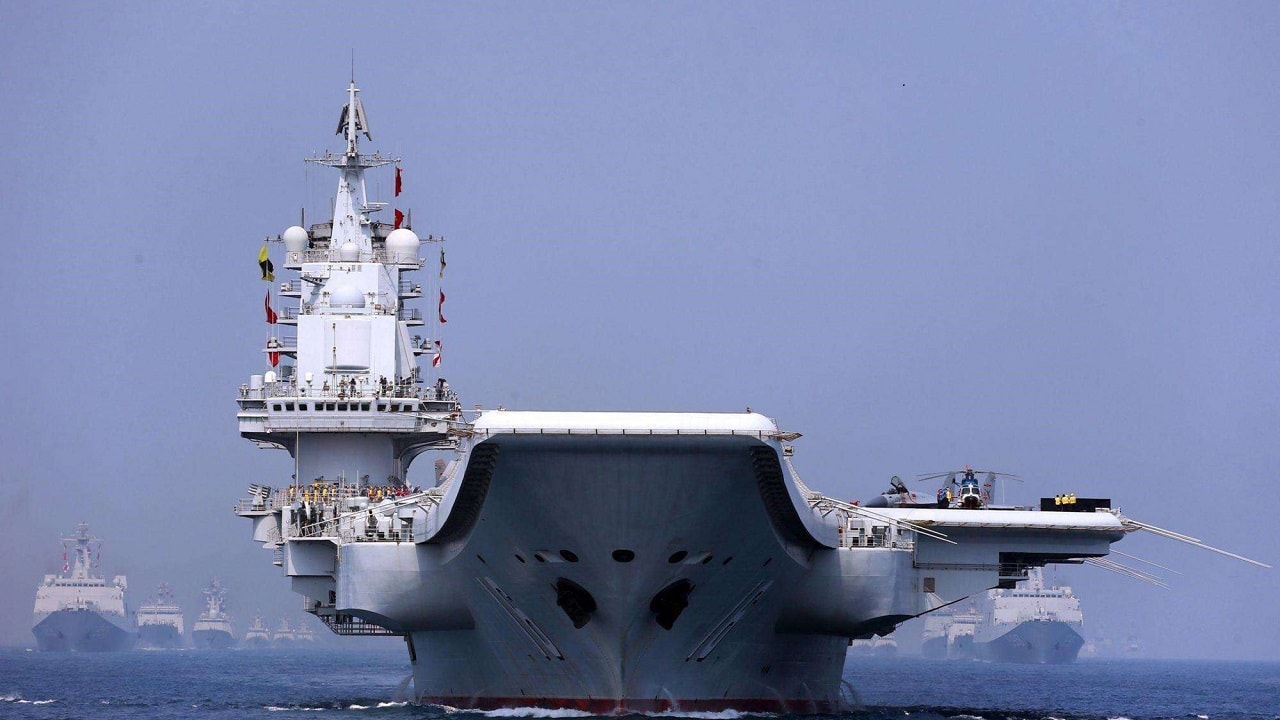
Summary and Key Points: China’s carrier program is accelerating fast, with the Fujian already in sea trials and reporting suggesting a fourth “supercarrier” could follow.
-The Fujian’s flat-deck design and electromagnetic catapult approach resemble the U.S. Ford-class, raising concern about how quickly Beijing is closing the capability gap in launch efficiency and sustained sortie generation.
-Yet carriers matter only as much as their air wings. China’s current deck-aviation weakness—limited fifth-generation carrier fighters—still constrains near-term combat credibility against U.S. Navy F-35Cs and allied regional airpower.
-The danger is trajectory: mass production, improving catapults, and the J-35 could shift the balance sooner than expected.
The PLAN’s Supercarrier Bet: 4 Carriers, 1 Big Problem
The pace at which the People’s Republic of China (PRC) is building and adding Navy ships and aircraft carriers will not likely go unnoticed at the Pentagon and around the world.
China is rapidly expanding its global power-projection capabilities, and perhaps even more concerning to the Pentagon is the very visible extent to which China’s third Fujian aircraft carrier appears to replicate or simply copy elements of the US Navy’s Ford-class carriers.
Building upon the success of its third carrier, the People’s Liberation Army Navy (PLAN) is also underway with a fourth carrier, a first-of-its-kind massive “supercarrier” designed to carry more attack aircraft than the world has ever seen on a single ship.
In the mere flash of an instant, it appears the People’s Liberation Army Navy will soon be a four-carrier force.
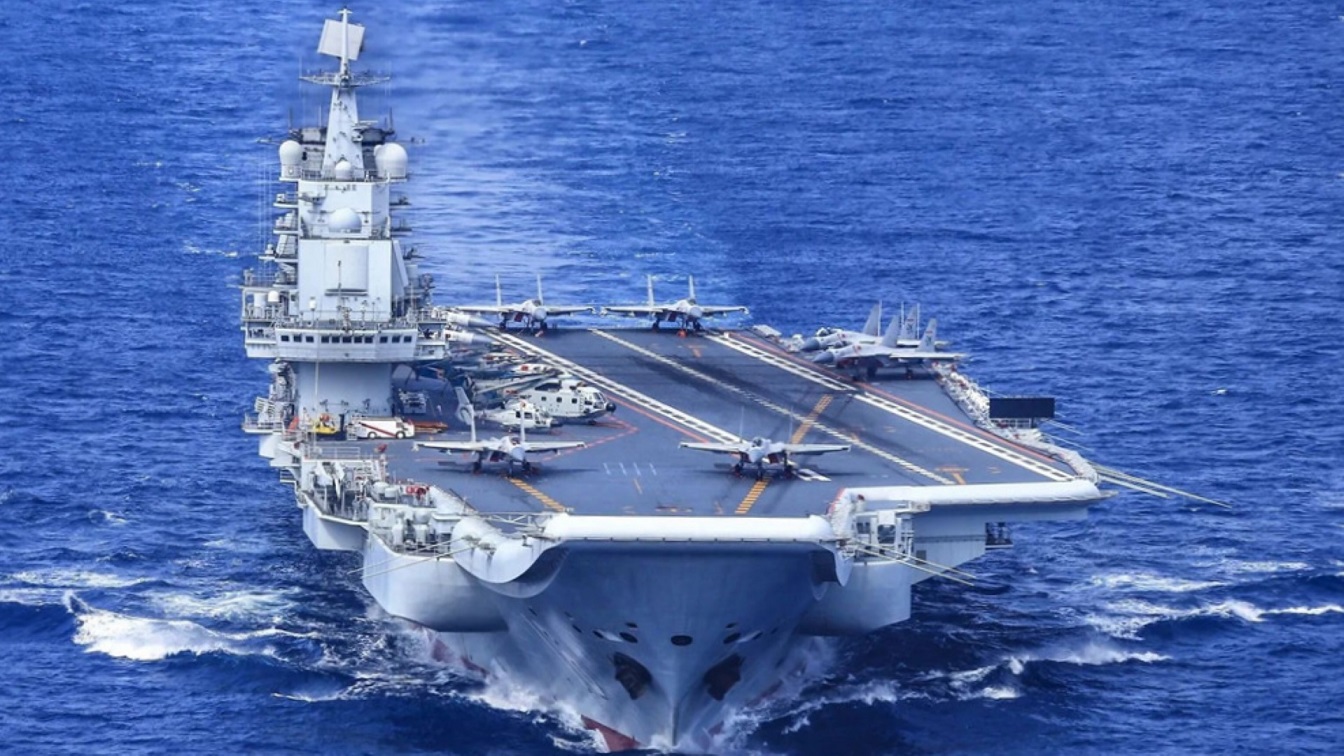
Image Credit: Creative Commons.
This seemed like a distant thought or wish just 10 years ago. Not only has the PLAN now had three aircraft carriers at sea at once, but China also appears to be advancing with its fourth carrier.
Citing commercially available satellite photos, numerous reports now say China appears to be progressing with its huge Type 004 aircraft carrier, which may be the largest the world has ever seen.
Available specifications indicate that the USS Gerald R. Ford can operate with up to 90 aircraft, whereas China’s 004 is reported to be capable of carrying at least 100.
China With 4 Carriers
The PLAN’s Fujian third carrier has been at sea for sea trials, a development that introduces several critical threat variables, the most pertinent of which may be questions of presence, reach, and construction speed.
The PRC has added a second large shipyard, blended civil and military construction, and is fast adding a new class of carriers.
China has already deployed “dual carrier” war preparations similar to the US and has also sent its second carrier, the Shandong, on deployments near Taiwan and the South China Sea.
With the Fujian, China has abandoned a ski-jump configuration and instead moved toward a large, flat-deck design similar to the US Navy’s Ford-class.
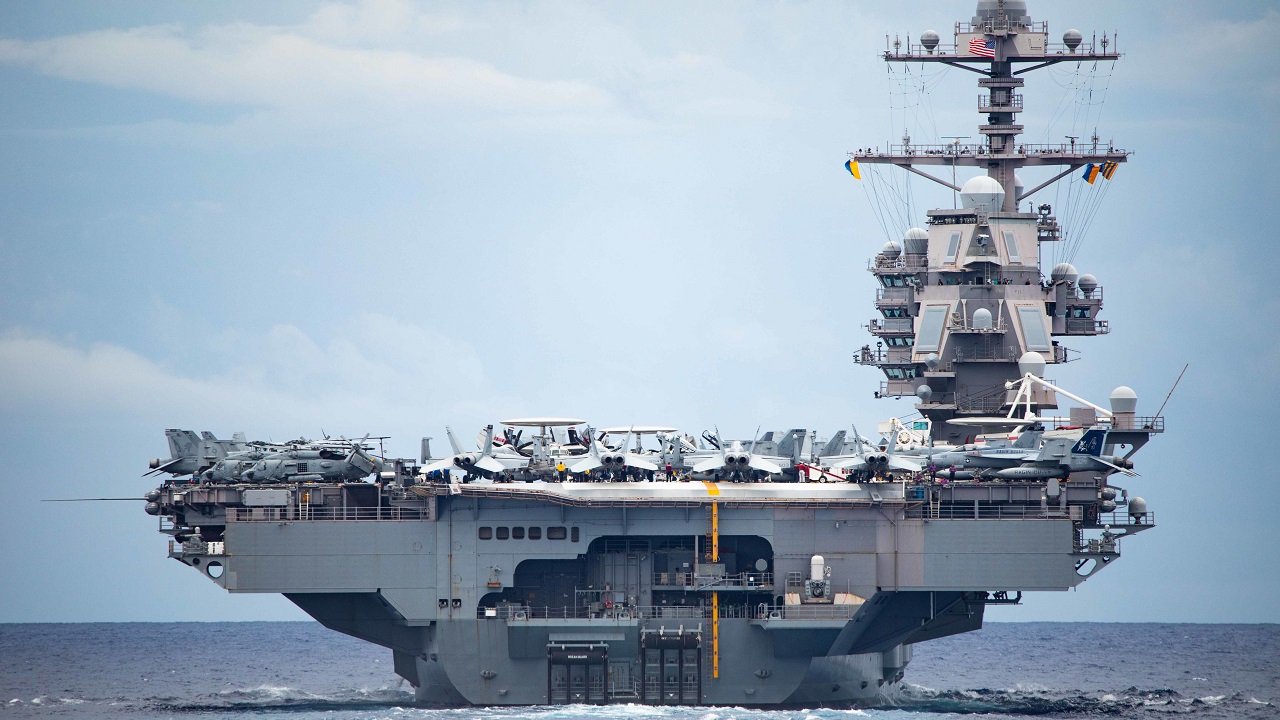
A view of the first-in-class aircraft carrier USS Gerald R. Ford (CVN 78) from aboard the Ticonderoga-class guided-missile cruiser USS Normandy (CG 60) as Normandy participates in a Tactical Force Exercise as part of the Gerald R. Ford Carrier Strike Group, Oct. 13, 2022. Ford is on its inaugural deployment conducting training and operations alongside NATO Allies and partners to enhance integration for future operations and demonstrate the U.S. Navy’s commitment to a peaceful, stable and conflict-free Atlantic region. (U.S. Navy photo by Mass Communication Specialist 2nd Class Malachi Lakey)
However, it is unclear how far along the Fujian is, as multiple reports cite problems with its catapults and other design features.
This is not particularly surprising given the challenges the U.S. has had in recent years with its electromagnetic catapult, so it makes sense that the PLAN might have similar growing pains.
China Power Projection
How dangerous is the PLAN’s carrier fleet at the moment? Certainly, in a clear initial sense, more carriers for China means their Navy can project power many more places throughout the globe to establish presence, exert influence, and even hold areas at risk of sea-launched air attack.
This aligns with the well-known Chinese strategy to become a dominant global power and expand far beyond its Pacific influence. While three aircraft carriers are far fewer than the US Navy’s 11, the civil-military fusion and production capacity raise concerns about the pace at which the PLA may be closing the gap.
Carrier-Launched 5th & 6th-Gen Fighters for China’s Navy
Upon closer examination, however, China’s third carrier seems challenged to present a real threat to the US Navy due to its Carrier Air Wing.
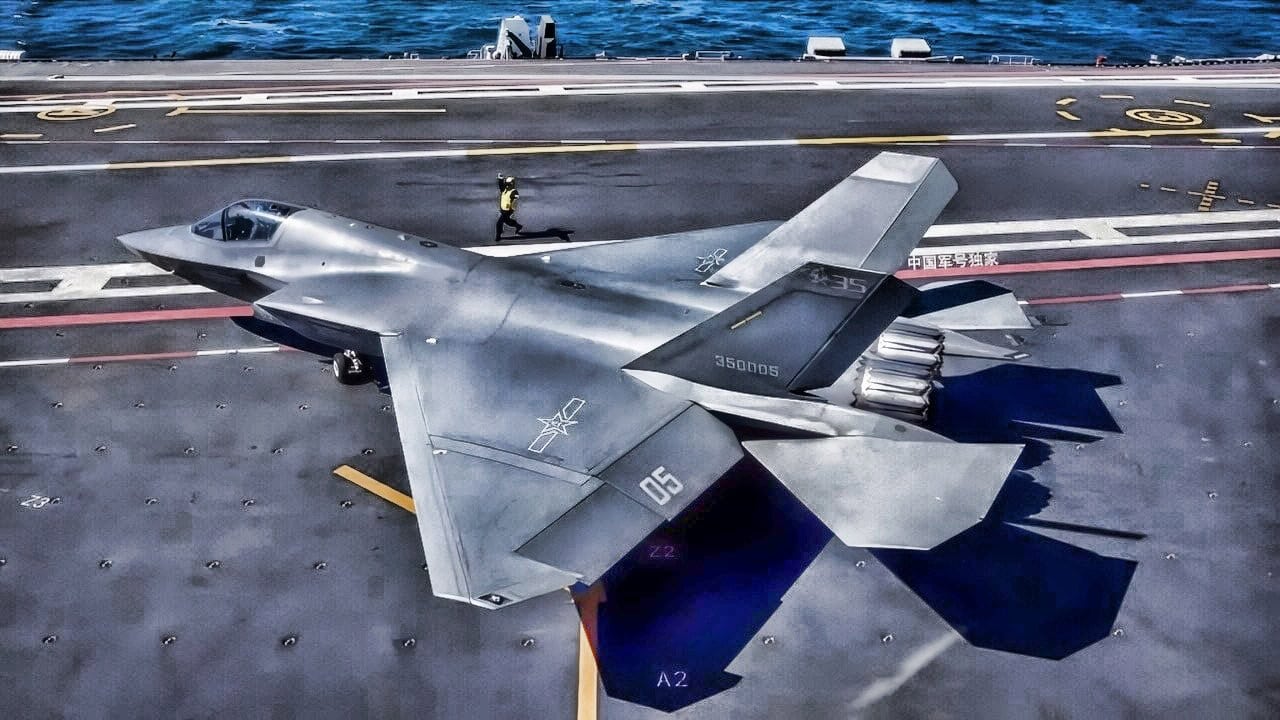
China J-35 Naval Stealth Fighter. Image Credit: PLAN.
A carrier can only maximize combat input to the extent enabled by its Carrier Air Wing, and at the moment, China does not have an impactful 5th-generation ocean-launched stealth fighter force.
This deficit, however, is closing very quickly due to the rapid emergence of China’s carrier-launched J-35. It also seems conceivable that one or both of the PLA’s nascent 6th-generation stealth fighters, the J-40 and J-36, could launch from the ocean as well.
As for what China operates today, it has only a limited number of its land-based J-20 5th-generation stealth aircraft, which would require refueling to sustain or prolong attacks from the ocean. The US Navy can already deploy more than 40 F-35Cs on a carrier and has deployed as many as 20 F-35Bs on its America-class amphibious ships.
Therefore, the US Navy would operate with a substantial margin of air superiority in a blue-water naval war between the US and China.
China Is Closing the Supercarrier Gap with the U.S. Navy
This Chinese deficit, however, may not last long, and the PLA-N could likely present sea-launched J-35 5th-generation air threats in impactful numbers in a few years.
However, they will need to produce massive amounts of 5th-generation aircraft to present any credible air threat to the US and its Japanese and South Korean allies. P
LA leaders likely know this, and the possibility of attacking Taiwan may still be a few years away.
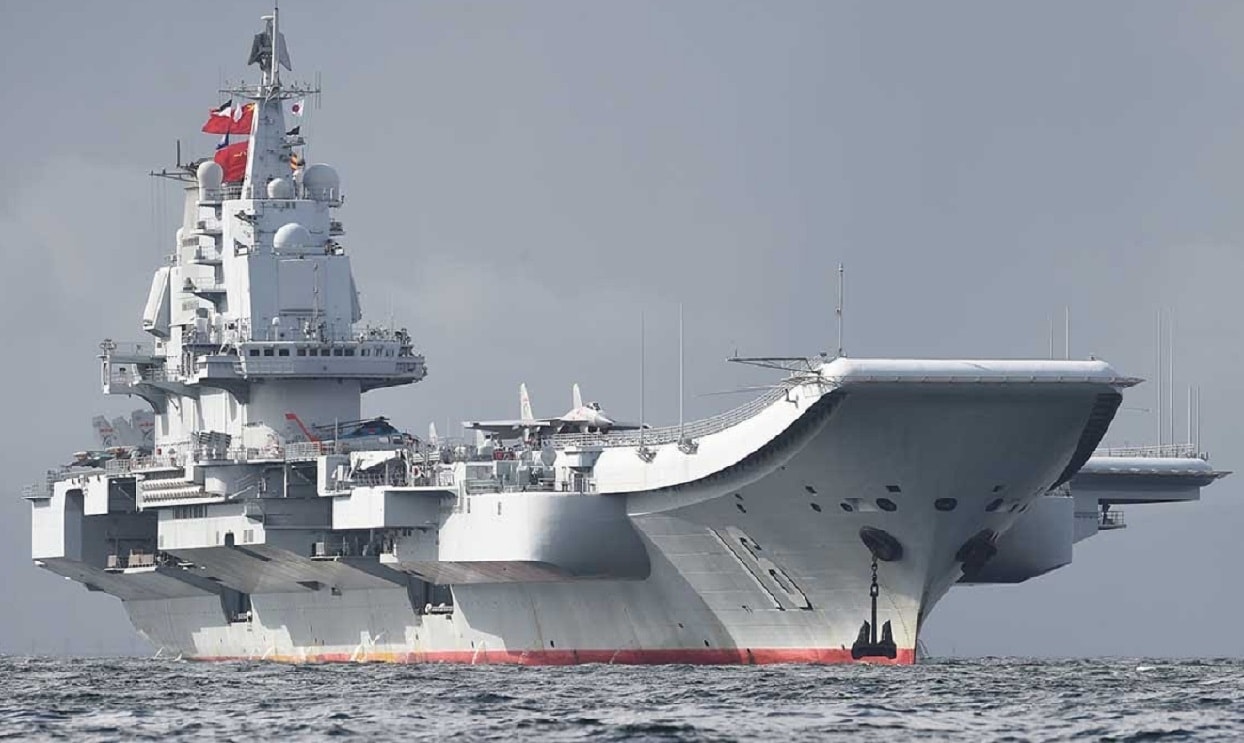
China Aircraft Carrier. Image: Creative Commons.
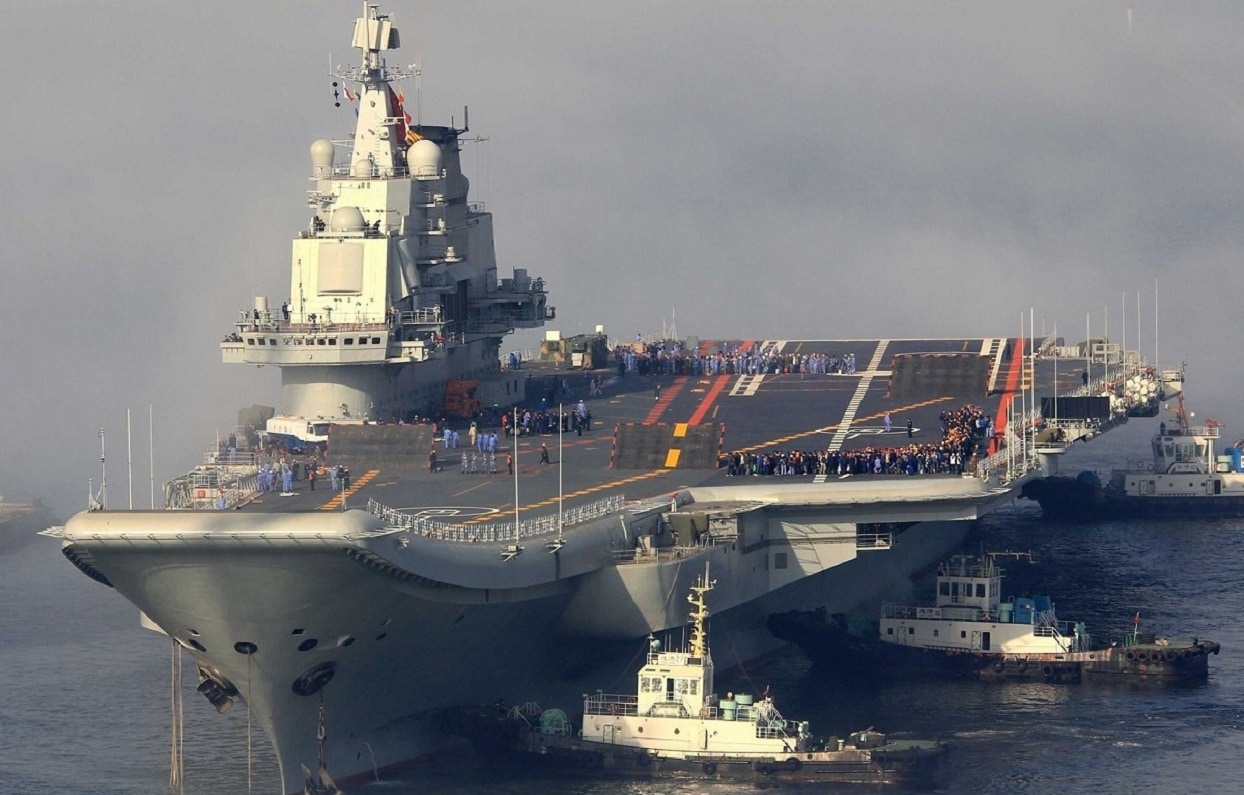
China Aircraft Carrier. Image: Creative Commons.
At the moment, any Chinese naval force would be extremely vulnerable to forward-positioned US F-35s and growing numbers of F-35s in Japan and South Korea. Japan, for example, has already shown it can deploy F-35Bs in warships in the Pacific, so China seems well overmatched in the realm of air power.
For this reason, the arrival of the Fujian does not pose a pressing or immediate threat to Taiwan and the West, provided the US and its allies can forward-deploy sufficient numbers of F-35s.
US Navy Electromagnetic Air Launch Systems (EMALs) not only allow for smoother, more efficient launches but also greatly reduce stress and wear on airframes, extending service life, power projection, and sustained aircraft performance.
The exact extent of the technological sophistication being built into electromagnetic propulsion for China’s Fujian may not be known. Still, it is likely getting attention at the Pentagon as a concern.
About the Author: Kris Osborn
Kris Osborn is the President of Warrior Maven – Center for Military Modernization. Osborn previously served at the Pentagon as a highly qualified expert in the Office of the Assistant Secretary of the Army—Acquisition, Logistics & Technology. Osborn has also worked as an anchor and on-air military specialist at national TV networks. He has appeared as a guest military expert on Fox News, MSNBC, The Military Channel, and The History Channel. He also has a Masters Degree in Comparative Literature from Columbia University.