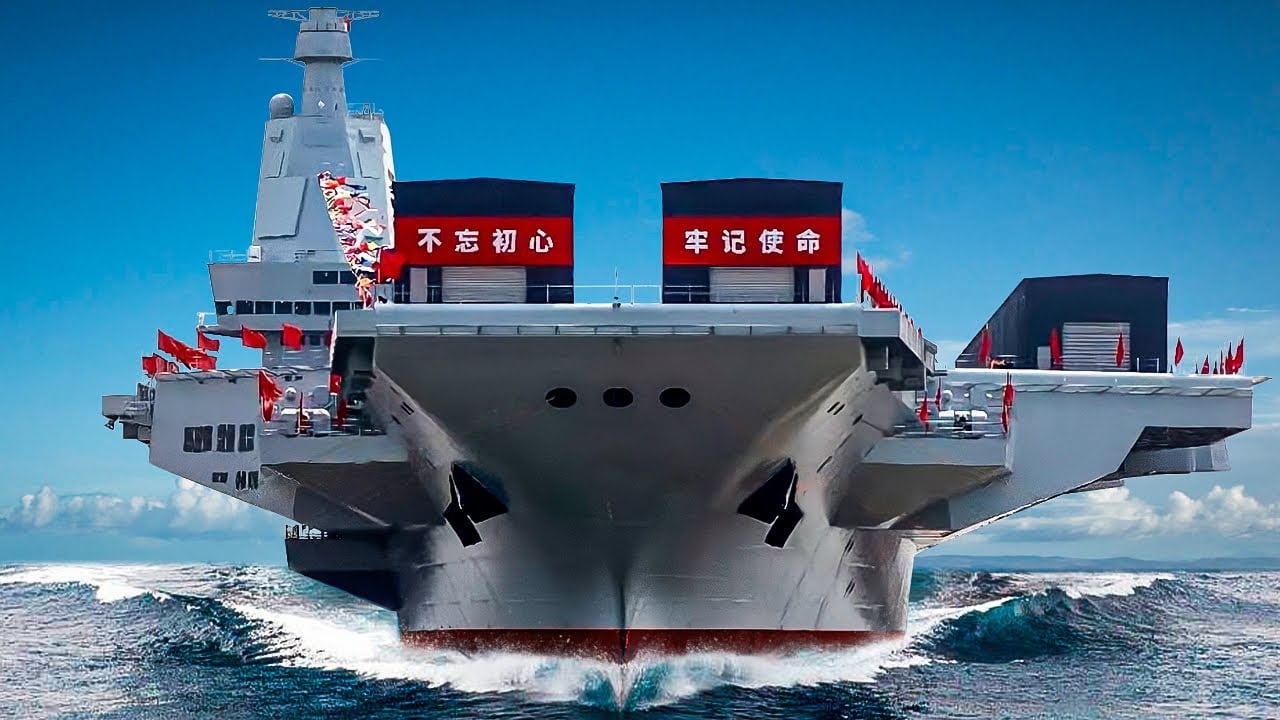
Summary and Key Points: China’s aircraft carrier program is advancing with the Type 003 Fujian, its first vessel utilizing Electromagnetic Aircraft Launch Systems (EMALS).
-Despite these gains, the PLAN still lags significantly behind U.S. nuclear-powered supercarriers.
-The Fujian suffers from critical design flaws, including conventional propulsion that limits range and a deck layout where catapults and elevators create operational bottlenecks.
-Compounding these technical hurdles is a massive high-level military purge involving General Zhang Youxia.
-Allegations of corruption and intelligence leaks suggest deep instability within the Central Military Commission, potentially stalling China’s ambitions for a true blue-water nuclear fleet.
The Explainer: Why China’s Type 003 Fujian is Struggling with “Design Flaws” in 2026
China’s expanding aircraft carrier fleet is part of a broader effort by Beijing to build a blue-water People’s Liberation Army Navy (PLAN) fleet with the size and capabilities to project power onto distant shores.
Building out the Chinese carrier fleet would not only bolster China’s maritime capabilities in the littoral waters adjacent to the mainland, and deeper toward the first island chain, but would also allow the PLAN to push farther east into the Pacific.
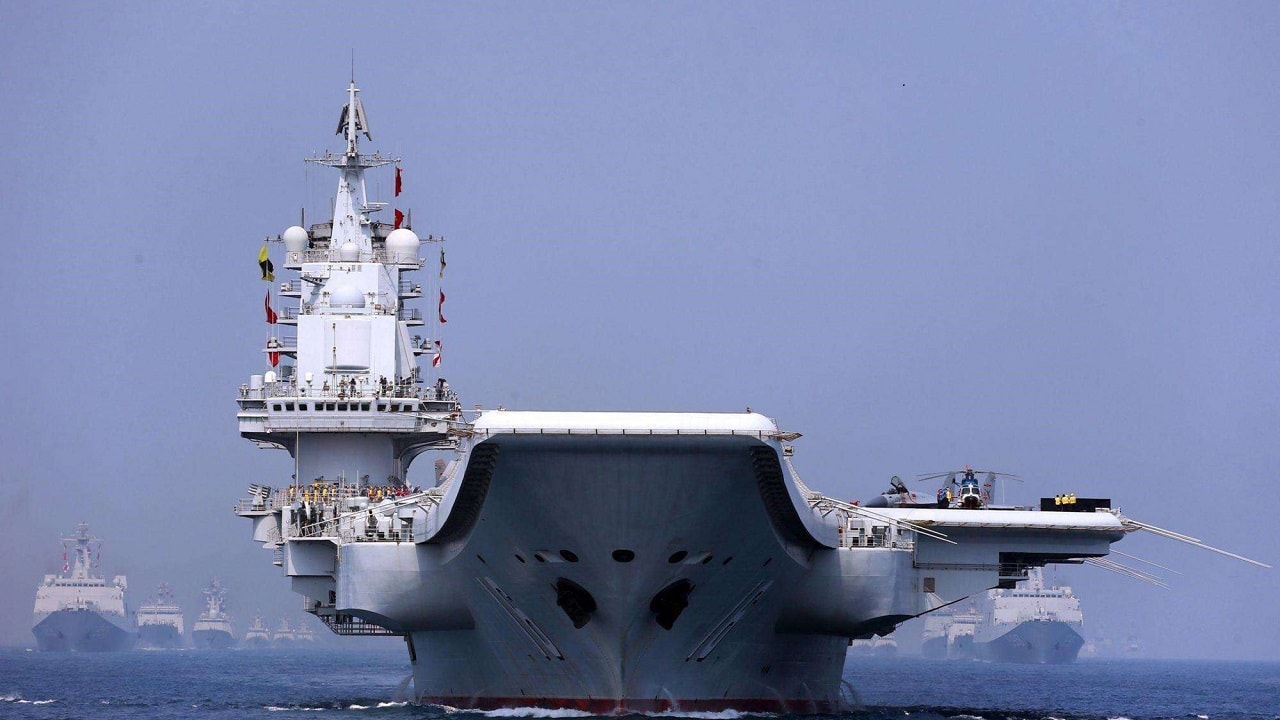
A Chinese Aircraft Carrier on the high-seas. Image Credit: Chinese Internet.
Today, the PLAN has three aircraft carriers in active service. And while the first two are adapted Soviet platforms, the third, the Fujian, incorporates some of the same technologies that went into the U.S. Navy’s newest aircraft carrier, the USS Gerald R. Ford (CVN-78) nuclear-powered supercarrier.
But despite the PLAN’s progress in fielding a larger and more mature fleet of carriers, the U.S. Navy still retains significant quantitative and qualitative advantages.
China’s Supercarrier Fleet, Explained: Growing Capabilities, but Still Behind
As one naval affairs expert outlined, the Fujian, China’s third and latest carrier, is by far the most advanced carrier China has built. China’s aircraft carriers remain far from challenging American naval dominance in the Indo-Pacific. In the near term, however, China’s burgeoning naval aviation capabilities pose an immediate threat to countries in the region that are aligned with the United States.
“While China’s carrier strategy may not imply a direct challenge to current US naval capabilities, it does put pressure on America’s regional allies, deviating them from the US-centered security architecture,” that expert noted. China is, however, “working towards the construction of a post-American fleet and emphasizing the importance of foreign bases—such as in Cambodia and the Solomon Islands—for surveillance and rapid deployment.”
And while the Fujian shows significant and rapid progress over the two aircraft carriers that preceded it, the aircraft carrier “falls short of direct competition with the US due to its lack of nuclear propulsion and its smaller scale. Unlike the nuclear-powered super-carriers of the Ford and Nimitz Classes, the Fujian relies on support ships for extended range.
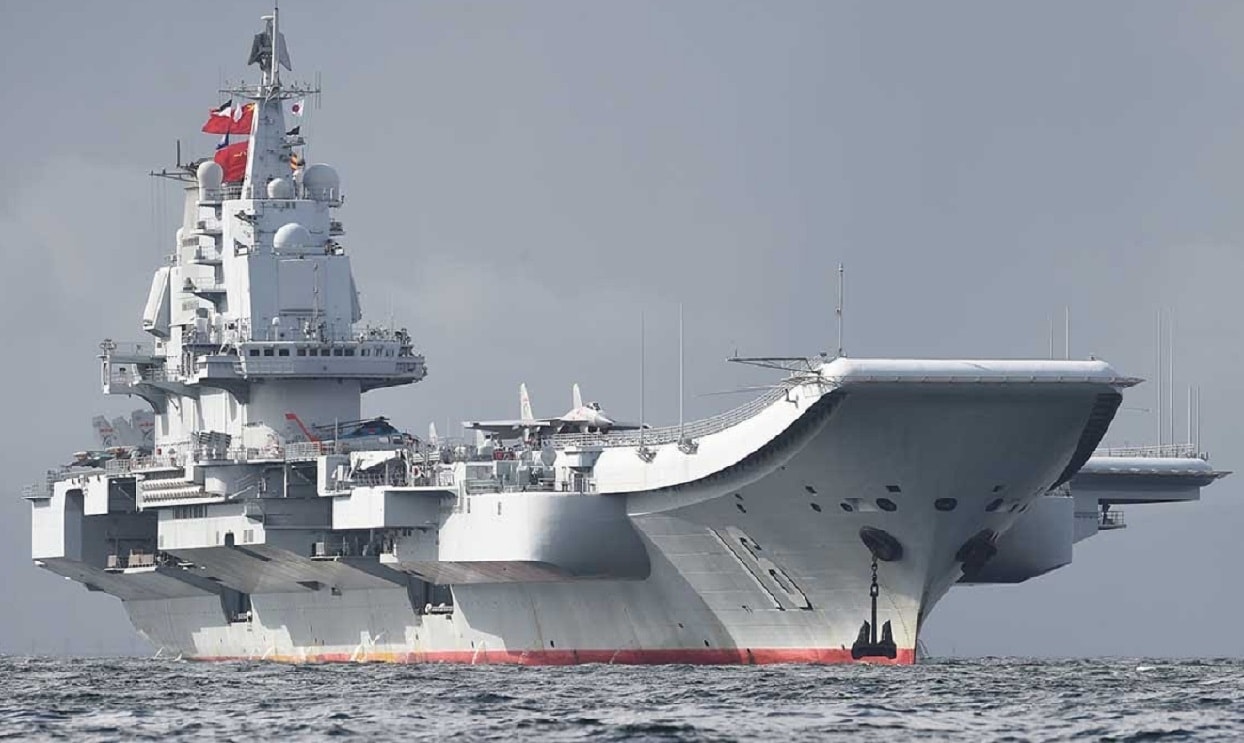
China Aircraft Carrier. Image: Creative Commons.
“Moreover, although the Fujian comes with advanced catapults—namely, electromagnetic aircraft launch systems (EMALS)—that align with US technology, tests this past November have shown markedly decreased effectiveness compared to America’s nuclear carriers.”
Design Flaws
The sentiment was echoed by the South China Morning Post when it outlined what it called the Fujian’s “design flaws.” The admission was striking, given the paper’s increasingly sympathetic voice toward mainland China in recent years. “These issues are largely caused by the Fujian’s conventional propulsion system and are mostly related to aircraft operations,” the newspaper wrote, citing both the aircraft carrier’s conventional propulsion system, as well as its centrally located island superstructure.
The island’s positioning, the article argued, crimps aircraft operational efficiency by reducing available deck space. The SCMP also took issue with the carrier’s aircraft catapults. “Observers have pointed out that one of the Fujian’s catapults encroaches onto the deck, which means it cannot be used when planes are landing.
“Another catapult was too close to the lift used to raise the planes onto the deck, creating another bottleneck.
“Some observers believe that the No 1 aircraft elevator on the Fujian is positioned too far forward because the carrier’s catapult configuration was modified during development, switching from steam catapults to electromagnetic catapults.”
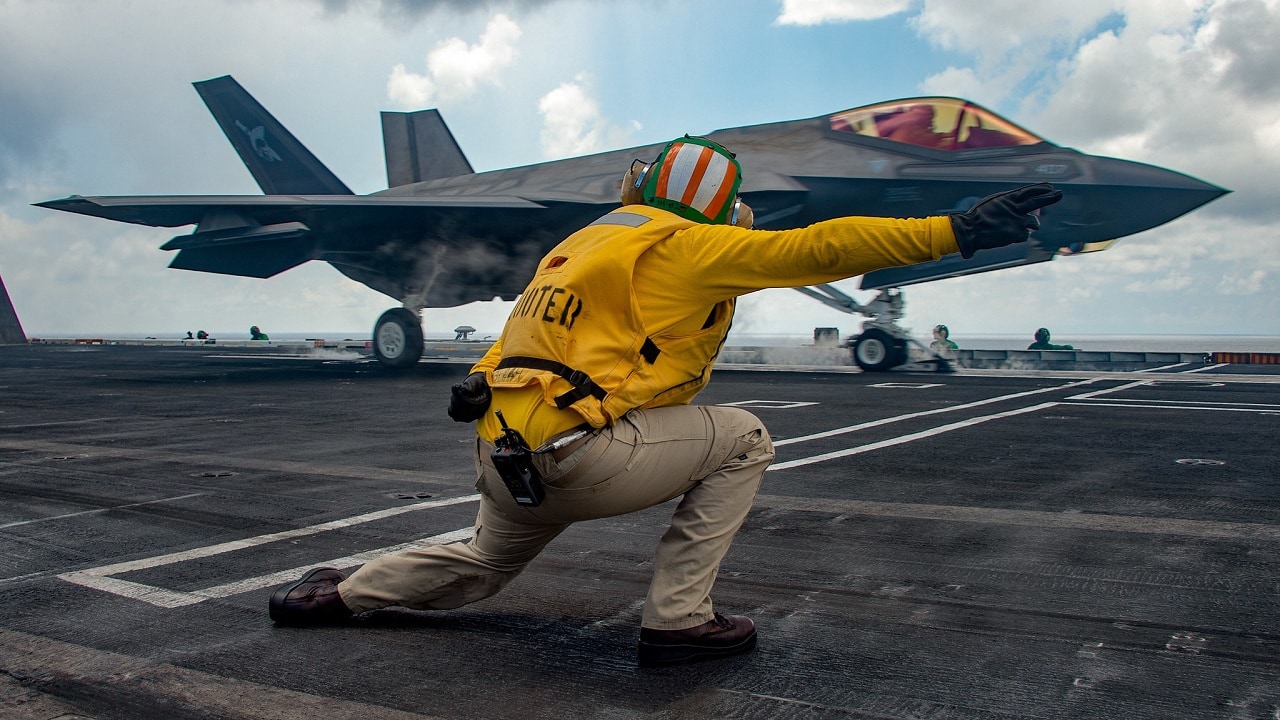
SOUTH CHINA SEA (Oct. 25, 2021) Lt. Nicholas Eppler, from Exeter, Calif., directs flight operations as an F-35C Lightning II assigned to the “Argonauts” of Strike Fighter Squadron (VFA) 147 launches from the Nimitz-class aircraft carrier USS Carl Vinson (CVN 70), Oct. 25, 2021. The Carl Vinson Carrier Strike Group is on a scheduled deployment in the U.S. 7th Fleet area of operations to enhance interoperability through alliances and partnerships while serving as a ready-response force in support of a free and open Indo-Pacific region. (U.S. Navy photo by Mass Communication Specialist Seaman Emily Claire Bennett) 211025-N-TY704-1241
The location of the island superstructure may have been necessitated by the carrier’s conventional propulsion system, which requires valuable real estate on the ship’s deck, as well as belowdecks, for fuel storage and exhaust.
A nuclear-powered aircraft carrier has no need for conventional fuel or a conventional exhaust system, as the article correctly notes—though nuclear-powered vessels do require their own unique support infrastructure.
Xi’s Anticorruption Drive Could Hurt China’s Military
Meanwhile, a recent shake-up at the highest levels of China’s military leadership shed some light on the workings of the Chinese military apparatus. Allegations leveled against General Zhang Youxia, formerly the country’s top man in uniform, accuse the general of accepting bribes. But the allegations also claim the general leaked or sold sensitive technical information about China’s nuclear arsenal to the United States.
General Zhang was part of the Central Military Commission, a tight cadre of generals, headed by Chinese leader Xi Jinping, that make the Chinese military’s most consequential policy decisions.
General Zhang’s downfall prefigures potentially the most consequential restructuring of China’s military leadership since Mao Zedong’s time at the helm of the Chinese state—a time during which China’s military was torn apart by infighting, loyalty tests, and personal vendettas.
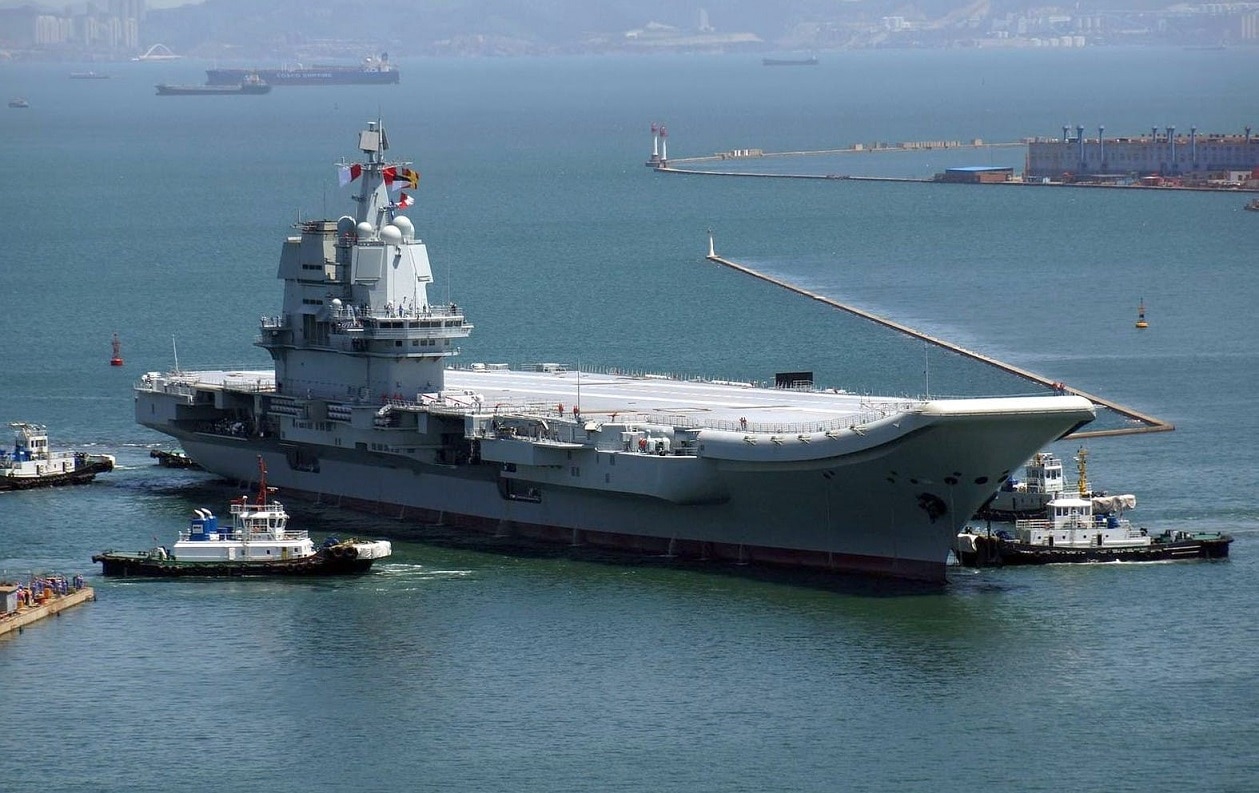
China Type 002 Aircraft Carrier. Image Credit: Creative Commons.
While there is not necessarily a direct correlation between China’s nuclear weaponry and maritime nuclear propulsion, insight into one could provide insight into the other.
More broadly, however, the allegations against General Zhang suggest that the United States intelligence community has gained access to the highest level of China’s military and political leadership after suffering significant setbacks in 2010-2012.
During that timeframe, the Chinese government imprisoned or killed 18 to 20 CIA informants in what was categorized as one of the worst American intelligence breaches in decades.
What, if any, information about China’s nuclear-powered aircraft carrier plans may have been spirited out of China to the American intelligence community may never come to light. But if plans about China’s nuclear arsenal were passed on, it is hardly a stretch to imagine a similar leak about Chinese warships currently in development.
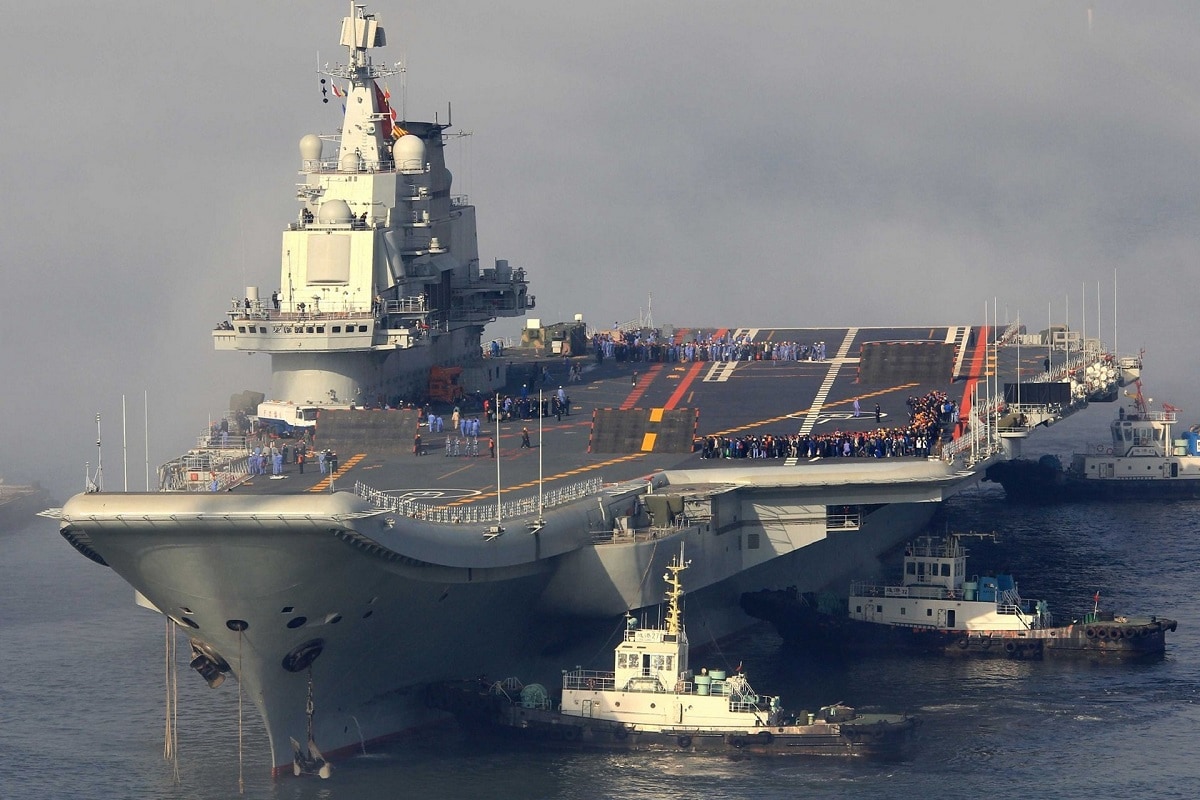
China’s Liaoning Aircraft Carrier. Image Credit: Creative Commons.
In any event, it will be some time yet before the PLAN can mount a credible challenge to the combined capabilities of the U.S. Navy and America’s allies in the region.
About the Author: Defense Expert Caleb Larson
Caleb Larson is an American multiformat journalist based in Berlin, Germany. His work covers the intersection of conflict and society, focusing on American foreign policy and European security. He has reported from Germany, Russia, and the United States. Most recently, he covered the war in Ukraine, reporting extensively on the war’s shifting battle lines from Donbas and writing on the war’s civilian and humanitarian toll. Previously, he worked as a Defense Reporter for POLITICO Europe. You can follow his latest work on X.