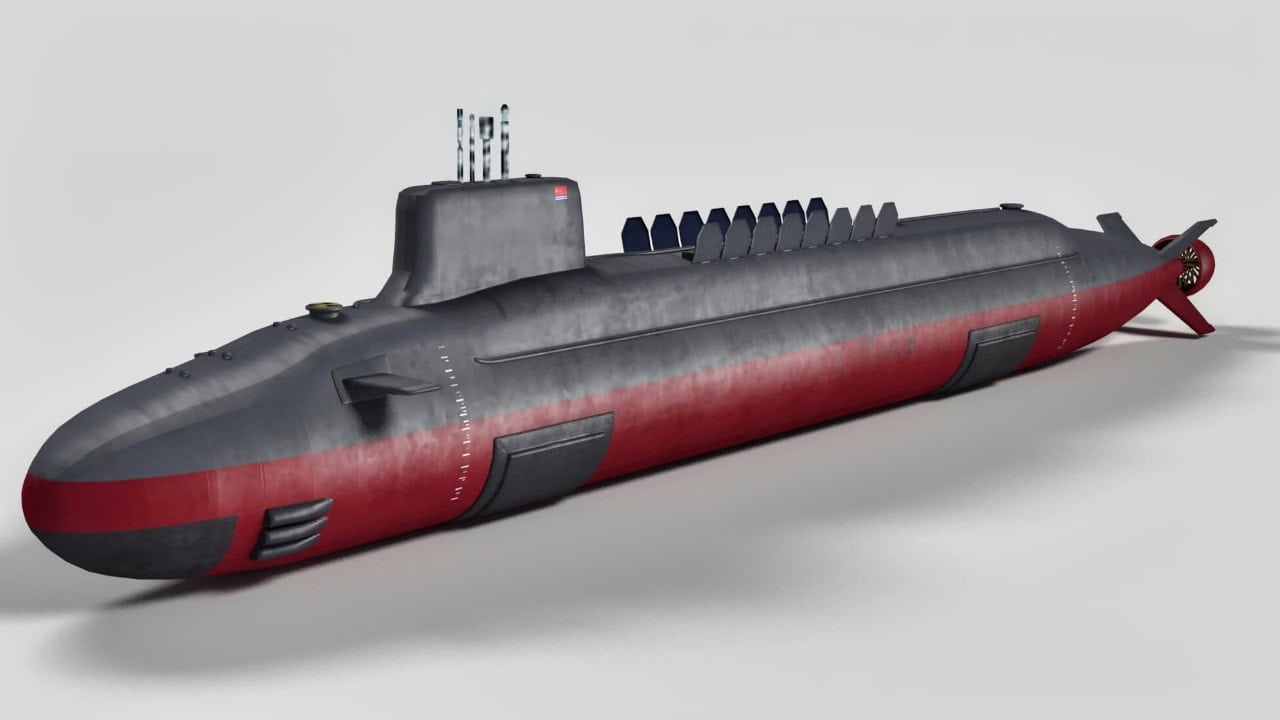
Summary and Key Points: China’s submarine force is expanding and modernizing, shifting from older designs toward domestically built boats across SSBN, SSN, diesel-electric, and AIP fleets. This presents a major challenge to the U.S. Navy’s dominance.
-Conventional submarines remain the most numerous, and AIP boats can be especially dangerous near and just beyond the first island chain, where endurance matters less, and quietness matters more.
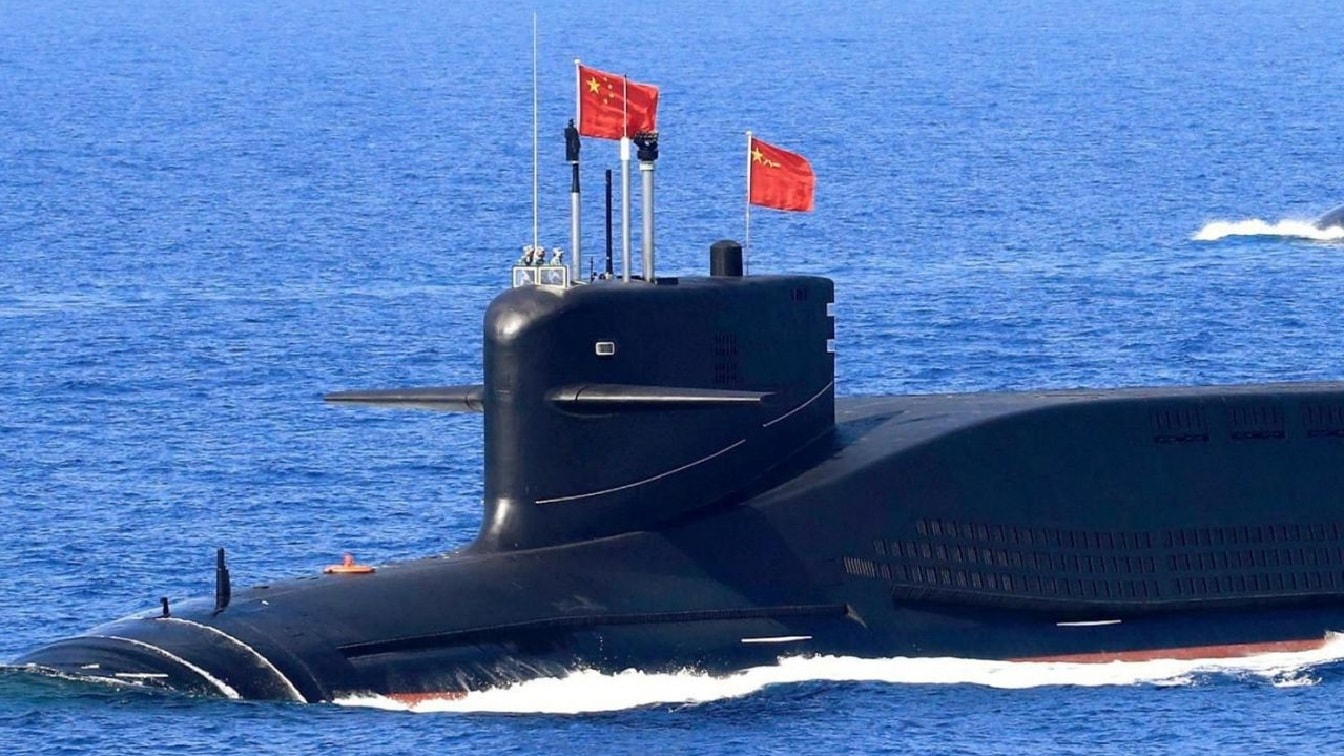
Chinese nuclear missile submarines. Image Credit: Creative Commons.
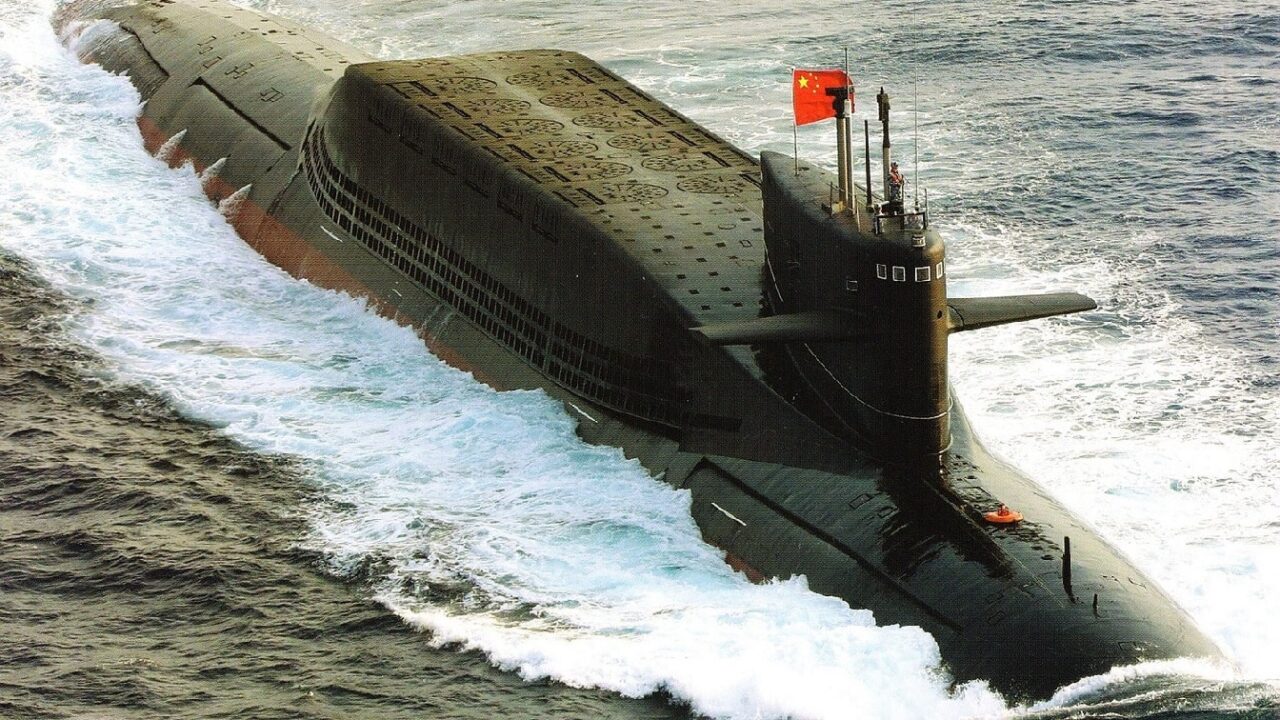
SSBN China Submarine. Image Credit: Creative Commons.
-Further out, geography and chokepoints, such as the Bashi Channel, constrain access, and newer Chinese nuclear submarines may still lag behind the top Western and Russian standards.
-Meanwhile, U.S. undersea primacy is threatened by industrial delays, with debate over AUKUS transfers and production capacity shaping the balance.
Can the U.S. Navy Compete With China’s Submarine Boom?
The United States has led the world in submarine technology since the end of World War II. During the Cold War, the Soviet Union was a close underwater rival to the United States, and Russia still builds some of the world’s most capable submarines. But the U.S. Navy today is increasingly wary of another rival: China and the People’s Liberation Army Navy (PLAN).
China’s submarine fleet is large and growing, The PLAN boasts a mix of ballistic missile submarines (SSBNs), nuclear-powered attack submarines (SSNs), diesel-electric subs, and conventionally powered air-independent propulsion (AIP) submarines. The PLAN’s submarine force used to be composed of legacy Soviet boats, but now, domestic Chinese designs are rapidly improving.
A report from the Royal United Service Institute notes that “across domains, Chinese weaponry is becoming more sophisticated which, at the very least, is closing the gap on Western systems. China’s defence policy is moving from a ‘model of quantity and scale to a model of quality and efficiency.’”

The Virginia-class submarine USS Vermont (SSN 792) makes her way up the Thames River and past Fort Trumble and the Coast Guard Cutter Borque Eagle as she returns home to Submarine Base New London on Thursday, December 24, 2020. The nineteenth and newest Virginia-class submarine she is the third U.S. Navy ship to be named for the Green Mountain State. (U.S. Navy Photo by John Narewski/Released)
But the publication notes, “unverified claims of technological advancement are regularly championed in PRC sympathetic publications. It is therefore a legitimate question to ask just how concerning these undersea advancements are for Western military planners and strategists.”
This leaves observers wondering whether PLAN submarines are sophisticated enough to challenge American submarine dominance—or, are their capability gains more modest, representing incremental improvements?
People’s Liberation Army Navy Submarines
As RUSI explains, while the PLAN operates a mix of conventional and nuclear-powered submarines, its conventionally powered submarines are much more numerous.
The PLAN’s AIP submarines are something neither the Soviet Navy nor today’s Russian Navy field — but the PLAN’s submarines are thought to lack some of the sophistication of their Western adversaries, particularly in the endurance of their AIP and diesel-electric submarines.
That may not be as much of a drawback as one would assume, however. The PLAN’s submarine fleet would be able to contest “areas at or just beyond the first island chain, where their relative lack of endurance is less of a handicap and they enjoy an advantage in quietness over SSNs.”
Further Afield: the Arctic
Despite its distance from the Arctic, China has called itself a near-Arctic power with an interest in securing a foothold in that region.
Robust, long-endurance submarines would help achieve that.
And given Beijing’s militarization of the South China Sea, the country’s interest is a cause for concern for the countries that border the Arctic. Late last year, a Chinese expedition to the Arctic raised alarm bells in Washington, which expressed concern that Chinese access to the Arctic, particularly by submarines, could bring Chinese nuclear weapons much closer to the United States.
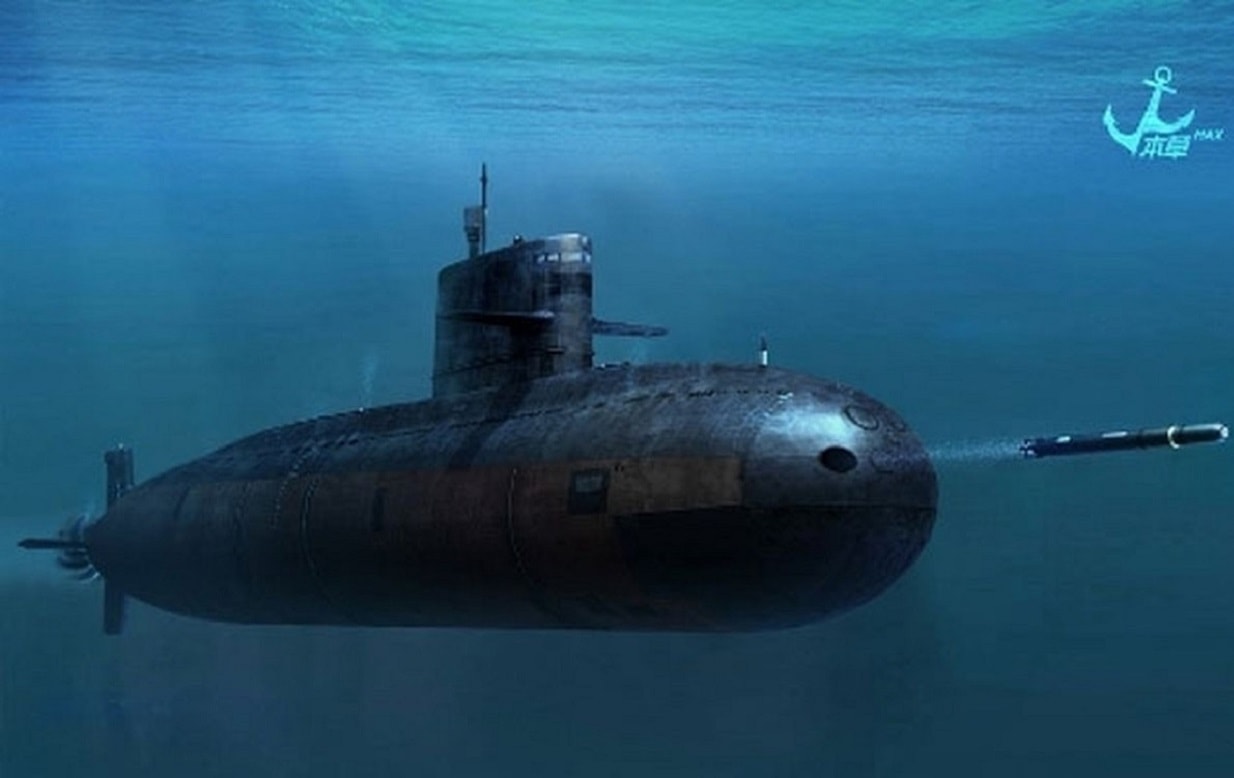
China Submarines. Image: Creative Commons.
“China doesn’t field the world’s largest fleet of oceanographic survey ships because they want to save the whales,” explained Hunter Stires, a naval strategist. “China aims to take the lead in marine and climate science because understanding the ocean and the climate is a critical enabler to success in naval operations, particularly in anti-submarine warfare.”
The Defense Production Bottleneck
A further erosion of the U.S. Navy’s primacy underneath the waves has less to do with China’s increasing capabilities, and more to do with the United States’ domestic shortcomings.
The Navy’s submarine fleet is the most technologically sophisticated in the world, but the defense industrial base—including the yards where the submarines are built—struggles to build new submarines on time and within budget. It has been a source of great consternation for one man in the Pentagon: Elbridge Colby, the Under Secretary of Defense for Policy.
Colby has questioned the wisdom of sending American-built submarines to Australia under the tripartite AUKUS agreement.
But Canberra has invested several billion dollars in U.S. submarine builders in order to help ensure these submarines are built and delivered.
Those submarines, the awkwardly named AUKUS-class, will be nuclear-powered, built in the United States, but operated by the Royal Australian Navy.
The Look Ahead
“Even newer Chinese SSNs may well fall short of the performance standards achieved by their quieter Russian and Western counterparts, something likely to be true of SSBNs as well,” RUSI concluded. “Furthermore, China’s constrained geography, which means that submarines can only leave the first island chain through chokepoints like the Bashi Channel (other routes of egress being too shallow) further limits Chinese submarine operations.”
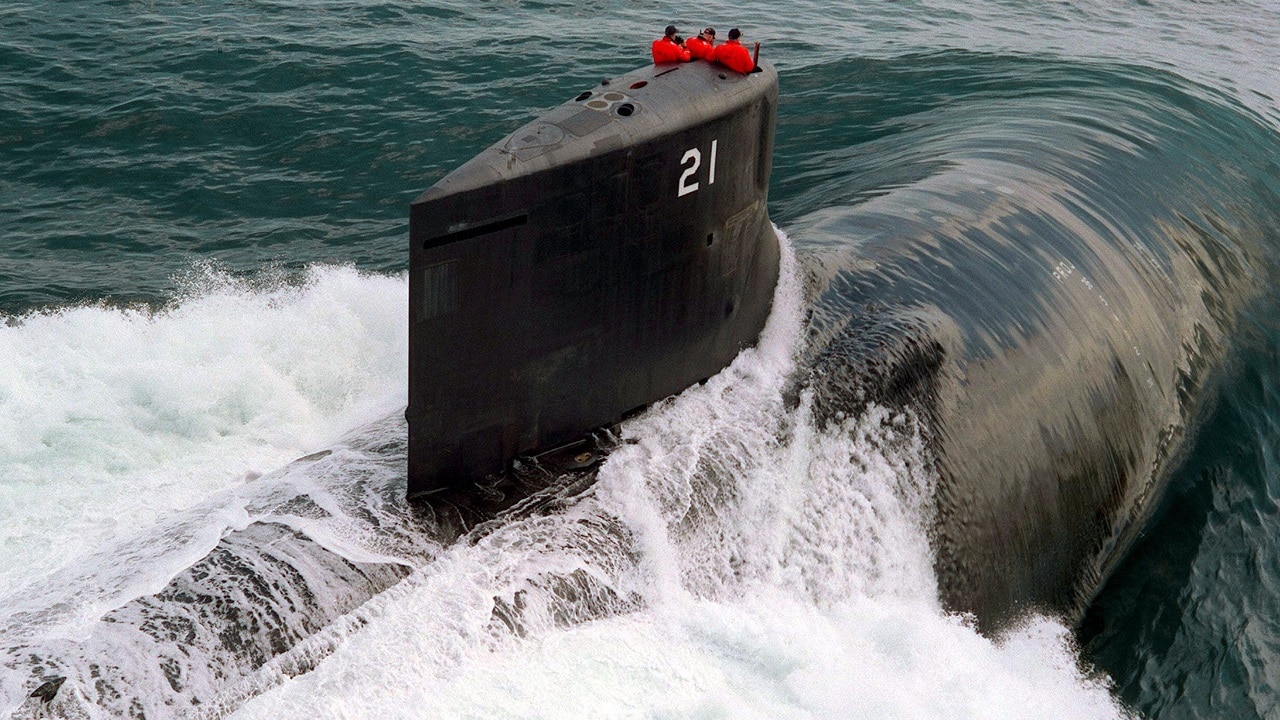
The U.S. Navy’s newest attack submarine, USS Seawolf (SSN 21), conducts Bravo sea trials off the coast of Connecticut in preparation for its scheduled commissioning in July 1997.
Within the first island chain and close to the Chinese mainland, the PLAN will enjoy a strongly reinforced underwater presence.
But farther from the mainland, China’s navy will struggle to control the battle space to the degree the U.S. Navy can. But “quantity has a quality of its own,” says a quote often attributed to Joseph Stalin.
Though perhaps apocryphal, it is worth noting the potential disparity in build capacity between the United States and China.
About the Author: Caleb Larson
Caleb Larson is an American multiformat journalist based in Berlin, Germany. His work covers the intersection of conflict and society, focusing on American foreign policy and European security. He has reported from Germany, Russia, and the United States. Most recently, he covered the war in Ukraine, reporting extensively on the war’s shifting battle lines from Donbas and writing on the war’s civilian and humanitarian toll. Previously, he worked as a Defense Reporter for POLITICO Europe. You can follow his latest work on X.