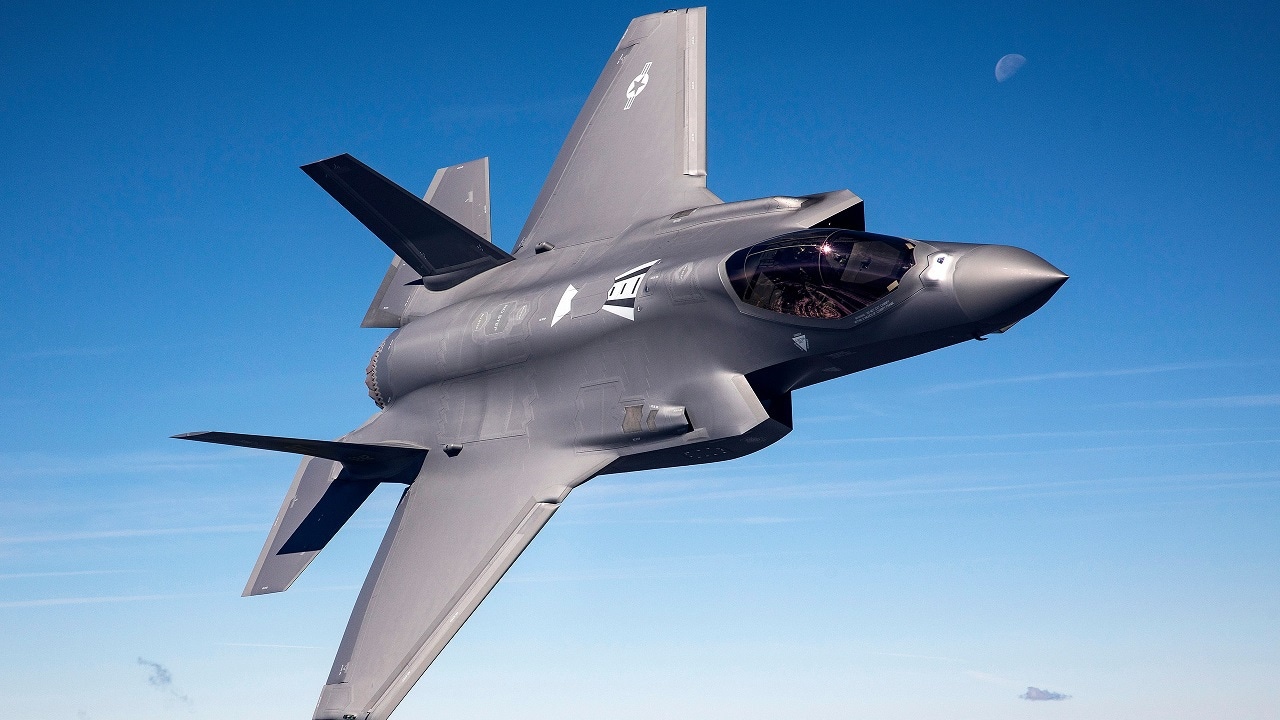
Summary and Key Points: Militaries are ramping up Arctic training as melting ice opens new waterways and boosts competition across the High North—an urgency sharpened by renewed attention on Greenland.
-NATO wargaming assessments suggest Arctic-ready capability is concentrated in Europe, with British and Scandinavian forces outperforming the United States in recent training.
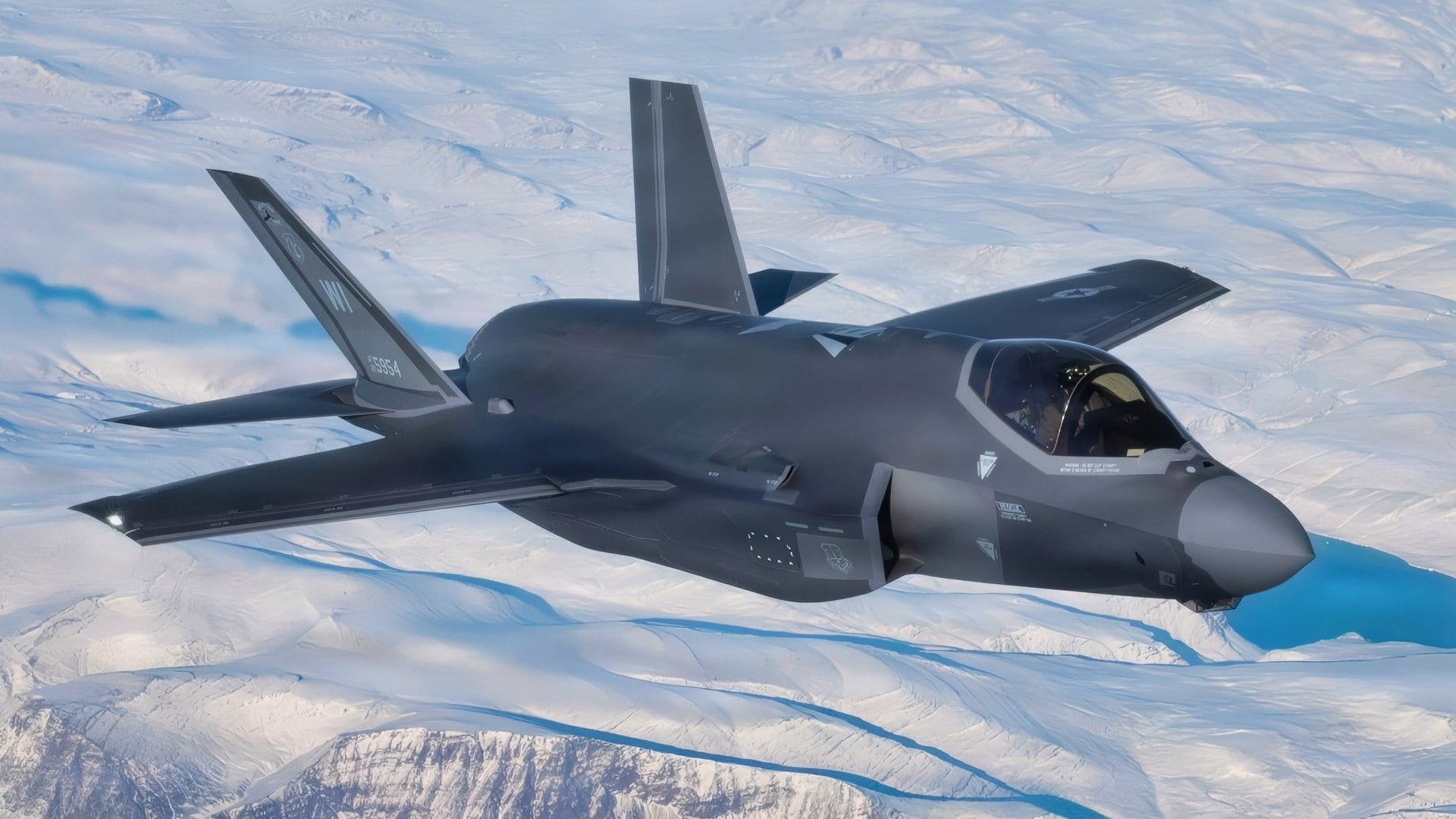
A North American Aerospace Defense Command F-35 Lightning II aircraft with the Wisconsin Air National Guard’s 115th Fighter Wing, in-flight over Greenland Oct. 9, 2025. Operating in the Arctic provides the flexibility and adaptability needed to overcome logistical hurdles in a dynamic and unforgiving environment. Greenland, as part of the Kingdom of Denmark has long played an important role in the defense of North America, which strengthens NORAD’s ability to protect the continent from today’s threats and emerging challenges from all approaches. (U.S. Air National Guard photo by 2d Lt Cameron Lewis)
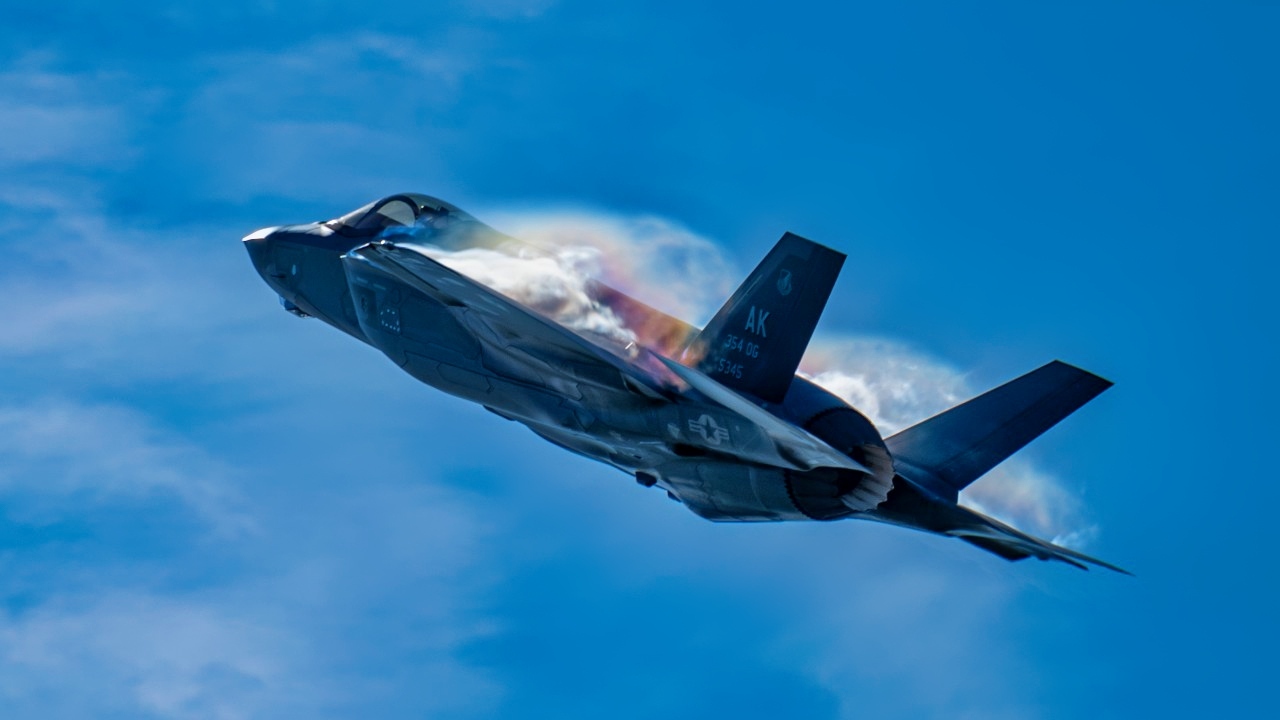
U.S. Air Force Maj. Kristin “BEO” Wolfe, F-35A Lightning II Demonstration Team pilot and commander, flies an aerial performance for the 2021 Arctic Lightning Air Show, July 30, 2021, Eielson Air Force Base, Alaska. The F-35 Demonstration Team utilized F-35s from the 354th Fighter Wing in order to showcase the combat capability of the Pacific Air Force’s newest F-35 units. (U.S. Air Force photo by Capt. Kip Sumner)
-The U.S. has more than 1,000 miles of Arctic coastline, yet operates only a limited number of icebreakers.
-Pentagon planning has tracked this shift for years, with the Navy accelerating timelines after warning that ice-free summers could arrive sooner than expected.
-Russia’s Northern Sea Route and its sizeable icebreaker fleet further widen the gap.
Arctic War Is Coming Faster Than Planned—And Europe Is Better Prepared Than America
While surely nobody wishes to open small-arms fire in the vicinity of polar bears, many militaries around the world are massively increasing training and preparations for warfare in the Arctic. This reality is likely to be further intensified by discussions concerning Greenland.
It comes as little surprise that NATO and some of its powerful Northern members, such as the UK, Norway, and Finland, have been increasing Arctic training and preparation exercises. A recent essay in Defence Blog cites a NATO wargaming evaluation based on multinational training that found that “Arctic-ready capabilities are concentrated in Europe rather than the United States.”
Sure enough, the US operates only a few icebreakers, and NATO’s evaluation of recent Arctic training showed that British and Scandinavian forces were far more competent and effective in Arctic wargames and training.
Is the US Ready for Arctic War?
In the last decade or so, the Pentagon has released several “Arctic” strategy papers and, roughly 10 years ago, the US Navy updated its 2009 Arctic Road Map to move up the timeframe with which the service will need to be prepared for an Arctic warfare contingency.
Before the Navy’s effort to update the Arctic Road Map, it had been thought that the US military would need to operate much more extensively in the Arctic by the 2030s. However, the pace at which new waterways are opening up due to warming waters and melting ice has prompted the US Navy to accelerate its plans to operate much more significantly in the region.
As water warms and ice melts, new waterways open in the Arctic, creating new strategic options for many countries that are increasing their interest in exerting influence from or within the Arctic.
The accelerated pace of Arctic Change was recognized by the Navy years ago, as the service’s 2009 Arctic Road Map said the Arctic may experience some “ice-free” summers in the next decade.
Pace of Melting Arctic Ice
“The Arctic is warming twice as fast as the rest of the globe,” the Navy document, dating back to 2009, states. “While significant uncertainty exists in projections for Arctic ice extent, the current scientific consensus indicates the Arctic may experience nearly ice-free summers sometime in the 2030s.”
Changes in the Arctic and the pace of melting ice have been on the Pentagon’s radar for many years.
Roughly 10 years ago, the Office of Naval Research deployed drones beneath the ice to assess the temperature and salt content of the water, to better predict the pace of ice melting and the opening of sea routes.
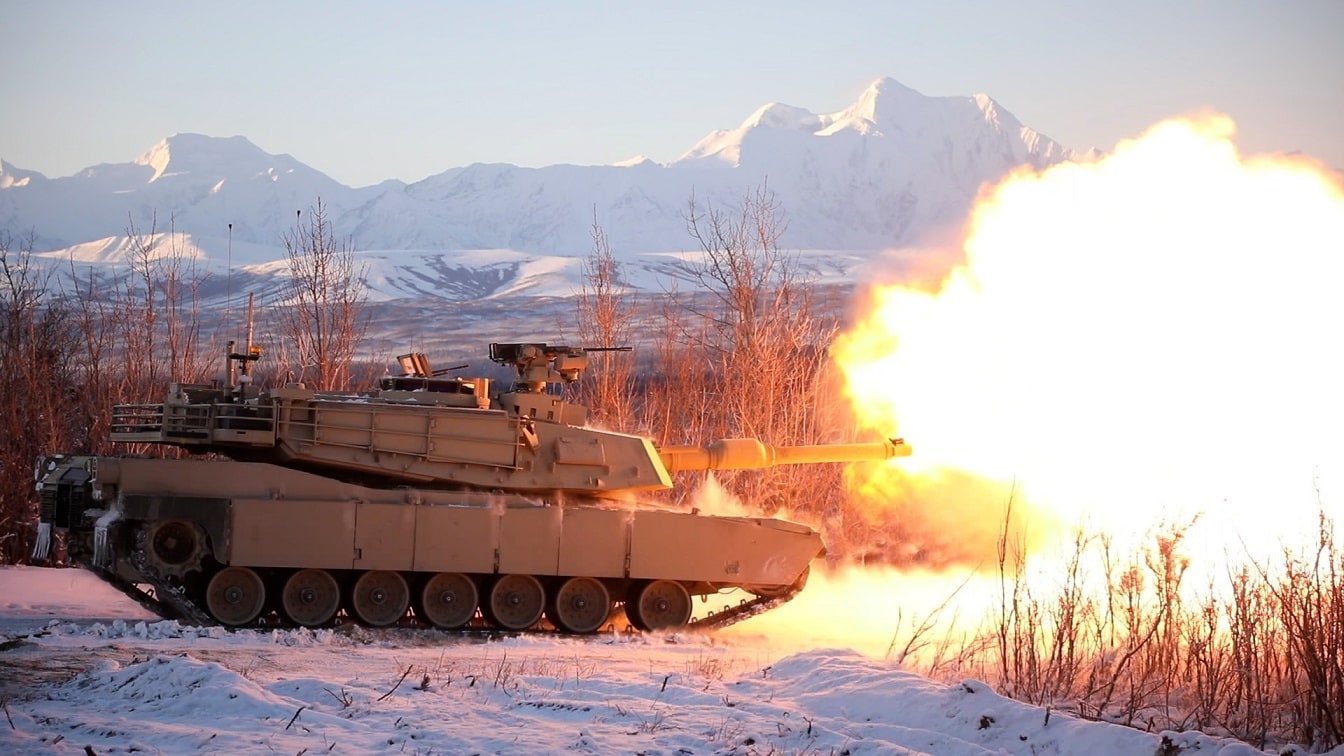
Since testing at U.S. Army Cold Regions Test Center, the Department of Defense’s lone extreme cold natural environment testing facility, began in January 2020, the M1A2 System Enhancement Package version 3 main battle tank was driven more than 2,000 miles in rugged conditions across three seasons of sub-Arctic weather, fired hundreds of rounds for accuracy in extreme cold, and underwent testing of its auxiliary power unit.
Though the platform was extensively tested at U.S. Army Yuma Test Center prior to being put through its paces in Alaska, the sub-zero temperatures brought forth glitches that would have been unimaginable in the desert.
In tandem with these efforts, the ONR has been working intensely in recent years to engineer and test weapons systems and technology specifically designed for Arctic warfare. These efforts have included testing of “warming” ship-hull technology and guns and sensors that operate effectively in icy Arctic conditions.
Russia’s Northern Sea Route
The US has more than 1,000 miles of Arctic coastline along its Alaskan border.
However, Russia’s Northern Sea Route, which parallels the Arctic and Russian border, is by far the largest existing shipping route in the region.
Russia operates more than 15 icebreakers and has been greatly expanding its Arctic presence in recent years, often to an extent that has raised alarms among members of Congress hoping to safeguard US interests in the region.
About the Author: Kris Osborn
Kris Osborn is the President of Warrior Maven – Center for Military Modernization. Osborn previously served at the Pentagon as a highly qualified expert in the Office of the Assistant Secretary of the Army—Acquisition, Logistics & Technology. Osborn has also worked as an anchor and on-air military specialist at national TV networks. He has appeared as a guest military expert on Fox News, MSNBC, The Military Channel, and The HistoryChannel. He also has a Master’s Degree in Comparative Literature from Columbia.