
How the Greenland Crisis Ends: Not with a Bang, but with a Whimper
The Greenland crisis is never going to end the way its loudest critics imagine. There will be no annexation, no purchase deal, no dramatic rupture between allies. All of those options are too crude an outcome for a dilemma sculpted by geography, might, and price.
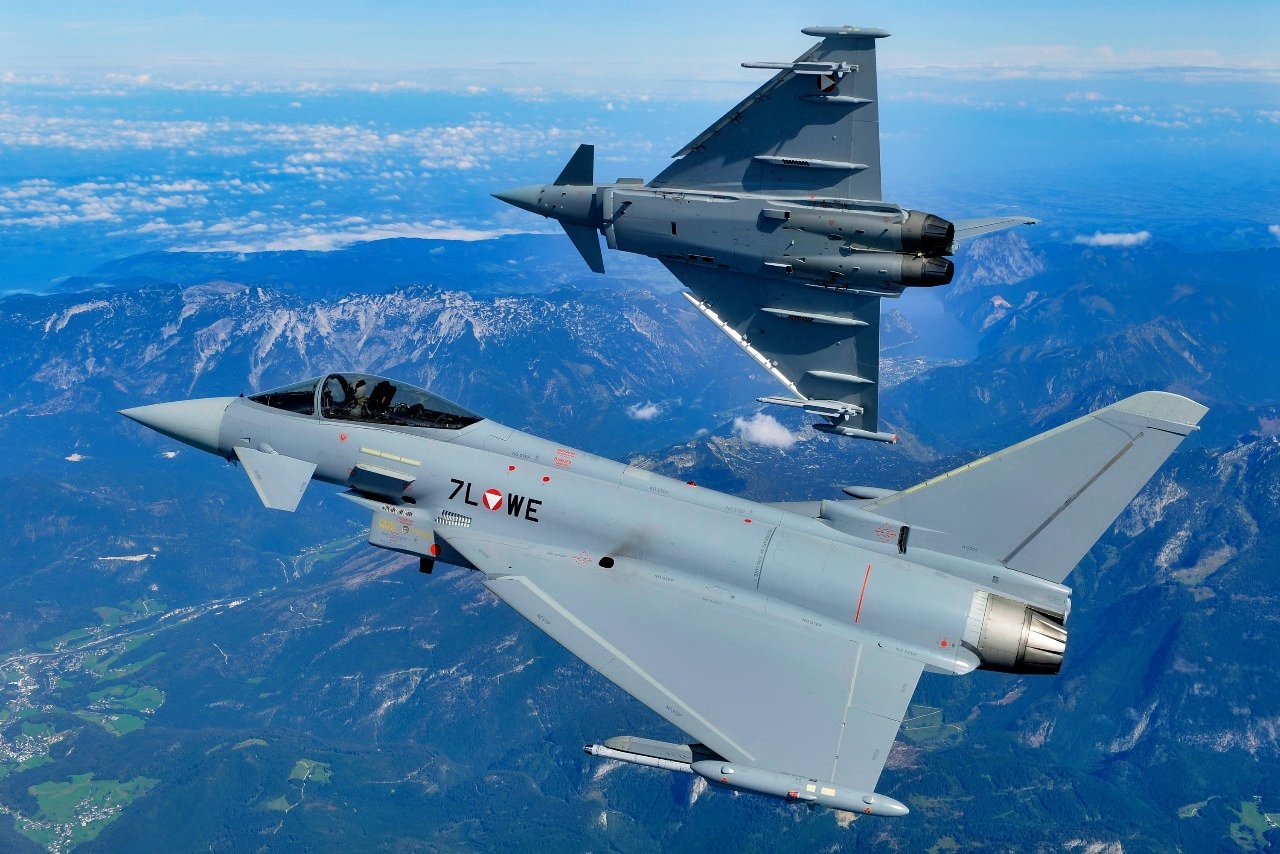
Eurofighter Typhoon. Image Credit: Creative Commons.

Eurofighter Typhoon. Image Credit: Creative Commons.
Instead, we will see the more predictable conclusion that intra-NATO Arctic geopolitics reliably brings: nothing official will change, American dominion will quietly expand, Europe will weather determination, and the alliance will hold without fracturing. The outcome will not be a disaster. It will be the result of the usual dynamics of inter-Alliance politics, albeit with a Trumpian spin.
Significant Island
Greenland matters because of where it sits and what it enables. It anchors the air and maritime approaches to North America at a time when long-range strike, missile warning, and domain awareness are again central to deterrence. It hosts infrastructure that feeds early warning and tracking across the North Atlantic and Arctic approaches.
None of this requires legal ownership. It requires assured access, operational integration, and the ability to deny rivals a meaningful presence, all of which are guaranteed to Washington by the 1951 Greenland Defense Agreement between the US and Denmark, which, it should be noted, unambiguously recognizes “the sovereignty of the Kingdom of Denmark” over Greenland. The current US military footprint can be expanded at any time without redrawing a single line on a map.
For that reason, the most dramatic endgames were always beside the point. Annexation would impose political and alliance costs without yielding additional security. A purchase would generate legal controversy while leaving underlying capabilities unchanged. Multilateralization would shift decision-making into process-heavy forums without improving control. Each of these paths introduces friction where none is required.
The United States does not need a formal title to secure Greenland’s strategic value. It needs sustained cooperation within an arrangement that already delivers access, integration, and denial.
That cooperation is moving from words to action. The practical arrangements now being discussed would give the United States favored access, enable logistical upgrades, and allow for far deeper involvement in planning and consultation.
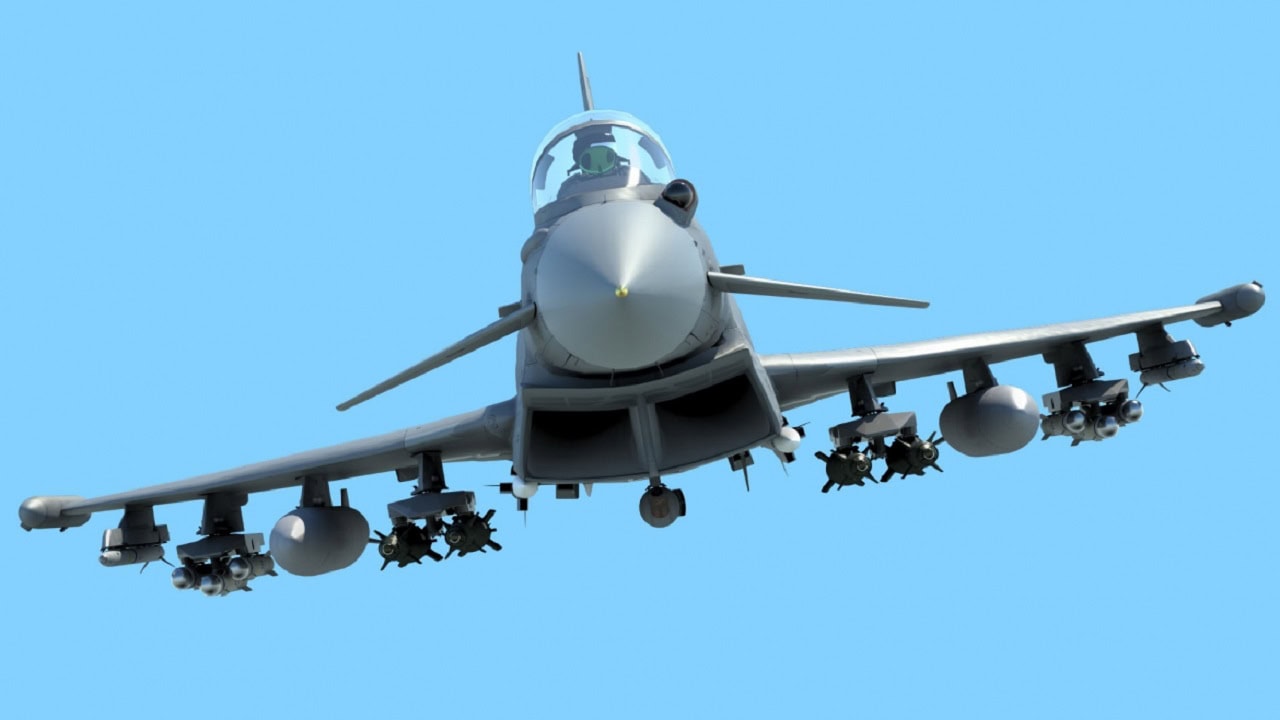
Typhoon fitted with the common launcher (computer generated image: for illustrative purposes only)
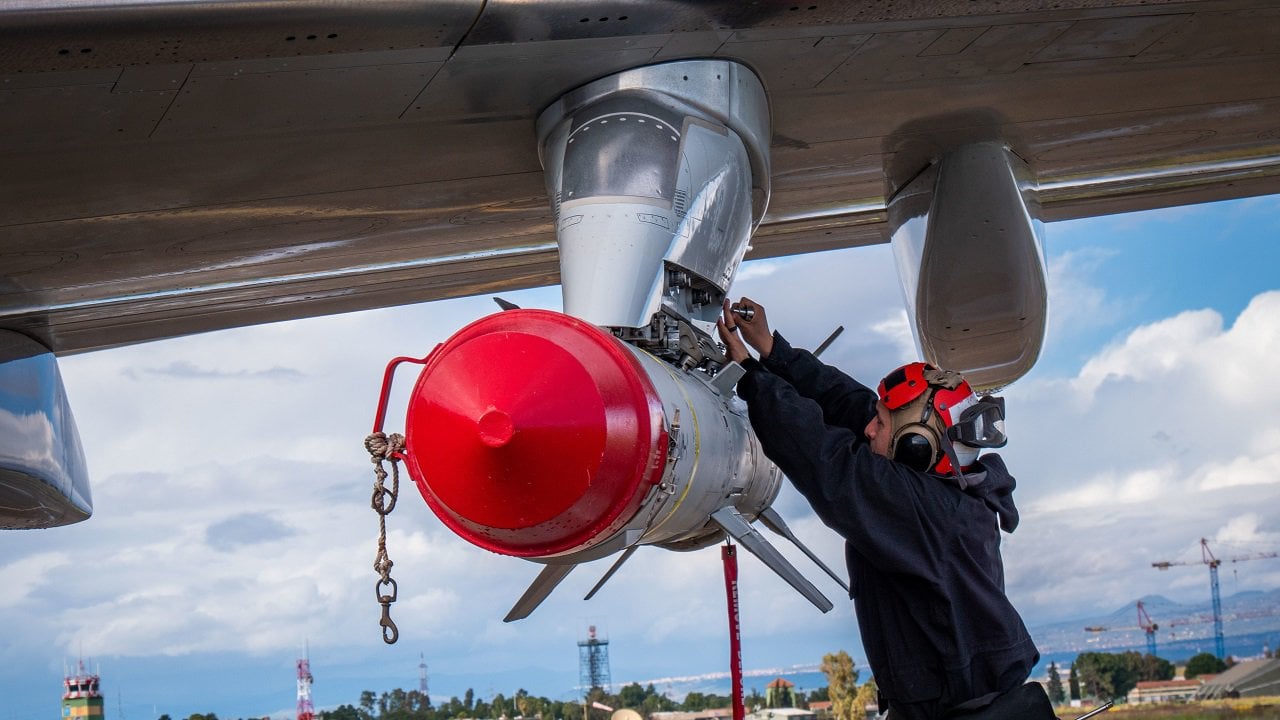
210123-N-VH871-1123 NAVAL AIR STATION SIGONELLA, Italy (Jan. 23, 2021) Aviation Ordnanceman 3rd Class Adam Vasquez, assigned to the “Grey Knights” of Patrol Squadron (VP) 46, installs an AGM-84D ‘Harpoon’ missile onto a P-8A Poseidon maritime patrol aircraft, Jan. 23, 2021. VP-46 is currently forward-deployed to the U.S. Sixth Fleet area of operations and is assigned to Commander, Task Force 67, responsible for tactical control of deployed maritime patrol and reconnaissance squadrons throughout Europe and Africa. U.S. Sixth Fleet, headquartered in Naples, Italy, conducts a full spectrum of joint and naval operations, often in concert with allied and interagency partners, in order to advance U.S. national security interests and stability in Europe and Africa. (U.S. Navy photo by Mass Communication Specialist 2nd Class Austin Ingram/ Released)
Denmark has said it would consider all these things—not because it is relinquishing sovereignty but because it recognizes the necessities of the situation. These moves would not announce a new basing agreement or alter current treaties. Instead, they would normalize American dominance within those treaties. Sovereignty will be preserved, but the distribution of power internal to that sovereignty will continue to shift toward those willing to do something with it. All of this will not represent a departure from the past, but rather a formalization of how Greenland has been secured for years.
What matters in practice is not the symbolism of these moves but their cumulative effect. As access becomes routine and coordination more tightly coupled to US planning assumptions, American primacy is exercised through everyday decisions rather than formal declarations. Denmark retains legal authority, but the scope for independent action narrows as operational realities assert themselves. Other European allies remain present and consulted, yet peripheral to the choices that determine how Greenland is actually secured. The legal framework remains intact, but the distribution of authority within it grows increasingly uneven—and increasingly difficult to disguise.
This is not a rupture with the past. It is the continuation of a long-standing arrangement that has shed some of its diplomatic softness. Greenland has long been treated as a North American security asset embedded within a European political framework. The crisis accelerates that logic while stripping away the pretense that authority and capability are evenly distributed.
European involvement has grown more visible as a result, not less. Rotational deployments increase. Statements of solidarity multiply. Consultations expand across allied forums. These moves serve a political function that should not be dismissed. They demonstrate relevance. They reassure domestic audiences. They signal that Europe is present in a theater often portrayed as distant. What they do not do is alter the underlying security architecture.
That gap between visibility and leverage is not accidental. It allows European governments to show resolve without assuming full responsibility for a demanding and expensive theater. It allows Denmark to affirm sovereignty without bearing the burden alone. It allows Washington to secure essential interests without forcing a confrontation that would add cost without delivering additional control. Performance fills the space where power would otherwise demand hard choices. This is where the quiet ending begins to reveal its price.
The alliance remains intact, but the expectations that govern how power is exercised within it quietly adjust. When operational primacy can be exercised on allied territory without sustained resistance, expectations adjust even if formal commitments do not. The treaty remains intact, but its operational significance grows more contingent, defined less by common control than by tolerated supremacy. That change need not be dramatic; it will, however, be noted by allies who adjust expectations of parity within the partnership, and by adversaries who observe how stress is dissipated rather than resisted.
Deterrence also absorbs a quiet adjustment. Adversaries do not conclude that alliances collapse under strain. They conclude that internal hierarchies bend when geography raises the stakes. That lesson matters most in gray zones where signals are ambiguous, and escalation is calibrated rather than explosive.
Inequality inside the alliance becomes easier to normalize. Geography elevates some members while others adapt to supporting roles shaped by capability and proximity. That reality has always existed, but Greenland brings it closer to the surface. Once surfaced, it becomes part of how allies calculate risk, responsibility, and leverage. Reversing that perception is far harder than creating it.
None of this produces immediate instability. That is precisely the point. The costs are deferred rather than avoided, accumulating quietly rather than announcing themselves through crisis.
Institutions adjust accordingly. Political frameworks remain present, but operational gravity shifts toward arrangements designed for continental defense and sustained presence. This is not institutional failure. It is functional sorting driven by geography and capability.
By stepping back from roles they cannot fulfill, institutions preserve relevance where they still can. The implication is uncomfortable but clear. Survival comes through specialization rather than expansion.
Despite these frictions, the settlement holds because it fits the limits within which each party is operating. It keeps escalation risk low and avoids the need for legal closure. Alliance cohesion is preserved, but only to the extent required. Denmark and its European NATO allies do not have to bear a burden they cannot realistically bear. America gains access and control without precipitating a crisis that might distract attention and resources from higher-priority issues. Stability is preserved—not through consensus—but through an arrangement that none of the parties has an interest in destabilizing.
What Happens Now?
Greenland’s crisis does not end with a settlement or a statement. It settles into routine. The map remains unchanged, and the alliance holds, but the terms under which both operate are subtly altered. What matters most is no longer formal ownership or declared unity, but who can act and who must accommodate.
Over time, that reality becomes harder to ignore. In the Arctic, this is how serious questions are resolved when escalation is too costly and formal change would add more risk than clarity.
Those waiting for a dramatic ending will be disappointed. For this is the way these intra-Alliance spats always end: not with a bang, but with a whimper.
About the Author: Dr. Andrew Latham
Andrew Latham is a non-resident fellow at Defense Priorities and a professor of international relations and political theory at Macalester College in Saint Paul, MN. You can follow him on X: @aakatham.