
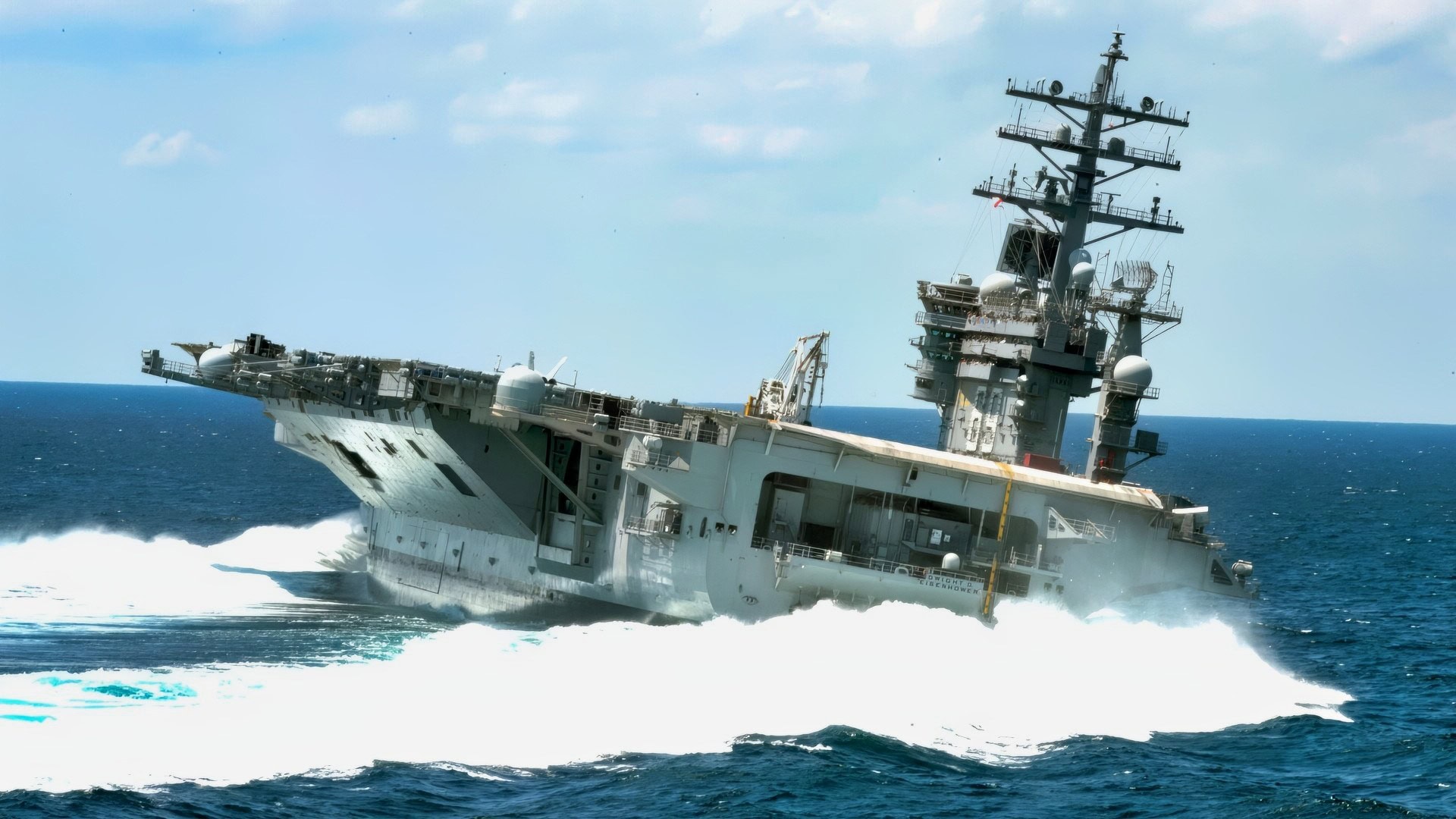
Key Points and Summary – China’s aircraft carrier force is expanding fast, but its flattops may be more vulnerable than Beijing admits—especially if they operate beyond the umbrella of shore-based defenses. The U.S. military does have attack options if a war were ever occur.
2 Words: Saturation Strikes – The key U.S. approach is a layered “find, fix, finish” kill chain that combines persistent tracking with saturation strikes from multiple domains.
-The concept: submarines threaten with Mk 48 torpedoes and maritime-strike cruise missiles, while aircraft and surface ships add stealthy long-range anti-ship missiles to overwhelm defensive screens.
-The piece argues China still lacks the operational experience, protective screening maturity, and organic early warning needed for sustained blue-water carrier ops.
How Can The US Sink China’s Aircraft Carriers?
China is building naval vessels at an incredible rate and is trying to build a fleet of six aircraft carriers.
They currently have three carriers, but two are older models. One was the former Soviet-built and retrofitted Liaoning, which carries 24 fighters, and the indigenously built Shandong, another ski-jump-type carrier that is slightly larger and carries eight additional aircraft.
Their third carrier, Fujian, operates a Ford-class-like electromagnetic catapult.
The Fujian carries about 40 fighters but is conventionally powered, so its range without refueling is more limited. The PLAN’s fleet of oilers is limited and would constitute vulnerable targets for US forces.
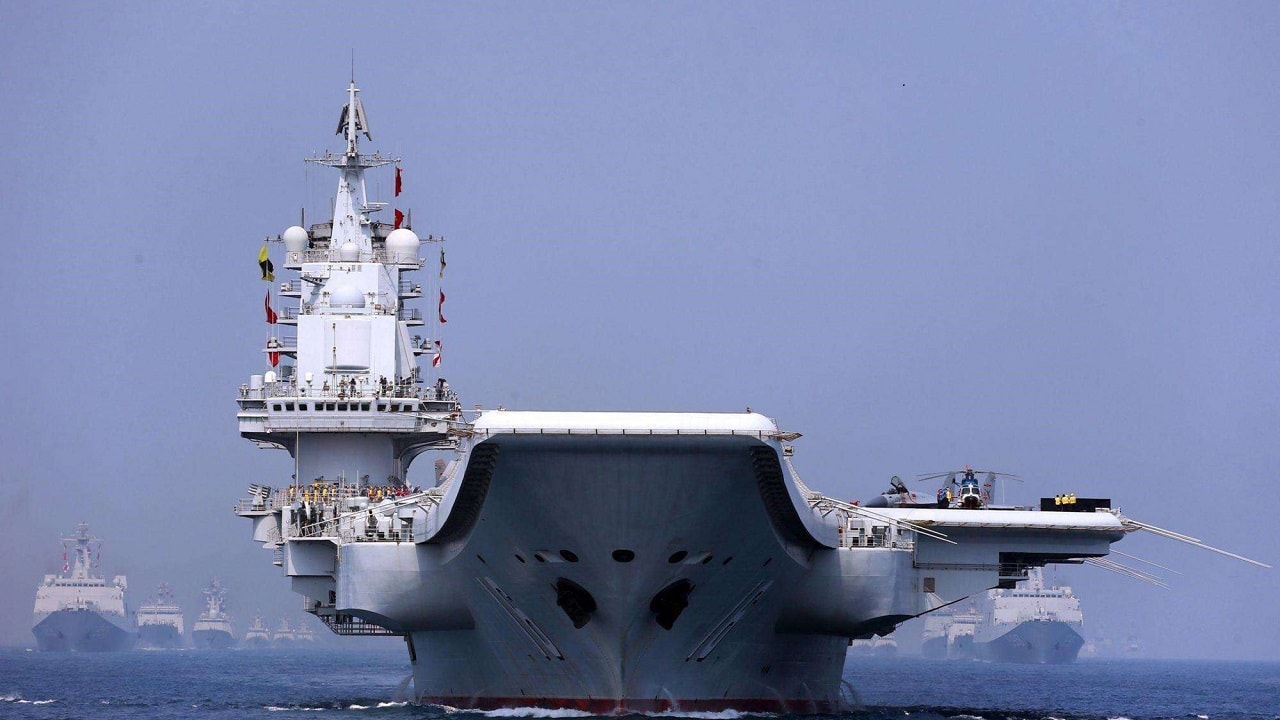
A Chinese Aircraft Carrier on the high-seas. Image Credit: Chinese Internet.
They are reportedly building a massive supercarrier similar to the US Ford-class.
China recently conducted a joint exercise involving all three carrier strike groups for the first time this year. This prompted many naval analysts (primarily from China) to claim that Chinese carrier strike groups would soon be a match for U.S. carriers.
But how effective would Chinese carrier strike groups be in missile defense?
Chinese Carriers Are Vulnerable Against Missiles
While much has been written about how vulnerable US carriers are to Chinese missiles, their carrier force is equally, if not more vulnerable to missile attacks.
US War Secretary Pete Hegseth set tongues wagging last year when he made the statement that Chinese hypersonic missiles could sink all US aircraft carriers within minutes of a potential conflict.
“So, if our whole power projection platform is aircraft carriers, and the ability to project power that way strategically around the globe. And, yeah, we have a nuclear triad and all that, but [carriers are] a big part of it. And if 15 hypersonic missiles can take out our 10 aircraft carriers in the first 20 minutes of a conflict, what does that look like?” he said in an earlier interview.
The United States could potentially sink a Chinese aircraft carrier through a layered application of various advanced military assets, including submarines, long-range anti-ship missiles, and fighter jets using a strategy known as “Find, Fix, Finish.”
The US Navy’s Find, Fix, Finish Program
The US Navy’s “Find, Fix, Finish” (F3) model, often expanded to F3EAD (Exploit, Analyze, Disseminate), is an intelligence-driven, rapid-targeting cycle designed to locate, track, and neutralize time-sensitive targets. It integrates sensors, unmanned systems, and special operations to disrupt enemy networks by quickly identifying threats and engaging them with precision.
Find involves identifying potential targets through intelligence, surveillance, and reconnaissance (ISR), often using Joint Intelligence Preparation of the Operating Environment.
Fix determines the target’s precise location with sufficient detail to enable engagement.
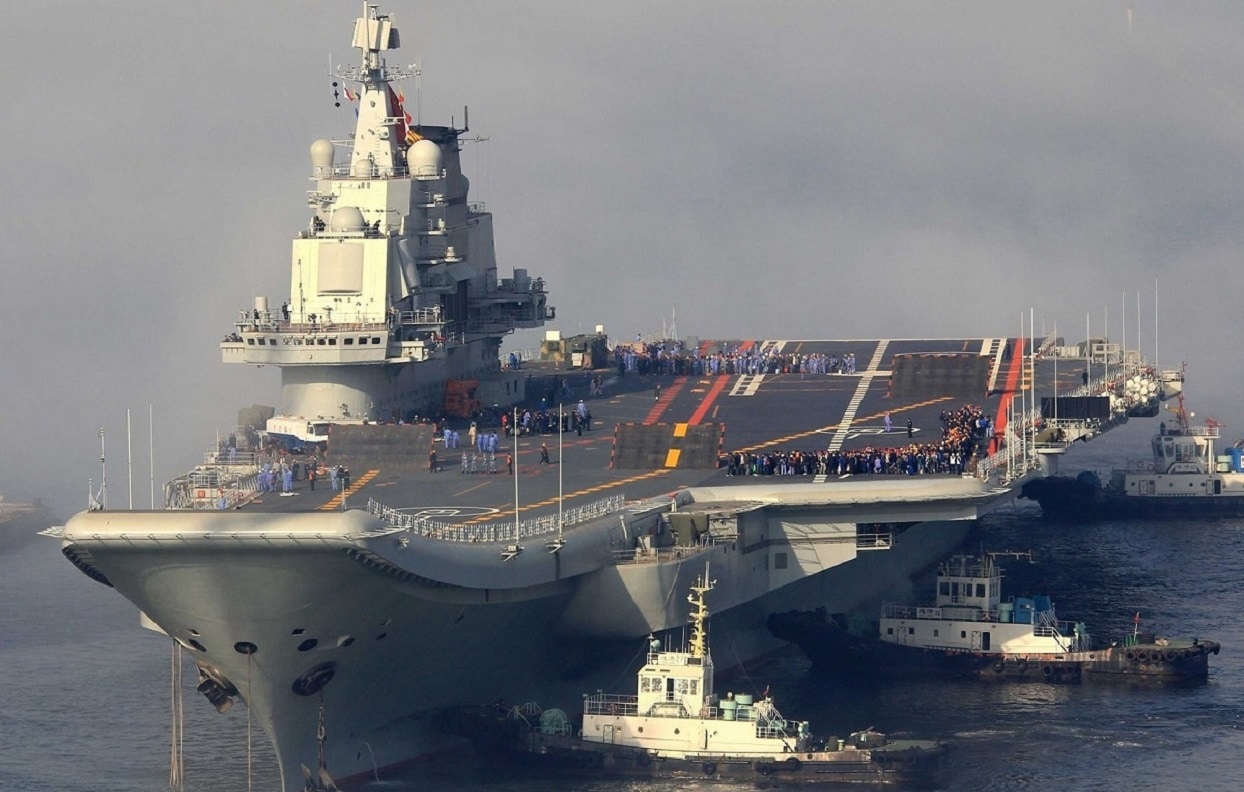
Chinese Aircraft Carrier. Image: Chinese Internet.
Finish, executes the final engagement (strike, capture, or destruction) with authorized forces.
F3EAD Evolution: Often extended to include “Exploit” (gather intelligence from the target), “Analyze” (process data), and “Disseminate” (share information), transforming the kill chain into a continuous feedback loop.
China’s Carrier Strike Groups Lack Operational Experience
The Chinese aircraft carriers still have a long way to go to match the US Navy, primarily due to a significant gap in operational experience, crew training, and military doctrine.
While China is rapidly advancing technologically, it faces significant challenges in areas such as sustained 24-hour air operations, antisubmarine warfare, and logistical support at sea, which can only be developed over time and with experience.
The PLAN lacks the decades of real-world experience the US has in conducting complex, sustained carrier operations and projecting power.
Aircraft and systems integration are lagging behind the US. While China’s new carriers can launch jets with electromagnetic catapults, the US has more advanced landing software and battle-tested systems. For example, China still lacks a carrier-based early-warning aircraft and relies on land-based aircraft for certain functions.
Protective Screening And Missile Defense Needs Improvement
China loves to tout its “carrier killer” missiles, which it can muster against US aircraft carriers, but what they and most analysts fail to mention is that China’s carriers are more vulnerable to US anti-ship missiles than American carriers are.
Some experts say China’s carriers would be vulnerable to missile and submarine attacks, noting that the People’s Liberation Army Navy has not perfected protective screening operations, particularly antisubmarine warfare.
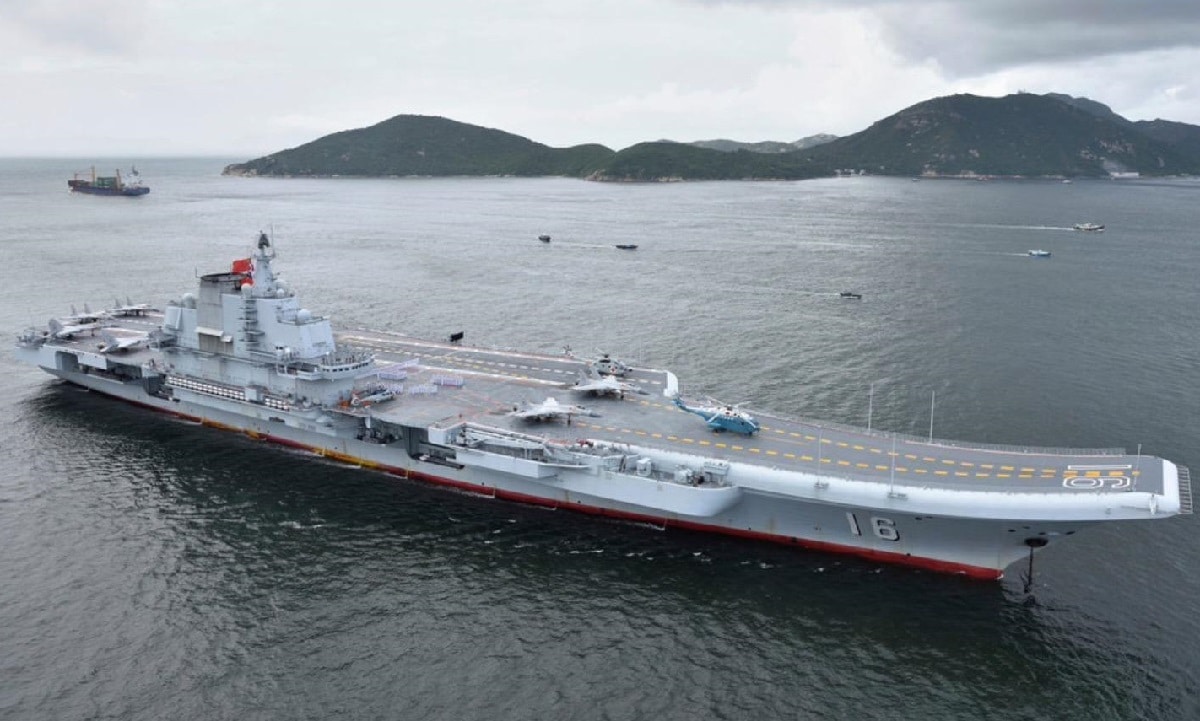
Chinese Aircraft Carrier. Image: Creative Commons.
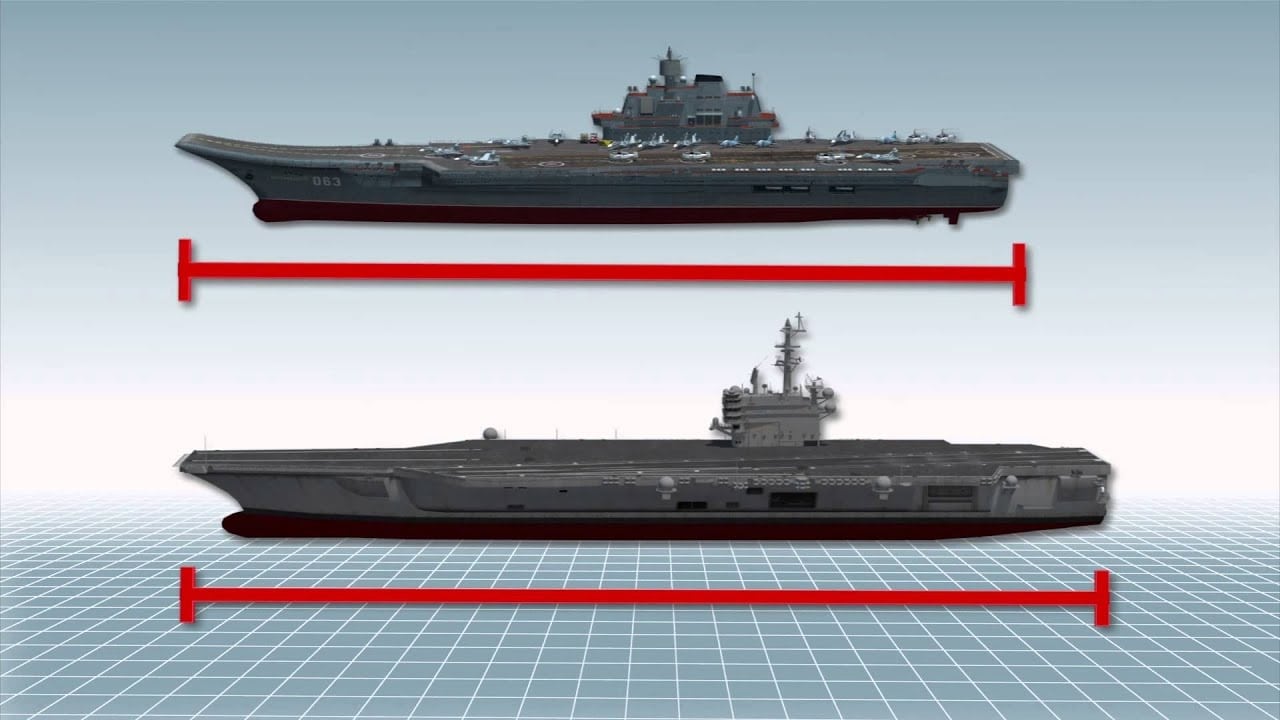
Comparison of U.S. and Chinese Aircraft Carrier sizes. Image Credit: Screenshot.
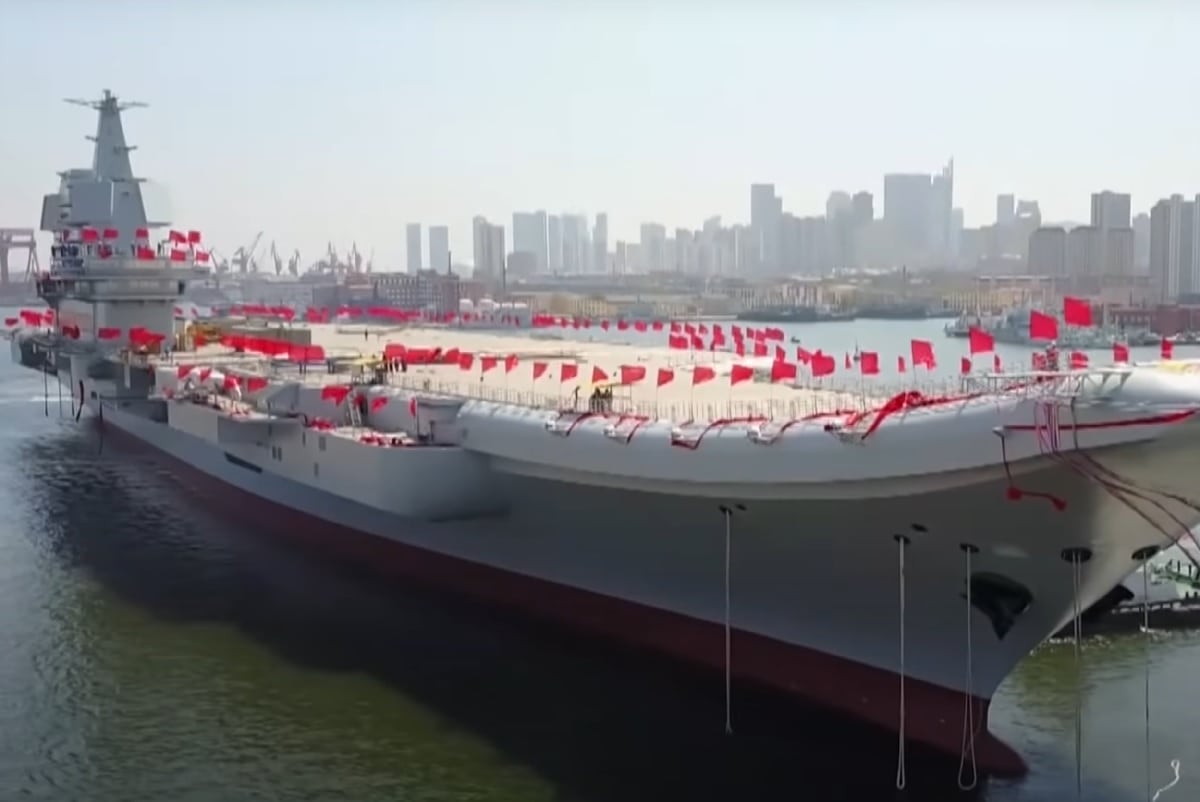
China Aircraft Carrier. Image: CCTV screenshot.
“Unlike other parts of their military modernization, there is something politically theatrical about their carrier deployments so far,” said Trevor Hollingsbee, a former British naval intelligence analyst.
“Carrier operations are a very complicated game, and China’s got to figure this out all by itself. It still has a long, long way to go.”
Chinese carriers operate without early-warning aircraft, relying on land-based aircraft. This is not conducive to operating anywhere but near their shores. A new aircraft, the KJ-600, designed to perform a role similar to that of the E-2C/D Hawkeye launched from US carriers, is still in testing, according to the Pentagon’s latest annual report on China’s military.
China’s Carriers Are Meant To Operate Close To Its Shores
China’s aircraft carriers have limited anti-missile defenses because they are designed to operate under the protection of land-based missile networks rather than to possess comprehensive onboard defenses like those of US carriers.
This strategy relies on land-based missile systems to create an anti-access bubble, in stark contrast to US carriers, which are designed to be self-sufficient and to operate as “roaming nerve centers” for a wider network.
As a result, China’s naval strategy emphasizes asymmetric warfare, employing long-range anti-ship missiles to threaten enemy carriers at range. In contrast, their own carriers remain relatively vulnerable to direct attack.
This means that China is far from having carrier strike groups that project power beyond its immediate coastal waters. They are still far from that.
US Weapons That Could Threaten China’s Carriers
US Virginia-class attack submarines are considered a prime asset for this task due to their stealth and powerful weaponry. They can use advanced torpedoes, such as the Mk 48, which are designed to detonate under a ship’s keel for maximum damage.
They can also launch Maritime Strike Tomahawk cruise missiles from their vertical launch systems. The Tomahawk, fired from submarines’ and warships’ Vertical Launch Systems, has updated guidance technology that adjusts course in flight to hit moving targets.
Today’s warship-launched Tomahawk can use its own surveillance to loiter over a target and use a two-way datalink to change course in flight as needed. This functionality gives the US Navy added capability to target and attack Chinese carriers.
The US Navy and Air Force use the Long Range Anti-Ship Missile (LRASM), a stealthy, sea-skimming cruise missile designed for autonomous targeting in contested environments.
LRASMs can be launched from various platforms, including carrier-based F-35C and F/A-18 fighter jets, as well as B-1B and B-2 bombers. The US plan isn’t to launch one attack using one method of attacking an enemy ship.
The plan would be threefold: launching Mark 48 torpedoes and Tomahawk cruise missiles, as well as LRASMs from ships, submarines, and aircraft, overwhelming a deficient defense system. The Virginia-class submarines are the X-Factor for the United States in a potential shooting war with China.
The Chinese are keen to tout the lethality of their navy (PLAN) and its missiles. However, their naval missile defenses still depend on shore-based missiles. That, along with the US’s capabilities, will ensure deterrence is maintained.
About the Author: Steve Balestrieri
Steve Balestrieri is a National Security Columnist. He served as a US Army Special Forces NCO and Warrant Officer. In addition to writing on defense, he covers the NFL for PatsFans.com and is a member of the Pro Football Writers of America (PFWA). His work was regularly featured in many military publications.
More From 19FortyFive
USS Nimitz Could Become a Drone Supercarrier