
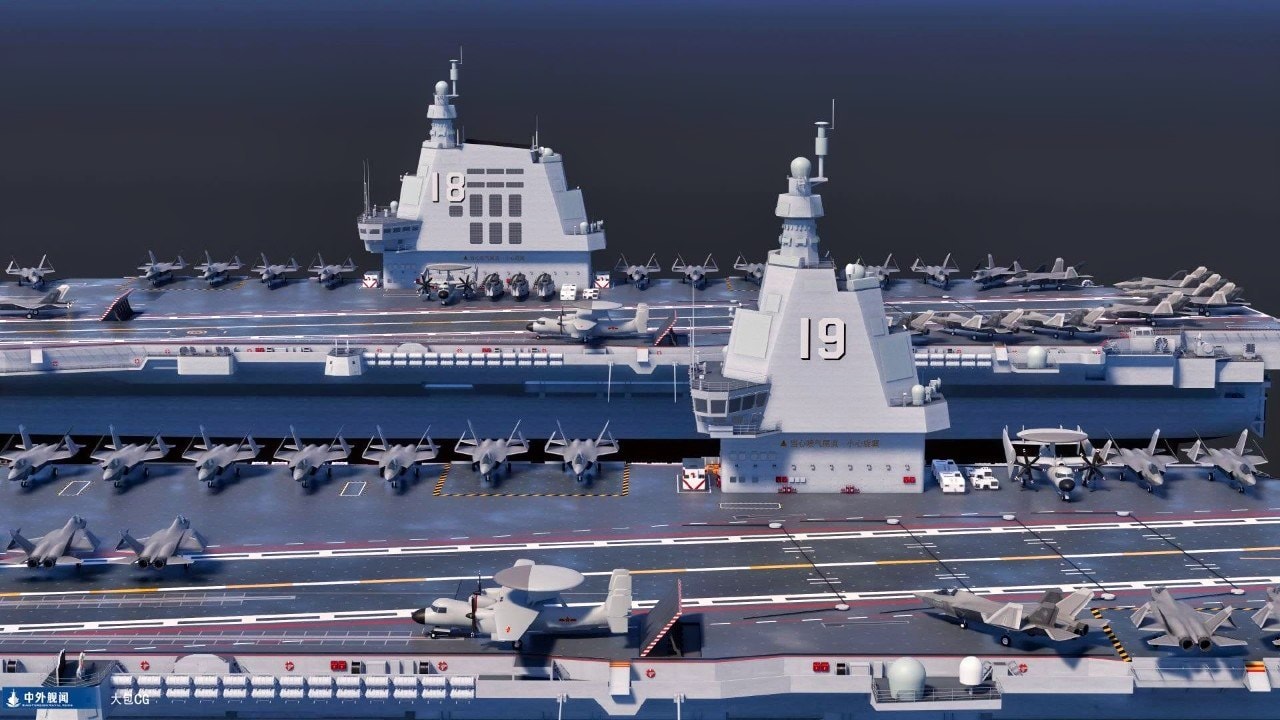
Summary and Key Points: The Pentagon’s 2025 assessment suggests China could field as many as nine aircraft carriers by 2035, signaling Beijing’s ambition to shift from coastal defense to sustained blue-water power projection.
-China’s current carrier force—Liaoning and Shandong (ski-jump STOBAR) and Fujian (CATOBAR with electromagnetic catapults)—reflects an effort to build a more complex air wing that could include J-35 stealth fighters, KJ-600 airborne early warning, and unmanned systems.
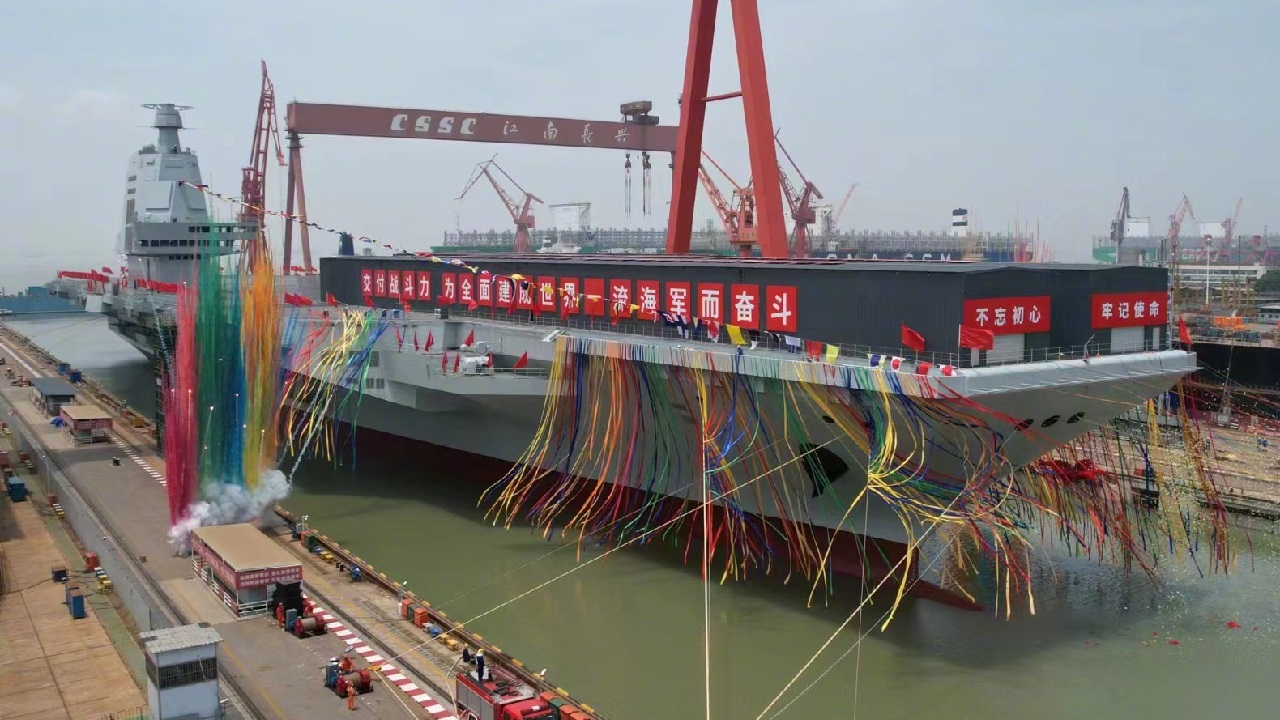
Fujian, China’s New Aircraft Carrier. Image Credit: Chinese Internet.
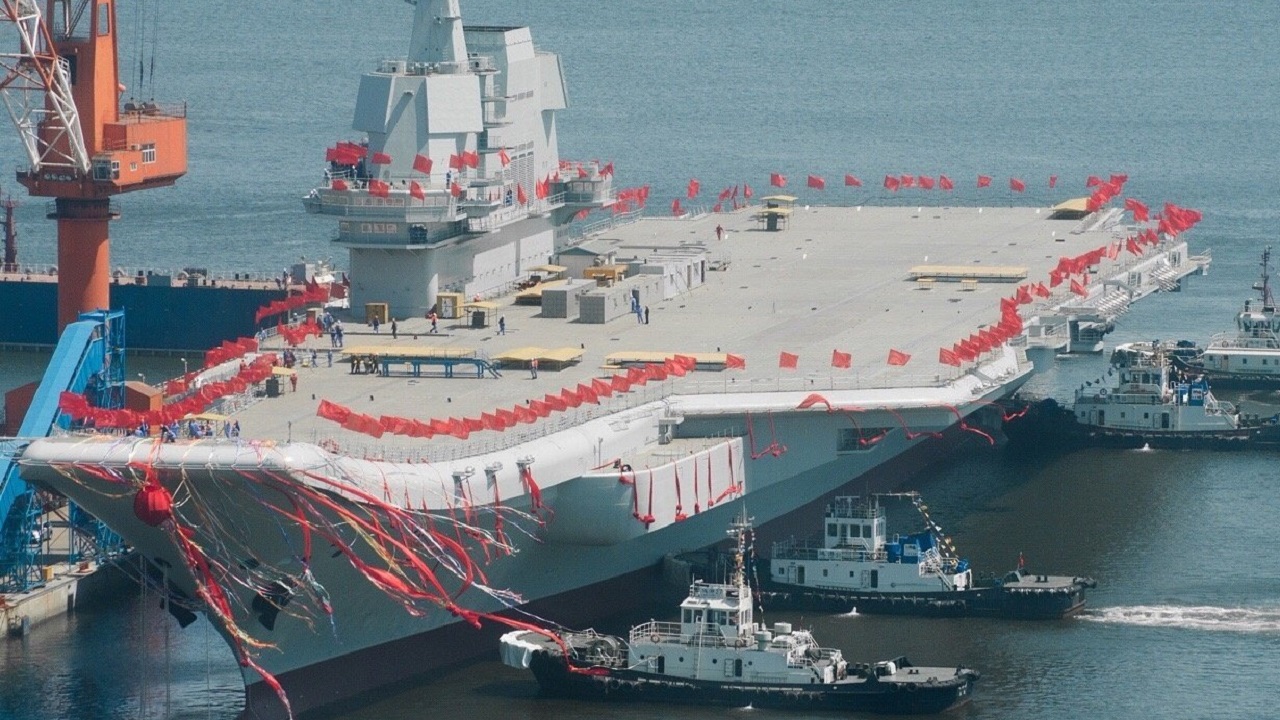
Fujian, China’s new aircraft carrier. Image Credit: Chinese Internet.
-If China adds more carriers, potentially including nuclear-powered designs like Type 004, it could sustain pressure across multiple theaters and complicate U.S. planning amid American maintenance and deployment strain.
China Is Preparing A Formidable Aircraft Carrier Force: Here’s What That Means
China may operate as many as nine aircraft carriers by 2035, according to the U.S. Department of Defense’s 2025 Annual Report to Congress on Military and Security Developments Involving the People’s Republic of China – a projection that demonstrated the speed and ambition of Beijing’s ongoing naval expansion.
According to the Pentagon, the People’s Liberation Army Navy (PLAN) intends to add six additional aircraft carriers to the three it already operates or is bringing into service. If realized, that expansion would represent one of the most dramatic shifts in global naval power since the Cold War, complicating U.S. operational planning across the Western Pacific while forcing Washington and its allies to adapt to a more crowded and contested maritime environment.
To be clear, the development does not mean China will achieve parity with the United States in terms of maritime power – but it does reflect the narrowing capability gap between the two countries.
It’s also a strategic bet by Beijing that aircraft carriers, despite the growing threats they face from drones and unmanned aerial craft, remain essential tools for power projection and establishing and maintaining regional influence – not to mention, deterrence.
Going Beyond Coastal Defense
For most of the Cold War, China’s navy was structured primarily for coastal defense, focusing on protecting the mainland and deterring amphibious landings rather than attempting to project power far beyond its home waters.
By the 1990s, that posture began to change somewhat, with U.S. carrier operations during the Taiwan Strait Crisis proving the strategic leverage provided by large-deck flattops (carriers).
Over the last two decades, Beijing has invested heavily in transforming the PLAN into a true blue-water navy, meaning it is capable of sustained operations beyond the first island chain. China’s anti-access/area denial tactics have served it well for some time, but according to the Pentagon, the PLAN is now aiming to achieve far more as the world’s largest navy by number of hulls.
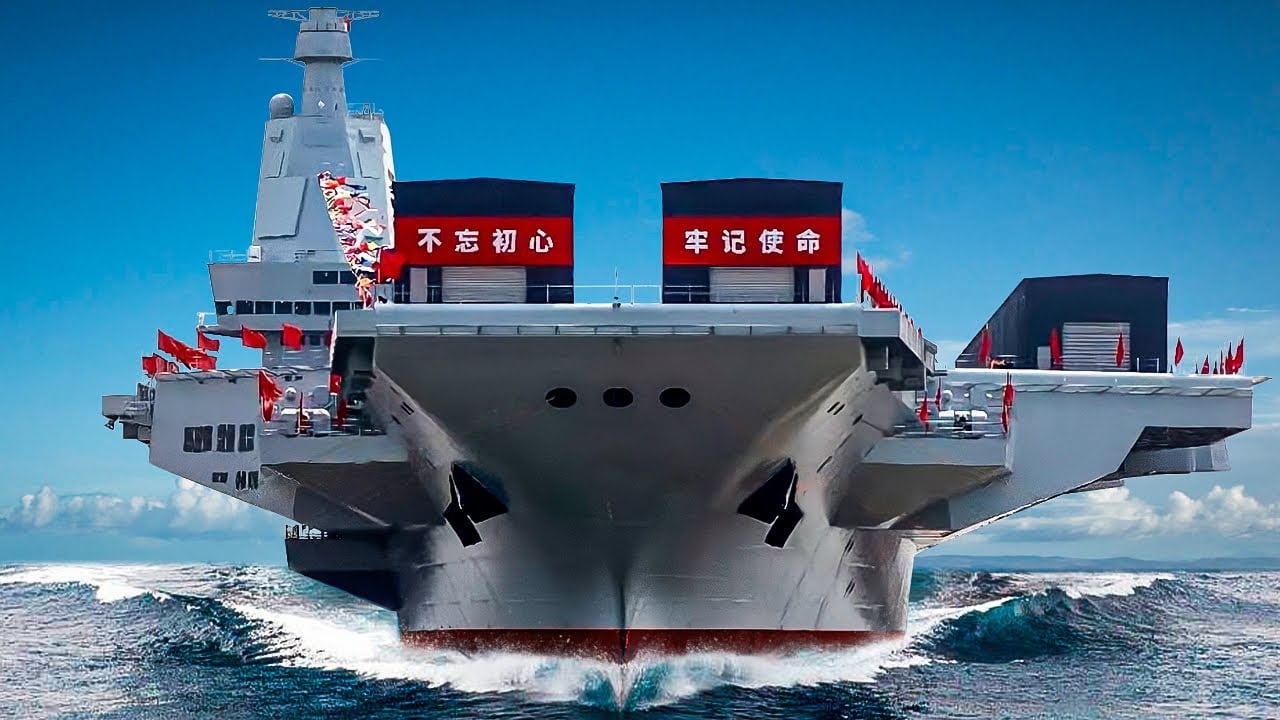
China Aircraft Carrier. Image Credit: YouTube Screenshot.
And even though the United States navy retains a decisive advantage in terms of global reach and overall tonnage, China’s transformation from a coastal defense-navy to a blue-water one will be felt in Washington. For every new carrier Beijing enters into service, its reliance on land-based aviation is reduced and U.S. maritime planning is complicated.
What China Has Now, and What Comes Next
China currently operates three aircraft carriers: Liaoning, Shandong, and Fujian.
The Liaoning and Shandong use ski-jump (STOBAR) configurations, which limit aircraft takeoff weight and reduce sortie efficiency. The Fujian, by contrast, represents a major technological leap. It is China’s first CATOBAR carrier, using electromagnetic catapults similar in concept to those on the U.S. Navy’s Ford-class carriers.
Per the Department of Defense’s assessment, Fujian’s future air wing will likely include the J-35 stealth fighter, the J-15T carrier fighter, the KJ-600 airborne early warning aircraft, helicopters, electronic-warfare aircraft, and unmanned aerial systems. Inclusion of all of these modern systems signals that Beijing is looking to develop a force that mirrors the complexity of the U.S. Navy’s carrier aviation.
Future Chinese carriers are expected to be nuclear-powered, too – eliminating range problems and allowing for longer deployments.
This Is Why China’s Doing It
If the Pentagon’s assessment that China could field up to nine aircraft carriers by 2035, it would enable Beijing to sustain simultaneous naval pressure across multiple theaters – thereby eroding many of the traditional advantages the U.S. Navy has utilized in the Indo-Pacific for some time.
China’s naval operations throughout 2025 indicate a deliberate increase in tempo and geographic reach, with significantly increased activity observed around Taiwan, the South China Sea, and near Japan. Several deployments and live-fire drills have also been conducted.
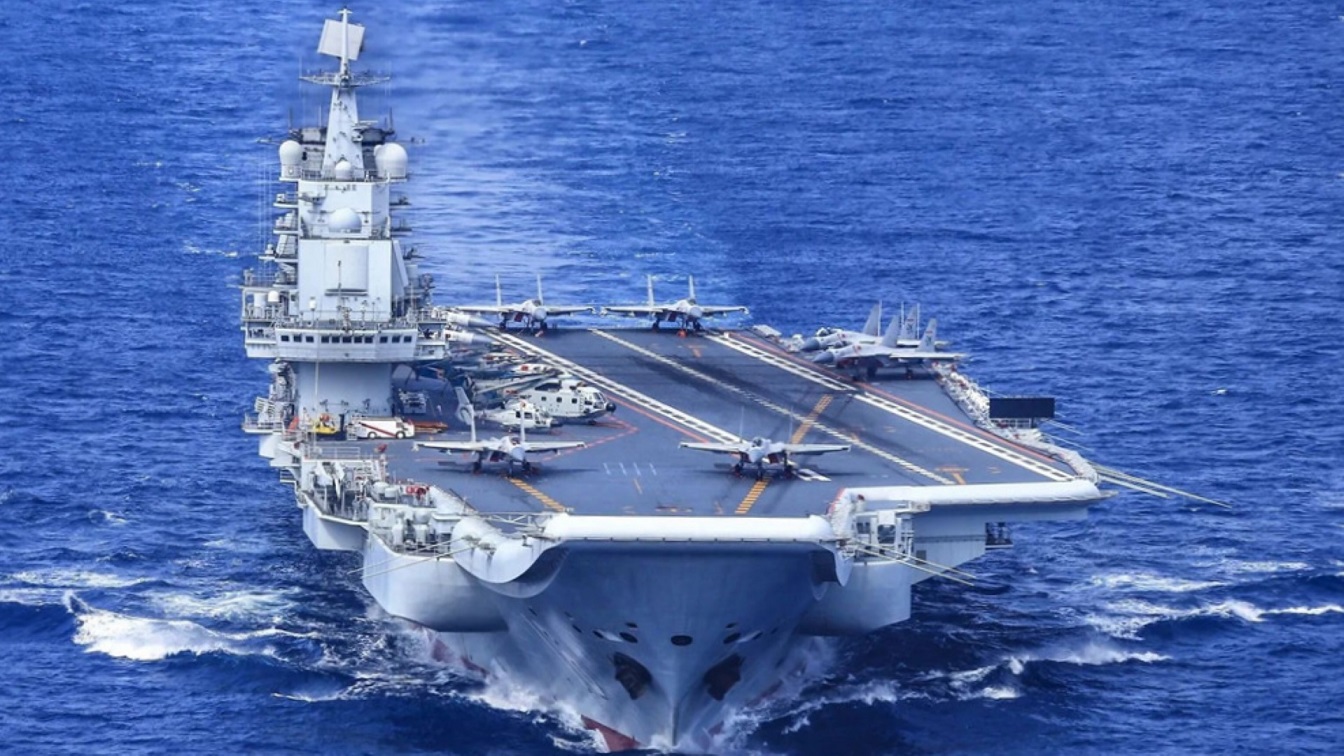
China Aircraft Carrier. Image Credit: Creative Commons.
That pattern is particularly important given that U.S. carrier strike groups are presently grappling with deployment strains and maintenance backlogs, limiting how often and for how long these vessels can remain at sea.
Recent extended carrier deployments have lasted far longer than their traditional six-month cycles, placing significant strain on crews and ships. Meanwhile, China’s carriers are increasingly active beyond coastal waters, clearly signaling Beijing’s intent to project power rather than merely defending it.
For U.S. forces, the implications are significant: China’s evolving naval presence increases readiness demands and requires a more sustained forward presence to deter coercion and reassure allies in the region.
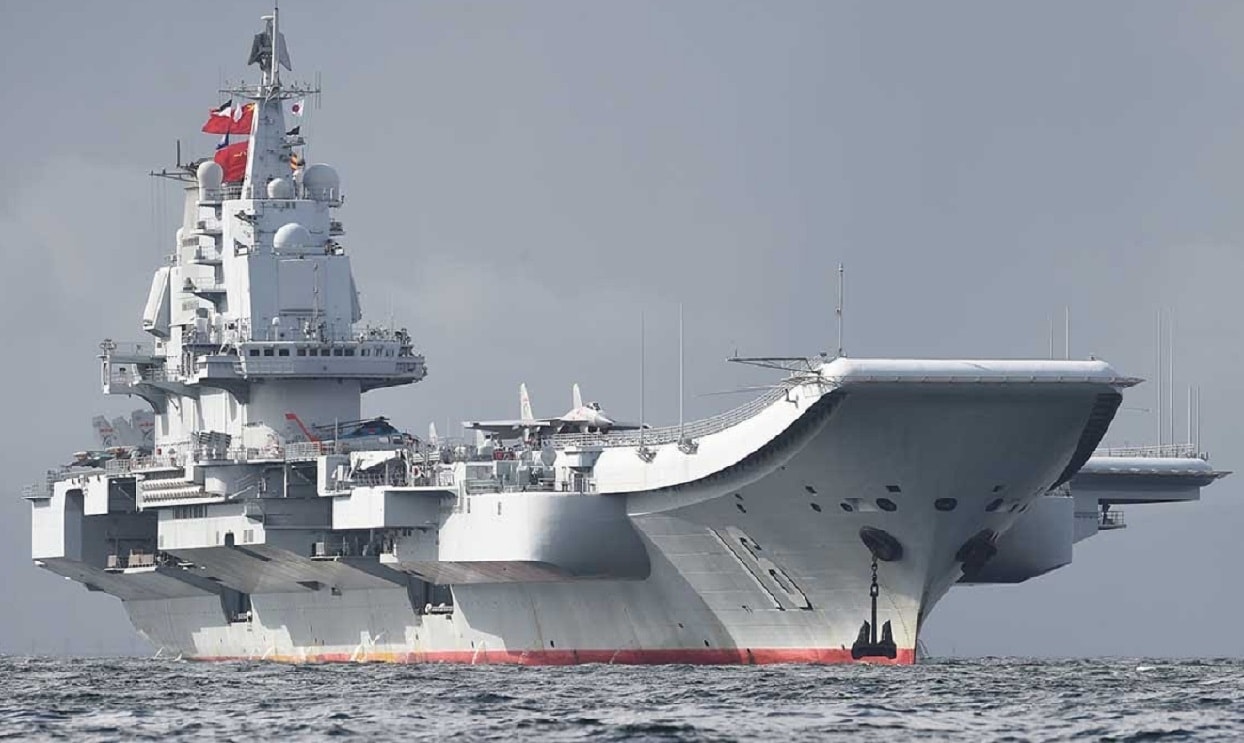
China Aircraft Carrier. Image: Creative Commons.
This is already happening, too; USS Abraham Lincoln recently conducted live-fire exercises in the South China Sea. In the long term, U.S. planners must now contend not just with the growing numbers of rival ships but the simultaneous maritime pressure that will be placed on American vessels and carrier strike groups.
China’s Type 004 carrier is expected in the early-to-mid 2030s – its latest supercarrier that is expected to be nuclear powered and similar in size to the U.S. Navy’s biggest supercarriers.
About the Author: Jack Buckby
Jack Buckby is a British researcher and analyst specialising in defence and national security, based in New York. His work focuses on military capability, procurement, and strategic competition, producing and editing analysis for policy and defence audiences. He brings extensive editorial experience, with a career output spanning over 1,000 articles at 19FortyFive and National Security Journal, and has previously authored books and papers on extremism and deradicalisation.