
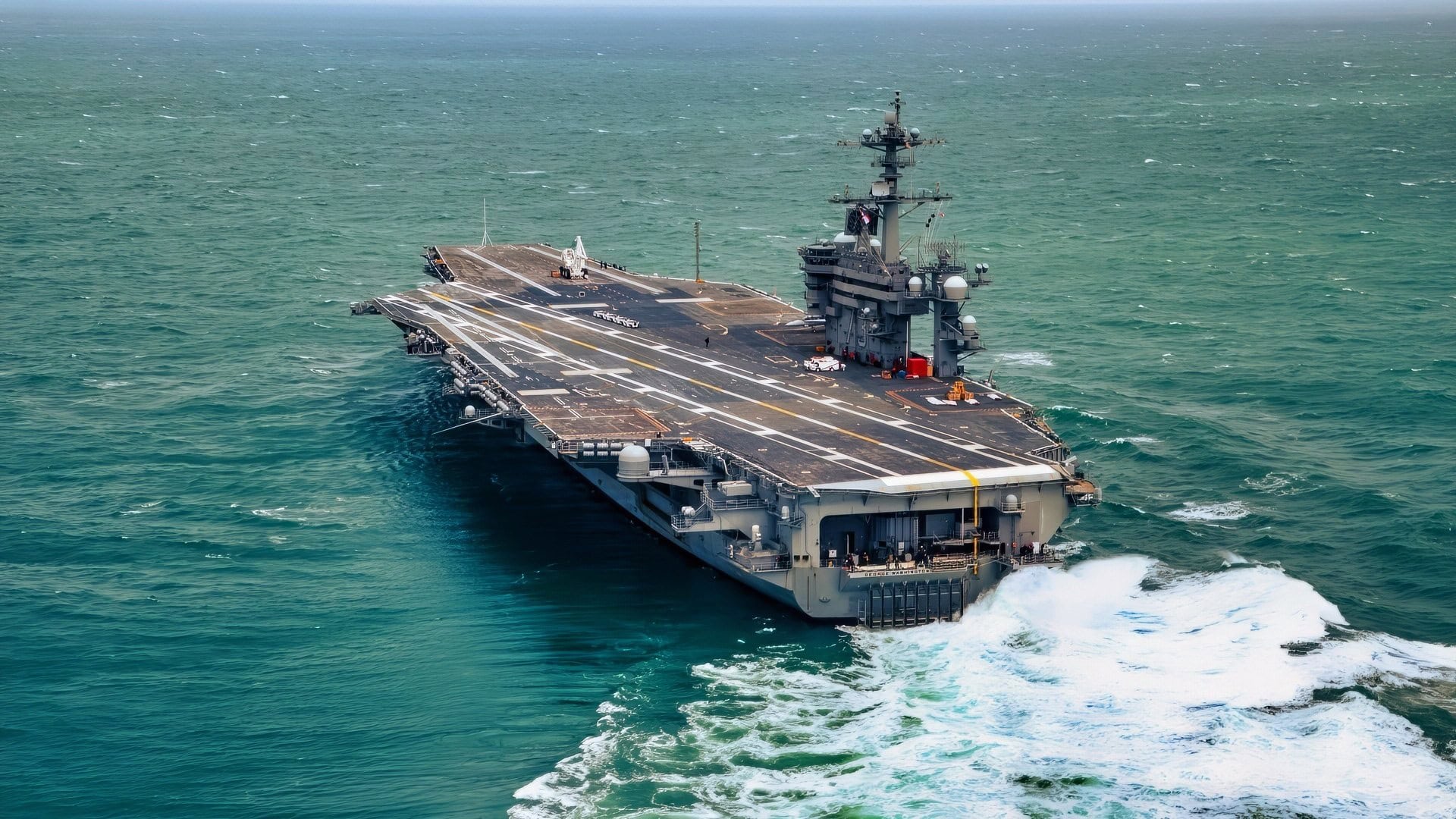
Summary and Key Points: China appears to be evolving its “carrier-killer” missile concept (DF-21D/DF-26B) into a weapon with intercontinental reach, threatening U.S. carrier strike groups far beyond the First Island Chain and Guam—potentially into the mid-Pacific.
-This development challenges the assumption that distance provides safety for U.S. naval forces and forces commanders to rethink deployment strategies.
-A long-range anti-ship ballistic missile also introduces a dangerous risk of miscalculation, as a launch could be mistaken for a nuclear strike.
-To maintain deterrence, the U.S. must look beyond surface dominance to undersea warfare, distributed operations, and resilient sensor networks.
The Nightmare Scenario: An ICBM That Hunts U.S. Aircraft Carriers
Something important is happening inside China’s missile forces that could give the PLAN and its new carriers a big advantage in a war. Beijing appears to be pushing the DF-21D/DF-26B anti-ship concept into a platform with intercontinental reach. If that effort succeeds, the People’s Liberation Army Rocket Force will hold the ability to hit US carrier strike groups far beyond the near seas, potentially deep into the mid-Pacific.
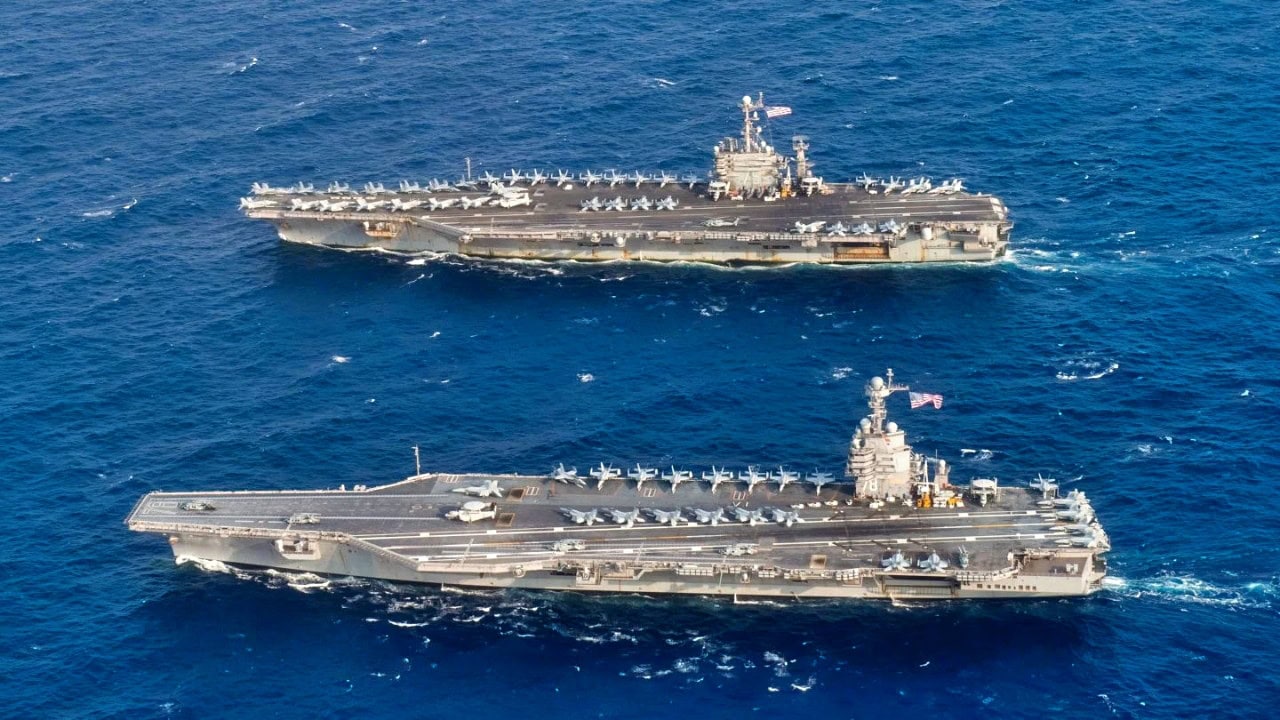
Ford-Class Aircraft Carrier U.S. Navy. Image Credit: Creative Commons.
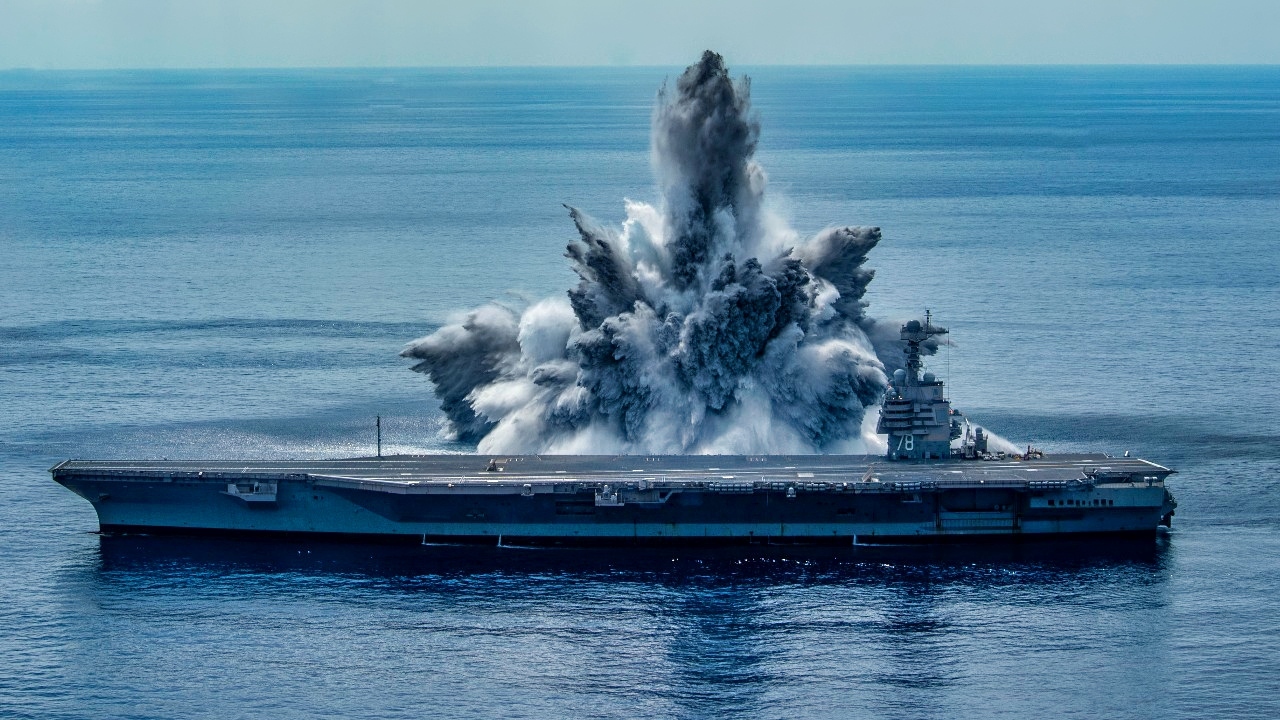
The aircraft carrier USS Gerald R. Ford (CVN 78) successfully completes the third and final scheduled explosive event of Full Ship Shock Trials while underway in the Atlantic Ocean, Aug. 8, 2021. The U.S. Navy conducts shock trials of new ship designs using live explosives to confirm that our warships can continue to meet demanding mission requirements under harsh conditions they might encounter in battle. (U.S. Navy photo by Mass Communication Specialist 3rd Class Novalee Manzella)
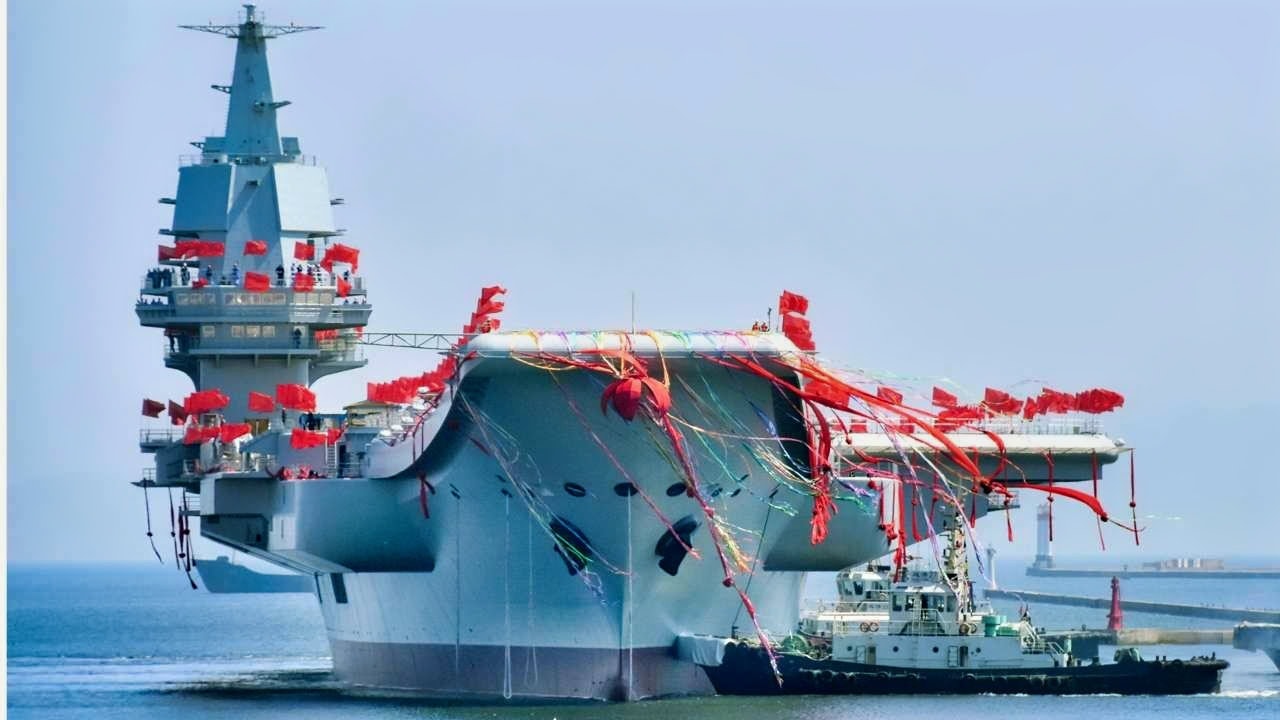
Shandong Aircraft Carrier. Image Credit: Creative Commons.
A decade ago, the “carrier-killer” discussion revolved around the First Island Chain and, for the DF-26, targets as distant as Guam. The possibility of an ICBM-class anti-ship ballistic missile alters that map. Suddenly, the mid-ocean or even waters closer to home are no sanctuary.
Observers have watched the ASBM evolution with fascination and unease. The DF-21D was a startling proof of concept—ballistic missiles used for maritime strike. The DF-26 widened the envelope and forced serious reconsideration of U.S. surface power projection toward East Asia. A long-range successor points toward a different strategic horizon.
It suggests that China wants leverage across more than its littoral approaches. It wants the ability to shape American choices at sea before ships are anywhere near Taiwan, the South China Sea, or even Guam. That aspiration carries consequences for readiness, freedom-of-the-seas missions, and, more quietly, the way allies calculate risk.
A Technology That Changes Planning Even if Imperfect
Whether such a missile works flawlessly is secondary at this stage. The more immediate effect lies in how it alters assumptions. Any long-range ASBM would still rely on a network of sensors and data links resilient enough to track and target a moving vessel across enormous distances.
That means satellites, overhead persistent surveillance, over-the-horizon radar, and a fusion architecture that can maintain a firing solution across contested electromagnetic conditions. Even a maneuvering re-entry vehicle must cope with discrimination problems, countermeasures, and active missile defense. A single gap in that chain can cause failure.
Yet capability need not be perfect to be disruptive. If US commanders cannot be certain a carrier group is beyond reach, they must operate as though it is exposed. Distance becomes less of a shield. Every sortie and tasking cycle faces new calculations: how close, how long, how visible. A long-range ASBM does not replace the fleet, but it forces decision-makers to think more carefully about deploying large surface formations within potential threat rings. The United States Navy has endured similar shocks—torpedoes in the 1910s, air-delivered anti-ship strikes in the 1940s, cruise missiles after 1967, and hypersonics today. American naval power survived each, although never without painful lessons along the way.
The Escalation Problem Few Want to Talk About
A more careful conversation concerns the risk of misinterpretation. An ICBM launch, detected by early warning systems, appears to be a strategic event. Detectors observe a plume, trajectory, and boost phase before anything more informative becomes available.
A president may have only a few minutes to decide whether the launch poses an existential threat. In that window, the instinct to assume the worst cannot be dismissed. The nuclear and conventional domains blur. Cold War theorists worried about this decades ago when debating prompt conventional strike; the logic remains the same today.
Imagine a U.S. carrier strike group operating somewhere east of Guam or even near Hawaii. A long-range missile arcs upward from deep inside China. Commanders must choose between trusting their interpretation or preparing for the unthinkable.
Hesitation could prove catastrophic. Overreaction could escalate a regional crisis into something far more dangerous. The risk may be manageable through communication channels, but no hotline can prevent early-phase ambiguity.
This is the deeper strategic significance of an ASBM with intercontinental reach. It does more than threaten ships. It casts a nuclear shadow over conventional naval operations. Contingency planning becomes heavier. Crisis moments become more volatile. The ladder of escalation shortens in ways neither government may fully control.
A Challenge, and Also an Opening
Still, this development does not determine the future. The United States retains enormous advantages in undersea warfare, long-range aviation, and joint strike capability. Directed-energy weapon development is advancing in increments rather than leaps, but even incremental progress matters. New interceptor families are emerging as successors to existing missile defenses. Naval integration of unmanned systems is moving unevenly yet steadily.
Undersea platforms, especially nuclear-powered attack submarines, offer reach and survivability that no ASBM can cancel out. American shipyards are under strain, but debates over industrial revitalization are finally moving out of committee rooms and into budget language. None of this is automatic; it requires political will, sustained funding, and a sense of urgency that matches China’s.
Adversaries adapt. The U.S. Navy must adapt in turn. Distributed operations, deception, electronic warfare, and hardened command-and-control networks will all grow more important. History suggests that navies that survive disruptive technology are those that rethink assumptions before the shooting starts. The worst mistake would be to comfort ourselves with the memory of past dominance as though history guarantees future advantage.
Deterrence Without Illusion
Great-power maritime competition today is shaped by geography, sensors, endurance, and psychological resolve. A long-range ASBM affects all four. If China believes it can hold carriers at risk far from land, Beijing may feel emboldened during a crisis.
That confidence could tempt decisions that would have seemed reckless a decade ago. The United States must make the consequences of such adventurism clear well before any crisis arrives.
Deterrence will rest on more than aircraft carriers. It will rely on submarines that can move unseen, bombers with prompt reach, resilient space architecture, survivable basing, cyber persistence, and alliance networks that change the cost calculus in Beijing.
None of these negate the value of carriers; they highlight that the future of American power at sea will be more distributed, more layered, and more difficult for any adversary to neutralize quickly.
The Future Is Already Pressing In
So where does this leave us? China appears determined to erode Washington’s confidence in surface dominance across the Pacific. Even partial success would shape how crises unfold. The United States cannot assume the ocean buys time.
Future conflict could open with long-range missile fire rather than distant maneuver. A weapon that seems untested on paper can still force planners to disperse, harden, and rethink.
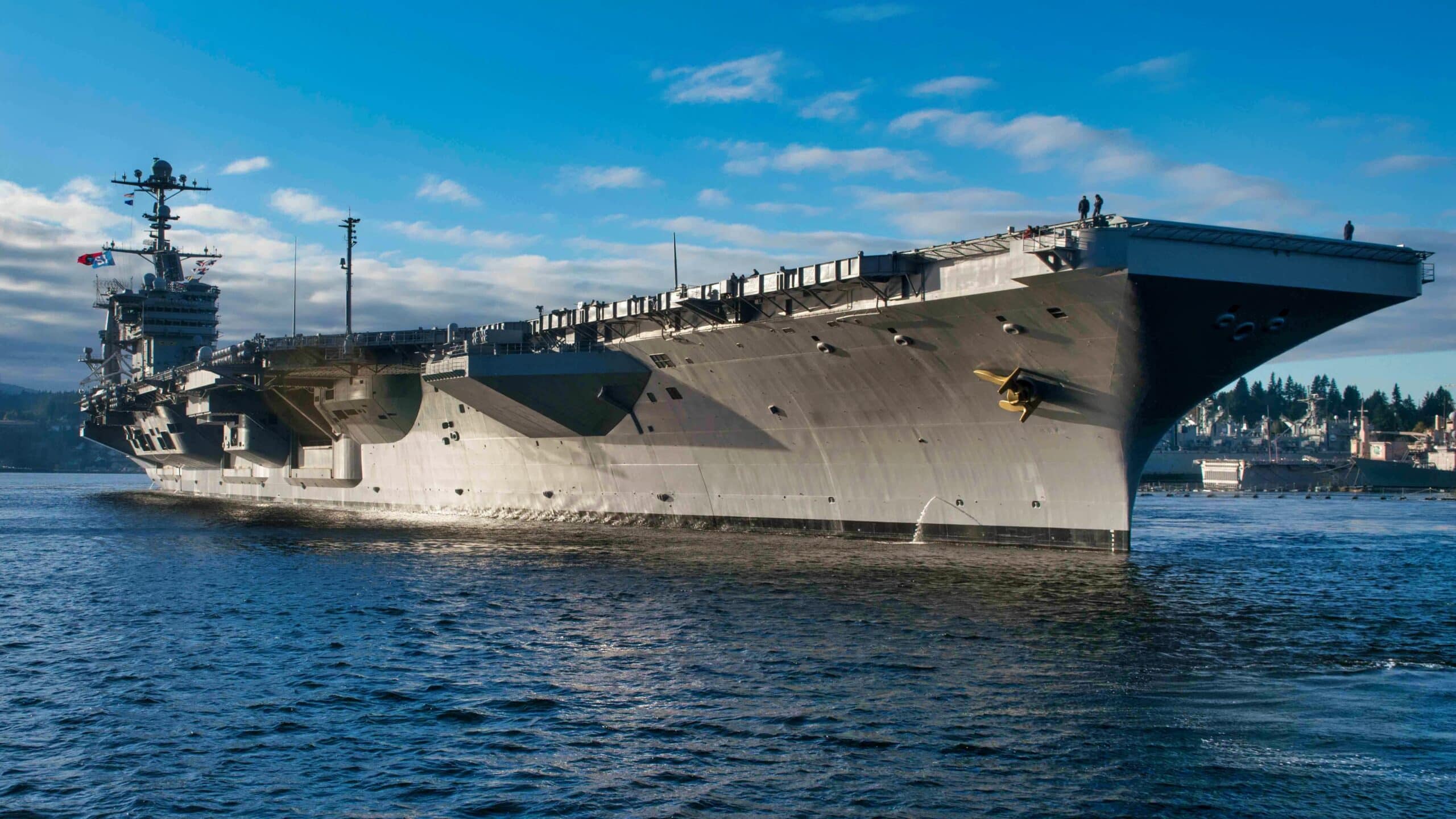
USS John C. Stennis Aircraft Carrier. Image Credit: Creative Commons.
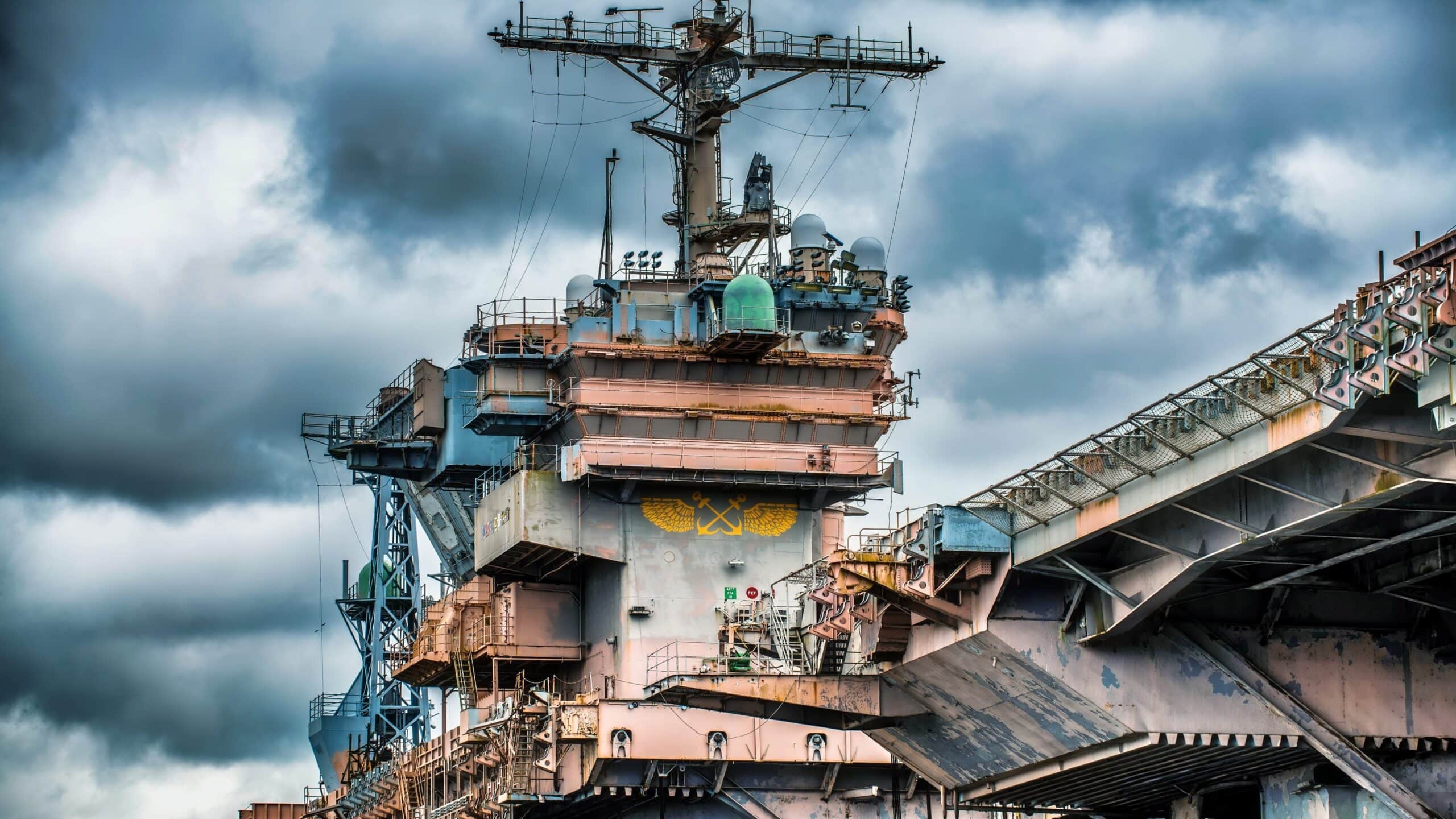
Aircraft Carrier U.S. Navy. Image Credit: U.S. Navy
The U.S. has navigated moments like this before. It will do so again if we resist the temptation to believe that past supremacy guarantees future ease. Navies that endure are those that innovate in a timely fashion. The Pacific century will be defined by those who treat deterrence as preparation, not nostalgia. Beijing is testing whether the United States still has the imagination to respond with energy and clarity.
It would be wise to answer in the affirmative.
About the Author: Dr. Andrew Latham
Andrew Latham is a non-resident fellow at Defense Priorities and a professor of international relations and political theory at Macalester College in Saint Paul, MN. You can follow him on X: @aakatham.