
Key Points and Summary – The aircraft carrier remains the centerpiece of modern maritime strategy—and the global pecking order is becoming clearer.
-The United States still sets the standard with the Gerald R. Ford-class and the proven Nimitz-class, combining scale, nuclear endurance, and high sortie generation.
-China’s Type 003 Fujian signals a major leap in carrier ambition, aiming to narrow the gap with a more modern launch-and-recovery approach.
-Europe’s leading decks round out the list: France’s Charles de Gaulle, a compact but capable nuclear carrier, and Britain’s Queen Elizabeth-class, powerful yet dogged by reliability concerns.
The World’s 5 Most Advanced Aircraft Carriers Heading Into 2026
With 2026 here, it is time to reflect on the state of naval power worldwide. Despite its detractors, the aircraft carrier remains the centerpiece of maritime strategy and will remain strategically viable for many years to come.
Currently, the U.S. remains the leader in carrier technology and production, but other nations around the world have their own carriers that deserve recognition.
These are the five most advanced aircraft carriers heading into 2026.
The Gerald R. Ford-Class (USA)
The Gerald R. Ford Class is the newest class of supercarriers developed by the United States. Measuring around 1,092 ft in length and with a displacement of about 100,000 tons, these warships are the largest military vessels ever constructed.
The Ford Class is also the most advanced carrier the U.S. Navy has built to date, being the first in the world to incorporate technologies like Electro-Magnetic Aircraft Launch Systems (EMALS), Advanced Arresting Gear (AAG), an AN/SPY-3 X-Band multifunction radar, an AN/SPY-4 S-Band volume search radar, and much more.
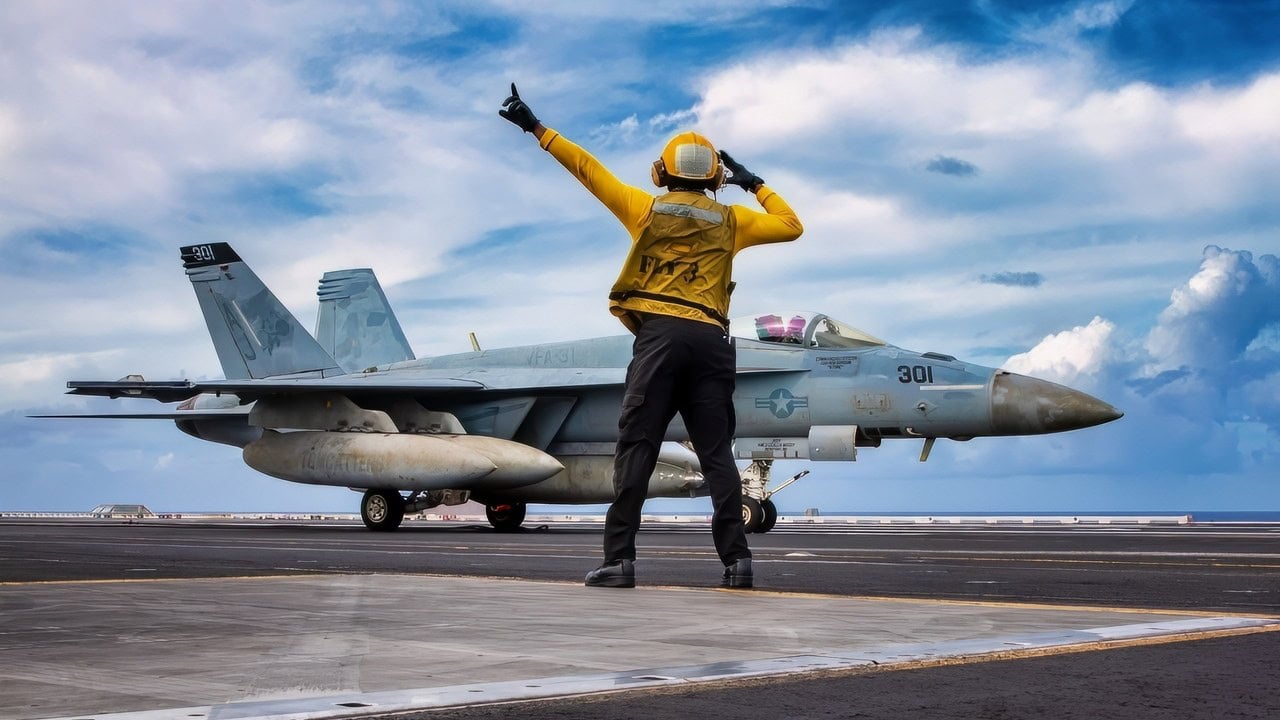
Ford-Class Aircraft Carrier. Image Credit: Creative Commons.
The carrier is built to house up to 90 aircraft and accommodate high sortie rates of up to 160 sorties per day, with surge capability of 270 sorties per day. It is powered by two A1B nuclear reactors, which enable the carrier to remain at sea almost indefinitely, as long as the crew has enough provisions. Speaking of crew, despite being bigger than the Nimitz Class, the Ford Class requires a significantly smaller crew (only 2,600 compared to 5,000 on the Nimitz Class) thanks to its autonomous onboard systems.
The Nimitz-class (USA)
Despite their age and slated retirement, the Nimitz Class is still one of the most advanced carriers in the world. First accepted in the 1970s, these carriers have been in service for around 40 years and are now reaching retirement age.
The Nimitz Class measures about 1,092 ft and displaces around 100,000 tons. It uses a CATOBAR arrangement with steam-powered catapults to launch aircraft and arrestor wires for recovery.
The Nimitz Class is powered by two A4W nuclear reactors, giving it near-unlimited range. Its air wing typically consists of around 64 aircraft, but it can carry about 85–90 aircraft of various types.
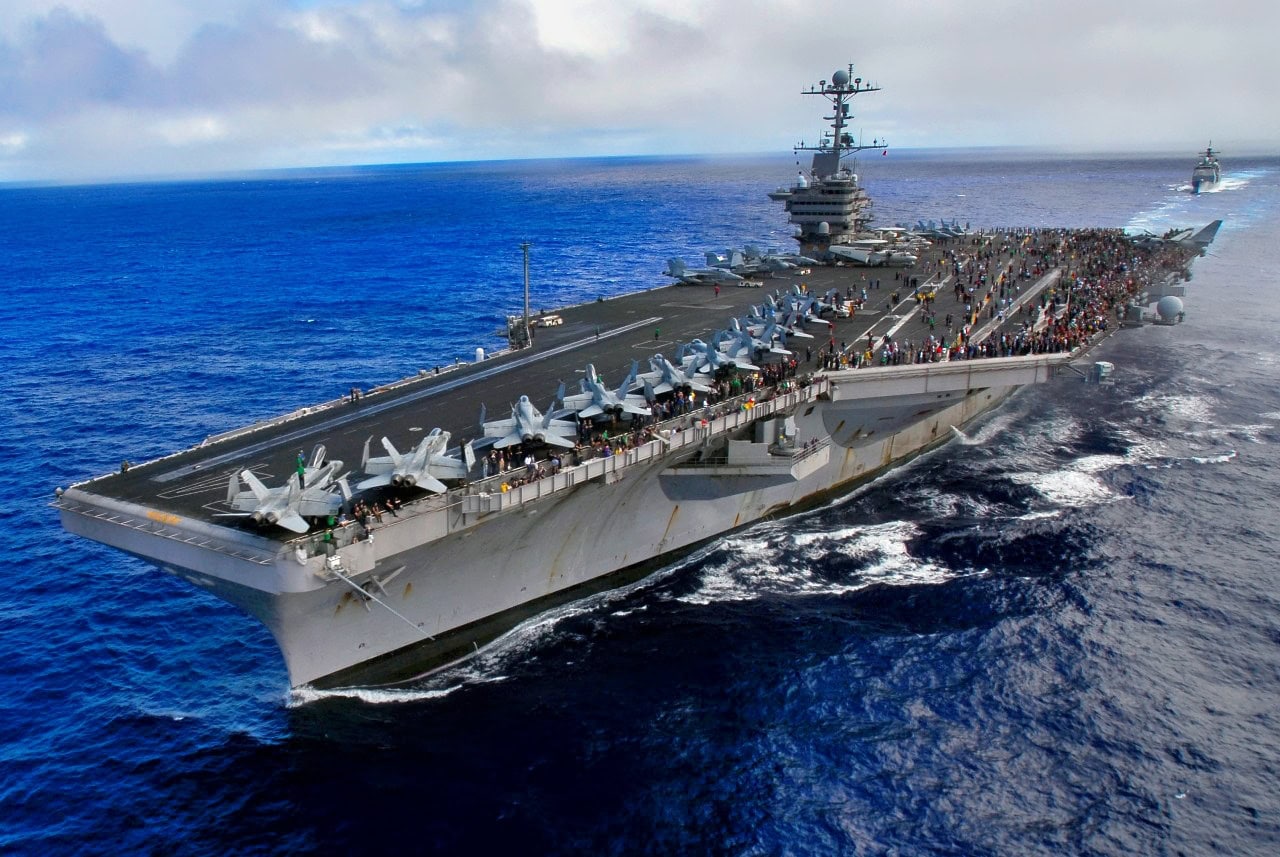
Nimitz class aircraft carrier USS John C. Stennis (CVN 74) leads guided-missile cruiser USS Antietam (CG 54) prior to conducting an air power demonstration. The air power demonstration showed the capability of Stennis and Carrier Air Wing 9 to service members’ family and friends who were invited to get underway with the ship. Stennis is returning to the United States after a 7 month long deployment promoting peace, regional cooperation and stability, and supporting the global war on terrorism.
The carriers can sustain a sortie rate of around 120 sorties per day, with a surge capacity of 240 per day. Currently, the U.S. operates 10 of these carriers, although the USS Nimitz (CVN-68) is expected to retire soon.
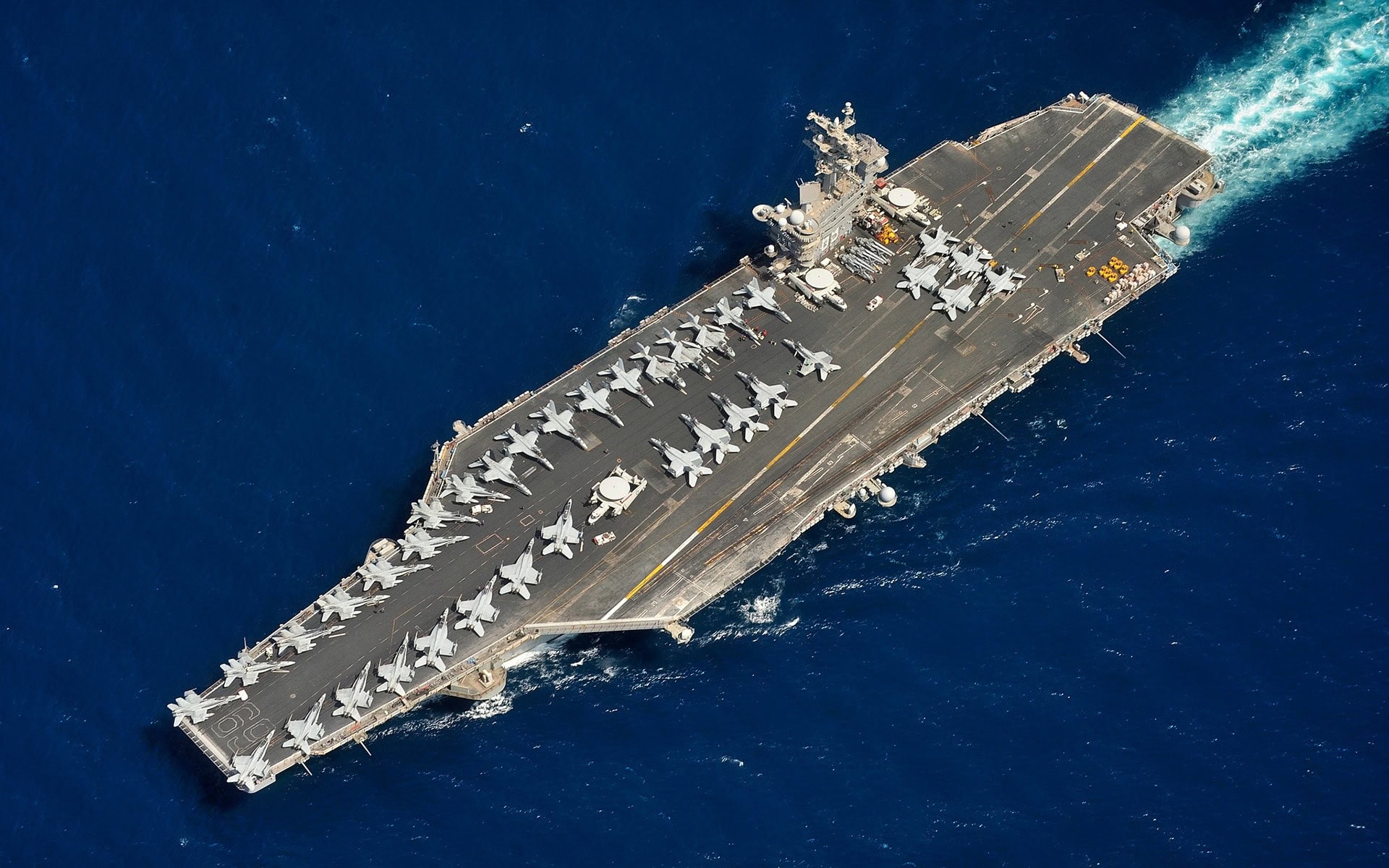
Nimitz-Class aircraft carrier. Image Credit: Creative Commons.
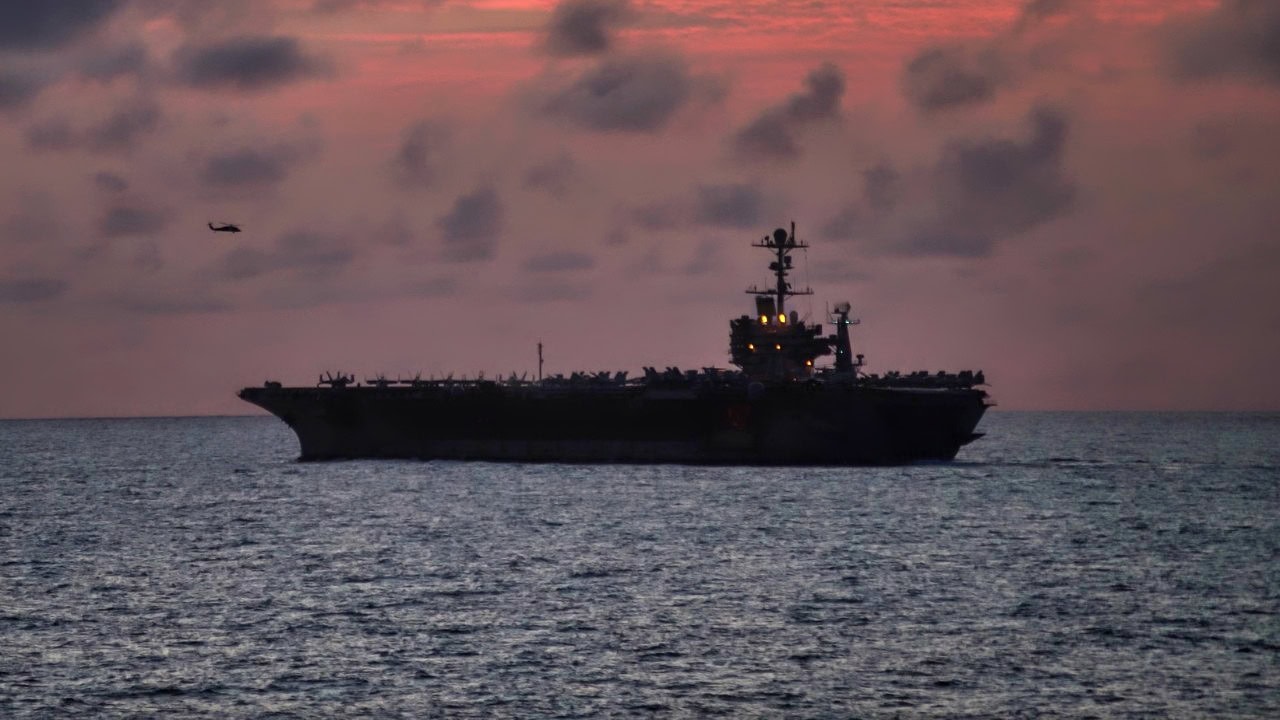
USS Nimitz. Image Credit: Creative Commons.
Despite its age, the Nimitz-Class remains the centerpiece of the U.S. Navy’s doctrine due to its reliability and power-projection capabilities.
The Type 003 Fujian (China)
Next up is China’s Type 003 Fujian-class aircraft carrier. This carrier entered service in 2025 and represents China’s first domestically designed aircraft carrier.
Fujian is a significant step up from China’s Soviet-designed carriers, more closely resembling an American-made supercarrier. The ship measures around 1,036 ft in length and has a displacement of about 80,000 tons. The Type 003 is not nuclear-powered, instead relying on steam turbines and diesel generators, which limit its overall range, but this fits within China’s strategy of creating a navy that can control and protect its claimed territory around the first island chain.
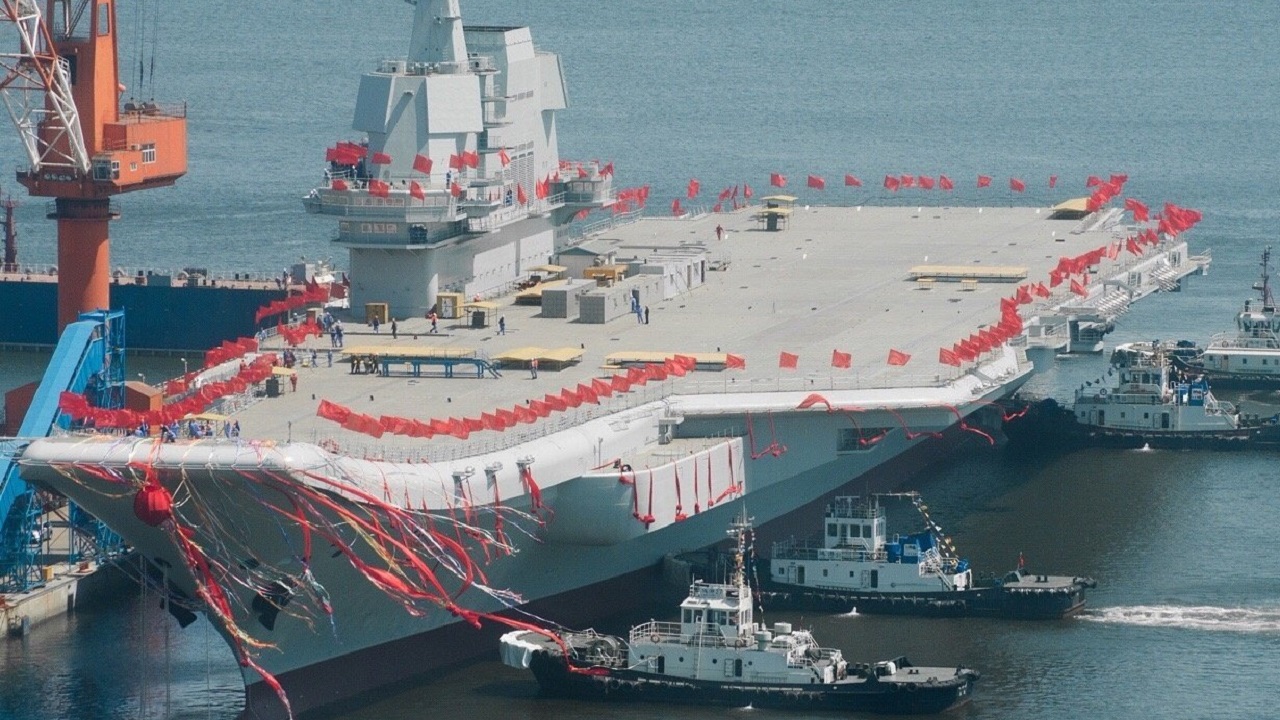
Fujian, China’s new aircraft carrier. Image Credit: Chinese Internet.
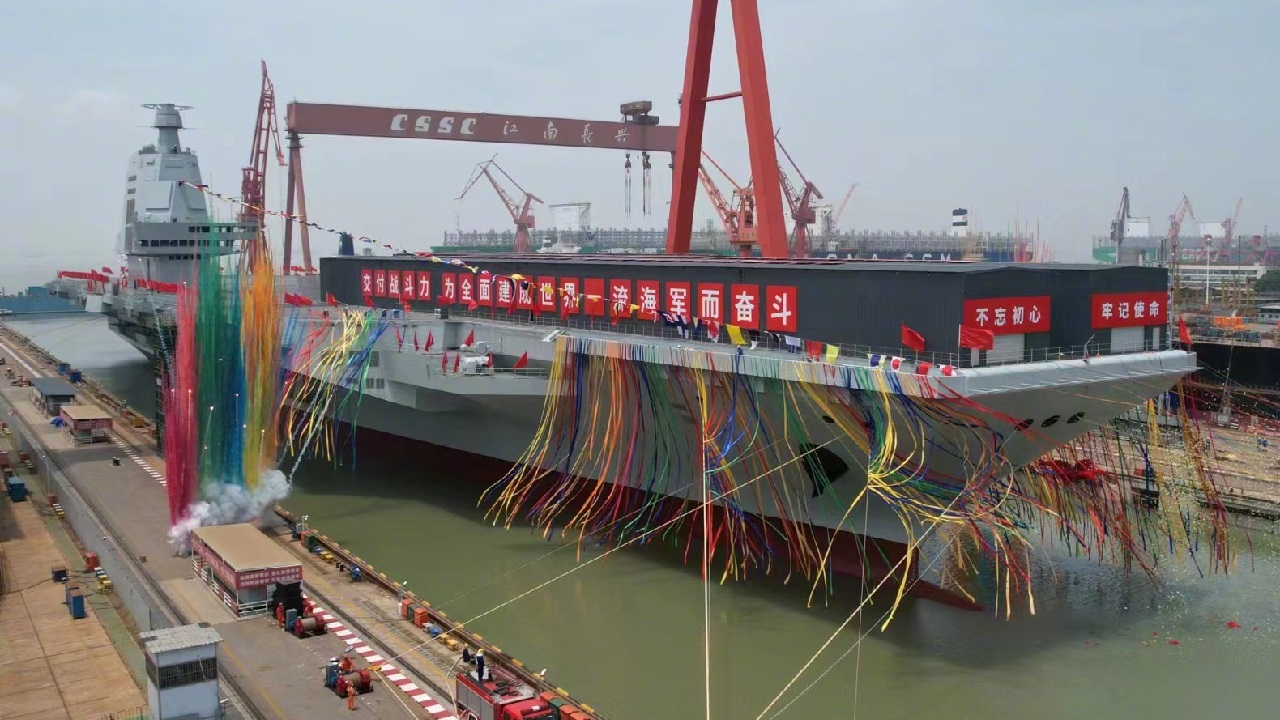
Fujian, China’s New Aircraft Carrier. Image Credit: Chinese Internet.
The Fujian Class can carry an air wing of around 50 aircraft, including the J-35 fifth-generation stealth fighter.
Much like the Ford Class, Fujian is equipped with an EMALS system for launching aircraft.
First launched in 2022, the Fujian is considered by many to be one of the most advanced aircraft carriers built outside the U.S. It is a testament to China’s growing naval industrial base and its ambitions to project power within its regional zone of influence.
Charles de Gaulle (France)
Next up is the French aircraft carrier Charles de Gaulle (R91). Charles de Gaulle is the first and last of her class and is currently the flagship of the French Navy.
Accepted into service in 2001, Charles de Gaulle is significantly smaller than her American counterparts, measuring 857 ft in length and displacing 42,500 tons (less than half that of the Nimitz or Ford Class carriers).
She is fitted with numerous search-and-track radars, electronic warfare suites, and decoy and countermeasure systems. For air defense, Charles de Gaulle is armed with several VLS cells for surface-to-air missiles, along with eleven 20 mm autocannons.
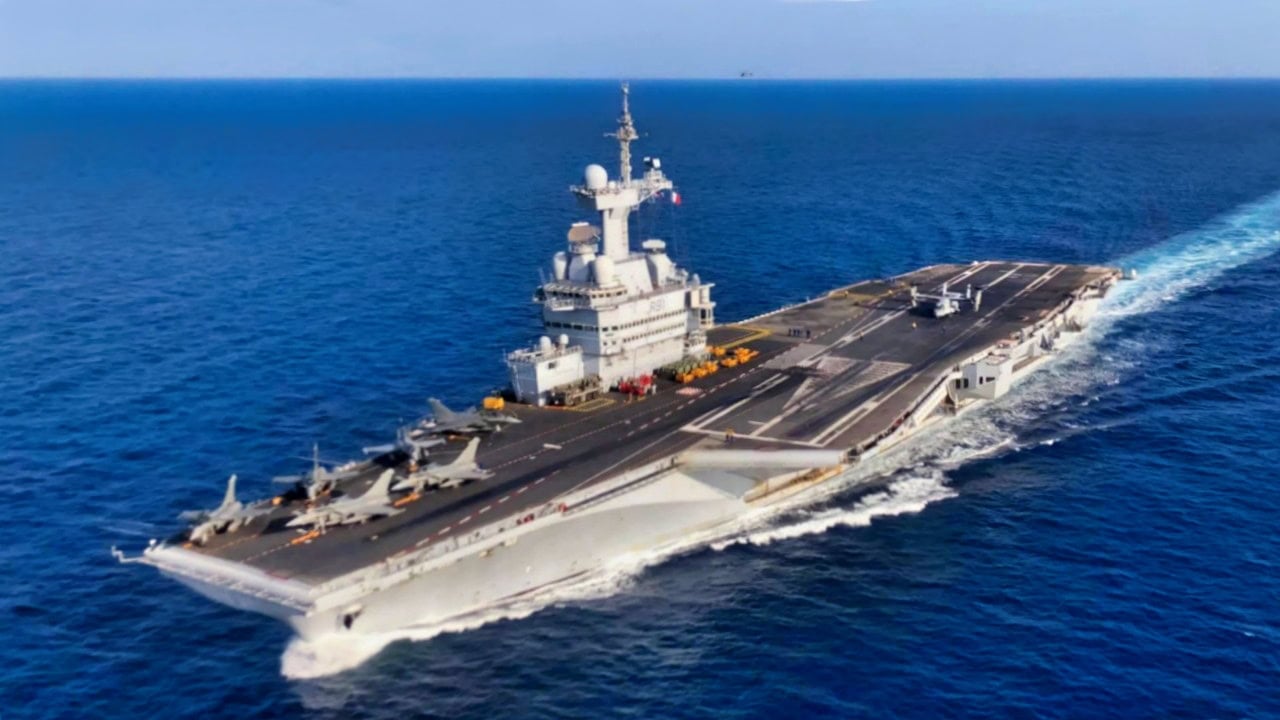
U.S. 5TH FLEET AREA OF OPERATIONS (April 24, 2019) A U.S. Marine MV-22 Osprey assigned to the 22nd Marine Expeditionary Unit sits on the flight deck of France’s Marine Nationale aircraft carrier FS Charles De Gaulle (R 91). This was the second time that Ospreys have landed aboard the French vessel. Marines and Sailors assigned to the 22nd MEU and Kearsarge Amphibious Ready Group are currently deployed to the U.S. 5th Fleet area of operations in support of naval operations to ensure maritime stability and security in the Central region, connecting the Mediterranean and the Pacific through the western Indian Ocean and three strategic choke points. (U.S. Marine Corps photo by Maj. Joshua Smith/Released)
Charles de Gaulle has a small air wing compared with the other entries on this list, with only 30–40 aircraft, most of which are Dassault Rafale-M multirole fighters. Two Areva K15 nuclear reactors power the carrier.
Despite being one of the smaller carriers in operation, Charles de Gaulle deserves a spot on this list primarily because of France’s tireless efforts to modernize its small but powerful fleet. While she may be France’s lone carrier, she is well-equipped to project power well beyond France’s territorial waters.
The Queen Elizabeth-Class (UK)
Last up is the UK’s Queen Elizabeth-class aircraft carriers. Comprised of only two ships, HMS Queen Elizabeth and HMS Prince of Wales are currently the only aircraft carriers in service with the British Royal Navy.
They measure around 932 ft in length and displace about 80,600 tons. Queen Elizabeth was launched in 2017, while her sister ship was launched in 2019.
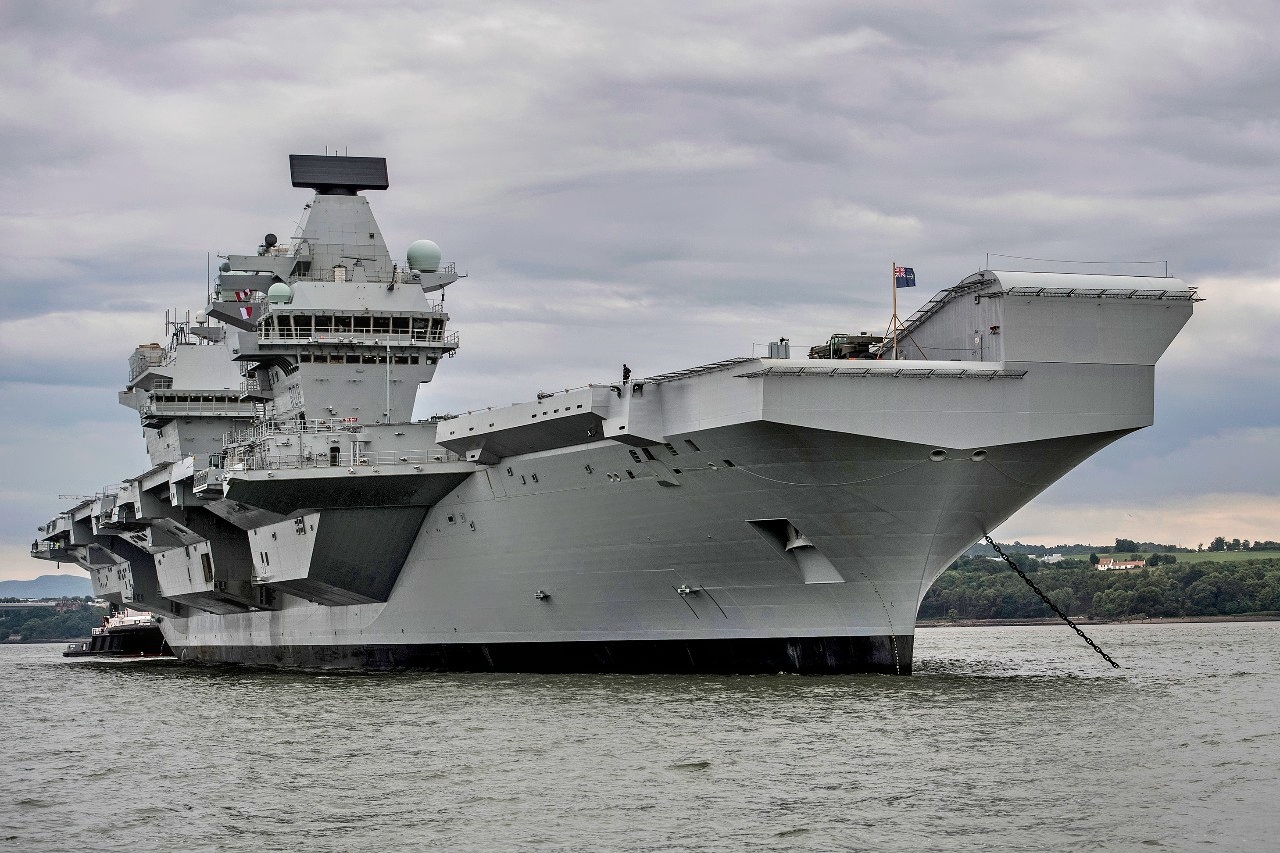
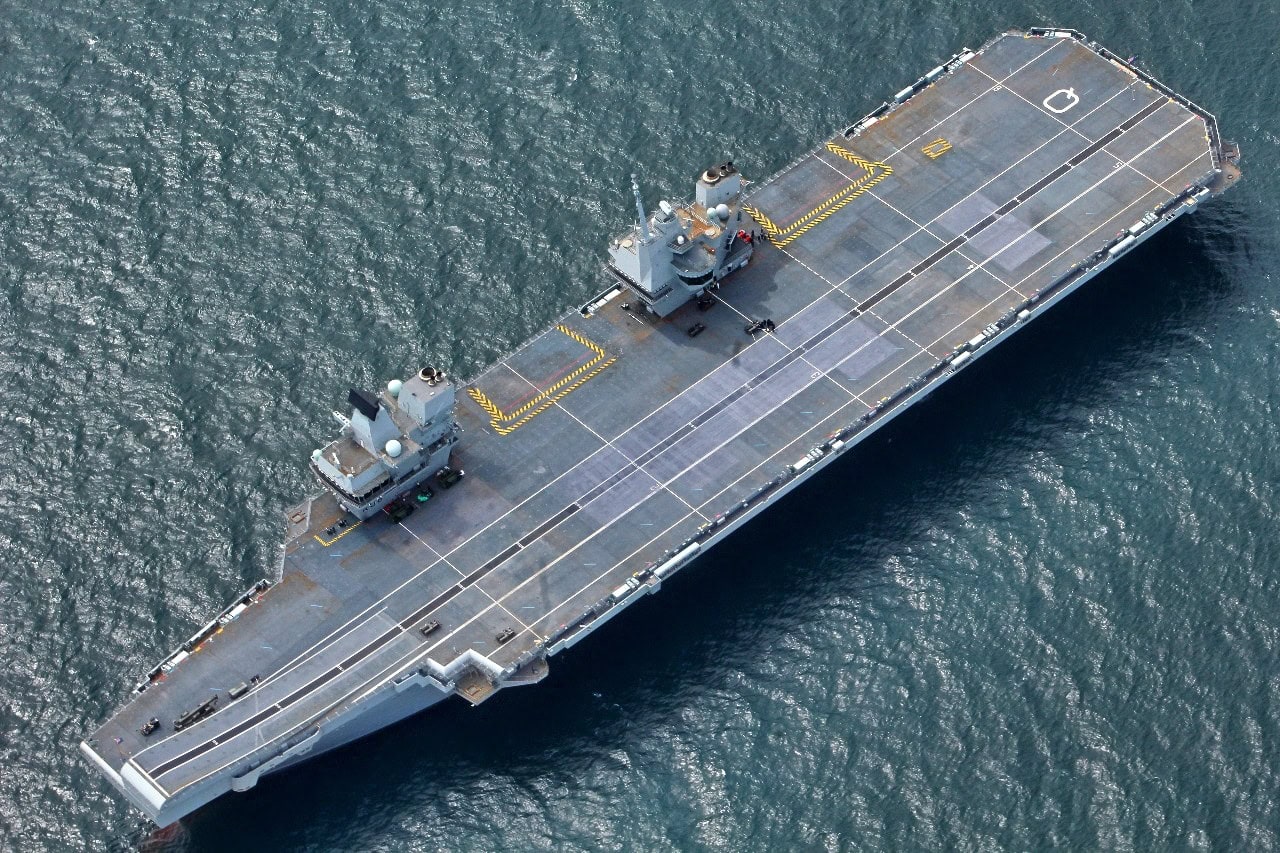
Pictured is HMS Queen Elizabeth under anchor awaiting low tide before departing at the start vital system tests off the coast of Scotland.
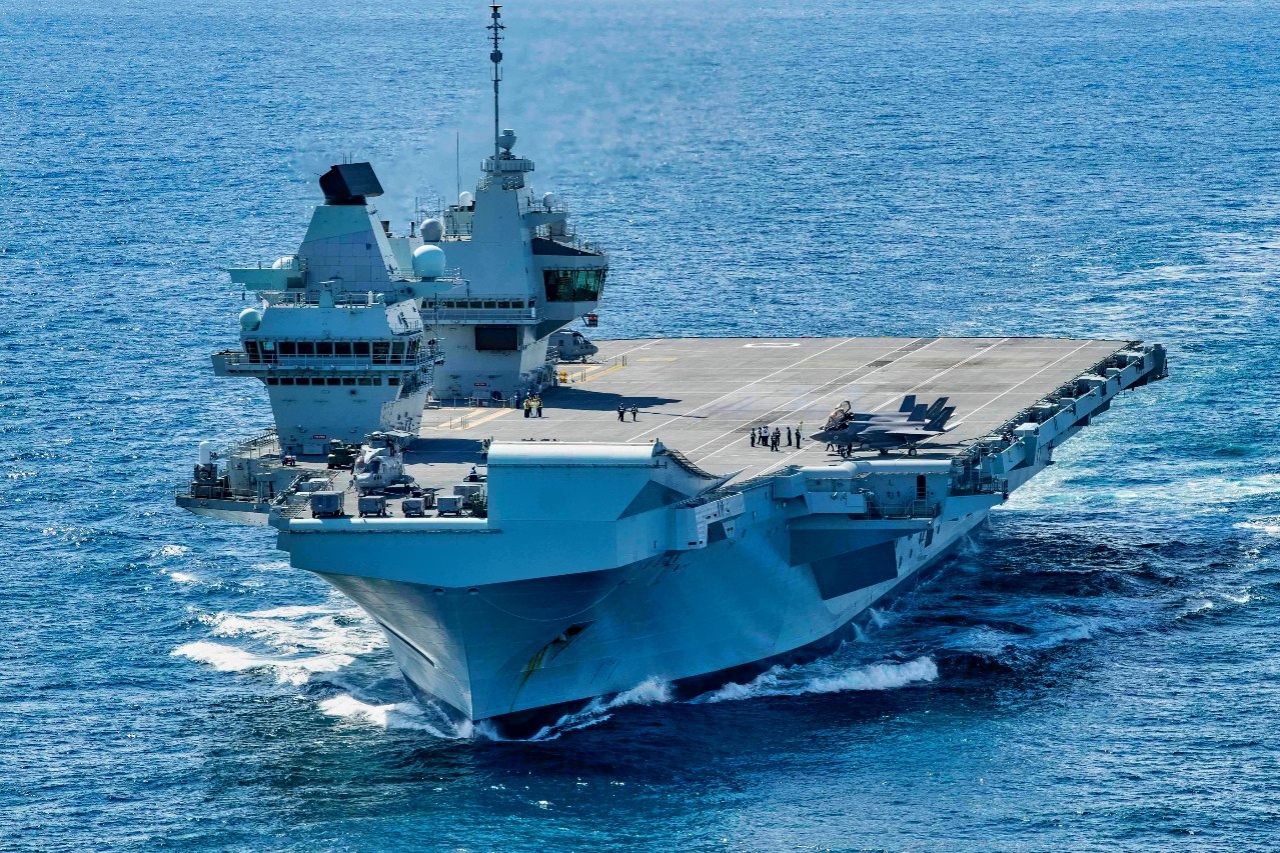
HMS Queen Elizabeth Aircraft Carrier. Image Credit: Royal Navy.
The Queen Elizabeth Class would rank higher on the list were it not for the repeated mechanical failures that both ships have experienced during their lifetime.
The Prince of Wales, in particular, suffered so many technical difficulties that the Royal Navy briefly considered mothballing the carrier until its issues could be resolved. Despite these issues, both carriers remain vital to the UK’s global naval strategy.
About the Author: Isaac Seitz
Isaac Seitz, a Defense Columnist, graduated from Patrick Henry College’s Strategic Intelligence and National Security program. He has also studied Russian at Middlebury Language Schools and has worked as an intelligence Analyst in the private sector.